
animism's Reviews
6 reviews Back to animism's Equipboard

105
Interesting approach to multiband dynamics, but falls short in the modern age
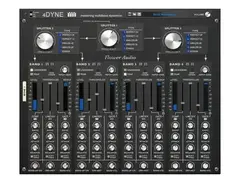
I've recently been trying multiband compression plugins, hoping to find one I connect with. I researched and tried Waves C6, I've struggled with TDR Nova, though it's starting to grow on me, and if I had the budget I'd likely invest in FabFilter Pro-MB. I noticed a recent sale on Reason Rack Extensions, and though few of them have ever impressed me, I wanted to try a multiband compressor for better performance. If 4Dyne worked the way I needed, I'd invest in it.
My main criticisms are that the interface is bigger than it needs to be, with an overwhelming number of controls - even though you don't need most of them. The latency for changing crossover points is extremely slow, which is not useful or accurate. Like other MB plugins I can't easily see the exact gain reduction and makeup gain I need to add. In the end, I didn't get it to sound any better than Reason's 4-band mastering Combinator preset, which is simpler to start with, and works and sounds better for my needs. The most important difference between this and better plugins is the visual display - I don't really see what I'm doing. Waves C6, Nova, FabFilter, Izotope, etc, all have a waveform display dynamically representing the changes being made, and 4Dyne could scrap most of its present interface to accommodate something similar.
The coolest benefits of 4Dyne are on the back, where you can natively sidechain any band, as well as the outputs/sends for dry and wet signal. This allows you to process bands in different ways - for instance, adding reverb to higher bands while leaving the bass frequencies dry and punchy, or adding distortion/saturation to the upper mids. This functionality alone will push me to try it a few more times.
Really more like 2 1/2 stars but the benefit of the doubt to a niche manufacturer who made a valiant attempt with this.
Suggestions for 4Dyne:
- Many ways to make the interface smaller, as it takes up most of the screen
- Only one set of controls per function needed - not 3 for each of compression, limiting, gating
- Visual / spectral display, to have better visual feedback of gain chances
- Improve latency
105
Innovative and useful but with issues
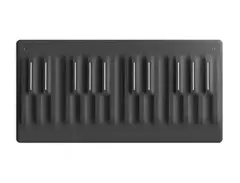
I bought the Roli Songmaker Kit second hand at a super low price, thinking to flip it, but first I wanted to try it out, perhaps sample sounds for later use. I'm a big fan of the full Roli Seaboard, particularly the 49-key edition. Shortly after buying the Songmaker Kit, I decided to take it as my main midi controller on a supposed 3-month trip to India, instead of my lighter XKey. It so happened I've been "stuck" here in Goa during global lockdown / home imprisonment, with the Roli Songmaker Kit. I'd have thought I'd use it more but it hasn't been nearly as handy as I desired, and feels less responsive than the bigger Seaboard.
Probably my main issue is that MPE is not presently compatible with Reason, even the excellent, recent Reason 11. Still, I use the Roli plugin. The latency is already super slow through USB - I can't imagine how slow it would be with Bluetooth. Reason also doesn't properly acknowledge the midi devices - sometimes it shows it, other times not. The Lightpad M and Loop Block have been nearly useless to me.
What I like about it is in the native Equator, it sounds nearly perfect and works most responsively. I've even used Equator while sampling it into another program, then importing the samples into Reason, though this process is a lot slower and less ideal. The Block keyboard itself is fairly useful in a general midi setting - but it's missing the high C note, which is highly inconvenient.
I love the portability of it, with the case providing protection for traveling. It looks great, it can sound excellent - I've used it subtly in all my productions so far in 2020. The Songmaker Kit as a whole I find difficult to recommend unless you're using a DAW that fully supports it.
105
Portable and versatile
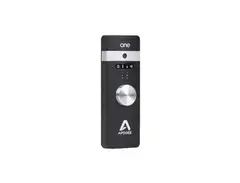
I bought this for a mobile, globe-trotting studio, mostly because of its flexibility - it offers high quality D/A conversion while integrating a surprisingly usable 96K microphone. It's lightweight nature lends to travel, with detachable dongle that makes sense in a portable setting - if you don't need to use it, leave it in a bag at home, saving further weight. My issues with it have been reliability - I bought it second hand with several cables, including replacements from the supplier. During a public live event / online broadcast while launching my new book, the device failed and the music shut off. Several times during recording it's similarly shut down - but now I suspect it might be an issue with a particular USB port on my computer. I will update this in a few months if the problem persists - or improves.
The more I use it the more the One grows on me, but the reliability issue worries me about relying on Apogee products on the road. If anything I'd love to see the next generation model - the Two? - with 192K sampling and proper 1/4" audio outs, which is possible with the dongle setup.
105
Brains of flexible, future proof, fun operations
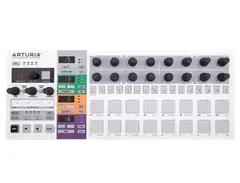
Versatile, flexible, dynamic, fun, future proof. For my new and long term act, I started with this as the brains of my studio and live operations, knowing it will anchor and play with just about anything. Still figuring out a custom, DIY sound module box which I'll develop on Linux or Raspberry Pi, for use of plugins and digital instruments without a computer. And researching the modular synth gear to accentuate my personal sound.
105
Clean, lightweight, rugged, versatile
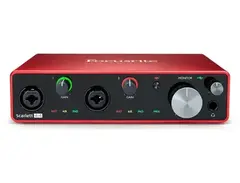
Building new studio and ultra-portable live rig, was dissatisfied with options available on the smaller / lighter / budget scale, preferring 4 inputs, and patient enough to wait. Enter the new Scarlett 4i4, with future-ready and super handy USB-C connector (e.g. plug straight into IPad Pro, connect midi gear via midi) and the 4 inputs - guitar, mic, 2 synths (or effects, inputs, etc), all bus powered. Smaller footprint than 2i4 predecessor, and 300+ grams lighter, in a rugged, smooth enclosure - and found one at a ridiculous price, prompting early purchase. The bigger 8i6 is really a 6i4 if you don't need SPDIF, the required wall wart is unfortunate, though 2 headphone outputs are handy. The 2i2 doesn't include MIDI ports and isn't much smaller or lighter. Comprehensive testing and full review to come, but others should know it looks like the real deal so far, and worth checking out for their studio/live needs.
105
XKey is a road warrior
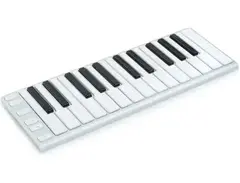
Have faithfully brought my XKey around the world since buying it in early 2016, spanning five continents and a whole host of different set up locations, including parks, beachfront cafes, hotel rooms, airports, and even on the occasional bus or plane. The piano sized keys are very helpful, and they have a mild degree of velocity sensitivity. I like the brushed aluminum look and build, with a classy, simplistic design that hasn't gone out of style and blends in with any setup. It's definitely solid enough for regular travel. Not sure how it will hold up as part of a bigger live setup with proper keys, but it is a trusty companion and reliable studio piece that is irreplaceable in my ultra-light, portable studio rig.