trixwagen's Electronic Synth Setup

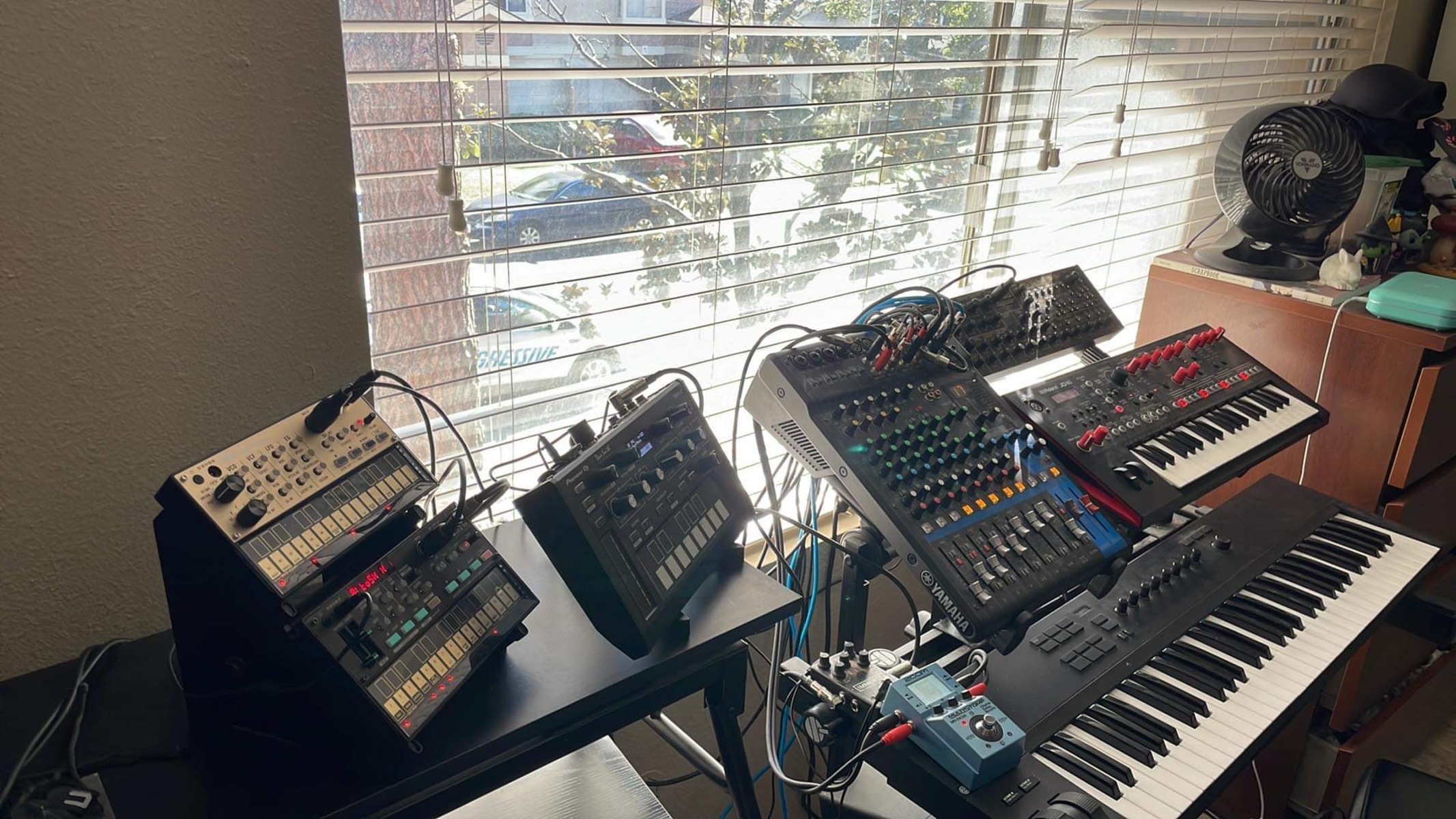
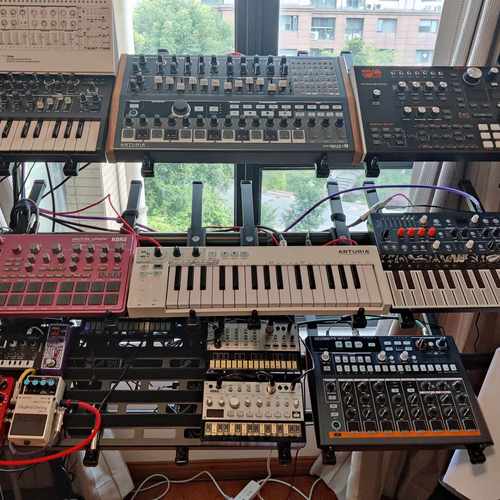
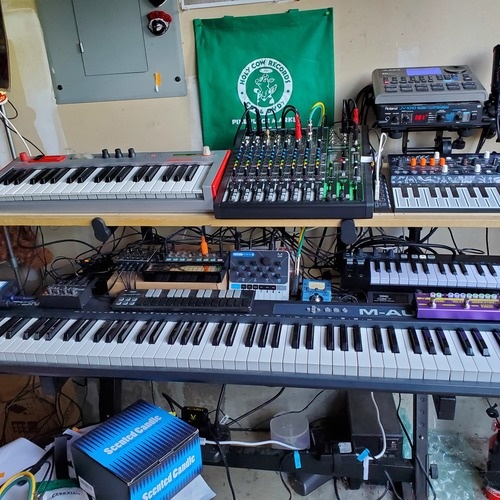
Running out of space in my bedroom. Edit: I returned the Volca Keys because I hated it THAT much.
Gear in this photo
This rig
~$2,063
Value by category
- Keyboards and Synthesizers 81.4%
- Effects Pedals 18.6%
Price mix
Mix of budget and standard

Pioneer DJ & Dave Smith TORAIZ AS-1
Avg price: $514.13


My favorite monosynth
First off, I wouldn’t pay full retail price for this beast. $500? Nah. Maybe I got lucky, I found one that someone bought and never used for $300. Take off a star for every $100 over that. I had a Mopho X4. I had a Tetra. I like the sound of this Dave Smith synth better. Maybe I had bad ones. The sound from the Mopho/Tetra sounded “crispy”, but not in a good way, IMHO. I can’t really explain, however the Toraiz sounds definitely analog but cleaner. It really is a single voice from the Prophet 6. It’s sort of a modern Pro One, as well. The bad stuff: sacrifices; because its size and that it is a “DJ instrument”. There are only 11 knobs (still better than the microKorg’s eight knobs) so it is not close to one knob per function, however the important knobs are there (low pass and high pass cutoff, resonance, attack, decay/release, et cetera). The dealbreaker for many reviewers is the Toraiz AS-1 will not stay in sync when using the sequencer. I usually sequence the AS-1 with an external sequencer (JD-Xi) so it’s a nonissue. For me. Pioneer has not/is not/will not fix the issue with a firmware update. Build quality is fairly solid. It makes my Volcas look a little more like toys in comparison, but that isn’t difficult to do. The AS-1 excels in bass. It does old school leads like strings better than anything else I currently have. I can hook up the Toraiz to my PC and use the free Toraiz As-1 SoundEditor LE. It is a little like having a Prophet 6 panel in front of you to shape the sound.
In a nutshell: the Toraiz is a module monosynth with two VCOs, effects (delay, distortion, right modulation, chorus, phaser) and sounds amazing. It holds 495 factory presets and 495 user presets. Everyone says nobody has heard of it. And now you have.

Avg price: $263.45
Has Uli beaten Korg at their own game?
Now in 2022, I’m not sure what the outrage was really about. Behringer offered affordable decently made versions of expensive vintage analog synths. What’s not to like? I had a Pro-1 for a few months and, for some reason, it didn’t click. It didn’t have much of a patch bay. The K-2 has quite the patch bay, being a fairly authentic MS-20 clone. But then, I could have bought an actual Korg MS-20 Mini used for about the price of a new K-2. Why buy a K-2? Two reasons. One. I already have a decent midi keyboard and I heard the MS-20 Mini keyboard is not great (and the K-2 takes up less space). Two. The K-2 has two filters, one more like the angrier early model MS-20, and the other more like the later model MS-20s.
The K-2 feels solid. The knobs feel a little stiff but not wobbly. My K-2 sounds kinda like MS-20s I see on videos and a generally like the software versions I have. Do any MS-20s sound exactly identical? The resonance is not afraid to squeal when pushed. As it most definitely should. It sounds different from my other analog synths. The MS-20/K-2 is distinctive. It can be gritty, it can be smooth. It adds that vintage sound to my mix.
Why four stars; why not five? I say the original full-size MS-20 gets five stars. Those 1/4 inch patch points. The full size keys. The mod wheel. This is completely subjective. The current full size MS-20 is $1400; is it worth the extra $1100? I don’t know. Is the upsized drink at Taco Bell worth the extra 20 cents? If you want it.

Avg price: $129.60


Half a sandwich. Might leave you a little hungry.
I don’t particularly like my Volca Keys. The Volca FM, on the other hand, sometimes steals the spotlight from my other synths. The killer app for the Volca FM is it accepts all the Yamaha DX7 patches, at least in my experience. It has six operators per voice like the DX7, so, in my opinion, it sounds better than four operator synths (like Yamaha’s own Reface DX). The only real limitation on the surface is it is only three voice polyphonic (the original DX7 was a 16 voice polyphonic). I use Dexed, a DX7 software emulator to upload DX7 patches onto the Volca FM. That amazing feature also begs the question, “Why use this hardware synth when it sounds more or less exactly like the free software synth?” I am still in my absurd dawless phase, so for reasons only important to me, having a piece of plastic and electronics with the word Korg on my rack seems more authentic than my iPad accomplishing the exact same function. All that said, the sounds avail on this FM synth play well with my other analog and digital synths. It does more than those cheesy 80’s sounds, as there are literally thousands of patches to choose from online. To be honest, me not being much of a sound designer and FM synthesis still being much of a mystery, I use the FM mostly as a preset machine, maybe making some tweaks or running it through some effects pedals. I want to rate this Volca higher, but, again, unless you absolutely want hardware with (tiny) knobs, there is a selection of FM software emulators that do the same thing.

Avg price: $145.15

“I’d buy that for a dollar”
Right. It’s cheap. It’s small. It’s a Volca, so that alone is supposed to excuse its numerous limitations. It can make certain sounds reasonably well: a three oscillator vaguely Moog-like sawtooth buzz, a very analog square wave and…that’s about it. I know. A 303 is also a very limited synth and that has a legendary character in certain circles. But that has a killer app: ACID. I don’t know what the Keys killer app is. It doesn’t really excel at anything other than, once more, it’s cheap and it looks interesting, in a retro sort of way. I was drawn to the Keys because of its three note paraphony, but it sounds a little thin that way and usually play it as a monosynth in unison mode. If you see this mostly as monosynth, the uniqueness of its paraphony is meaningless. You may be better off with a Behringer Model D if a three oscillator analog synth is on the menu. I lump this synth in the category of “after playing this synth, you will know what your next synth won’t be missing”. Ever drive a car without air conditioning? Your next car will definately have air conditioning. Your next synth will have polyphony instead of paraphony, bigger knobs, a MIDI out or USB connectivity, an actual keyboard, presets, more control over sound creation, perhaps a display. And will cost a lot more. This isn’t a Minilogue XD. It’s not even an IK Multimedia UNO synth. Assuming you must have an authentic analog sound at the lowest price, this fits the bill. At least on paper. Me, I’m a bedroom producer, so my expectations are low for entry level equipment. Still. Deliberately limiting my already barely adequate abilities removes the question “is it the equipment or the producer that achieved that sound”? With the Keys, it is all you, for better or worse.

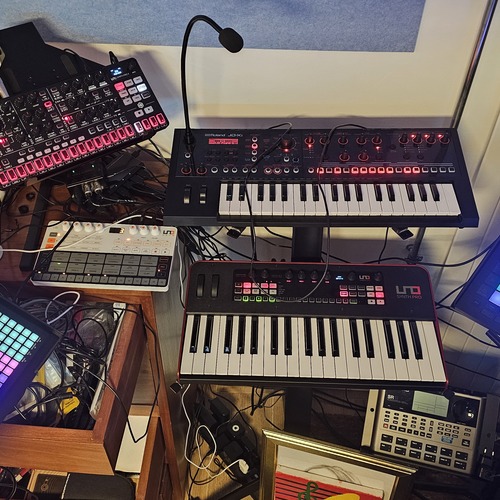
Roland JD-Xi Interactive Crossover Synthesizer
Avg price: $626.89
One of the better minikey options, even with its limitations
In a world of DAWless, before I had my JD-Xi, it was chaos. I needed an all-in-one synth; something I could build an entire song on. I didn't want a groovebox, though it probably could have worked. The JD-Xi allowed me to start with a drum track, selecting from solid 808/909/707/606/etc kits. I could put down a bass track from either of two digital or one analog synth tracks. Then I could add a lead. Then another track on that. If the JD-Xi didn't have the sounds I wanted, I could use MIDI outs to control other synths, though I needed a MIDI control box to control my four other synths.
It works. There is no "song mode", but there are work arounds. You can't add samples. Programming with deep menu dives is crazy. But there is "enough": enough control, enough knobs. The star of the show really are the drums.
I recommend it. Get it used. They are always available, though I've heard the keybed is fragile. I haven't had that problem.

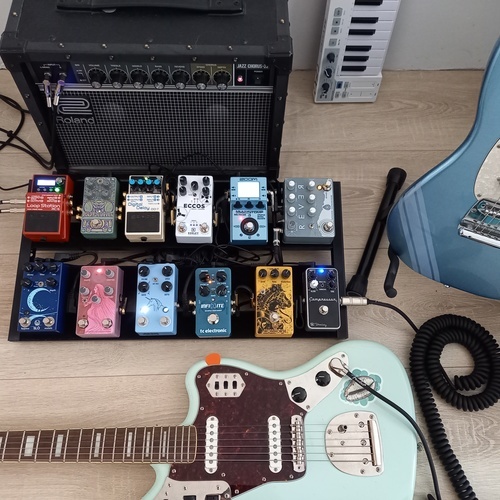
Neunaber Immerse Reverberator Mk II
Avg price: $257.00

Avg price: $126.56
About this setup
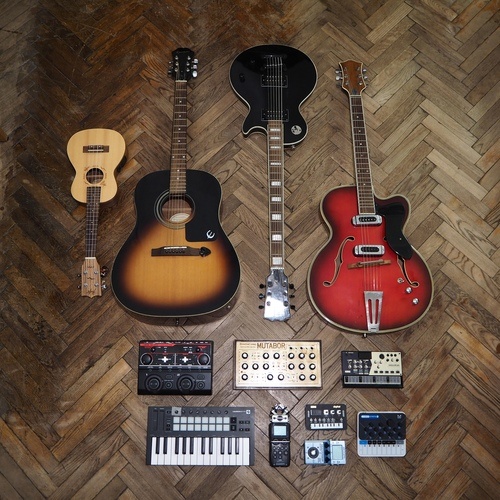
This gear photo by trixwagen features 7 pieces of gear, including Pioneer DJ & Dave Smith TORAIZ AS-1, Behringer K-2, and Korg Volca FM. The setup spans Keyboards and Synthesizers and Effects Pedals, with a mix of budget and standard pieces. Artists with this kind of gear are most often found in the Electronic, Rock, and Pop scenes.