

Pricing and availability
We compare 600+ stores and found this item at 1 store. Prices updated .




* Product prices and availability are updated by Equipboard every 24hrs and are subject to change. Equipboard may receive compensation for purchases made at participating retailers linked on this site. This compensation does not affect what products or prices are displayed, or the order of prices listed. For more information, please refer to our affiliate disclosure.
Description
In 1975, Peter Schmidt and Brian Eno created the original pack of Oblique Strategies cards, through thinking about approaches to their own work as artist and musician. The Oblique Strategies constitute a set of over 100 cards, each of which is a suggestion of a course of action or thinking to assist in creative situations. These famous cards have been used by many artists and creative people all over the world since their initial publication. Fifth edition 2001.
Videos

David Bruce Composer
Composing Hacks #2 - Brian Eno's Oblique Strategies
Composing Hacks #2 - Brian Eno's Oblique Strategies
David Bruce Composer
Brian Eno’s Unconventional Approach to Getting More Creative

Bloomberg Quicktake

Oblique Strategies

Danny Gregory
Brian Eno Oblique Strategies - An Oblique Unboxing - 6th Edition Peter Schmidt

palimpsest2011
Brian Eno - Oblique Strategies Limited Numbered Edition 2013

AAAAHHH! It's Darren Lock
Oblique Strategies

Audiopedia
Reviews
Owner Insights
We analyzed real musician discussions from forums and Reddit to find what players love, question, and tweak about Oblique Strategies: Over One Hundred Worthwhile Dilemmas.
Use cases and applications
-
Bands find Oblique Strategies helpful during recording sessions, often leading to innovative angles and successful song outcomes.
Source -
The 'fortune cookie' approach prompts a mental pause, aiding users in quickly refocusing on creative projects and offering a fresh perspective during mixing.
Source -
One user reported transformative results by halving the tempo of a remix after following a suggestion, showcasing the cards' potential to inspire unconventional solutions.
Source
User experience
-
Artists across disciplines, including visual arts and music, benefit from the abstract thinking encouraged by Oblique Strategies, aiding in overcoming creative blocks.
Source -
Some musicians carry printed flashcards of the strategies as a constant source of inspiration during song arrangement and creative processes.
Source -
Owners often craft personal decks from cardstock, enhancing the tactile experience and keeping ideas accessible during creative sessions.
Source
Critic Reviews
4.0 out of 5
Based on 0 Reviews and 1 Rating
Artist usage
Add artist

Used while making the Berlin Trilogy and 1. Outside - The Nathan Adler Diaries: A Hyper-cycle, all produced by Oblique Strategies co-inventor Brian Eno.

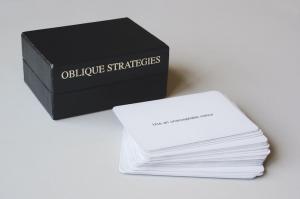
Developed by Eno and Peter Schmidt in 1975, as related in the official product description.

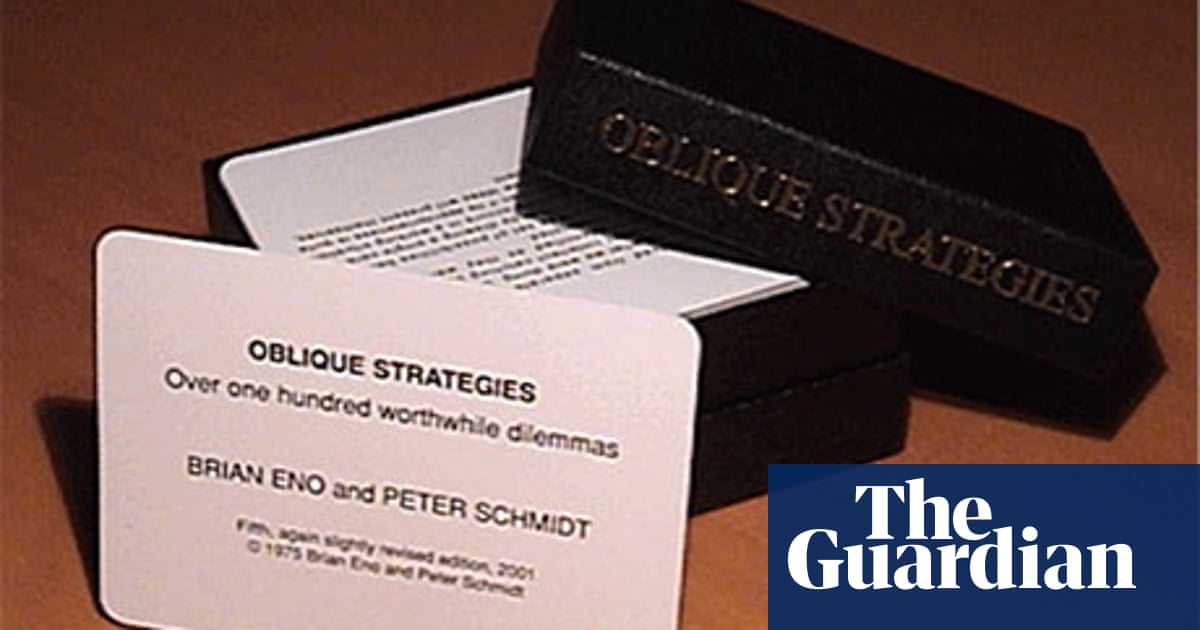
Byrne has used Oblique Strategies at least once while working with its co-inventor Brian Eno, as stated in this September 7, 2009 The Guardian article.
David Byrne thinks that "Brian's cards are funny and sometimes useful", but the rest of Talking Heads resented Eno's input.


Used during the making of Congratulations, as stated in this March 2, 2010 Brain Magazine interview.
English transcript of the video
Andrew: Originally, we wanted him [Brian Eno] to produce that track called "Brian Eno". [laughs] That didn't happen. The song is just... I think he's heard it by now, I think Brian Eno has heard it. It wasn't supposed to be offensive, you know.
The whole time we were in the studio, we had a deck, one of the series of the Oblique Strategies and we were comin' up—Pete Kember, Sonic Boom, had a notebook that he was taking notes in—we came up with "Obtuse Strategies" of our own, kind of like a take on his, but they were pretty silly.
Alister [Interviewer]: Do you have an example of your own strategy?
Andrew: The first one we wrote down was "Go fuck yourself." Yeah. [laughs]
French transcript provided from the article
ALISTER : Il y a un autre musicien anglais qui vous intéresse c'est Brian Eno. Il y a une chanson sur l'album qui porte son nom Est-ce que vous avez essayé de travailler avec lui ? Les paroles sont un peu ambiguës à son sujet (nda le texte est tout au plus ironique, brossant le portrait dun Eno excessivement gourouesque « Je vois bien quil est souriant/Mais quest-ce quil sait ?» etc...)
ANDREW : Au début on voulait qu'il produise cette chanson Mais finalement ça ne s'est pas fait Je pense qu'il est blessé maintenant Mais ce n'était pas censé être offensant.
ALISTER : Elle est un peu maligne quand même
ANDREW : Oui un peu On voulait juste que ça soit un moment un peu léger sur l'album. C'est une chanson marrante pour danser.
ALISTER : Est-ce que vous utilisez les « stratégies obliques » (nda jeu de cartes inventé par Brian Eno pour débloquer les crises d'inspiration artistique) ?
ANDREW : Oui. On avait ça en studio avec Sonic Boom. On a même nos propres stratégies qui s'appellent les « stratégies obtuses » qui sont assez ridicules (rires)
ALISTER : Vous avez un exemple ?
ANDREW : La première qu'on a écrite dit Go Fuck Yourself (rires) Mais on en a des meilleures
Ils cherchent
BEN : Je m'en rappelle plus
ANDREW : C'est des blagues en fait

Used during the making of Congratulations, as stated in this March 2, 2010 Brain Magazine interview.
English transcript of the video
Andrew: Originally, we wanted him [Brian Eno] to produce that track called "Brian Eno". [laughs] That didn't happen. The song is just... I think he's heard it by now, I think Brian Eno has heard it. It wasn't supposed to be offensive, you know.
The whole time we were in the studio, we had a deck, one of the series of the Oblique Strategies and we were comin' up—Pete Kember, Sonic Boom, had a notebook that he was taking notes in—we came up with "Obtuse Strategies" of our own, kind of like a take on his, but they were pretty silly.
Alister [Interviewer]: Do you have an example of your own strategy?
Andrew: The first one we wrote down was "Go fuck yourself." Yeah. [laughs]
French transcript provided from the article
ALISTER : Il y a un autre musicien anglais qui vous intéresse c'est Brian Eno. Il y a une chanson sur l'album qui porte son nom Est-ce que vous avez essayé de travailler avec lui ? Les paroles sont un peu ambiguës à son sujet (nda le texte est tout au plus ironique, brossant le portrait dun Eno excessivement gourouesque « Je vois bien quil est souriant/Mais quest-ce quil sait ?» etc...)
ANDREW : Au début on voulait qu'il produise cette chanson Mais finalement ça ne s'est pas fait Je pense qu'il est blessé maintenant Mais ce n'était pas censé être offensant.
ALISTER : Elle est un peu maligne quand même
ANDREW : Oui un peu On voulait juste que ça soit un moment un peu léger sur l'album. C'est une chanson marrante pour danser.
ALISTER : Est-ce que vous utilisez les « stratégies obliques » (nda jeu de cartes inventé par Brian Eno pour débloquer les crises d'inspiration artistique) ?
ANDREW : Oui. On avait ça en studio avec Sonic Boom. On a même nos propres stratégies qui s'appellent les « stratégies obtuses » qui sont assez ridicules (rires)
ALISTER : Vous avez un exemple ?
ANDREW : La première qu'on a écrite dit Go Fuck Yourself (rires) Mais on en a des meilleures
Ils cherchent
BEN : Je m'en rappelle plus
ANDREW : C'est des blagues en fait


Used while making Mystic Familiar, as featured in this March 6, 2020 Phoenix New Times interview.
Eno’s deck of cards served as a kind of collaborator on Mystic Familiar, helping Deacon transition into being a one-man band again.
“I did most of the production myself, so that could be a real nerve-wracking process, wondering if I’ve gone down the right path or making the right choice,” Deacon says. “The cards are a good way to visualize there being another person in the room. If I agreed with the card, I would incorporate that idea into the next step of the process. If I disagreed with the card, I would still try to find some way of using it. I’d try to understand why I thought it didn’t apply or how it wasn’t applicable. It’s the same way you’d be if there was a person there: You have to have a conversation about why you thought it was a bad idea.”
(...) “I was a real fan and follower of John Cage’s philosophies in college, and Eno’s cards seemed to embrace those,” Deacon says. “Chance has been a part of my process since the very beginning. I love leaving things to chance and seeing what can occur.”


Used while making Wolfgang Amadeus Phoenix, as stated by bandmate Thomas Mars in this April 29, 2009 Earfarm "Band of the Week" feature.
Still, inspiration wasn’t limited only to analog synths and longtime collaborators; Mars and company also employed the card game Oblique Strategies early and often throughout the Amadeus sessions.
Oblique Strategies were created in 1975 by Brian Eno and Peter Schmidt (a German artist), a set of over 100 cards each containing a cryptic phrase (of which there are over 100) meant to solve a small dilemma or break a creative stalemate. Examples include “State the problem in words as clearly as possible” and “What to increase? What to reduce?” Eno actually used these cards regularly during his early recording sessions with the Talking Heads, and it’s probably not coincidental that more than a few of David Byrne’s lyrics could pass as Oblique Strategies themselves. Mars wasn’t simply content to go by Eno’s version of the game, however, and in characteristically playful fashion eventually created his own set of cards as the sessions for Amadeus progressed.
“I’m a lazy guy and I always wanted the card that says ‘take a break’,” Mars laughed. “So I was always like, ‘come on, give me that one!’ I was so tired all the time and it never showed up. So, we started our own cards as a joke and it worked in a way, it made us more responsible, sometimes it’s hard to focus and it helped.”

Used while making Wolfgang Amadeus Phoenix, as stated by bandmate Thomas Mars in this April 29, 2009 Earfarm "Band of the Week" feature.
Still, inspiration wasn’t limited only to analog synths and longtime collaborators; Mars and company also employed the card game Oblique Strategies early and often throughout the Amadeus sessions.
Oblique Strategies were created in 1975 by Brian Eno and Peter Schmidt (a German artist), a set of over 100 cards each containing a cryptic phrase (of which there are over 100) meant to solve a small dilemma or break a creative stalemate. Examples include “State the problem in words as clearly as possible” and “What to increase? What to reduce?” Eno actually used these cards regularly during his early recording sessions with the Talking Heads, and it’s probably not coincidental that more than a few of David Byrne’s lyrics could pass as Oblique Strategies themselves. Mars wasn’t simply content to go by Eno’s version of the game, however, and in characteristically playful fashion eventually created his own set of cards as the sessions for Amadeus progressed.
“I’m a lazy guy and I always wanted the card that says ‘take a break’,” Mars laughed. “So I was always like, ‘come on, give me that one!’ I was so tired all the time and it never showed up. So, we started our own cards as a joke and it worked in a way, it made us more responsible, sometimes it’s hard to focus and it helped.”


Stipe recommends the deck at the end of this March 23, 2017 The Creative Independent interview. It was previously mentioned in the lyrics of "Diminished", while a fictional oblique strategy from the film Slacker is quoted in "What's the Frequency, Kenneth?".
"Diminished"
I'll consult the I Ching / I'll consult the TV / Ouija, Oblique Strategies / I'll consult the law books for / Precedents / Can I charm the jury?
"What's the Frequency, Kenneth?"
Richard said, "Withdrawal in disgust is not the same as apathy"
The Creative Independent, March 23, 2017, "Michael Stipe on having multiple creative lives"
Michael Stipe recommends:
- Our Lady of the Flowers by Jean Genet
- Those Who Love Me Can Take The Train directed by Patrice Chéreau
- Wire’s 154, and Pylon’s Gyrate Plus
- Oblique Strategies by Brian Eno and Peter Schmidt
- My own tumblr, which serves as my own ongoing mood board for basically everything.

Used while making Wolfgang Amadeus Phoenix, as stated by Mars in this April 29, 2009 Earfarm "Band of the Week" feature.
Still, inspiration wasn’t limited only to analog synths and longtime collaborators; Mars and company also employed the card game Oblique Strategies early and often throughout the Amadeus sessions.
Oblique Strategies were created in 1975 by Brian Eno and Peter Schmidt (a German artist), a set of over 100 cards each containing a cryptic phrase (of which there are over 100) meant to solve a small dilemma or break a creative stalemate. Examples include “State the problem in words as clearly as possible” and “What to increase? What to reduce?” Eno actually used these cards regularly during his early recording sessions with the Talking Heads, and it’s probably not coincidental that more than a few of David Byrne’s lyrics could pass as Oblique Strategies themselves. Mars wasn’t simply content to go by Eno’s version of the game, however, and in characteristically playful fashion eventually created his own set of cards as the sessions for Amadeus progressed.
“I’m a lazy guy and I always wanted the card that says ‘take a break’,” Mars laughed. “So I was always like, ‘come on, give me that one!’ I was so tired all the time and it never showed up. So, we started our own cards as a joke and it worked in a way, it made us more responsible, sometimes it’s hard to focus and it helped.”

Used while making Wolfgang Amadeus Phoenix, as stated by bandmate Thomas Mars in this April 29, 2009 Earfarm "Band of the Week" feature.
Still, inspiration wasn’t limited only to analog synths and longtime collaborators; Mars and company also employed the card game Oblique Strategies early and often throughout the Amadeus sessions.
Oblique Strategies were created in 1975 by Brian Eno and Peter Schmidt (a German artist), a set of over 100 cards each containing a cryptic phrase (of which there are over 100) meant to solve a small dilemma or break a creative stalemate. Examples include “State the problem in words as clearly as possible” and “What to increase? What to reduce?” Eno actually used these cards regularly during his early recording sessions with the Talking Heads, and it’s probably not coincidental that more than a few of David Byrne’s lyrics could pass as Oblique Strategies themselves. Mars wasn’t simply content to go by Eno’s version of the game, however, and in characteristically playful fashion eventually created his own set of cards as the sessions for Amadeus progressed.
“I’m a lazy guy and I always wanted the card that says ‘take a break’,” Mars laughed. “So I was always like, ‘come on, give me that one!’ I was so tired all the time and it never showed up. So, we started our own cards as a joke and it worked in a way, it made us more responsible, sometimes it’s hard to focus and it helped.”
Album Usage
The Oblique Strategies: Over One Hundred Worthwhile Dilemmas has been featured on the following albums:
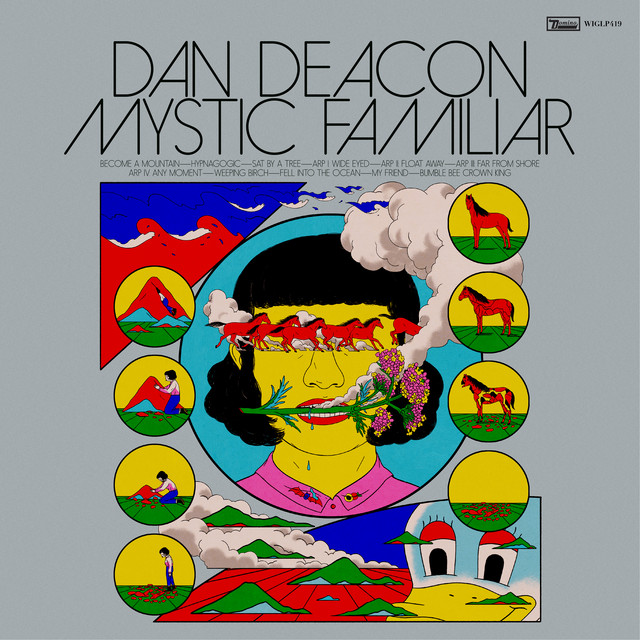
Mystic Familiar
Dan Deacon (2020)

Congratulations
MGMT (2010)
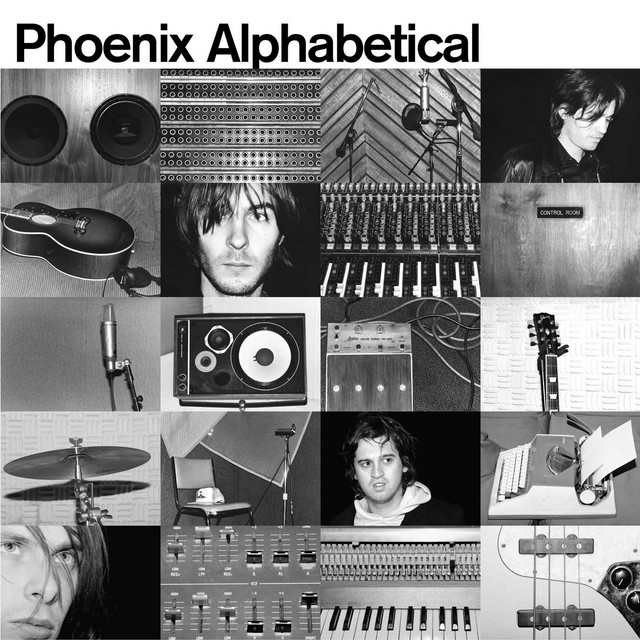
Alphabetical
Phoenix (2004)
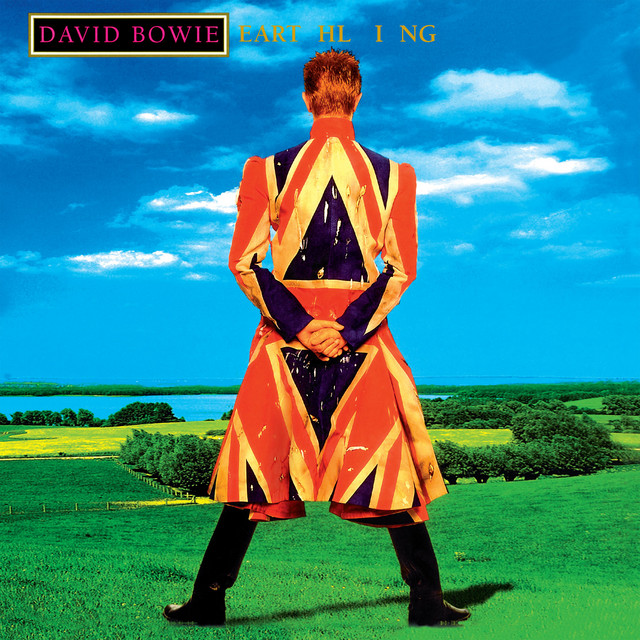
Earthling
David Bowie (1997)
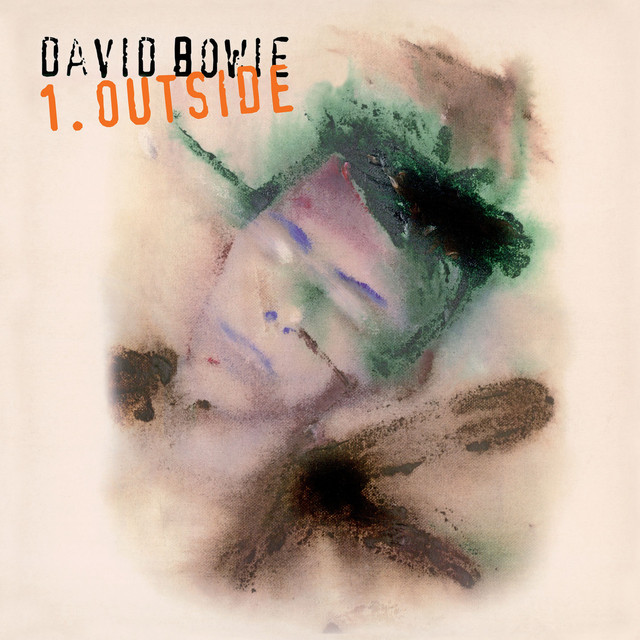
1. Outside (The Nathan Adler Diaries: A Hyper Cycle)
David Bowie (1995)
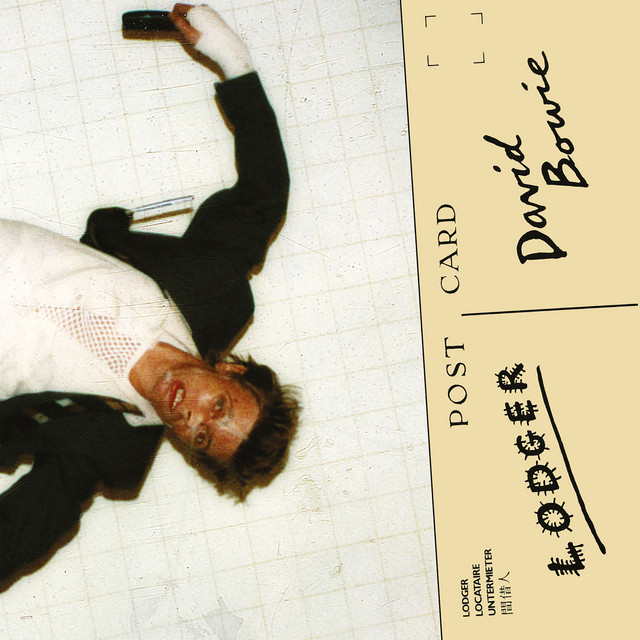
Lodger (2017 Remaster)
David Bowie (1979)
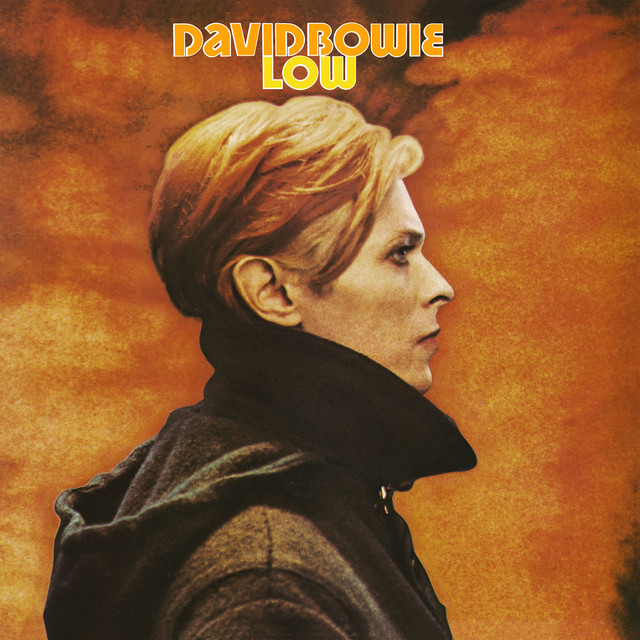
Low (2017 Remaster)
David Bowie (1977)
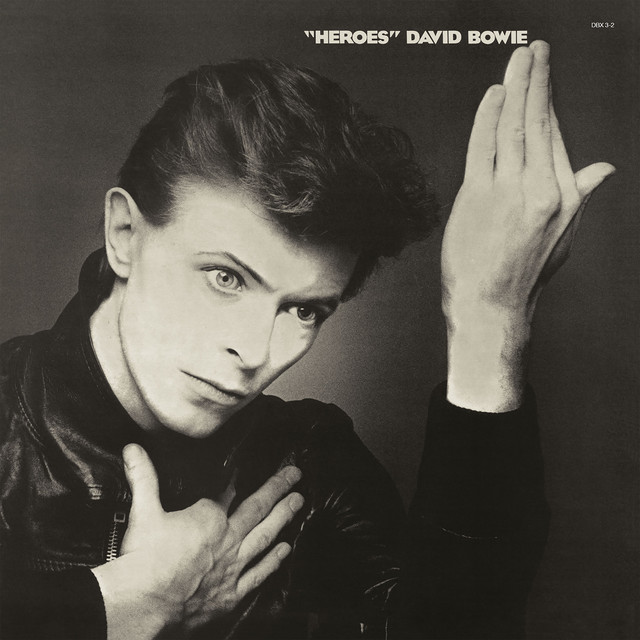
"Heroes" (2017 Remaster)
David Bowie (1977)
Genre Usage
Based on how artists on Equipboard use this gear, it is most commonly found in the following genres.
More Musical Gifts


Community setups


Similar


Gear Guides









Most Popular Brands
-
Added to Equipboard on by
 eyeseeofficial
GearIQ 161640
-

