
kenneth_martin_gammell's Reviews
11 reviews Back to kenneth_martin_gammell's Equipboard
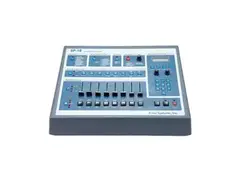

Revolutionary Drum Sampler and more
Intelligently designed, one could quickly load samples and play them on velocity sensitive finger triggers. I would create a self contained groove by sampling a bass note and guitar chords. Best of all, you could build your own drum set with the type of drum sounds you preferred, not just what came in the box. Even so, you had available a whole pile of internal percussion sounds to play with. The SP-12 had a flaw when trying to change the pitch of percussive samples, it added this grungy digital noise that became it's own cool sound effect. This flaw became popular and was exploited in recordings. Independent outputs were also a bonus. I got rid of mine once the memory started going.
Great for multi-timbral layering
I use a great deal of horn, organ, and string samples. But they lack the sharp attack and expressiveness you wish for. Especially strings, they usually have a soft attack and sound mushy. Horns also can have a weak attack when you want a real percussive stab. Enter the digitally sharp attacks to strings and horns using my TX802. The combination of real instrument samples and digital padding creates a nice full sound that covers the frequency spectrum. My digital horns have velocity sensitivity to control how bright they sound, making them more expressive. I also have a multi-timbral organ combination that combines the full body B3 samples with a bright and punchy digital organ.
The Ultimate Multi-Effects Unit
The 4 In 4 Out effects can be configured in every way under the sun. Go 1 instrument In through all 4 effects. Or put 2 stereo instruments through 2 effects with individual stereo outputs, or just one stereo output if you are short on mixer channels. Or have 4 sends from my mixer to 4 effects out, or stereo mix. And on and on. The best thing about this contraption are the lush and full reverbs. I ran a violin through the reverb and it added power and body to the sound. Percussion reverbs go from natural rooms to hard gates. Even reverse reverb! MIDI controllers can change parameters in realtime, like EQ cutoff, or anything else like delay time. I purchased mine in the early 1990's. Later models were less bulky and had a better guitar amp preset. I still run my keyboards through it when playing live.
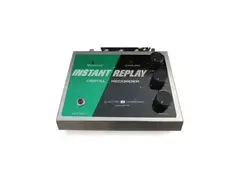
Hard to Categorize Primitive Sampler
Before MIDI was more common, Electro-Harmonix created this inexpensive sampler designed as a pedal effect. It came with a percussion trigger pad, and was ideal for recording some kind of percussive sound sample and triggering it live. However, you could also plug in your keyboard, using a raw sine wave, and play the sample as notes! I would sample an oboe, violin, or my voice. It was primitive and monophonic, but gave me a headstart into the digital sampling world back in 1983.

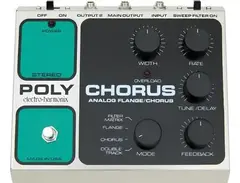
Well built analog chorus
With the ability to be both a chorus and a flanger, I made great use of this over the years.
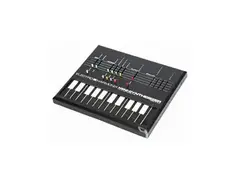
What a toy!
Because the mini-synth was touch sensitive, I would tap on the body of the synth to trigger the envelope, making it a great percussion effect. I also enjoyed the unique resonance, especially on bass notes, an electro-growl effect. Having little money back then (1980), this was my chance to bring the synthesiser sound to my band. The last time I used this was to create cheesy science fiction sounds for the TV show "Let's Bowl!" in 2001.
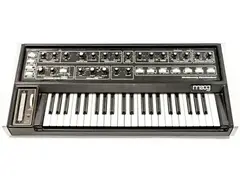
Versatile for experiments
All possible controls and custom adjustments were made available on this classic machine. I used to run all sorts of sounds through the audio input to create science fiction sounding effects. I used the ribbon not only to add expressiveness but also manually create arpeggio by playing the ribbon like a violin string. This was my first Moog and eventually got too beat up over time.
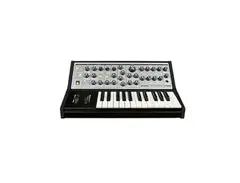
Could have more preset space
My Moog Source only can hold 16 presets at a time. I bought this as a backup, and felt that with new cheap memory space this baby could hold a few more presets at one time.
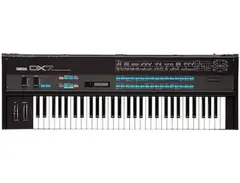
1st Generation!
I found out the hard way that the keys (which break very easily) were a different design from subsequent DX7s. I spent 100s of hours creating custom patches, still some of my favourite.
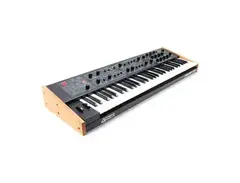
Baby Prophet 5
Doesn't have the more complex modulation options as the Prophet V, but still has that classic analog strings sound.
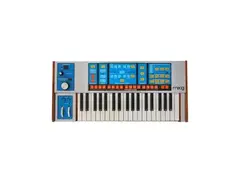
First Moog with programmable presets
Has the classic wailing lead synth sound. Also used for traditional fat bass. No MIDI!