

Pricing and availability
We compare 600+ stores and found this item at 1 store. Prices updated .
Store
Reviews
Price




Average Price: $1,950
High-end/Boutique
$500
$1501+
Price Tier
Budget
Standard
High-end
* Product prices and availability are updated by Equipboard every 24hrs and are subject to change. Equipboard may receive compensation for purchases made at participating retailers linked on this site. This compensation does not affect what products or prices are displayed, or the order of prices listed. For more information, please refer to our affiliate disclosure.
Description
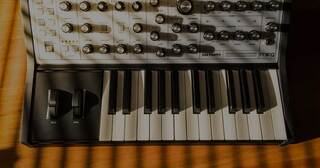
Step into the world of vintage synthesis with the Moog Source, a synth that truly revolutionized the music industry in its time. Produced from 1981-1985, the Moog Source introduced the world to the convenience of patch memory storage, making it a game-changer in the synth realm. This was also the first Moog to incorporate a data wheel, a feature that made editing parameters a breeze. Swapping out knobs and sliders, the Source uses small membrane buttons, delivering a smooth, streamlined user experience. The synth also boasts the iconic 24 dB/octave Moog filter, lending your music the legendary Moog sound that's revered by musicians worldwide.
Key Features:
- First Moog to offer patch memory storage.
- Features a data wheel for easy editing of parameters.
- Uses small membrane buttons instead of individual knobs and sliders.
- Contains the iconic 24 dB/octave Moog filter.
Product specs
| Brand | Moog |
| Model | Source Monophonic Analog Synthesizer with Patch Memory |
| Finish | Blue |
| Year | 1981 - 1985 |
| Made In | United States |
| Categories | Analog Synths, Keyboard Synths |
| Analog / Digital | Analog |
| Key Size | Full Size |
| Keyboard Action | Synth Action |
| Number of Keys | 37 Keys |
| Polyphony | 1 Voice |
FAQs
-
Is the Moog Source synthesizer polyphonic or monophonic?
-
The Moog Source is a monophonic synthesizer, meaning it can only play one note at a time, which is ideal for bass lines, leads, and solos.
-
What are the standout features of the Moog Source's sound engine?
-
The Moog Source features a classic analog sound engine with two voltage-controlled oscillators (VCOs), a voltage-controlled filter (VCF), and patch memory, allowing for rich, warm sounds with the convenience of saving presets.
-
How many keys does the Moog Source have, and what is their size?
-
The Moog Source has 37 full-size keys with a synth action, providing a responsive and comfortable playing experience.
-
Can I save and recall patches on the Moog Source?
-
Yes, the Moog Source was one of the first synthesizers to offer patch memory, allowing you to save and recall your custom sounds easily.
-
What type of music is the Moog Source best suited for?
-
The Moog Source is versatile but particularly excels in genres that benefit from its warm analog tones, such as electronic, synth-pop, and progressive rock.
Videos

RetroSound
Moog Source Analog Synthesizer (1981)
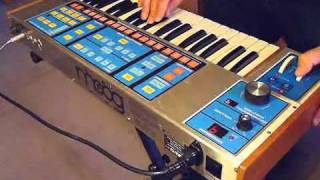
Moog Source Analog Synthesizer (1981)
RetroSound
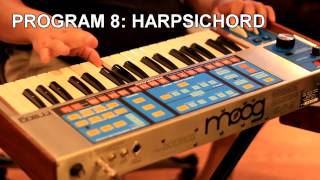
Moog Source - the 15 classic factory patches

SynthMania
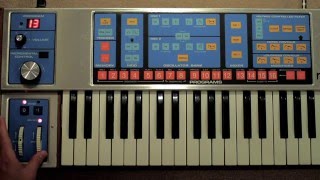
Moog Source Magic

Calvin Cardioid
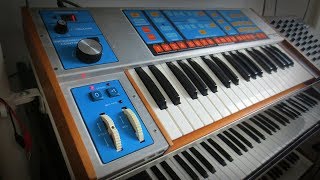
Moog Source Analog Synthesizer (1981) *Twenty Sounds*
RetroSound
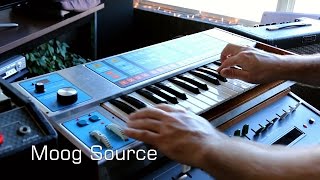
Erik Deutsch demos his MOOG SOURCE synthesizer

Erik Deutsch
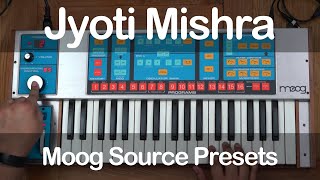
Moog Source Presets by Jyoti Mishra

Jyoti Mishra
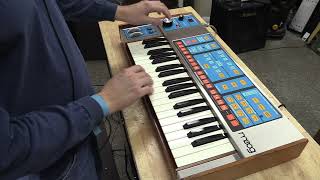
Dave's Moog Source Demo (by synthpro)

synthpro
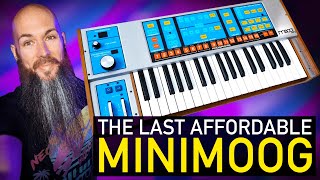
Unlocking the Mystery of this Insanely Rare Minimoog update | MOOG SOURCE (Scum Night)

Vulture Culture

Bob Moog Foundation 2020 Trifecta Raffle: The Moog Source

moogfoundation
Moog Source - Tour and noodle

100 Things I Do
Reviews
PROS
-
Classic Moog tone with a unique soul and feel
-
More affordable compared to vintage or reissue models
-
Simplified control with one value knob makes it user-friendly
-
Spill-safe surface design for durability
-
Powerful filter easily accessible for shaping sound
-
Utilizes legendary CEM3340 VCO for rich, fat sound
-
Versatile for both lead synth and traditional fat bass sounds
-
Preferred keybed feel over competitors like the Pro One
-
Creamier sound in many instances compared to other synths with CEM3340
CONS
-
Lacks MIDI functionality
-
Only two oscillators, compared to three in some competitors
-
Cannot modify two parameters simultaneously due to single knob design
Owner Insights
We analyzed real musician discussions from forums and Reddit to find what players love, question, and tweak about Moog Source Monophonic Analog Synthesizer with Patch Memory.
Features and functionality
-
The Moog Source has an endless knob that provides a unique tactile experience, preferred by some users over traditional all-knob designs.
Source -
The Moog Source's oscillator sync allows modulation wheel use to create a distinct wah wah effect, a feature utilized by The Rentals.
Source -
The sequencer lacks quantization and step input, leading to timing inconsistencies and making it less practical for precise sequencing.
Source -
The Moog Source's sequencer resolution is unpredictable, making it difficult to synchronize accurately with other gear like the TR-808.
Source
Mods and upgrades
-
Owners have successfully replaced the problematic membrane panel with a mechanical switch panel, maintaining the original appearance while enhancing functionality.
Source
Use cases and applications
Setup and maintenance
-
Membrane buttons are prone to failure due to early 80s technology, but modern replacements and mods with micro switches improve reliability.
Source
Comparisons
-
Users find the Source to deliver a sound closer to a vintage Minimoog than newer models like the Sub37, with added live performance benefits.
Source -
Users note that the Moog Source can achieve similar sounds to the Moog Prodigy, as both were used by bands like The Hippos for ska-style music.
Source -
The Source's sequencer is less efficient compared to standalone sequencers like the Metropolis or Digitakt, which offer more reliable performance.
Source
Software and compatibility
-
An Encore MIDI kit and filter CV upgrade allows integration with modern DAWs like Ableton through the CTRLR app, enhancing control over the vintage synth.
Source -
For budget-friendly options, users recommend pairing a MIDI keyboard with free VSTs like Vital, U-he's Tyrell N6, and discoDSP's OB-Xd for similar sonic capabilities.
Source
4.0 out of 5
Based on 2 Reviews and 9 Ratings

417
Is it really a Moog, or a toy?
Hey that's a relevant question for everyone looking at it at a distance...
Actually, when you open the owner's manual, you do have the impression that Moog wanted to sell synths that would be easier to use for people starting of on synthesizers. So they only left in one single value knob in there, and they put in a spill safe surface, for the clumsy people...
But when you start using this machine, it's easy to get in touch with the Moog sound, with the very powerful filter, accessible with that value knob :P So is it really usable? Of course! Well you don't have one value knob for each parameter, but you can easily switch parameters just by a press, and keep your hand on that dial, but at the same time you can not modify two values at once. Sooooo... Well you have the pitch bend and the mod wheel, what is there to complain about?
Ok so compared to a Mini Moog, there are two oscillators instead of 3, but here we're talking about the CEM3340 (which came back into production not so long ago). CEM3340 is a legendary VCO,. Every single Synth that used the 3340 is legendary; EVERY ONE OF THEM; Roland Jupiter series, Prophet 5 / 10, Pro One, SH-101 / MC-202, Oberheim OB-8 / OB-Xa, Memorymoog, Voyetra 8...
It sounds fat, powerful, in fact you will never play this on maximum volume form the unit, it is that loud, similar to the Pro One in that regard. What curious is that it doesn't have the same tonality as the Pro One. I find the Pro One to sound rougher / grittier most of the time. The Source has a creamier sound in many instances. I also prefer the keybed of the Source over the Pro One, but really we are talking about two mono synths using the CEM3340 but with a totally different implementation and very different filter capabilities and sound. So you may like one or the other, but liking both means you have a wide taste.
To be enjoyed.

First Moog with programmable presets
Has the classic wailing lead synth sound. Also used for traditional fat bass. No MIDI!
Artist usage
Add artist

The classic "Moog Source" can be spotted in Calvin Harris' studio.


Used for bass on Eliminator, as stated by engineer Terry Manning in this February 15, 2005 ProSoundWeb forum reply.
[Tue, 15 February 2005 09:20]
tenaciousJay wrote on Mon, 14 February 2005 12:05
Terry I wonder if you could comment on the guitar sound in Eliminator. What I always heard it was all Rockman - but was there an amp mixed in as well? And thoughts on the direction of that album as a whole - it certainly was a huge change in sound, even if there were hints of it on earlier albums.
The full story of the making of Eliminator (the politics, the chicannery, the technical aberrations, the high social drama, the exodus, the payback) is one that I cannot tell. Even if I could, there certainly wouldn't be room for it here! It probably won't even make it into "the book" (or the movie). Just don't forget that truth is often stranger than fiction!
However, I will address certain specific musical or technical issues, and I'll begin with your guitar amp question.
THERE WAS ABSOLUTELY NO ROCKMAN USED ON THIS RECORDING!
Not a little bit, not a tiny bit; NOT ANY. I don't know how these stories get started. Billy may indeed have used Rockman at a later date, after I left the situation, but I did not allow it when I was working with him. He did bring one in to try, but I was not satisfied with the sound, compared to an amplifier.
The amp used, almost exclusively, on Eliminator was a Legend. This was about a 50 watt hybrid unit, employing a tube/valve preamp, and a transistor power amp. This is the amp which has a finished wood case, and a rattan-type cane grill. It has one 12" Celestion speaker. Legend were later bought by, or at least distributed by, Gibson, but they were independent when we started using them. I still have this amp; it is almost new. A couple of years ago I plugged one of the Eliminator guitars into it, just to see...there was the sound!
The guitars were custom built by Dean. Dean were out of Chicago, and were trying to break into the high end (a la Jackson, PRS) market. They were very nice, albeit different, instruments. Subsequently however, they got a contract with Sears to make guitars, so they opted for the big bucks, Korean manufactured, low end market instead. But the ones we used were very nicely made. There were two which we employed. One was somewhat like a cross between a Flying-V and a Moderne shape, very long "ears," and the other was a sort of a warped, pointy Stratocaster-y shape. Both guitars had a single DiMarzio Super Distortion high output pickup, and almost no controls. I don't think there is even a tone control...what would you need one for? They have big, heavy, brass bridge/tail pieces bolted into the body. These guitars were very live, very resonant, and would verge on resonant feedback at all times; they were also very hard to keep in tune because of this. But they were always alive. Billy has the first one mentioned, and he gave me the latter, which I still have.
The guitar was recorded with basically only one setup; one amp (Legend), one speaker (12"), one guitar (Deans, the two were almost exactly the same), one mic (AKG 414B-ULS, I still have it) in one position (about 5" from the cone, placed at a slight angle off axis), one mic pre (the SpectraSonics console). 98% of ALL guitar on this album, whether lead or rhythm was done this way. Any variations were from the player himself, who, remember, did not even have a tone control. That's how good Billy was back then. We did use very briefly a small amp by Ross, but we didn't like it much, and I think only a tiny part or two was kept from this, if any.
The rhythm guitars were done in a precursor-to-Protools style. Short phrases were played, and then double tracked, onto one set of tracks, and then the chord change/next phrase was played on a second set of tracks. This allowed a seamless transition between changes; since the Deans were so close to feedback at all times (acoustically, through the fairly loud JBL monitors), we couldn't even lift the fingers to change chords! Then I would trim the edges of each section by punching in and out to silence at the beginnings and ends of the phrases (somewhat analogous to "trimming the region" today). This method also "eliminated" to a degree the loud harmonic squeaks between chord changes. The punch in/out points, if done exactly perfectly, made for a primitive cross fade of probably 10-20 ms, and ended up sounding very different as rhythm guitar, sort of like a big train rolling down a track, almost out of control; without knowing how it was done, one wouldn't really realise why it was different.
For the leads, as always, there was a lot of punching done.
The bass was mostly played either by Billy or by me, and was either a bass instrument, or a Moog Source (the Source was a Mini Moog [rhymes with 'Vouge'] analogue synth with digitally controlled parameters...I still have this, too). Synth chords were played on a Memory Moog (polyphonic Mini).
Billy sang great, different vocals, as usual, and the harmonies were done either by Jimmy Jamison or by me.
There are a MILLION more things which could be told about this distinctive album, but as mentioned, most of it is probably better left unsaid. But one interesting thing, at least to me, was the recording of "Legs." We had tried it a couple of ways unsuccessfully at Ardent, so I decided to try a new approach. I had a 24 track studio in my attic at home, so I took Billy's lead guitar and vocal home on a 1/2" two track L/R ("samples"). I recut the entire track myself, and then hand flew in Billy's parts onto the track. This meant careful timing of the play button on my MCI 1/2", for each and every phrase, as after a few seconds, they would drift out of sync. I mixed it there through my Soundcraft 1200 console (these were also the mic pre's) onto the MCI 1/2". The multitrack was also the Soundcraft 2" machine, which I really loved. Then I did a totally different version, which became the long "dance mix" later released to clubs, and it is now included in the new box set. Later, I saw a review of this dance version credited, to Jellybean Benitez ...go figure!
Anyway, that's a lot about Eliminator for now. Thanks for your interest!
Terry


The Moog Source can be seen in Studio 13, and in the documentary Bananaz (Gorillaz). Damon Albarn plays the Moog Source here on Friends of P (The Rentals) on Taratata with Matt Sharp https://mytaratata.com/taratata/129/blur-matt-sharp-friends-of-p-1996 The Moog Source is on the song Movin'On ( Blur album) and All We Want (Blur- 13 B-Sides)
.jpeg?v=1784214915)
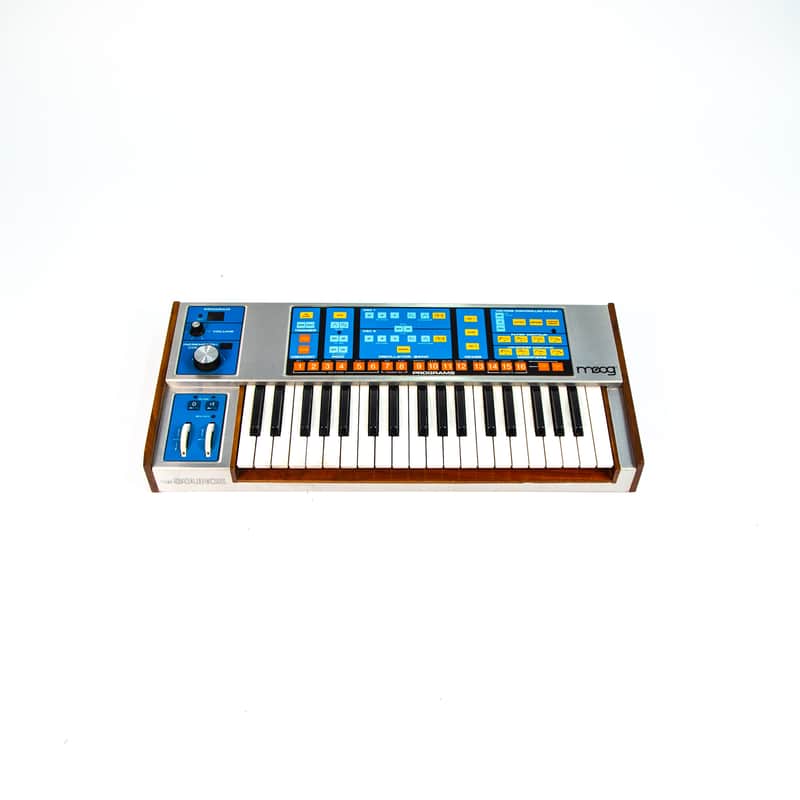
This Moog Source was Owned By Mark Hoppus Of blink-182.
A killer piece from Mark's private collection.

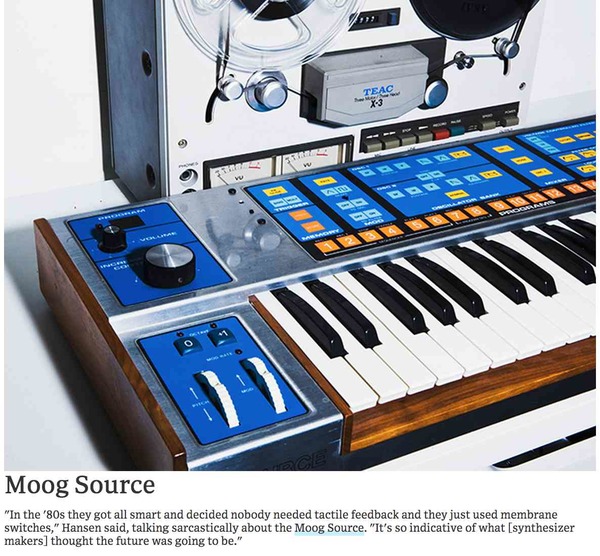
"In the '80s they got all smart and decided nobody needed tactile feedback and they just used membrane switches," Hansen said, talking sarcastically about the Moog Source. "It's so indicative of what [synthesizer makers] thought the future was going to be." – Wired Magazine


According to this article, Bernard used a Moog Source for the synth bass on "Blue Monday."


In a YouTube video titled "King Crimson – Three Of A Perfect Pair - Live In Japan 1984," Tony Levin is seen using a Moog Source synthesizer at the 16:30 mark during the backstage segment. The Moog Source was also used in tracks like "Model Man" and "Industry" from the 1984 album "Three of a Perfect Pair" by King Crimson. This video was recorded at Kani Hoken Hall, Tokyo on April 28, 1984

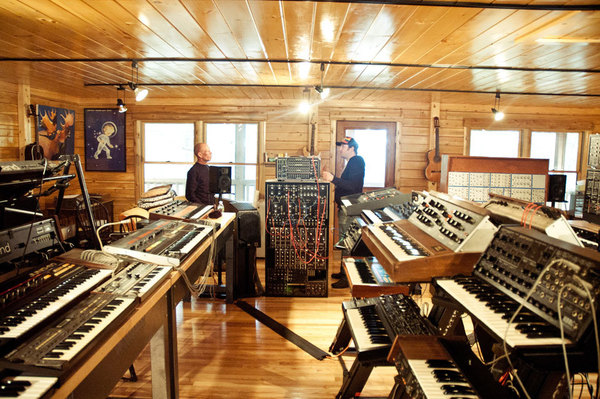
The Moog Source can be seen in the lower right rack of synths in this photo of Vince Clarke's studio.

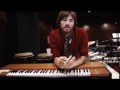
the Moog can be seen 3:36 into this video. This video was shot inside Air's Atlas Studio in Paris. Courtesy of The Gardian Uk for the documentary.


Used on Lite Me Up, as specified in Herbie Hancock’s Electronic Instrument Glossary from September 14, 2016.
Moog Source – A monophonic analog synthesizer that was the first synthesizer to offer patch memory storage. Herbie used this instrument on his 1982 album Lite Me Up.


Key lists the Moog Source as one of the synths he has used in an interview with Reverb.com
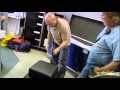
In 1980, Key would join the new wave band Images in Vogue as a drummer, gaining access to a Sequential Circuits Pro One and Prophet 5, an ARP Pro Soloist, a Moog Source, the Syncussion, and all sorts of drum machines.

Album Usage
The Moog Source Monophonic Analog Synthesizer with Patch Memory has been featured on the following albums:
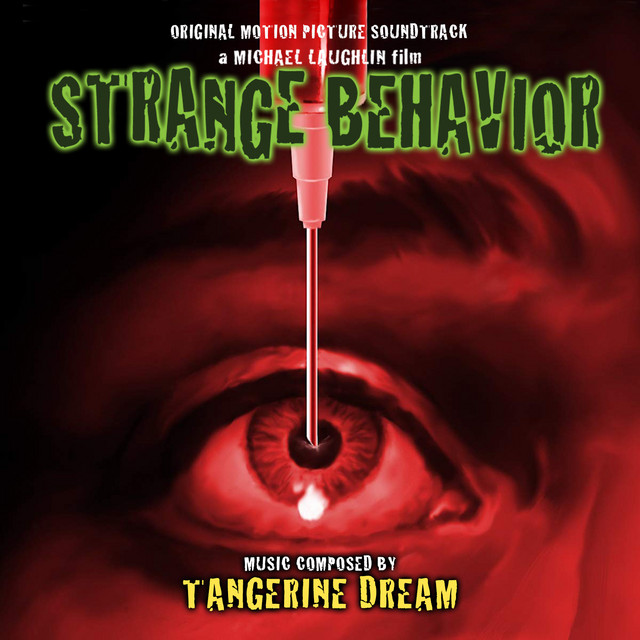
Strange Behavior: Original Soundtrack
Tangerine Dream (2022)
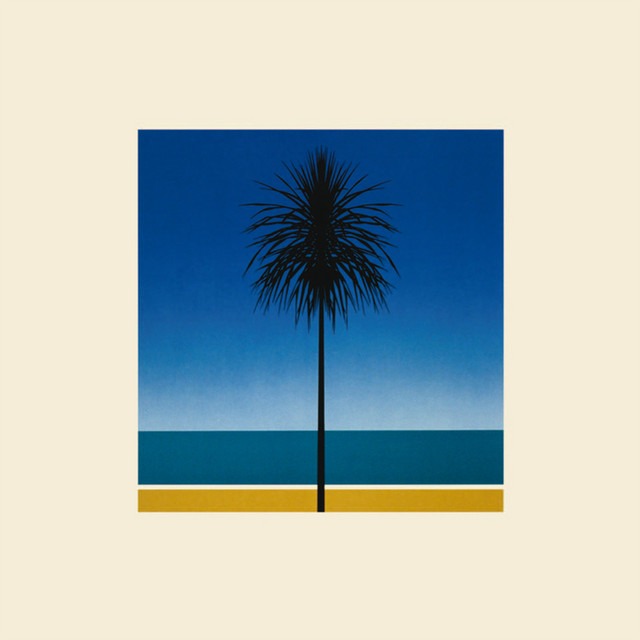
The English Riviera
Metronomy (2011)
Geography (limited bonus)
Front 242 (2004)
Three of a Perfect Pair
King Crimson (1984)

Blue Monday
New Order (1983)
Eliminator
ZZ Top (1983)
Oh No! It's Devo
Devo (1982)
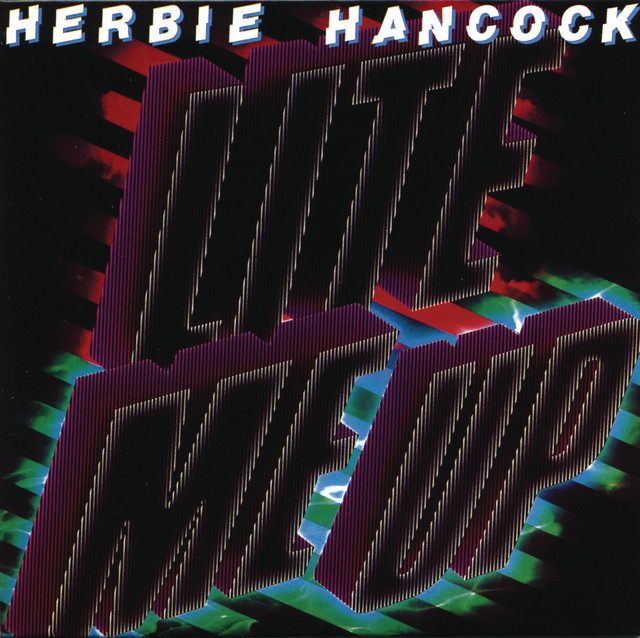
Lite Me Up
Herbie Hancock (1982)
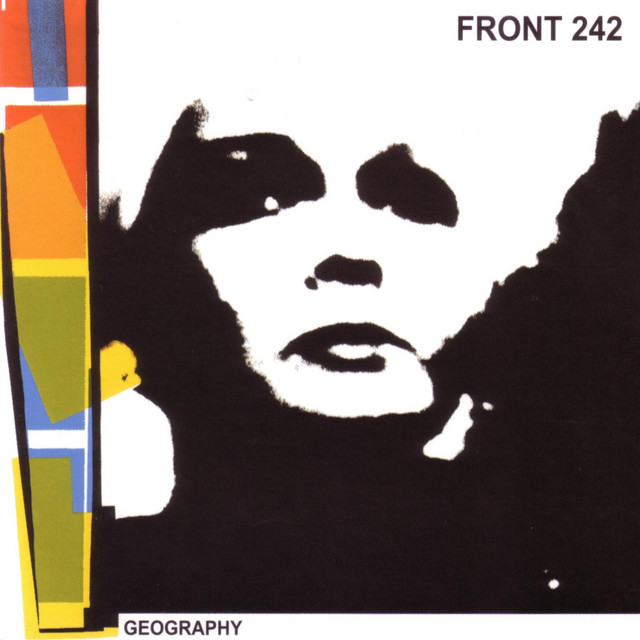
Geography (2004)
Front 242 (1982)
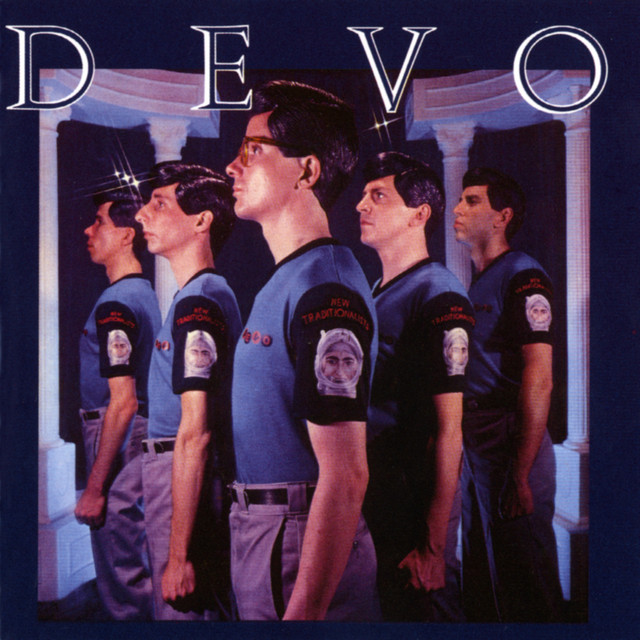
New Traditionalists
Devo (1981)
Genre Usage
Based on how artists on Equipboard use this gear, it is most commonly found in the following genres.
Used With
Based on how musicians on Equipboard use Moog Source Monophonic Analog Synthesizer with Patch Memory, it is most commonly used with the following gear.

-s.webp?v=1784041053)


Similar
Add recommendation1 alternative for Moog Source Monophonic Analog Synthesizer with Patch Memory, curated by the Equipboard community.

The VCOs of The River are based on the Moog Source, as specified on Sequencer.de: https://www.sequencer.de/blog/the-river-synthesizer-by-baloran/29530
- 8 voice, 2 VCO based on the Moog Source but a lot more advanced – so this is a lot more.
More Moog Synthesizers

$999.00 - $1,084.00
in Synthesizers Rank


-m.webp?v=1784300295)
$1,100.00
in Synthesizers Rank


$1,486.49 - $1,899.00
in Synthesizers Rank


-m.webp?v=1784300920)
$1,709.10 - $1,899.00
in Synthesizers Rank


$3,999.00 - $4,999.00
in Synthesizers Rank


$350.00
in Synthesizers Rank


$6,600.00 - $10,444.00
in Synthesizers Rank


$52.00 - $780.80
in Synthesizers Rank


-m.webp?v=1784300359)
$348.50 - $399.00
in Synthesizers Rank


$800.00
in Synthesizers Rank


$8,900.00
in Synthesizers Rank


$452.90
in Synthesizers Rank


$555.00 - $656.00
in Synthesizers Rank


-m.webp?v=1784286244)


$9,999.00
-m.webp?v=1784300182)


$12,999.00


-m.webp?v=1784271689)


$965.00


$9,999.00

$1,650.00


$1,438.99 - $1,899.00


$3,999.00 - $5,199.00


Accessories & Related Items


-s.webp?v=1784286244)


Community setups


Gear Guides









Most Popular Synthesizers
Most Popular Brands
-
Added to Equipboard on by
IitisleeannGearIQ 1371
-


