

Pricing and availability
We compare 600+ stores and found this item at 1 store. Prices updated .
Store
Reviews
Price




Average Price: $1,049
Standard/Professional
$500
$1501+
Price Tier
Budget
Standard
High-end
* Product prices and availability are updated by Equipboard every 24hrs and are subject to change. Equipboard may receive compensation for purchases made at participating retailers linked on this site. This compensation does not affect what products or prices are displayed, or the order of prices listed. For more information, please refer to our affiliate disclosure.
Description
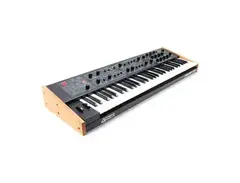
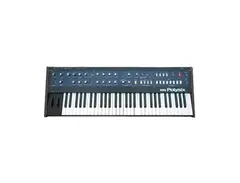
Discover the unparalleled power of the Sequential Circuits Prophet 600 Synthesizer. A true master of versatility, this synthesizer is equipped with 2 VCOs, each offering a unique blend of waveforms. VCO A takes you on a sonic journey with its saw, pulse, and triangle waveforms. But VCO B takes it a step further, adding an extra layer of complexity with pulse width. Besides this, it comes with an LFO, filter, VCA, and a breathtaking arpeggiator, sequencer that adds depth and texture to your sound. What's more, it is MIDI equipped, ensuring seamless integration into your setup.
Key Features:
- Equipped with 2 VCOs: VCO A includes saw, pulse, triangle waveforms; VCO B includes the same with pulse width addition
- Featured LFO, filter, and VCA for a wide array of sound manipulation options
- Built-in arpeggiator and sequencer for creating complex sound patterns
- MIDI equipped for easy integration with other equipment
Product specs
| Brand | Sequential |
| Model | Prophet 600 61-Key 6-Voice Polyphonic Synthesizer |
| Finish | Black with Wood Sides |
| Year | 1982 - 1985 |
| Made In | United States |
| Categories | Analog Synths, Keyboard Synths |
| Analog / Digital | Analog |
| Key Size | Full Size |
| Keyboard Action | Synth Action |
| MIDI I/O | MIDI Input, MIDI Output |
| Number of Keys | 61 Keys |
| Polyphony | 6 Voices |
FAQs
-
Is the Sequential Circuits Prophet 600 Synthesizer polyphonic or monophonic?
-
The Sequential Circuits Prophet 600 is a polyphonic synthesizer, offering six voices of polyphony, which allows you to play up to six notes simultaneously.
-
Does the Prophet 600 have MIDI capabilities?
-
Yes, the Prophet 600 was one of the first synthesizers to feature MIDI, with both MIDI input and output, allowing it to be integrated with other MIDI-compatible equipment and software.
-
What are the standout features of the Prophet 600's sound engine?
-
The Prophet 600 features a classic analog sound engine with two digitally controlled oscillators (DCOs) per voice, a 4-pole resonant low-pass filter, and flexible modulation possibilities, making it versatile for a wide range of sounds.
-
How does the keyboard action of the Prophet 600 feel?
-
The Prophet 600 features a synth-action keyboard with 61 full-size keys, providing a smooth and responsive playing experience suitable for both expressive playing and fast synth runs.
-
What type of sounds is the Prophet 600 best known for?
-
The Prophet 600 is renowned for its warm, rich analog tones, capable of producing lush pads, punchy basses, and classic leads, making it a favorite for creating vintage and contemporary synth sounds.
Videos

RetroSound
Sequential Circuits Prophet-600 Analog Synthesizer (1982)
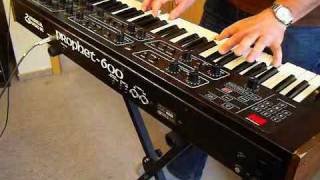
Sequential Circuits Prophet-600 Analog Synthesizer (1982)
RetroSound
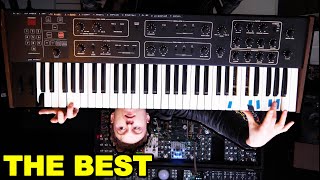
Proper Underrated - Sequential Circuits Prophet 600 -

LOOK MUM NO COMPUTER
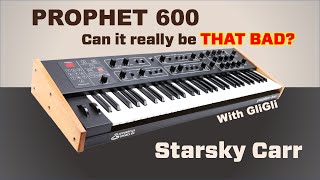
Prophet 600 // SOUNDS GREAT but why is it underrated and much maligned?

Starsky Carr
Sequential Circuits Prophet~600 | By Design

Alex Ball
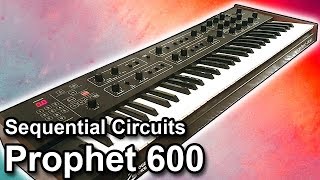
PROPHET 600 | Presets, Sounds & Patches | Sequential Circuits【SYNTH DEMO】

synth4ever
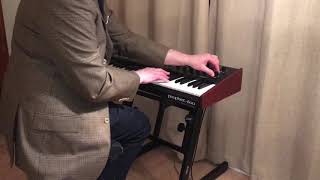
Prophet 600 Synthesizer - GliGli Sound Demo - Vintage and Old School patches - Sequential Circuits

Tom Loncaric
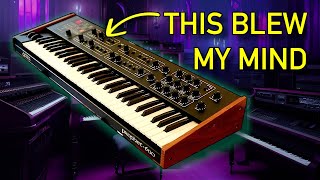
SEQUENTIAL CIRCUITS PROPHET 600 Best Vintage Synth to Buy in 2024? Live Demo

Vulture Culture

CHROMA POLARIS vs PROPHET 600: Live Shoot-out of these Analog Synth Titans!
Vulture Culture
Reviews
PROS
-
Unique heavy metal-like power and grittiness in sound
-
Produces full, rich strings and pads smoothly
-
First MIDI-capable analog polysynth, historically significant
-
GliGli mod significantly enhances sound quality and features
-
Extensive modulation section and control knobs
-
Unison mode allows for fat lead-synth or bass sounds
-
Comes with great-sounding patches stock from the factory
-
Midrange sound quality described as superlative
-
Can realistically mimic power-chord guitar sounds
-
More lush and integrates better in mixes than some newer models
CONS
-
Lacks some complex modulation options compared to Prophet 5
-
Some units may require significant repairs and upgrades
Owner Insights
We analyzed real musician discussions from forums and Reddit to find what players love, question, and tweak about Sequential Circuits Prophet 600 Synthesizer.
Mods and upgrades
-
The Gligli mod enhances filter smoothness and provides snappier envelopes, significantly altering the feel of the Prophet 600.
Source -
The Gligli mod is challenging to obtain due to the discontinuation of Teensy++ SoCs; alternatives like Chinese clones won't boot with the firmware.
Source -
The creator of the Gligli mod was reportedly hired by Behringer to incorporate similar features into their products.
Source
Comparisons
-
The Behringer Pro-800 offers a similar Gligli upgrade at a potentially lower cost, especially if you already own a keyboard to drive it.
Source -
The Prophet 600 shares oscillator sound similarities with some Prophet 5 revisions, both using the CEM 3340 chip.
Source -
The Prophet 600 lacks the high-end brightness and features present in the Prophet 6, making the latter appealing for those seeking a brighter sound.
Source -
The Prophet 5's Poly-mod section is praised for creating musical FM bells and chimes, a feature less effective on the Prophet 6.
Source
User experience
-
Owners appreciate the Prophet 600's raw sound, describing it as a gnarly, character-rich synth that complements models like the Korg Mono/Poly.
Source
Use cases and applications
-
It's highlighted for its unique, raw sound, making it a standout choice for those seeking a gritty synth experience.
Source
Build quality
-
Owners mention the Prophet 600's keybed as subpar compared to newer models, impacting playability.
Source
Setup and maintenance
-
Components in the Prophet 600 are described as solid and easily accessible, facilitating repairs and modifications.
Source
Features and functionality
-
The Prophet 600 was the first synth released with MIDI, utilizing the Zilog Z80 processor, which can be easily overwhelmed, causing pot value skips during MIDI use.
Source
Critic Reviews
4.0 out of 5
Based on 4 Reviews and 18 Ratings

609
The Best Affordable Polysynth of the '80s, and Still Going Strong
When I wanted to get a Polysynth in the '80s, I put a lot of research into it (over 6 months). Without a lot of money to spend, the only options at the time were the Roland Juno-6 and the Korg PolySix, but then, ...Sequential Circuits released the Prophet 600. On paper and brochures, just the features alone on the Prophet 600 surpassed the other synths, but when I actually played one, I was blown away, because it had the fat oscillator sound of its predecessor, the Prophet 5, not the thinner sound of the Juno-6 and PolySix.
The Prophet 600 had a more extensive "modulation" section and even had more control knobs than the other synths. The knobs were laid-out almost identically to the Prophet 5. It was also the first polysynth to have MIDI In & Out jacks, and one of the best features was that it allowed you to throw all 6 oscillators together on top-of-one-another in "unison" mode to fatten up a lead-synth or bass sound/patch. The Prophet 600 also came with plenty of usable awesome great-sounding patches "stock" from the factory. Another great feature was being able to step-thru (go to the next #) patch using a foot pedal. I owned one for 8 years and (with lots of time and work) was able to create a whole lot of great patches and sounds, including (get this...) "power-chord guitar" patches that I ran through a Boss Heavy-Metal HM-2 distortion pedal to create realistic power-chord guitar.
If you would like to hear this synth being used (especially the power-chord guitar examples) check out some of my old songs for "Prophet 600 Project" on ReverbNation.com at:
https://www.reverbnation.com/prophet600project
...or just google "chuck cohen prophet 600"
If you can find a Prophet 600 today, they are actually upgradable to use a better (and more current) digital processor CPU chip, called the "Gligli" mod. This mod not only improves the resolution of the sound & filters, but adds new features and capabilities that the synth did not have prior.

41028
at last its mine
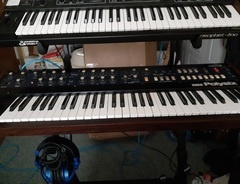
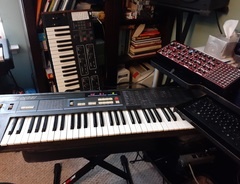
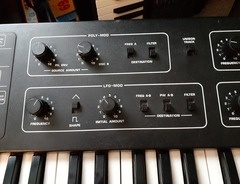
I'm over the moon for my prophet 600 right now. My unit has seen some serious road time and has been hacked into at least twice, but one of the hacks was for the GliGli mod which corrects the knob resolution to eliminate stepping, makes the envelopes a lot snappier and adds some prophet5 modulation features via the multi encoder and embrane buttons. Its a great upgrade and it made me open to buying a synth that has always gotten mixed reviews. What the prophet lacks (noise gen, what?) it makes up for in sound quality. The midrange is superlative on this board and the cranked resonance on the filter is the stuff of legend. Its a little more nasal than a prophet 5, but can cop the whole prophet thing better than a the new prophet 6. Its more lush and sits in the mix better. Cuts where it should, never where it shouldn't.

128
good analogue poly from the 80s
mine's broken, thats the only way i was able to afford it. i got it working well enough for a while though, and it was very good. nothing special really, just a very normal polysynth, gets the job done. currently needs a new keypad and oscillator chip, as well as some cleaning on the potentiometers. I'll update my review when i've restored it.

Baby Prophet 5
Doesn't have the more complex modulation options as the Prophet V, but still has that classic analog strings sound.
Artist usage
Add artist

In the video "Tame Impala 'Lonerism' Episode 2" on YouTube by Modular YouTube, Kevin Parker is seen playing a Sequential Circuits Pro One Synthesizer at the 1:00 mark. Initially, there was a mix-up, as it was thought to be a Prophet 600.

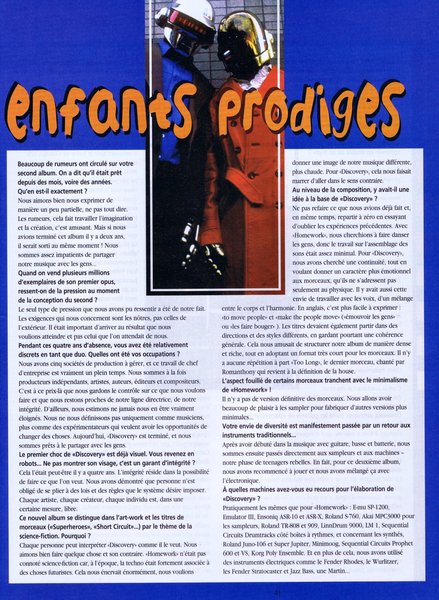
Per this March 2001 interview with Keyboards Magazine (FR), Daft Punk employed a Sequential Circuits Prophet 600 during the recording of Discovery.


In this article it says Justin Vernon (Bon Iver) used an Prophet 600 when recording his last album, 22, A Million


BT tweets a photo of his modded Sequential Circuits Prophet 600 synth, which was built in 1983.
He writes "Behold the beauty of a firmware modified, re-contacted Prophet 600. Best part signed 'Assembled by Randy 1983' #Epic" (posted by BT on 13 Jan 2015).


This Electronic Musician article states that Murphy owns a Prophet 600.


At the 3:07 mark of "Carl Craig – Modular Pursuits", this synthesizer is seen just to the right of the Prophet 5 in the lower-right hand corner of the shot.

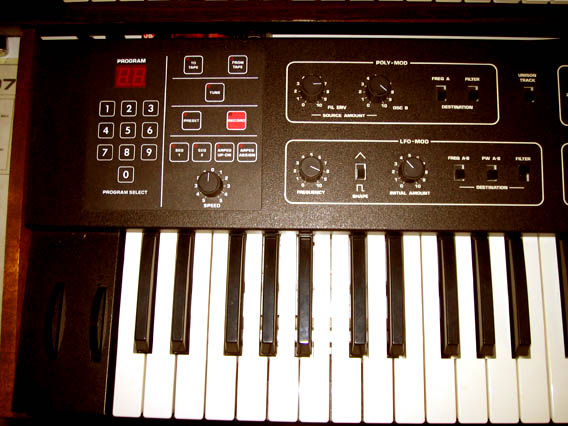
"A gritty raw sounding analog synthesizer with lots of knobs to make programming easier. Its a bit dim witted or slow for that matter; you can hear the 127 digital controller steps when you turn the knobs and the envelopes aren’t that smooth…but it sounds quite nice and has that typical Sequential sound."
From the official Legowelt website under the "Synthesizers" section.


in the first image, you can see the Prophet 600 in front of the group


Rob Swire can be seen using a Sequential Circuits Prophet 600 Synthesizer in the provided image. Although it's partially obscured below the keyboard stand, discussions with synth enthusiasts on Reddit have confirmed its identification.

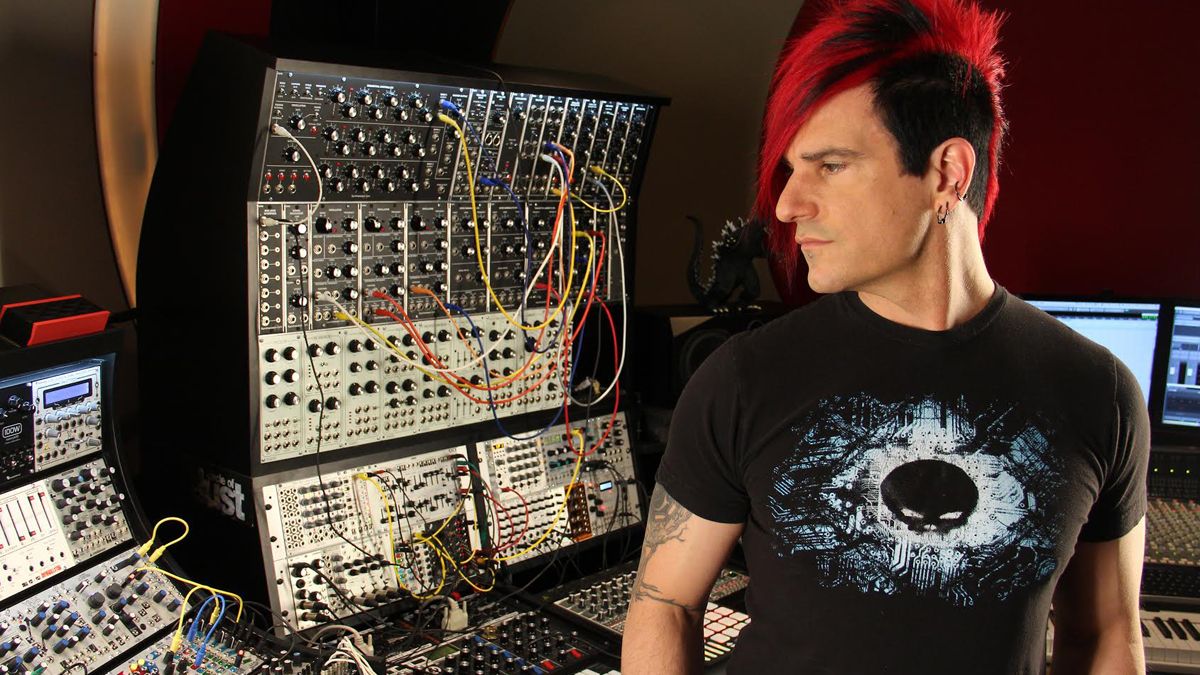
"It's mostly Eurorack, but I have a classic Moog Voyager and a Synthesisers.com set up that emulates the old Moog 5U modular system. Then I have things like the TTSH (Two Thousand Six Hundred), which is an ARP 2600 replica, an original Roland System 100M - I love the way that thing sounds, a Roland Juno-106, a Juno-160 and a couple of Prophet 600s. I also have a Buchla set up, and a Swarmatron, which I use a fair amount as well, so I can kind of do anything I want."


From a Synth History article written by Roger O'Donnell:
Early in 1983, Sequential Circuits, under the guidance of its guru, Dave Smith, whom I later became close friends with, released the Prophet 600, the first instrument with MIDI. A huge landmark for synthesizers, recording and even washing machines! I don’t think any of us realized at the time how important MIDI would become and how it would change our lives as musicians, we just saw it as a way of one keyboard being able to control another. Dave didn’t patent it, it was a gift to the world, one of those moments when the greater good was more important.
The 600 itself was like what the Micro was to the Minimoog, a paired down budget version. When the Prophet 5 first came out, it was about the same price as a small apartment in London, I think the 600 was around £1200? Sonically, it was great, the only downside was that the filter wasn’t as smooth as the 5, you could hear it step if you swept it. It was 6-note polyphonic, so you could play a nice sized chord. It had preset memories, a short un-clocked sequencer, which was a sort of musical notepad and one feature I really liked was a latch button. You could latch a chord and then play it with one finger.
This was the keyboard I used when I first joined the Thompson Twins. In fact, on the first tour of the US opening for The Police on the Synchronicity tour, I didn’t even have a flight case. It stayed in its original shipping box. I used this keyboard throughout my time with the Twins and then with the Furs through until 1987. I still have this one too.


Album Usage
The Sequential Circuits Prophet 600 Synthesizer has been featured on the following albums:
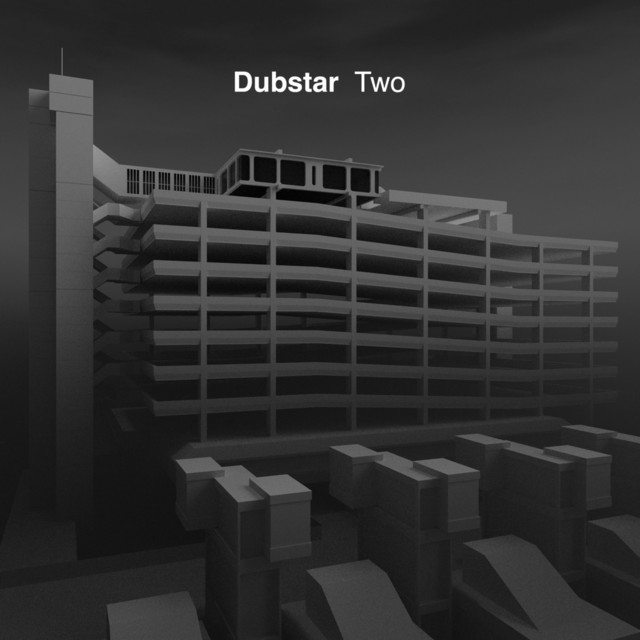


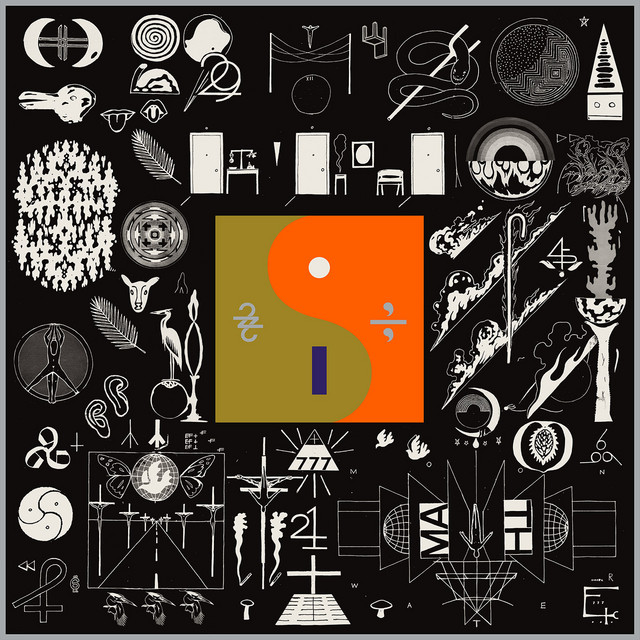
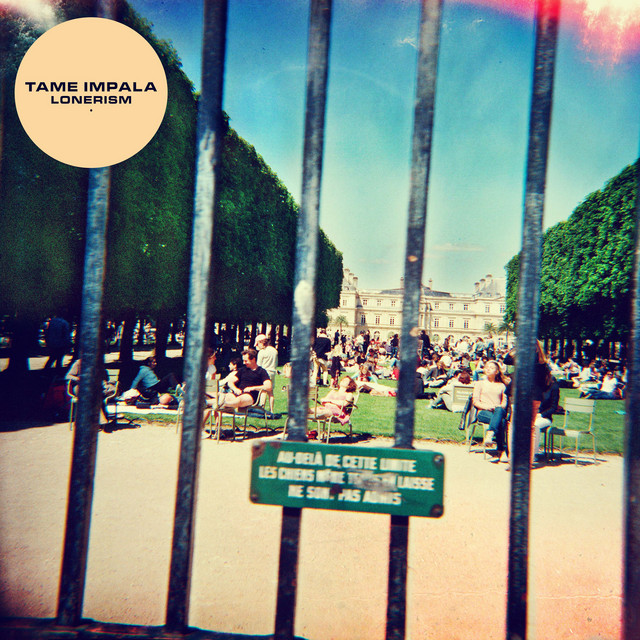
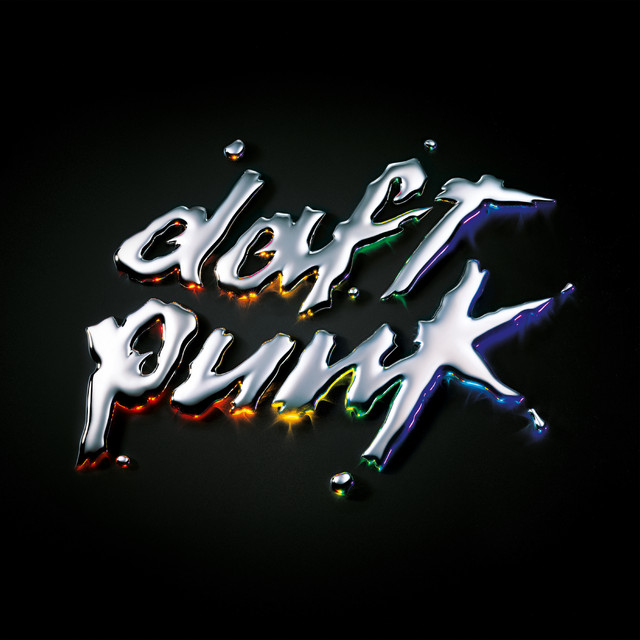
Genre Usage
Based on how artists on Equipboard use this gear, it is most commonly found in the following genres.
Used With
Based on how musicians on Equipboard use Sequential Circuits Prophet 600 Synthesizer, it is most commonly used with the following gear.
-s.webp?v=1784818702)



Community setups
Show yours

Similar
Add recommendation1 alternative for Sequential Circuits Prophet 600 Synthesizer, curated by the Equipboard community.

$139.00 - $379.00
More Sequential Circuits Synthesizers

$3,525.03 - $3,599.99
in Synthesizers Rank


$2,000.00
in Synthesizers Rank


-m.webp?v=1784818813)
$4,357.00 - $14,374.74
in Synthesizers Rank


$4,222.00 - $4,399.99


$3,399.00 - $3,599.99
.jpg?v=1784656553)

.jpg?v=1784323637)

$117.00 - $5,543.66


$2,444.00 - $2,599.99
.jpg?v=1784640202)


$3,546.00 - $3,599.99

.jpg?v=1784756862)


$3,272.18 - $3,499.99
in Synthesizers Rank


$469.00 - $699.99
in Synthesizers Rank


$20,256.12
in Synthesizers Rank


$439.00 - $545.00
in Synthesizers Rank
.jpeg?v=1784640200)

$3,333.00 - $3,499.99
in Synthesizers Rank


$999.00 - $1,084.00
in Synthesizers Rank


-m.webp?v=1784818786)
$1,100.00
in Synthesizers Rank

-m.webp?v=1784818754)
$379.00 - $499.99
in Synthesizers Rank


$600.00 - $2,398.00
in Synthesizers Rank

$2,000.00
in Synthesizers Rank


$411.00 - $699.99
in Synthesizers Rank


$277.00 - $349.00
in Synthesizers Rank


$2,199.00 - $2,946.49
in Synthesizers Rank


$1,479.42 - $1,899.00
in Synthesizers Rank


$298.22 - $652.00
in Synthesizers Rank


$1,356.47 - $1,839.99
in Synthesizers Rank


$379.00 - $549.99
in Synthesizers Rank


$491.72 - $899.99
in Synthesizers Rank


$279.00 - $449.99
in Synthesizers Rank


$230.51 - $749.99
in Synthesizers Rank


$279.12 - $1,763.18
in Synthesizers Rank


$79.99 - $495.44
in Synthesizers Rank

Accessories & Related Items


Gear Guides






.webp)

Most Popular Synthesizers
Most Popular Brands
-
Added to Equipboard on by
 odysseyeurobeat
GearIQ 1708
-


