
knuckchucks's Reviews
12 reviews Back to knuckchucks's Equipboard

174
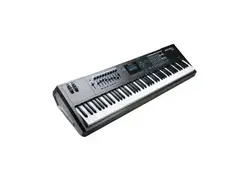
Well Designed and Professional Keyboard. A Workstation Without the Sampler.
This is my first piece of hardware so there isn't a point of reference besides MIDI Keyboards and YouTube.
88-Key Hammer Action Keybed with Aftertouch and over 1,000 preset patches (think it was 1057?) 32-Bit Analogue Output DACs with sample rates up to 96Khz. 256 V.A.S.T Polyphony (or "normal" voices) , Kurzweil String Resonance, 6-op FM Engine, 2GB of Flash Play (ROM), and 2GB User Sample Memory. All of this on what appears to be a plastic frame. It comes with a bunch of knobs (including the defacto mod wheel and pitch slider) and other things that I'm too noob to take advantage of. Enough with specs and let's get busy.
The sounds on the keyboard are definitely respectable and it comes with numerous patches. Has good Pianos, E.Piano, Organ sounds, Strings, and respectable drum sets. As far as keyboards are concerned they're definitely good quality, especially strings, but it will not beat the sound of decent sample libraries. Not a pianist and don't use piano/key-based instruments often however Strings (violin family) are a different story. As far as keyboards go these are probably one of the better string ensemble sounds available. Even the mellotron strings are nice sounding. The orchestral brasses and woodwinds are more "standard" affair and don't stick out as much, though some are good. Many interesting samples but I do get the impression Yamaha has better acoustic instruments overall even if the strings aren't as good. That being said you can load your own samples via PC USB Transfer or offline on the USB Storage Port. Having this option allows you to work around any weakness you find on the board.
The keyboard is not GM Compatible though the drums line up pretty close. One tiny annoyance is that the bass patches are transposed down one octave. So exporting the MIDI the bass will be too high, inversely you import a normal bassline track it will be an octave too low, this is only applicable using any of the bass patches. Then there is the USB Feature. As a disclaimer you need to have the USB Drive in FAT32 for the PC4 to read it, most default formatted storage devices are FAT32 but I often format new drives and Windows will not format FAT32 if the drive is too large (more than 32GB?) To get around this I partitioned the USB Drive, one for the Kurzweil and the other partition for normal storage. The only purpose of the USB Drive is for offline transferring, everything has to be downloaded to the PC4's own memory.
To be quite frank I can't tell how much better the Forte is (strings seem higher quality) compared to the PC4. Maybe the Forte has a better key-bed, apparently it's heavier too. The PC4 also has additions unavailable on the Forte, higher polyphony (if you don't need KB3 which is free on Forte) and it all but obsoleted the Forte SE. After playing it I'm more satisfied with just using a MIDI Keyboard, VST Libraries, and writing in MIDI. It would be nice for them to release a 61-Key Version.

174
There is an edit button. You program patches through a series of menus. Not terribly quick but works.
174
The Reviews Speak for Themselves, Excellence
Originally wasn't a fan of this library and to be honest, at this point in time (away from my PC), can't utilize it to its full potential. First things first is the default mic mix is "okay" but preferred some sounds from East West Hollywood. That is the default mic mixes are relatively wet (so I opted for drier mics.) Number two is please install it on an SSD or buy it with the SSD. Time is money and it'll save you a lot of time. Each instrument/section comes with about 8 mic positions each and special mics for Dolby Atmos. You are given many tools to shape the sound you want and ultimately mold it into place, hence using dryer mics like Stereo, Mono, and/or Close.
The woodwinds are what had impressed me the most in the demos and still think it's the best thing on the Library. Clean and expressive their sound seems like a step up above some other libraries I've used. This may not be a result of bad recording but a combination of the player playing and the instrument itself (e.g. no two Clarinets are the same.) Between Miroslav Philharmonik and EW Symphony/Hollywood the English Horn and Oboes sound closest to Peter Siedlaczek's Advanced Orchestra but at a higher quality. Very little reason not to use them, only for stylistic choices might you use something else.
The strings seem to be fairly debatable. I do not own the Hollywood Solo Bundles so it's can't compare those but overall I still prefer the general sound of Hollywood Strings. That being said they can be "too big" for some tastes but I have other string libraries to solve that problem. Don't really possess an opinion on them at this time besides being strong. The solo strings from Miroslav Philharmonik I/II still posess a more human character at times.
The brass are also fair. To be honest though I never play with brasses much so this section will be a bit sparse. EW Hollywood naturally has a bigger or more "in your face" brass sound to it but BBC is cohesive and controlled. More often than not BBC vs EW Hollywood Orchestra is just a matter of a controlled sound versus big sound. Being a newer library it's recorded at 48Khz 24-bit versus 44.1Khz 24-bit/16-bit (latter for cheaper gold version.) If you HAD to choose between BBC Orchestra and EW Hollywood I would recommend BBC for its greater versatility and neutral sound. Bought it on sale for $749, as an "upgrade" to EW Hollywood Diamond ordinarily would not say it's entirely worth it in that regards, however the woodwinds, completeness of instruments, cohesive sound, it just stands by itself.
174
Extremely Flexible Library
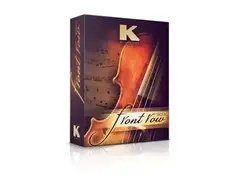
So this library has the Kirk Hunter goodness we want. Auto-Divisi, True-Divisi, Vibrato Control/customizable Vibrato, Vibrato-Live, select your player size, bowing style, legato, etc. I'll highlight a few of the features but right out of the box it produces a more intimate tone than Spotlight Strings 4D. However let's look at what makes this library so special.
Select your player size. From Solo to all 16 (tutti) players, no division by section size. As a result this is one of the few string libraries offering true, complete, divisi. The vibrato control is as powerful as ever, though if there is one complaint (also with other products) is that the default vibrato is over-the-top. It's extremely wide and borderline out-of-tune, of course you can tone this down with your own vibrato or changing the presets. *It also comes with a 2nd Violins Patch, they seem to be intelligently programmed rather than separate recordings (don't quote me.)
The worst thing about the library is it's only violins. Great sound, customization, and the strings have a lot of character. Kirk Hunter's Libraries will usually work with anything as long as you tweak them to do so. Whether you want to supplement these with East West, Spit Fire, IK Multimedia, it'll find a spot.
*Updated, after using the library more I'm convinced the 2nd violins are separate samples (maybe it says it in the manual too.) In any case this is easily, in my opinion, the best recorded Kirk Hunter Product. Very clean sound and wonderful divisi.
174
Once Ubiquitous but Still Relevant
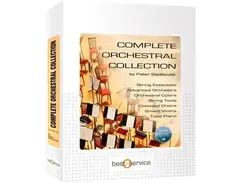
This library contains many iconic orchestral sounds from the late 90s, early and mid 2000s (prior 2010.) The sounds here are unfortunately rather old and the brass sounds are a bit weak. However with enough EQ and plugin effects it is possible to come close or match the quality of East West's Symphonic Orchestra.
I would only recommend this if you have a weak budget and need orchestra sounds (first you should look at free options), you're a collector, or need a "distinct" sound. You can hear Siedlaczek's Oboe and English Horn from a mile away. Even the solo string may be caught. People still use 1990's hardware/synths and these were originally recorded in the late 90's. It's as useful as you need it to be.
Update: The sounds on this are actually lower quality than more authentic sources such as the CD releases. Gigasamples(?) for example.
Preferred Settings + Usage:
Oboe: If you played video games (probably found its way onto TV shows at the time) in the early (released in 1996 actually so even earlier) 2000's you'd have probably heard this sound, probably in an RPG. It's as distinct as a Roland French Horn.
English Horn: Same as above. This sounds pretty similar to the Oboe but is suited towards a lower repertoire. You can't really mistake these sounds off of Peter Siedlackzek's Advanced Orchestra. Granted, because they're so distinct (and obvious), you should be tactful in how you use it.
174
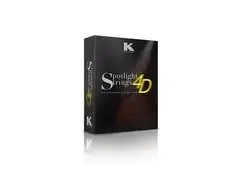
Latest Spotlight Strings from Kirk Hunter Studios
Unfortunately haven't been able to test it much. Like the standard thoroughfare of Kirk Hunter Strings this offers you Divisi live, vibrato control, and much in the way you'd expect from Kirk Hunter's products. Which is what makes them so great, the amount of customizable options. That being said, however, they are only fair sounding out of the box. Though designed for ease of use for you to pick up and play (live via keyboard) you will have to tinker the options to get a more appropriate sound. In fact Miroslav Philharmonik 2's solo strings seem to sound more natural out-of-the-box.
Kirk has done it again with another solid product. Various customization options, add solo players, remove solo players, remove ensemble, vibrato control, divisi-live. It's got about everything you could want and with these you can bet it'll fit with any other library if you spend time going through the options. However for the best mileage you WILL need to fiddle around with the parameters.
Update: After playing with the library more it became apparent why owning multiple libraries are important. Spotlight Strings 4D came in clutch in providing the "right" tone I needed for a staccato passage (divisi.) BBC Symphonic Orchestra was too messy, at default round robins it sounds like the string players can't keep up (240bpm) and they almost sound out of sync. Playing with the round robins tightened the sound but wasn't quite there, apparently these performed "too realistic", not Don't have the iLok to use East West Products and Miroslav Philharmonik was overall a bust (actually usable but read more...) and tied with Siedlaczek's Advanced Orchestra.
What made it work is the tight staccato. Though from what I can tell the chamber ensemble/backups doesn't actually seem to support divisi (it's the soloists) and the result wasn't particularly realistic, however it didn't matter since it produced the best results on the track compared to other string libraries on hand. The versatility of Kirk Hunter's Strings are why they're good to keep on hand.
174
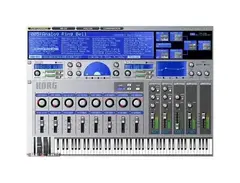
Great VST and Good Value
Because I do not own the original hardware I cannot make a good comparison. However the plugins themselves are fairly intuitive and easy to use. Supposedly the emulation is very impressive and, although the sounds can be dated, they still can be given purpose.
174
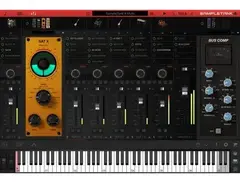
Gives the User a Nice Collection of Sounds
While Sample Tank is more than instruments; it's a workstation, editor, and more I'll only focus on the samples because that's what I use it for. Sample Tank 4 comes with the Library from Sample Tank 3 which may have also included Sample Tank 2XL's instruments. Sample Tank 4 MAX comes with additional plugins/instrument libraries such as Neil Peart Drums, Electronika, Orchestral Percussion, and more. With the MAX version at least you got a very wealthy set of sounds.
That being said it appears to be somewhat lacking in acoustic instruments, by that I mean incomplete. Sample Tank 4 is missing some woodwinds, recycles ensemble strings (maybe solo too?) from Miroslav Philharmonik 2, missing Celeste, by itself Sample Tank 4 does not provide a complete set. There is a saying don't fix what ain't broke, you still have access to some Sample Tank 3 and 2XL instruments.
As someone with MAX I'd say it's not bad. Admittedly I hoped for more ST4 instruments but in the grand scheme of things it probably has more samples you'll ever use which is a good thing. Whether it be from obsoletion or the fact it's not an instrument for your style of music.
UPDATE: After owning a hardware keyboard synthesizer it looks like I was a bit critical of the sounds on Sample Tank 4. However it is still a 4 star if it's not for the fact it's somewhat and buggy crashes.
174
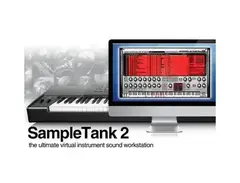
Very Decent Collection of Sounds
Sample Tank 2XL samples are included as part of Sample Tank 3. The best comparison for Sample Tank would be similar to owning a Keyboard Synthesizer. It comes with a great variety of sounds that are also very usable. In fact some modern synths are still lacking compared to some sounds presented from this old library.
174
Decent Sounds
The original Miroslav Philharmonik comes with Miroslav Philharmonik 2. Considering the original was released in the late 90's and the sounds are as good as they are today color me impressed. That being said it's a bit disappointing the successor didn't obsolete many of sounds here. As a result earning an extra star versus my review on MP2.
174
A bit dated but very usable sounds
Had purchased it after the Hollywood Bundle. Ordinarily I recommend getting Hollywood over this because of the drier samples and, in my opinion, improved engineering. The instruments, even on close mic position, seem a bit wet. However the quality is consistent across each instrument. So if we consider Hollywood the successor then one of its competitors would be Miroslav Philharmonik 2. Choosing this library you get access to mic positions (if you chose platinum) and a very consistent quality across all your instruments. One thing Miroslav seems to beat Symphonic Orchestra is in its expressive and colorful sounds, particularly solo instruments. Overall, as an entire package, Symphonic still holds well to this day and is a nice, complete collection for your orchestral needs.
Yes, there are better and more realistic instruments. However you can get a fast, good, symphonic sound very quickly and easily with this. Like I mentioned previously, the Hollywood series are the successor to this. While it can be debated (Hollywood vs. Symphonic) there is no doubt the samples are more life-like in Hollywood. If you need something good and on a budget then you can't go wrong with East West Symphonic Orchestra.
174
Solid Orchestral String Library
A very solid contender for string libraries, though strongly recommend buying the "East West Hollywood Orchestra" which includes the brass, woodwinds, and percussion. While yes there are better string libraries out there it is great for the price. Particularly if you own platinum, 5 mic positions allow you to get a very dry sound if desired or layer the mics to generate your own sound space. The downsides of this string library is its "out of box Hollywood sound." The strings are lush and fairly big but if you need smaller ensemble sizes or sounds it'll be difficult to work around that need. It also does not have true Divisi, that is the sound is programmed to be divisi-like but it is not the same authenticity from a library such as Kirk Hunter's various string libraries.
To conclude you get a nice, big, lush sound. With Platinum you get mic positions for even better sound shaping. However you may run into issues doing chamber music due to its large sound. Thus if you need something more petite then there are other libraries to look out for. On sale, if you get the bundle, it's a sweet deal and unless you're on a budget (or using this as a stepping stone) you should go for Platinum.
Preferred Settings + Usage:
First Violins Long Vib Sus 13 (can't remember the name) which is an intensive patch taking awhile to load. That being said it has a wonderful sound.
The Viola Patches (if you choose the "right" ones) are among my favorite across string libraries (competing with Kirk Hunter.) In large part because of the consistent vibrato. Generally it makes BBC Symphonic Orchestra's Viola patches feel weak. I don't blame other string libraries when you consider the reputation of real life viola players.
174
Good All-Around Orchestra Suite
When you purchase Miroslav Philharmonik 2 you also receive the original Miroslav Philharmonik Library (some recycled for Sample Tank 3.) As far as solo strings go I find them more expressive and less cliched than East West's offerings, the built-in reverb has a nice sound. Solo brasses are fair in sound, I think the woodwinds are good but the solo strings takes the cake.
One of the few issues I have with the library is consistency. Different articulation on the same instrument may have different pitch ranges and may even sound as though they're recorded in a different space/position. There are some inconsistencies in volume and I've even found a solo string run (was it violin?) where the player had messed up on the recording. So let's check what these amount to is competition.... For the same price you can get EW Hollywood Orchestra Gold (or Platinum on Sale.) or EW Symphonic Orchestra (Gold being cheaper.) Hollywood generally has the better edge on ensemble sounds (though it can be "too big") it's definitely more consistent in its sound. It's fluid across its instruments and fairly dry on default mics (more dry with platinum mics.)
To sum it up. Lively solo instruments (particularly strings) and overall it has a very expressive character. It comes with the original Philharmonik 1 to give you more sounds to play with. Unfortunately it seems to be a quantity over quality approach. For a "big orchestra" sound it doesn't seem as strong as some of East West's offerings. The instruments are not particularly consistent in volume/soundscape so you may need to dig through its many sounds. Compared to other similarly priced libraries its in a rough spot and if you want to purchase it then I recommend doing it on sale or cross grade.
Update: After playing with the library more I removed a comment about the Miroslav II vs I instruments (oboe ensemble/solo english horn). Fact of the matter is you sometimes have to dig through the patches but unless you need a certain distinct sound you can safely use only Miroslav Philharmonik II sounds.
Preferred Settings + Usage:
The solo patches, as mentioned, are my favorites.
Cello Det 2,3 mp: A very lovely and natural sound. Not only is the musician good but that cello itself has wonderous qualities.
English Horn Sus mp 3,0: Expressive and unique. Unless heavy realism is your aim (it's possible but likely cumbersome on Miroslav) like in a full orchestration with a long solo passage it's really hard to beat any of Miroslav Philharmonik II's solo instruments. This is when it comes to an "out of the box" sound and even then they still are wonderful.