
Jay DeMarcus
American bassist, vocalist, pianist, producer and songwriter
Role
Genre
Role
Genre
Jay DeMarcus' Gear


"Wanted to tell you I played the bass you made for me in the studio today, awesome axe! Thank you so much, what a great feeling, great sounding instrument! Love it. It tracked like a champ. Engineer loved it. Sounded amazing, color is amazing and plays like a dream. Appreciate your craftsmanship and grateful to you."
Find it on:


"My favorite is a ’63 Fender Jazz Bass, and I also have a ’59 Fender P-Bass. If I’m looking for that old-school rock and roll vibe, I grab the P-Bass. If I need something to speak a bit more and cut through the mix, I’ll use the Jazz. Lately, I’ve been tuning down a minor third, and using heavier-gauge strings, so I can grab some lower notes that you usually can’t get with standard E, A, D, G tuning."
Find it on:


Demarcus's visit to a Lakland workshop, shown on their official website.
Find it on:


-m.webp?v=1784007890)
Bass tech Robert “Bucky” Huck says that bassist Jay DeMarcus’ rig comprises an Avalon 737 through a Distressor EL8-X comp and an Ampeg SVT Classic through a Distressor EL8-X comp and a Palmer PDI-03 direct box. “It starts with three Shure UR4D dual wirelesses into an Amp Gizmo custom splitter I had them design with eight ins and four outs,” Huck says. “One out goes to the Ampeg side and one out goes to the Avalon side. I also have a second rig built in the rack for our pedal-steel player, Travis Toy. He plays bass when Jay is on keyboards. His rig is completely separate on the Avalon side, but they both share the Ampeg side with the use of a Tour Supply Amp Selector.”
Find it on:


-m.webp?v=1784008610)
Bass tech Robert “Bucky” Huck says that bassist Jay DeMarcus’ rig comprises an Avalon 737 through a Distressor EL8-X comp and an Ampeg SVT Classic through a Distressor EL8-X comp and a Palmer PDI-03 direct box. “It starts with three Shure UR4D dual wirelesses into an Amp Gizmo custom splitter I had them design with eight ins and four outs,” Huck says. “One out goes to the Ampeg side and one out goes to the Avalon side. I also have a second rig built in the rack for our pedal-steel player, Travis Toy. He plays bass when Jay is on keyboards. His rig is completely separate on the Avalon side, but they both share the Ampeg side with the use of a Tour Supply Amp Selector.”
Find it on:


Bass tech Robert “Bucky” Huck says that bassist Jay DeMarcus’ rig comprises an Avalon 737 through a Distressor EL8-X comp and an Ampeg SVT Classic through a Distressor EL8-X comp and a Palmer PDI-03 direct box. “It starts with three Shure UR4D dual wirelesses into an Amp Gizmo custom splitter I had them design with eight ins and four outs,” Huck says. “One out goes to the Ampeg side and one out goes to the Avalon side. I also have a second rig built in the rack for our pedal-steel player, Travis Toy. He plays bass when Jay is on keyboards. His rig is completely separate on the Avalon side, but they both share the Ampeg side with the use of a Tour Supply Amp Selector.”
Find it on:

"My favorite is a ’63 Fender Jazz Bass, and I also have a ’59 Fender P-Bass. If I’m looking for that old-school rock and roll vibe, I grab the P-Bass. If I need something to speak a bit more and cut through the mix, I’ll use the Jazz. Lately, I’ve been tuning down a minor third, and using heavier-gauge strings, so I can grab some lower notes that you usually can’t get with standard E, A, D, G tuning."
Find it on:

Rascal Flatts performing at Blossom on June 25, 2016. Here, DeMarcus is seen with a XF7 on the top tier of the keyboard stand on the right.
Find it on:

Rascal Flatts performing at Blossom on June 25, 2016. Here, DeMarcus is seen with a Nord Stage 2 EX on the bottom tier of the keyboard stand on the right.
Find it on:

Onstage and in the studio, DeMarcus relies on Yamaha keyboards, especially the Motif ES8. "I have a grand piano shell with a Motif inside that I play live," he says. "I have another one here in my studio, and I also have the Motif Rack. It's my favorite synth--it's been the meat and potatoes of everything I've worked on and everything I've produced. It has exactly what I'm looking for: I can dial up sounds so quickly, and it has all the textures I need, the pads and the other synth sounds. For just about every application I've ever needed, the Motif has fit the bill. I also have a Yamaha C7 grand piano in my studio, and the Motif feels more like it than any 88-key weighted keyboard I've ever used."
Find it on:

Onstage and in the studio, DeMarcus relies on Yamaha keyboards, especially the Motif ES8. "I have a grand piano shell with a Motif inside that I play live," he says. "I have another one here in my studio, and I also have the Motif Rack. It's my favorite synth--it's been the meat and potatoes of everything I've worked on and everything I've produced. It has exactly what I'm looking for: I can dial up sounds so quickly, and it has all the textures I need, the pads and the other synth sounds. For just about every application I've ever needed, the Motif has fit the bill. I also have a Yamaha C7 grand piano in my studio, and the Motif feels more like it than any 88-key weighted keyboard I've ever used."
Find it on:

UHF-R systems on the tour use UR4D receivers for both lead vocalist Gary LeVox's UR2/SM58 handheld transmitter and Joe Don Rooney and Jay DeMarcus' wireless guitars. With Rooney and DeMarcus both noting that "The new UR4D has given back what we've been missing in our tone," monitor engineer Stuart Delk unabashedly admits that "UR4D wireless technology excels above all others. The self-scan and sync features, combined with higher output levels and audio quality, can only be matched by using a cable. These qualities alone say a lot about why Shure is in this show." "The sound going into the beltpacks is exactly what we get back out," FOH engineer Jon Garber says, getting his own two cents worth in on the guitar wireless systems. "It's like the same energy we get out of the guitar cabinets."
Find it on:
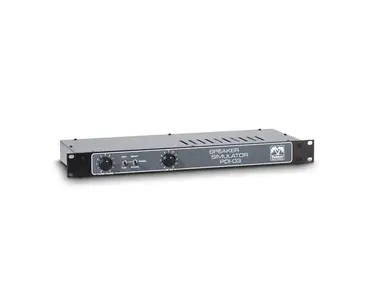
Bass tech Robert “Bucky” Huck says that bassist Jay DeMarcus’ rig comprises an Avalon 737 through a Distressor EL8-X comp and an Ampeg SVT Classic through a Distressor EL8-X comp and a Palmer PDI-03 direct box. “It starts with three Shure UR4D dual wirelesses into an Amp Gizmo custom splitter I had them design with eight ins and four outs,” Huck says. “One out goes to the Ampeg side and one out goes to the Avalon side. I also have a second rig built in the rack for our pedal-steel player, Travis Toy. He plays bass when Jay is on keyboards. His rig is completely separate on the Avalon side, but they both share the Ampeg side with the use of a Tour Supply Amp Selector.”
Find it on:

Bass tech Robert “Bucky” Huck says that bassist Jay DeMarcus’ rig comprises an Avalon 737 through a Distressor EL8-X comp and an Ampeg SVT Classic through a Distressor EL8-X comp and a Palmer PDI-03 direct box. “It starts with three Shure UR4D dual wirelesses into an Amp Gizmo custom splitter I had them design with eight ins and four outs,” Huck says. “One out goes to the Ampeg side and one out goes to the Avalon side. I also have a second rig built in the rack for our pedal-steel player, Travis Toy. He plays bass when Jay is on keyboards. His rig is completely separate on the Avalon side, but they both share the Ampeg side with the use of a Tour Supply Amp Selector.”
Find it on:

Jay has a 1959 höfner violin bass that he uses for recording and performing Live. The bass was featured in Rascal Flatts music video for their song “Changed”. The bass was also used live on the same song during their 2012-2013 Changed tour.
Find it on:

Starting in 2007, Jay started using a Tobacco sunburst Gibson LP3 Bass. The bass was only played on the Rascal Flatts song “Me & My Gang. The only official Pro shot footage of Jay playing the bass was from a special concert for “Yahoo Nissan live sets” in 2007. The bass has been caught on film being used by Jay during the Rascal Flatts “still feels good” tour from mid 2007 to mid 2008. Since then the bass has not been brought out on any more Rascal Flatts tours. Video of the Yahoo Nissan live set’s performance can no longer be found online but the official audio released by rascal Flatts can be found on their Greatest hits volume 1 record.
Find it on:
This is a community-built gear list for Jay DeMarcus.
- Find relevant music gear like Microphones, Bass Guitars, Amplifiers, Effects Pedals, Pianos, Keyboards and Synthesizers, Studio Equipment, Software Plugins and VSTs, Headphones, and other instruments and add it to Jay DeMarcus.
- The best places to look for gear usage are typically on the artist's social media, YouTube, live performance images, and interviews.
- To receive email updates when Jay DeMarcus is seen with new gear, follow the artist.
Album Credits
-

Nashville Cast · 2014
Producer -
Jennette McCurdy · 2012
Producer -
Chicago · 2006
Producer


