Table of Contents

Equipboard
Equipboard is the world's largest community of artists and their gear. Read our review process.
We are reader-supported. When you buy through links on our site, we may earn an affiliate commission. Learn more.
Our Picks
-l.webp?v=1784991608)
Best Vintage Sound: Epiphone Casino delivers authentic 1960s hollow body tones in a historically significant instrument that has shaped countless recordings from the Beatles to modern indie rock.
Read more


Best Budget-Friendly Hollow Body: Ibanez Artcore AF75 delivers remarkable build quality and versatile tones at an entry-level price point, making traditional hollow body design accessible to players on tight budgets.
Read more
Best Boutique Option: Eastman AR503CE combines old-world craftsmanship with modern reliability in a hand-built instrument that rivals the tone and feel of vintage archtops at a fraction of their cost.
Read more

The Godin 5th Avenue Kingpin delivers authentic vintage archtop tones, solid build quality, and exceptional value, making it an ideal choice for guitarists seeking classic aesthetics without the premium price tag.
Read more
The PRS Hollowbody II is a high-quality, versatile guitar featuring excellent craftsmanship, carved figured maple construction, dual humbuckers, and a piezo pickup system, making it ideal for musicians seeking both electric and acoustic tones.
Read more
-l.webp?v=1784732434)
The Fender Coronado II is a modern reimagining of a vintage oddity, offering improved playability, versatile twangy tones, and solid craftsmanship, making it a great option for musicians seeking retro appeal with modern reliability.
Read more


Best Premium Iconic Choice: Gretsch White Falcon G6136-55GE delivers breathtaking craftsmanship and distinctive bright tones in a visually striking package that has captivated professionals and collectors for generations.
Read more-l.webp?v=1784991562)
Gretsch G5420T Electromatic Hollow Body
Best Vintage-Style Hollow Body: Gretsch G5420T Electromatic delivers authentic Gretsch aesthetics and tones at a remarkably accessible price point, perfect for players seeking vintage character without the premium cost.
Read more
Best Premium Jazz Hollowbody: D'Angelico Excel EXL-1 combines timeless archtop design with impeccable craftsmanship to deliver the quintessential jazz guitar experience for discriminating professionals.
Read more
Gretsch G6120T Players Edition Nashville
Best Overall Hollow Body Guitar: Gretsch G6120T Players Edition Nashville boasts versatile vintage tones with modern playability, becoming the go-to choice for professionals across multiple genres.
Read more
The unmistakable warm, resonant tones of hollow body electric guitars have shaped countless iconic recordings across jazz, blues, rockabilly, and vintage rock genres. These instruments offer a distinctive sonic character that sets them apart from their solid-body counterparts, with a rich acoustic quality that remains highly sought after by musicians looking to capture that classic sound.
Whether you're a seasoned professional seeking the perfect jazz box or a beginner drawn to these elegant instruments, this comprehensive guide will walk you through everything you need to know about selecting the ideal hollow body electric guitar.
What Are Hollow Body Electric Guitars?
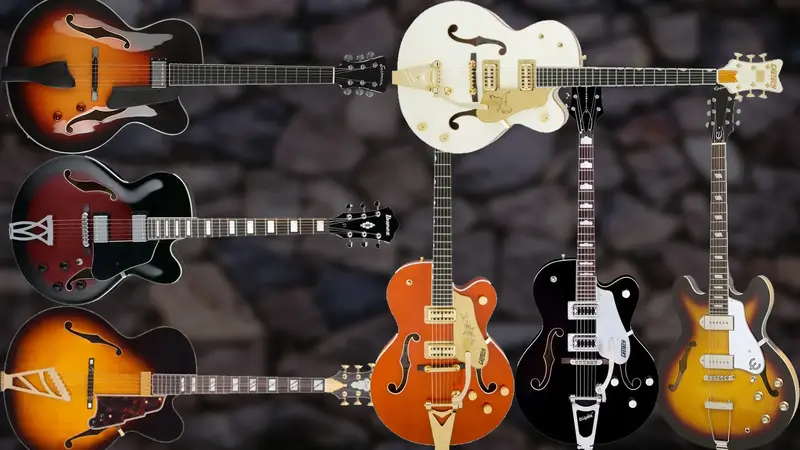
Unlike solid-body guitars, hollow body instruments feature a completely hollow interior, similar to acoustic guitars but with electric pickups added. This design creates a distinctive resonance and natural acoustic projection even before amplification.
Hollow body guitars differ from semi-hollow models, which feature a solid center block running through the body. True hollow bodies have no center block, allowing for greater acoustic resonance but sometimes making them more susceptible to feedback at high volumes. The fully hollow construction contributes to their warm, full-bodied tone with enhanced bass response and natural sustain that's particularly well-suited for jazz, blues, and rockabilly styles.
These guitars first rose to prominence in the 1930s and 1940s, when guitarists needed instruments with greater volume for big band settings. Manufacturers like Gibson and Gretsch pioneered early hollow body electric designs that continue to influence contemporary models. The hollow body sound became synonymous with legendary players like Wes Montgomery, Chuck Berry, and Chet Atkins, helping to define entire musical genres.
Today's hollow body guitars maintain these classic characteristics while incorporating modern improvements in construction, electronics, and playability. They remain the go-to choice for players seeking that authentic vintage tone with the conveniences of contemporary design.
Key Considerations for Selecting a Hollow Body Guitar
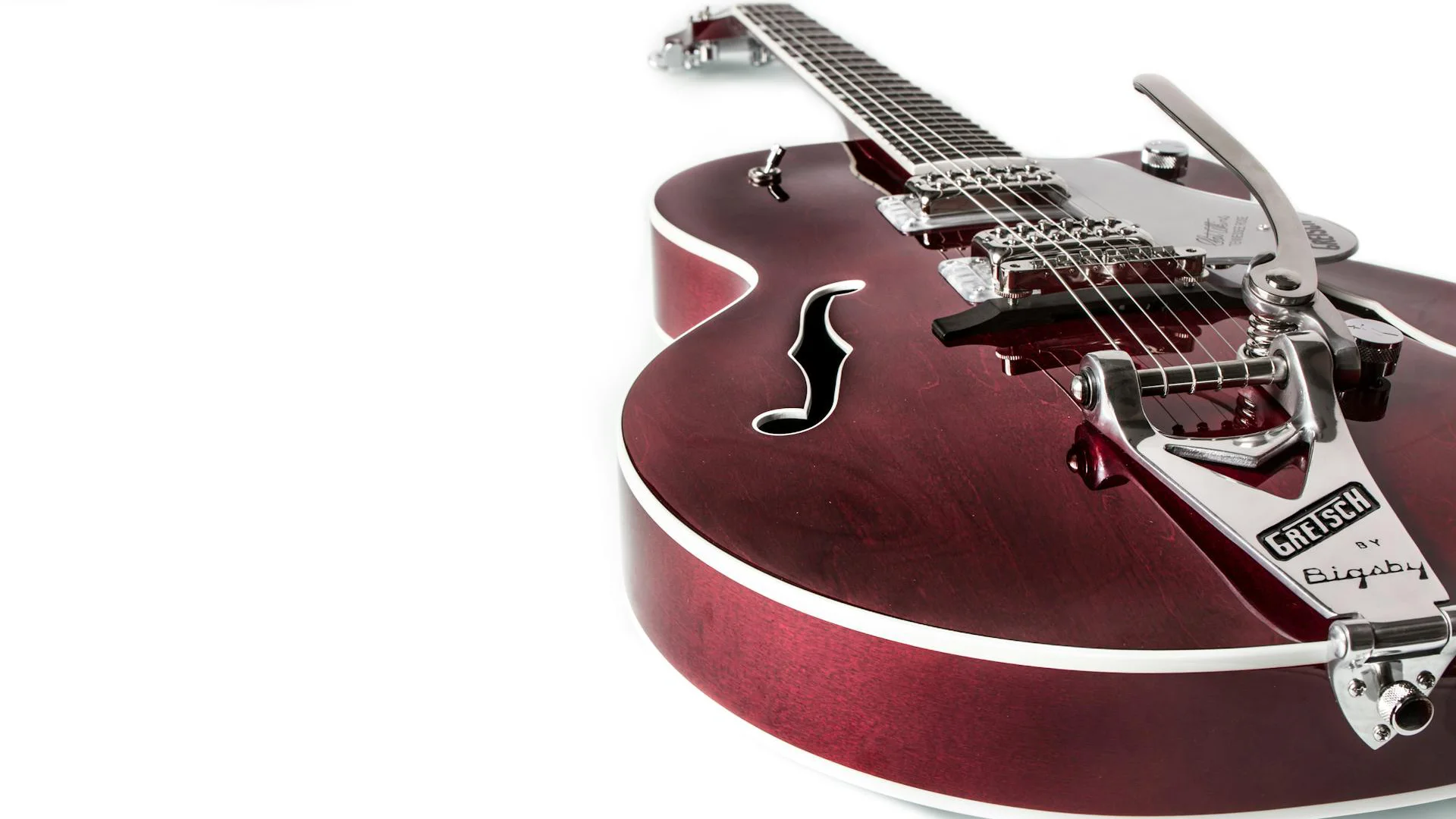
When shopping for a hollow body guitar, several important factors will influence your decision. Understanding these elements will help you make a more informed choice based on your playing style, preferences, and budget.
Body Size and Construction
Hollow body guitars come in various sizes, from full 17-inch jazz boxes to more compact 15-inch models. Larger bodies typically offer more acoustic volume and bass response, while smaller bodies can be more comfortable to play and less prone to feedback.
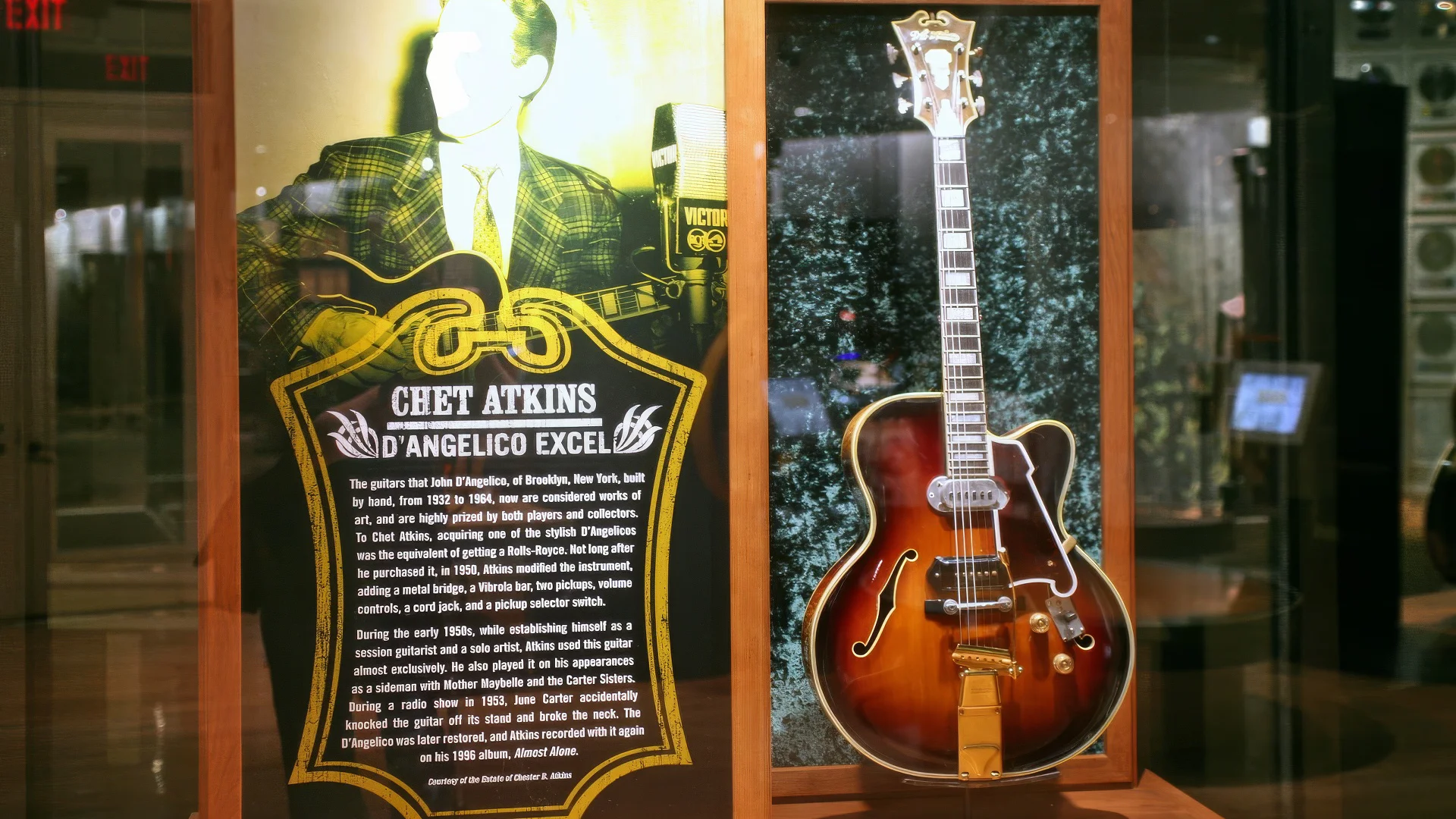
The body depth also significantly affects tone and handling. Traditional jazz guitars like the D'Angelico Excel EXL-1 often feature deeper bodies (up to 3.5 inches) for maximum acoustic resonance, while thinner bodies (around 2 inches) offer greater comfort and feedback resistance when playing at higher volumes.
Construction methods vary across manufacturers, with some using solid carved tops and others employing laminated woods. Solid-topped instruments generally offer superior acoustic properties but come at a higher price point, while laminated construction provides greater stability and feedback resistance.
Tonewoods and Craftsmanship
Like acoustic guitars, the woods used in hollow body construction profoundly influence the instrument's tonal character. Common top woods include spruce for clarity and maple for brightness, while mahogany backs and sides typically add warmth and richness.
The neck wood and construction method also impact playability and tone. Mahogany necks tend to provide warmth, while maple necks add brightness and attack. The neck joint construction, whether set-neck or neck-through design, affects sustain and upper fret access.
Pickup Types and Configurations
Hollow body guitars typically feature one of two pickup configurations:
Single pickup designs (usually neck position) are common on traditional jazz guitars, offering warm, smooth tones perfect for jazz and blues.
Dual pickup configurations provide greater tonal variety, with neck and bridge pickups allowing players to select different sounds for rhythm and lead playing.
Pickup types range from vintage-style single coils to PAF-style humbuckers to specialized designs like Filter'Trons. Each offers distinct tonal characteristics, with humbuckers generally providing warmer, feedback-resistant performance ideal for hollow body instruments.
Modern switching options often include coil splits and phase options for expanded tonal versatility beyond traditional hollow body sounds.
Build Quality and Stability
Structural integrity becomes particularly important with hollow body guitars due to their complex construction. Bracing patterns inside the body provide necessary support while allowing the top to vibrate freely.
Hardware quality directly impacts tuning stability and sustain. Look for solid bridges, quality tuning machines, and proper nut construction. These elements become especially crucial for hollow bodies with vibrato systems like Bigsbys on the Gretsch G5420T Electromatic, which place additional demands on the instrument's stability.
Portability and Handling
Hollow body guitars generally weigh less than solid-body counterparts, making them more comfortable for long performances. However, their larger bodies can make them bulkier to transport and handle on stage.
Balance on the strap is another important consideration, as some hollow body models may be neck-heavy. Good balance makes for more comfortable playing sessions, especially during longer performances.
Cases designed specifically for hollow body guitars are recommended due to their unique dimensions and greater susceptibility to damage from temperature changes and humidity.
Top Hollow Body Guitars
Here are the top recommendations across various categories. Each selection represents exceptional quality and value within its price category.
Epiphone Casino
4.5 (207)
The Beatles' Favorite
-s.webp?v=1784991608)





Average Price: $673
Budget/Beginner
$999
$2500+
Budget
Standard
High-end
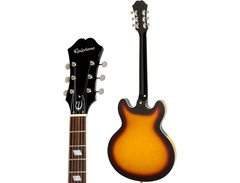
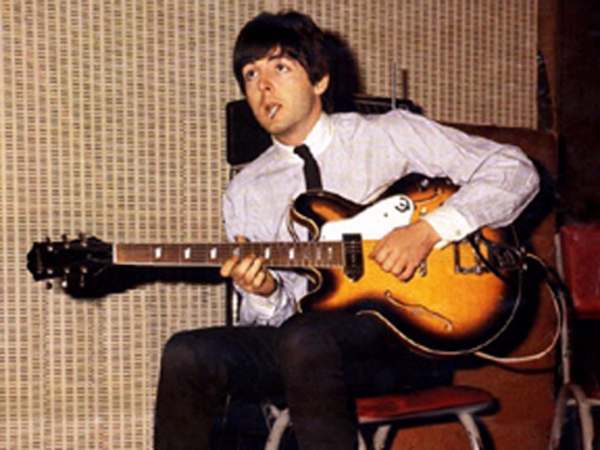
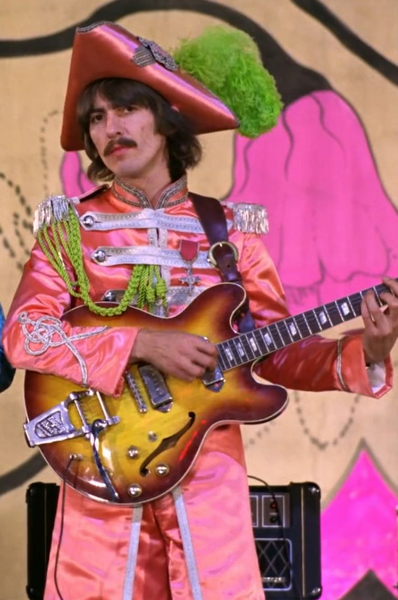
The Epiphone Casino holds a special place in guitar history as one of the most influential hollow body models ever produced. This fully hollow design became famous through its association with The Beatles, with Paul, George, and John all playing Casinos during their most innovative recording period.
Historic Significance
Unlike many hollow body guitars that feature a laminated maple construction, the Casino utilizes a different approach to achieve its distinctive sound. The full hollow body construction with layered maple delivers an exceptionally open and resonant tone that defined numerous classic recordings.
The Casino's influence extends beyond the Beatles to artists like Howlin' Wolf, Keith Richards, and Noel Gallagher, cementing its place in multiple musical genres. This historical pedigree makes the Casino more than just a guitar, but a connection to pivotal moments in music history.
Distinctive P-90 Sound
The dual Epiphone Pro P-90 pickups define the Casino's sonic character, delivering all the chime, bite, and powerful low-end response that has made this pickup design legendary since the 1940s. These pickups provide a distinctive voice that sits between traditional single coils and humbuckers.
The P-90 equipped Casino produces a tone that can be simultaneously warm and aggressive, with excellent dynamic response and harmonic complexity. This tonal versatility has made it suitable for everything from delicate fingerstyle jazz to aggressive rock and roll.
Comfortable Playability
The Casino features a mahogany neck carved into a fast-feeling SlimTaper '60s "C" profile that provides exceptional comfort for both chord work and lead playing. This neck profile has proven popular across musical styles and playing techniques.
The Indian laurel fingerboard with a 12-inch radius offers a comfortable playing surface with moderate curvature that balances chord playing and single-note runs. The parallelogram inlays provide classic visual aesthetics while maintaining the instrument's vintage appeal.
Hardware includes a LockTone Tune-o-matic bridge, old-school diamond trapeze tailpiece, and Epiphone Vintage Deluxe tuners that together ensure solid tuning stability and excellent intonation across the fingerboard.
See how artists use this






.png?v=1784946700)


Ibanez Artcore AF75
4.0 (11)
Affordable Versatility

Average Price: $471
Budget/Beginner
$500
$1201+
Budget
Standard
High-end
- Exceptional natural, unamplified sound; doubles as an acoustic guitar
- Impeccable finish and eye-catching design
- Offers excellent value for money compared to high-end jazzboxes
- Responsive and fun to play; ideal for jazz and soft rock
- See 6 more
- Slightly muted amplified sound may not appeal to all
- Occasional fret buzz; requires string or action adjustments
- Tuning stability issues, possibly due to nut slot design
- Some minor finish imperfections under the neck
- See 1 more
The Ibanez Artcore AF75 has earned a reputation as one of the most impressive values in the hollow body market, delivering quality construction and versatile tones at a price point that beginning and intermediate players can afford. This model brings traditional hollow body design to musicians who might otherwise be priced out of this guitar category.
Traditional Design
The AF75 embraces a traditional hollow body approach with its full-sized body constructed of maple top, back, and sides. This classic configuration delivers the fat tones associated with vintage jazz boxes while maintaining excellent projection and clarity.
The mahogany set-in neck provides a warm tonal foundation and comfortable playability, complementing the hollow body resonance with excellent sustain. The bound rosewood fingerboard with 20 medium frets and pearl block inlays offers both visual appeal and comfortable playability across styles.
Versatile Electronics
A pair of ACH humbuckers provides warm hollow body tones with excellent clarity and feedback resistance. These pickups offer impressive versatility, performing well across jazz, blues, rock, and even lighter fusion styles.
The traditional control layout includes independent volume and tone controls for each pickup, allowing for precise tonal shaping and blend options. This arrangement gives players access to a wide palette of sounds from a single instrument.
Impressive Value
What truly distinguishes the AF75 is the level of quality achieved at its price point. The construction details, hardware quality, and overall fit and finish significantly exceed expectations for instruments in this price range.
The AF75 serves as an excellent introduction to hollow body guitars for players exploring these instruments for the first time. It also makes a capable backup instrument for more experienced players who need a reliable hollow body option without investing in a premium model.
While it lacks some of the refinement and premium features of more expensive options, the AF75 delivers the essential hollow body experience without compromise to fundamental playability and tone.
Eastman AR503CE
Handcrafted Excellence

Average Price: $1,474
High-end/Boutique
$500
$1201+
Budget
Standard
High-end
- Solid carved spruce top offers exceptional tone and responsiveness
- Combination of carved top with laminated sides/back enhances sound and playability
- Articulate sound with both dark and bright tones, ideal for jazz
- Seymour Duncan Seth Lover pickup enhances sound quality
- See 6 more
- Intonation problems, especially with the G string, may require a saddle modification
- Factory tuners often criticized for looks and functionality, may need upgrading
- Binding and f-hole finishing have minor imperfections
- Non-standard bridge base stud spacing may complicate saddle replacements
- See 1 more
The Eastman AR503CE represents a different approach to hollow body guitar manufacturing, with hand-carved components and traditional construction methods more commonly associated with high-end boutique builders. This approach delivers exceptional quality and tone at a price point significantly below comparable custom-built instruments.
Traditional Construction Methods
The AR503CE features genuine hand-carved components, including a solid 16-inch Sitka spruce top that delivers excellent balance in projection and tonal response. This traditional construction method allows the top to vibrate more freely than mass-produced alternatives, resulting in superior acoustic properties.
The maple back and sides combine resonance with detailed articulation and brightness, creating an instrument with excellent projection and clarity. These tonewoods are shaped using traditional methods that respect the heritage of classic archtop design.
Refined Neck Profile
The three-piece dovetail maple neck with Traditional Even "C" profile enhances brightness while providing a comfortable hold for extended playing sessions. This neck design balances vintage feel with modern playability.
The 20-fret unmarked bound ebony fingerboard encourages fantastic sustain while offering the smooth feel preferred by many jazz and blues players. The lack of position markers creates a clean, sophisticated aesthetic that many professionals prefer.
Premium Electronics and Hardware
The Seymour Duncan Seth Lover neck humbucker delivers smooth and rich response across all frequencies, capturing the essence of PAF-style vintage pickups. This meticulously designed pickup offers exceptional clarity with the warmth and body that hollow body players seek.
Master Volume and Tone controls permit precise sonic shaping, allowing players to dial in everything from vintage jazz warmth to more contemporary clarity. The quality of these components ensures smooth operation and precise control.
The hardware includes sealed chrome Pingwell RM-1271 tuners that maintain excellent tuning stability, while the classic narrow ebony pickguard, tailpiece, and bridge not only look incredible but also work to enhance sustain.
Classy details are abundant, featuring ivoroid binding on both the body and neck, amber bell knobs, and a beautifully scripted headstock logo, all of which perfectly complete the vintage-inspired aesthetic.
Godin 5th Avenue Kingpin
4.5 (13)
Vintage Archtype Vibes


Average Price: $773
Budget/Beginner
$999
$2500+
Budget
Standard
High-end
- Vintage aesthetic with beautiful matte finish and rich woodgrain
- Lightweight and comfortable, ideal for both seated and standing play
- Smooth fretwork and neck for easy playability, even with challenging chords
- Offers warm, clean tones with versatility for jazz, rockabilly, and more
- See 6 more
- Acoustic sound is quieter and tinny compared to full acoustic guitars
- P90 pickup can be noisy, especially noticeable in recordings
- Pickup height adjustment is limited; modifications may be necessary
- Feedback issues at high volume levels when amplified
- See 1 more
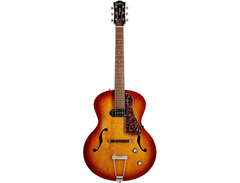
A modern archtop that oozes vintage appeal, the Godin 5th Avenue Kingpin archtop presents a unique value to the musician on the hunt for a traditional archtop that won’t break the bank. Benefiting from Godin’s decades worth of experience (the Canadian based company was founded in 1972 by Robert Godin), the Godin 5th Avenue Kingpin is one of the few modern archtops capable of reproducing vintage tones without sacrificing quality or affordability.
To preface this review, it should be made clear that there are three main variations to the 5trh Avenue line. There is the Fifth Avenue, the Fifth Avenue Kingpin, and the Fifth Avenue Kingpin II (which comes with either two P90 pickups or two humbuckers). The models are very similar in terms of specifications so most of the following review will apply to the different models. The main difference is just the available pickup configurations.
The most important feature of the Godin 5th Avenue Kingpin is that it’s essentially an acoustic guitar with a P90 screwed into the top. The P90 damps the resonance and tone of the guitar unplugged, but the acoustic properties that instrument still retains does have an impact on its amplified tone. The guitar is also capable of being played as an acoustic instrument, but if you’re looking for a true acoustic archtop sound we would recommend considering either the Loar LH-600 or the Godin 5th Avenue (the Kingpin moniker denotes that the guitar comes with a pickup).
Interestingly, the Godin 5th Avenue Kingpin is one of the few guitars made with Canadian Wild Cherry. As a tonewood, cherry is analogous to maple, though some describe it as being a bit brighter. However, though it’s less common than other tonewoods that doesn’t mean that it’s any less suited to producing a quality instrument. In fact, due to the shortage of quality tonewoods (try buying Brazillian rosewood sometime) cherry is actually a very ecologically friendly and sustainable choice for the environmentally conscious musician.
Considering that the guitar comes with a 1.72” nut width some musicians may find the Fifth Avenue Kingpin’s neck to be a bit on the hefty side. While this may be an inconvenience to those of you with smaller hands, it actually is a plus for playing the complicated chords you generally find in Jazz and the its subgenres. The Godin Fifth Avenue Kinpin is available in three different finishes, cognac burst, natural, and black. The Godin 5th Avenue Kingpin II is available in Burgundy.
While the amplified sound of the Godin 5th Avenue Kingpin isn’t lacking in any way, some may find that the P90 is a bit too thin to easily get a good jazz sound. That doesn’t mean that the guitar isn’t capable of being a great jazz instrument, it’ll just be a bit harder to achieve. If you’re looking to play jazz exclusively you may find that the Kingpin II with humbuckers will be a better fit for your needs.
While the 5th Avenue Kingpin does sound good unplugged, it’s never going to compete with a true acoustic archtop. If that’s what you’re looking for, you will want to look elsewhere. While the guitar is pleasing to the ear and has enough volume to make unplugged practicing a realistic option, it doesn’t have the mid-range honk that’s exclusive to a good acoustic archtop. However, it definitely does have more viability as an acoustic instrument than most other pickup equipped archtops in its price range.
Structurally, the Godin 5th Avenue Kingpin is just as durable as any of its competitors. And though the brand may not be as widespread as Epiphone or Gretsch, Godin has always had a great track record for producing high quality instruments. The fit and finish of this model is generally superb, and there hasn’t been any widespread reports of issues like improper neck angles or a higher than average susceptibility to damage caused by changes in temperature or humidity. Of course be sure to check the instrument before you purchase it. Every company is capable of turning out a lemon, and though Godin has a great track record they’re no exception
The Godin 5th Avenue Kingpin is a great fit for the musician who’s looking for a great guitar with a unique vintage vibe. Short of buying an old Kay or Harmony archtop (both of which will generally require expensive repairs before they’re brought up to an acceptable level of playability) and slapping a pickup on it there’s no guitar being produce today that offers the features found in the Kingpin at a price that most musicians can afford.
See how artists use this







.jpg?v=1784985830)

PRS Hollowbody II
5.0 (17)
Masterful Craftsmanship Meets Sonic Versatility

Average Price: $5,519
High-end/Boutique
$999
$2500+
Budget
Standard
High-end
- Lightweight design makes it comfortable for extended playing sessions
- Versatile tones suitable for blues, rock, and jazz
- Excellent build quality with top-notch fit and finish
- Combines tones of humbuckers and piezo for unique sound options
- See 5 more
- Not suitable for metal due to limited distortion capabilities
- Tends to feedback (larsen) easily
- Requires more finger pressure for bending and tremolo due to string setup
First debuted at the 1985 NAMM show, PRS has been one of the premier guitar manufacturers for decades. A true rags to riches story, Paul Reed Smith (the master luthier who first conceptualized the brand) began building his own guitars in the mid-70s. The superior quality of his instruments was quickly noted by musical luminaries such as Derek St. Homes, Stanley Whitaker, and Carlos Santana.
The PRS Hollowbody II is a newer addition to PRS’s lineup, and comes equipped with a wide variety of features that makes it incredibly attractive to modern musicians.
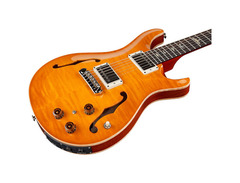
The PRS Hollowbody II is definitely a feature packed guitar. In addition to sporting two humbuckers (both of which are wound and manufactured at the PRS factory) the PRS Hollowbody II sports a LR Baggs/PRS Piezo Pickup system. The piezo pickup offers musicians acoustic tones, and though a piezo in an electric guitar won’t sound quite as realistic as an acoustic instrument it provides a close enough approximation to a genuine acoustic tone that it will sound relatively realistic to the uninitiated As an added bonus, the guitar also features two output jacks which will allow musician to run the piezo through a DI box or a soundboard. The piezo pickup can also be blended into main output jack, allowing musician to blend both acoustic and electric tones.
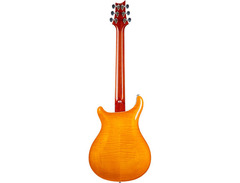
Interestingly, the PRS Hollowbody II features carved figured maple back and sides. As a general rule, most hollow and semi-hollow body electric guitars utilize laminated woods. While this does add to the end cost of the instrument, it definitely does enhance its resonance and sustain. The carved back and sides may lead to more feedback issues than you’d run into with a laminate instrument, though the difference is less severe because the guitar is a thinline (a thinner type of electric archtop) model.
With the exception of its lower quality models (generally those manufactured over seas) every PRS guitar features proprietary hardware. Every piece of a PRS guitar is undoubtedly well made, though should you have to replace anything on the guitar it will most likely be more expensive and harder to find than the equivalent part on a Fender or Gibson.
The PRS Hollowbody II is available in 18 distinct finishes. There is also a single cutaway version of the guitar. The PRS Singlecut Hollowbody II is essentially the same guitar except it doesn’t have a cutaway on the upper bout. The dimensions, hardware, and pickups are all the same.
PRS really does get a bad rap for producing metal or hard rock guitars exclusively, when in reality PRS arguably makes some of the most versatile instruments you’re likely to find. While no guitar is going to be able to cover every genre comfortably the PRS Hollowbody II is definitely capable of producing a wider variety of sounds than just about any hollowbody guitar out there. Everything from clean jazz to spiky hard rock is achievable with this instrument. Musicians as diverse as Jack Fowler and John Mayer have been seen sporting a PRS, and Carlos Santana has been using one as his main guitar for decades. In fact, Paul Reed Smith actually owes the majority of his success to Carlos Santana, as the brand was relatively unknown until it was adopted by the artist.
In regards to the PRS Hollowbody II in particular, the guitar is geared a bit more towards vintage sounds than some of the other instruments the brand produces. The 58/15 pickups have received rave reviews since their inception, and are meant to approximate the tone of Gibson PAF (what some consider the holy grail of Les Paul pickups) humbuckers.
As far as quality is concerned, PRS is on par with any independent luthier. Much like Bob Taylor, Paul Reed Smith started off as an independent luthier. Unlike some companies, Paul never compromised his ideals when he hit it big. Every American made PRS guitar is built to the same standards as his original instruments, which ensures a higher level of quality than a comparatively priced instrument from Gibson or Fender.
Though it may not be the most affordable instrument around, the PRS Hollowbody II has the potential to become the secret weapon of any guitarist. The instrument is just as well suited to gigging as it is to recording, and though it’s less capable of harder genres of music than some other guitars made by PRS at the end of the day it is an incredibly versatile instrument.
See how artists use this






Fender Coronado II
4.5 (23)
Vintage Charm Meets Modern Playability
-s.webp?v=1784732434)

Average Price: $2,100
High-end/Boutique
$500
$1201+
Budget
Standard
High-end
- Exceptional clean tone, comparable to the best in its class
- Unique DeArmond pickups offer a distinct sound profile
- Versatile; can deliver both bright and thick tones
- Vintage aesthetics with a modern playability
- See 6 more
- Can experience feedback issues at high volumes
- Some models may exhibit manufacturing inconsistencies (e.g., crooked neckplates)
- Thin body may feel flimsy compared to other semi-hollows like the 335
- Plastic logo on tailpiece prone to rattling and vibration
A modern take on a vintage oddity, the Fender Coronado II presents a unique value to the musician who’s on the hunt for something unique. Based on the short lived Coronado II (which though it had a small span of time in the spotlight following its use by Elvis Presley in Speedway was plagued by a number of issues that made it unappealing to musicians of the time) the modern reimagining of the instrument features a wide variety of modern appointments that make it a much more attractive instrument to both professional and hobbyist musicians.
The Coronado II is a semi-hollow guitar, utilizing an alder block in the center of the guitar to help prevent troublesome feedback issues at higher levels of volume and/or gain. This is a great plus for gigging musicians because feedback is an incredibly difficult issue to eliminate or control during a live performance.
Like most Fender instruments, the Coronado II utilizes a bolt on neck system as opposed to the set neck configuration more common to hollow and semi-hollow body instruments. While this is most likely a compromise on the part of Fender to keep costs low it really isn’t too detrimental to the final tone of the instrument. While it does limit sustain and resonance this can be compensated for by either using an active EQ or a higher level of gain. The neck of the Coronado II is made from maple and the fretboard is rosewood. The only real downside to the Coronado II’s neck is that it doesn’t use a bone nut. Synthetic bone does negatively impact the tone of an instrument, but thankfully it’s pretty cheap to get a luthier to cut out a bone nut for you instrument. However, this upgrade is an extra cost that musicians shouldn’t have to make with a new instrument. The nut width of the Fender Coronado II comes in at 1.650”, which is a bit thinner than the industry standard of 1.68”.
As far as hardware is concerned, the Coronado II is adequate for a guitar in this price range. You shouldn’t have to worry about intonation or playability beyond what you would with any instrument. The laminate maple body is also a nice touch, and though it doesn’t impact the tone in a verifiable way it definitely does make for an attractive instrument. The Fender Coronado II is available in four different finishes, 3-color sunburst, black, black cherry burst, and candy apple red.
At its heart, the Coronado II is a Gretsch made to Fender’s specs (though Fender does own Gretsch it has kept the two brands differentiated from each other relatively well). The guitar features Fideli’Tron pickups. The pickups on the original Coronado II were made by DeArmond. DeArmond was known for producing very unique sounding pickups, highly regarded for both their chime and high end bite. Fender’s use of Fideli’Tron pickups in this model is likely an attempt to approximate the sound of pickups found in the original, though they’re not entirely faithful to the tone of the originals.
However, that’s not to say that the Fender Coronado isn’t a great sounding instrument in its own right. It’s definitely capable of twangy country and blues tones, and in the right situations it really is a very versatile instrument. It’s never going to be a jazz or hard rock machine, but it can deliver a great approximation of blues or garage rock. In fact, Jack White even used an original Coronado from time to time when the White Stripes were still together.
As far as quality is concerned, the Coronado II is just as well built as any other instrument in its price range. Guitars made overseas are generally subject to less stringent levels of quality control, but by all accounts the Fender Coronado II generally comes fairly well set up from the factory. Unlike other manufacturers at this price tier Fender usually does perform pretty good fret work on their instruments, which is a plus for musicians who aren’t comfortable performing their own repairs or can’t justify the expense of taking a guitar to a luthier.
Though the Fender Coronado may not be quite as interesting as its inspiration, at the end of the day it is a quality instrument with a unique vintage appeal. It’s a great way for musicians to get a guitar with a unique old school feel without having to shell out a ton of cash to get something like an old Harmony or Kay up to a playable condition.
See how artists use this








Gretsch White Falcon
5.0 (24)
The Legendary White Bird

Average Price: $4,218
High-end/Boutique
$999
$2500+
Budget
Standard
High-end
- Unique sonic range with single coil pickups and full deep hollow body
- Stunning visual appeal; opulent design and impeccable fit and finish
- Rich tones with a distinctive bite and snarl, perfect for rockabilly
- Versatile sound for both clean and distorted styles
- See 3 more
- Potential issues with string rattling affecting playability
- Some may experience problems with intonation and tuning stability
- Vintage white finish might initially not appeal to all tastes
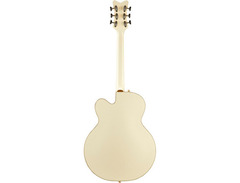
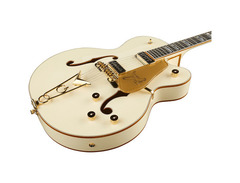
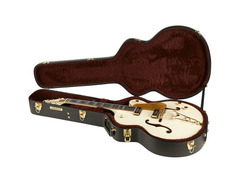
The Gretsch White Falcon stands as one of the most visually striking and tonally distinctive hollow body guitars ever created. This premium offering represents the pinnacle of Gretsch craftsmanship and continues to be a coveted instrument among professionals and serious collectors.
Heritage and Design
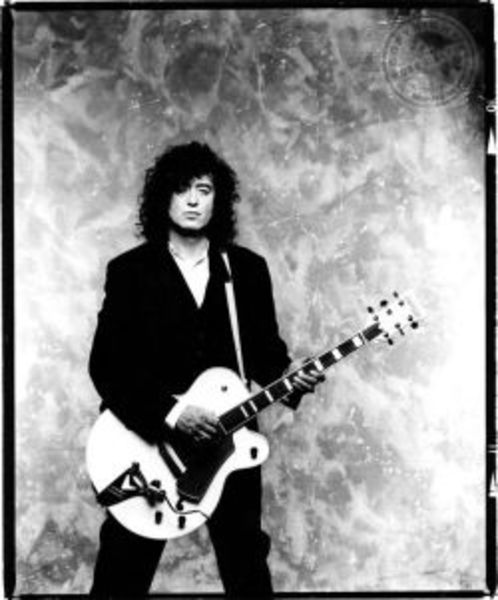
The White Falcon remains true to Jimmie Webster's original design, featuring an arched maple body finished in a stunning white with gold appointments. This period-correct recreation captures the essence of the instrument that has graced stages with artists ranging from Neil Young to Brian Setzer.
The visual details are nothing short of spectacular, with gold-sparkle binding, jeweled control knobs, and the iconic falcon headstock inlay. While undeniably flashy, these elements represent the pinnacle of instrument craftsmanship rather than mere decoration.
Tonal Character
The TV Jones T'Armond pickups deliver the sweet, vintage character that defines the White Falcon sound. These meticulously designed pickups capture the essence of the original PAF-style pickups while offering improved clarity and reduced noise.
The fully hollow maple body produces a remarkably snappy, open tone with excellent projection. This unique sonic signature combines brightness with a rich harmonic content that has made the White Falcon a favorite for everything from rockabilly to alternative rock.
Playability and Control
The White Falcon features a highly playable standard U-shaped maple neck paired with an ebony fingerboard. This combination provides both speed and comfort while contributing to the guitar's distinctive bright tonal character.
The control layout includes two volume controls and one master tone control, creating exceptional sonic flexibility. This arrangement allows players to blend the pickups in unique ways, achieving tonal variations impossible on many other hollow body designs.
While the White Falcon comes with a premium price tag, its combination of iconic status, superior craftsmanship, and distinctive tone make it a worthy investment for professionals and serious collectors seeking the ultimate expression of hollow body design.
See how artists use this





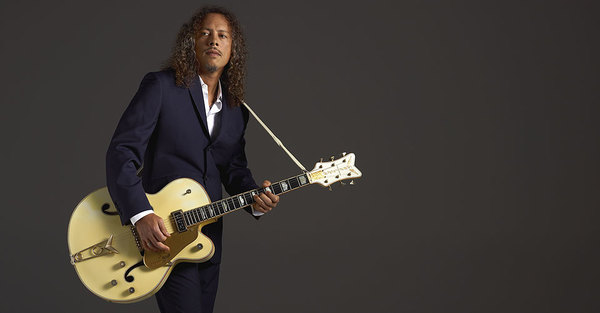


Gretsch G5420T Electromatic Hollow Body
4.5 (78)
Classic Gretsch on a Budget
-s.webp?v=1784991562)

Average Price: $741
Budget/Beginner
$999
$2500+
Budget
Standard
High-end
- Striking design with excellent fit and finish; stands out visually
- Bigsby tailpiece holds tune well, even with heavy use
- Recreates classic Gretsch sound with ease
- Fantastic pickups that enhance the guitar's tonal quality
- See 6 more
- Stock bridge may cause discomfort during play
- Tuning stability may require setup adjustments
- Some users prefer upgraded pickups for specific tonal preferences
- Vintage yellow binding may not appeal to all aesthetics
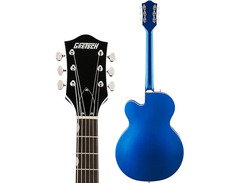
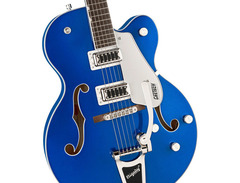
The Gretsch G5420T Electromatic brings the company's classic hollow body design and distinctive tone into a more affordable package without compromising the essential elements that make Gretsch instruments special. This model has become a favorite among players seeking vintage aesthetics and sound on a reasonable budget.
Construction and Bracing
The G5420T features the classic single-cutaway hollow body design with laminated maple for the top, back, and sides. This construction adds snap and definition to the sound while maintaining the fundamental hollow body character.
A key feature that separates this model from other budget offerings is the trestle-block bracing pattern. This sophisticated internal structure enhances sustain while significantly reducing the feedback issues that plague many hollow body designs, making the G5420T more practical for live performance settings.
Filter'Tron Sound
The FT-5E Filter'Tron pickups deliver the classic Gretsch punch and twang that has defined the brand's sound for decades. These pickups offer excellent clarity with a distinctive midrange character that works particularly well for roots music, rockabilly, and vintage rock styles.
The master volume comes equipped with a treble-bleed circuit that retains high-end shimmer when rolled back, allowing for dynamic volume control without losing the guitar's characteristic brightness and articulation.
Hardware and Playability
The G5420T includes a Bigsby-licensed B60 vibrato for subtle pitch modulation effects that remain a signature element of the Gretsch sound. This system allows for expressive playing techniques while maintaining reasonable tuning stability.
Aesthetic details include binding on the fingerboard and soundholes, adding class and visual distinction that captures the essence of much more expensive Gretsch models. The overall fit and finish significantly exceeds expectations at this price point, making the G5420T an exceptional value proposition.
While some hardware components don't match the quality of the higher-end Gretsch models, the G5420T delivers the core Gretsch experience at a price point accessible to a much wider range of players.
See how artists use this








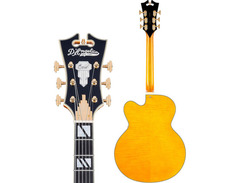
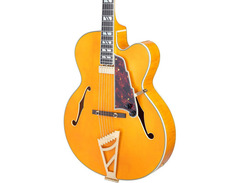
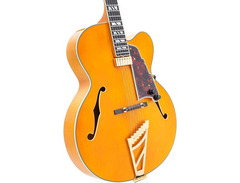
D'Angelico Excel EXL-1
The Jazz Box Perfected

Average Price: $1,720
High-end/Boutique
$500
$1201+
Budget
Standard
High-end
- Warm, mellow tone both acoustically and amped
- Attractive vintage aesthetic with meticulous attention to detail
- Versatile across genres like folk, blues, and jazz
- Excellent build quality and fit and finish
- See 3 more
- Inconsistent build quality reported; potential fretwork issues
- Tone pot sometimes ineffective in altering sound
- Glossy neck may not appeal to all players
- Limited acoustic resonance, especially from bass strings
- See 1 more
The D'Angelico Excel EXL-1 faithfully recreates John D'Angelico's original design, offering today's jazz guitarists access to one of the most revered archtop designs in history. This premium instrument represents the gold standard for jazz hollow body guitars.
Premium Tonewoods
The Excel EXL-1 features a laminated spruce top over maple back and sides, producing the classic archtop tone that has defined jazz guitar for generations. This traditional wood combination provides exceptional dynamic range with clarity and warmth that rewards nuanced playing techniques.
The three-piece maple/walnut/maple neck feels substantial in the hand, offering the stability and response that serious jazz players demand. This neck construction contributes to the guitar's distinctive tonal character while ensuring long-term stability.
Jazz-Focused Electronics
The Seymour Duncan Johnny Smith mini humbucker delivers transparent tones perfectly suited for jazz applications. This specialized pickup offers exceptional clarity and articulation, faithfully reproducing the natural acoustic character of the instrument.
The straightforward control layout focuses on sound quality rather than complexity, with volume and tone controls that offer intuitive response and excellent taper. The emphasis on simplicity ensures that nothing stands between the player and their musical expression.
Elegant Aesthetics
The Excel EXL-1 features art deco styling that brings old-school sophistication to the instrument. The distinctive headstock, tailpiece design, and multi-ply binding create an elegant visual presentation that matches the guitar's premium sound.
The 12-inch ebony fingerboard provides ample space for bending and technical playing, with a smooth feel that facilitates complex jazz voicings and fluid single-note lines. This playing surface perfectly complements the neck profile to create an instrument that disappears in the hands of experienced players.
While the Excel EXL-1 represents a significant investment, its combination of premium materials, superior craftsmanship, and focused design make it the definitive choice for serious jazz guitarists seeking an instrument that will inspire their playing for decades.




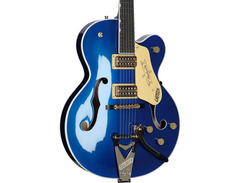
Gretsch G6120T Players Edition Nashville
5.0 (3)
The Nashville Tone Machine

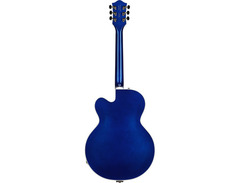
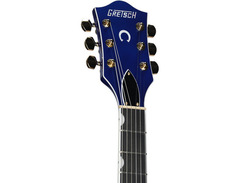
- Impeccable fit and finish with classic Gretsch orange and striking gold hardware
- FT-67 Filter'Trons offer a versatile tonal range from twangy to thumpy
- Comfortable neck carve and thinner body for easy playability
- String-thru Bigsby and locking tuners simplify restringing
- See 6 more
- Limited access beyond the 15th fret
- Initial tuning stability issues may require professional setup
The Gretsch G6120T Players Edition Nashville earns its place as the best overall hollow body by masterfully balancing classic tones with contemporary performance features. This model builds on Gretsch's storied heritage while incorporating thoughtful upgrades that address the needs of today's players.
Construction and Design
The G6120T features a maple laminate body with a slim 2.5-inch depth, striking an ideal balance between hollow body resonance and feedback resistance. This thinner body profile proves especially valuable for stage performances, allowing players to achieve higher volumes without fighting feedback issues common to fully hollow instruments.
The elegant design includes classic Gretsch appointments like the iconic orange finish, F-holes, binding, and horseshoe headstock inlay. These vintage-inspired aesthetics come paired with modern construction techniques that ensure greater consistency and durability compared to vintage instruments.
Sound and Electronics
At the heart of the G6120T's sound are the dual FT-67 Filter'Tron pickups, delivering the signature Gretsch twang and chime that has defined countless recordings. These pickups offer exceptional clarity with a distinctive midrange character that cuts through dense mixes.
The electronics include several player-friendly features, including a Treble Bleed circuit that maintains high-end clarity when rolling back the volume knob. The No-load Tone Pot with Squeezebox capacitor provides remarkable tonal flexibility, allowing players to transition from warm vintage timbres to bright, shimmering tones with a simple knob adjustment.
Playability and Performance
The memorable "U-shape” maple neck offers comfortable playability across genres, balancing vintage feel with contemporary comfort. The 12-inch radius ebony fingerboard facilitates both chord work and lead playing, making this an exceptionally versatile instrument.
One standout feature is the string-through bridge design paired with a Bigsby B6GP vibrato tailpiece. This combination enhances sustain and note definition while allowing for expressive bends and subtle vibrato effects. The addition of Gotoh locking tuners and a TUSQ XL nut ensures exceptional tuning stability, even with aggressive Bigsby use.
For stage performers, the Luminlay side dots provide perfect visibility in dark performance environments, addressing a common challenge for working musicians.
See how artists use this


Buying Advice and Practical Tips
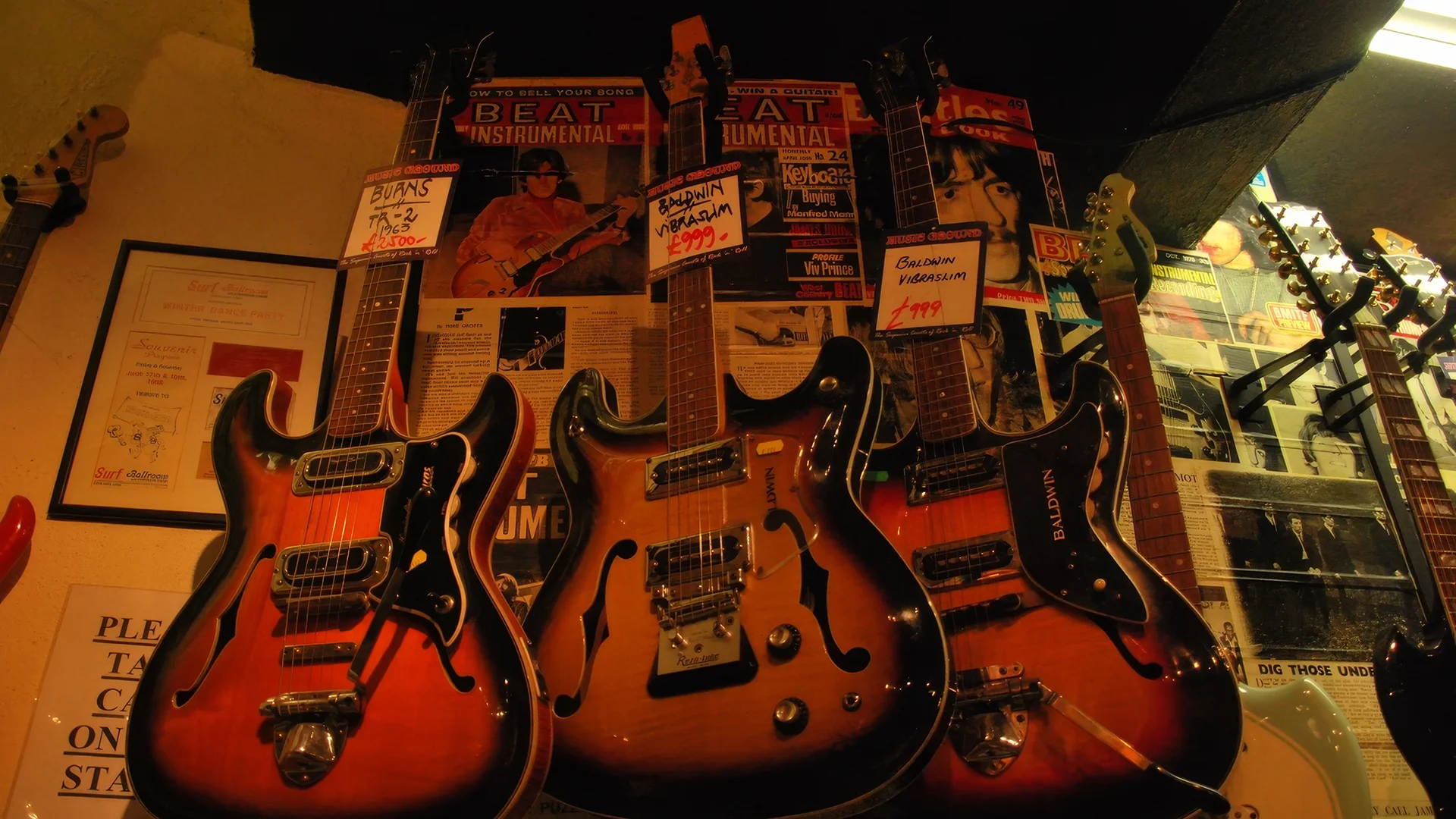
Selecting the right hollow body guitar requires considering both your playing needs and practical concerns. These additional tips will help guide your decision-making process toward finding your ideal instrument.
Matching Guitar to Playing Style
Consider your primary musical genres when selecting a hollow body guitar. Traditional jazz players typically prefer larger bodies with warmer tones like the Eastman AR503CE, while rockabilly and blues players might prefer instruments with more midrange bite and articulation like the White Falcon.
Scale length affects both playability and tone. Shorter scales (around 24.75") offer a warmer tone and slightly lower string tension, while longer scales (25.5") provide more brightness and tension. Your hand size and playing technique should influence this choice, with smaller hands often finding shorter scales more comfortable.
Pickup configuration should align with your sound requirements.
Inspecting Build Quality
When examining a hollow body guitar, pay special attention to the neck joint stability, as this area faces significant stress in hollow designs. Any movement or gaps indicate potential future problems.
Inspect the binding work around body edges, F-holes, and fingerboard for clean, consistent application. These details reveal much about the overall quality of construction.
Check the fretwork for smooth ends, level installation, and proper crowning. Well-executed fretwork dramatically improves playability and can save significant money on future maintenance.
Test the electronics thoroughly, listening for any crackling pots, loose jacks, or microphonic pickups. Quality control in these areas varies widely between manufacturers and even between individual instruments.
Maintenance Considerations
Hollow body guitars require more careful environmental control than solid body instruments due to their sensitivity to temperature and humidity changes. Maintaining stable conditions helps prevent top cracks and neck issues.
Regular cleaning inside the F-holes prevents dust buildup that can affect electronics and introduce unwanted noise. A soft, long-handled brush works well for this maintenance task.
Frequently Asked Questions
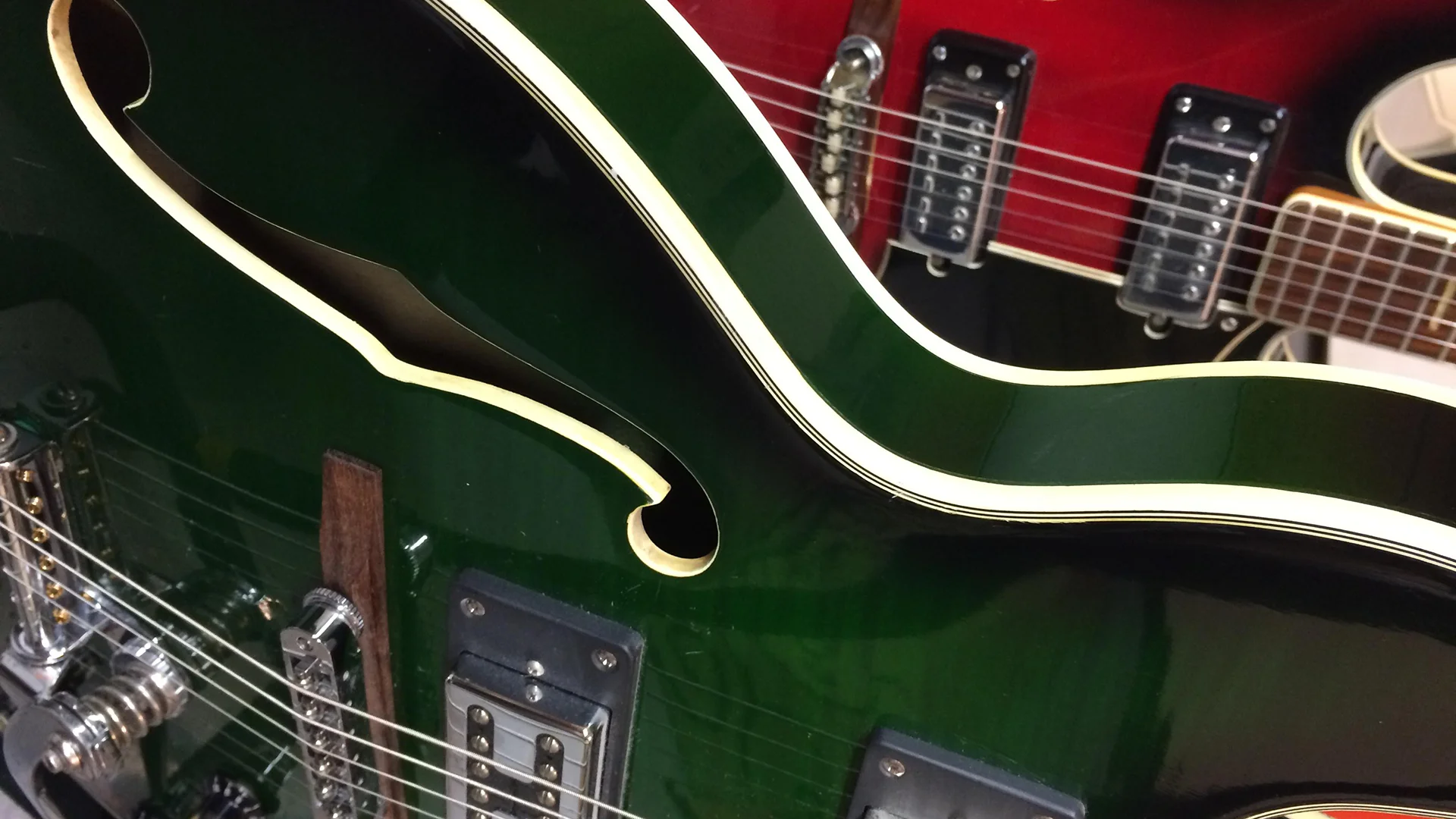
What's the difference between hollow and semi-hollow guitars?
Hollow body guitars feature a completely hollow interior with no solid center block, providing maximum acoustic resonance and natural projection. Semi-hollow guitars incorporate a solid center block running through the body's middle, which reduces feedback at high volumes and adds sustain. True hollow bodies offer more acoustic volume and resonance but can be more challenging to control at high amplification levels.
How does body shape and size influence tone?
Larger hollow bodies (17-18 inches) typically produce more bass response and acoustic volume, making them ideal for jazz and traditional styles. Medium-sized bodies (15-16 inches) offer a balance of resonance and manageability, suitable for various genres. Smaller bodies (14 inches and under) provide greater feedback resistance and comfort but sacrifice some of the acoustic properties of larger instruments. Body depth similarly affects tone, with deeper bodies producing more acoustic volume and bass response.
Are hollow body guitars suitable for beginners?
Hollow body guitars can be excellent choices for beginners interested in jazz, blues, or rockabilly styles. Models like the Ibanez Artcore AF75 offer affordable entry points with comfortable playability. However, beginners should consider several factors before choosing a hollow body: these guitars tend to be physically larger than solid bodies, which may challenge smaller players; they sometimes require more precise technique to control unwanted resonance; and budget models might have playability issues not found in comparable solid body instruments. For beginners drawn to hollow body tones, starting with a well-setup entry-level model can provide an excellent introduction to these distinctive instruments.
How to reduce feedback in hollow body guitars during live performances?
Controlling feedback with hollow body guitars requires a combination of techniques. Position yourself to avoid directly facing amplifiers and monitors, creating less opportunity for sound to enter the guitar's cavity. Consider using feedback suppressors or soundhole covers that physically block sound waves from entering the body. EQ adjustments can help by reducing problematic frequencies, particularly in the low-mids where hollow bodies tend to feedback most readily. Some players stuff soft material like foam into the body to dampen resonance, though this affects the natural acoustic properties. Finally, modern hybrid designs with thinner bodies and internal bracing offer hollow body tones with improved feedback resistance for high-volume situations.
Conclusion
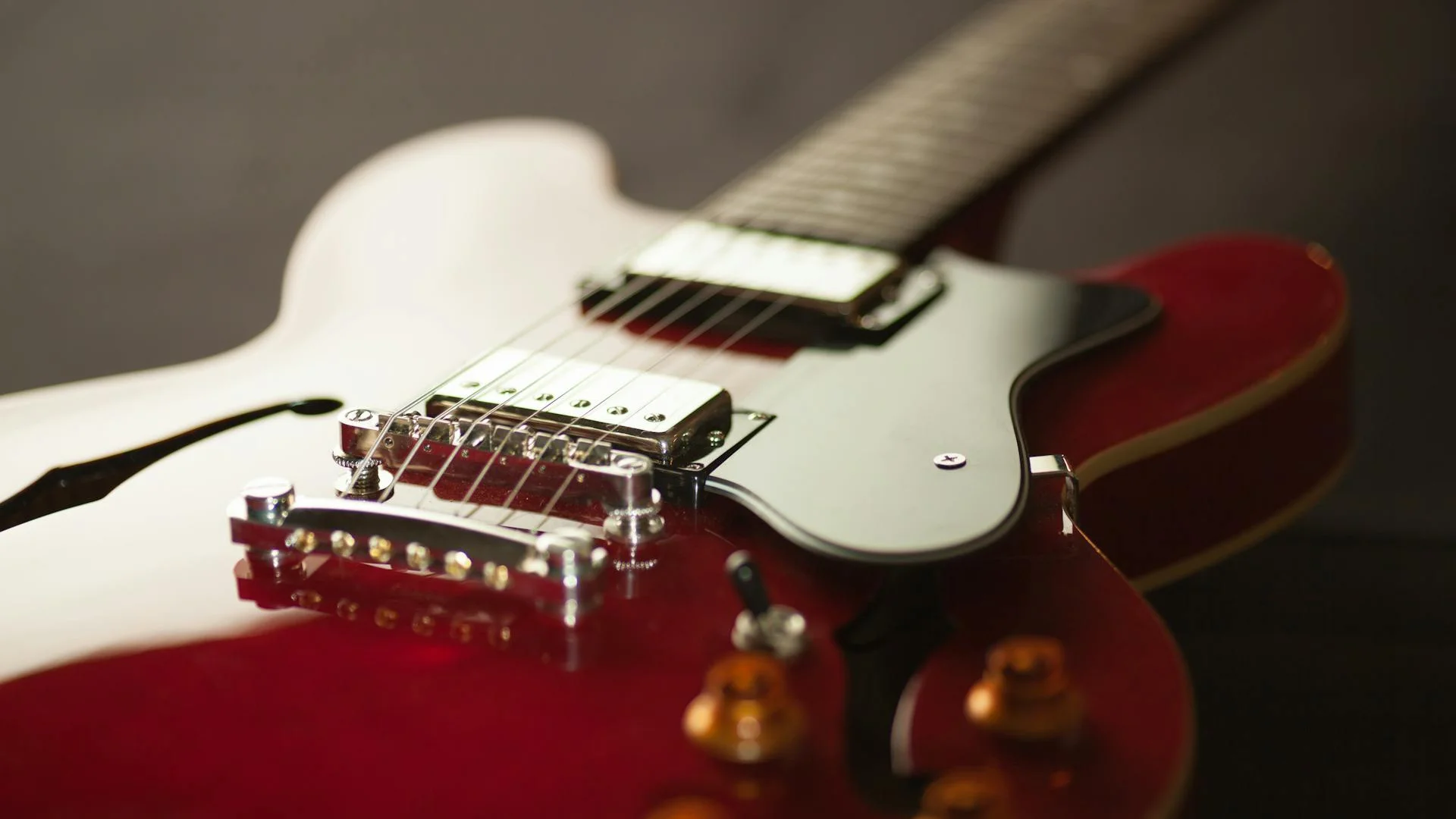
Hollow body electric guitars hold a special place in music history and continue to shape the sound of multiple genres today. Their distinctive tones, elegant aesthetics, and historical significance make them instruments with genuine character and soul that stand apart from other guitar types.
The models featured in this guide represent the finest hollow body options available, from professional-grade instruments to accessible entry points for newcomers. Each offers its own unique combination of tonal character, playability, and value that sets it apart from the competition.
When choosing your hollow body guitar, think about both your current playing style and your musical aspirations. These instruments often become longtime companions, developing more character with age and use.
Whether you're drawn to the rockabilly twang of a Gretsch G6120T, the jazz sophistication of a D'Angelico Excel EXL-1, or the raw expressive power of an Epiphone Casino, today's hollow body market offers exceptional options at every price point. Each guitar in this guide represents a distinctive approach to the hollow body tradition, with unique qualities that will resonate with different players.
The journey with a hollow body guitar opens up rich tonal possibilities and expressive potential unlike any other instrument type. As you explore these remarkable instruments, your playing will evolve alongside your appreciation for their unique sonic characteristics and historical significance.
Top Ranked Hollowbody Electric Guitars on Equipboard
-m.webp?v=1784991608)
-m.webp?v=1784991562)
-m.webp?v=1784991639)

-m.webp?v=1784905288)
About the authors

S. Jino is an accomplished multi-instrumentalist and music producer based in Kolkata, India, distinguished by his self-taught mastery and unique blend of technical acumen and musical performance. His extensive experience was forged through hands-on dedication, starting with the full restoration of a broken guitar. Jino's capabilities span keyboards, pedals, and advanced digital production, reflecting a comprehensive skill set developed independently. As a significant contributor to the music scene, Jino regularly performs with worship bands and college ensembles. He has also established himself as a reliable and authoritative professional in freelance mixing, mastering, and original music creation. Inspired by the innovative sounds of Brian May and David Gilmour, and influenced by Kolkata's vibrant metal community, Jino is committed to the intricate art of vintage gear restoration and the continuous exploration of music and technology fusion. His current professional setup, featuring a meticulously restored nameless guitar, a Fender Player Strat, and a Boss Katana 50. Read more
New in Hollowbody Electric Guitars


$2,880.00 - $4,299.00
in Hollowbody Electric Guitars Rank


$1,499.00 - $1,599.00
in Hollowbody Electric Guitars Rank


$1,129.00 - $1,299.99

$1,333.00 - $1,499.99
in Hollowbody Electric Guitars Rank


$5,799.00 - $7,760.00


-m.webp?v=1784992464)