
shrike's Reviews
11 reviews Back to shrike's Equipboard

192
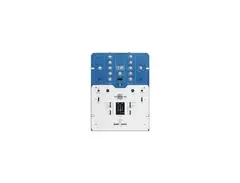
Well built for a beginner mixer
I tend to be harsher on products that have the word "Scratch" on them. After all, what does a DJ needs from a mixer that will be useful in a scratch setting?
Well you need to go back to the late-90s, when DJ mixers did not feature actual modern scratch-oriented crossfader. So in context, a scratch mixer would mean a 2-channel, 3-band EQ, and faders that have a faster and smoother travel than on traditional club DJ mixers . So for this, the SA-3 includes everything crucial to get the "Scratch" badge, even though you definitely cannot "cut" using that stock crossfader setting.
But by today standards, the SA-3 is at best a good introduction to classic analog DJ'ing methods. In a world where you can get a Numark Scratch, Native Instruments Z2, or Pioneer DJM'-250 for relatively cheap, there is no point in considering the SA-3.
192
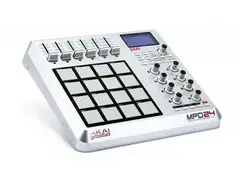
Ouch...
I had this for a couple of weeks and resold it. Wasn't happy at all with pad performance. Stiff pads were literally hurting my finger tips, which aren't soft after 20 years of playing guitar, but anyway. The faders... they bent after only a couple of hours of really soft play, and the knobs wouldn't stay straight, so the thing basically looked like a crooked smile. I really wanted to get a Akai feel, use Ableton Live as my sampler but definitely have an Akai hardware control surface.
In the end I bought a Maschine MK1 and a Korg Nanopad, and both totally blew up the MPD in terms of feel. Since then I know things have changed and it seems by now Akai makes greater pad controllers. I really hope this was only this model that was such a piece of crap.
192
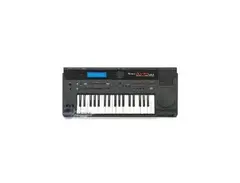
Sampler from another era, still was innovative!
This is a blast from the past. When ZIP drives were the hype, and MPC was king of samplers. But this thing is another type of samplers. While the MPC was mainly aimed at hip-hop heads, the DJ-70 MK2 offered the same type of specs; up to 32MB of RAM, a SCSI port, and the same sample editing features. You could split the keyboard, use the jog wheel to create a (not so much) scratch-like effect. So it basically was an MPC in a keyboard format.
Mike Patton of Faith No More, Mr.Bungle, Fantômas, Tomahawk, Peeping Tom and other famous projects, used one live between 1996 and 2002.
192
If you dig interesting instruments, this is a must have!
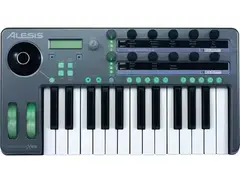
I had an Alesis AirSynth before. While the AXYZ dome was nice to play with, the sounds were so limited it wasn't really interesting. Same for the AirFX.
This little controller is bringing the one-of-a-kind control to any MIDI feature you'd like. It's also a class-compliant audio and MIDI interface (no driver required), The knobs on this thing are plenty enough to control all your standard synth/sampler features, the semi-weighted keybed is really comfortable to play with.
Back to AXYZ. It's not precise. It's not meant to achieve exact results. It's a little sad it's been discontinued before software caught up with this. The best way I found to use it is set range-based random effects. Crashing a track with Stutter Edit and the AXYZ dome feels like a spiritual link between the track and you. Jiggle your hand a little to modulate instantly...
Listen, it's a 25 key controller; there's nothing much special about it. The audio interface and dome are what sets it apart, and if you use it for random results and probabilities, try to find a used one!
192
Gave 2 stars only because it does what it's intended. Disserved 1 and a half.
I ordered this because of an insane deal, and am happy for the price I paid. If I had paid MRSP for this, i would have returned it for sure.
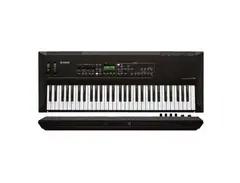
Keybed is okay, not weighted in any way. Some keys are jiggling a little from side to side after not so much playing with it. It has basically no control feature except 4 pots which are hard plastic and not pleasant at all to play with. Plus they're unpredictable. On the upside the large panel with no controls leaves space for a more focussed knobs/pots/buttons/sliders controller like my Novation Nocturn, or my Korg nanokontrol.
Now on the upside: this is a "classic Yamaha product". By that I mean that it's basically feature-less, but still it has all the MIDI implementation you could need. Using it to control 4 Volcas (with a MIDI splitter) was a breeze. It has MIDI in/out/thru in combination with USB, which is becoming more and more rare these days in the lower bracket (everything is USB MIDI only now).
But what I hate the most about this controller is its weight. It's basically feather light. While it may sound practical to carry around, I assure you it's not. It's built so cheaply that even in a padded case, I would be worried to hit something and break it. When taking it in your hands, you can feel most of the casing is empty (as most cheao MIDI controller keyboards), but this one does particularly feels cheaper than any other controller I've tried. Plus this lack of weight makes it very hard to perform as I have to attach it to my stand. I will eventually stick some weight to it underneath because it's so irritating.
It's nice to have a 61 key controller, but any other controller is better than this, offers more features, has a better keybed, has pads and sliders and everything to make a performance exciting. This is basically a MIDI controller for the piano player on the go, nothing else. Except if like me, you have a good small controller to pair with it.
192
The most underrated DJ software, please forget their name and look deeper
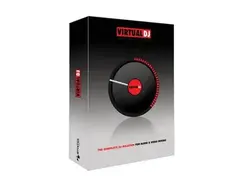
VirtualDJ. To some it may sound like a generic name, and that's exactly the issue. This piece of software disserves way better marketing and it could easily be as popular as Pioneer Rekordbox or Serato Pro.
First, VDJ is really stable. If a problem occurs and the software shuts down, it starts right back up and loads the last tracks you've used. Until we get true standalone controllers with built-in DJ software/engine, we're prone to Windows/MacOS woes and such problem can still occur. Better be safe than sorry and use a software that fires back up when shut down by your OS.
VDJ supports VST. Now, much DJs don't really care about this and are more concerned with internal effects, but for a producer this is a big deal. It means you can use your flawless Echoboy delay, Vintageverb, Stutter Edit or whatever studio-grade effects you have in VST format. VDJs effects are one thing that's not so great about the software. They work as intended, it's just that with the possibility of using VSTs, the choice here is easy.
It is very effective for turntablist duties as well. This was my primary reason to get it; I needed a good scratch solution. And VDJ delivers. Absolutely no delay on even the fastest scratches.
Please Atomix, get a better name for that software, rebrand it, and I can assure you you will crush Pioneer and Serato!
192
Same sad story as the SCS.1D...
For more information about the SCS series, please see my SCS.1D review.
Like the SCS.1D, the mixer has display issues which caused Stanton to discontinue the SCS series.
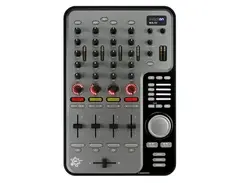
This 4 channel mixer controller is as innovative as the SCS.1D was; a large dial allows you to scroll your library quickly and precisely, pressing it to enter a folder. Virtual dJ is the perfect companion for this mixer, as it offers native support for it. The crossfader is a once-a-legend Pro X-Fade which is an aftermarket upgrade crossfader. The SCS.1M was the second mixer to sport the Pro X-Fade, after Audio Innovate own's AEM-100 and AEM-100i. It allows for lightning fast cuts, an essential feature to scratch DJs and turntablists.
It's also an audio interface, with headphones, booth and main outputs, and rca inputs with phono ground for use with a turntable or other line-level sources.
While it's pretty rare these days, it's still an excellent control surface to any DJ software that supports it, or a DAW.
192
When you're a pioneer, you can't get it 100% right at first try.
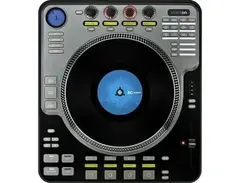
The Stanton SCS.1D is a Firewire-based turntable controller. It sports the same direct drive motor as the flagship Stanton ST-150 turntable. It has many buttons, knobs, displays, a motorized pitch slider, and a 10" platter instead of the classic 12" size.
First thing first; when Stanton announded this product, nothing on the market even came close to being as advanced as this. Its closest competitors were traditional turntable combined with a Serato SL or Traktor-driven interface, and CDJs with the same setting. But Stanton played themselves by marketing this as the new best thing: delays caused by development issues finally caught up with the public interest. For months we only had a 1 minute video demo to rely on. Stanton came back to NAMM next year with what they said was where they were in development stage, showing only a software counting the platter resolution. While this at the time was revolutionary (the count was about 1000 per round IIRC), people were starting to believe this was all vaporware, and I deeply believe this played a huge part on how things turned for Stanton there after.
Product was released early, and was plagued with bugs and hardware issues. Parts were nowhere to be found, distributors couldn't fill their orders. The first issue users noticed was small displays were burning out, or displaying data randomly. Traktor support was non-existent while the controller was supposed to be automatically mapped, platter didnt behave as supposed (had to be used as a scrub wheel instead of an actual turntable emulation. VirtualDJ though was the first DJ software to properly support the SCS.1D, with good results.
But this never took off. Stanton discontinued the SCS series shortly, leaving many unhappy customers with mostly useless units in their hands. Stanton also released USB touch strips controllers around the same thime, and while their low prices gave them many sales, the controllers were seen as toys more than real DJ hardware.
The rest is history, Stanton has been sold to Gibson and since then, nothing much came out of it. But how's the SCS performs today?
I have a VirtualDJ lifetime license which I bought for next to nothing back in the days, and it still supports the SCS very well, for what's working on it. Every knob and button are mapped properly, but you have to have good memory since none of them could be labeled properly on the long-gone displays.
BUT, and it's a big BUT, if you're a turntablist, scratch DJ, or simply want to get into live remixing, the SCS still stands its ground today. The motor is working as good as day 1, the layout is pretty intuitive and the most well hidden gem is the motorized pitch fader.
The motorized pitch fader allows you to many things if you map it to other functions, but out of the box, it gives you instant zero % recall at the touch of a button, and can do the same but progressively, slowly moving towards 0%. I never understood why such a feature was never done by another DJ-industry company on any product; this was revolutionary, and should have a place on today's controllers instead of inaccurate touch strips.
That platter/motor... It just feels great. 10" is really a great compromise between the standards 12" and 7". Denon had put 9" platter on its DN-SC3900, I always wondered how it compared to this.
In 2015, for a reason I can't explain, Stanton SCS series were basically given up on eBay. It was probably the american distributor who got rid of all its left open box stocks. The original SCS.1D was aoove $1200 USD, and you could now get one for less than $100.
If you forget about the display issues, and pay $60 for the product as I did, it's probably the closest thing you can get to a Rane Twelve or a Reloop RP-8000 turntable with an interface. I don't think the new Denon Prime-M small turntable can compare to this as it's a world of difference in engineering and product quality, still, can something beat a larger platter to a scratch DJ? Don't think so.
The benefits of using VirtualDJ instead of Traktor or Serato are plenty, but being able to easily program things and use VST effects are a good starter. You can program the start/stop time of the platter in a matter of seconds. You can dial in an effect and control it with the top 4 knobs and buttons, feels natural.
So to sum this up, this was a product that was supposed to be the new turntable. Idea-wise, this was so promising; imagine having CDJ-like controls over a real turntable! No more needles, tonearm, crates, none of this would matter because you be a club-DJ or turntablist, this got you covered. I'm a little sad thinking about this to be honest. I hate seeing good ideas such as this get discontinued and all efforts, marketing, everything is ruined.
But it still works to this day and I still use it in my studio, and even live sometimes.
192
The nicest cab you'll ever see!
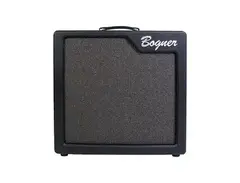
What could you want for a 2 speaker cabinet other than being well built, and house great speakers in it? Most companies nowadays are releasing "vertical" cabs, because they finally realized that's how most home players actually need a cab to be. While these companies are putting these speakers one on top of the other, the Alchemist cab stands tall, despite its smaller height.
Let's first talk about its look. WOW. That's probably the most good looking cab of all cabs. Period. Its tolex is strong and the retro-modern grill cloth gives it a style that will fit pretty much any setting.
The speakers are at a 45 degrees angle one from another, instead of the new-type on top of the other speaker cabinets. This gives us two things. First, it's as large as a standard amp head, so it makes it look more like a slightly smaller 4 speaker cab, which makes you wonder if it's cute, or if it's just the nicest cab you've ever seen. That speaker placement allows you to enjoy a bassier G12H on the floor and brighter Greenback on top. More on the speakers below.
They say it's open back, but it's semi-open, which is great for a balance of the two. When playing at home, not all the beef is going on the back of the cab, and is more projected to the front, especially when playing at lower volumes. When playing live at louder volumes the open-back part does its job at getting a beefier sound while still cutting well though the mix.
It sports two 12" speakers, a Celestion Greenback and a G12H Anniversary, which makes it perfect for any modern rock, metal, classic rock. and blues as well. These sound very good even at low volume, you can still feel that bass in your tone, which is awesome. Like I wrote earlier, the speaker placement is everything with this cab. Bright on top, dark on bottom, that's how I like my cabs to be. Maybe one day I will replace the G12H for a Vintage 30, but it sounds so good I don't really care about it.
I paired it with a Peavey Valveking 20MH, and together the setup looks veeeeery neat, Like a Marshall/Vox vibe with a modern twist.
192
Get off with your 100w amp you can't play anywhere, Peavey VK 20 MH is here!
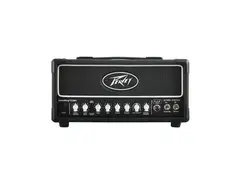
When it comes to low-wattage tube amps, choices are plenty by now. The Peavey VK 20 MH is my first tube amp, and I couldn't be happier. They're discontinued by now, which I believe says something about the amp; it's that it was cannibalizing sales from other Peavey models. It's a perfect MIDDLE GROUND between the Classic 20MH and the 6505 20MH.
First, its retro-modern look fills you with classic Marshall vibe, and the result looks really great IRL. Some say the tolex is cheap; they are mostly right: this tolex just wants to rip apart from being carried and hit too much. Luckily for me, I use it in my home studio mostly and I take good care of it, so no problem here. I just think it would probably need extra care if you use it as a touring amp.
Feature-wise, there's not a single thing that's missing: it's a 2-channel tube amp with a built-in attenuator that gives you the possibility for bring it down from 20 watts to 5, to only 1 watt. I've been playing on 1w for most of the time since I got it, and being able to get those lushy tube tones at incredibly low volume is plain awesome.
Direct output is another great feature for those who can recognize the fact that you're not gonna get high-profile recording studio sounds with a <$500 amp in your bedroom, whatever sound treatment you make. It sounds very, very good. I never got to try a Boss tube amp Expander or a TwoNotes Torpedo, but I don't really care. My recordings sounds great no matter what. I just fire the amp up, plug in my guitar, disable the speaker output and the cab-sim output does what it's supposed to.
It also has USB audio out which I thought I'd use more, but since I'm not using Apple anymore and cannot aggregate audio interfaces plus it doesn't makes the amp's headphones jack a monitor. So basically, if you're on MacOS this is a given. If you're on Windows, don't mind this feature and use a dedicated audio interface.
The EQ is shared between the two channels, which is a downside to smaller/low-wattage tube amps. Hughes & Kettner Tubemeister 18 (Peavey Valveking's predecessor and competitor) is the same, and people who have either don't seem to complain about it. You should know what you buy and labeling shared EQ as a "bad thing" is a little silly. Plus, 12 o'clock on all 3 settings on this amp sounds pretty good on both channels out of the box.
Now for the 2 channels... The clean channel is very, very useful. It takes pedals very well, has a great warm tone to it, and I use it 90% of the time. The lead channel though is another story. First, on my amp it's pretty tamed out and tends on the darker side, so I usually have to bring up the treble a bit to get a tone I can then work with pedals. And there's a volume issue between the clean and lead channels: I can't seem to get a good balance between the two without bringing down the clean channel volume to 1 or 2. The lead channel is liked of tamed compared to the clean channel. Now, this could be a problem that could be fixed with new tubes and a bias (bought the amp used), but I don't really care since I can get a wider palette of distorted tones with pedals on the clean channel. But don't get me wrong; the lead channel sounds very good on its own, and many Doom guitar players vouched its lead channel virtues. Before I bought it, people were saying I could get trash metal and even modern high gain tones with a little boost; well it's mostly right. I can get a very good Dillinger Escape Plan's Ben Weinman like tone. I don't play down tuned stuff very much, but I guess it should sound pretty good. So all in all; the clean channel is awesome, the lead channel is good when used with pedals and a little EQ work. It's not the perfect channel-switching amp despite its two channels; you can use either channels to get a tone you like, and not bother with channel switching. Whatever style you play, you may find in on the VK, and that's more important to me than on-the-fly channel switching. I may retube the amp soon and edit this review accordingly.
The infamous A/AB dial. I just leave it all the way on AB. I get significantly higher volumes and definition from this setting compared to straight A class.
This little amp has an FX loop, and it makes a WORLD of difference. Delays and other time-based effects sound way better in the loop than in front of the amp. You'll have to use 4 cables, but it's totally worth it.
I had a hard time finding footswitches for it. First, I live in a city with no Peavey dealer around, so had to look online only to find out that ordering the og Peavey footswitch with shipping include would cost me too much (really, too much for a footswitch). So I looked into alternative. The footswitch has to have a stereo output, and a single stereo TRS cable (with 2 rings). With one dual footswitch you can control channel switching and boost, and with another you can turn on/off the onboard reverb and FX loop. I first ordered an Apex Dual Footswitch with stereo, but as other users experienced; it had strange effect on the amp. The volume would just tame a lot, sound would get distorted... So I returned it, didn't mess around this time and ordered a Boss FS-6U, which works perfectly.
The boost feature of the amp, I would recommend not using, or at least not consider it as a selling point to you. When using the amp with no pedals, the lead channel + boost gives you mean tones, but that's about it. It does not sound good on the clean channel at all. You can get a Klon Centaur clone pedal for next to nothing these days, and there's other boosters that sound wonderful (TC Spark, Xotic EP, Wampler Tumnus...), so if I were you, I wouldn't care about it. Not at all.
The reverb sounds okay. It has no setting other than a wet knob, so not much to talk about here. If you don't own a reverb pedal that you like yet, it's a cool little addition as you can carry the head around and have a crucial effect built in, like many pricier and top-end amplifiers do. That said, I use it a lot as an always-on effect, and keep the knob below 4, just to get a roomier sound, When I say it sounds okay, I mean it sounds good, it's just that you don't have much control over it. So for a reverb with no controls it sounds good.
I wanted an amp as versatile as possible. I thought 2 channels were needed but found out that with one really good clean channel, you can do pretty much everything. Still, I enjoy playing the lead channel from time to time, and must admit that maybe because the clean channel is so good, I may have missed something with the lead. Writing this makes me want to get back at it and try to get a great tone, and edit this review accordingly.