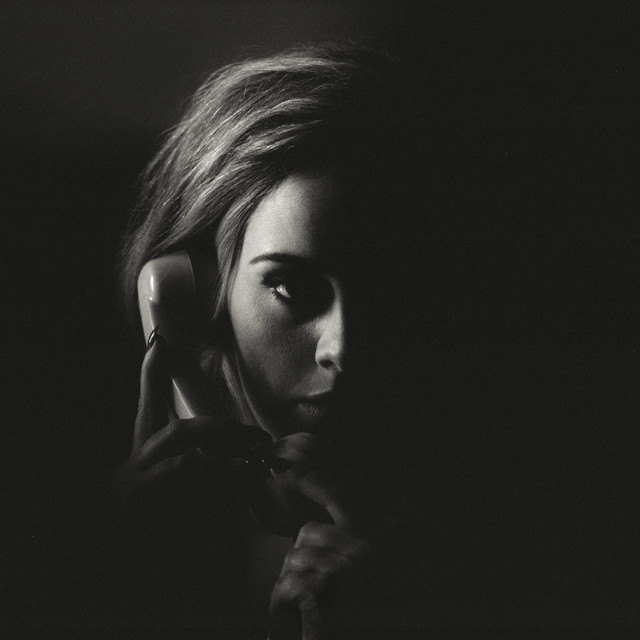
Adele – Hello
The music gear and equipment used by the artists, producers, engineers, and more involved in the making of the 2015 single Hello.
Music from Hello


Gear Used On Hello
Explore the instruments, equipment, software, and production tools used in the making of Adele – Hello (2015). Click more on each item to see exactly how it was used.
Pianos used by Adele on Hello

Used on "Hello", as mentioned in the product description for Waves' Grand Rhapsody Piano.
Sampled from the Fazioli F228 grand piano housed at London’s Metropolis Studios – the very piano played on Grammy-winning hits such as Adele’s “Hello.”


Software Plugins and VSTs used by Adele on Hello

Avg price: $33.59
Used for vocals on "Rolling in the Deep" and "Hello", as stated by mix engineer Tom Elhirst in this September 2011 Sound on Sound interview and in this December 21, 2015 SonicScoop interview, respectively. An image of the settings for the latter song can be found here.
Sound on Sound, September 2011, "Tom Elmhirst: Recording Adele 'Rolling In The Deep'"
Vocals: Waves Q6 & De‑esser, Digirack EQIII, Lo‑Fi & Trim, Pultec EQ, Urei 1176, Tube‑Tech CL1B, various spring reverbs and delays.
"I had the Q6 on the chorus vocal, notching out 930, 1634 and 3175 Hz very, very heavily: ‑18dB, ‑18dB and ‑12.1dB respectively, with very narrow Q. I also had the EQIII on the lead‑vocal sub, notching something out again. Something obviously needed to be taken out. The vocal is the most important thing in the track, and taking those frequencies out allowed me to keep it up front in the mix, particularly in the chorus. You can never account for what mic the vocals were recorded on, and whatever it is that bugs me, I can take it out. 'T' on the lead vocal bus is the [Massey] Tapehead plug‑in, which wasn't used, but I did use two Waves De‑essers, one taking out at 5449Hz and the other at 11004Hz. Rather than use one to try to cover all the sibilance I used two. I do that quite often.
"Regarding the outboard, I had the Pultec EQ, Urei 1176 and the Tube‑Tech CL1B on the lead vocal sub insert (desk channel 25). The Pultec boosted around 100Hz and 12k. It's colourful, but not drastic. There was not a lot of gain. The blackface Urei had fast attack and fast release, whereas the Tube‑Tech had slow attack and slow release, it was more evening out the level. You can use compression as an effect, but on the vocal you mainly want control. You want to set it up right so you're not constantly moving the channel fader to fit the vocal in the mix. If you're constantly moving the fader, rather than just doing the occasional ride, you know that you need to look at your compression. There's also Paul's Roland Space Echo track, which I used throughout, and which was the only lead vocal effect in the first chorus. On the backing vocals I had the Digirack Trim, again the Lo‑Fi, and the EQIII, cutting a bit around 405Hz and boosting a little around 3.17k. I used quite a few spring reverbs on the backing vocals, because I wanted them to have a lot more ambience. In the choruses I would also have added several delays. The delays make the backing vocals swing a bit, and they also fill up the space and make sure that they fit in the mix.”
SonicScoop
The chain in LA was the Neve 1066 (Mic pre/3-band EQ) to the Bluestripe UREI 1176 compressor into a Fairchild 660 limiter. I’m taking the multitrack return from Pro Tools to the line amp on the Neve 1066, then straight into the 1176 and 660 and back up the insert return.
The UREI is hitting and releasing quicker, while the Fairchild is doing a much slower attack and release. Here at Electric Lady I use a Neve 1081 into a Blackface 1176 and then into a Tube-Tech CL 1B compressor.
A large part of the vocal sound is the plates and chambers at Capitol Studios: There’s chambers that Les Paul built back in the 1940’s, and they are literally like nothing else on earth. When I got back to NY in September, I mixed five or six songs at Electric Lady, so we’d send the vocals from here and they’d record it through the chamber, and send back the prints.
Once you’ve found the vocal sound for someone like Adele, you want to use it through the whole record, and these plates and chambers sound incredible. To get to them is hard enough: you go in to the basement of Capitol, you then climb through a ladder to get to the sub-basement, where it looks like no one has been for 50 years. You literally open a hatch and climb down a steel ladder.
Have you ever been in a reverb chamber? They’re like tiled rooms, not painted – like Alice in Wonderland rooms, they don’t look right.
There’s a lot of effects going on behind the vocals. There’s an AMS delay, an Eventide preset called “Canyon,” a plate, a spring…You can see the escalation of things. There’s about seven or eight things going on. You get this wide kind of thing, but her vocal remains super-present.
So what’s going on in the box?
There’s no compression processing going on at all, just some de-essing and some little volume draws on the vocals – little dots and dips, but no rides. The rides have been done with automation on the flying faders.



Waves Q10 Paragraphic Equalizer Plugin
Avg price: $34.74
Used for vocals on "Hello", as stated by mix engineer Tom Elhirst in this December 21, 2015 SonicScoop interview. An image of the settings can be found here.
The chain in LA was the Neve 1066 (Mic pre/3-band EQ) to the Bluestripe UREI 1176 compressor into a Fairchild 660 limiter. I’m taking the multitrack return from Pro Tools to the line amp on the Neve 1066, then straight into the 1176 and 660 and back up the insert return.
The UREI is hitting and releasing quicker, while the Fairchild is doing a much slower attack and release. Here at Electric Lady I use a Neve 1081 into a Blackface 1176 and then into a Tube-Tech CL 1B compressor.
A large part of the vocal sound is the plates and chambers at Capitol Studios: There’s chambers that Les Paul built back in the 1940’s, and they are literally like nothing else on earth. When I got back to NY in September, I mixed five or six songs at Electric Lady, so we’d send the vocals from here and they’d record it through the chamber, and send back the prints.
Once you’ve found the vocal sound for someone like Adele, you want to use it through the whole record, and these plates and chambers sound incredible. To get to them is hard enough: you go in to the basement of Capitol, you then climb through a ladder to get to the sub-basement, where it looks like no one has been for 50 years. You literally open a hatch and climb down a steel ladder.
Have you ever been in a reverb chamber? They’re like tiled rooms, not painted – like Alice in Wonderland rooms, they don’t look right.
There’s a lot of effects going on behind the vocals. There’s an AMS delay, an Eventide preset called “Canyon,” a plate, a spring…You can see the escalation of things. There’s about seven or eight things going on. You get this wide kind of thing, but her vocal remains super-present.
So what’s going on in the box?
There’s no compression processing going on at all, just some de-essing and some little volume draws on the vocals – little dots and dips, but no rides. The rides have been done with automation on the flying faders.
Studio Gear used by Adele on Hello

Avg price: $24,000.00
Used for vocals on "Hello", as stated by mix engineer Tom Elhirst in this December 21, 2015 SonicScoop interview.
The chain in LA was the Neve 1066 (Mic pre/3-band EQ) to the Bluestripe UREI 1176 compressor into a Fairchild 660 limiter. I’m taking the multitrack return from Pro Tools to the line amp on the Neve 1066, then straight into the 1176 and 660 and back up the insert return.
The UREI is hitting and releasing quicker, while the Fairchild is doing a much slower attack and release. Here at Electric Lady I use a Neve 1081 into a Blackface 1176 and then into a Tube-Tech CL 1B compressor.
A large part of the vocal sound is the plates and chambers at Capitol Studios: There’s chambers that Les Paul built back in the 1940’s, and they are literally like nothing else on earth. When I got back to NY in September, I mixed five or six songs at Electric Lady, so we’d send the vocals from here and they’d record it through the chamber, and send back the prints.
Once you’ve found the vocal sound for someone like Adele, you want to use it through the whole record, and these plates and chambers sound incredible. To get to them is hard enough: you go in to the basement of Capitol, you then climb through a ladder to get to the sub-basement, where it looks like no one has been for 50 years. You literally open a hatch and climb down a steel ladder.
Have you ever been in a reverb chamber? They’re like tiled rooms, not painted – like Alice in Wonderland rooms, they don’t look right.
There’s a lot of effects going on behind the vocals. There’s an AMS delay, an Eventide preset called “Canyon,” a plate, a spring…You can see the escalation of things. There’s about seven or eight things going on. You get this wide kind of thing, but her vocal remains super-present.
So what’s going on in the box?
There’s no compression processing going on at all, just some de-essing and some little volume draws on the vocals – little dots and dips, but no rides. The rides have been done with automation on the flying faders.
Studio Equipment used by Adele on Hello

Urei Universal Audio 1176 Blue Stripe Rev. A/B Limiting Amplifier
Used for vocals on "Hello", as stated by mix engineer Tom Elhirst in this December 21, 2015 SonicScoop interview.
The chain in LA was the Neve 1066 (Mic pre/3-band EQ) to the Bluestripe UREI 1176 compressor into a Fairchild 660 limiter. I’m taking the multitrack return from Pro Tools to the line amp on the Neve 1066, then straight into the 1176 and 660 and back up the insert return.
The UREI is hitting and releasing quicker, while the Fairchild is doing a much slower attack and release. Here at Electric Lady I use a Neve 1081 into a Blackface 1176 and then into a Tube-Tech CL 1B compressor.
A large part of the vocal sound is the plates and chambers at Capitol Studios: There’s chambers that Les Paul built back in the 1940’s, and they are literally like nothing else on earth. When I got back to NY in September, I mixed five or six songs at Electric Lady, so we’d send the vocals from here and they’d record it through the chamber, and send back the prints.
Once you’ve found the vocal sound for someone like Adele, you want to use it through the whole record, and these plates and chambers sound incredible. To get to them is hard enough: you go in to the basement of Capitol, you then climb through a ladder to get to the sub-basement, where it looks like no one has been for 50 years. You literally open a hatch and climb down a steel ladder.
Have you ever been in a reverb chamber? They’re like tiled rooms, not painted – like Alice in Wonderland rooms, they don’t look right.
There’s a lot of effects going on behind the vocals. There’s an AMS delay, an Eventide preset called “Canyon,” a plate, a spring…You can see the escalation of things. There’s about seven or eight things going on. You get this wide kind of thing, but her vocal remains super-present.
So what’s going on in the box?
There’s no compression processing going on at all, just some de-essing and some little volume draws on the vocals – little dots and dips, but no rides. The rides have been done with automation on the flying faders.

Avg price: $20,996.67
Used for vocals on "Hello", as stated by mix engineer Tom Elhirst in this December 21, 2015 SonicScoop interview.
The chain in LA was the Neve 1066 (Mic pre/3-band EQ) to the Bluestripe UREI 1176 compressor into a Fairchild 660 limiter. I’m taking the multitrack return from Pro Tools to the line amp on the Neve 1066, then straight into the 1176 and 660 and back up the insert return.
The UREI is hitting and releasing quicker, while the Fairchild is doing a much slower attack and release. Here at Electric Lady I use a Neve 1081 into a Blackface 1176 and then into a Tube-Tech CL 1B compressor.
A large part of the vocal sound is the plates and chambers at Capitol Studios: There’s chambers that Les Paul built back in the 1940’s, and they are literally like nothing else on earth. When I got back to NY in September, I mixed five or six songs at Electric Lady, so we’d send the vocals from here and they’d record it through the chamber, and send back the prints.
Once you’ve found the vocal sound for someone like Adele, you want to use it through the whole record, and these plates and chambers sound incredible. To get to them is hard enough: you go in to the basement of Capitol, you then climb through a ladder to get to the sub-basement, where it looks like no one has been for 50 years. You literally open a hatch and climb down a steel ladder.
Have you ever been in a reverb chamber? They’re like tiled rooms, not painted – like Alice in Wonderland rooms, they don’t look right.
There’s a lot of effects going on behind the vocals. There’s an AMS delay, an Eventide preset called “Canyon,” a plate, a spring…You can see the escalation of things. There’s about seven or eight things going on. You get this wide kind of thing, but her vocal remains super-present.
So what’s going on in the box?
There’s no compression processing going on at all, just some de-essing and some little volume draws on the vocals – little dots and dips, but no rides. The rides have been done with automation on the flying faders.

