

Pricing and availability
We compare 600+ stores and found this item at 6 stores. Prices updated .
Store
Reviews
Price






Price History
Based on price data from 5 merchants for "Waves Q10 Paragraphic Equalizer Plugin". Prices shown reflect NEW condition. Tracking began Apr 2, 2026.
* Product prices and availability are updated by Equipboard every 24hrs and are subject to change. Equipboard may receive compensation for purchases made at participating retailers linked on this site. This compensation does not affect what products or prices are displayed, or the order of prices listed. For more information, please refer to our affiliate disclosure.
Description
Experience precision and versatility with the Waves Q10 Paragraphic Equalizer Plugin, a staple in the toolkit of audio professionals. This renowned EQ plugin offers ten fully parametric bands, each equipped with a range of six filter types, allowing you to shape audio with surgical precision or apply gentle tonal enhancements. The Q10's ability to operate as either separate mono or ganged stereo EQs provides unparalleled flexibility, making it ideal for both mixing and mastering tasks.
With a wide array of presets tailored for specific applications like multimedia, pseudo-stereo, and hum removal, the Waves Q10 ensures you're prepared for any audio challenge. Its advanced noise-shaping capabilities guarantee optimal fidelity, while the option to choose between Legacy and Modern interfaces allows for a customized user experience. The 25th Anniversary edition brings enhancements like Proportional Q filters and Double Precision 64-bit processing, ensuring the Q10 remains a timeless tool in the ever-evolving world of audio production.
Whether you're repairing problematic frequencies or refining the overall soundscape, the Waves Q10 is your go-to solution for powerful and precise equalization.
Key Features:
- Ten-band fully parametric EQ
- Six filter types per band
- Advanced noise-shaping for optimal fidelity
- Presets for multimedia, pseudo-stereo, band limiting, and more
- Up to 24-bit/192 kHz resolution
- Supports mono and stereo components
- Legacy and Modern interface options
- Proportional Q filters
- Double Precision 64-bit processing
- Separate or ganged processing and parameter control
Owner's manual
Waves Q10 Paragraphic Equalizer Plugin User ManualProduct specs
| Software Type | EQ |
| Platform | Mac, PC |
| Upgrade/Full | Full |
| Download/Boxed | Download |
| Bit Depth | 64-bit |
| Format | AAX Native, AudioSuite, VST, AU, SoundGrid |
| Hardware Requirements - Mac | Intel Core i7 or higher (M1 support), 8GB RAM minimum |
| Hardware Requirements - PC | Intel Core i5 / AMD Quad-core or higher (AVX required), 8GB RAM minimum |
| OS Requirements - Mac | macOS 10.15.7 or later |
| OS Requirements - PC | Windows 10 or later (21H2), 64-bit |
FAQs
-
What makes the Waves Q10 Paragraphic Equalizer unique compared to other EQ plugins?
-
The Waves Q10 combines the visual interface of a graphic equalizer with the precision of a parametric equalizer, offering adjustable frequency and Q for each band. This allows for detailed and flexible sound shaping.
-
Is the Waves Q10 Equalizer compatible with my DAW?
-
The Waves Q10 supports multiple formats, including AAX Native, AudioSuite, VST, AU, and SoundGrid, making it compatible with most major DAWs on both Mac and PC platforms.
-
What are the system requirements for running the Waves Q10 on a Mac?
-
To run the Waves Q10 on a Mac, you need macOS 10.15.7 or later, an Intel Core i7 processor or higher (M1 supported), and at least 8GB of RAM.
-
Can I use the Waves Q10 Equalizer for mastering purposes?
-
Yes, the Waves Q10 is suitable for mastering, offering precise control over 10 bands for detailed frequency adjustments, making it ideal for final mix tweaks and mastering.
-
Does the Waves Q10 Equalizer support 64-bit processing?
-
Yes, the Waves Q10 supports 64-bit processing, ensuring high-quality audio performance and compatibility with modern DAWs and operating systems.
Videos

Waves Audio
EQing Separate Tracks + Mix Buss with the Q10 Equalizer
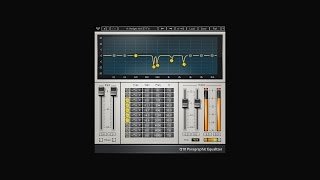
EQing Separate Tracks + Mix Buss with the Q10 Equalizer
Waves Audio
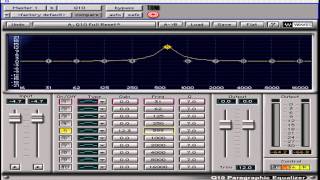
Waves Mastering Lesson 18 - Q10 Paragraphic Equalizer Tool

Gabriel Toma
Surgical EQ On Drums & Vocals With The Waves Q10 And Cubase Studio EQ Plugin

David Domminney Fowler
Reviews
PROS
-
Extremely user-friendly interface, ideal for quick adjustments
-
Renowned for its precision in surgical equalization tasks
-
Capable of resolving complex audio issues, even in post-production disasters
-
Highly effective in removing unwanted resonances and muddiness
-
Trusted by professionals worldwide for over two decades
-
Affordable price point for its capabilities
-
Works efficiently on vocal chains and master buses
CONS
-
Lacks built-in sound analysis features
-
Requires an additional analyzer for comprehensive audio monitoring
Owner Insights
We analyzed real musician discussions from forums and Reddit to find what players love, question, and tweak about Waves Q10 Paragraphic Equalizer Plugin.
Features and functionality
Setup and maintenance
-
It's preferable to use the input stage fader for preamp settings, aligning with the traditional "PREamp" concept.
Source
4.0 out of 5
Based on 1 Review and 13 Ratings


118
Of course I have Ears buddy but sometimes I miss Shitty frequenzys when i'm just using my ears so I use the PAZ for safety. And... ..Wait found my Ears!
Artist usage
Add artist
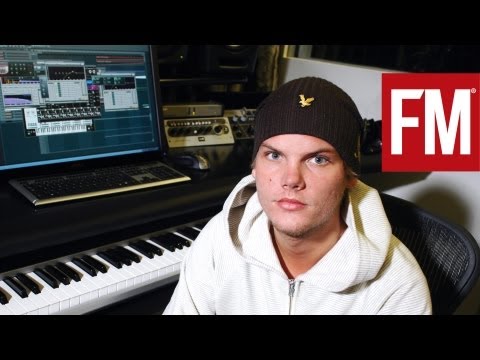
At 12:35 into the video clip, Avicii loads an instance of the Q10 Paragraphic Equalizer.


Above & Beyond say they use the Q series equalizers from Waves to "take out resonant frequencies in vocals."


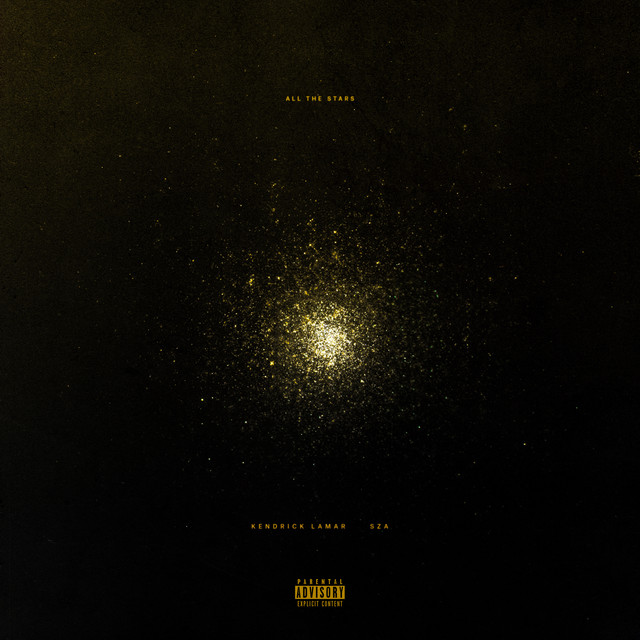
Used on Lamar's vocals for "All the Stars" as stated by producer Matt Schaeffer in this May 2018 Sound on Sound interview.
Kendrick Lamar’s vocal audio tracks, named after his teenage stage name K.Dot, consist of his first verse rap track, ‘VS 1 LD’, and 10 tracks for three moments in the track where he sings the pre-hook in a robotic voice. The verse rap track only has the AIR Flanger on it, and is sent to the ‘Dot VS LD’ aux track, which has eight inserts and five sends. Nine of the 10 pre-hook tracks have Auto?Tune, while the top four have a number of plug-ins on the inserts, including the EQ3 seven-band, Waves RVox, UAD Galaxy Tape Echo, SoundToys Little AlterBoy, SoundToys MicroShift and Valhalla Vintage Verb. These four are sent to a ‘Hook Ref’ aux track higher up in the session with another four plug-ins on the inserts and five sends. The other six are backing vocals to the four other pre-hook tracks and have no other plug-ins, other than a Trim, and are sent to a ‘Hook Background’ aux, just below them, which itself also is sent to the ‘Hoof Ref’ track. It’s a pretty complicated vocal signal chain, as Schaeffer admits.
“The ‘Dot VS LD’ aux indeed has a lot of stuff on it! I did most of the processing on that bus. On the inserts there are the SSL E-Channel, Waves RComp, Waves Q10 EQ, Waves DeEsser, UAD LA2A, UAD Pultec EQP1A, SoundToys Decapitator and Pro?Q2. The SSL channel strip, Q10 and RCompressor remain from the tracking, and maybe the DeEsser as well, but I most likely messed with the settings more during mixing. The Q10 has a high-pass at 50Hz and I notched out a frequency that was bothering me around 8.5kHz with the Q2. I added the other plug-ins during mixing, and they all add something a bit different. I’m boosting 100Hz and 16kHz with the EQP1A. As I said, I like using several EQs on one thing.
“The sends go to a ‘FlangeVerb’ track, on which I put the RVerb and the UAD MXR Flanger, then the ‘Huge Verb’ with the [Audio Ease] Altiverb and EQ3, ‘Hook Valhalla’ with the Vintage Verb, and the SoundToys EchoBoy, the ‘EMT250’ aux with the UAD EMT250, Valhalla Plate and MicroShift, and then finally a send to the ‘Dot VS Delay’ track, with the EchoBoy, set to quarter note, the Reel Tape Flanger and the RCompressor. The EchoBoy is the main delay you can hear in the verse. The EMT250 is not set to a reverb, but to a phaser effect, which gives a cool stereo effect. The Valhalla adds a bit of reverb here, though it’s set to -12, so it only gives a tiny bit of ambience, and the MicroShift makes the whole thing a little wider. It probably still sounded a bit dry, which is why I sent the track to the ‘Huge Verb’ aux with the Altiverb, again taking out low end with the EQ3.
.jpg?v=1784328016)
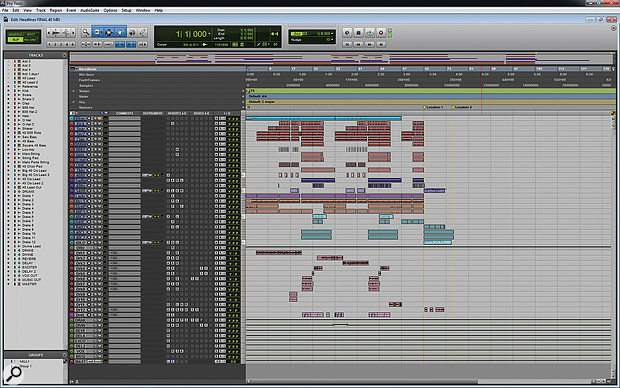
In the Sound on Sound interview Noah '40' Shebib Mentions that Q10 was apart of the vocal processing chain in recording "Headlines"

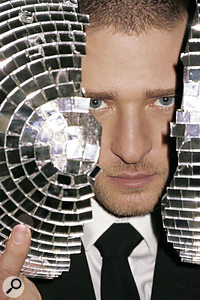
Used for the backing vocals on "SexyBack", as stated by mix engineer Jimmy Douglass in this July 2007 Sound on Sound interview.
Backing vocals: MXR flanger, Digidesign Impact, Sound Toys Filter Freak, Celemony Melodyne, Waves Q10, Metaflanger and Renaissance Reverb, Pultec EQ
"The backing vocals are all Justin. I'd say it's about 12 tracks, three-part harmony. I'm sure I used the MXR flanger on this as well, and also the Impact plug-in, which is supposed to simulate the SSL board compressor. I wanted to really hit it hard, with an attack-y kind of sound that releases really quickly. I also used the Filter Freak plug-in, which is great, and Melodyne, Metaflanger, the Waves Q10 EQ, the Pultec EQP1A and the Rverb [Renaissance Reverb] plug-ins. Rverb is not a great reverb, but I like it, because it's low-grade. The weird backing vox effects are a combination of things, and I have no idea how I did what."

When in the video Fluff shows the mixer, you can see on the first slot of the EZDrummer's Ambient channel the Q10

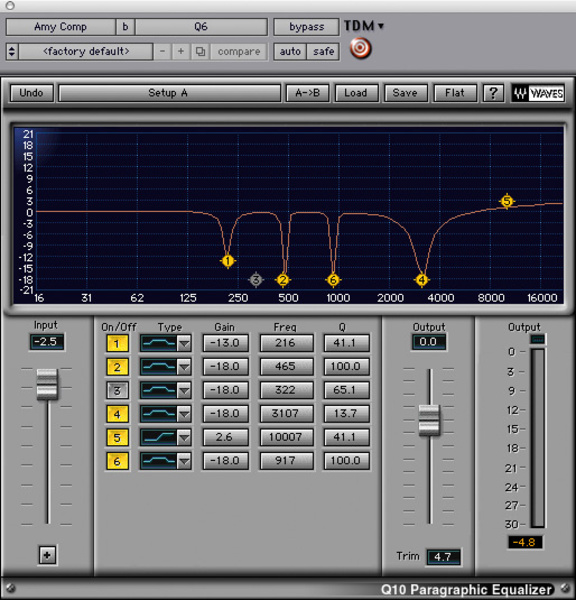
Used for Winehouse's lead vocals on "Rehab", as stated by mix engineer Tom Elmhirst in this August 2007 Sound on Sound interview. An image of the settings can be found here, with the caption "As well as plenty of hardware processing, Amy Winehouse's lead vocal was treated with surgical EQ from Waves' Q10."
Lead vocals
- Urei 1176 blackface compressor, Pultec EQ, Fairchild compressor/limiter, McDSP F2 Filterbank, Waves Q10 Paragraphic EQ, Waves De-esser, Great British Spring reverb, EMT plate reverb.
"I am not a techno snob, I'll use whatever I can to make a great record. Simple as that. I do try to keep compression and EQ analogue, unless it's EQ to notch out specific frequencies, in which case plug-ins are more precise and effective. Amy is a very dynamic singer. She has a lot of bite in her voice, but I wanted it to sound warm and not take your head off. I often use the Renaissance Q10 EQ for radical reductive EQ'ing, and you can see this in the settings I used on Amy's voice. I'm cutting four frequencies by 18dB; in two cases, 465 and 917, with a Q of 100! That's a really heavy notch. At 3107Hz the Q is only 13.7, so that's quite wide. Taking off 18dB here is enormous, but that's what it was.
"There were specific frequencies in Amy's lead voice [the track labelled 'AmC'], that were bugging me. It may be due to hundreds of things, perhaps to do with the microphone that was used on the day. Don't get me wrong, it was not a bad vocal sound, but she does have some hard frequencies in her voice. There are a few tracks on the album that I did not mix [instead they were mixed by Gary 'G Major' Noble], and you can hear on them what she sounds like without the EQ I applied. I also use McDSP's Filterbank F2, probably shelving around 40Hz, and the Waves De-esser cuts around 5506Hz. Amy is not hugely sibilant. The threshold here is 22, which is not that high for me. There would probably be no more than 3dB of de-essing.
"In addition, I was also filtering with a Pultec outboard EQ and on the board as well. The outboard chain on Amy's vocal was Pultec, going into a Urei 1176 blackface compressor, going into a Fairchild compressor. On the Pultec I was probably adding around 12k, just to brighten it up a little bit, adding air. The Urei will have been set with a very fast attack and a super-fast release, doing perhaps 10dB of compression, while the Fairchild will have had a very slow release. I can't quite explain what this does, but in my head the Urei will catch anything that jumps out, while the Fairchild will pick up the slack and keep a more constant hold of the vocal -- ie. smooth things out. During the mix I'll be constantly playing with these two compressors; it's not something I set up and then leave. How hard the signal coming from the Urei hits the Fairchild affects the sound a lot.
"The vocals had a spring reverb which would have been tracked when they recorded Amy, at Chung King Studios in New York. I also recorded an EMT plate on the vocals at Metropolis. You can see both at the bottom of the Edit screen. I spent a lot of time on the vocal, and I would regularly come back to it. Late in the evening of the first day of mixing 'Rehab' I would have the vocal pretty much in the track all the time, and after that I'd constantly be tweaking it a little bit. I don't just do it and leave it. You're getting constantly closer to the final mix, but it's not immediate."


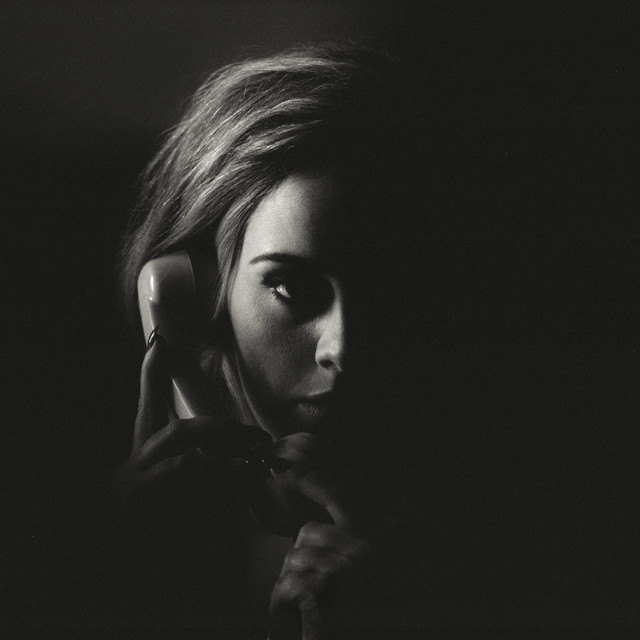
Used for vocals on "Hello", as stated by mix engineer Tom Elhirst in this December 21, 2015 SonicScoop interview. An image of the settings can be found here.
The chain in LA was the Neve 1066 (Mic pre/3-band EQ) to the Bluestripe UREI 1176 compressor into a Fairchild 660 limiter. I’m taking the multitrack return from Pro Tools to the line amp on the Neve 1066, then straight into the 1176 and 660 and back up the insert return.
The UREI is hitting and releasing quicker, while the Fairchild is doing a much slower attack and release. Here at Electric Lady I use a Neve 1081 into a Blackface 1176 and then into a Tube-Tech CL 1B compressor.
A large part of the vocal sound is the plates and chambers at Capitol Studios: There’s chambers that Les Paul built back in the 1940’s, and they are literally like nothing else on earth. When I got back to NY in September, I mixed five or six songs at Electric Lady, so we’d send the vocals from here and they’d record it through the chamber, and send back the prints.
Once you’ve found the vocal sound for someone like Adele, you want to use it through the whole record, and these plates and chambers sound incredible. To get to them is hard enough: you go in to the basement of Capitol, you then climb through a ladder to get to the sub-basement, where it looks like no one has been for 50 years. You literally open a hatch and climb down a steel ladder.
Have you ever been in a reverb chamber? They’re like tiled rooms, not painted – like Alice in Wonderland rooms, they don’t look right.
There’s a lot of effects going on behind the vocals. There’s an AMS delay, an Eventide preset called “Canyon,” a plate, a spring…You can see the escalation of things. There’s about seven or eight things going on. You get this wide kind of thing, but her vocal remains super-present.
So what’s going on in the box?
There’s no compression processing going on at all, just some de-essing and some little volume draws on the vocals – little dots and dips, but no rides. The rides have been done with automation on the flying faders.

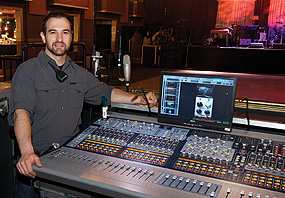
Used on the The Fall Tour for the closing jams' Nuemann TLM 103 (for which Jones played guitar), as stated by FOH engineer Brett Dicus in this July 9, 2010 Mix Online interview.
Four members of the band do a little jam at the end of the show surrounding a Neumann TLM103 mic. Dicus has a Waves Q10 inserted on the channel, as well as the strip EQ to help eliminate feedback and then to contour the tone.


Selena Gomez uses the Waves Q10 Paragraphic Equalizer Plugin, as confirmed by her engineer: "Many of the vocal tracks have the same chain on the inserts: Waves Q10 EQ, Waves Renaissance Compressor, Waves REQ6, FabFilter Pro‑DS, Waves CLA‑2A and the Pro‑Q2" (Source: Sound On Sound, "Inside Track: Selena Gomez 'Rare'").


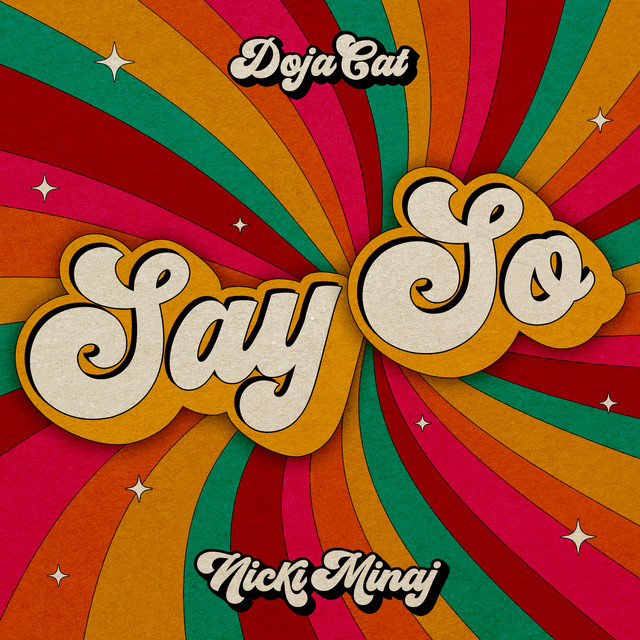
Q8 was used for Minaj's feature on Doja Cat's "Say So" remix, as stated by mix engineer Clint Gibbs in this July 2020 Sound on Sound interview.
"The Nicki Minaj remix happened very last minute. I got a text from her engineer, Aubry 'Big Juice' Delaine, saying, 'Here's a link for Nicki's vocals.' I opened it up and realised they were for 'Say So'. So I hit up the label and they confirmed that we were doing a remix. As I was mixing, I was getting updated versions of the vocals, verses, and so on. We did the mix, got it mastered, it was all approved, and the day before the remix was supposed to come out, someone wanted to change the beat underneath her vocals. All of a sudden there was an emergency!
"I got an email from Tyson Trax, saying: 'Here are the new beat stems for Nicki.' Among other things they contained some heavy 808s. I had an hour to mix in these new beat stems, because the remix was supposed to be released in Australia a few hours later. I pasted these new beats in just above the vocal VCA of the original session, and in Nicki Minaj's first verse I deactivated the clips from the original beat files for this section. But because the original did not have 808s, they killed my mix bus. I had to automate a new limiter during this part of the remix.
"I put Nicki's vocal at the bottom of the session, and just needed to pair them with the track. I added all plug‑ins on her vocals that you see in the session, but I did not need to do much, because the processed stems Big Juice sent me sounded great! The SoundToys Little Radiator adds a little warmth, and the Metric Halo Channel Strip boosts some top end while also cutting some low end. There are two Waves C6 plug‑ins dynamically suppressing 177Hz and 700Hz, with a -6dB range. There was some build-up in those frequencies that didn't work with the mix. On the inserts of the individual vocal tracks there also is a Waves Q8 doing two sharp 4-6 dB cuts at 10kHz and 11kHz, which was to tame some 's' harshness.
"One of the 808 audio tracks has the FabFilter Pro‑Q 2, with a high pass at 20Hz and a cut around 40Hz, and the Oeksound Soothe on a 'melodic bass control' setting. On the 808s aux bus and 808 parallel bus I have the FabFilter Saturn, Timeless, and the Waves F6. These 808 buses obviously were added for the remix. My approach with them was similar to that of the bass aux. The Saturn is only active on the parallel track, and is a bit dirtier on the 808 than on the bass. The F6 is side-chained to the vocal to suppress the mids of the 808 while Nicki is rapping. The Timeless also is only active on the parallel track, and adds a light chorus that spreads the 808 out slightly."


Album Usage
The Waves Q10 Paragraphic Equalizer Plugin has been featured on the following albums:





Genre Usage
Based on how artists on Equipboard use this gear, it is most commonly found in the following genres.
Used With
Based on how musicians on Equipboard use Waves Q10 Paragraphic Equalizer Plugin, it is most commonly used with the following gear.




-s.webp?v=1784556118)
More Waves EQ Plugins
-m.webp?v=1784556146)
$34.99 - $39.99
in EQ Plugins Rank


$47.00 - $49.99
in EQ Plugins Rank


$33.00 - $34.99
in EQ Plugins Rank


$33.00 - $34.99
in EQ Plugins Rank

.jpg?v=1784328016)


$34.99 - $85.00
in EQ Plugins Rank


$33.00 - $34.99
in EQ Plugins Rank


$33.00 - $35.99
in EQ Plugins Rank


$33.00 - $34.99
in EQ Plugins Rank


$33.00 - $34.99
in EQ Plugins Rank


$29.99 - $34.99
in EQ Plugins Rank


$37.00
in EQ Plugins Rank


$33.00 - $249.00
in EQ Plugins Rank

$29.00 - $29.99
in EQ Plugins Rank


$33.00 - $34.99
in EQ Plugins Rank


$33.00 - $34.99
in EQ Plugins Rank


$49.99 - $129.00
in EQ Plugins Rank

$34.99
in EQ Plugins Rank


$169.00 - $199.00
in EQ Plugins Rank


$63.00 - $271.00
in EQ Plugins Rank


$1,015.75 - $1,195.00
in EQ Plugins Rank


$29.99 - $30.00
in EQ Plugins Rank


$49.00
in EQ Plugins Rank

$80.00 - $99.00
in EQ Plugins Rank


$95.00 - $109.00
in EQ Plugins Rank


$0.00
in EQ Plugins Rank


$49.00 - $124.00
in EQ Plugins Rank

$39.00
in EQ Plugins Rank


$39.00 - $49.00
in EQ Plugins Rank
.jpeg?v=1784574735)


Accessories & Related Items


-s.webp?v=1784556073)
-s.webp?v=1784556103)
-s.webp?v=1784556112)


-s.webp?v=1784556146)


-s.webp?v=1784526320)


Community setups


Similar


Gear Guides




Most Popular EQ Plugins
Most Popular Brands
-
Added to Equipboard on by
 equipboard
GearIQ 4934
-