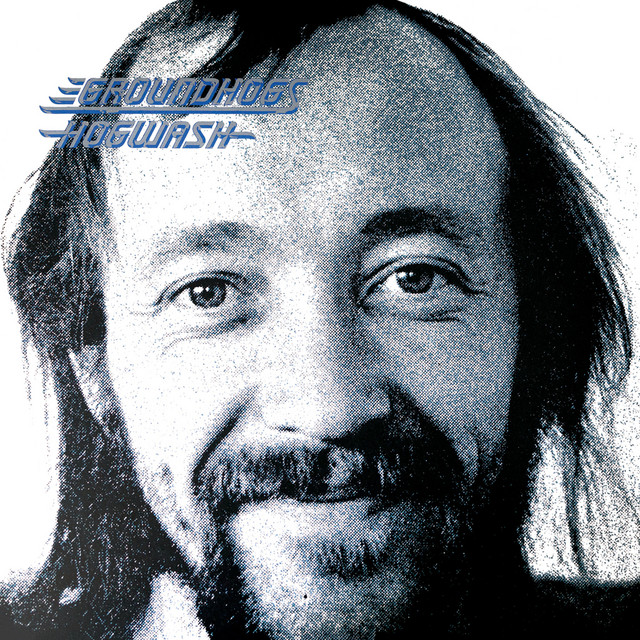
The Groundhogs – Hogwash
The music gear and equipment used by the artists, producers, engineers, and more involved in the making of the 1972 album Hogwash.
Music from Hogwash
Artists on Hogwash

Gear Used On Hogwash
Explore the instruments, equipment, software, and production tools used in the making of The Groundhogs – Hogwash (1972). Click more on each item to see exactly how it was used.
Keyboards and Synthesizers used by Tony McPhee on Hogwash

Avg price: $7,744.39
McPhee used an M400 from Who Will Save the World? The Mighty Groundhogs up to Solid as a means of progressing the sound of The Groundhogs and his own sound, as reported in the following sources:
Sounds, March 18, 1972, "The Groundhogs: Tony McPhee At The Talk-In" by Jerry Gilbert
Do you think this could be the start of a new phase for the band?
Well I can't really envisage it. I'm going to get a mellotron for the States which will involve some pretty clever juggling between guitar and mellotron, but it'll be nice to have it because when you play guitar and play a lot of improvised stuff you do get the feeling that if you could just break it up a little bit... with Split we found that more than half the album we could easily do on stage but with this one it's going to be very difficult because the basic three piece sound is all the same really and it's getting a bit of a problem figuring out which way we are going to go. But I really think that if you listened to that album without knowing us, I'm pretty sure that if you saw us live we wouldn't be the same band at all.
I don't mind this because I think albums are different things anyway – I don't think it's necessary to see a band doing its album on stage.
Since Thank Christ For The Bomb you've started to get into sounds and effects which you can obtain by using the studios and also by modifying your guitar and amplification.
Yeah definitely. Studios are weird things, you know you can get a sound on stage which suits you but you can't get it in a studio so you have to muck about with it quite a bit and in doing so you get a different sound. I use a wah-wah pedal which I'm using less of now – it got a bit tiresome after a while – then there's a new thing called an octave splitter and that just sort of gives you a rough octave above and below.
You can get sounds like a bass and sustained sounds with a weird quality and in effect it's like an electrical Rory Gallagher – you know this ability he's got of striking harmonics, well in actual fact that's what it does, so you can cheat quite well on those things. Also playing two notes at once it gives you the same effect as a ring modulator which is very trendy these days... notes which are the subtraction and addition of the two frequencies and this sort of thing which gives you a bubbly sort of sound. That's all I get along with really but I do feel now that I want more – not simply from gadgets because I don't use these as gadgets, I use them as separate instruments really.
The whole point is I knew I could imitate things like strings on the new album but I wanted the actual strings sound for some reason otherwise it makes it another freaky album which I didn't want to do. When the mellotron comes on stage we are going to have to re-think quite drastically – not that we do much thinking; we'll probably just slide along like we always do.
Hogwash liner notes (listed under McPhee's profile and pictured in Pete Cruickshank's profile)
Mellotron M400
Sounds, May 5, 1973, "Mac’s Home Cooking: The Groundhogs" by Jerry Gilbert
"So I think it’s time to pull a few strokes and they can take it or leave it. The synthesiser and mellotron, no matter what else they did, at least provided a break."
Roots
The real testing time comes in September when Mac goes solo. He plans to do a series of solo concerts featuring a set of pure, unadulterated blues, going right back to his early roots. Then he’ll reappear with his thinking cap on and present a one man electronics show.
He’s also cutting an album called The Two Faces Of Tony McPhee, and on stage he plans to surround himself with three Moogs, two mellotrons, Hammond organ, electric and acoustic piano as well as a wide range of acoustics and electric guitars.
Photos from the 1973 Kendal Pop Festival (August 26, 1973): Derek Copeland, John Dennis (#1, #2)
New Musical Express, October 27, 1973, "Tony McPhee: Who Will Save McPhee" by Tony Stewart
"I just had the feeling that I wanted to do something different. But the audiences just wouldn't let us get away from Split, and it showed itself. It got so we were stuck in the quagmire of Split.
"I realised what was happening and I tried to break out of it with The Mighty Groundhogs by making it more melodic and bringing in the mellotron. I don't know whether I should have done that.
"With Hogwash we went back to the initial formula of being heavy. But now there are criticisms levelled at us of being too much like a jet plane and I do want to get away from that. I want to get more dynamics into the thing, And more arrangements just to break up the guitar monopoly.
"So that's why I used synthesiser on my solo album – for a complete change. That's the only way to do it really – by saying, 'forget what I've done in the past, this is something completely different'. There's no guitar at all on the second side, and the first side is acoustic, which I don't play on stage anyway."
SINS OF THE FATHER [...] Vocals, Guitar & Mellotron ; T.S.
[...]
SNOW STORM [...] Vocals, Guitars, Bass & Mellotron ; T.S.
Instruments used :
Gibson S.G, Fender Stratocaster, Yamaha Acoustic, Zemaitis Bass, Ludwig Drums, ARP 2600 Synthesizer, Mellotron
Beat Instrumental, November 1974, "Home Studios: Tony McPhee" by Del Robinson, pg. 28-29 (pictured)
Tony's also very interested in electronic music: 'I want to build an electronic music studio', and he enthusiastically demonstrated some gear in his present set-up. It includes a couple of ARP2600 synthesisers, a rhythm sequencer ('I found this unit invaluable'), and frequency shifter, a Compact piano and a Mellotron.
'I'm a guitarist, not a keyboards player,' commented Tony modestly. 'Though I find I'm really beginning to get into synthesisers now. They're very creative instruments and it's very much up to the individual musician what he gets out of them. I prefer the ARPs - not everyone can get along with EMS units. I know people have criticised the ARP because you have to patch across it, but I don't find this a problem.'
Tony's also got a Mellotron (although he doesn't use it much now - 'It takes too long to tune up on stage and we don't like to lose any impact at the start of a performance.'), and a Compact piano.
Beat Instrumental, March 1976, "Tony McPhee: The Hogs Return" by Chris Simmons, pg. 25
Like Tony, Dave is a capable musician on other instruments besides guitar - electric violin and mandolin, and these will be gradually integrated into the act when the time is right. The combination of these and McPhee's mellotron and ARP synthesizer will certainly give an added dimension to the band's music.


Studio Equipment used by Tony McPhee on Hogwash

Avg price: $9,362.00
Listed among McPhee's gear in the liner notes of Hogwash. It is also specified among the equipment in McPhee’s home studio “T.S. Studios” on page 29 of the November 1974 issue of Beat Instrumental.
Hogwash liner notes
Astronic Graphic Equalizer
Beat Instrumental, November 1974, "Home Studios: Tony McPhee" by Del Robinson, pg. 29
[...] Astronic graphic equalisers; […]

Acquired by McPhee sometime after the recording of Hogwash and used for The Two Sides of Tony (T.S.) McPhee, as stated in this May 5, 1973 Sounds interview, a November 1974 Beat Instrumental interview and in a 1997 interview with John Tobler.
Sounds, May 5, 1973, "Mac’s Home Cooking: The Groundhogs" by Jerry Gilbert
Tony started building the studio in January, the centrepiece being an eight track console which he’d procured from the De Lane Lea studios in Kingsway. As a technician for whom nothing less than the right sound is sufficient, he made up his mind that Hogwash would be the last album the Groundhogs would record in London.
[...]
"Studios really piss me off so I wanted to get my own studio done because it was necessary", McPhee blandly pointed out. "It started off as a four-track and then became eight when I got this equipment."
[...]
"The eight track I have is obsolescent, which means that I have to go and stick jacks in round the back but that doesn’t matter — I mean how much more can you get from a modern machine?"
Beat Instrumental, November 1974, "Home Studios: Tony McPhee" by Del Robinson, pgs. 28
Tony certainly has plenty of opportunity to develop his engineering now. For a start, the centrepiece of the crowded control room is the Cadac 8-track desk, which he bought second-hand from Majestic Studios in Clapham. 'It can be converted very easily to 16.' This is the second desk Tony's installed in his home studio. 'I did a deal with De Lane Lea, before they became Kingsway Recorders, and bought about £5,500 worth of gear, which was the basis of a complete studio.
'I used the original desk to do my solo album, but it didn't have the advantage of pan pots, so when this one came up I decided to take it. I've ordered an Ampex 16-track recording machine which I should be getting very soon.'
Rock's Backpages audio, "AUDIO: The Groundhogs' Tony McPhee (1997)" by John Tobler (@ 53:38)
Tony "T.S." McPhee: So, by that time, I'd got equipment, 'cause my idea was it's cheaper to buy the equipment. Then you can, from that point, you can have as many albums as you'd like. Yeah.
John Tobler: Yeah. You mean recording it?
McPhee: Recording from it, yeah.
Tobler: Okay.
McPhee: So I actually bought out De Lane Lea... a eight-track,
Tobler: Yeah.
McPhee: which is what we did Thank Christ and Split on.
Tobler: Oh.
McPhee: And other assorted bits and pieces. And so, from that point on, I did my own albums.
The following information further corroborates that the A-Range built for De Lane Lea Kingsway was sold to McPhee:
- The March 1970 issue of Beat Instrumental reports on page 23: "Equipment at Kingsway includes an 18-channel 8-track console, custom-built by Sound Techniques, which was also responsible for the electronics of the 8-track tape machine, which has a 3M deck. In addition, there are Ampex four-track, two-track and mono machines and an EMI mono."
- The May 1970 issue of Beat Instrumental reports on page 12: "At De Lane Lea's Kingsway studios, the Groundhogs were putting finishing touches to their album".
- On the "Recording Consoles" page of Sound Techniques' website, there are only pictures of the A-Range consoles built for De Lane Lea Wembley and De Lane Lea Soho. Yet, the site's "History" page lists a total of three De Lane Lea consoles: Soho, Kingsway and Wembley.
Guitars used by Tony McPhee on Hogwash

Avg price: $450.00
Visible in this photo of McPhee. It is listed among his equipment in the liner notes of Hogwash, the back cover of Solid, the press kit for Solid, and on the back cover of Back Against the Wall, besides also appearing with McPhee on The Old Grey Whistle Test in 1973.
Hogwash liner notes
Yamaha Acoustic
Solid back cover
Instruments used :
Gibson S.G, Fender Stratocaster, Yamaha Acoustic, Zemaitis Bass, Ludwig Drums, ARP 2600 Synthesizer, Mellotron
WWA press kit for Solid (1974), profile for McPhee
INSTRUMENTS: Gibson SG, Fender Stratocaster, Zemaitis, Yamaha, Harmony Acoustics, H/H Amplification, ARP 2600 synthesizer and EMS Sequencer
Back Against the Wall back cover
Yamaha Acoustic FG180
Live Setup Accessories used by Tony McPhee on Hogwash

Listed among McPhee's P.A. equipment in the liner notes of Hogwash. It is also attested by pink fish media user Paraheadache in this March 12, 2019 forum reply.
Hogwash liner notes
10 Quad 303 Main amps.
pink fish media, March 12, 2019 reply by Paraheadache on "There's a Quad 405 near me - should I buy it or not please?" by beammeup (March 8, 2019)
I use a 405 as a PA amplifier.
At home a 303 is used in an audio system.
Tony Mcphee used one when touring solo I saw him at the Darlington arts centre way back.

Pete Cruickshank
Roles:
Bass Guitars used by Pete Cruickshank on Hogwash

Avg price: $1,316.00
An EB-3 is listed among Cruickshank's equipment in the liner notes of Hogwash and in Cruickshank's profile for the WWA press kit for Solid. It is visible in a 1969 photograph posted to Facebook by The Groundhogs on January 12, 2010, a photograph of The Groundhogs posted by Basket Case on November 20, 2013, photos of Cruickshank from from The Groundhog's August 27, 1970 performance at 1970 Isle of Wight festival (Chris Weston, Charles Everest, Claudio Hosquet's footage (here and here)) and this October 3, 2023 Facebook post by Basket Case bandmate Stephen Underwood.
Hogwash liner notes
Gibson E.B.3.
WWA press kit for Solid (1974), profile for Cruickshank
INSTRUMENTS: Zemaitis Bass Guitar, Gbison [sic] EB3 guitar, 4 H/H 2 x 15 cabinets, 2 Amps, H/H 100 watt


Listed among Cruickshank's equipment in the liner notes of Hogwash (where it is also pictured) and Solid. It can be seen on the EMI cover of Live at Leeds '71 and is also attested by the following:
Top of the Pops, April 22, 1971 (dated according to Martin Charles Strong's The Great Rock Discography) (three extant stills: one by Chris Walter dated November 30, 1971, another posted to The Groundhogs' official Facebook page on October 20, 2014, and another posted by McPhee to Facebook on March 16, 2016)
July 8, 1972 photos from Carl Dunn of The Groundhogs performing at Concert 10, posted to Facebook by McPhee on September 12, 2011 (Photo 1, Photo 2) (visible)
Hogwash liner notes
Zemaitis Bass Guitar
- Sounds, May 5, 1973, "Mac’s Home Cooking: The Groundhogs" by Jerry Gilbert
Cruikshank was plonking away on his Zemaitis bass and Brooks disappeared behind the partition to his drum kit. Mac picked up his Telecaster and the action begun.
Instruments used :
Gibson S.G, Fender Stratocaster, Yamaha Acoustic, Zemaitis Bass, Ludwig Drums, ARP 2600 Synthesizer, Mellotron
INSTRUMENTS: Zemaitis Bass Guitar, Gbison [sic] EB3 guitar, 4 H/H 2 x 15 cabinets, 2 Amps, H/H 100 watt
TalkBass, September 2, 2009 reply by PJSShearer
The first Rock Gig I ever went to - The Groundhogs @ Guildford Civic Hall in 1974 - the Bass Player had a Zemaitis, I believe Greg Lake played one with ELP but I've never seen one since.
Facebook, Tony McPhee, September 12, 2011
Pooconos festival looking towards stage, Me playing my grey 1963 Strat( later stolen in Wales, bugger it!) Ken on his Kit (stolen in London) & Pete on his fabulous Zemaitis, which he later gave to his son.
- Basschat, June 15, 2020 reply by Raymondo
On 13/06/2020 at 07:34, Bill Wy,Aye,Man said:
I wouldnt mind the bass that Tony Zemaitis made for Ronnie Lane, it's the only one and Ronnie was an actual musician
Actually he made a bass for Pete Cruickshank that looks very similar(or at least he owned one , gave it to his son for doing well in exams a few years ago apparently ...Ken Pustlenik told me that when I mentioned that I had always lusted after Mr Cruickshank's bass).
Amplifiers used by Pete Cruickshank on Hogwash

Listed among Cruickshank's equipment in the liner notes of Hogwash and mentioned by The Groundhogs bandmate Tony McPhee in a May 1971 Beat interview. It can also be seen in a photo of The Groundhogs posted to Facebook by Basket Case on November 20, 2013.
Beat, May 1971, "Groundhogs' 'Split'" by T.T., pg. 17
The amps that Groundhogs favour ('our old stuff was great but it was falling apart and it was all different plugs anyway') is Laney, which, says Tony, is the best deal in gear they could find. He and Peter each have two stacks of Laney equipment—'it gives out what it claims'—and are very satisfied, although there are some longings for their old gear (sentimentality, possibly).
Hogwash liner notes
3 Laney 100 watt. Amps.

Four are listed among Cruickshank's equipment in the liner notes of Hogwash. They were sold soon after, as testified by their absence from Cruickshank's profile for the WWA press kit for Solid and in several forum posts by the third owner of one, simoncroft of the Fender Stratocaster Guitar Forum.
Hogwash liner notes
4 J.B.L. 2 x 15 Cabinets
strat-talk.com (Fender Stratocaster Guitar Forum), simoncroft:
- May 15, 2014 ("HH was sold out for months, so I 'settled' for a Hiwatt 100 all valve head. Then a friend sold me an empty JBL 2 x 15 that used to belong to a band called The Groundhogs. The volume level out of this rig was Earth shattering! Seriously, if you've never heard a Hiwatt 100 on full, you have no idea how loud a 100W amp could be.")
- October 13, 2015 ("John D'Angelico New Yorker fitted with DiMarzio X2N high-gain humbuckers into an Acoustic 260 head and a JBL 2x15 loaded with a couple of Gauss speakers, miked with an SM57 and an AKG D12... but I could be wrong.")
- June 30, 2016 ("Back in the day, I had Hiwatt 100 head, a 1 x 18 Summit reflex cab (copy of the Acoustic, basically), plus a JBL 2 x 15 that I was all proud of because it used to belong to the Groundhogs and still had their logo sprayed on it. That was for bass. When I played guitar, I 'only' used the head and the JBL. By the time you got to the 'sweet spot' on that amp, you could knock birds out of the sky, it was so loud.")
- July 8, 2017 ("I first became aware of this in the early 1970s, when I was lucky enough to have a Fender Jazz Bass, a HiWatt 100 head and a JBL 2x15.")
- February 9, 2019 ("I had one of those JBL cabs 35 years ago and the front grille could be pulled off quite easily.")
- January 10, 2020 ("I used to play club, art school and uni gigs using a HiWatt 100 head with a JBL 2x15 cab, and sound engineers would sometimes ask me to turn down.")
- February 9, 2023 ("For years, I used an ex-Groundhogs JBL 2x15 for guitar and bass.")

Clive Brooks
Roles:
Drum Sets used by Clive Brooks on Hogwash

Known from the following sources:
George Hayman Kit
Comprising
24" bass drum
16" Tom Tom
13" tom-tom
14" snares (2)
Colour silver
2 Paiste cymbals
Hayman 'C' drumsticks
Beat Instrumental, March 1973, "Player of the Month: Clive Brooks", pg. 74
At present Brooks is using a Hayman drum kit with a Ludwig snare. It consists of 22 in. bass drum, 13 in. by 9 in. and 16 in. by 16 in. tom-toms and a 5½ in. by 14 in. snare. The cymbals are by Paiste and are composed of an 18 in., a 16 in. and a 20 in. ride cymbal. Thirteen inch hi -hats complete the kit. He's had the set-up for two years now and is pleased with its performance.
WWA press kit for Solid (1974), profile for Brooks
INSTRUMENTS: 1 Ludwig Snare Drum, Custom Hayman Kit consisting of: 24" Bass Drum, 2 13 x 9 Tom Toms, 1 16 x 16 Tom Tom, Paiste Cymbals, 1 20" 602, 1 18" 602, 1 pair 14" Hi Hats 602, 1 Avdis [sic] 16" Cymbal