
Tony McPhee
Tony McPhee's Gear


McPhee's favorite guitar was an SG Standard with Vibrola, which he purchased in 1962 at Selmer on Charing Cross Road. He modified it extensively over the years and played it until October 19, 1986, when it was stolen in Irvine, Scotland. McPhee wrote "51416" as a tribute (51416 was his SG's serial number) and put notes on the Back Against the Wall LP (for which he borrowed his friend Gonzo's SG) letting audiences know that he was looking for the guitar, but he never recovered it. After buying a replacement that was itself later stolen, McPhee took a break from Gibson guitars. He eventually bought a replacement in 2005, which can be seen in this video of McPhee performing "No More Doggin'" at The Cellars in early September 2007.
Besides this November 1985 video of McPhee playing "One More Chance" at the Pennyfarthing in Oxford and this 1986 video of McPhee playing "Soldier", both among his last performances on his original SG, the following sources confirm his use and modification of it:
The Beat Room, Episode 14 (October 5, 1964) (visible in John Lee Hooker segments (“Boom Boom Boom” and “I’m Leaving”))
1970 photograph of McPhee performing in Hamburg, Germany, posted to The Groundhogs' official Facebook page on July 29, 2010
Disc and Music Echo, June 6, 1970, "Me and My Music: Tony McPhee", pg. 9
Plays a Gibson SG, a Framus 9-string, a Harmony Sovereign acoustic and builds his own amplification equipment. Uses a 30-watt amp with eight speakers in two cabinets.
Melody Maker, June 5, 1971, pg. 34, Any Questions?
I use two other guitars, a Gibson SG which I've had for ten years, and recently I bought a Zemaitis, which I used on Top Of The Pops.
July 8, 1972 photos from Carl Dunn of The Groundhogs performing at Concert 10, posted to Facebook by McPhee on September 12, 2011 (Photo 1, Photo 2) (visible)
Gibson SG
Instruments used :
Gibson S.G, Fender Stratocaster, Yamaha Acoustic, Zemaitis Bass, Ludwig Drums, ARP 2600 Synthesizer, Mellotron
WWA press kit for Solid (1974), profile for McPhee
INSTRUMENTS: Gibson SG, Fender Stratocaster, Zemaitis, Yamaha, Harmony Acoustics, H/H Amplification, ARP 2600 synthesizer and EMS Sequencer
Beat Instrumental, March 1976, "Tony McPhee: The Hogs Return" by Chris Simmons, pg. 25 (misreported as an SG Junior)
Gibson
Tony had already defined himself as a "sounds rather than notes" man, and we discussed his choice of equipment bearing his definition in mind. On the guitar side he has both a Gibson SG Junior and a Strat, enjoying the variation that two such different axes offer. "I've had the Gibson about fourteen years," he enlarged; "at various times I've thought about buying other guitars, but I'm glad I didn't. It's an all-round guitar, and the wide neck suits my style of finger playing. As well as the thinner, harsher sound the Strat gives me, the main advantage there is the tremolo arm. Actually, I also have a Zemaitis fitted out with humbucking pick ups so that it's quite close to the Gibson sound, but have never really found it fits."
[Image]
McPhee plus well worn S.G. Junior.
Beat Instrumental, June 1978, "Don't Mention the Gr**ndh*gs! says Tony 'T.S.' McPhee. Peter Douglas apologises" by Peter Douglas, pg. 18
"I thought what I needed was a total change all round. I used to use the SG almost totally, and I've still got the Zemaitis — it's hanging up on the wall, been there for years! The trouble was that the metal front tended to oxidise with the sweat, and I thought it was just going to get ruined. I thought I'd rather wait until I could get some sort of coating put on it. I've been trying to figure that out. Nobody's come up with a good answer. I've always liked the raunchy sound of the Strat, and towards the latter part of using the Gibson I fixed a Strat pick-up in the middle between the two Gibson pick-ups, but it still didn't react the same — the density of the body and all that sort of stuff obviously had something to with it — so I decided that I'd have to get used to the Strat.
"I used to play finger-style, and the Gibson strings were further apart, and the neck was wider and flatter, so I thought, well, with the Strat I'd have to get used to a pick again because of the heftier fingerboard. But now that I have got used to it, it was a good thing because I had to totally change style. I've also put on heavier gauge strings. I used to have ridiculous strings — started off with a .007, went on to something like a .009, .011, .018 . . . I used to have an unwound 4th sometimes! Well, playing finger-style that's fine, but with a pick they annoyed me after a while — too floppy. So now I start off with a .009, .011, .014, .022, .032, .042 — something like that, usually Rotosound. I find that they work OK. I've never been a great strings fanatic ..."
July 1984 photo of McPhee performing at Ripon Rock Festival
Gibson Les Paul SG
"54146", title and lyrics
First time I saw you, / I knew I had to have you. / You know I had a choice / but I liked the sound of your voice. / When I think of what we've been through / since 1962 / Sometimes I was dissatisfied, / but I always come back to your side.
There were times when I had to treat you rough, / but you could take it, / you were tough, / I used to throw you on the floor / and make you scream, / and hear the people roar.
Then one day I broke your neck and cracked your head, / I could have walked off and left you for dead. / But I knew that I could fix you / as good as new / 'cos I needed you / to play these blues.
But then one day a guy stole you away from me, / he wouldn't have had a chance. / But I didn't see, 'cos he waited 'til my back was turned. / And he ran off with you, I hope his fingers burn.
Now I don't know if I'll ever see you no more, / but you were my favorite guitar for sure / It used to feel so good when I played those licks / on my Gibson SG number 54146
Back Against the Wall back cover
Gibson SG, [...] My thanks to Gonzo for the loan of his SG after mine was nicked by a twerp in Irvine, Scotland, Oct. 19 1986
Back Against the Wall runout groove
OI JIMMY WHERE'S MY F...... GIBSON
The Yelping Hounds, Issue 17 (Spring 1998), "Split" by Paul Freestone
The guitarist is playing a white fender stratocaster which is one of the two guitars he used for the recording sessions for Split. [...] The other guitar was McPhee's faithful cherry red gibson SG. [...] Both of the two guitars McPhee used on Split have disappeared without trace. [...] The cherry red gibson was stolen & never recovered.
Get Ready to ROCK!, "INTERVIEW: TONY McPHEE" by Joe Geesin (2005)
I have just bought myself a new, old Gibson SG, valve amp and transmitter I am going to get a new band together not too sure of the direction yet but I have been writing new material for a while and would like to get it recorded and played.
YouTube, "PART 2 OF 2 PETE FEENSTRA TALKS TO TONY McPHEE" by PRAK14 (recorded July 7, 2007, uploaded July 10, 2007) (@ 1:25)
Pete Feenstra: And do you still play a Gibson? That Gibson?
Tony "T.S." McPhee: No, that's a brown Gibson. My original Gibson was nicked...
Feenstra: Was it?
McPhee: ...a long time ago.
Feenstra: Aw, that's a shame
McPhee: Yeah, and I got another one to replace it, that was nicked, so I gave up on Gibsons and got Japanese. And, uh... but then I— This Gibson is from a local shop, so I just got back to it.
Early Blues, "Early Blues Interview: Tony 'TS' McPhee - Vocals / Guitar, The Groundhogs" by Alan White (2008)
Which is your favourite guitar?
It’s gone. A Gibson. It was nicked in Irvine, in Scotland. But can I say that whoever’s got it – I’m going to get him one day!
Friars Aylesbury, "Friars Interviews: TONY MCPHEE" (May 2009)
But the punks did take to some bands..
Yes, us for one! Especially people like Captain Sensible who bought a Gibson SG because I played one. He uses one to this day.
everythingSG, November 29, 2012 reply by altoricky on "Let's see your vintage SG!" (February 16, 2012) by Kevin James
Having said that, I saw Tony McPhee with the Groundhogs ( not sure if they made it across the pond ) at the Marquee in London back in the early 70s and he was using a sideways vib to great effect and didn't seem to have too may tuning issues.
Blues.Gr, "An Interview with Tony "TS" McPhee of The Groundhogs: A Legendary Artist of British Blues History" by Michael Limnois (June 28, 2013)
What do you miss most nowadays from the 60s and your first steps in music?
The thrill of getting my first guitar and amp & modifying them to my own requirements, these days guitars and amps are factory set-up, I used to have to stone the frets on all my guitars and modify my amps, maybe change the pre-amp wiring.
Interview with Tony Bacon for The SG Guitar Book: 50 Years of Gibson's Stylish Solid Guitar (2015), excerpted in Guitar, "The oral history of the Gibson SG" by Tony Bacon (September 3, 2019)
“I got my SG Standard from the Selmer shop in Charing Cross Road, central London, in 1962. I chose it because it had a tremolo arm like a Stratocaster, which was my first choice – Hank Marvin had a Strat and I loved the single-coil sound of its pickups.
“I also loved the sound of Gretsch guitars and the look of their Jet Firebird. But the SG had the side-action vibrato – I hate the term whammy bar. And the clincher was the position of the pickup selector switch, similar to a Strat’s – but not a Goldtop’s, which was in the wrong place, ergonomically, as far as I was concerned. And the Goldtop was a heavy guitar.
“I made some changes to my SG through the years. I took off the vibrato cover – I thought of the vibrato like a side-to-side-action Morse-code key, like ultra-fast Morse-code operators used and it didn’t cause me any problems. I put a capacitor on the volume pots between the slider and output tags, which enhanced the treble. I called it the tone changer and you can hear it on Mistreated on the Blues Obituary album.
“Also, I put a push-button switch mid-body that put a capacitor across the output, like a tone control – my version of a wah-wah pedal, before I got my first Schaller wah. I’d press it in solos and so on to imitate a wah pedal. Later, I had Paul Raven, the Killing Joke bassist, make a TS logo for the pickguard and at one time, I put a Strat pickup between the two humbuckers.
“Anyway, in 1986 that original SG Standard [serial number 54146] was stolen from a dressing room at a gig in a theatre in Irvine, Scotland. The buggers! Later, around 2006, I bought an SG Special. It had a great action, but I found the neck was too narrow, and Derek Forbes, ex-Simple Minds, has it now. My career is on hold these days after the stroke I suffered in June 2009, which stole my voice and a certain amount of dexterity.”
The SG Guitar Book: 50 Years of Gibson's Stylish Solid Guitar (2015) by Tony Bacon, pgs. 33-34
"I chose the SG Standard because it had a tremolo arm like a Stratocaster," McPhee recalls, "which was my first choice – Hank Marvin had a Strat and I loved the single-coil sound of its pickups." The Selmer shop had no Strats, so his attention turned to other possibilities. "I also loved the sound of Gretsch guitars and the look of the Jet Fire Bird. But the SG had the side-action vibrato, and the clincher was the position of the pickup selector switch, similar to a Strat’s – but not a Goldtop’s, which was in the wrong place, ergonomically, as far as I was concerned."
He soon began modifying his SG/Les Paul, removing the metal cover from the vibrato to leave the bare mechanism on show. He says: "I thought of the vibrato like a side-to-side-action morse key, like ultra-fast morse code operators used, so it didn't cause me any problems". He modified the electrics to boost treble. He added a switch for a sort-of wah effect, and through the years he added another switch for a pre-amp in/out and had Paul Raven (the Killing Joke bassist) make a TS logo for the pickguard. He swapped the tuners for Schallers, he put a Strat pickup between the two humbuckers (then removed it and put a plate there to hide the mess), and he endured a few head and neck breaks, mostly as a result of throwing the guitar across the stage at the end of gigs in the early 1970s. What you might call a weary but willing workhorse.
The Fretboard, "The second coolest person to ever rock a Gibson SG after Angus Young in my book." by Leisceoir, comment by boogieman (March 27, 2023)
Couple of glaring omissions in this thread : Tony Bourge and Tony TS McPhee. It was seeing TS back in the 70s that made me want to own an SG.
Michael Messer Forum, June 7, 2023 reply by pete1951 on "Tony McPhee >RIP" (June 7, 2023) by Michael Messer
The Ground Hogs was one of my favourite bands in the late 60s and along with The John Dummer Band ( with Dave Kelly) were regular performers at my local small band venue.
My interest in slide guitar was kindled by his playing.
( in 1971 my school leavers concert had 2 bands, The Ground Hogs and Chicken Shack, I had already left school but didn’t miss the gig)
I remember him playing a Framus(?) 9 string for slide , and in the early years an SG for standard tuning ( the first guitar I made was SG shaped because of his guitar)
Pete
Vintage Guitar, August 2023, “In Memoriam: Tony “T.S.” McPhee” by Dan Forte
“Tony played with his fingers on a cherry red Gibson SG, and his ability to emulate John Lee Hooker was uncanny,” said Blues piano great Bob Hall, an original Groundhog.
Find it on:


A certain "Anje" was the owner of theMcPhee's "MK1 Supergroup" 100W ampilifier with a custom covering, as featured in a November 24, 2004 The Les Paul Forum post, a August 1, 2005 The Les Paul Forum post, a July 30, 2020 The Gear Page reply, and a May 26, 2021 The Gear Page reply. Another in a standard covering can be seen in the background of this photo. The amp is also mentioned in the following sources, among which is the "Any Questions?" column of the June 5, 1971 issue of Melody Maker, which specifies that the amp was modified.
ZigZag, March 1971, "Tony McPhee... Groundhog" by John Tobler
Let’s get onto your equipment....why the change to Laney gear?
Well, I liked the stuff we used to have but it just literally became obsolete. I built my own amplifier and it was what I wanted, but I never got round to putting it in a cabinet and people used to drop it because it was just mounted in a sort of rabbit hutch thing and wasn’t screwed in properly. But I couldn’t replace the broken parts because they were so old, and we had to think about some new gear. We shopped around — looked at HiWatt and Marshall, but eventually settled for Laney. There’s not really much to choose between makes, but this Laney stuff gave out what it claimed to give out and seemed OK....though I’ve made some alterations to improve the tone, because I’m as interested in getting a good sound as I am in volume.
What do these watt ratings mean? Can you give us a layman’s definition?
The wattage is an electrical term, but sound power is also termed in watts. Ten watts of audio power, acoustically, is a very large orchestra; but when you say 10 watts electrically, it’s 10 watts that the amplifier gives out....and any speakers are, at the most, only ten per cent efficient — so the sound power given out is only one watt. You can go up to about 30 watts, and each step of 10 watts is about twice as loud. But above that it gets a lot more complicated, and to get twice the volume of 30 watts, you’d have to have about 200 watts....and to get twice as loud as 200 watts, you’d need about 2000 watts. But it’s the quality that’s important rather than sheer volume.
[...]
I’ve also got an octave splitter which sounds great through the Laney gear [...]
Beat, May 1971, "Groundhogs' 'Split'" by T.T., pg. 17
The amps that Groundhogs favour ('our old stuff was great but it was falling apart and it was all different plugs anyway') is Laney, which, says Tony, is the best deal in gear they could find. He and Peter each have two stacks of Laney equipment—'it gives out what it claims'—and are very satisfied, although there are some longings for their old gear (sentimentality, possibly).
Melody Maker, June 5, 1971, pg. 34, Any Questions?
I use a Laney 100-Watt stack, [...]
3 Laney 100 watt. Amps
Beat, March 1976, "Tony McPhee: The Hogs Return" by Chris Simmons, pg. 25
Amps
In the amplification department, Tony is still undecided as to what he will use for the gigs. "I used to have a big Laney cabinet, and I'll probably end up using that. I have been in the studio with a Davoli amp (with a 15" speaker) which is great for straight things, but as soon as I put my Hi-Fli through it it just breaks up. Perhaps I'll end up driving the Davoli through the Laney cab, but I'll have to experiment more fully first. Actually, the real problem is not amplifying the guitar but my synthesizer.
Distort
"You need a system that won't distort the sound and still has enough poke behind it to carry. On certain gigs you will find that the set-up you have is perfect and on others you will hate it. Then, another problem is that I need a whole lot of top as I use my fingers instead of a pick. Recording is obviously a different bag; I use a pick in the studio to pick out definite notes clearly. It doesn't matter on stage but when you use your fingers some notes are a little down on others. Anyway, if one note's a bummer so what? The main thing is feel."
Anje, The Les Paul Forum, November 24, 2004
I've just got this cute little baby :
[Laney.jpg]
It's a nice Supergroups from about the late 60's (that was owned by Tony McPhee of the Groundhogs BTW)
Anje, The Les Paul Forum, August 1, 2005
here's my played collection, splitted on 2 continents for now :) :
[...]
'69 Laney Supergroup 100 (belonged to Tony McPhee of the Groundhogs, who did a little custom psyche tolex job, nice :) )
Anje, The Gear Page, Jul 30, 2020
Man, makes me miss my old Klipp 60! These old Laneys are so cool.
I think the dude from The Groudhogs (Tony McPhee?)was a Laney player back in the day too. Great player
Yes I can confirm that:
That's my old one I mentioned before, former Tony's / The Groundhogs's; miss it too.
[https://i.imgur.com/Wu7DT8b.jpg]
Anje, The Gear Page, May 26, 2021
I remember visiting Roger Daguet 15-20 years ago (to buy one of former Tony McPhee's late 60's Laney Supergroup, but that's another story) [...]
Find it on:


Two ARP 2600s were used on Hogwash, on Solid for "Sad Go Round" and "Joker's Grave", on Crosscut Saw for "Fulfillment", "Live A Little Lady" and "Eleventh Hour", and on The Two Sides Of Tony (T.S.) McPhee for "The Hunt", as listed in those albums' respective liner notes. It is also mentioned in a November 1974 Beat Instrumental interview (where it is also pictured), a March 1976 Beat Instrumental interview, McPhee's review of the ARP Avatar in the May 1978 issue of Beat Instrumental, and the WWA press kit for Solid.
Hogwash liner notes
A.R.P. 2600 Synthesizer
Photos from the 1973 Kendal Pop Festival (August 26, 1973): Derek Copeland, John Dennis (#1, #2)
Beat Instrumental, December 1973, "The Loneliness of the Long Distance Groundhog" by Anonymous, pg. 22 (pictured)
The Two Sides Of Tony (T.S.) McPhee liner notes
Two ARP 2600s
SAD GO ROUND [...] Vocals, Guitars & Synthesizers ; T.S.
[...]
JOKER'S GRAVE [...] Vocals, Guitars & Synthesizer ; T.S.
Instruments used :
Gibson S.G, Fender Stratocaster, Yamaha Acoustic, Zemaitis Bass, Ludwig Drums, ARP 2600 Synthesizer, Mellotron
WWA press kit for Solid (1974), profile for McPhee
INSTRUMENTS: Gibson SG, Fender Stratocaster, Zemaitis, Yamaha, Harmony Acoustics, H/H Amplification, ARP 2600 synthesizer and EMS Sequencer
TS. plays ARP 2600 Synthesizer on "Eleventh Hour", "Fulfilment" & "Live A Little Lady".
Beat Instrumental, November 1974, "Home Studios: Tony McPhee" by Del Robinson, pg. 28-29 (pictured)
Tony's also very interested in electronic music: 'I want to build an electronic music studio', and he enthusiastically demonstrated some gear in his present set-up. It includes a couple of ARP2600 synthesisers, a rhythm sequencer ('I found this unit invaluable'), and frequency shifter, a Compact piano and a Mellotron.
'I'm a guitarist, not a keyboards player,' commented Tony modestly. 'Though I find I'm really beginning to get into synthesisers now. They're very creative instruments and it's very much up to the individual musician what he gets out of them. I prefer the ARPs - not everyone can get along with EMS units. I know people have criticised the ARP because you have to patch across it, but I don't find this a problem.'
Beat Instrumental, March 1976, "Tony McPhee: The Hogs Return" by Chris Simmons, pg. 25
Like Tony, Dave is a capable musician on other instruments besides guitar - electric violin and mandolin, and these will be gradually integrated into the act when the time is right. The combination of these and McPhee's mellotron and ARP synthesizer will certainly give an added dimension to the band's music.
Beat Instrumental, May 1978, "Instrument Review 6: ARP Avatar Guitar Synthesizer" by Tony McPhee, pg. 31
When I got my first synthesizer, an ARP 2600, about six years ago, I soon realised my keyboard playing was just about adequate even though it was a monophonic instrument, in other words – one-handed. Delving into the workings of the machine, I knew that I must try to find a way of working the synth from a guitar fretboard, but this proved not to be an easy task. A synthesizer requires three voltages: pitch; trigger 3nd gate, although on some the trigger voltage is taken from the leading edge of the gate voltage, which is a square wave
At the time there was a machine made by EMS called a pitch -to -voltage converter which should have done the trick; you just plugged an instrument into it, it scanned the pitch of the note you were playing, and it gave out the correct voltages to operate the synth. Unfortunately the guitar note is so rich in harmonics and transients that the converter flew about all over the place trying to find something steady to latch on to. So, somewhat disillusioned by what I thought would be the answer, I looked for another way.
[...]
Another little goodie that isn't present on my 2600 is a high pass filter. [...]
The only frustration I found was that there were a couple of little things I wanted to try which weren't possible because the thing is totally pre-patched, and I suppose I'm used to using patch cords on the 2600.
So to summarize:
The synthesizer proper is what you would expect from ARP – nice clean graphic controls as on the 2600 and Odyssey, but maybe those nylon sliders are a bit too easy to break off, as has happened on my 2600 a couple of times. But for that matter the whole thing should be treated with care.
Find it on:

In an interview with Tony Bacon for The SG Guitar Book: 50 Years of Gibson's Stylish Solid Guitar (2015), which was excerpted by Bacon in "The oral history of the Gibson SG" for Guitar (September 3, 2019), McPhee shared that he briefly used an SG Special after its purchase circa 2006, only to give it to Derek Forbes when he found the neck to be too narrow.
Later, around 2006, I bought an SG Special. It had a great action, but I found the neck was too narrow, and Derek Forbes, ex-Simple Minds, has it now.
Find it on:


McPhee used an Add-A-Sound that he personally modified, as known from the following sources:
ZigZag, March 1971, "Tony McPhee... Groundhog" by John Tobler
What about records? You’ve never thought of bringing in Moogs and what have you?
No, I’m not really a weird noise freak. I think it’s much better and cleverer to get a strange sound out of an ordinary instrument, which is why I admired Hendrix so much. He could make Moog noises with a guitar, and though I don’t consciously try to copy him, I do sometimes get similar effects.
Yes, and the wah-wah pedal often accentuates the similarity...
Well, a lot of people don’t realise about wah-wahs....I mean, every little step you bring it down is a different tone, and you can get all sorts of noises from it. I’ve also got an octave splitter which sounds great through the Laney gear — it gives you an octave above and an octave below. Hendrix uses one on ‘Machine Gun’ — it gives a sort of modulated note, where you have the note and other frequencies with it which aren’t really related, so you end up with a weird sort of dischordant sound. And I’m just discovering exactly what you can get out of this device.
Melody Maker, June 5, 1971, pg. 34, Any Questions?
I use a Laney 100-Watt stack, plus an Arbiter Add-A-Sound octave splitter, which adds higher harmonies, producing a "violin" sound and also lower octaves, which used [sic] on "Cherry Red." I modified this unit and built in a pre-amp with high-pass filter which acts as a treble boost. I also use a Shcaller [sic] wah-wah pedal. On "Thank Christ" we had completely different equipment, so the sound is different on "Split", plus the fact that I also used a Fender Stratocaster for many of the numbers on "Split," notably parts 2 and 4, using a combination of wah-wah and tremolo arm to get "whizzing" effects.
Sounds, March 18, 1972, "The Groundhogs: Tony McPhee At The Talk-In" by Jerry Gilbert
Since Thank Christ For The Bomb you've started to get into sounds and effects which you can obtain by using the studios and also by modifying your guitar and amplification.
Yeah definitely. Studios are weird things, you know you can get a sound on stage which suits you but you can't get it in a studio so you have to muck about with it quite a bit and in doing so you get a different sound. I use a wah-wah pedal which I'm using less of now – it got a bit tiresome after a while – then there's a new thing called an octave splitter and that just sort of gives you a rough octave above and below.
You can get sounds like a bass and sustained sounds with a weird quality and in effect it's like an electrical Rory Gallagher – you know this ability he's got of striking harmonics, well in actual fact that's what it does, so you can cheat quite well on those things. Also playing two notes at once it gives you the same effect as a ring modulator which is very trendy these days... notes which are the subtraction and addition of the two frequencies and this sort of thing which gives you a bubbly sort of sound. That's all I get along with really but I do feel now that I want more – not simply from gadgets because I don't use these as gadgets, I use them as separate instruments really.
The whole point is I knew I could imitate things like strings on the new album but I wanted the actual strings sound for some reason otherwise it makes it another freaky album which I didn't want to do. When the mellotron comes on stage we are going to have to re-think quite drastically – not that we do much thinking; we'll probably just slide along like we always do.
July 8, 1972 photos from Carl Dunn of The Groundhogs performing at Concert 10, posted to Facebook by McPhee on September 12, 2011 (Photo 1, Photo 2) (visible)
Dallas Arbiter Octave Splitter
Sounds, May 5, 1973, "Mac’s Home Cooking: The Groundhogs" by Jerry Gilbert
For having exploited the full range of guitar sounds via the various echo and wah-wah pedals and octave splitter, he turned to the electronic keyboard instruments just as a duck turns to water.
"I only want to use a synthesiser to synthesise — nothing more. I synthesised a drum kit and got an amazing brass sound. I want to use a brass sound on the new album, but brass musicians are a pain in the arse so this is ideal. You can never mistake a synthesiser for the real thing, though, because it has characteristics of its own".
Andrew Liles website, Discography, "Split-Up" (2015)
In 1971 when ‘Split’ was originally released, there were {a few} guitar pedals, mainly wah-wah, overdrive & chorus (with a bit of phasing or ‘flanging’). I had an Arbiter and a sound early octave pedal but I was keen to find ‘new’ sounds, like ring modulation. Some of the 70’s bands have re-done their most popular albums but I never thought I could improve on Split, with Martin Birch engineering at De Lane Lea studios, it had it all!
When Andrew Liles (regarded by some to be the funniest man) told me he’d like to re-do Split I thought he was having a laugh, but he has done what I would have IF I’d had the modern pedals.
Andrew has done me a great service by bringing my recordings into the 21st Century.
Tony (T.S.) McPhee – 2015
Find it on:

Besides this photo, McPhee's Schaller wah-wah is known from the following sources:
August 27, 1970 photograph by Charles Everest of The Groundhogs at the 1970 Isle of Wight festival
ZigZag, March 1971, "Tony McPhee... Groundhog" by John Tobler
What about records? You’ve never thought of bringing in Moogs and what have you?
No, I’m not really a weird noise freak. I think it’s much better and cleverer to get a strange sound out of an ordinary instrument, which is why I admired Hendrix so much. He could make Moog noises with a guitar, and though I don’t consciously try to copy him, I do sometimes get similar effects.
Yes, and the wah-wah pedal often accentuates the similarity...
Well, a lot of people don’t realise about wah-wahs....I mean, every little step you bring it down is a different tone, and you can get all sorts of noises from it. I’ve also got an octave splitter which sounds great through the Laney gear — it gives you an octave above and an octave below. Hendrix uses one on ‘Machine Gun’ — it gives a sort of modulated note, where you have the note and other frequencies with it which aren’t really related, so you end up with a weird sort of dischordant sound. And I’m just discovering exactly what you can get out of this device.
Beat, May 1971, "Groundhogs' 'Split'" by T.T., pg. 17
'A lot of the strange sounds you hear on Split were actually done in the studio,' he adds, 'but all I use on stage is me guitar, me amp, and a wah-wah.'
Melody Maker, June 5, 1971, pg. 34, Any Questions?
I use a Laney 100-Watt stack, plus an Arbiter Add-A-Sound octave splitter, which adds higher harmonies, producing a "violin" sound and also lower octaves, which used [sic] on "Cherry Red." I modified this unit and built in a pre-amp with high-pass filter which acts as a treble boost. I also use a Shcaller [sic] wah-wah pedal. On "Thank Christ" we had completely different equipment, so the sound is different on "Split", plus the fact that I also used a Fender Stratocaster for many of the numbers on "Split," notably parts 2 and 4, using a combination of wah-wah and tremolo arm to get "whizzing" effects. I use two other guitars, a Gibson SG which I've had for ten years, and recently I bought a Zemaitis, which I used on Top Of The Pops. This guitar was custom built for me by Tony Zemaitis and has an engraved metal front. It has one Fender and one Gibson pick-up but any could be fitted. Cost of similar guitar would be around £250 from Tony at 19 Laitwood Road, Balham, London SW12 (01-675 1342). On "Junk Man", the wind sound is transistor noise from the wah-wah pedal and the other effects were obtained using the Stratocaster with tremolo arm, wah-wah pedal and volume pedal simultaneously, and then playing the track through a speaker at one end of the studio picking it up with a mike at the other end, panning this against the original track in the mix at the same time varying the speed of the 8-track machine! All the other effects were obtained with pedals and channel panning. I played the organ which happened to be in the studio that day. I sang to a pre-recorded backing track on Top Of The Pops, but it would have been a lot easier to have done the whole thing live!
Sounds, March 18, 1972, "The Groundhogs: Tony McPhee At The Talk-In" by Jerry Gilbert
Since Thank Christ For The Bomb you've started to get into sounds and effects which you can obtain by using the studios and also by modifying your guitar and amplification.
Yeah definitely. Studios are weird things, you know you can get a sound on stage which suits you but you can't get it in a studio so you have to muck about with it quite a bit and in doing so you get a different sound. I use a wah-wah pedal which I'm using less of now – it got a bit tiresome after a while – then there's a new thing called an octave splitter and that just sort of gives you a rough octave above and below.
You can get sounds like a bass and sustained sounds with a weird quality and in effect it's like an electrical Rory Gallagher – you know this ability he's got of striking harmonics, well in actual fact that's what it does, so you can cheat quite well on those things. Also playing two notes at once it gives you the same effect as a ring modulator which is very trendy these days... notes which are the subtraction and addition of the two frequencies and this sort of thing which gives you a bubbly sort of sound. That's all I get along with really but I do feel now that I want more – not simply from gadgets because I don't use these as gadgets, I use them as separate instruments really.
The whole point is I knew I could imitate things like strings on the new album but I wanted the actual strings sound for some reason otherwise it makes it another freaky album which I didn't want to do. When the mellotron comes on stage we are going to have to re-think quite drastically – not that we do much thinking; we'll probably just slide along like we always do.
- July 8, 1972 photos from Carl Dunn of The Groundhogs performing at Concert 10, posted to Facebook by McPhee on September 12, 2011 (Photo 1, Photo 2) (visible)
Sounds, May 5, 1973, "Mac’s Home Cooking: The Groundhogs" by Jerry Gilbert
For having exploited the full range of guitar sounds via the various echo and wah-wah pedals and octave splitter, he turned to the electronic keyboard instruments just as a duck turns to water.
"I only want to use a synthesiser to synthesise — nothing more. I synthesised a drum kit and got an amazing brass sound. I want to use a brass sound on the new album, but brass musicians are a pain in the arse so this is ideal. You can never mistake a synthesiser for the real thing, though, because it has characteristics of its own".
Schaller Wah Wah Pedals
Facebook, Tony McPhee, September 13, 2011
Succinctly put,Col, I even had a Schaller Wah-wah nicked off the stage Newcastle City Hall. People were searched as they went out but they'd obviously stashed it somewhere.
Facebook, Tony McPhee, September 13, 2011
Tony McPhee Succinctly put,Col, I even had a Schaller Wah-wah nicked off the stage Newcastle City Hall. People were searched as they went out but they'd obviously stashed it somewhere.
Col Price Daunting when your out on tour. That message came through and i had Split pt2 on. Full on wah riff.
Tony McPhee That was the Schaller pedal, better than the Cry baby in my opinion, hard to find now. Actually I might try Ebay!!
Interview with Tony Bacon for The SG Guitar Book: 50 Years of Gibson's Stylish Solid Guitar (2015), excerpted in Guitar, "The oral history of the Gibson SG" by Tony Bacon (September 3, 2019)
“Also, I put a push-button switch mid-body that put a capacitor across the output, like a tone control – my version of a wah-wah pedal, before I got my first Schaller wah. I’d press it in solos and so on to imitate a wah pedal.
Find it on:

Listed on the back cover of Back Against the Wall among McPhee's equipment and shown up close in Live At Anti WAA Festival 1989 at 12:55.
Boss Super Overdrive and chorus.
Find it on:

McPhee used an M400 from Who Will Save the World? The Mighty Groundhogs up to Solid as a means of progressing the sound of The Groundhogs and his own sound, as reported in the following sources:
Sounds, March 18, 1972, "The Groundhogs: Tony McPhee At The Talk-In" by Jerry Gilbert
Do you think this could be the start of a new phase for the band?
Well I can't really envisage it. I'm going to get a mellotron for the States which will involve some pretty clever juggling between guitar and mellotron, but it'll be nice to have it because when you play guitar and play a lot of improvised stuff you do get the feeling that if you could just break it up a little bit... with Split we found that more than half the album we could easily do on stage but with this one it's going to be very difficult because the basic three piece sound is all the same really and it's getting a bit of a problem figuring out which way we are going to go. But I really think that if you listened to that album without knowing us, I'm pretty sure that if you saw us live we wouldn't be the same band at all.
I don't mind this because I think albums are different things anyway – I don't think it's necessary to see a band doing its album on stage.
Since Thank Christ For The Bomb you've started to get into sounds and effects which you can obtain by using the studios and also by modifying your guitar and amplification.
Yeah definitely. Studios are weird things, you know you can get a sound on stage which suits you but you can't get it in a studio so you have to muck about with it quite a bit and in doing so you get a different sound. I use a wah-wah pedal which I'm using less of now – it got a bit tiresome after a while – then there's a new thing called an octave splitter and that just sort of gives you a rough octave above and below.
You can get sounds like a bass and sustained sounds with a weird quality and in effect it's like an electrical Rory Gallagher – you know this ability he's got of striking harmonics, well in actual fact that's what it does, so you can cheat quite well on those things. Also playing two notes at once it gives you the same effect as a ring modulator which is very trendy these days... notes which are the subtraction and addition of the two frequencies and this sort of thing which gives you a bubbly sort of sound. That's all I get along with really but I do feel now that I want more – not simply from gadgets because I don't use these as gadgets, I use them as separate instruments really.
The whole point is I knew I could imitate things like strings on the new album but I wanted the actual strings sound for some reason otherwise it makes it another freaky album which I didn't want to do. When the mellotron comes on stage we are going to have to re-think quite drastically – not that we do much thinking; we'll probably just slide along like we always do.
Hogwash liner notes (listed under McPhee's profile and pictured in Pete Cruickshank's profile)
Mellotron M400
Sounds, May 5, 1973, "Mac’s Home Cooking: The Groundhogs" by Jerry Gilbert
"So I think it’s time to pull a few strokes and they can take it or leave it. The synthesiser and mellotron, no matter what else they did, at least provided a break."
Roots
The real testing time comes in September when Mac goes solo. He plans to do a series of solo concerts featuring a set of pure, unadulterated blues, going right back to his early roots. Then he’ll reappear with his thinking cap on and present a one man electronics show.
He’s also cutting an album called The Two Faces Of Tony McPhee, and on stage he plans to surround himself with three Moogs, two mellotrons, Hammond organ, electric and acoustic piano as well as a wide range of acoustics and electric guitars.
Photos from the 1973 Kendal Pop Festival (August 26, 1973): Derek Copeland, John Dennis (#1, #2)
New Musical Express, October 27, 1973, "Tony McPhee: Who Will Save McPhee" by Tony Stewart
"I just had the feeling that I wanted to do something different. But the audiences just wouldn't let us get away from Split, and it showed itself. It got so we were stuck in the quagmire of Split.
"I realised what was happening and I tried to break out of it with The Mighty Groundhogs by making it more melodic and bringing in the mellotron. I don't know whether I should have done that.
"With Hogwash we went back to the initial formula of being heavy. But now there are criticisms levelled at us of being too much like a jet plane and I do want to get away from that. I want to get more dynamics into the thing, And more arrangements just to break up the guitar monopoly.
"So that's why I used synthesiser on my solo album – for a complete change. That's the only way to do it really – by saying, 'forget what I've done in the past, this is something completely different'. There's no guitar at all on the second side, and the first side is acoustic, which I don't play on stage anyway."
SINS OF THE FATHER [...] Vocals, Guitar & Mellotron ; T.S.
[...]
SNOW STORM [...] Vocals, Guitars, Bass & Mellotron ; T.S.
Instruments used :
Gibson S.G, Fender Stratocaster, Yamaha Acoustic, Zemaitis Bass, Ludwig Drums, ARP 2600 Synthesizer, Mellotron
Beat Instrumental, November 1974, "Home Studios: Tony McPhee" by Del Robinson, pg. 28-29 (pictured)
Tony's also very interested in electronic music: 'I want to build an electronic music studio', and he enthusiastically demonstrated some gear in his present set-up. It includes a couple of ARP2600 synthesisers, a rhythm sequencer ('I found this unit invaluable'), and frequency shifter, a Compact piano and a Mellotron.
'I'm a guitarist, not a keyboards player,' commented Tony modestly. 'Though I find I'm really beginning to get into synthesisers now. They're very creative instruments and it's very much up to the individual musician what he gets out of them. I prefer the ARPs - not everyone can get along with EMS units. I know people have criticised the ARP because you have to patch across it, but I don't find this a problem.'
Tony's also got a Mellotron (although he doesn't use it much now - 'It takes too long to tune up on stage and we don't like to lose any impact at the start of a performance.'), and a Compact piano.
Beat Instrumental, March 1976, "Tony McPhee: The Hogs Return" by Chris Simmons, pg. 25
Like Tony, Dave is a capable musician on other instruments besides guitar - electric violin and mandolin, and these will be gradually integrated into the act when the time is right. The combination of these and McPhee's mellotron and ARP synthesizer will certainly give an added dimension to the band's music.
Find it on:

Listed among McPhee's gear in the liner notes of Hogwash. It is also specified among the equipment in McPhee’s home studio “T.S. Studios” on page 29 of the November 1974 issue of Beat Instrumental.
Hogwash liner notes
Astronic Graphic Equalizer
Beat Instrumental, November 1974, "Home Studios: Tony McPhee" by Del Robinson, pg. 29
[...] Astronic graphic equalisers; […]
Find it on:

Discussed at length on pg. 18 of the June 1978 issue of Beat Instrumental and listed among McPhee's equipment on the back cover of Back Against the Wall.
Beat Instrumental, June 1978, "Don't Mention the Gr**ndh*gs! says Tony 'T.S.' McPhee. Peter Douglas apologises" by Peter Douglas, pg. 18
In line with this begin-all-over-again approach Tony has ditched a lot of the equipment he accumulated with the old band through some remains. "I'm still using the EMS Hi-Fi, mainly because I use it as a power supply. Let me explain: when this band got together, I thought right — I still had the Laney cabinets and all that sort of stuff I used to use — you can't walk into a pub with that stuff. So I thought I'd look around for some smaller gear. I'd got a fifty watt Marshall, but I found that was too loud — I couldn't get it to scream without It deafening everybody. Anyway, I was round at a friend's house and he brought out this amplifier — it was an old Guild, circa 1960 I should think. He said it didn't seem to work, and I didn't have any tools with me at the time, so I couldn't look inside it.
He told me he'd had a bit of an accident with it — he'd plugged it in and smoke had poured out of the back. Apparently there was a fuse missing and they'd forgotten it was a 110 volt amplifier. It had never been changed from the American voltage. So I walked off with it, bought myself another transformer and a few resistors, stuck 'em all in, and it worked fine. It's the sort of amp where the inputs are marked 'organ' or 'accordian'!
"I took the speaker out, 'cause I blew it. Anyway, it was obviously quite low sensitivity, so I knew I'd have to have to put something in front of it to wind it up. Now for some time I'd been using a transmitter/receiver, and that boosts the signal up a bit, but with the receiver it was always awkward to know exactly where to stick it. So I stuck the receiver on the pole of the Hi-Fli and plugged it into the Hi-Fli using the power supply. And the Hi-Fli boosted the signal up a bit more so I can get a raw sound at quite a low volume. I just plug it in, turn it right up, and away it goes."
A more involved way of raunching up the sound of a guitar could hardly be devised. The obvious question was — why? What was wrong with getting one of the new amplifiers on the market that can deliver everything from a slight bite to a fuzzy buzz?
"Urm . . ." A pause. ". . because whenever I've gone out and got a new amplifier they've always been a disappointment after a while. The only amplifier that I really liked was one I built myself a long time ago. It was the only one that would do everything that I wanted it to, and some time ago I got hold of the parts again — and transformers for valve amps are pretty rare now. I've still got these parts at home, so I must make another one up. But in the meantime this Guild functions well. It's just the right sort of sound. I think it was intended to be about fifteen watts, but the transformer I put in it gave it a bit more H.T., so it'll probably go to about twenty, twenty-five. It's just got one very old 12" Jensen loudspeaker in it — which blew, but I had that rewound with a heavier coil. At the moment I'm running it into the speakers of the Marshall — just using the speakers of that, 'cause it's handy just to sit on the top."
Back Against the Wall back cover
Guild 20watt circa 1958
Although the model is not specified, it can be deduced. In the 1958 Guild catalog for the United Kindgom, the 66-J is the only one of the three amps listed that is rated at twenty watts. The 1960 Guild catalog further specifies that the 66-J has a "remote speaker jack" and that its twelve-inch speaker is by Jensen.
Find it on:

Visible in this photo of McPhee. It is listed among his equipment in the liner notes of Hogwash, the back cover of Solid, the press kit for Solid, and on the back cover of Back Against the Wall, besides also appearing with McPhee on The Old Grey Whistle Test in 1973.
Hogwash liner notes
Yamaha Acoustic
Solid back cover
Instruments used :
Gibson S.G, Fender Stratocaster, Yamaha Acoustic, Zemaitis Bass, Ludwig Drums, ARP 2600 Synthesizer, Mellotron
WWA press kit for Solid (1974), profile for McPhee
INSTRUMENTS: Gibson SG, Fender Stratocaster, Zemaitis, Yamaha, Harmony Acoustics, H/H Amplification, ARP 2600 synthesizer and EMS Sequencer
Back Against the Wall back cover
Yamaha Acoustic FG180
Find it on:
-m.webp?v=1784631623)
Two were used in the 1980s. The first, a red Mustang with Vibrato, is visible in this 1985 video of McPhee playing "Groundhog Blues" at the Pennyfarthing in Oxford; it is likely the same Mustang listed among McPhee's gear on the back cover of Razor's Edge. The second, a black Mustang with Vibrato, appears in this July 19, 1987 photograph from a show at The Mardi Gras, Nottingham (which was posted to The Groundhogs' official Facebook page on May 18, 2015) and in this 1988 video of McPhee performing at Rock City.
Razor's Edge back cover
Fender Mustang
Facebook, The Groundhogs, May 18, 2015
OK last one for tonight, Tony McPhee from 19/7/1987 at The Mardi Gras, Nottingham, in the days when he used to take his Zemaitis round as a spare....!
McPhee also mentions a Mustang in his review of the ARP Avatar, which appeared on page 31 of the May 1978 issue of Beat Instrumental. He describes how it was the subject of a prototype pitch-to-voltage converter for guitar.
In the end I took an old Fender Mustang along to PA:CE, who make MM mixers, and together with Dick Parmee, their designer, tried to figure out how to make a fretboard function as a supplier of voltages. Basically we had to cut a groove along the neck and insert resistors, one for each fret, and solder them to the frets. A voltage was then connected to each end of the string of resistors, and when a string touched a fret, a corresponding voltage was taken from the end of the string via a special bridge.
The gate and trigger voltages were derived from the pick up via an envelope-follower circuit.
Well, it worked to a point, but then both Dick and myself started getting into other things, and it was shelved. At the same time, other companies were trying to solve the same problems and came up with various solutions, all with certain snags.
Find it on:

According to this August 1997 Vintage Guitar article, the first metal-front Zemaitis guitar ever made was built for McPhee. It is attested by the following sources:
Top of the Pops, April 22, 1971 (dated according to Martin Charles Strong's The Great Rock Discography) (three extant stills: one by Chris Walter dated November 30, 1971, another posted to The Groundhogs' official Facebook page on October 20, 2014, and another posted by McPhee to Facebook on March 16, 2016)
Melody Maker, June 5, 1971, pg. 34, Any Questions?
I use two other guitars, a Gibson SG which I've had for ten years, and recently I bought a Zemaitis, which I used on Top Of The Pops. This guitar was custom built for me by Tony Zemaitis and has an engraved metal front. It has one Fender and one Gibson pick-up but any could be fitted. Cost of similar guitar would be around £250 from Tony at 19 Laitwood Road, Balham, London SW12 (01-675 1342). [...] I sang to a pre-recorded backing track on Top Of The Pops, but it would have been a lot easier to have done the whole thing live!
Zemaitis Guitar
INSTRUMENTS: Gibson SG, Fender Stratocaster, Zemaitis, Yamaha, Harmony Acoustics, H/H Amplification, ARP 2600 synthesizer and EMS Sequencer
- Beat, March 1976, "Tony McPhee: The Hogs Return" by Chris Simmons, pg. 25
"[...] Actually, I also have a Zemaitis fitted out with humbucking pick ups so that it's quite close to the Gibson sound, but have never really found it fits."
- Beat Instrumental, June 1978, "Don't Mention the Gr**ndh*gs! says Tony 'T.S.' McPhee. Peter Douglas apologises" by Peter Douglas, pg. 18
"I thought what I needed was a total change all round. I used to use the SG almost totally, and I've still got the Zemaitis — it's hanging up on the wall, been there for years! The trouble was that the metal front tended to oxidise with the sweat, and I thought it was just going to get ruined. I thought I'd rather wait until I could get some sort of coating put on it. I've been trying to figure that out. Nobody's come up with a good answer.
- July 19, 1987 photograph of McPhee performing at The Mardi Gras, Nottingham, posted to The Groundhogs' official Facebook page on May 18, 2015 with the following caption:
OK last one for tonight, Tony McPhee from 19/7/1987 at The Mardi Gras, Nottingham, in the days when he used to take his Zemaitis round as a spare....!
- Vintage Guitar, August 1997, "Zemaitis Guitar: Tony Z and the Cult of the Zemaitis Guitar" by Adrian Ingram (posted online on March 2, 2004)
The first metal-front Zemaitis guitar was made for Tony McPhee, of the Groundhogs, in the late ’60s.
Facebook, Tony McPhee, September 27, 2011 (which includes the following comment)
My Zemaitis I asked Tony Z to make me an electric & this was his 1st metal-front he said if I didn't like it he'd make me another 'straight' style. I said I'd have this one!!
Facebook, Tony McPhee, September 29, 2011
Here it is in all it's beauty!!!
Facebook, Tony McPhee, September 30, 2011
Here I am sitting on my Plastic Pig (Reliant Regal) with my Z outside Foel Studios. Circa 1987.
- Andrew Liles, 10 Questions, "Tony (TS) McPhee" (March 2, 2015)
6.) OTHER THAN FRIENDS AND FAMILY WHAT IS YOUR MOST CHERISHED POSSESSION?
My Zemaitis metal front guitar.
Facebook, Tony McPhee, February 6, 2016
This is me atop my 1st plastic pig, a Reliant Regal, holding my Zemaitis , sporting a '70s Stosh at Foel Studios waiting for Dave Anderson!
Facebook, Tony McPhee, March 16, 2016
On the set of Top of the Pops with my newly acquired Zemaitis & beard which I grew after seeing Andy Sneddons,bass player in East of Eden shared a flat upstairs to mine in South Kensington at the time, beard didn't last long, too itchy!
Find it on:

Used live, on Solid and on Crosscut Saw. By June 1978, it was being used to boost his Guild amp.
Ca. 1973 photo of McPhee on stage (pictured), via Easy on the Eye, "Tony McPhee & The Groundhogs" (April 2013)
https://easyontheeye2.wordpress.com/wp-content/uploads/2013/04/tony-ts-mcphee.jpg
Tony TS McPhee with The Groundhogs, photographed on stage at the Sheffield City Hall.
Effects using:
A Synthi Hi-Fli, Audio Design Phaser, Vari-Pitch Revox
1974 footage of The Groundhogs performing "Light My Light" at The Marquee (visible; prominent at 2:46)
Beat, March 1976, "Tony McPhee: The Hogs Return" by Chris Simmons, pg. 25
Amps
In the amplification department, Tony is still undecided as to what he will use for the gigs. "I used to have a big Laney cabinet, and I'll probably end up using that. I have been in the studio with a Davoli amp (with a 15" speaker) which is great for straight things, but as soon as I put my Hi-Fli through it it just breaks up. Perhaps I'll end up driving the Davoli through the Laney cab, but I'll have to experiment more fully first. Actually, the real problem is not amplifying the guitar but my synthesizer.
Distort
"You need a system that won't distort the sound and still has enough poke behind it to carry. On certain gigs you will find that the set-up you have is perfect and on others you will hate it. Then, another problem is that I need a whole lot of top as I use my fingers instead of a pick. Recording is obviously a different bag; I use a pick in the studio to pick out definite notes clearly. It doesn't matter on stage but when you use your fingers some notes are a little down on others. Anyway, if one note's a bummer so what? The main thing is feel."
One might guess that with his penchant for sound experimentation, Tony supplements his guitar with various effect units, but surprisingly he sticks to his Hi-Fli and Echoplex only. He explained his feelings. "The Hi-Fli is a pretty underrated instrument — I've seen a lot for sale secondhand which means that people buy them and then get rid of them. The Echoplex I find very versatile, and that's what appeals to me particularly. What I really want is an amp to handle all the different sounds properly. Earlier on I was trying out a system using either an HH or JBL 2x15 cabinet, with Gauss speakers, and little Eagle tweeters for top. The amp was 100 watt HH. This was ideal for some things but once again it was quite difficult to get a straight sustain."
Beat Instrumental, June 1978, "Don't Mention the Gr**ndh*gs! says Tony 'T.S.' McPhee. Peter Douglas apologises" by Peter Douglas, pg. 18
In line with this begin-all-over-again approach Tony has ditched a lot of the equipment he accumulated with the old band through some remains. "I'm still using the EMS Hi-Fi, mainly because I use it as a power supply. Let me explain: when this band got together, I thought right — I still had the Laney cabinets and all that sort of stuff I used to use — you can't walk into a pub with that stuff. So I thought I'd look around for some smaller gear. I'd got a fifty watt Marshall, but I found that was too loud — I couldn't get it to scream without It deafening everybody. Anyway, I was round at a friend's house and he brought out this amplifier — it was an old Guild, circa 1960 I should think. He said it didn't seem to work, and I didn't have any tools with me at the time, so I couldn't look inside it.
He told me he'd had a bit of an accident with it — he'd plugged it in and smoke had poured out of the back. Apparently there was a fuse missing and they'd forgotten it was a 110 volt amplifier. It had never been changed from the American voltage. So I walked off with it, bought myself another transformer and a few resistors, stuck 'em all in, and it worked fine. It's the sort of amp where the inputs are marked 'organ' or 'accordian'!
"I took the speaker out, 'cause I blew it. Anyway, it was obviously quite low sensitivity, so I knew I'd have to have to put something in front of it to wind it up. Now for some time I'd been using a transmitter/receiver, and that boosts the signal up a bit, but with the receiver it was always awkward to know exactly where to stick it. So I stuck the receiver on the pole of the Hi-Fli and plugged it into the Hi-Fli using the power supply. And the Hi-Fli boosted the signal up a bit more so I can get a raw sound at quite a low volume. I just plug it in, turn it right up, and away it goes."
Paul Freestone, January 25, 2014 comment on Easy on the Eye, "Tony McPhee & The Groundhogs"
I think this was taken on 30th Nov 1973, during the band’s ‘Soldier’ tour. The effects unit behind TS is the EMS Hi-Fli, which he was using for the first time at these gigs. All details of line-ups, equipment, gigs, etc, are included in my book about Tony McPhee – ‘Eccentric Man: A Biography & Discography of Tony (TS) McPhee’.
Find it on:

Part of McPhee’s home studio “T.S. Studios”, as specified on page 29 of the November 1974 issue of Beat Instrumental. It is also listed on the back cover of Solid.
Solid back cover
Effects using:
A Synthi Hi-Fli, Audio Design Phaser, Vari-Pitch Revox
Beat Instrumental, November 1974, "Home Studios: Tony McPhee" by Del Robinson, pg. 29
[...] an Audio Design F400RS phasing unit and F700RS compressors from the same source; […]
Find it on:

The first Cadac console ever made, which was designed for Morgan Studios before heading to Majestic Studios, was purchased by McPhee in 1973 after the recording of Hogwash. It was used for Solid, Crosscut Saw and Black Diamond.
Recorded on 3M 8 track with Cadac desk and Ampex stereo machine.
Beat Instrumental, November 1974, "Home Studios: Tony McPhee" by Del Robinson, pgs. 28-29 (pictured)
Tony certainly has plenty of opportunity to develop his engineering now. For a start, the centrepiece of the crowded control room is the Cadac 8-track desk, which he bought second-hand from Majestic Studios in Clapham. 'It can be converted very easily to 16.' This is the second desk Tony's installed in his home studio. 'I did a deal with De Lane Lea, before they became Kingsway Recorders, and bought about £5,500 worth of gear, which was the basis of a complete studio.
'I used the original desk to do my solo album, but it didn't have the advantage of pan pots, so when this one came up I decided to take it. I've ordered an Ampex 16-track recording machine which I should be getting very soon.'
Beat, March 1976, "Tony McPhee: The Hogs Return" by Chris Simmons, pg. 24 (pictured)
Rock's Backpages audio, "AUDIO: The Groundhogs' Tony McPhee (1997)" by John Tobler (@ 53:38)
Tony "T.S." McPhee: So, by that time, I'd got equipment, 'cause my idea was it's cheaper to buy the equipment. Then you can, from that point, you can have as many albums as you'd like. Yeah.
John Tobler: Yeah. You mean recording it?
McPhee: Recording from it, yeah.
Tobler: Okay.
McPhee: So I actually bought out De Lane Lea... a eight-track,
Tobler: Yeah.
McPhee: which is what we did Thank Christ and Split on.
Tobler: Oh.
McPhee: And other assorted bits and pieces. And so, from that point on, I did my own albums. We did— I did Solid out there. [...] and built out to a sixteen-track. So, Solid was eight-track and then, uh... yeah, Crosscut Saw and Black Diamond were both on sixteen.
www.philsbook.com, "Majestic Recording Studios"
There were some differences of opinion about Newells acoustic design and choice of equipment so engineer David Hadfield from Maximum Sound studios was brought in as a consultant. He convinced Collier to abandon Philip Newell's ides and that he should basically start again with the studio. Eddie Veale was commissioned to sort out the acoustics; Hadfield contacted Clive Green who had just set up the Cadac company about the possibility of supplying a console. Clive Green was about to deliver a new console to Morgan Studios to replace their original Cadac, one of the very first desks built by Clive Green.
So when the studio finally opened commercially it was equipped with the Cadac 16:8 (with 3 built in Pye compressors) and an 8-track Ampex tape machine.
[...]
Trident B
In April 1973 Majestic went 16 track installing a Trident B desk.
"Majestic studios in Clapham had a Trident B Range desk. It was one of the earliest B Ranges ( John Kongos had the first one in his studio in Mortlake, Saturn Sound in Worthing had the second one ( clad in blue formica..) My friend Dougal and I wired the console frame (for Majestic). When I went down there to do some sort of mod shortly after it was installed, the engineer was Roger Wilkinson - and he played me the 2-track of Jimmy Helms "I'm Gonna Make You an Offer You Can't Refuse" which had recently been recorded there, so that would make it 1973". Gwyn Mathias.
The Morgan Cadac desk was put up for sale and bought by Tony McPhee of The Groundhogs for his home studio.
Find it on:

Visible in this March 3, 2017 Facebook post by The Groundhogs.
Find it on:

Shown up close in Live At Anti WAA Festival 1989 at 12:54.
Find it on:

Shown up close in Live At Anti WAA Festival 1989 at 12:55.
Find it on:

Listed on the back cover of Back Against the Wall among McPhee's equipment and shown up close in Live At Anti WAA Festival 1989 at 12:55.
Boss Super Overdrive and chorus.
Find it on:

Listed on the back cover of Back Against the Wall among McPhee's equipment and shown up close in Live At Anti WAA Festival 1989 at 12:55.
Ibanez Analogue Delay.
Find it on:

Listed on the back cover of Back Against the Wall among McPhee's equipment and shown up close in Live At Anti WAA Festival 1989 at 12:54.
Cry Baby Wah Wah
Find it on:



Visible throughout Live At Anti WAA Festival 1989 (starting at 0:31) and in this January 20, 1989 photograph of The Groundhogs performing at the Kazbah Music Club in Sunderland, which was posted to The Groundhogs' Facebook on August 16, 2018. The Auroc is also recalled in the following forum and Facebook posts:
speakerplans.com, January 30, 2013 reply by TONY.A.S.S.
Seeing that photo brought back memories. I was coming back home on the ferry after a trip to Frankfurt, and met Tony sitting on his own, so we we spent the whole trip just yacking about guitars. I was there with my guitars on show and I had seen him demoing some guitars made out of the same stuff they make Bowling Balls out of. He's never been too showbizzy, he just likes to get on with his playing. A true Muso.
Facebook, Tony McPhee, November 20, 2015
The grimace is,I'm sure down to the fact that my Auroc, being made of marble is heavier than a Gibson gold top SG!
Facebook, Tony McPhee, February 6, 2017
Groundhogs, Jon Camp, me & Mick Jones at the Horn of Plenty in St. Albans in 1988, with my Auroc & the badge I got from Jim Berger, a fellow finger style player I met at the Frankfurt guitar show when I went there to demonstrate the Auroc,meeting Tim Oakes there, who I hadn't seen since he interviewed me with the folk magazine he worked for.
NZGuitars.com, January 2020 reply by Molly
Watched Tony McPhee demo one in a pub in Warrington decades ago. I'd never heard of him at the time (though we did later open for him at one show) and I thought he was fucking awful. They gave him some multi-knob 800 Series half stack and he managed to get a fucking terrible tone from it.
NZGuitars.com, September 13, 2020 reply by Molly
Remember Aurock (sp?). The marble Strats from fuckin' ages ago. I watched Tony McPhee do a demo for them in a Warrington pub. He was shit. The guitar was worse. Must've weighed 20lbs. Skinny, short-arsed fucker. Guitar would've been about the same.
NZGuitars.com, November 25, 2021 reply by Molly
We opened for The Groundhogs once. Definitely wasn't our crowd....
Separately, I recall Tony McPhee doing a showcase for Aurock (sp?) guitars. They were made of reconstituted marble, were fitted with EMGs and weighed more than the sun. To show it off they gave him a Marshall half stack with more knobs than Jodrell Bank. He couldn't get a sympathetic tone for Africa. Poor bloke. It was a disaster.
Find it on:

Visible in this March 6, 2010 photo of The Groundhogs at the 100 Club in London (posted on March 9, 2010 on The Groundhogs' Facebook) and in the photo in this March 23, 2017 Facebook post by The Groundhogs.
Find it on:

Acquired by McPhee sometime after the recording of Hogwash and used for The Two Sides of Tony (T.S.) McPhee, as stated in this May 5, 1973 Sounds interview, a November 1974 Beat Instrumental interview and in a 1997 interview with John Tobler.
Sounds, May 5, 1973, "Mac’s Home Cooking: The Groundhogs" by Jerry Gilbert
Tony started building the studio in January, the centrepiece being an eight track console which he’d procured from the De Lane Lea studios in Kingsway. As a technician for whom nothing less than the right sound is sufficient, he made up his mind that Hogwash would be the last album the Groundhogs would record in London.
[...]
"Studios really piss me off so I wanted to get my own studio done because it was necessary", McPhee blandly pointed out. "It started off as a four-track and then became eight when I got this equipment."
[...]
"The eight track I have is obsolescent, which means that I have to go and stick jacks in round the back but that doesn’t matter — I mean how much more can you get from a modern machine?"
Beat Instrumental, November 1974, "Home Studios: Tony McPhee" by Del Robinson, pgs. 28
Tony certainly has plenty of opportunity to develop his engineering now. For a start, the centrepiece of the crowded control room is the Cadac 8-track desk, which he bought second-hand from Majestic Studios in Clapham. 'It can be converted very easily to 16.' This is the second desk Tony's installed in his home studio. 'I did a deal with De Lane Lea, before they became Kingsway Recorders, and bought about £5,500 worth of gear, which was the basis of a complete studio.
'I used the original desk to do my solo album, but it didn't have the advantage of pan pots, so when this one came up I decided to take it. I've ordered an Ampex 16-track recording machine which I should be getting very soon.'
Rock's Backpages audio, "AUDIO: The Groundhogs' Tony McPhee (1997)" by John Tobler (@ 53:38)
Tony "T.S." McPhee: So, by that time, I'd got equipment, 'cause my idea was it's cheaper to buy the equipment. Then you can, from that point, you can have as many albums as you'd like. Yeah.
John Tobler: Yeah. You mean recording it?
McPhee: Recording from it, yeah.
Tobler: Okay.
McPhee: So I actually bought out De Lane Lea... a eight-track,
Tobler: Yeah.
McPhee: which is what we did Thank Christ and Split on.
Tobler: Oh.
McPhee: And other assorted bits and pieces. And so, from that point on, I did my own albums.
The following information further corroborates that the A-Range built for De Lane Lea Kingsway was sold to McPhee:
- The March 1970 issue of Beat Instrumental reports on page 23: "Equipment at Kingsway includes an 18-channel 8-track console, custom-built by Sound Techniques, which was also responsible for the electronics of the 8-track tape machine, which has a 3M deck. In addition, there are Ampex four-track, two-track and mono machines and an EMI mono."
- The May 1970 issue of Beat Instrumental reports on page 12: "At De Lane Lea's Kingsway studios, the Groundhogs were putting finishing touches to their album".
- On the "Recording Consoles" page of Sound Techniques' website, there are only pictures of the A-Range consoles built for De Lane Lea Wembley and De Lane Lea Soho. Yet, the site's "History" page lists a total of three De Lane Lea consoles: Soho, Kingsway and Wembley.
Find it on:

McPhee used a homemade amplifier head with Truth, Herbal Mixture, the John Dummer Blues Band, and The Groundhogs until the recording of Split, by which time the unhoused amp was irreparably broken due to fall damage and obsolete components. It is attested by the following sources:
Melody Maker, December 14, 1968, "Out of the Groundswell the New Groundhogs" by Max Jones
He tried a few more things when the Truth folded, then formed his own group, the Herbal Mixture, with Pete Cruickshank (former Groundhog bass player) and drummer Mick Meekam.
"The psychedelic scene was blossoming," says Tony, "so I built a fuzz into my amp and, wearing bizarre garb, we played the Electric Garden, Roundhouse and other feedback clubs."
The Mixture recorded for Columbia and, at this time, McPhee began singing. Then this group separated and, earlier this year, he joined the John Dummer Blues Band, and, in his words, "felt my way back into blues again."
Disc and Music Echo, June 6, 1970, "Me and My Music: Tony McPhee", pg. 9
Plays a Gibson SG, a Framus 9-string, a Harmony Sovereign acoustic and builds his own amplification equipment. Uses a 30-watt amp with eight speakers in two cabinets.
ZigZag, March 1971, "Tony McPhee... Groundhog" by John Tobler
Let’s get onto your equipment....why the change to Laney gear?
Well, I liked the stuff we used to have but it just literally became obsolete. I built my own amplifier and it was what I wanted, but I never got round to putting it in a cabinet and people used to drop it because it was just mounted in a sort of rabbit hutch thing and wasn’t screwed in properly. But I couldn’t replace the broken parts because they were so old, and we had to think about some new gear. We shopped around — looked at HiWatt and Marshall, but eventually settled for Laney. There’s not really much to choose between makes, but this Laney stuff gave out what it claimed to give out and seemed OK....though I’ve made some alterations to improve the tone, because I’m as interested in getting a good sound as I am in volume.
Beat Instrumental, June 1978, "Don't Mention the Gr**ndh*gs! says Tony 'T.S.' McPhee. Peter Douglas apologises" by Peter Douglas, pg. 18
The only amplifier that I really liked was one I built myself a long time ago. It was the only one that would do everything that I wanted it to, and some time ago I got hold of the parts again — and transformers for valve amps are pretty rare now. I've still got these parts at home, so I must make another one up.
Blues.Gr, "An Interview with Tony "TS" McPhee of The Groundhogs: A Legendary Artist of British Blues History" by Michael Limnois (June 28, 2013)
What do you miss most nowadays from the 60s and your first steps in music?
The thrill of getting my first guitar and amp & modifying them to my own requirements, these days guitars and amps are factory set-up, I used to have to stone the frets on all my guitars and modify my amps, maybe change the pre-amp wiring.
London, Reign Over Me: How England's Capital Built Classic Rock (2020) by Stephen Tow, Chapter 6, pg. 171
In 1966, the Groundhogs would morph into the psychedelic Herbal Mixture in 1966, but that fizzled out after a couple of years; they eventually re-formed the Groundhogs as a power trio by 1969. By that time, the blues boom was in full force. What distinguished this generation of blues from the earlier R&B boom? One word: “Heavier,” McPhee exclaimed. The evolving equipment, including the Marshall Super 100 head featuring 100-watt power, had something to do with it as well. “With the invention of the fuzz box used on the Stones’ ‘Satisfaction,’ [plus the Taste’s] Rory Gallagher had used a treble boost for ages, so changing or modifying the guitar sound was necessary even in the ’60s,” McPhee wrote me. “Heavier sounds was the next step, so amps and speakers had to get louder and bigger. I made or modified my own amps and made my own speaker cabinets. I made [bassist] Pete Cruickshank’s cabinets also.”
Find it on:

McPhee used at least four Stratocasters, which are known from the following sources:
1969 photograph, posted to Facebook by The Groundhogs on January 12, 2010 (visible)
August 15, 1970 photograph of McPhee at the Krumlin Festival, which became the cover of Split (Source 1, Source 2) (visible)
Claudio Hosquet's footage of the 1970 Isle of Wight festival (Part 2 of 5) (@ 2:38)
Melody Maker, June 5, 1971, pg. 34, Any Questions?
I use a Laney 100-Watt stack, plus an Arbiter Add-A-Sound octave splitter, which adds higher harmonies, producing a "violin" sound and also lower octaves, which used [sic] on "Cherry Red." I modified this unit and built in a pre-amp with high-pass filter which acts as a treble boost. I also use a Shcaller [sic] wah-wah pedal. On "Thank Christ" we had completely different equipment, so the sound is different on "Split", plus the fact that I also used a Fender Stratocaster for many of the numbers on "Split," notably parts 2 and 4, using a combination of wah-wah and tremolo arm to get "whizzing" effects. I use two other guitars, a Gibson SG which I've had for ten years, and recently I bought a Zemaitis, which I used on Top Of The Pops. This guitar was custom built for me by Tony Zemaitis and has an engraved metal front. It has one Fender and one Gibson pick-up but any could be fitted. Cost of similar guitar would be around £250 from Tony at 19 Laitwood Road, Balham, London SW12 (01-675 1342). On "Junk Man", the wind sound is transistor noise from the wah-wah pedal and the other effects were obtained using the Stratocaster with tremolo arm, wah-wah pedal and volume pedal simultaneously, and then playing the track through a speaker at one end of the studio picking it up with a mike at the other end, panning this against the original track in the mix at the same time varying the speed of the 8-track machine! All the other effects were obtained with pedals and channel panning. I played the organ which happened to be in the studio that day. I sang to a pre-recorded backing track on Top Of The Pops, but it would have been a lot easier to have done the whole thing live!
July 8, 1972 photos from Carl Dunn of The Groundhogs performing at Concert 10, posted to Facebook by McPhee on September 12, 2011 (Photo 1, Photo 2) (visible)
Fender Stratocaster
Instruments used :
Gibson S.G, Fender Stratocaster, Yamaha Acoustic, Zemaitis Bass, Ludwig Drums, ARP 2600 Synthesizer, Mellotron
INSTRUMENTS: Gibson SG, Fender Stratocaster, Zemaitis, Yamaha, Harmony Acoustics, H/H Amplification, ARP 2600 synthesizer and EMS Sequencer
- Beat Instrumental, March 1976, "Tony McPhee: The Hogs Return" by Chris Simmons, pg. 25
Tony had already defined himself as a "sounds rather than notes" man, and we discussed his choice of equipment bearing his definition in mind. On the guitar side he has both a Gibson SG Junior and a Strat, enjoying the variation that two such different axes offer. "I've had the Gibson about fourteen years," he enlarged; "at various times I've thought about buying other guitars, but I'm glad I didn't. It's an all-round guitar, and the wide neck suits my style of finger playing. As well as the thinner, harsher sound the Strat gives me, the main advantage there is the tremolo arm. Actually, I also have a Zemaitis fitted out with humbucking pick ups so that it's quite close to the Gibson sound, but have never really found it fits."
Footage of The Groundhogs performing "Your Love Keeps Me Alive" at the Marquee on October 28th, 1976 (starting at 0:10)
Beat Instrumental, June 1978, "Don't Mention the Gr**ndh*gs! says Tony 'T.S.' McPhee. Peter Douglas apologises" by Peter Douglas, pg. 18
"I thought what I needed was a total change all round. I used to use the SG almost totally, and I've still got the Zemaitis — it's hanging up on the wall, been there for years! The trouble was that the metal front tended to oxidise with the sweat, and I thought it was just going to get ruined. I thought I'd rather wait until I could get some sort of coating put on it. I've been trying to figure that out. Nobody's come up with a good answer. I've always liked the raunchy sound of the Strat, and towards the latter part of using the Gibson I fixed a Strat pick-up in the middle between the two Gibson pick-ups, but it still didn't react the same — the density of the body and all that sort of stuff obviously had something to with it — so I decided that I'd have to get used to the Strat.
"I used to play finger-style, and the Gibson strings were further apart, and the neck was wider and flatter, so I thought, well, with the Strat I'd have to get used to a pick again because of the heftier fingerboard. But now that I have got used to it, it was a good thing because I had to totally change style. I've also put on heavier gauge strings. I used to have ridiculous strings — started off with a .007, went on to something like a .009, .011, .018 . . . I used to have an unwound 4th sometimes! Well, playing finger-style that's fine, but with a pick they annoyed me after a while — too floppy. So now I start off with a .009, .011, .014, .022, .032, .042 — something like that, usually Rotosound. I find that they work OK. I've never been a great strings fanatic ..."
- The Yelping Hounds, Issue 17 (Spring 1998), "Split" by Paul Freestone
The front of the album featured a striking image of Tony McPhee split into circular segments. The guitarist is playing a white fender stratocaster which is one of the two guitars he used for the recording sessions for Split. The white strat didn't belong to McPhee - it was borrowed from his brother-in-law who refused all offers to part with it. [...] Both of the two guitars McPhee used on Split have disappeared without trace. The ex-brother-in-law (from McPhee's first marriage ) who owned the white strat is now deceased. The guitar was sold before his death but to whom is unknown. (It's odd to think that the the current owner of the white strat has probably no idea of its true historical & financial value.)
Pooconos festival looking towards stage, Me playing my grey 1963 Strat( later stolen in Wales, bugger it!)
- Interview with Tony Bacon for The SG Guitar Book: 50 Years of Gibson's Stylish Solid Guitar (2015), excerpted in Guitar, "The oral history of the Gibson SG" by Tony Bacon (September 3, 2019)
“I got my SG Standard from the Selmer shop in Charing Cross Road, central London, in 1962. I chose it because it had a tremolo arm like a Stratocaster, which was my first choice – Hank Marvin had a Strat and I loved the single-coil sound of its pickups.
“I also loved the sound of Gretsch guitars and the look of their Jet Firebird. But the SG had the side-action vibrato – I hate the term whammy bar. And the clincher was the position of the pickup selector switch, similar to a Strat’s – but not a Goldtop’s, which was in the wrong place, ergonomically, as far as I was concerned. And the Goldtop was a heavy guitar.
- The SG Guitar Book: 50 Years of Gibson's Stylish Solid Guitar (2015) by Tony Bacon, pgs. 33-34
"I chose the SG Standard because it had a tremolo arm like a Stratocaster," McPhee recalls, "which was my first choice – Hank Marvin had a Strat and I loved the single-coil sound of its pickups." The Selmer shop had no Strats, so his attention turned to other possibilities. "I also loved the sound of Gretsch guitars and the look of the Jet Fire Bird. But the SG had the side-action vibrato, and the clincher was the position of the pickup selector switch, similar to a Strat’s – but not a Goldtop’s, which was in the wrong place, ergonomically, as far as I was concerned."
- strat-talk.com (Fender Stratocaster Guitar Forum), March 3, 2017 reply by simoncroft on "The Fastfingers pic thread." by Fastfingers
Even in the early 70s, you could get a '60s Strat for around the £100 mark if you were lucky. Usually, they'd be a bit tatty/amateur refin for that money, but I knew a guy in a C&W group who was lucky enough to bump into some guy called Tony McPhee. Eddie Green had barely heard of The Groundhogs, but he had a certain 'gift of the gab', so Tony sold him a white 60's Strat for £95, from memory.
- strat-talk.com (Fender Stratocaster Guitar Forum), May 31, 2019 reply by simoncroft on "Pre-CBS Values In The 80s???" by mikej89
Strats were worth nothing in the early 70's. I went around all the music shops in Birmingham, England, to sell my white '62 and was offered generally £60. I sold it for the only offer of £80, virtually mint. I bought it used (private sale) around 1965 for £35 - from someone who must have been desperate for the money (it was offered at £70)! Obviously, I wish I had kept it, but nobody knew then that the vintage Strat market would take off so spectacularly. I still have my Fiesta Red '62 which I bought used in 1963 for £130. New price then was £172 - a lot of money in 1963 for a 17 year-old!
Check out @Alan Crossley's post . I'm sorry to say it, but you were robbed, mate. Unfortunately, dealers have to charge VAT, pay all the overheads of their business, and make a profit. £200-250 would have been closer to market value, although I occasionally saw them go for a lot less. (I know someone who bought one from Tony McPhee of The Groundhogs for £99 around that time!)
Find it on:


McPhee's 9-string Framus, which is mentioned in the "Me and My Music" column of the June 6, 1970 issue of Disc and Music Echo, is also remembered by Michael Messer Forum user pete1951 in a June 7, 2023 reply. Pete specifies that McPhee used the Framus for slide guitar.
Disc and Music Echo, June 6, 1970, "Me and My Music: Tony McPhee", pg. 9
Plays a Gibson SG, a Framus 9-string, a Harmony Sovereign acoustic and builds his own amplification equipment. Uses a 30-watt amp with eight speakers in two cabinets.
Michael Messer Forum, June 7, 2023 reply by pete1951 on "Tony McPhee >RIP" (June 7, 2023) by Michael Messer
The Ground Hogs was one of my favourite bands in the late 60s and along with The John Dummer Band ( with Dave Kelly) were regular performers at my local small band venue.
My interest in slide guitar was kindled by his playing.
( in 1971 my school leavers concert had 2 bands, The Ground Hogs and Chicken Shack, I had already left school but didn’t miss the gig)
I remember him playing a Framus(?) 9 string for slide , and in the early years an SG for standard tuning ( the first guitar I made was SG shaped because of his guitar)
Pete
Find it on:

In this this September 13, 2011 Facebook post, McPhee shared a photograph of himself performing at Concert 10 on July 8, 1972, which was taken by Carl Dunn. In the comment section, Dave Thompson replies "I've got the same Ace strap 🙂", thereby identifying the brand of the strap in the photo.
Find it on:

Part of McPhee’s home studio “T.S. Studios”, as specified on pg. 29 of the November 1974 issue of Beat Instrumental.
JBL 4310s are used for playback – ‘they seemed to be the best small-sized speaker I could use, and I’m limited by space’; […]
Find it on:
This is a community-built gear list for Tony McPhee.
- Find relevant music gear like Microphones, Guitars, Amplifiers, Effects Pedals, and other instruments and add it to Tony McPhee.
- The best places to look for gear usage are typically on the artist's social media, YouTube, live performance images, and interviews.
- To receive email updates when Tony McPhee is seen with new gear, follow the artist.
-
Added to Equipboard on by
.jpg?v=1784627249) gchiaren
gchiarenGearIQ 37815
-
Updated
Discography
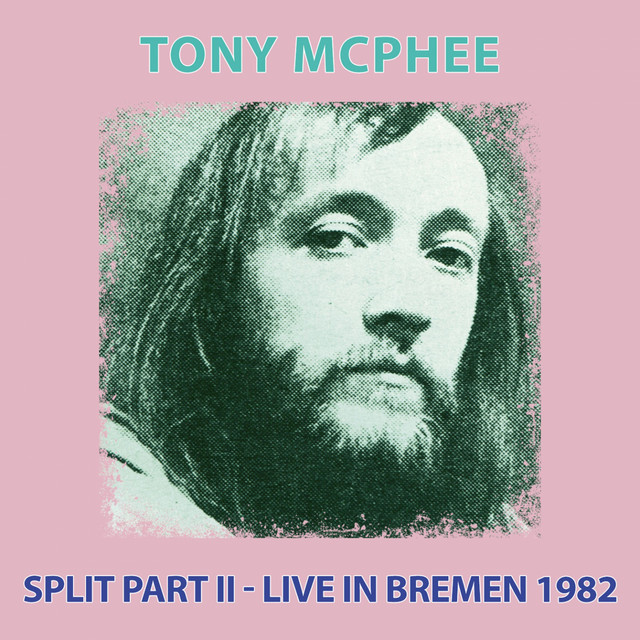
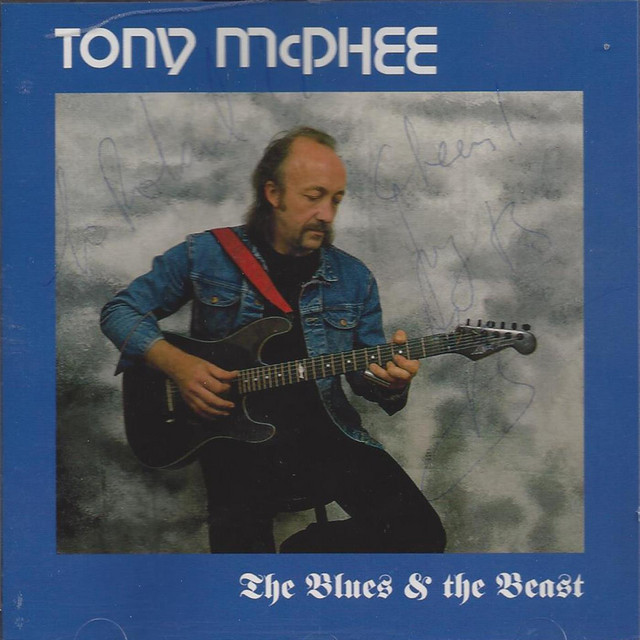
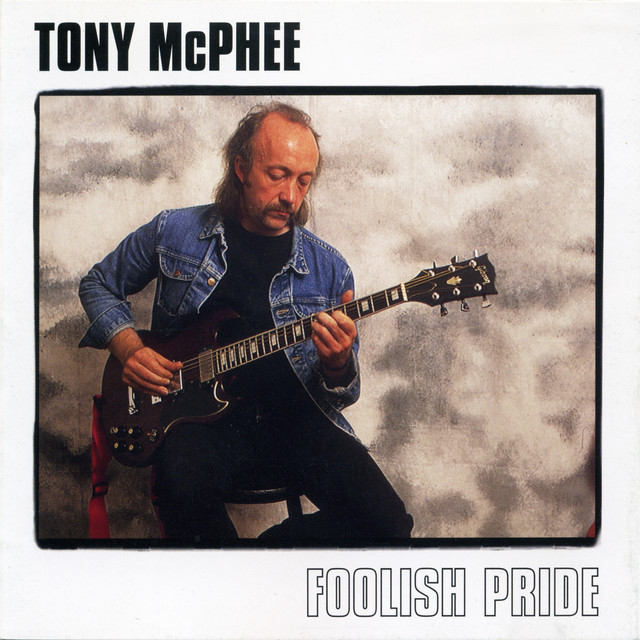
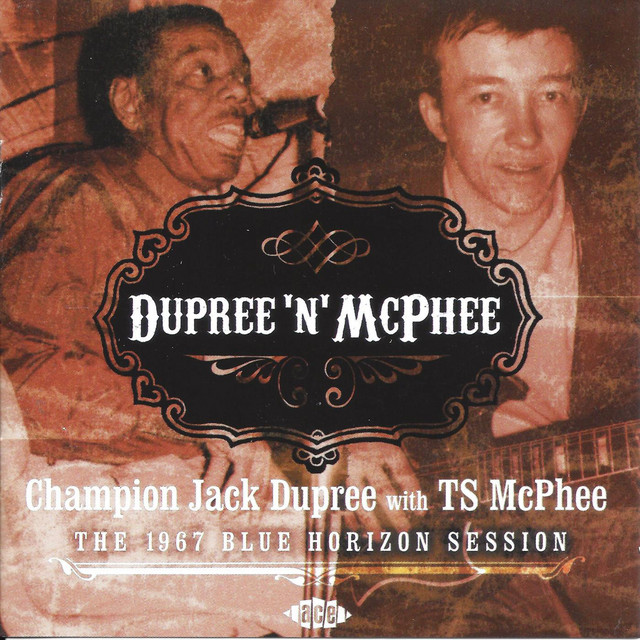
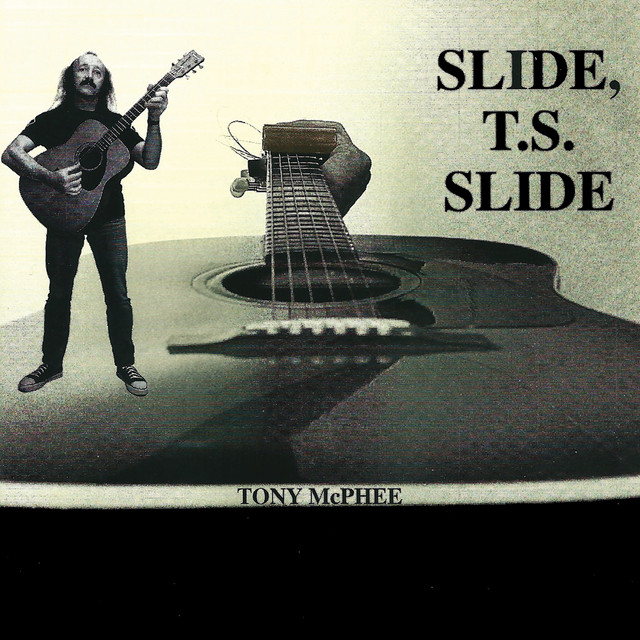


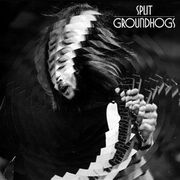
.webp)


