
cagatay_cetin's Reviews
14 reviews Back to cagatay_cetin's Equipboard

224
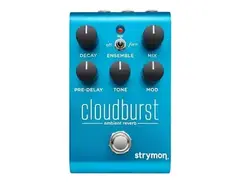
Much More Than a Reverb Pedal
Calling the Cloudburst a reverb pedal feels unfair. It acts more like a string synth for your instrument. I use it only with bass guitar, and even on the first day, I was amazed by the lush, pad-like textures. The Ensembles mode adds an organic layer that sounds almost like real strings behind your playing. The interface is very clean and simple. I’ve tried many other reverb pedals before, but Cloudburst opened up a whole new ambient space. I’m already in love with it.
224
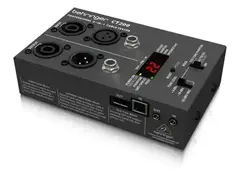
A lifesaver for patch cables
I’m very satisfied with this product. It has saved me a lot of time, especially when checking patch cables. It’s super easy to use, has long battery life, and feels sturdier than I expected.
There’s just one small issue: when testing mono TS plugs using the TRS input, it often gives a “short” warning even if the cable is fine. I’m not entirely sure why, but using an RCA input with an adapter to test mono TS cables gives accurate results instead.
As long as you're aware of this quirk, the CT200 is a very practical and reliable tool to have.
224
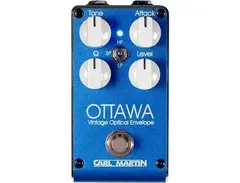
My Favorite Vintage Style Filter
I enjoy using the Carl Martin Ottawa. I’ve only tested it with bass, and it works beautifully in LP mode. The tone feels warm and natural, and the envelope tracking is smooth and satisfying.
Compared to a more popular alternative like the MXR M82, the Carl Martin truly lives up to the word "Vintage." The effect feels much more natural to my ears.
If it had a blend knob, it would’ve been perfect. Even so, it has quickly become one of my favorite envelope filter pedals.
224
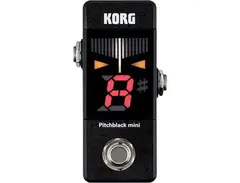
Compact, Accurate and Reliable
I used the Korg Pitchblack Mini for a long time and was genuinely happy. Even with a bass guitar, it tracked quickly and consistently. The screen is bright enough to be easily readable, even in direct sunlight, which is a huge plus for live use.
The only real criticism I have is about the battery compartment latch. Opening it can sometimes be a bit of a struggle, and because it’s made of thin plastic, it feels fragile and prone to breaking. However, very few people use batteries in their pedals anymore, so I’m not sure it’s fair to count that as a downside. Still, if you plan to use it with a battery, it’s something to keep in mind.
224
Well-Built But Not for Everyone
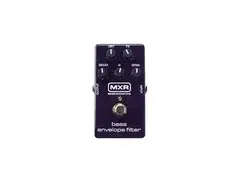
The MXR M82 is widely regarded as one of the most established envelope filter pedals for bass, and it's clear that many players are highly satisfied with it. However, in my experience, it hasn't quite met my expectations.
To achieve a usable effect, I found myself needing to set nearly all the controls close to their maximum values. This felt somewhat restrictive, as it left very little room for subtle adjustments or tonal variation. Interestingly, I’ve had better results with the Carl Martin Ottawa, a pedal not specifically designed for bass, which responded more effectively in my setup.
Despite spending considerable time trying to optimize the settings, I was unable to resolve this issue. While I recognize that the M82 is a solid and well-respected pedal, it simply didn’t suit my needs.
224
It worked well for a while...
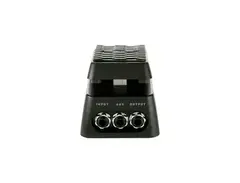
I bought the Dunlop Volume X Mini after reading countless positive reviews and trying it out in a store. For the first year, I was genuinely impressed. But before its second year, it completely failed and became unusable.
I really loved the pedal when it worked, and I wish there were a practical way to repair it. Unfortunately, the internal design makes that nearly impossible. As much as I liked it, I can’t justify buying the same pedal again, knowing it might fall apart in just a couple of years. At this point, exploring volume pedals from other brands seems like the more sensible path forward.
-s.webp?v=1784214146)
224
Solid Looper, Disappointing Support
I’ve been using the TC Electronic Ditto X4 for a while now. While I’m generally happy with its functionality, my experience has been overshadowed by a frustrating flaw: its Hold function doesn’t work at all. I tried updating the firmware and resetting to factory settings but nothing helped.
This feature isn’t critical to how I use the pedal, so I didn’t go through the hassle of returning it. But it shook my trust in TC Electronic’s quality control. Reaching out to support didn’t help much either; it took over 10 days to get a response, and when it came, it was just “please contact your dealer.”
Having two independent loop channels is a real advantage. But I honestly find the built-in effects like reverse, half speed, fade, etc., completely unnecessary. And their inclusion makes the pedal noticeably bulkier than it needs to be. I bought the X4 during a discount period when it was cheaper than the X2, which made the choice easy at the time. But knowing what I know now, I would’ve gone with the X2 instead.
Aside from that, the pedal itself works well and delivers on most of what it promises. But given this experience, this will likely be the first and last TC Electronic product I ever buy.
224
The Oldest One I Still Enjoy
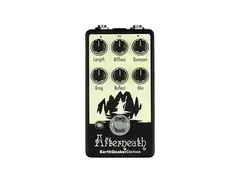
Afterneath V1 is probably the oldest pedal I still keep on my board. And yet, after all these years, I still reach for it with the same excitement I had on day one. It doesn’t behave like a traditional reverb; it’s more like a blend of reverb and delay effects. It isn’t just a utility pedal; it’s a creative instrument in itself, and I still love using it.
224
10 Years with the Aguilar TLC Compressor
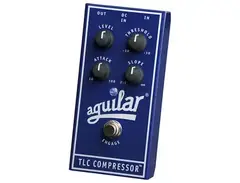
I’ve used the Aguilar TLC Compressor for nearly a decade with both electric and electro-acoustic basses, in live and studio settings. Its biggest strength is transparency, it controls dynamics effectively without coloring the tone. The low end stays intact, and the response feels smooth and musical. Still one of the most dependable bass compressors out there.
-s.webp?v=1784214267)
224
Premium Feel, Smart Design
From the moment you take it out of the box, you can tell how well it’s built and how unique it is. Every single knob feels carefully considered and genuinely useful, nothing is there just for show.
One of the most valuable features is the FX loop. It significantly increases the pedal’s versatility. I’ve tried running an octaver, chorus, tremolo, and phaser through the loop, and the results were excellent across the board.
Its size is roughly the same as a standard volume or wah pedal, so there’s nothing to complain about there. If I had to point out one small limitation, though I’m not even sure it’s fair to call it a flaw, it would be the way the foot pedal responds: you get a quieter sound when you press lightly and then a sudden volume jump when you press it all the way down. It’s a two-step rather than a smooth, linear transition like a volume pedal. However, the Rise knob does a great job of smoothing it out, so I can’t call it a downside.
224
Easy to Use, Great Results
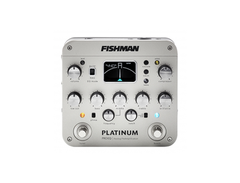
I’ve been using the Fishman Platinum Pro EQ Analog Preamp for a while now, and I’m really satisfied with it. The EQ provides excellent control over my tone, and the built-in tuner is quick and accurate. The compressor, despite having just one knob, does an impressive job of balancing dynamics and tightening the sound. The Notch knob is incredibly useful for eliminating unwanted resonances or feedback, especially in live situations. I’ve used it with both electric and acoustic basses, and it’s performed well with both, delivering clear and well-defined tones. It’s compact, durable, and easy to use, making it a great option for gigs. Overall, it’s a reliable, versatile preamp, and I couldn’t be happier with its performance.
224
Surprisingly Easy for First-Time Users
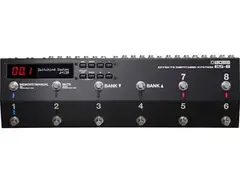
As someone trying an effects switcher for the first time, I had some doubts about the learning curve before buying the Boss ES-8. It looked a bit complicated on paper. But after unpacking it and spending just half an hour exploring, I was already comfortable with all the features. It turned out to be much easier to use than I thought. I've been using it for about a month, and honestly, I dislike nothing about it. ES-8 is very flexible, reliable, and super easy to work with. If you're worried about it being too complicated, don't be. It’s way easier to master than it looks.
224
The Classic That Always Delivers
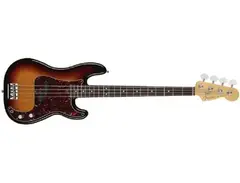
The Fender American Standard Precision Bass is a reliable classic with a punchy, warm tone that suits almost any genre. Its solid build and simplicity, one pickup, one volume, one tone, make it incredibly versatile and easy to play. It doesn’t try to be flashy, but its timeless performance is what keeps it a top choice for bassists worldwide.
224
A Unique and Inspiring Bass
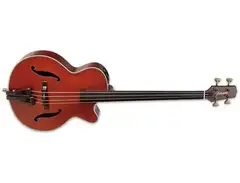
I had dreamed of owning a Takamine TB-10 for a long time, and I’ve been using mine for about a year now. It’s one of those rare instruments where I love everything about it; the sound, the feel, the look. It’s beautifully built and incredibly expressive, both on stage and in the studio.
One thing to keep in mind: the neck has absolutely nothing in common with an electric bass. The profile and fingerboard radius feel much more like an upright bass. If you come from an electric bass background, it might seem intimidating at first, I was honestly unsure whether I’d get used to it. But surprisingly, I adapted very quickly and now I feel completely comfortable with it.
The TB-10 comes with its own hardcase, which looks incredibly cool and feels rock solid. But be warned, despite the instrument’s large body, the case is somehow even heavier than the bass itself. If you travel frequently with your instrument, it can feel like you’re carrying two or even three basses at once.
One useful feature is the CTP-3 preamp which allows you to add an additional microphone alongside the piezo if you want to. I’ve personally never felt the need for it, but it’s great to have the option. When used unplugged, the TB-10 has a low acoustic volume, which makes it great for practicing quietly at home. That said, don’t expect the kind of projection you’d get from a full upright bass, that’s simply not what it’s designed for.
There’s no real downside for me, but I did notice a faint rattling noise when playing certain low frequencies. It’s definitely not electrical, it feels like something inside the body is slightly vibrating. I checked the preamp slot, even padded it with some fabric to test, but the issue remained. My guess is it could be a cable between the piezo and preamp making contact with the wood due to resonance. It’s subtle and not noticeable in live settings, but it can be a bit distracting during quiet practice sessions. I’m not sure if this is unique to mine or a common TB-10 trait, if it’s widespread, it would be a bit disappointing for an instrument in this price range.
That said, it hasn’t stopped me from enjoying it. The TB-10 is still a joy to play and one of the most inspiring instruments I’ve owned.
And after everything I’ve written above, I can honestly say: I’m deeply attached to this instrument, and I know it will be with me for the rest of my life.