
Daryl Skinner
GearIQ 629
Joined Apr 2021
0 Followers
Site engineer by day, old school rock and metal guitarist by night.
Role
Follow
0 Followers
Every rig tells a story. Start yours.
Catalog your gear, wishlist what's next, and share the setups behind your sound — free.
Create your EquipboardGuitars 2

If I need to describe the Firebird in one word it will be perfection. It hands down best and most versatile guitar ever made by Gibson. I use Mojotone Johnny Winter Signature Firebird pickups in my Firebird. Through my Vox AC100 CPH the Firebird can pull off anything starting from the The Beach Boys to Diamond Head.
-m.webp?v=1783769452)
I bought my Rick used. Since I use my guitars at a comparatively higher gain than most Rickenbacker users, I have replaced the stock toaster pickups with hum-cancelling Low '57 toaster pickups from Creamery. It doesn't sound anything different from what it used to sound with the single coil toaster pickups, but with the hum-cancelling toaster pickups the hum is gone.
Since it's no more held back by issues concerning pickup hum I can use them with higher amount of gain, and the Rickenbacker armed with the hum cancelling toasters sounds glorious through my Vox AC100 CPH. As far as playability is considered, well it's a Rickenbacker, one can't go wrong with it.
Strings 5


Pickups 2

Before you read this review let me make one thing clear. I'm a die hard Johnny Winter fan, so this may not be the most unbiased review.
As for the pickups, if you own a Gibson Firebird and you want your guitar to sound great then don't even think twice, just go for these pickups. They're the best Firebird pickups I've ever used. The thing I like the most about them is the beautiful overtones they produce when I use them clean.
Gibson's stock Firebird pickups ain't bad but these puppies take the guitar to the next level. There's no mini humbucker trickery over here. It's a true blue Firebird pickup built in the good ole way. They make my Firebird V sound like a genuine '63 and '64 Firebird, albeit with even better dynamics.

The folks at The Creamery claim that this pickup is a bit fatter sounding than the toasters from 1957. I ain't sure about the 1957 era toasters but compared to current generation of toasters they sound nothing different. The only difference I could hear between them and the current generation toaster pickups is that they don't hum. That may sound like a minuscule difference and to be honest if you use your Rickenbacker guitar for clean or cleanish low gain applications then switching to them won't make a big difference for you.
However, for me they make a big difference. Since they don't hum I'm able to use them for comparatively higher gain applications than what Rickenbacker guitars are generally used for. I know Rickenbacker makes their own humbucker too, but they don't sound like the toaster pickups. These humbucking toasters on the other hand sound just like toasters but without the hum. These pickups open up new horizons for Rickenbacker guitars without sacrificing the qualities that make a Rickenbacker guitar unique.
Effects Pedals 11

This wah pedal is like multiple vintage halo-inductor based wah pedal stuffed in one pedal. Back when I bought it, it used to cost around $100. If I ain't wrong they have hiked the prices, but even after the price hike it offers unbeatable value for the money. If anything I like it better than vintage Eleca halo inductor based wah pedals because BBE's halo inductor has lower noise, and the pedal has great quality true bypass switching.

It's a simple no frills buffered volume pedal made by Saturnworks. The quality of buffers used by them is excellent, there's no buffer noise from this pedal, and it perfectly preserves my guitar tone. As for the sweep, it's nice and smooth. Back when I ordered it, it cost me around $100, for that price it gives pricier volume pedals a run for their money.
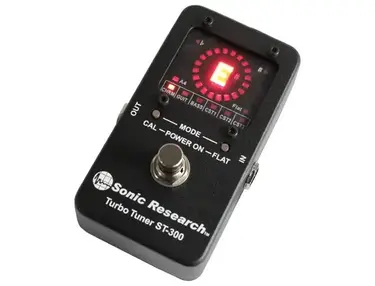
I've yet a find a tuner that tracks my guitar signal anywhere as fast and accurately as this tuner.

It's fairly cheap and easy to use. It does have some impact on the sustain, but it isn't a big deal.

It's a high quality clone of the Catalinbread Naga Viper. In terms of build quality it's actually as well built as the Naga Viper but costs lesser than it. The traditional Rangemaster mode is obtained on the pedal by turning the range and gain knob fully clockwise. The boost knob then functions the same way as the boost knob on a Rangemaster. The other way to use it is like Tube Screamer wherein you can turn the gain knob all the way down counter-clockwise.
I use it in many different ways with my AC100 CPH. When I want the old-school Vox and Rangemaster style tone I switch to channel 1 on my amp, dial up the gain knob and tone cut knob on the AC100 CPH to emulate the normal channel of a Vox AC30, then slam it with the Pink Treble Booster. For Black Sabbath style tone I turn the range knob counterclockwise to fatten up the overall guitar tone.
In some aggressive speed metal songs I use it to boost the channel 2. On channel 2 of my amp, I turn off the fat and bright switches. Then on my treble booster I dial the gain knob all the way back, turn the range knob all the way up and then dial the boost knob as per requirement. It gooses up the overdrive channel by just the right amount. Playing around with the range knob provides even more tonal options.
I find this pedal way more usable and versatile than the usual one or two knob kind of treble boosters, and due to the usage of silicon transistors it has a more controlled response than the germanium transistor based treble boosters.

The Calvin Compressor circuit is derived from the Ross/Dynacomp family of OTA compressors. However, it adds an extended control scheme to fine tune the compression. The inclusion of attack, and threshold controls and voicing switch make it way more usable than other compressors. It's price isn't that high either, and to be honest it packs a huge bang for the buck.

No other chorus pedals under $100 come anywhere close to the MXR Analog Chorus in terms of sheer versatility and range.
Edit: I found a neat mod for this pedal. The through output on the pedal uses a TRS jack. When you plug a mono jack into it, it shorts across the ring and sleeve. This acts as a switch and sends the dry signal to the second output. So, what I did is I drilled a hole in the left side of the enclosure and installed a push-button micro toggle switch connected to the ring and sleeve of the second output jack. So, now that switch acts a chorus and vibrato toggle switch when the pedal is used in mono mode.

Back when I bought it it used to cost around $100. In that price range no other phaser pedals come even close to this pedal in terms of features and versatility. Forget MXR Phase 90 it gives even many pricier phaser pedals a run for their money. Unlike many of the pedals made by such lesser known Chinese brands it's actually pretty well built. It's build quality is as good as MXR pedals. By adjusting the depth, resonance and sweep knob this pedal can sound like different 4-stage phasers like Script Phase 90, Block Letter Phase 90, EHX Small Stone, etc. If you play around the knobs it can even easily go into the weird and wonky experimental territory. When it's about value for money, it's impossible to beat this phaser pedal.

The second generation Ekko 616 MKII is a really clean sounding analog delay. Its cleaner repeats were a major reason why I chose it over the MXR Carbon Copy. A cool thing about its repeats is that due to their cleaner nature they tread a fine line between the bucket brigade and tape echo sound. Its tonal quality is right up in the same league as the vintage EHX Deluxe Memory Man. Another thing I like about this pedal are its external speed and depth knobs, they offer a fine control on the modulation parameters.

It's an old school analog bucket brigade flanger and when it comes to the flanging effect it stands neck to neck with the MXR Flanger. I never expected a cheap flanger pedal to be this good.

I learnt the hard way that tap dancing around pedals is a bad idea. So, I decided to go for a loop switcher. I went for this loop switcher instead of readily available ones from name brands because of the customization options offered by Buzz Electronics. The options for volume pedal insert, & pre tone-stack and post tone-stack loops is quite nifty.
Amplifiers 2

Let me get few stuffs clear about this amp. This amp was marketed rather poorly. Vox marketed it as a modern high gain amp, even its extended control layout and features are similar to a modern two channel amp but that's where all the modernity ends. If you're looking for an alternative to a Marshall DSL100HR, or JVM210H, or a Peavey 5150 then sorry to disappoint you, but this amp isn't meant for you. It's high gain by Vox standards, but it's by no means a modern high gain fire breather. It's more or less a vintage high gain amp.
It's an odd amp among legions of hot-rodded Marshall, and Fender based amps. Its preamp section is basically a VOX AC30 preamp that has been heavily modified for extended tone shaping and higher gain, and its power amp section is derived from the second generation fixed bias Vox AC100.
This amp is picky when it comes to speakers. So far I've had excellent results through Weber Ceramic Blue Dog, and pretty great results through the Celestion Heritage G12M Greenback speakers. Too bad Vox marketed it with the Wharfedale GSH-1230 speakers which are based on Celestion G12H30 speakers. Like every other Vox amp this amp too sounds okay through G12H30 style speakers when clean, but absolutely terrible through them when overdriven. Its performance is pretty lackluster through the Vintage 30 too.
When paired with right speakers it does the nice old-school Vox tones, as well as a unique high gain hot-rodded take on the classic Vox tone with aplomb, however with wrong speakers it either sounds rather lackluster or downright terrible. Same is true when it's about using various kinds of boost pedals with it. Overdriven Vox amps sound rather poor when boosted by a Tube Screamer, unfortunately that trait is true for this amp too.
For this amp either stick to using transparent overdrives like Timmy as boost, or if you want the best performance opt for a modernized treble booster that has a gain cut knob and a controlled voicing like the Naga Viper. It's a good amp provided you know what you're getting into. The best thing about this amp is that it not only sounds great but it also has its own unique tone that you won't hear from any other amp.
With the right set-up it does classic rock, arena rock, old school Black Sabbath style metal, and old school NWOBHM like a boss. If your musical style is similar to those then you would astonished by the tone of this amp. It can go from The Beatles style guitar tones to aggressive Riot style guitar tones without breaking a sweat. This amp is like the souls of multiple Vox amps stuffed in one single amp. The only catch is that you need to pair it up with the right speakers.

I have no complains against the quality of this amp. It's my go-to practice amp and it has been through a lot of usage. I did replace the stock speaker with a 10" Weber Ceramic Blue Pup speaker and the amp sounded excellent through it.
However, after a long period of usage its carry handle was damaged, I accidentally misplaced the plastic vent, and the grill cloth was ripped. So, I had to replace them, but I couldn't find cream colored Vox carry handle and vent in my local guitar store. All they had were the black ones, so I had to adjust with them. The worst part was the grill cloth, I couldn't find the "Tygon" grill cloth anywhere. I did have the regular brown Vox checkerboard cloth with me, so I had to use that instead.
I do understand that Vox has discontinued this amp and replaced it with a new variant with 12" speakers and regular brown grille cloth, but at least they should ensure proper availability of spare parts.
Speaker Cabinets 1

The Vox V412BN is quite ruggedly built, in term of quality it easily trumps over the current generation Marshall cabs. However, the stock Wharfedale speakers were a rather poor choice for the Vox AC100 CPH.
Speakers 2

I replaced the Wharfedale speakers in my Vox V412BN with these speakers and my Vox AC100 CPH came to life. The AC100 CPH sounded terrible with the Wharfedale speakers, it sounded dull, buzzy and hissy.
Before buying these speakers I tried my amp through my bandmates Marshall 4x12" loaded with G12M Heritage Greenbacks. Although it sounded good but the unique qualities of a Vox amp were gone with the Greenback. The overdrive channel sounded great but the cleans were a bit lacking for my tastes.
Then I tried them through a Mesa/Boogie Traditional 4x12" loaded with the made in U.K. Vintage 30 speakers. With the Vintage 30 the mid-range response was okay but the the complex upper mids, and the chime that you expect from a Vox amp were completely missing. Instead of having a detailed and complex chime the Vintage 30 made the cleans smeared in the high end. In overdrive channel the Vintage 30 made the upper-mids sound congested and smeared. So I contacted Weber Speakers and they recommended the 50 watt Ceramic Blue Dog speakers for my amp.
With these speakers my amp sounds absolutely beautiful. In the clean channel it produces the nice signature Vox chime that is rich in complex harmonics in the presence and high end spectrum. In overdrive channel not only the speaker has a nice low end response, and detailed mid-range, but it also has detailed and complex upper mids like an Alnico Blue speaker. However, unlike an Alnico Blue these speakers handle high gain with aplomb, and have a faster low end response.
With these speakers my AC100 CPH sounds exactly like what it was built to sound like, it sounds like a hot-rodded Vox amp. If only Vox would have put something like this speaker in the VOX V412BN the AC100 CPH wouldn't have been such a failure.

There were multiple reasons for me buying these speakers. Of course the biggest reason was that a bloke was selling them on Reverb for just $70, so I couldn't miss out on such a sweet deal. The other reason was that I heard the Alnico Blue Pup doesn't fit in the small space of AC4C1 without modifications to the amp, so the Ceramic Blue Pup was the next best choice.
The one I have is a 20-watt variant with pre-rola dope. It sounds great with the AC4, and is a dramatic improvement over the stock VX10 speaker. The excellent performance of this speaker was a major reason why I opted for its bigger brother the 12" Ceramic Blue Dog for my Vox AC100 CPH. It has the chime of an Alnico Blue with the fast low end response that you expect from a ceramic speaker. With it my Vox AC4 sounds a lot more open.
Microphones 4

I bought this microphone after my old and trusty Shure SM57 was misplaced after a gig. I love the SM57 but I have to admit that this is a vastly better microphone than SM57, or any other $100 microphone.
The best thing I like about it is that how uncolored it is. I have had my experiences with fair share of uncolored dynamic microphones in studios like the Sennheiser MD441U, and Shure KSM8. Although this microphone isn't as uncolored as those high end dynamic microphones, but it's great for its price. I actually prefer it over the Sennheiser MD421-II, which is a quite huge achievement for a $100 microphone.
-m.webp?v=1783782829)
I replaced my sE Electronics VR1 ribbon mic with this ribbon mic. The VR1 was a great ribbon mic and honestly with modern amps like Mesa Rectifier, Randall Thrasher, etc it works far better than the M130. It's neutral frequency response works great with the modern high gain amps but with Vox amps the M130 just sounds better. I realized that sometimes the most neutral mic isn't the most perfect mic for all amps. The mid-range of the M130 just works perfect for Vox amps.

I bought it used in mint condition and the variant I have bought is the non-neodymium one. It lacks the frequency roll-off knob of MD 421-U but since I'll be using it to record guitars it's not a big deal for me.
There is also a neodymium variant out there called BF 521 II (The product code is written on the mounting notch) which is basically a MD 421 II without the frequency roll-off knob, but I prefer the sound signature of this non-neodymium variant. The neodymium variant tends to sound scratchy to my ears.
It isn't as neutral sounding as my Lewitt MTP 440 DM but for some reason it works better for recording Vox amps than the 440 DM. It pairs nicely with my Beyerdynamic M130 and to my ears it's a far better combination for recording Vox amps than the industry standard Shure SM57 & Royer R121 combination.

I bought myself the re-issue in black finish called the PL80a. Comparing it to my current microphones I am genuinely surprised why this microphone isn't popular.
It's a supercardioid microphone and it has excellent off axis rejection. Tone wise, it's basically a poor man's Sennheiser BF521. I compared them in a mix and to be honest they sound more or less indistinguishable. Of course by BF521 I mean the first generation non-neodymium BF 521, not the bright neodymium BF 521 II.
Now the bad part. It uses a neodymium magnet but its output is no better than microphones that use ferrite magnet. To be honest its output is more or less same as my BF 521. It's kinda weirdly shaped for a handheld microphone and is uncomfortable to hold compared to a SM58, but if you use it as an instrument microphone or if you use it in a stand then it won't be a problem.
If you're a guitarist and you want a cheap alternative to the old BF 521 or the old MD 421-U then this microphone is your best bet. As for vocalists, well if you prefer use your vocal microphones mounted on a stand then go for this microphone, for folks who like to hold their microphone, it isn't the most comfortable microphone to hold on to.
Recording Equipment 2


DAWS 1

Let me be honest, I am the least tech savvy person you'll ever find. I have always found DAWs difficult to use because I get overwhelmed by their overcomplicated interfaces. I am well versed with working with analog decks but working with DAWs have always been a challenge to me.
However with the Mixbus32C I felt right at home. The interface is very reminiscent of real recording decks and is very easy to use for someone who is not well versed with DAWs. It's highly stable and its UI helps folks like me to get on with the digital age of music production.
Had 5

They are not necessarily poor quality speakers. If anything they're pretty decent G12H30 style speakers. However they are a rather poor match for the Vox AC100 CPH. Through them the VOX AC100 CPH had rather harsh and hissy high end, and extremely dull mid-range. The amp sounded outright horrible through them. I replaced them with 50-watt Weber Ceramic Blue Dog speakers and the now my amp sounds exquisite. Maybe these speakers will work better in some other amp.

The best thing I did with these speaker was to replace them. They sounded terrible, unless you have some sort of odd penchant for boxy, scratchy, muffled and lifeless guitar tones you'll find these speakers to be terrible. They make the AC4C1 sound really terrible. With them the AC4 has this cheap scratchy tin can kind of sound. My amp came to life after I replaced them with Weber Ceramic Blue Pup speakers. I can't believe out of all speakers Vox choose to put this piece of junk in an otherwise nice amp.

Can't go wrong with the Shure SM57. It has a history unlike any other microphone, and it has been used in some of the greatest hits ever produced. I have used it for many gigs and it has never failed me.

It's a different kind of ribbon microphone. When compared side by side with Royer R121 it doesn't have the mid-range honk, it has a very clean, detailed, and neutral mid-range.
As for the low end, once again, it's very uncolored, clean but extended. The biggest surprise is the high end. It has a more extended high end than other ribbon microphones, however its high end is very clean and it has the warmth that you expect from a ribbon microphone.
The best description of this microphone will be that it's highly accurate, hifi, but at the same time it has the warmth of a ribbon microphone. It captures sound sources with utmost accuracy, but at the same time imparts smoothness to them. I like it better than the Royer R121, which is quite surprising when you consider the fact that this microphone costs just $400. It looks hideous though.

Honestly, I am surprised by the quality of this microphone. I bought it as a cheap junker mic to use live but after using this I am happy as well as bummed all at the same time. I am bummed because I still can't believe that a $40 microphone can sound better than a SM57, it makes no sense but somehow it does.
Now about the part of me being happy, I am astonished by how it sounds like a cross between Sennheiser MD421-II and Shure SM57, that's just unbelievable for such a cheap microphone. As for its build quality, it doesn't have the Sherman tank like build quality of my Lewitt but it's at least as well built as the SM57
Now the bad part, the accessories in the box suck. The clip that comes in the box is utter junk and it became loose after a week of usage. Forget about being usable, the hinge on the clip became so loose that it can't hold the microphone in place anymore. The threads on the hinge screw ripped out when I tried to tighten it. The storage bag is utter joke, its seams tore out within 2 weeks of usage and then the crappy leatherette material started to flake off. Then again for $40 they are okay.
Update: It stopped working for no reason. Quite a bummer that it turned out to be unreliable, because it's was a good microphone.
Wishlist 0
Nothing here yet.