bart_van_zon's Electronic Studio Setup

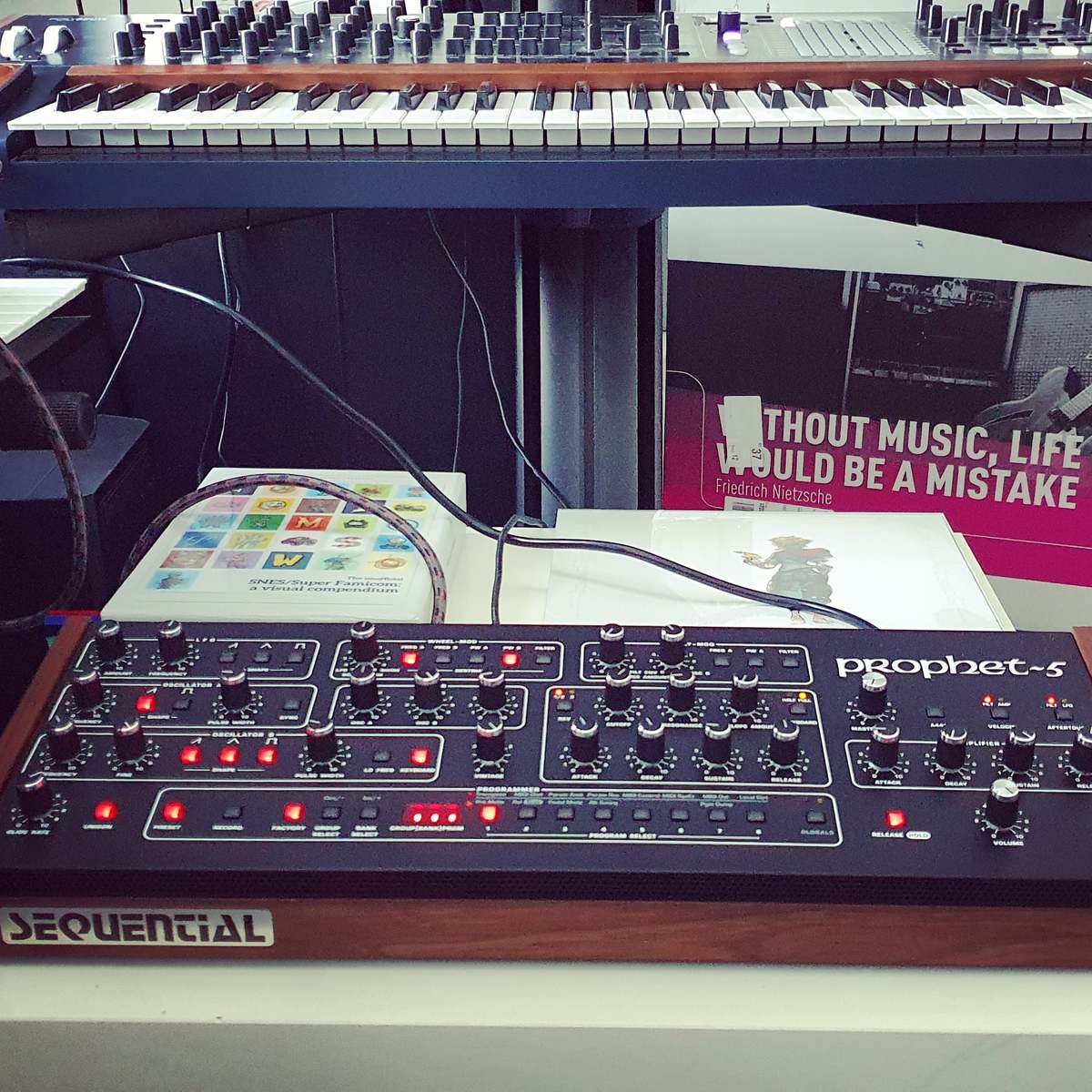
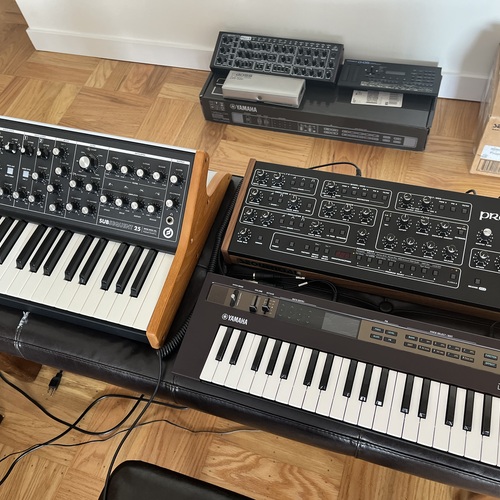
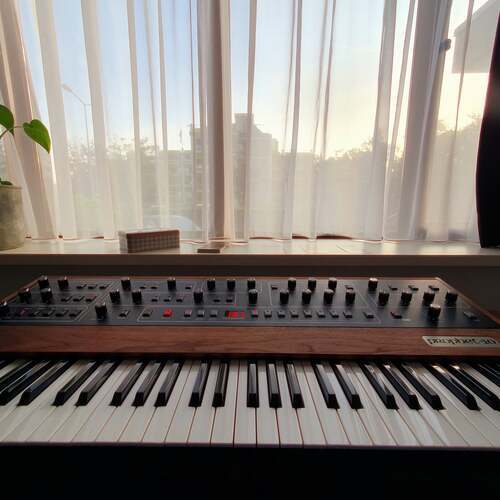
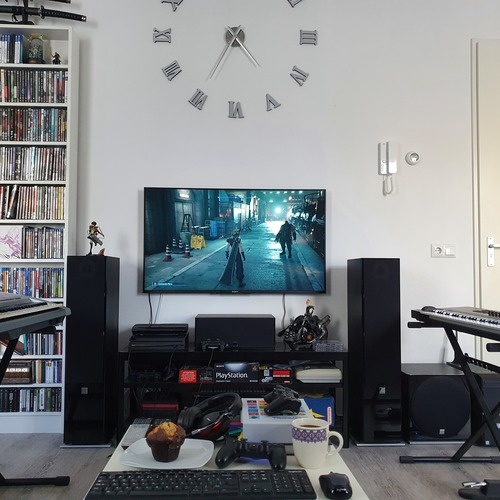
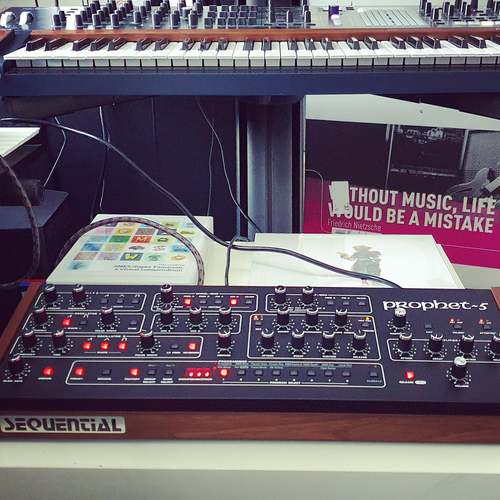
Closeup of a Prophet 5 Desktop as it's connected in my home studio. The box it came in is in the background with an appropriate Nietzsche quote on it.
More gear photos from bart_van_zon


Gear in this photo

Sequential Circuits Prophet 5 Rev 4 Desktop
Avg price: $2,492.94


Cheapest way to get your hands on an authentic classic synth sound
The Prophet 5 is a legend among synthesizers. I don't need to explain anything about it. You can find plenty articles and videos about the history of the Prophet 5 if you like. Most polyphonic synthesizers are in in way or the other based on this one.
This is a modern re-isue of the classic 1978 instrument in module form, but released by the company Sequential Sircuits who released the original, and while the creator Dave Smith was still alive. It's the cheapest way you can get your hands on the real deal.
Since it's such an old synth it's really basic. It's easy to understand and create sounds with, which makes it a great first synth to learn the basics. It's very limited in what it can do compared to modern synths, but what it can do it does like no other. Fantastic timeless sound. It does sound extremely neutral, which makes it versatile. It gets it character from the analogue lifelines but doesn't have a unique sound. To some this means very vanilla and boring. The upside is it doesn't take over your song, and how good you can make it sound depends entirely on your own skills in sound design, playing or music production. I'd say it's a good back-bone for your synth collection.
My main problem with this instrument is the tuning. I keep using the autotune program constantly to ensure the tuning stays constant, before i start tweaking any parameters. Than you have to manually tune the synth to your songs with the tuning pods to make it sound right with the other instruments. Tho pods have no notches to tell you were the 0 position is exactly and the oscillators have so much drift it's impossible to get it 100% correct. This is all of the fun with vintage analogue gear. Keep this in mind though, because the result can clash with more modern digital sounds or a singer who's perfectly in tune. Modern synths sit better in modern mixes. You don't want to spend all that cash on a re-issue of a vintage synth, just to slap some autotune on it to make it sound modern.
The module version saves you a lot of money and space compared to the full sized version. I think it also looks better, because the UI is better, the pods and buttons are sleeker and better looking. It has the exact same sound. The downside is, it's not as big, doesn't have all of that nice wood, and doesn't look and feel like the 1978 classic.
Preferred Settings + Usage:
This works best for raw analogue tones with a vintage late 70's to 80's character. You can use the first preset "It's a Prophet 5" right out of the box. I shamelessly used that on the first track I made with this instrument. "Sync ii" is fantastic. It's that lead from Breakwater's "Release the Beast". It can do all kinds of sounds like warm strings, brass sounds that are less rubbery but more punchy than those of the Oberheims, cool bass sounds that can be sharp but not too unpleasant. Most fun is to start from scratch and create your own sounds. It has a basic easy to use UI and a very large sweet spot.

Avg price: $2,689.36
Fantastic analogue synth with vintage character but modern capabilities.
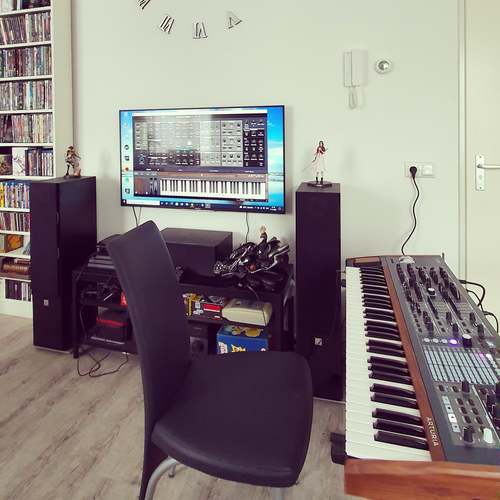
Arturia started out 30 years ago as a creator of software emulations of classic synthesizers. They've gained quite a bit of experience in that time, and have applied that in their creation of hardware synthesizers. They don't have the arrogance of bigger older companies that live on old fame and release classic synthesizers with limited capabilities at inflated prices. Arturia on the other hand, built the Polybrute from the ground up. They looked at what made the classic synthesizers that great, took the best aspects of each and designed hardware around that with the most intuitive UI that would be most affordable to produce in present day.
The Polybrute is an absolutely fabulous analogue synthesizer. A pleasant vintage sound comparable to old synthesizers that cost many times more (like the Prophet 5 and OB-Xa), but with a lot more possibilities to fine-tune your sounds and get something really interesting. All of that whilst the interface remains easy to understand. On top of that, it has a lot of modern effects and features to get sounds that you only get from modern synths.
Arturia also gives you a free VST editor, so you can connect the Polybrute to your computer via USB, and load the VST into your DAW that you operate with the Polybrute, or you can operate the Polybrute with the VST. The boundaries between hardware and software disappear. With my Sequential Prophet 5 and Oberheim OB-X8 which are much more expensive, I had to buy the VST editors separately for $160 each, and they didn't work nearly as well as Arturia one for the Polybrute. Moog also offers free VST editors, but I also have more problems with those than with the Polybrute. Arturia also releases frequent firmware updates that never gave me any trouble and helped make the instrument even better. Arturia released tons of great free presets.
The Polybute is solidly built. Metal housing with wooden side panels, sturdy metal and plastic pods and rubber buttons with multicoloured LEDs inside. The look is timeless. It combines 1960s teal and wood, with 1980s rubber buttons with LEDs in them and deep black and pure white keys and knobs that are very modern. The most beautiful synth I've ever seen. In terms of sound it's right up there with my Prophet 5, OB-X8 and Subsequent 37. Different character but at least as good.
About this setup
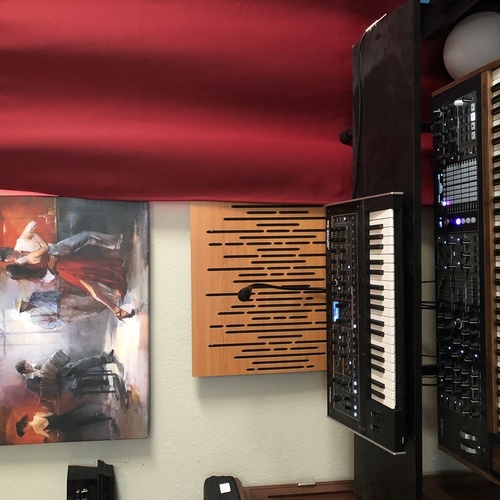
This gear photo by bart_van_zon features 2 pieces of gear, including Sequential Circuits Prophet 5 Rev 4 Desktop and Arturia PolyBrute. Artists with this kind of gear are most often found in the Electronic, Rock, and Pop scenes.