nick_danola's Pedalboard
.jpeg?v=1769397412)
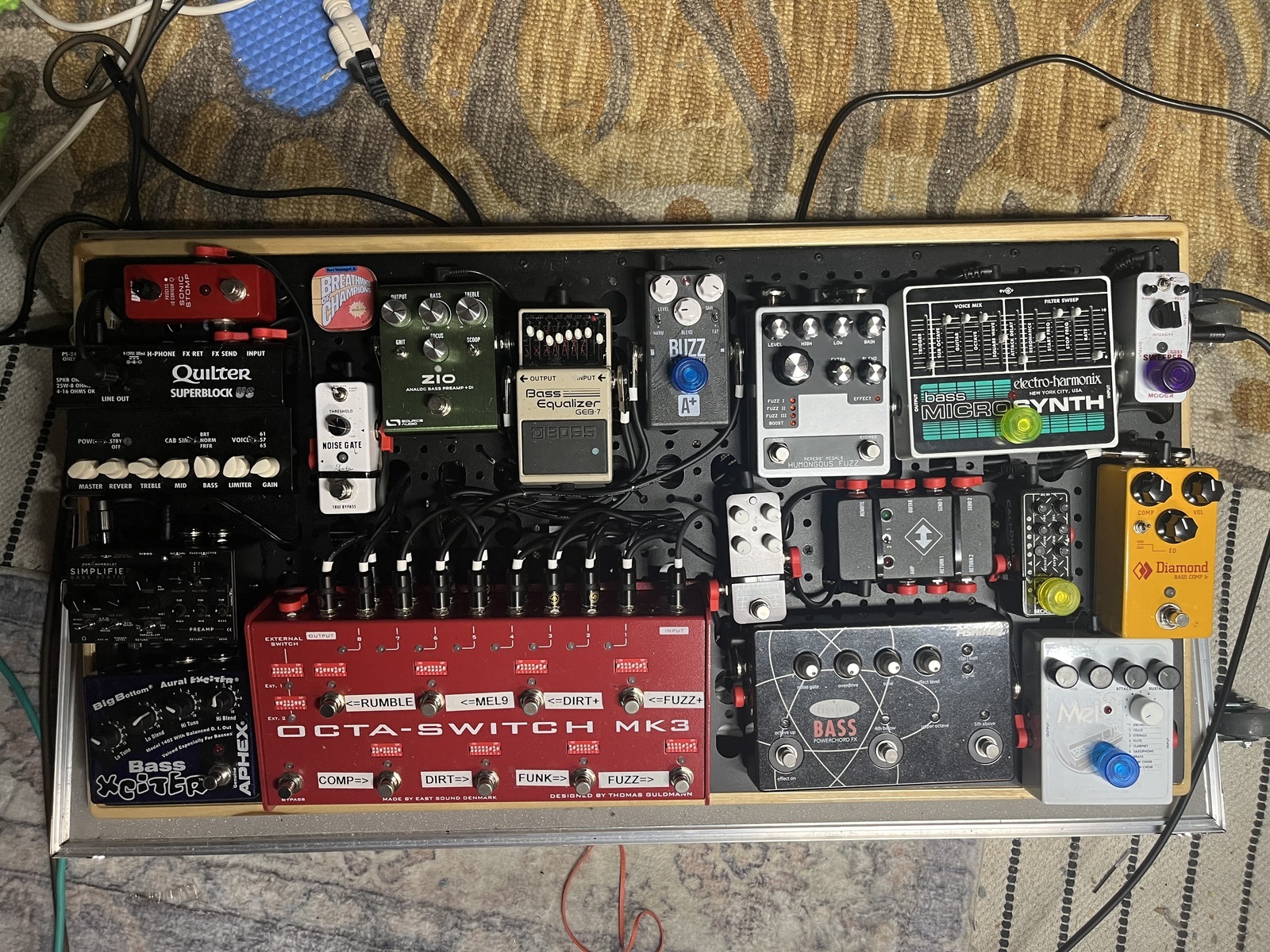
Bass Board
More gear photos from nick_danola
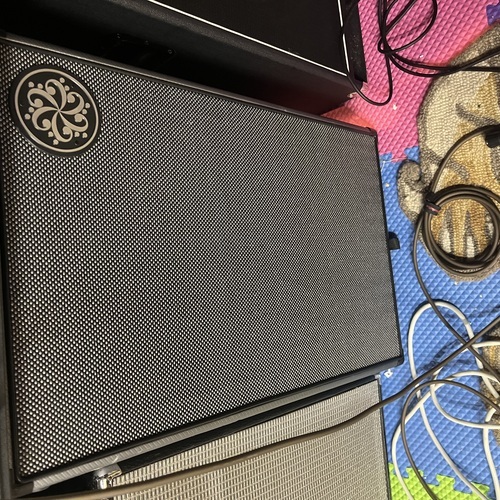
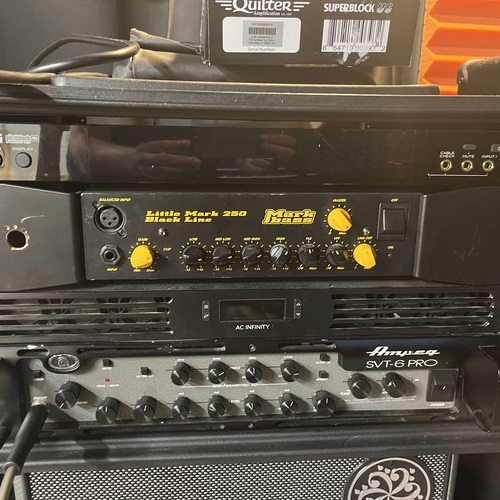
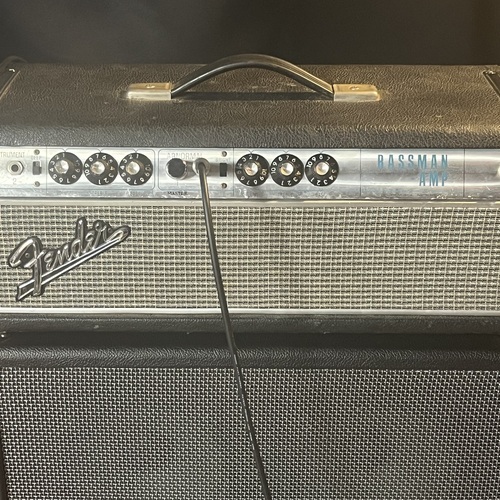
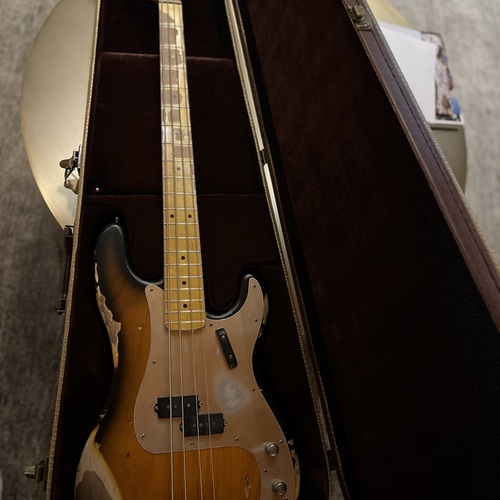

Gear in this photo
This rig
~$2,558
Value by category
- Effects Pedals 87.9%
- Amplifiers 12.1%
Price mix
A wide range of price points

Boldest pick: BBE MS-92 Mini Sonic Stomp Maximizer Pedal
Only 1 pro artist on Equipboard owns it, but it's ranked #9 in Buffer Pedals.

Avg price: $374.83


Great but with flaws
I have and will continue to use this pedal, as I love the functionality and usability. I split my bass signal with this pedal, sending my wet signal into a guitar amp (full wet with none of my bass signal mixed in). The dry goes back into my switcher and the rest of my bass pedals, and then into my bass amp.
Pros
Having the ability to switch between octave up, octave + 5th, and the octave + 5th + 2nd octave with your feet is at a L awesome. As are the wet and dry outputs.
Tracking is really good. The caveat here is you need to use the trim pot, and put this up front in the signal chain. When set up right it tracks as well or better than any other octave pedal I have used with a bass (I have used many).
Cons
The tones it creates on its own aren’t great. Not anything close to a natural sounding electric guitar. The pitches and tracking are great, but you need to put something (or multiple things) after it in your signal chain. I switch between a EHX Mel9 (Melotron emulator) and a Mooer 011 Dual Cali (Mesa Dual Rectifier emulator). The “overdrive” on the pedal sounds like crap. So you need to put a better dirt pedal after this pedal if you want to make good sounding “powerchords”.
The end of the decay can get a little weird if you let notes ring out really long. If your using the 3 note powerchord setting, it works best with straight ahead of 1/4 note or 1/8 note type songs and riff based stuff.
Overall it’s a very useful and fun pedal. Sometimes I just use the octave with heavy distortion (via my Dual Cali pedal) to double a bass riff with a lead guitar sound (like when we cover Hysteria by Muse). I use the other three octave combinations with my Mel 9 to add strings/orchestra or choir sounds (ex: Orchestra for “When you were Young” by the killers and the choir setting on Radioheads “Paranoid Android”). It was fun at a recent gig to see the sound guy jolt up and look confused when I punched in the full orchestra in the middle of The Killers and then watch him confusedly look for a keyboard player (we don’t have one). And I use the 3 note power chord setting with my Dual Cali to mimic an additional high gain rhythm guitar during guitar solos or at the end of a song climaxes (to bring the dynamic to 11).
I just wish another manufacturer took a shot at this design and added a better distortion circuit and found a better way to manage decay/tracking/noise gating at the end of long sustained notes. You can work around these limitations with additional pedals and appropriate application (this isnt an always on type of pedal). So it’s a 4.4 for me. It’s a unique pedal, and I haven’t found anyother pedal quite like it. As I noted earlier, I just wish a more electric guitar/bass pedal focused maker with some more “rock and roll” DNA took a stab at this concept. I feel like EHX could nail this using some of their existing POG circuits. Or maybe JHS could mod this with a Rat circuit. Wishful thinking…

Electro-Harmonix Mel9 Tape Replay Machine
Avg price: $240.51

Mooer Micro Preamp 011 Cali-Dual
Avg price: $75.61
Awesome as a distortion pedal
I really just use the gain channel on this as a high gain distortion pedal. It sounds really good… I am sure not quite as awesome as a real dual rectifier, but pretty damn close. Clean channel is fine… and it’s nice to be able to shape the tone with the EQ knobs. But the gain channel is why you buy this pedal. Excellent value.

Electro-Harmonix Pico Platform
Avg price: $112.16


Avg price: $112.66


Electro-Harmonix Bass Micro Synth XO
Avg price: $292.02

Avg price: $190.00
Simple and Effective
I have cycled through a number of bass compressors, and this is by far my favorite. The compression is smooth and natural, and it really sweetens up the tone of my Pbass. You can dial in a good amount of compression without it feeling squished or farty. Straightforward controls might now excite compression heads. But for those of us who just want and effective and easy to use pedal that sounds great… this is the ticket.
Preferred Settings + Usage:
Early in my signal chain. Compression around 11 o’clock. Tilt at 1 clock, but I also play my pbass with the tone rolled back 2/3rds or the way. Gives me a very even and smooth sound that some punch and cuts through the mix. Works great with passive basses, but I can’t speak to how it sounds with an active bass.

Avg price: $119.25

Avg price: $308.50

Source Audio ZIO Analog Bass Preamp/DI Pedal
Avg price: $249.00
Unique Bass Preamp
This is a cool pedal. It’s got its own subtle voice, but you can get a ton of different shapes with the bass, treble, and focus knobs once you learn how to use them (along with the scoop setting). They aren’t normal Eq/tone controls, so you really should read the manual. But once you understand them, they are really fun and interactive. It also has a balanced DI out, which is a great feature to have (though I don’t currently use it because I have a Humboldt Bass Simplifier on my board).
I currently have this in a loop switcher and use it as the Eq for about half my presets (I use a boss Eq for my others). I play it scooped with the focus at 9 o’clock, bass at 1 and Treble at 4 o’clock. Gives me a pretty hard scooped sound with lots of treble/transparency that pairs great with dark distortion (my Shift Line Buzz OD) and my compressor (a diamond bass comp Jr).


Avg price: $49.00


Avg price: $119.00

Best Fuzz Ever
I love this pedal. This is the ultimate version of the famous Shen-Ei Super Fuzz circuit. It has the features of both the Boss Hyper Fuzz (FZ-2) and the Behringer Super Fuzz combined into one box… with extra goodies. You get the 2 fuzz modes and boost mode, but also a 4th setting that mimics the 1.5 setting on the Behringer you can get by putting the switch delicately between Mode 1 and 2 and mixing the signals. Nice to have that option and not have to worry about stomping to hard and knocking fully into one of the 2 Fuzz modes. There is an “Extra” knob that dials in additional gnarly fuzz. Totally unnecessary, but fun nonetheless. The real secret sauce of this pedal in the blend knob. This is the only version of this circuit I have found with a blend. It’s cool to have for guitar, but makes this the best Super Fuzz ever for a bass guitar. since I have a Boss Hyper Fuzz already on my guitar board, I primarily use this on my bass board. It sounds “humongous”. I can get that crazy scooped Fuzz sound of Mode 2, but dial in just enough of my clean signal to cut through the mix and keep my pitch clearly defined. Super Fuzz always sounds good on bass by itself, but this is the first version that also sounds good in the mix with a full band. It’s so heavy but still so musical. Just buy one. Do it.
Preferred Settings + Usage:
For bass I find the sweet spot is both the treble and bass controls at 2 to 3 o’clock in Mode 2, and keep my mix knob at about 10 o’clock.
About this setup
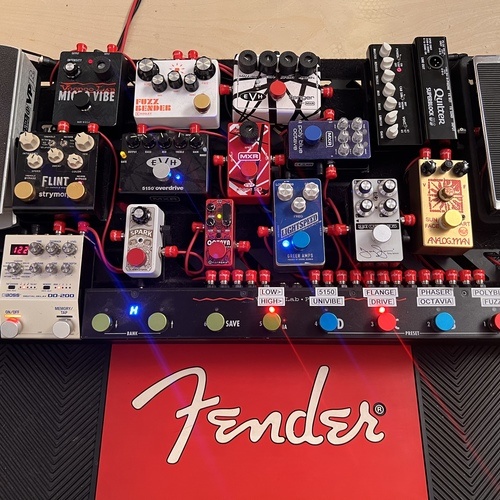
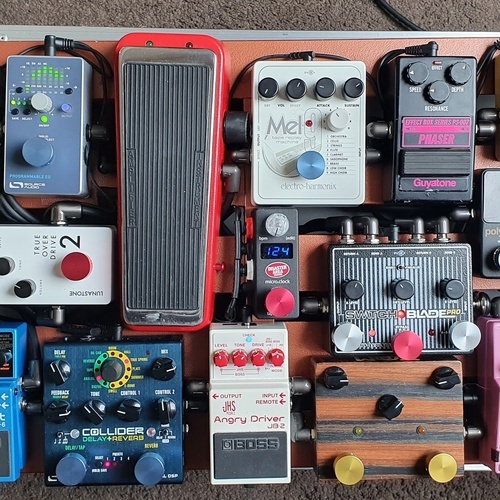
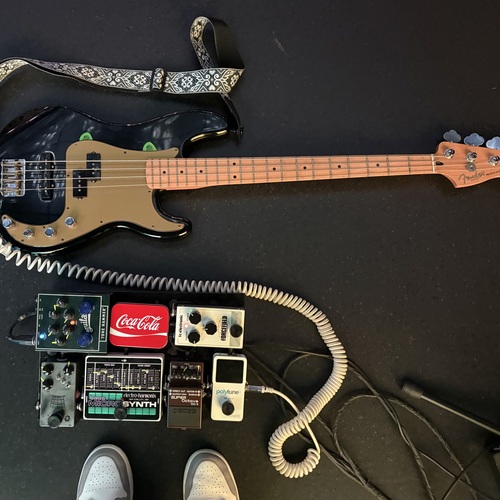
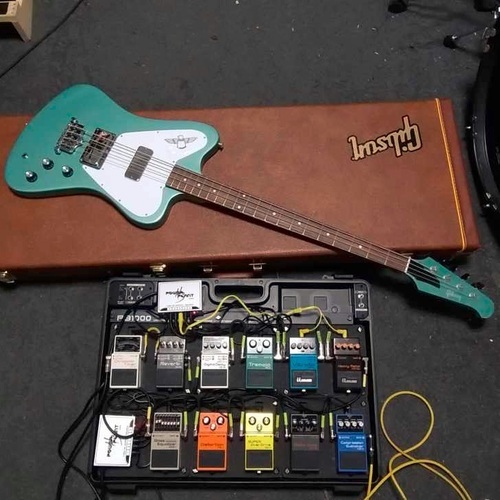
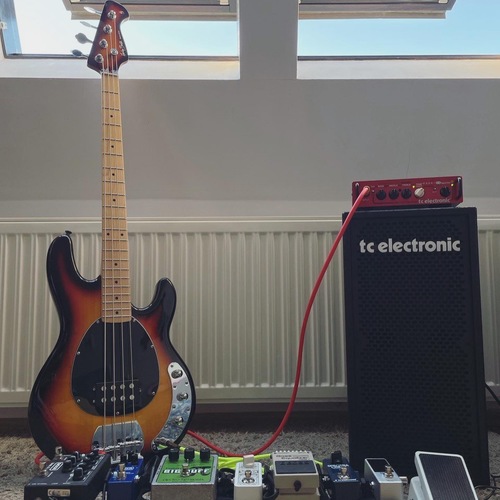
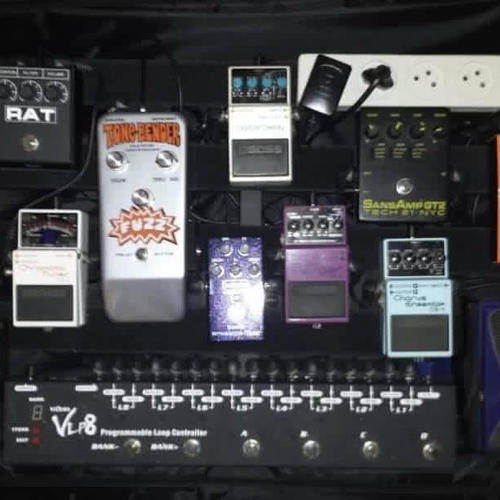
This gear photo by nick_danola features 17 pieces of gear, including Carl Martin Octa-Switch MK3, Fishman Fission Bass Powerchord Octave Bass Effects Pedal, and Electro-Harmonix Mel9 Tape Replay Machine. The setup spans Effects Pedals and Amplifiers, with a wide range of price points. Artists with this kind of gear are most often found in the Rock, Pop, and Alternative rock scenes.







.jpg?v=1784722896)




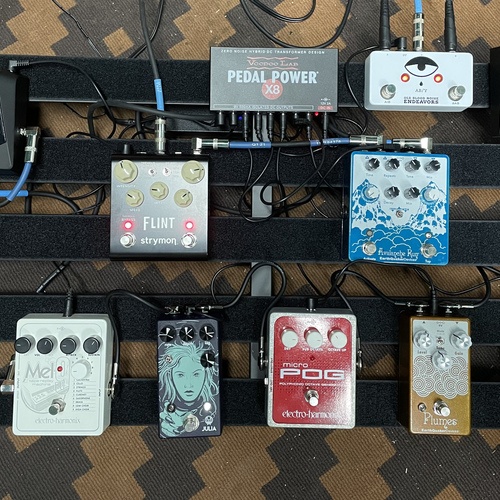
So this is my bass board… which is a little complicated. In the first loop of my switcher, I split my signal using the Fishman Bass FX Powerchord. My clean bass signal goes back into the switcher and the rest of my bass pedals. The “wet” signal is an octave up, a 5th above that, and a second octave up… aka a “power chord” above my bass note. I use a JHS Switchback (controlled via the Octa Switch latching jack) to send that guitar signal to either a heavy gain Mooer Mesa Boogie emulator pedal (011 Dual Cali) or my EHX Mel 9. It allows me to either create heavy rythym guitar sounds or orchestra/band/choir tones. After some compression and enhancement, the guitar signal goes to a Quilter Powerblock which powers a dedicated 1 by 12 Fender Cab. This seperate signal path is only engaged when I have loop 1 selected (about 25% of the time) but lets me do some really cool stuff. My bass signal path goes throug my switcher, where I have access to an envelope filter, synth, compression, a few dirt pedals, and a few different EQ options. After all that, I run into a Bass Simplifier with cab and amp emulation. I use the dry out from the simplifier into my amp (an Ampeg SVT 6 Pro). But I take a balanced XLR out from both the Simplifier and Quilter Powerblock, and run them into a passive 2 channel mixer under my board. The summed XLR output comes out of a jack on the side of my board and can be sent directly to FOH or a recording interface. This allows me to control the relative level between my two signals, and go “amp less” if so desired while still having good amp/speaker emulation. I use a Hands pedalboard from South America, which I can’t recommend enough (they are exceptional value). And I ordered all custom length GoodWood cables to ensure quality connections.