io_perplesso's Reviews
25 reviews Back to io_perplesso's Equipboard
327
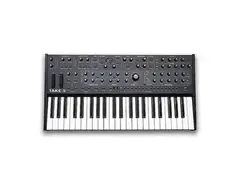
Unusual for Sequential tradition
I've owned during 3 yrs, then sold. It's quite useable, great basses, Dave Rossum filter that gives a sweet and clean contour. Great the LFO2 with five independent sections, each per voice even in non-synchronous mode for more sound movement in pads. Average quality effects.
Indeed the Take-5, although it features true VCOs and full analog path, appeared to me as lacking character, despite (for example) to the Prophet-6 I also own. Some machines are recognisable any setup is made, e.g. Moog, Prophets, Roland etc., but not for this one. For pads I find the Korg Polysix (same filter) more convincent and warm, while the high region isn't that effective like in other machines. Very practical interface, nearby one knob per function, excellent Fatar keybed, great idea the split transpose to cover wider key range with the 44 keys. Sold and replaced with its gemini: no comparison between them.
327
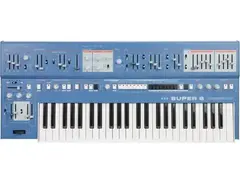
A real audio Lab
I already own an FPGA synth (Novation Peak), but the UDO overall sound is astonishing: lot of details and massive body. It has been designed as a true sound research lab, where each parameter works with the full capability towards sound richness. An SSI-based VCF (Dave Rossum design) does model the sound in a very creamy shape, and the filter drive control could recover the low frequency loss that high resonance values could introduce, gaining a massive and firm bass range.
Two oscillators (DDS1 and DDS2) are FPGA-based but work in different way: DDS1 has sampled single-cycle waveforms (sine, ramp, triangle, square and 32 custom) and its sound is huge like an analog VCO; DDS1 uses calculated waveforms instead (sine, ramp, triangle, square and PWM), that sounds smaller than DDS1 but very useful to enrich harmonics to create very subtle timbre overtones. DDS1 could be enpowered by replicating itself other 6 times, with variable detuning, making the second oscillator unneeded and useful for other purposes. A drift control would simulate analog feel, by shifting pitch, filter cutoff and envelope timings as per a true analog synth.
The build is incredible. Very solid and with a great mechanical feedback: sliders does have lot of friction to gain precise setting, rocker switches and pushbuttons looks like Roland Jupiter and Sequential tradition. The choice not to have a display is a bit confusing at beginning, but the design scope is to have the musician to concentrate on the sound instead of diving within menus, leaving off all potential distraction items.
327
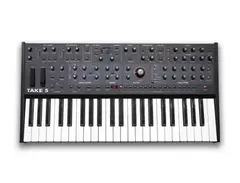
A genuine analog
It's the only synth I've got that collects all my playing experience (since '70s!) in one place. Everything is logically arranged, quick to edit, in a single word: familiar. The sound is gorgeous, lots of details (thanks to the Dave Rossum' filter), and the VCO-based engine is well appreciated in the foreground. Two LFOs, one common and one per-voice, allow detailed sound model. Two ADSRs to be used with VCF, VCA or used as a modulation source through the flexible modulation matrix. Arpeggiator and 64-step sequencer are welcomed extras. The effects are good quality and pleasant to add with no definition impact on the sound. By usage, it remembers to me my 1975 ARP Odyssey, a quite similar feeling, except for the polyphony of course. With this price, indeed I couldn't expect anything more, either as sound quality, nor as building one.
327
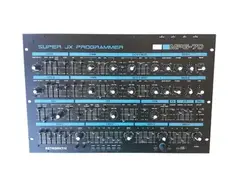
Easy and immediate to use
The controls are of good size and adequate to a live context. In this time of tiny knobs and micro controllers, this one presents all needed items in an intuitive order and useability. Yes, it's a bit large, and a bit expensive, but the learnig curve is very short and it's a pleasure to concentrate myself in the sound and not in a menu and submenu maze. Moreover, the embedded patch generator is a great source for new sound creations. Only the little display should be a bit larger, because it require very good eyes and too much concentration to read it.
327
Great piano expander
I've just bought one for a very low price. At present I've used the integra-7 for piano sounds, but this old and small Korg module is very inspiring me, despite to the Roland one. AI2 synthesis, 24MB of waveforms. The classic pianos are really convincing, and the Classic EP (Rhodes) totally mimics my old Eighty-Eight. There are some good FM pianos and two good effects. The CP80 sound is missing, and luckilly the TR-Rack does have a good one.
I think that the SG-Rack is a very underrated module, to be tried!
327
With Sanctuary card is unbeatable
I've bought it second-hand only for the fabulous pipe organ samples: with the Sanctuary card it has 20 different pipe organ samples, rich and full of realism. The polytimbric architecture allows to have a multiple keyboards setup with several organ registrations.
327
A great old one
The Polysix could look as very limited today, but its structure and quality is near unsurpassed. SSM filters are more creamy than the CEM ones, the sub osc with 1 or 2 octaves effectively thickens the sound, it is modulated by four true LFOs (VCO/VCF/VCA, PWM, Arpeggiator, Effects) and the Effect section sports a three-BBD delay line like the Solina or ARP Omni. A great old one.
327
A non-typical synth (now)
My first synth was an ARP Odyssey II: I've spent months in tweaking it to realize my sounds. The Peak was capable to make me live those ages again. With so many special-sound synths around, I felt the lack of an instrument able to be programmed from scratch; with the Peak I could create brand new sounds, step by step, without having any unwanted effect or modulation disturbing me. All I need could be added and modified during the sound exploration. The filter is interesting and with an own character. Highly recommended!
327
A little classic
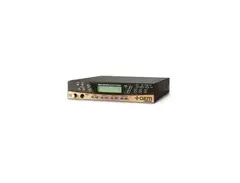
GEM was one of the first companies in developing physical modeling technology; their R&D worked together IRCAM (Paris), CSELT (Turin) and CSC (Padua), obtaining the powerful engine inside the RealPiano line. This expander isn't that advanced like the current production, but already has features like sympathetic resonance and pedal noise. The grand piano is pleasant, while the Rhodes shows some audible artifacts. There are even a tonewheel organ, strings ensemble and it can do split/layer. It does recognise sustain half-pedal.
327
Excellent old analog
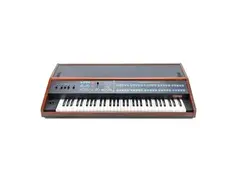
The Rhodes Chroma is a wonderful piece of hardware; it comprises full analog audio generation and path (XR4151 VCOs, Curtis filters and VCAs) and a clever digital control part. The instrument could be virtually patched in 16 different ways, like as with a modular synth; the 16 voices could be arranged as 16x1VCO, 8x2VCO, unison, arpeggio modes. Ring modulation and sync are present. VCFs could work either as 2-pole or 4-pole, LPF or HPF. A new CPU board (named CC+) is currently available to overcome to several limitations and to add native MIDI interface with SysEx. An optional alphanumeric display could be connected, to make editing far easier and immediate. Even with CC+, an external controller like Behringer BCR-2000 could be used to adjust the various parameters in a much easy way. The instrument could be upgraded with a polyphonic aftertouch kit, and its electronic implementation is present as factory on all units. The eight DVB (dual voice boards) are quite prone to fault, mainly due to component age, and some early CMOS ICs are quite often to be replaced. The Power Supply unit is the most failing part, but a kit (SPSU) is available as drop-in replacement. The wooden keyboard doesn't present any piano-like feedback articulation, but simply it's a pleasure to play.
327
Amazing quality
I've bought the HX3 MIDI Expander to replace my Hammond XK3 generator: this small box is a totally different stuff in respect with other clonewheels; it doesn't synthesize or build some waves, but it simply plays the tonewheel wave models fetching them from a FPGA matrix, with no CPU nor calculation in between. The only difference with an original B3 is the absence of multi-contact key effect: all the rest, including vibrato scanner, leslie emulation and a terrific AO-28 saturation is a sort of 2nd original. A peculiar feature: with Hammond XK3 as master keyboard, it could drive separate vibrato for the two manuals, like on XK3c. All organ controls are already mapped to the correspondent controls on HX3 expander, like drawbars, presets, vibrato, leslie, overdrive etc.
327
Bad keyboard
The key action is very very plastic. By acting to use the aftertouch, the white keys does bend down!
-s.webp?v=1783522914)
327
It had to be better
Bought because of its very good Rhodes emulation, I've been disappointed by the Hammond emulation: too "plastic" and "perfect", where a real tonewheel is "live" and with uneven characteristics. Good leslie emulation. The acoustic piano definitely unusable for me. The waterfall keyboard action good for the organ, but definitely too light for the rest (how to overcome this?)
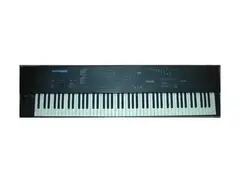
327
Old, ugly, but good feel
This old thing was built with three sizes: MK55, MK76 and MK88, with 61, 76 and 88 keys respectively. I own the 76-key one. It sports polyphonic aftertouch, one of the best solutions ever built. It's quite programmable, but the value comes from the simple playing: the Fatar keyboard has a very good feel and I find it quite inspirating. Currently there are plenty of light and well articulated weighted-keys master keyboards, but this old classic does still its job very well.
-s.webp?v=1784041270)
327
Superb sound quality
I've bought this small keyboard to use it as an expander during gigs. Driven with a good masterkeyboard, it generates the most beautiful Rhodes sound I've heard in many years; as an old owner of a Rhodes 88, I'm quite used with its voice, and the Reface CP restores the full content of the wonderful electromechanic piano. The other timbres are quite useable in live context, except for the ridiculous Toy Piano. There is an hidden acoustic piano too, but it's nothing special. The built-in effects are effective and complete.
Yamaha shouldn't have named it toy piano. That doesn't give it the credits it deserves.
In the lower octaves your hear what it really is: ( church ?) bells...
327
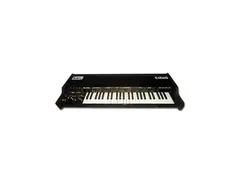
Unique and fragile
Its sound is unique, it sounds as a well known one. The build is quite fragile: the pushbutton switches are highly prone to break and no replacement does exist. The tantalum capacitors that control keyboard voices are failing quite often, so it's mandatory to replace them all. The power supply had a design error that could burn the other electronics upon power-up. And the bass line is lowest-key priority, so that the old keyboard contacts usually have bounces that switches continuously between held notes... The ensemble/chorus unit is a genial creation by dutch company Eminent: three BBDs in parallel, clocked with 3 unsync'ed LFOs, and no straight signal, does create the ethereal sound the instrument is famous about. The term "synthesizer" is improperly used with the Omni: indeed it's paraphonic, with a single 24dB/oct VCF (the famous ARP 4075) and the ADSR is first-note triggered. The Omni II had an extra button to allow repeated triggers and a separate bass line EG and output.
327
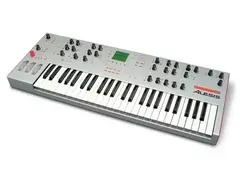
A great classic
First the bad news: the keyboard is a disaster and the built-in effects are pretty useless. Moreover, the display is flat with the panel surface, so the player cannot see it if seated. The remaining is just fabulous: it's a VA, but the quality is very good, very low aliasing, and the voice is fat enough. The modulation matrix is great, and so the 3 OSC controls (with a very useful "in tune" led). All pots except the volume are endless potentiometers. I've replaced the factory Fatar TP/7 keyboard with a very better Fatar TP/9 (same connectors), and added channel aftertouch with a small MIDI encoder module installed inside the instrument and connected (in thru mode) between MIDI IN jack and motherboard input. Now my ION weighs some 2kgs more, the keys protrude of 5mm at front, but it's a joy to play.

327
Great church organs
I use it only for church organ sounds. The TR-RACK offers the best church organ samples I've ever heard. I also own some other romplers (e.g. Integra-7, JD-990) but nothing to compare with such a good tones. With a Lexicon LXP-15 to build a cathedral reverb, is terrific.
327
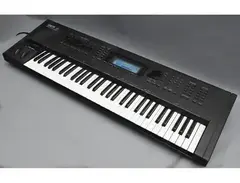
Powerful and clever workstation
Like the GEM S3, but with 5-octaves keyboard. Polyphonic aftertouch and Turbo-mod as well.
327
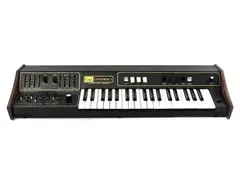
Preset and programmable monophonic synth
A rare piece of gear, ARP Explorer I was initially built by ARP to be embedded in Eminent organs. It uses a VCO module like those used in ARP 2600, a transistor ladder VCF module (Moog filter clone), an ADSR, a noise generator and a dynamic waveform shaper. It could be used either as a preset synth or a programmable one.