


Pricing and availability
We compare 600+ stores and found this item at 1 store. Prices updated .
Store
Reviews
Price




Average Price: $11,630
High-end/Boutique
$500
$1501+
Price Tier
Budget
Standard
High-end
* Product prices and availability are updated by Equipboard every 24hrs and are subject to change. Equipboard may receive compensation for purchases made at participating retailers linked on this site. This compensation does not affect what products or prices are displayed, or the order of prices listed. For more information, please refer to our affiliate disclosure.
Description
The Fender Rhodes Chroma is a legendary synthesizer that continues to captivate musicians with its unique blend of versatility and classic analog warmth. Originally introduced in the early 1980s, this synthesizer remains a favorite among both vintage gear aficionados and modern sound designers. Its enduring appeal lies in its rich sound palette and the innovative features it introduced to the synth world.
The Chroma is renowned for its 16-voice polyphony, a rarity for its time, allowing musicians to create lush, full-bodied sounds that are perfect for both studio recordings and live performances. Its architecture includes a dynamic interface with touch-sensitive keys, making it highly responsive to nuanced playing techniques. The synth's multi-mode filter and extensive modulation capabilities offer endless possibilities for crafting unique tones, from smooth pads to gritty leads.
What sets the Chroma apart is not only its robust design but also its ability to integrate seamlessly into modern setups. Its MIDI implementation, though initially introduced as an upgrade, ensures that it can communicate effectively with contemporary digital audio workstations and other MIDI-compatible devices. Whether you're exploring ambient soundscapes or driving electronic beats, the Chroma's intuitive layout and powerful sound engine make it a timeless tool for any musician's arsenal.
Key Features:
- 16-voice polyphony for complex and rich sound layering
- Dynamic touch-sensitive keys for expressive playability
- Multi-mode filter for versatile sound shaping
- Extensive modulation options for creative sound design
- Original MIDI capability for modern connectivity
- Robust build quality, ensuring longevity and reliability
Product specs
| Analog/Digital | analog |
Videos

synth4ever
ARP RHODES CHROMA - Analog Synthesizer - Sounds, Patches & Ambient Soundscapes | Synth Demo
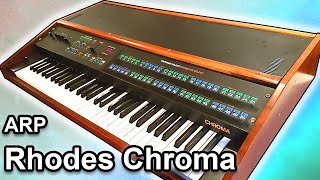
ARP RHODES CHROMA - Analog Synthesizer - Sounds, Patches & Ambient Soundscapes | Synth Demo
synth4ever
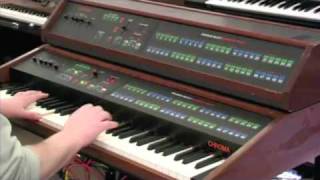
Rhodes Chroma Demo, Part 2

NonDigitalTom
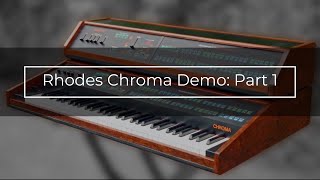
Rhodes Chroma Demo (Part 1)

The Keyboardist Blog
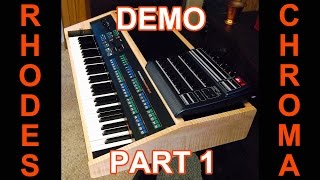
ARP / Rhodes Chroma | HD DEMO - Overview | Part 1

Synthesizer Circuit
Reviews
Owner Insights
We analyzed real musician discussions from forums and Reddit to find what players love, question, and tweak about ARP Rhodes Chroma.
Features and functionality
-
The Rhodes Chroma allows VCOs, VCFs, and VCAs to be reconfigured electronically, enabling modular-like patching without cords, enhancing sound creation flexibility.
Source -
The synthesizer supports optional polyphonic aftertouch and can be expanded to 32/16 voices with the rare Chroma Expander unit.
Source -
The Chroma has digitally generated ADSR envelopes and 16 LFOs with multiple waveform options, allowing for diverse modulation capabilities.
Source -
The Max for Live editor includes tabs for Voice A/B control and a Both tab, which can overwrite individual voices and send combined CCs, enhancing patch flexibility.
Source -
The Chroma can be enhanced with an iPad controller via Lemur, expanding its modulation capabilities beyond the factory setup.
Source -
The Chroma's architecture allows for extensive modulation options once understood, offering a rich playground for sound experimentation.
Source
Mods and upgrades
-
Behringer BCR2000 sysex templates and custom controllers from StereoPing and Red Shift Consulting provide hands-on control, overcoming the limited real-time editing of membrane buttons.
Source
Use cases and applications
-
Known for its powerful and rich tones, the Chroma is frequently compared to a polyphonic ARP 2600, making it suitable for complex soundscapes and ambient music.
Source -
The custom editor aids in quick patch creation and is beneficial for those who use Ableton Live to record and sequence MIDI with the Rhodes Chroma.
Source
User experience
-
Owners note the synth's sound as big, brash, and harmonically rich, yet requiring in-person experience to truly appreciate its power and tone.
Source -
Text color issues may occur when using the custom editor with older versions of Ableton Live, such as Live 10, due to background color settings.
Source
Software and compatibility
-
A custom Max for Live CC editor was created to facilitate patch creation on the Chroma, specifically tailored to work with the CC+ upgrade and default MCM custom settings.
Source
Setup and maintenance
-
Loading Ableton projects with saved settings can overload the Chroma by sending too many control values simultaneously; it's advised to load patches directly on the Chroma for stability.
Source
Comparisons
-
A user noted the Chroma's ability to function as a powerful drone machine by setting the release to maximum, maintaining sound without decay.
Source
Critic Reviews
5.0 out of 5
Based on 1 Review and 6 Ratings
327
Excellent old analog
The Rhodes Chroma is a wonderful piece of hardware; it comprises full analog audio generation and path (XR4151 VCOs, Curtis filters and VCAs) and a clever digital control part. The instrument could be virtually patched in 16 different ways, like as with a modular synth; the 16 voices could be arranged as 16x1VCO, 8x2VCO, unison, arpeggio modes. Ring modulation and sync are present. VCFs could work either as 2-pole or 4-pole, LPF or HPF. A new CPU board (named CC+) is currently available to overcome to several limitations and to add native MIDI interface with SysEx. An optional alphanumeric display could be connected, to make editing far easier and immediate. Even with CC+, an external controller like Behringer BCR-2000 could be used to adjust the various parameters in a much easy way. The instrument could be upgraded with a polyphonic aftertouch kit, and its electronic implementation is present as factory on all units. The eight DVB (dual voice boards) are quite prone to fault, mainly due to component age, and some early CMOS ICs are quite often to be replaced. The Power Supply unit is the most failing part, but a kit (SPSU) is available as drop-in replacement. The wooden keyboard doesn't present any piano-like feedback articulation, but simply it's a pleasure to play.
Artist usage
Add artist
Besides being mentioned on the Syro gear list, Richard gives more details about this piece of gear with a comment about microtunings left on his SoundCloud page (user18081971). Comment can be found on his uploaded track called "Love 7": "with the chroma, i just use midi for sysex midi tuning dumps to get them in, bit more tricky getting them out but doable."


It's actually a Rhodes Chroma. Used on some of the Blur albums and on the first few Gorillaz albums for some synth leads, brass, and stuff like that.

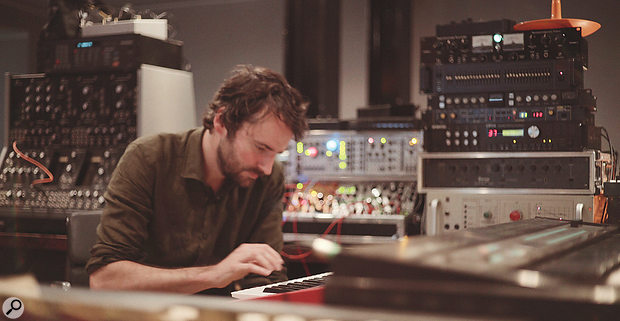
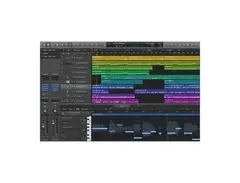
I had some MIDI instruments on Logic for the track 'Café D'Athens' — a marimba part and a vibraphone part — and I sent the MIDI into the Chroma Polaris. It's just an amazing synth. Very intuitive and it felt like an important synth for us to use on this record.

.jpg)
Most recent post (at this moment) shows the acquisition of a rare Rhodes Chroma (without Polaris).


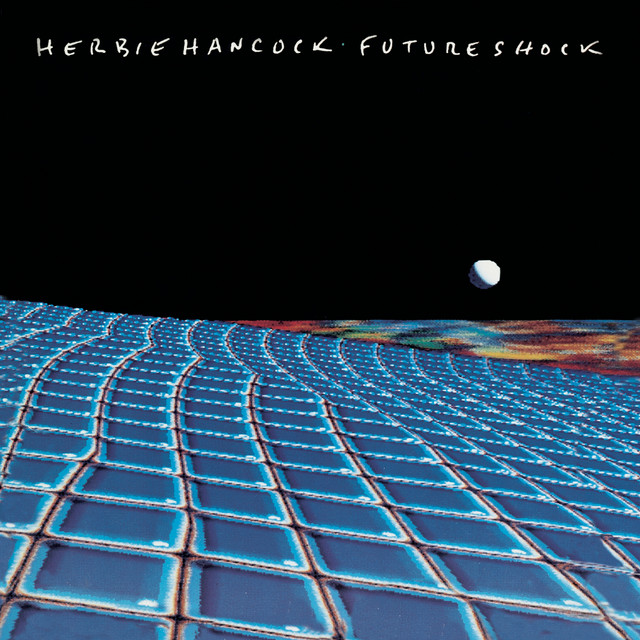
In the YouTube video "I Love Quincy," Herbie Hancock can be seen using the Fender Rhodes Chroma synthesizer. Additionally, the liner notes of his album "Future Shock" and other albums mention this instrument, highlighting its significance in his work.


A Rhodes Chroma is shown and described at 0:30 in this Studio Tour by MusicTech. Ulrich says about the synth "It has typically an app sound in the sense that it has a very aggressive - very present mid-range - I find it very useful for sort of elements that need to cut through in the mix, like melodies or sequences that need to be very present."

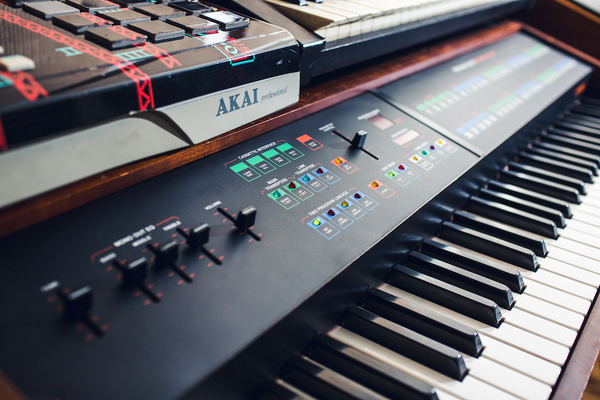
"Very rich-sounding instrument with polyphonic aftertouch, velocity sensitivity, and immense programming capabilities. Almost like a modular synth in a programmable box."
-RJD2, Thump.Vice Intervew


"Zawinul did not stop at the Wurlitzer and Fender Rhodes electric pianos he used in the 1960s. By the late 1960s he was extending his sonic palette with effects like phase shifters, Echoplexes, wah-wahs and ring modulators, and when synthesizers came on the market he was among the first to buy one (the EMS Putney). The list of synthesizers he has used since then — among them the ARP 2600, Rhodes Chroma, Oberheim Four-voice and Eight-voice, ARP Quadra, Sequential Prophet 5 and Prophet T8, Korg Trident, Oberheim Xpander, Korg VC10 vocoder, Emu Emulator, Casio CZ101, Korg DW8000, DSS1, DSM1 and M1 — reads like a synth museum's treasure list."


At his home studio (dubbed “50” for the street address where he lives), Price would often access his bank of vintage synths — including a Moog Polymoog, Korg MS-20, Roland SH-09 and a rare Rhodes Chroma — to add textures to a demo track or to supplement the Clavia Nord Lead 3 that Flowers uses as his main synth.


In Anthony Marinelli's studio tour video titled "My Synth Studio Revealed | Studio Tour 2025," the ARP Rhodes Chroma is prominently featured at the 58:06 mark, confirming its use by the artist.


video of Firechild performing on the Rhodes Chroma in his studio


Jimmy Waldo, a renowned keyboardist, uses the Fender Rhodes Chroma. This is confirmed by a quote from Keyboard Magazine, November 1984, where Waldo states, "an unbelievable amount of bottom, but I've found that a lot of that low end isn't really usable when you're playing in a 10000 seater or on a record." This information is supported by Chris Ryan's comprehensive review on his Chroma website.
Album Usage
The ARP Rhodes Chroma has been featured on the following albums:
Genre Usage
Based on how artists on Equipboard use this gear, it is most commonly found in the following genres.
Used With
Based on how musicians on Equipboard use ARP Rhodes Chroma, it is most commonly used with the following gear.


-s.webp?v=1783695424)


Community setups
Show yours
More ARP Synthesizers

$239.00 - $1,200.00


.jpeg?v=1783537117)


$1,199.00 - $1,999.99


$3,280.20 - $3,499.99
in Synthesizers Rank

Accessories & Related Items

-s.webp?v=1783695951)

Similar


Gear Guides









Most Popular Synthesizers
Most Popular Brands
-
Added to Equipboard on by
 miggityfriggity
Gear IQ 5535
-


