
pkennethk's Reviews
27 reviews Back to pkennethk's Equipboard

27231
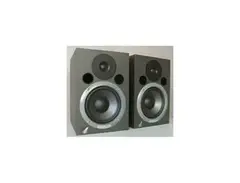
A godsend in the early 00's
There weren't a lot of 6" self-powered monitors on the market back when these hit, and certainly not at this merciful price point. These guys were so much better than anything else I could afford at the time, and a big upgrade over the separately-amplified Yorkvilles I tried to live with before taking the plunge. Plugged these guys in, loved the sound, never had to give them a second thought for 10 years, which is the highest complement I can give. The world's expectations from mid-priced studio monitors were a bit higher by the time they finally died on me, but I was still very sad to see them go.
Update: It should be noted that I only got rid of these because I blew a woofer on one after a decade of regular abuse with analog synths. I can't remember what else had failed electronically, exactly, but the repair would have been more that just a cone replacement. I would never have parted with these otherwise.
27231
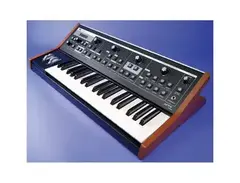
A great Moog, just not the Moog for me
Attractive. Built like a tank. Sounds like a Moog... with presets! What's not to like?
I have this Little Phatty on my "to sell" list because it just never seemed to fit, sonically, with all the old Japanese electronics I tend to favor. Even my weightiest-sounding Rolands (Jupiter 6 and Juno 60) don't have the (for lack of a better term) midrange "heft" of the LP. Whenever I used the LP with the rest of my synths, I felt like I was using a riding mower on a yard that was just too small. I always ended up swapping my analog drum sounds for sampled acoustic sounds to match the power/presence of the LP.
Nice problem to have, right?
I'm sure a little bit of EQing and more time served learning some of the more buried tonal parameters could have eventually got it jelling with all my decaying Japanese favorites... but working hard to thin-out a Moog just feels wrong; I'd always be working against it's nature... it would be like modifying a V-8 Mustang to be quieter, get better gas mileage, and be more comfortable in stop'n'go traffic.
So whoever buys this thing one day is getting a hell of a synth. I'm sure they'll think I'm crazy for not getting more use out of it... and they're probably right.
118
What's it like working with the Juno ? I thought about one of those and the kurzweil k2000 (josh silver from type o negative and Trent result used em a lot. That's why all the type o songs sound like Church) . By the way you should tell that guy who made the dumb comment below that they probably have software updates just like the kurzweil k2000 does even while its discontinued. Lol I wouldn't care 'cuz moogs are fairly boss no matter how you look at them
27231
@alysian9 The LP and an (analog) Juno will get along just fine, provided the Juno is providing the less-dominant sound (pad, background string, higher-register arps, etc). If your drums are based mostly on sampled sounds and harder stuff, all will be fine. It's mostly in mixing Moog sounds with unprocessed 808 and 909 drums where things can get tricky, for me at least.
27231
3P + Programmer = Pure Joy
TLDR: I'm fortunate enough to also own a Jupiter 6, a Juno 60, and a pair of SH-101s, but the JX-3P has been my favorite of the lot for many years. It'll fill in the midrange of your arrangement in a way that fits effortlessly and it rewards absent-minded knob twiddling with a diverse palette of funky strings, pads, organs, and lush atmospheric tones... more so than even the (more robust, but more architecturally-constrained) Juno 6/60/106 or the (far more powerful, but with narrower sweet spots) Jupiter 6.
(I can't speak for the Jupiter 8 in this regard, but you could buy at least 14 pairs of 3Ps + PG-200s at the Jupiter 8's current market value)
The First Date: At my Craigslist-facilitated visit to the seller's home, I loved the 3P from the first keypress, but when I got my new prize back to my place, it (initially) sounded a bit anemic when compared directly to the Juno 60. A lot of this can be pinned on the very modest presets it ships with, but the fact remains that the 3P just doesn't have the soaring highs, window-shaking lows, nor quite the same fluid musicality of the 6/60's oscillators and filter. Sadly, and stupidly, the 3P was relegated to my "to sell" pile shortly thereafter. I'm guessing many buyers/owners were originally turned off by similar expectation-laden comparisons to it's (physically) larger Roland siblings. The Jupiters and Juno 6, 60, and 106 set the bar for entry-level analog polysynths pretty damn high.
So why did I rescue the 3P from the pile and give it a second chance? Well, someone on the internet opined that the anonymous(ish) folks behind Drexcyia, Arpanet, Elektroids, etc feature JX-3P all over their releases, and those acts definitely had my respect. I was shocked to hear this synth I had deemed to be "too anemic" was a go-to for a bunch of acts that certainly had a good arsenal of analog classics at their disposal. I plugged the 3P back in listened with fresh ears. I stopped waiting for "those Juno tones" to appear and just listened to what was there: which is a whole lot, with it's own inimitable vibe... and with a hell of a lot less historical baggage.
So What's this synth like in use?
Analogy 1: If the Juno 6/60/106 and Jupiter 6/8 can "sing" well across the bass, baritone, tenor, countertenor, etc ranges, one could say the JX-3P does it's best work in the upper baritone and tenor ranges, a "lighter" voice, but no less essential, and it can give you far more within the limits of this range than the aforementioned synths can (the David Byrne to the Juno's Roy Orbison). That said, I LOVE some of the basses I've made on the 3P, basses I can't duplicate on any of my other synths, and it's "high highs" are pleasing, they're just not as crisp and/or screeching as the Junos and Jupiters. Boo-hoo... must every instrument do everything?
Analogy 2: In guitar-land, Fender Stratocasters and Telecasters were the only 6 string Fenders the market consistently wanted until the late-80s/early 90s grunge and college rock boom(s). Guitarists started picking up old, funky Jazzmasters, Jaguars, and Mustangs in a search for something a little left of center (and cheaper). Nobody is going to tell you that a Jaguar can do everything a Strat can... but those "offset" fenders have returned to production and desirability because they offer a unique feel, sound, and tonal palette relative to the ubiquitous chocolate and vanilla of Strat and Tele. The 3P is like a Jaguar to the Juno's Telecaster and the Jupiter's Stratocaster: a little more comfortable to play, a little smaller, more funky switches and sound shaping potential (compared to a Telecaster, at least). And, like the Jaguar, it's comparatively lacking some of the overall power in the highs and lows, but not in an unpleasant/unmusical way... it's just a less "weighty" sounding instrument, but this lightness let's more of the synth's ragged, primitive, digitally-slaved analog character come through.
In Use: Whenever I'm twiddling the 3P, the world is a wonderful place.
With the PG programmer, the ergonomics of this instrument are so on-point. I remember reading years back that Legowelt felt the 3P+PG-200 had the best layout of all the synths in his museum-sized arsenal... thus far, I have to agree. Having everything you need tidily organized all in the right hand corner is ergonomically convenient. It's also worth noting that the 3P is probably 75% as big as a Juno 60 (which is huge, too huge) and probably not even half as heavy. The 3P is, for me, the prefect size for a 61 key polysynth.
Sonically, this thing came out the same year the DX7 started taking over the world, so it's got (among other interesting touches) a "metal" setting for the cross mod control, which (I believe) is someone's attempt to enable some DX/Synclavier/PPG-style chime within the classic Roland analog palette. Thankfully, the 3P fails miserably at sounding anything like the DX7 or any of the other early digital synths. (analogy alert!) If the DX7 is the TI Graphing Calculator of synths, the 3P is more like a TI Speak & Spell: much simpler, more colorful, and more charming... and the 3P is definitely that much more fun and approachable than the DX synths... in fact, with the PG-200 attached, I find it more fun and easier to get lost in (the good kind of lost) than any other instrument I've lived with. Similar to the Junos, it has a wide sweet spots that ensure things never really sound all that wrong/abrasive, but with it's 2 oscillator per voice architecture (Juno's are just 1-per) you've got a bigger box of crayons to work with... those crayons may be a bit smaller a little more muted than the Juno's big bold primary reds, blues, and yellows, but you can explore the joys of detuned oscillator pairs AND a bucket of classic Roland chorus at the same time: timbres a Juno inherently just can't produce... and let's not forget that none of the Jupiters of this era have built-in analog chorus. Yes, I'm grossly over-simplifying what makes the 3P unique; you'll just have to try one.
Also, while I have nothing against them, I currently have no interest in the later JX-8P/10. I'm sure they're great string/pad synths, but in my experience, they don't have the rough-edged, slightly unpredictable tonal charm of the 3P. The first JX (the 3P) is my pick of the litter for the JX product line: it always gives back a little more than you put into it.
Consider This: Every knob position on a Juno 6/60 or 106 is electronic music history, some artist's classic patch from some classic track... this can often be a great thing, there's a reason everyone used one, but I sometimes struggle to forget all about the weight of that history and just serve the music I'm trying to make in-the-moment. You'll have no such historical struggles with the 3P; it plays/mixes beautifully with all Roland gear of that era, but every new patch I dial-in feels like it's my own voice, filtered through a lot of classic Roland flavoring... which is pretty much what I was hoping for when I bought it.
I was so happy to see Roland include the lesser-known 3P in it's initial trio of "Boutique" hardware reissues. I read a majority of the pro and end-user review of those Boutique boxes, and a surprising # of people from both camps said that the 3P was their favorite of the 3. When going head to head with great DSP-reproductions of a holy grail Juno 60 and Jupiter 8, the lowly, less-famous, less-soaring, less-bass-quaking 3P was the one that kept getting the nod as the reviewer's personal favorite of the 3... think about that for sec...
So... If you want a Juno, get a Juno. If you want a 2-OSC Juno 6/60, maybe get a Jupiter 8 (not the 4 or 6, but that's a different review). And if you want a bone-simple, approachable, inspiring, funky, 2-OSC polysynth from a different, forgotten planet within the same early-80s Roland universe, go 3P + PG-200 (or Boutique JX-03, or Roland Cloud JX-3P VST) and never look back.

27231
Powerful, Unique... Joyless
So strong was my love for Yamaha FM back in the early 00's, that one day, MIDI implementation chart in-hand, I built a complete set of real-time patch-editing profiles for my TX81z. I used a Kenton ControlFreak as my development environment. Every 4-OP synthesis parameter was lovingly and thoughtfully mapped using the hexadecimal backflips needed to address a unit with (if memory serves) a pure sysex-based MIDI implementation... meaning none of the easy single-MIDI-CC to single-synth-parameter mapping we've all come to expect...
... So, I thought all this might mean I was ready for an FS1r...
Nope.
The Good:
The FS1r does everything it says it does on the tin. It sounds cool in a digital-meets-high-impact plastic kind of way and (in the right hands) it sounds a bit different than anything else that came before and possibly since. In my experience, it had a unique presence that made pretty much every sound it produced want to stand apart in a mix, which meant it could give you (for example) a slightly different, 90s hi-fi coloration on any well-worn DX7 presets you load in. Bonus: it's rare, so you're pretty much guaranteed to NOT sound exactly like anyone else if you can find your way around it.
The Challenging:
I fully embraced and enjoyed the nerdy, myopic pursuit of building those pages of edit profiles for the TX81z in hex, and I got around it's tiny front panel OK for years before that... but the FS1r was just too much... too many pages, parameters, and matrices to consider in the FS1r for even MY FM-loving tastes at the time. I tried the limited software front-ends available then (early 00's), but they proved either awful, unstable, or both (I can't recall exactly why they were unworkable, but they were). I truly hope there are now better editors available for the FS1r, 15+ years later. On top of all this, the aforementioned "presence" of the FS1r contrasted with the (comparatively) muddy crunch of my well-preserved TX81z, and the general neutrality of my Nord Modular in a way that wasn't flattering for any of them, including the FS1r. I can't fault the FS on this point though, as Squarepusher's Go Plastic album from the same time period has enough FS1r-meets-legacy-DX-synths to prove that at least one person (far more talented and musically productive than me) found this kind of texture clash workable. I won't pretend to know which exact Squarepusher songs of that period use which FM synths, but the first few minutes of "I Wish You Obelisk" sound pretty damn FS1r to me... even if that's not FS1r, it's very indicative of the type of "creeping up under your skin" sounds I kept stumbling on as I learned to integrate the FS's unique digital filters along with all the operators and algorithms.
The Conclusion:
Ultimately, the FS1r just didn't bring me any joy, and I never got to the point where I looked forward to using it... so I had to evict it from my rack.
I remember making a decent profit when I sold it a year or two later, which is truly the only good thing it ever did for me. (Sorry Team at Yamaha, I still love that this synth got made)
To all out there considering one, you can always resell it if you don't like it, and (like me) you might even make a few bucks... but know that being familiar/successful with other Yamaha FM synths or similar will only help so much in coming to terms with all that is the FS1r... maybe poke around for a robust and well-supported software editor before making your decision. ;)

45
That's a great review, thanks! It sounds like you gave the FS1R a pretty good go.
27231
@synchromesh, thanks for reading my rambling novella of a review. You should chuck up one yourself someday. :)

27231
Meet The Dank Tank: My Goldilocks 80s Reverb
Dark, dense, a bit grainy, and sounds "right" at nearly every setting and mix amount.
I went on an 80s algorithmic reverb odyssey in the early '10s, scooping up a range of different 80s reverb flavors (real and virtual) for my synth/electronic hardware/software home studio pleasure.
Of the hardware units I decided to keep (which include a Lexicon PCM-70 on the high(er) end and an Alesis Quadraverb+ on the low) the LXP-1 was my hands-down favorite. There's a thickness and density to the sound that just works for me and my personal expectations, without a lot of tweaking and A/B comparison second-guessing. Everything in my setup is some kind of 80s or 90s synth or sampler, so I've got enough things to tweak to death already. These little LXP units (I scored an LXP-5 too) give me a few different flavors of "usable, pleasing and familiar" as soon as I switch them on, and (unlike many I tried) mixing in a #$%&-load of LXP-1 doesn't sound sound like "this tasteless idiot is using too much reverb" ... it just sounds like another (dank) creative possibility.
Thanks to @federicovaona for reminding me I need to hunt down an MRC controller for a little more hands-on fun
Oh! and I should note that, despite all one might have learned about restoring crackling pots over the years, crackling pots on these LXP half-rack units = 90% chance you'll have to replace the pot (cleaning won't do much). I'm having this (worsening) problem with both units... and I'm talking speaker-hammering static blasts, not little pops. Worse: there's no off-the-shelf replacement part either (last I consulted with a tech experienced in LXP modding, a few years back)... apparently one must hunt down a Lexicon product of the same vintage with the same exact pot and cannibalize... so while these units may seem like a bargain on Craigslist (at least they were when I bought 'em), know that some very likely repairs may cost you as much or more than the units themselves in parts alone.
Still worth it? For me, yes. :)
27231
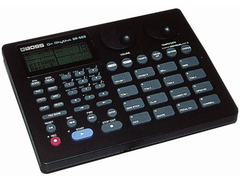
The MPC-60 of budget drum ROMplers
My first hardware drum machine was actually the successor to the 660: the DR-770. I got on well with the little blue and orange 770, but found that my ears would start to hurt if I spent too much time banging away at it; the 770 had perhaps more brightness and top-end sizzle than I (or anyone) needed at the time.
I sold my 770 and picked up a used 660 based on the following:
Reviews from owners of both machines stating that (despite way more sample memory on the 770) they found the selection of sounds on the 660 more usable, despite it's flatter, more lo-fi sound quality.
The 660 had two individual outs for routing snares/hats/etc to their own FX/mixer channel. The 770 had just one extra out. For my FX-heavy musical fumbling of that era, 2 individual outs meant "twice as good!".
Separate, dedicated buttons for (MPC-style) rolls and flams, instead of one switchable button for both on the 770. I was listening to a lot of IDM/drill'n'bass at the time... rolling AND flamming in the same recording take somehow seemed important to me.
According to the internet, Roger Linn had supposedly worked on and/or designed the 660, but not the 770, and Tom Jenkinson was on-record as having sequenced all drums on all albums (to that point) using a 660... so, despite the 770 having essentially the same sequencer, I wasn't above buying into some of the 660s very specific pedigree + mojo. Note: I've yet to find any hard evidence that Roger Linn actually contributed to the 660, beyond a single vague line on Roger's own website: "In addition to these designs for Akai, he also helped design products for a variety of companies during the 1990s, including the Japanese Roland company."
The 660 was dressed in black: all business... and therefor sexier. The 770's plastic colors, while still reasonably tasteful for this "Groovebox" era of gear, didn't really fit its design, intent, and sound... the colors said "I'm fun! Bang my pads! Make Crystal Method beats", but the actual experience was "serious drum sequencer for serious(ish) musicians". In both intent and execution, the 660 and 770 are more of a budget, ROMpler-only version of the MPC-60/3000 than any kind of sibling to contemporaneous products like the MC-303/505. I still have a peak-electronica-cash-in-era DR-202 somewhere, it couldn't be more different... mostly for the worse.
Anyway... I overestimated how much use I'd get from the extra outs and extra roll button, but the sounds didn't disappoint: they were indeed more fun, flat, and useful for lo-fi electronic beats, with the standout being a great range of aggressively-late-80s "dance" snares. Most every sound on the 660 starts off somewhere between 80s Phil Collins and Fine Young Cannibals, but you can quickly edit them into something you'd wanna hear for 3 or more minutes. A decade later, when I finally got a real TR-808, I remember being disappointed that its snare didn't have the same cutting presence as the single 808 snare sample on my 660... I tweaked in vain, trying to get the real deal to match its much more cost-reduced great grandson.
Note: I've heard the 660's sample set was sourced from the library of the earlier Roland R8 drum machine and it's expansion cards -- a late-80s instrument now considered a classic by some folks, and still getting action on recent Aphex Twin releases. While I haven't verified this sample-origin story myself, it's worth nothing that, even if true, the R8 is a 44.1kHz/16-bit machine, while the 660 is 32kHz/16-bit -- and the DAC on the much more upmarket R8 is likely to be from a higher shelf of the parts bin... whether or not these realities ultimately makes the 660 sound better or worse than the R8 is up to you and your ears. I've yet to demo an R8 in the flesh.
A couple years after all that, Legowelt helped me discover the crusty joys of Chicago's Dance Mania label, and the dozens of (forgive me) "Ghetto" House tracks and proto-Footwork tracks that used nothing more than the DR-660, a 4-track, a mic, and some attitude to make underground party vinyl. That same recipe was the centerpiece of the early/mid-'90s Memphis rap sound. Shawty Pimp and MC Spade's 1993 Solo Tape is the ultimate in DR-660 ingenuity; other than the background vinyl in the intro shout-outs, that tape is 100%, DR-660, 4-track and a mic. It's gold.
I eventually learned to love my TR-808's snare on it's own terms, and I really don't hammer on the 660 much anymore... but I'd never sell it. Despite sounding a little grainy and muffled by today's 24-bit DAC standards, the 660 represents (for me) a damn good idea, executed perfectly... and the over-achieving it's done in the world at-large since it's release is testament to how right Roland's planners, designers, and Engineers got things with this very approachable 1992 gem.
Preferred Settings + Usage:
The late-'80s Janet Jackson and Fine Young Cannibals-esq snares and the cutting, studio-grade eq treatment baked into all the 808 sounds.
27231
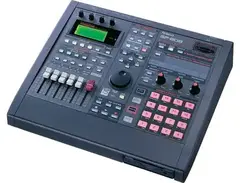
Fun FX, but let down by sluggish, sloppy timing
This was my first "real" piece of music gear that wasn't guitar-focused. It got me through a late-90s live performance obligation that required some live sample triggering and manipulation, but it proved to be an unworthy studio hub during my first year of ownership.
The FX were fun, the flashing lights were fun, and the layout was straightforward enough, but I recall the (MIDI) event timing was noticeably sluggish, even to someone as inexperienced as I was at the time... and, if memory serves, it only got worse when more FX and disk-streamed tracks where added at the same time.
I'm lucky to have sold it while the original SP-808 still being produced; I remember being relieved that the eBay auction closed for only a few bucks below list price... at least my (ultimately) bad decision didn't cost me too much $$.
If you see one at a yard sale, skip it. This is NOT an SP-202/303/404 on steroids, it's a 90s Roland VS-series multitrack recorder taking on more sampling and sequencing duties than it can successfully handle.