
pkennethk's Reviews
27 reviews Back to pkennethk's Equipboard

27231
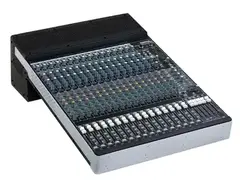
Flexible, Bulletproof I/O
Pros:
It's still a reliable audio interface on OS X, after 8 years, 3 computers, and 2 (TWO!?!) Firewire-to-Thunderbolt adapters. I rely on the interface portion of this mixer all day, every day.
Full-featured 4-bus mixer with more analog, digital, and analog/digital hybrid routing options that I will likely ever need.
Clean, clear, dynamic sound quality in all contexts.
Firewire I/O doesn't hinder full-analog operation w/o computer turned on.
Very usable EQ, w/ sweepable mids.
Rugged and rack-mountable chassis.
Headphone amp has power to spare -- you won't leave first 1/10th of volume knob to power ATH-M50 or HD 280 Pro.
Never required any drivers or management apps on OS X, and never will.
Cons:
For recording spoken-word volume material, usable gain on preamps is in the last 25% of the knob range -- regardless of whether I'm using condenser or dynamic mic booted with w/ cloudlifter. For drums and mic'd guitar cabs, I'm sure gain range is likely appropriate. It's not just me, this characteristic of the preamps was also noted by SoundOnSound. Not a deal-breaker, just surprising.
Will occasionally develop minor pops and clicks when used as an interface, but a simple restart of unit (w/o restarting computer or DAW) always resolves. This behavior is likely due to unit being used with 2 stacked Firewire adapters. I'm just happy a Firewire interface works at all in 2022. I don't expect miracles.
I have to resort to the user manual whenever I need to change or re-route digital signals to/from my computer; the button layout for digital routing (sandwiched in with all the traditional analog mixer controls) just isn't that intuitive. The good news is whatever it is you're trying to route in/out is likely possible -- the button configs are just hard to commit to memory.
The mixer section is fully analog, but don't expect this unit to impart any kind of magical analog character to your tracks and mixes; it's a big, clean, reliable, feature-laden mixing utility, not 16-channels of vintage charm. You CAN overdrive the inputs and distort in the analog domain, and I do that, on occasion, when running something like a 909 kick & snare through it, but such feats are not this mixer's speciality. Expect to get back what you put into it, and no more... expect very useful EQ, but not an EQ that's going to be clearly superior to your DAW's bundled EQ.
Final Thoughts:
- Mackie's Onyx mixers are good enough for most of us, but buy one because you need a solid and capable mixer that will last, not because you need some secret tone-defining/mix-gluing weapon.
27231
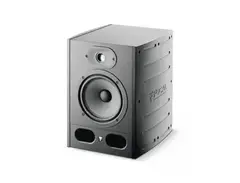
Like Sweatpants for my Ears
Exec Summary: The slightly dark/mellow tonality of these speakers is a godsend for tracking/listening all day. The midrange clarity and depth I need to be confident in my decisions is there, but unlike many pro/prosumer monitors I've tried, my wimpy ears don't start to feel tight/pained after 20 mins. I can listen to music recreationally on these all day, at moderate volumes, without feeling like I am permanently eroding my aural health.
Historical Context: I purchased these around 2014/15; the sub-$1000/pair studio monitor market has surely evolved and re-shuffled a bit since then. And I trust that if I moved up to Adam A7X or even further up to something from Barefoot Sound, I'd likely enjoy yet another tier of depth and clarity... but when one has a product that just fits one so well, as these Alphas do, one stops caring what else is out there and just keeps on working. :) I'd also need to treat/calibrate my space to justify spending any more on monitors than I already have.
But How Do They Bass?: The 65s are rated down to 40Hz, but that doesn't mean things fall off a cliff below 40. In my own casual tests, I don't perceive much fade until the test sine is well below 35Hz. I am currently using the 65s with a 10" Presonus sub, but toggling back and forth between sub and full-bypass while listening to some sub-heavy 90s jungle, or the 808 subs on Kendrick Lamar's DAMN, many would question why I bothered with the subwoofer at all. In other words, the low end on these speakers is (in my opinion) damn respectable, without ever being overhyped. A subwoofer is a luxury, not a necessity, when your monitors can smoothly and consistently get this low.
My One Complaint: I got these 65s right when they hit the US market, and the power-saving auto-shutoff wasn't fully dialed-in yet. I love the feature in-principle, it's just that it takes too much signal to wake them back up... so I often have to goose a fader on my mixer for a split second after I come back from a lunch break. I've read that Focal has improved this behavior with later shipments.
Conclusion: When these Alphas die on me, probably in another 3-5 years (past-as-precedent), I will look at what Adam/Eve/Hedd-style ribbon-tweeter goodness is out there for under $2k/pair, and I'm very curious re: Output's collaboration with Barefoot Sound... but what's on offer from these companies will have to be both exceptional AND just as fatigue-free as these Alphas to seduce me away from whatever Focal can offer.
UPDATE: I've had these almost 10 years now, and I've been using them 12 hours a day for the last 6 years... and not a single problem. These Alphas have already outlasted every pair of studio monitors I've had over the past 25 years.
Preferred Settings + Usage:
Sitting on IsoAcoustics ISO-L8R200 stands, tweeters at ear-height, slightly angled towards me, triangle-formation: 36" between each tweeter and each ear
27231
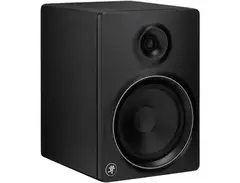
Just get the HS5s...
TLDR: Impressive low end, but I personally found the high-end fatiguing and had to switch to something different. However, I then passed these on to a friend, who didn't find them fatiguing in his studio space and has been happy with them for years. All that said, it's not the mid-2010s anymore, and (in this price range) you should just buy Yamaha HS5s or something from Kali Audio.
Ok... now the long version:
For the price, and the era, these were impressive... I picked up a pair of MR5s in 2014(?) because I was setting up a tiny studio space/desk in my then-new apartment and wanted to downsize to something fitting the size of the room, that still had reasonable low-end, that also wasn't Genelec-priced.
I tried getting along with these new monitors for a few weeks, but my ears would get fatigued and start to tighten up after only a few minutes at moderate volumes, regardless of settings... this didn't happen with my old (very old) Event PS6s or even with the giant, peculiar M-Audio EX66s I ended up using for a hot minute.
So I boxed up the Mackies and moved up to the larger, tonally-darker Focal Alpha 65s. The Alphas were such a huge relief: they had the honesty/detail I was after, and I could track with them for most of the night without physical discomfort.
HOWEVER, I then loaned these Mackies to a good friend of mine, who set them up in his tiny back-house studio, and in that odd, cozy one-room house, these things sound great... I mean, they sound nothing like I remember them sounding in my (now) old apartment, the harsh highs have died away... and the lows are even more impressive than I recall.
Some of this change in performance could be due to the speakers physically breaking-in over time, but also, the room just makes a huge difference, obviously. This isn't a treated space, mind you, and my friend isn't doing much detailed mixing on them; he just keeps the MRs cranked when he's banging out tunes on the laptop/Maschine setup in that space... and in this context, they're way beyond adequate.
So these monitors ultimately found a happy home with a happy user who has been enjoying them for years... but now, in 2020/21, if you asked me to spend close to the same $$ on 5" project studio speakers, I'm going to direct you to Yamaha HS5 all day. I haven't heard what the newer Mackie MR5 mk3 (4?) sound like, but... just get the HS5s... unless you're ready to go all-in and get something approaching $1-2k/pair.
27231
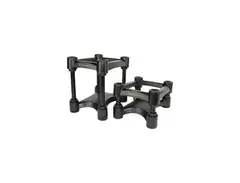
Height worth paying for
I wanted my Focal Alpah 65's tweeters to be at ear-height... it was either these, cinderblocks, or drill holes for pole stands in my tabletop.
I had been using Auralex wedges to angle the Focals up to my ears for awhile, but things still sounded much clearer if I awkwardly lowered my head about 10".
I don't have a work area that would allow me to move my table 2' back from the wall to add stands/poles, and I'm not interested in buying dedicated studio furniture with built-in speaker/monitor risers, so these L8R200s were a nice solution.
In doing my research on these stands, there were an odd # of people who mentioned using them with Focal Alpha 65s (not a super common monitor)... and the IsoAcoustics website specifically mentioned and displayed Alphas with the L8R200. So perhaps the nice upgrade in clarity I got with my Alphas is not typical of what to expect with other models... but either way, tweeters at or near ear hight is a good thing, and, sonically, simply angling your speakers up from a desktop position was nowhere near the solution that these stands provide. I'm tempted to A/B these against some Home Depot solutions to gaining desktop height... but I do like how much more open and uncluttered my desk feels with stands that don't obstruct much visually. Cinder blocks + Auralex wedges wouldn't allow for this same open feel.
Notes: I got a great deal on these on Reverb... I'd be slightly less enthusiastic if I had to pay the full price. These are made well-enough, but it's still just 4 plastic platforms, 16 rubber bushings, 2 sets of 8 metal poles, and some plastic spacers. This isn't some hand-crafted item, it's made in the same big factories most everything else in this world comes from... unless IsoAcoustics has some great patents in place, someone else could come along and offer the same thing for drastically less money.
Update: these have held up well during a few minor earthquakes in 2020, so I give them a passing grade for seismic stability... but I'm still holding back one star for the high list price.
27231
Come for the foot switch, stay for the rice dressing
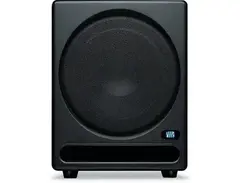
20 years of studio monitors, but this is my first studio sub. After reading the manual, and a few weeks of anxious fine tuning, I'm happy with this purchase. I've paired it with a set of Focal Alpha 65s that were already solid-enough down to about 35Hz (I've set x-over & highpass shelving @ 80Hz). If anything, the T10 has convinced me that I didn't need a sub for that last little bit of bottom end as badly as I thought I did.
BUT, it IS the 2020's, and even though every club on the planet is currently on pandemic lockdown, 808 subs are everywhere, and it's glorious. I can now hit a foot switch and get a slightly better sense of how gut-rumbling something is going to be when it's booming out of someone's car 2 blocks away... and I like that.
So the foot switch is easily my favorite feature, as it enables a full bypass (disabling sub output and removing the hp filter on the feed to my Alpha 65s). While this feature isn't unique to the T10, Presonus does include a footswitch assembly with the purchase, which is a rare and nice touch in this price range. I would never buy a sub that didn't have this ability... as sometimes, that extra air moving under my desk is just a bit too much during tedious/repetitive edits.
Also, the manual for the Temblor includes a recipe for rice dressing. You gotta love that. It seems like the team at Presonus is having a good time out in Baton Rouge... which makes me happy.
Update 5/21: I've fully adjusted to the solid bottom end the T10 adds to my monitoring setup. I work with the sub always-on now, as nothing (electronic, folk, metal, or otherwise) sounds quite right to me when the T10 is removed.
27231
Solid, but expendable
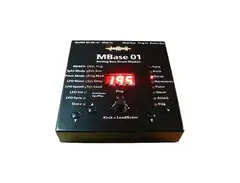
This little guy churned out rock solid analog kicks, just as promised... but it just wasn't that fun to play with or integrate into a creative workflow. Having only one endless encoder shared between all parameters probably contributed to the joylessness...
The chance came up to trade it for a mint TR-727 here in Los Angeles, and (10 years hence) I haven't regretted that move for a second.

41013
lets face it, the arp 2600 churns out rock solid analog kicks all day.... or R2D2 noises...
41013
just kidding... but I won't pay a lot for a kick synth, the korg volca kick is fabulous for under $100 used, the boss dr55 is highly 808ish in the kick dept and goes for pretty cheap even these days.... nd even soemthing like summit/peak can produce monster kick drums in the depeche mode and daniel miller 2600 style.
27231
Simply Fun
Purchased it because it was always the best sounding little amp @ the tiny local guitar store I used to frequent (early '90s).
Sold it because a friend with a lot more talent borrowed it and couldn't bare to give it back.
Sure it's solid state, but it was solid.
27231
The Dennis Rodman of 80s Polysynths
This video nails the basic timbre and scope of mine.
Either you like these sounds, or you don't.
Mine is due for a recalibration and some repairs, but even in its weakened state, it still sounds like this video all day.
Play a JP6, then immediately try an Sh-101 (for example), and for a moment you'll wonder why 101s were ever known for their bass sounds... the JP6 is a big, angry synth, even when it's trying to sound polite.
People see the "Jupiter" name, and (reasonably) expect the Michael Jordan of Japanese polysynths... but I find the JP6 to be more Dennis Rodman: an imposing role player that isn't afraid to get under everyone's skin.
41013
its so twangy and hard sounding in that demo, I really didn't remember it this way, but I guess that's what it sounds like!
27231
I've heard smoother JP6's too. I'm curious to see what a good calibration can do for mine. Thinking of sending it to SynthSpa in Utah and having it Europa'd at same time.
27231
Well, I'll get this thing tuned up and back to 100% operational, and then neither of us will have to wonder any longer :D
27231
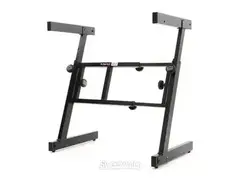
A $100 investment I've never regretted
I've had this thing since at least 2003. It's the only stand I trust for my beefy weighted digital pianos and oversized old analog Junos and Jupiters. Heck, if I needed something to stand on while hanging a light fixture, this would do in a pinch. I bet it would take more than a thousand pounds to make it break a sweat.
The ultimate compliment: a buddy of mine always asks if this stand is something I borrowed from him back in the day, and (if so), if he can have it back.. (it's not his. I vividly remember the pain of having to shell out for this thing back when money was tight)... but I understand where he's coming from: once you see one in the flesh, you want it... most other keyboard stands are a wobbly joke compared to this thing.
This folding-Z will outlive me. 100 years from now, some relative of mine will be using it with some retro-mod clone of some huge-ass keyboard that hasn't even been invented yet... and that lucky relative, like me, will constantly have to defend from friends who yearn to give it a new forever-home.
27231
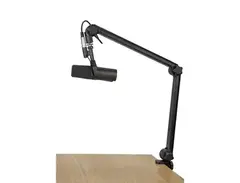
No-brainer for SM7B
This thing is absolutely beefy enough to hold your heavy-ass SM7B in any crazy position forever, and the mount fits perfectly into the SM's base without having to buy an annoying extender/adaptor.
If you have an SM7B you need to boom-up, I whole-heartedly recommend the 3000-series Gator over the ubiquitous Rode option.
The Gator was recommended to me as a budget proxy to the higher-end K&M desktop booms; a cut above other booms in this price range. I don't have any experience with those specific K&M booms, but I have every confidence that I'll still be using this thing 20 years from now. It's solid.
27231
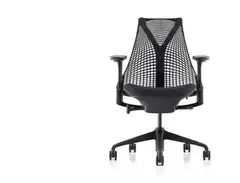
The one-size-fits-all Herman Miller
High praise: I NEVER think about studio chairs anymore...
... and I thought about studio chairs A LOT before I got this chair.
The Sayl is a great studio/task/office chair for people who want the focus to be on the work to be done, not goddamned office furniture. Is this why you got into making music? To have conversations about sexy office chairs? I sure hope not.
Yes, I've worked in Aerons before, and tried so hard to make the top-of-the-line Herman Miller Embody work for me in my home studio, but eventually returned it. I'm a Sayl man.
For reference, I'm 6' 0", about 175-190, skinny-fat. I'm not a wide individual; snug Recaro racing seats fit me just fine... but I used to work in an office space with hundreds of identically-spec'd Sayls, and they fit the widest of us.
Sayl comes in one size only. It has far fewer adjustment points than Aeron and Embody. It is a work of art designed for the times I don't want to be standing, rather than something that encourages me to sit for longer than I need to or should be. I have gear all over. I move around. I pop up and listen from different parts of the room. Making music is a full body activity, and thus I choose Sayl.
27231
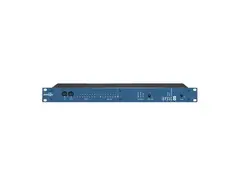
90s Eye Candy
I haven't seriously used this thing in over a decade, but I keep it around because look at it... it's gorgeous! Why can't all my rack gear look this classy?
I've seen at least two different tests online of timing accuracy of these old eMagic MIDI interfaces vs. newer MOTU interfaces of similar spec... The MOTUs trounced the accuracy of these things in both cases (max 0.5ms jitter in the MOTUs vs a full 7ms of jitter in the eMagic Unitor/AMT8 in last test I found).
Apple/Emagic Logic Pro used to support a proprietary MIDI pre-load/buffering protocol called "AMT" designed to up the timing accuracy, but I doubt the latest Logic X still supports this... I mean, Apple doesn't even include drivers for these interfaces in the Logic installer anymore, to the best of my knowledge... so I'll finally be replacing this old workhorse with a newer MOTU unit at some point in the future.
27231
It will make you a believer
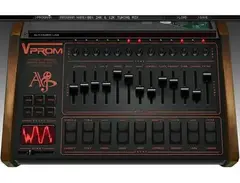
The first (and still only, as of 2026) software instrument to accurately emulate the sample-playback architecture of early 1980s drum ROMplers like the LM1 and DMX -- and more importantly, it sounds like nothing else.
Each individual drum voice in an LM1 (or DMX or SCI Drum Tracks, etc) had it's own DAC (digital to analog converter), and each of those converters ran at its own clock speed, so you had tiny sample files recorded at 28kHz that could be playing back at speeds as low as 14khz (1/2 speed) and as high as 56kHz (2x speed), depending on where the user set the tuning pots. Result: you got wild, crunchy aliasing grit on sounds pitched down and a unique metallic-yet-glassy effect on sounds pitched up, all blending together into a stew that modern samplers and sampling software don't dare attempt to emulate. There was no sample re-interpolation in these early days, the per-voice playback engine was just sped up or slowed down to alter pitch, like a fleet of tape recorders... crude and inefficient, but oh what a sound!
I've played VProm side by side with top-shelf LM1 sample sets (in Simpler, Kontakt, etc) and asked people (blind to which was which) to tell me which one sounded more like records they remember from the 80s... whether they're a musician or totally tone deaf, VProm always wins.
I've run the GForce DMX plugin alongside VProm3 loaded with DMX .bin files, and... GForce's version just sounds so subdued compared to VPROM.
Downsides? This is a 1-developer effort by a person clearly obsessed with the details of playing back ancient .bin files exactly as the LM1 and DMX once did, complete with full emulation of each VAC and VCF chip within the signal path. This obsession pays off sonically, but there are rough edges elsewhere:
Finding and loading banks, presets and the individual sample files (antique .bin files) is a rough experience. There are surely legal considerations behind why the plugin requires you to download and install many of the .bin and preset files separately, but the process seems to get more and more convoluted with each new version of vProm.
The UI for adjusting all the various sample playback and envelope behaviors of each drum voice is starting to sprawl pretty bad. Actually, navigation across the whole plugin is feeling pretty rough these days -- you'll be needing the PDF manual. I'm hopeful VProm4 will tidy things up considerably.
VProm3 (unlike VProm1 & 2) has some UI performance issues in Ableton Live 12 on Mac (M-series). The sound engine and timing for VProm3 seem rock solid no mater what, but messing around in the VProm plugin window for several minutes can start to slow down the entire UI in Live... things seem to return to normal once I close the VProm3 plugin window, though.
These issues aside, even after 10+ years on the market, nothing out there in software-land sounds like VProm. No sane Engineer would dare attempt what Aly has clearly poured his whole self into acheiving. The kicks knock hard, the snares slap, the hats will make your tweeters sweat and the playback timing quirks that give the LM1 (and others) their unique feel are replicated with the exacting precision afforded by modern DAWs.
If you've read this far, go give VProm a try -- feel those DMX kicks punch you in the face, wince in pain as the Drumulator Digidrums Rock snare dominates your mix at any volume, then detune the LM1 side stick, and hear that huge, Princely sound that you didn't know you've been searching for your whole damn life.
Thank you, Aly. #&$%ING. James.
Preferred Settings + Usage:
Download the free expansion library and click through all the LinnDrum .bin files for kick and snare until you find THE ONE.
27231
Made with love and dedication
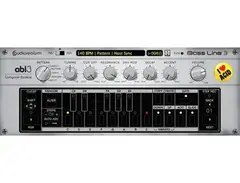
I've owned this since version 1, and it's been a pleasure to see it slowly improve over the years. I have yet to compare it to a real 303 or Roland Cloud's 303, but it's musical and engaging and gives back more than you put into it.
Good: Sounds a heck of a lot like a 303. crazy submenu parameters allow you to dial in exactly the resonance and waveform characteristics you want. Contains a vast library of patterns, including note-for-note versions of many acid classics. It has a wave analyzer for automatically transcribing patterns (never tried this, but damn...). It's a quality single-developer effort that is always kept up to date and priced fairly... so you can feel good about giving AudioRealism your money; they always answer my questions promptly and thoroughly.
Bad: Real 303s still sound slightly SLIGHTLY better to my ears, but in the virtual domain, ABL has always represented the closest one can get in software. It's good enough; If you can't write great acid patterns with this, that's on you, not AudioRealism. ;)
27231
There's a reason studios keep these handy
The Good (aka, what it does better than my ATH-m50s):
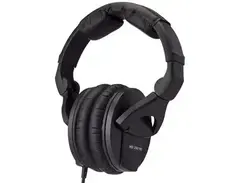
Outstanding isolation from exterior noises. I bought these because I found myself working shoulder-to-should with a colleague in a small room many years ago. I wanted the material I was listening to to bother my colleague as little as possible, bleed-wise, and I also needed as much exterior isolation as I could get without resorting to noise-cancelling phones. These were the best option on the market at the time (10+ years ago) and likely still are. If you don't care about outstanding passive isolation, then you should probably be looking at a different pair of headphones.
Tons of detail and separation... for better or worse, instruments don't smear together with these.
Solid sub-bass performance. I wouldn't make mix decisions with these (or any) headphones, but they handle (for example) the decay phase of 808 subs a bit better than my ATH-m50s.
Indestructible. Over the past 10+ years, I've travelled all over the western hemisphere with these... crammed them in bags that didn't have the room, tripped over the cord dozens of times, and had fellow passengers literally step right on them as they climbed over me to get to the plane's restroom... nothing, not a scratch, still perfect.
Designed to be 100% user-serviceable... this means Sennheiser makes every component readily available to purchase separately and parts are easy to install yourself by hand or with a small screwdriver... no soldering required and no special tools necessary to pry things apart. When it was time to replace the headband on my 280s, all I had to do was order a cheap Sennheiser-made part, un-snap the old part, snap in the new part, and they were back to factory-fresh. I didn't fully appreciate just how great this is until I had to "replace" the headband on my ATH-m50s... which isn't actually that replaceable, you end up having to buy some third-party neoprene koozie to zip over the flaking band... sigh.
The Bad:
Constrained soundstage. They have a very present/upfront sound that lets you more easily focus on individual parts, but that focus comes at a cost.
More sensitive to the type of headphone amp driving them than my ATH-m50s. When paired with consumer-grade headphone amps, the sound quality is still great, but you lose a bit of fullness and sounds can occasionally feel a bit like icepicks in your ears... making them generally more fatiguing for long listening sessions than my ATH-m50s, which seem to do a better job of staying musically-pleasing across different output sources (I know impedance rating plays a role in this, among other factors). If I'm using MacBook Pro headphone out, I go with the m50s... if I'm plugging into the headphone out on a good interface or mixer, I often reach for the HD 280s.
Great isolation doesn't lend itself to great breathability. I don't find the 280s at all uncomfortable, but the seal the ear pads need to form to accomplish all that isolation also traps in a bit more heat than you might be used to -- several hours in, you might feel a bit of sweat on your ears start to cool right after you take them off. I've never had beads of sweat running down or anything close to it, but YMMV.
In Closing:
I still recommend ATH-m50s (now m50X) over these when people ask me about general-purpose passive phones, as the m50s are a bit more comfortable, more flattering to most types of music, and more consistent across different output sources -- but I'm glad I still have the HD 280s handy for a range of specific use-cases in which they are a better fit than anything else anywhere near this price range: great external isolation while tracking, low sound bleed when those in the same room as you need some peace and quiet, and the ruggedness and compactness necessary for airline travel. I know that, sonically, I could spend $300 more, and another $500 for a dedicated headphone amp, and have my mind blown, but I'm too hard on headphones... these are the only pair that have held up to all my years of abuse and accidental cord-yanks.
If I owned a studio and needed several pairs of cans for artists to wear while tracking, these would be at the top of my list for all the reasons I cited above.
Preferred Settings + Usage:
Plugged into my old Mackie 1640i... or any time I don't want what's playing in my headphones to bleed through to the outside world.
27231
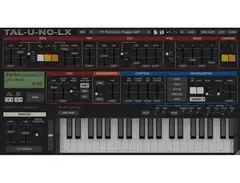
better than my real 101s
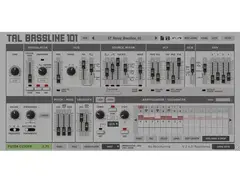
I'm fortunate to have 2 real SH-101s in a drawer. Picked them up before prices got stupid... but they're in a drawer and not getting regular use, because of this lovingly-crafted plugin. If I wanted to use an SH-101 as my go-to bass synth, I'd probably use the real units or a modern analog clone (Intellijel Atlantis, Behringer knock-off, etc), as IMHO one can still milk a tiny bit more bottom and bounce out of the real deal (just a TINY bit, well within the margin of imaginary mojo), but if you just want to dial in some wonky, squelchy, 101-style riffs or melodies, this plugin will (unlike the real deal) actually stay in tune, and gives me all that I seek. This plugin's behavior at high resonance/self-oscillation is so commendable and true-to-life.
Update: just did another side by side with the more stable of my 101s... yes, there are spots here and there where the TAL is a little less smooth or slightly flatter/digital than the real deal, but any patch I can make on the real deal, i can re-create on the TAL, and you'd be hard pressed to tell me which was which. When friends ask me if they should get a 101 clone as their next hardware synth, I always tell them to just get the TAL and have a 101 that can save patches for hundreds less than even the Behringer version.
27231
Wonderful boutique instrument
It may be more Juno than my actual Junos... it's Juno-ness is cranked to 11. Maybe it's a little 2D & sterile compared to the real deal, if I'm being super SUPER picky... but regardless, it's very musical and a joy to use. Always makes me happy to tweak away. I hope this one is still supported 10 years from now -- like a real Juno-6/60/106, it's it's worth owning and it's worth owning for a very long time. :)
27231
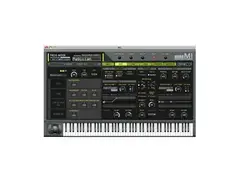
Scratches every M1 itch I will ever have
The Good:
It contains damn-near every M1 expansion card ever released
Korg has kept these Legacy Collection plugins updated through decades of OS updates... so commendable. Thank you Korg Engineers!!!!
The Bad:
- The interface isn't going to win any awards in 2020, but given they haven't changed it much since launch, I've had plenty of time to learn it well through all the quirks. :) Still beats navigating a tiny LCD screen.
Preferred Settings + Usage:
Every acoustic piano patch in this thing sounds like 1980s Elton John standing under fluorescent office lights with a bag of cocaine... in other words they are PAINFULLY BRIGHT.
...but they are painfully bright and tinny in way that makes you keep coming back, like a bag of Sour Patch Kids you can't put down.
If anyone uses this plugin for anything other than 90's house piano and organ sounds, let me know.
27231
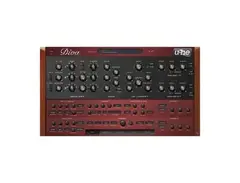
If sounding like old analog is your aim, don't waste time with anything else
I've got a Jupiter 6, a Juno 60, a JX-3P, SH-101, etc etc sitting right next to me as I use Diva... and I've been using it since it launched. Does Diva sound exactly like any of those synths? Yes and no... it's not aiming for perfect emulation of every parameter, so you're not going to be able to perfectly capture every nuance of every synth it claims to (partially) emulate. But after 20+ years of using various software and hardware VA synths, this was the first one to make me stop wishing I was using "the real thing" and just enjoy the results I was getting.
Being a lucky (old) skunk who has most of the original hardware this thing is trying to emulate, I'll say that it makes a reasonable case for me selling my Jupiter 6, but a weaker case for selling the Junos and Moogs. Diva provides very warm and usable mini moog-type basses, but I've yet to successfully clone some of the funkier mini moog baselines, eg Kashif's work on "Love Come Down"... but that's a pretty specific and niche sound that I'd probably still struggle to emulate with a Voyager or Sub 37. On the juno front, the pads always seem to be too thick, even when using one of the HPFs... my real Juno and JX tend to respond to their HPF and settle into the a specific sliver of the mix spectrum easier than Diva (TAL's Juno emulator is a bit closer to the real deal in this regard), but I should probably just EQ it and/or stop worrying about sounding authentic... the results are great regardless.
UPDATE 11/21: I just spent a few days with a borrowed Behringer Model D. The latest update of Diva more than held its own against the little analog MiniMoog clone when it came to bass sounds. In terms of being able to get the filter cutoff, filter envelope amount and the envelope attack, decay, and sustain settings into their sweet spots, dare I say I had an easier time getting Diva there than the Boog. You can still tell which is which when you directly A/B them, but I'd be hard pressed to tell you which was which if I was listening (blind) to one without the other to compare it to.
-s.webp?v=1784041581)
27231
just right
Good:
Substantial build quality
Tasteful design/aesthetics
Mature editor software that actually works
Fits in my laptop-sized backpack
2 of the 16 knobs are also push toggles
Blindingly-bright and colorful LEDs I can custom-configure
Great key feel with quiet mechanical action
Feels greater than the sum of its parts and is a joy to play
Bad:
Drum pads feel great, but occasionally, they will give you a stuttering double trigger if you strike and hold a pad while applying progressively more pressure... I got used to this over time. If you just strike them with a quick release, like a drum, they are perfect 100% of the time.
The octave +/- buttons are way too bright AND they flash whenever you're transposed up or down at least an octave... it's beyond distracting and takes some time to learn to ignore.
The Arturia Keystep, in my opinion, has even better key feel... if just by a slim margin. The lack of aftertouch sensors on the cheaper Minilab series is probably why the Keystep key feel is a bit more luxurious.

258
Oh yes, you right, i can stuff my minilab in my backpack with notebook and it just ideal you know. Super compact and comfortable for travels and something like this