Eddie Rayner
New Zealand keyboardist, singer, songwriter & producer
Genre
Credits
Genre
Credits
Eddie Rayner's Gear


-m.webp?v=1784646389)
Eddie Rayner is playing an Ensoniq TS-12 during this 2005 live performance with Split Enz; the model number can be seen clearly at 0:38.
Find it on:


-m.webp?v=1784334141)
"The end of the 1970s saw a huge rise in the development of synthesisers, and in making traditional instruments like pianos and organs more transportable and able to be amplified well. In the early days Split Enz always used to need an acoustic piano at every gig, which was a pain for us (amplification without feedback was always an issue) and promoters alike, but with the advent of Yamaha’s CP-70, that all changed. Synthesisers had also become polyphonic and memory space to store your own sounds was also a new development. The 'space capsule', as the guys called it, was seven or eight different keyboards, including a CP-80 Yamaha (full 88-note piano), a CS-80 and Prophet 5 (both early polysynths), a CP-30 electric piano, a Mellotron for 'real' string and choir sounds, a string synth, and a monophonic synth such as an EML 500 or Cat Octave … Oh, and I bought the first Korg Vocoder to arrive in New Zealand, which was fun! As you can imagine, transporting the sheer weight and volume of all this gear became prohibitive, so we replicated the setup in the US. Unsure what happened to all that gear when the band broke up!"
Find it on:

"The end of the 1970s saw a huge rise in the development of synthesisers, and in making traditional instruments like pianos and organs more transportable and able to be amplified well. In the early days Split Enz always used to need an acoustic piano at every gig, which was a pain for us (amplification without feedback was always an issue) and promoters alike, but with the advent of Yamaha’s CP-70, that all changed. Synthesisers had also become polyphonic and memory space to store your own sounds was also a new development. The 'space capsule', as the guys called it, was seven or eight different keyboards, including a CP-80 Yamaha (full 88-note piano), a CS-80 and Prophet 5 (both early polysynths), a CP-30 electric piano, a Mellotron for 'real' string and choir sounds, a string synth, and a monophonic synth such as an EML 500 or Cat Octave … Oh, and I bought the first Korg Vocoder to arrive in New Zealand, which was fun! As you can imagine, transporting the sheer weight and volume of all this gear became prohibitive, so we replicated the setup in the US. Unsure what happened to all that gear when the band broke up!"
Find it on:

"The end of the 1970s saw a huge rise in the development of synthesisers, and in making traditional instruments like pianos and organs more transportable and able to be amplified well. In the early days Split Enz always used to need an acoustic piano at every gig, which was a pain for us (amplification without feedback was always an issue) and promoters alike, but with the advent of Yamaha’s CP-70, that all changed. Synthesisers had also become polyphonic and memory space to store your own sounds was also a new development. The 'space capsule', as the guys called it, was seven or eight different keyboards, including a CP-80 Yamaha (full 88-note piano), a CS-80 and Prophet 5 (both early polysynths), a CP-30 electric piano, a Mellotron for 'real' string and choir sounds, a string synth, and a monophonic synth such as an EML 500 or Cat Octave … Oh, and I bought the first Korg Vocoder to arrive in New Zealand, which was fun! As you can imagine, transporting the sheer weight and volume of all this gear became prohibitive, so we replicated the setup in the US. Unsure what happened to all that gear when the band broke up!"
Find it on:

"The end of the 1970s saw a huge rise in the development of synthesisers, and in making traditional instruments like pianos and organs more transportable and able to be amplified well. In the early days Split Enz always used to need an acoustic piano at every gig, which was a pain for us (amplification without feedback was always an issue) and promoters alike, but with the advent of Yamaha’s CP-70, that all changed. Synthesisers had also become polyphonic and memory space to store your own sounds was also a new development. The 'space capsule', as the guys called it, was seven or eight different keyboards, including a CP-80 Yamaha (full 88-note piano), a CS-80 and Prophet 5 (both early polysynths), a CP-30 electric piano, a Mellotron for 'real' string and choir sounds, a string synth, and a monophonic synth such as an EML 500 or Cat Octave … Oh, and I bought the first Korg Vocoder to arrive in New Zealand, which was fun! As you can imagine, transporting the sheer weight and volume of all this gear became prohibitive, so we replicated the setup in the US. Unsure what happened to all that gear when the band broke up!"
Find it on:


"The end of the 1970s saw a huge rise in the development of synthesisers, and in making traditional instruments like pianos and organs more transportable and able to be amplified well. In the early days Split Enz always used to need an acoustic piano at every gig, which was a pain for us (amplification without feedback was always an issue) and promoters alike, but with the advent of Yamaha’s CP-70, that all changed. Synthesisers had also become polyphonic and memory space to store your own sounds was also a new development. The 'space capsule', as the guys called it, was seven or eight different keyboards, including a CP-80 Yamaha (full 88-note piano), a CS-80 and Prophet 5 (both early polysynths), a CP-30 electric piano, a Mellotron for 'real' string and choir sounds, a string synth, and a monophonic synth such as an EML 500 or Cat Octave … Oh, and I bought the first Korg Vocoder to arrive in New Zealand, which was fun! As you can imagine, transporting the sheer weight and volume of all this gear became prohibitive, so we replicated the setup in the US. Unsure what happened to all that gear when the band broke up!"
Find it on:

"The end of the 1970s saw a huge rise in the development of synthesisers, and in making traditional instruments like pianos and organs more transportable and able to be amplified well. In the early days Split Enz always used to need an acoustic piano at every gig, which was a pain for us (amplification without feedback was always an issue) and promoters alike, but with the advent of Yamaha’s CP-70, that all changed. Synthesisers had also become polyphonic and memory space to store your own sounds was also a new development. The 'space capsule', as the guys called it, was seven or eight different keyboards, including a CP-80 Yamaha (full 88-note piano), a CS-80 and Prophet 5 (both early polysynths), a CP-30 electric piano, a Mellotron for 'real' string and choir sounds, a string synth, and a monophonic synth such as an EML 500 or Cat Octave … Oh, and I bought the first Korg Vocoder to arrive in New Zealand, which was fun! As you can imagine, transporting the sheer weight and volume of all this gear became prohibitive, so we replicated the setup in the US. Unsure what happened to all that gear when the band broke up!"
Find it on:


"The end of the 1970s saw a huge rise in the development of synthesisers, and in making traditional instruments like pianos and organs more transportable and able to be amplified well. In the early days Split Enz always used to need an acoustic piano at every gig, which was a pain for us (amplification without feedback was always an issue) and promoters alike, but with the advent of Yamaha’s CP-70, that all changed. Synthesisers had also become polyphonic and memory space to store your own sounds was also a new development. The 'space capsule', as the guys called it, was seven or eight different keyboards, including a CP-80 Yamaha (full 88-note piano), a CS-80 and Prophet 5 (both early polysynths), a CP-30 electric piano, a Mellotron for 'real' string and choir sounds, a string synth, and a monophonic synth such as an EML 500 or Cat Octave … Oh, and I bought the first Korg Vocoder to arrive in New Zealand, which was fun! As you can imagine, transporting the sheer weight and volume of all this gear became prohibitive, so we replicated the setup in the US. Unsure what happened to all that gear when the band broke up!"
Find it on:

"The end of the 1970s saw a huge rise in the development of synthesisers, and in making traditional instruments like pianos and organs more transportable and able to be amplified well. In the early days Split Enz always used to need an acoustic piano at every gig, which was a pain for us (amplification without feedback was always an issue) and promoters alike, but with the advent of Yamaha’s CP-70, that all changed. Synthesisers had also become polyphonic and memory space to store your own sounds was also a new development. The 'space capsule', as the guys called it, was seven or eight different keyboards, including a CP-80 Yamaha (full 88-note piano), a CS-80 and Prophet 5 (both early polysynths), a CP-30 electric piano, a Mellotron for 'real' string and choir sounds, a string synth, and a monophonic synth such as an EML 500 or Cat Octave … Oh, and I bought the first Korg Vocoder to arrive in New Zealand, which was fun! As you can imagine, transporting the sheer weight and volume of all this gear became prohibitive, so we replicated the setup in the US. Unsure what happened to all that gear when the band broke up!"
Find it on:
This is a community-built gear list for Eddie Rayner.
- Find relevant music gear like Microphones, Pianos, Keyboards and Synthesizers, Studio Equipment, Software Plugins and VSTs, Headphones, and other instruments and add it to Eddie Rayner.
- The best places to look for gear usage are typically on the artist's social media, YouTube, live performance images, and interviews.
- To receive email updates when Eddie Rayner is seen with new gear, follow the artist.
-
-
Updated
Album Credits
-
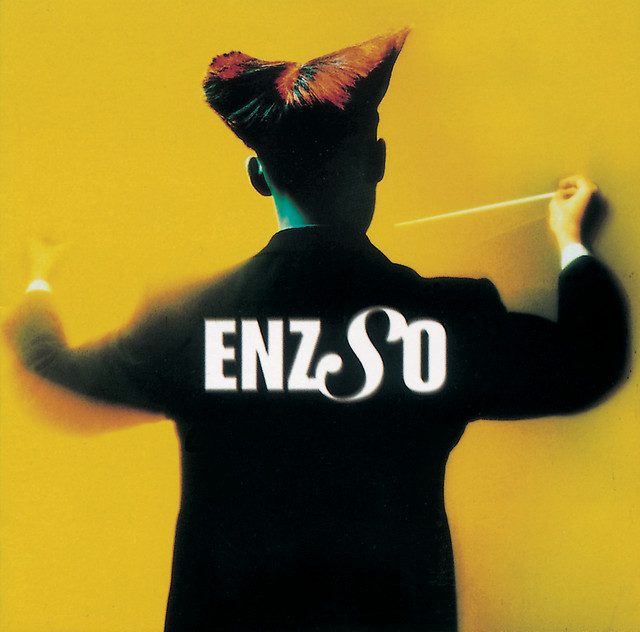
Enzso · 1996
Producer