Jaco Pastorius
Role
Genre
Credits
Role
Genre
Credits
Jaco Pastorius' Gear


rebuilding the bass of doom...
by Rick Suchow
(This is the unedited sidebar piece I wrote for my Jaco feature published in Bass Guitar Magazine in late 2008. The main piece, "Pastorius Kids Seek Jaco's Bass Of Doom", can be found in my View From The Bottom section)
Jaco Pastorius' basses of choice were a pair of well-worn Fender Jazz models, a 1960 blond fretted and 1962 sunburst fretless. Both were manufactured as fretted basses, as Fender did not begin to market fretless basses until 1970. Jaco reportedly bought each instrument second-hand for under a hundred dollars, and it was the '62, later converted to a fretless, that would become the trademark bass Jaco was noted for.
How the frets actually came to be removed is not as clear however, with Jaco himself giving varying accounts. Although he generally claimed that he removed the frets himself with a butter knife, he gave a different and more detailed version of the bass's evolution to writer Bill Milkowski in 1984 for Guitar Player magazine. "When I got the bass," explained Jaco, "the cat who had it had taken the frets out himself, and he did a really bad job of it-- left all kinds of nicks and chunks taken out of the fretboard. So I really had to fix it up. I filled in the chunks with Plastic Wood." He told Milkowski that he used Petite's Poly-Poxy, a boat epoxy, on the fretboard. "You can find it in any boating supply store in Florida," remarked Jaco. "I used about six coats on my fretless, and it took about a day for each coat to dry."
It was Kevin Kaufman however, Jaco's bass technician from the late seventies on, who perfected the epoxy technique used on Jaco's fretboard. "I explained to him that how I surfaced the board was a bit different than what he had done," says Kaufman."He used a very thin epoxy paint and had applied many coats. I used a more viscous epoxy and cast the fingerboard with a single application. I told Jaco that in my opinion it would transfer sound better and wouldn't wear out in the same way, and that there are many different epoxies and all of them sound completely different." Jaco was happy with Kaufman's work and would continue to use his services for the rest of his life.
Kaufman did his most significant repair in early 1986 after Jaco rang him from New York to say that he was having trouble getting his bass to play well and laughed. "A few days later I got the instrument in a box slightly larger than a shoebox," explains Kevin, who worked in Florida. "It was in 10 or more fundamental pieces and many splinters beyond that. It was obvious why Jaco had chuckled." The instrument had reportedly been thrown down a concrete stairwell by Jaco in the heat of an argument. Although he told Kaufman that he didn't have high expectations, Jaco asked the accomplished luthier to do his best. "I can't find another axe that even comes close," said Jaco.
Working with luthier Jim Hamilton, Kaufman spent over 150 painstaking hours repairing the bass. "Because there were so many fragments missing we decided that we would have to carefully glue everything together and then inlay any pieces that were missing. I took each part of the instrument and attached it to homemade jigs to hold these parts to a milling machine, which is typically a metal working machine." After weeks of cutting wood and removing fragments, Kaufman and Hamilton finally had the bass assembled. "The hope was that in the end all the parts would transfer sound and resonate as before. We also wanted to be absolutely certain there was structural integrity, realizing that the instrument was of no real use if it was fragile once it was done." An eight inch overlay was laminated to the top and back of the body, but because of the overlay's thickness Kaufman had to use a sander to maintain the body's size. The same process was used for the headstock, and was reinforced with pearwood. In addition, the neck pocket, pickup cavities, control cluster and machine holes all needed to be re-cut.
Kaufman personally delivered the completely rebuilt Bass Of Doom to Jaco in New York, who was ecstatic to see his friend Kevin and his miraculous work. "Jaco immediately restrung it with a new set of Rotosounds. After playing it for a few minutes he gave me his 'who loves ya'. The bass was back as far as Jaco was concerned and he was now eager to get going to pay some bills and make a session later that night," says Kaufman. That session turned out to be with Mike Stern to record "Moodswings" for Stern's new album "Upside Downside".
It was about a year later when Kaufman heard that the Bass Of Doom had disappeared. "Gregory Pastorius (Jaco's brother) called me and said that Jaco's bass had been stolen, and asked if I had any pictures of the bass after it was rebuilt," explains Kaufman. "I didn't actually talk to Jaco about the instrument until he moved back to Florida in December of 1986. Jaco told me that the bass had been stolen when he left it temporarily unattended on a park bench. I think his exact words were, "I only walked away for a few seconds!"
Looking back, Kaufman is happy to be a part of the legendary history of the Bass Of Doom. "The instrument was great, special to some extent," he says. "It was a bunch of variables that when combined had kind of an exponential effect. That instrument, in Jaco's hands-- his facility and touch, his sense of melody... the whole amalgam was unique." Perhaps Jaco's friend Bob Bobbing says it best: "There is no denying that this fretless instrument is the one that changed music. In Jaco's hands, the Bass Of Doom's fretless voice made it's way onto some of the most beautiful music ever played and in the process brought into style the use of the fretless bass as a melodic voice, arguably Jaco's biggest influence on the instrument to this day." BGM Issue 40
Find it on:


In this photo, you can see Jaco playing at the Montreal Jazz Festival of 1982 using his Acoustic 360-361PP combo amplifier behind him.
Find it on:

I've got an MXR Digital Delay, which I put through one amp, leaving the other amp clean [...]
Find it on:

In the featured image on Pinterest, Jaco Pastorius is pictured playing a Rickenbacker 4003 bass guitar.
Find it on:


Jaco used the original prototype 810 cabinet until Hartke made the first small run of 410’s. The cab was based on a gutted Ampeg SVT 8X10, but with aluminum speaker cones.
Find it on:

Early '60s Fender Jazz, SN 82429 During his 1982 Word of Mouth tour of Japan, Jaco threw this bass into Hiroshima Bay; Ibanez Guitars then refinished it natural. Shigeru Uchiyama's photographs of Jaco and this bass appear in promotional material for the live Twins and Invitation albums, on the back cover of Invitation , and on BP 's Jan/Feb '91 cover. According to Kaufman, Jaco didn't like this bass as much as the others. Its whereabouts are unknown.
Find it on:

1962 Fender Jazz, a.k.a. the "Bass of Doom," SN 64437 Like the fate of a mythic hero's mighty weapon, the original condition and final resting place of the world's most famous fretless are shrouded in mystery. Its legendary tone was well documented through every era of Jaco's career, and he himself told several versions of the tale. According to Bill Milkowski's August '84 Guitar Player cover story, the '62 Jazz was already fretless when Jaco bought it in Florida for $90. Upon meeting Kaufman in 1978, Jaco told him he removed the frets himself with a butter knife and filled in the slots and missing fingerboard chunks with Plastic Wood, followed by several brushed-on coats of Petite's Poly-Poxy. Kaufman's first job for Jaco was to replace the peeling epoxy, which he did by using his own method of pouring on the epoxy in one treatment and shaping it with a rasp. According to Kaufman, Jaco left it in New York's Central Park shortly before his death.
The bass went missing for some 20 yrs, and has since been recovered by the family with the help of Robert Trujillo>>>http://www2.fender.com/experience/artists/metallicas-trujillo-rescues-jaco-pastorius-bass-of-doom/
Find it on:


At 0:20, there is a clear shot of the Fender Jazz Bass that Jaco is playing in this video.
Find it on:

1960 Fender Jazz, SN 57308 Jaco's main fretted Jazz Bass, a two-tone sunburst, of average weight and "very resonant" according to Kaufman. This was Jaco's main bass on tour with Joni Mitchell; it can be seen and heard on her Shadows and Light album and DVD. Its whereabouts are unknown.
Find it on:

Pastorius played a Framus-S-380 bass when he visited bassist and producer Jan Jankeye in Stuttgart in the spring of 1986. He used that bass to record the CD entitled "Broadway Blues". When he came to Germany that time - he stayed at Jankeye´s place for 6 months -, he apparently brought no instrument with him, so he had to play with what was available. The recording engineer had a Framus bass that was modified as a fretless lying around in the studio - and Jaco was impressed. Jan Jankeje remembers: "I was the producer of those recording sessions. Jaco wrote the tune "Teresa" on an Ibanez® Jazz Bass copy, but in the studio he used the Framus bass for everything." Jan Jankeje found that bass again on eBay about two years ago, being sold by his former recording engineer. The bass then changed owners for a moderate price because the Pastorius story was arguably only mentioned in fine print. Even that is possible. The new Framus museum make it possible to admire this bass up-close!
Find it on:

"A bass owned by classically trained bassist and concert promoter Rod Glaubman and played by Jaco Pastorius is being offered up at auction. We’re not sure we buy the whole story, but from what we’ve gathered, Jaco borrowed this bass frequently, and possibly modified it. As the story goes, Glaubman allowed some modifications, but stopped short of letting Jaco de-fret the bass.
The bass is a 1960 Fender Jazz bass, purchased by Glaubman for $300 in 1970."
http://www.notreble.com/buzz/2009/04/24/bass-played-by-jaco-pastorius-at-auction/
Find it on:

Can be seen on almost every photo with his fretless jazz bass.
Find it on:

0541-A L2 black 1982-12-20 sent directly from factory to Jaco Pastorius- Steinberger official archives
Find it on:

1960 Fender Jazz Longtime Buddy Guy bassist Greg Rzab bought one of Jaco's final Jazz Basses from the Pastorius family ** in 1994. Rzab played the bass, apparently used by Jaco during a six-month stretch of intense practicing in 1986, on Guy's 1994 album Slippin' In . "I used it on 'Lover with a Feeling,' and it was really alive in the studio-the notes and harmonics jumped out of that bass." Greg eventually sold it to a good friend-a famous bassist who chooses to remain anonymous. "It's in good hands and being kept safe."
Find it on:

1963 Fender Jazz, SN L14769 The opening shot of Jaco's DCI instructional video, Modern Electric Bass , shows Jaco slotting the nut on this bass. The original neck was being repaired at the time, so Jaco installed a '70s Fender Precision neck on the Jazz body. This bass wound up at Albert Molinaro's Guitars R Us shop in Los Angeles and was sold to a collector with the original and the P-Bass necks.
Find it on:

In this picture Jaco is seen playing a fretless Ibanez Blazer bass
Find it on:

Quoting from an article that originally appeared in the January 2002 issue of BassPlayer .
1967 Fender Jazz Fifteen-year-old Jaco got his first electric bass, a new sunburst Fender Jazz with binding and pearl blocks, in 1967. He strung it with La Bella flatwounds and played it through a Sunn amp in Las Olas Brass, and with the organ trio Woodchuck. It was his main electric until 1971.
Find it on:

1974 acoustic bass guitar Jaco and luthier Larry Breslin co-designed a fretless, 5-string acoustic bass guitar with a high C string; upon completion, Jaco paid Breslin $500. It featured a 34"-scale neck with a Brazilian rosewood fingerboard with maple veneer fretmarkers, Brazilian rosewood back and sides and a spruce top. Jaco strung it with Rotosound roundwounds. In later years, the headstock broke off and Jaco brought the bass to Kaufman. He still has it.
Find it on:

Jaco became an endorser of both Guild and Hartke cabinets in 1986. From an interview with Jaco's son and Larry Hartke, to be found at: http://jacopastorius.com/features/stories/the-jaco-hartke-connection/
"JP: Bob Bobbing told me something about how my Dad was actually the one responsible for getting you the deal with Guild in the very beginning. How did that go down?
LH: Mark Dronge, the owner of Guild at that time, was developing a new Guild Pilot Bass. Mark went to see Jaco at the club to show him the bass. Jaco liked the Pilot Bass, but came back at Mark with the comment that his new experimental bass cabinet that he was using was the “real deal,” and “IT” was what he really should be interested in. Shortly there after Mark actually contacted me, and BAM, just like that, we got a distribution deal. The rest is history.
JP: Actually, I was always a little confused when I saw that ad with my Dad holding a Guild bass. My Dad always played Fender jazz basses when he recorded and played out… He was playing his Fender jazz in New York during the period you knew him wasn’t he?
LH: Jaco did like the pilot bass that Guild made for him, and he did play it live a lot during that period. They had early EMG pickups and they sounded very full and clean. The Fenders were always around though and he did continue to use them.
Find it on:

You can see him holding it through the video
Find it on:

Jaco Pastorius is known for using Rotosound RS66LD Swing Bass 45-105 strings, as confirmed by Rotosound Music Strings. He was recognized as a Rotosound artist, and due to the stainless steel nature of these strings, there are accounts of him applying epoxy glue to protect his fretboard from damage during play.
Find it on:


Jaco Pastorius is documented using a Yamaha DX7 in a live performance of "Liberty City" on the "So What?" TV Show in Belgium, 1985. This is supported by footage shared by jazzphotoarchives on Instagram, showcasing him playing the instrument.
Find it on:

A photograph of Jaco Pastorius's rig from his 1986 tour in Italy clearly shows three Boss pedals, one of which is identified as the Boss OC-2 Octaver. This image serves as evidence that Jaco Pastorius used the Boss OC-2 Octaver during that period.
Find it on:

A photograph of Jaco Pastorius's rig from his 1986 tour in Italy shows three Boss pedals, one of which is identified as a Boss CE-3 Chorus.
Find it on:

In a photograph of Jaco Pastorius's equipment during his 1986 tour in Italy, three Boss pedals are visible, including the Boss OD-2 Turbo OverDrive.
Find it on:
This is a community-built gear list for Jaco Pastorius.
- Find relevant music gear like Bass Guitars, Amplifiers, Effects Pedals, Pianos, Keyboards and Synthesizers, Microphones, Software Plugins and VSTs, Instruments, Studio Equipment, Headphones, and other instruments and add it to Jaco Pastorius.
- The best places to look for gear usage are typically on the artist's social media, YouTube, live performance images, and interviews.
- To receive email updates when Jaco Pastorius is seen with new gear, follow the artist.
-
Added to Equipboard on by
 opzflash
GearIQ 47
-
Updated
Discography
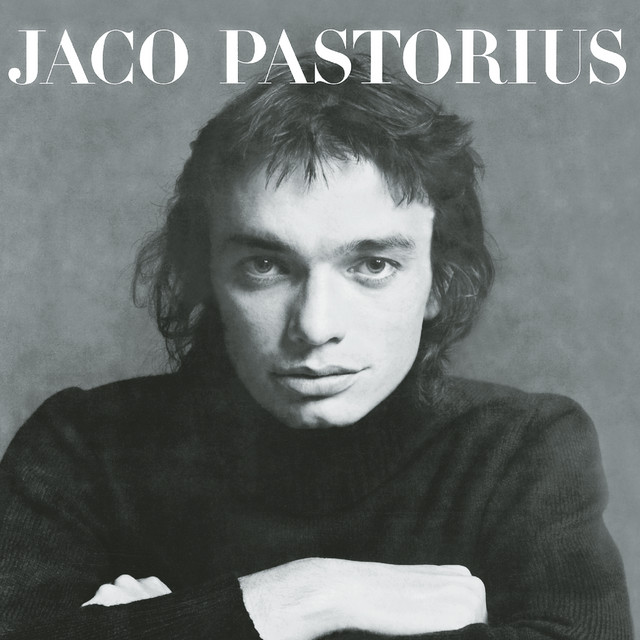
Jaco Pastorius
1976
Word Of Mouth
1981
![Invitation [Live] album cover](https://images.equipboard.com/uploads/album/image/411569/invitation-live.jpg)
Invitation [Live]
1983
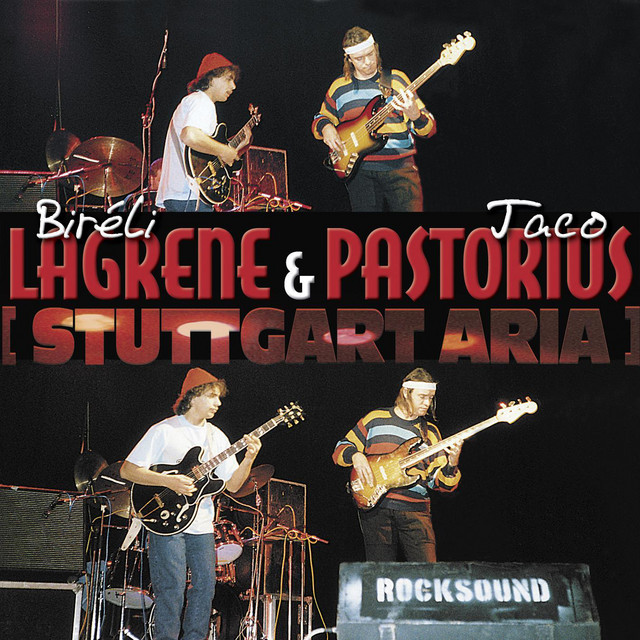
Stuttgart Aria
1986
Jazz Street
1989

Blackbird (Live)
1991
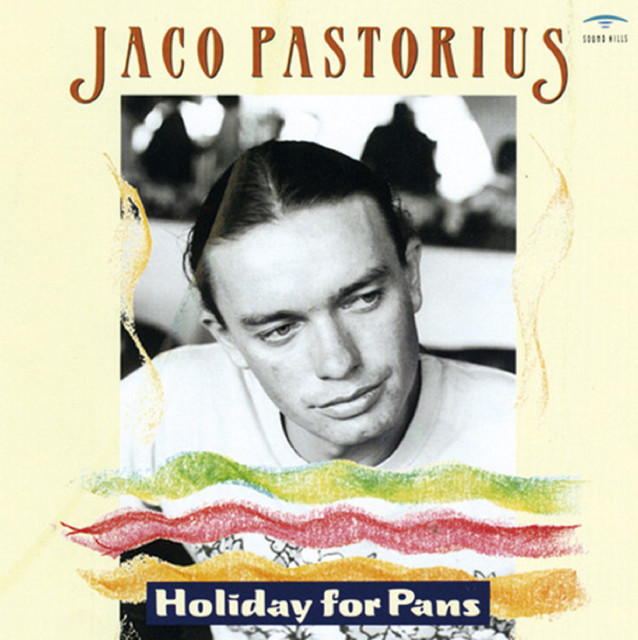
HOLIDAY FOR PANS
1993
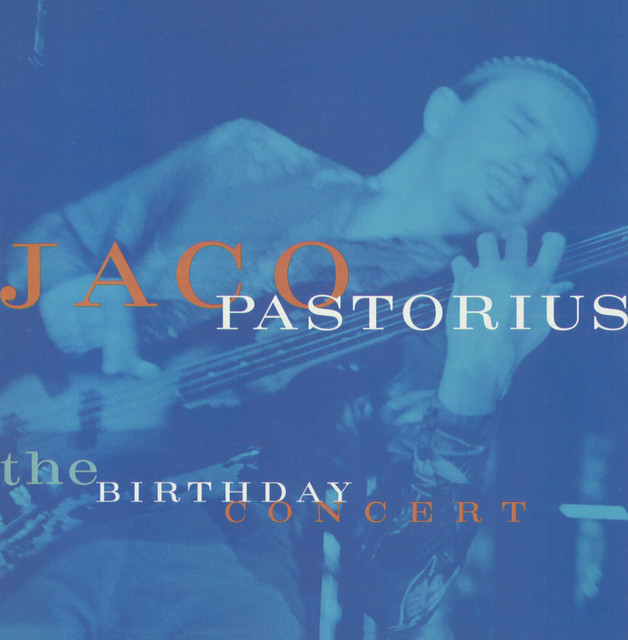
The Birthday Concert (Live at Mr. Pip's, Ft. Lauderdale, FL, 12/1/81)
1995
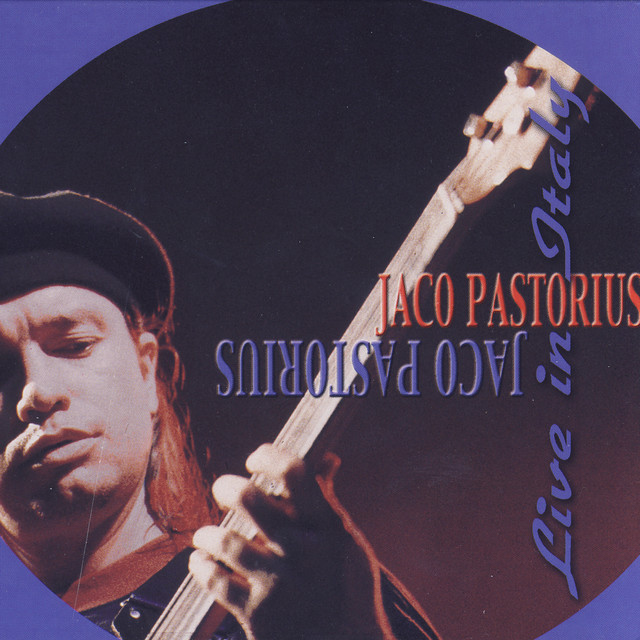
Live in Italy
1998
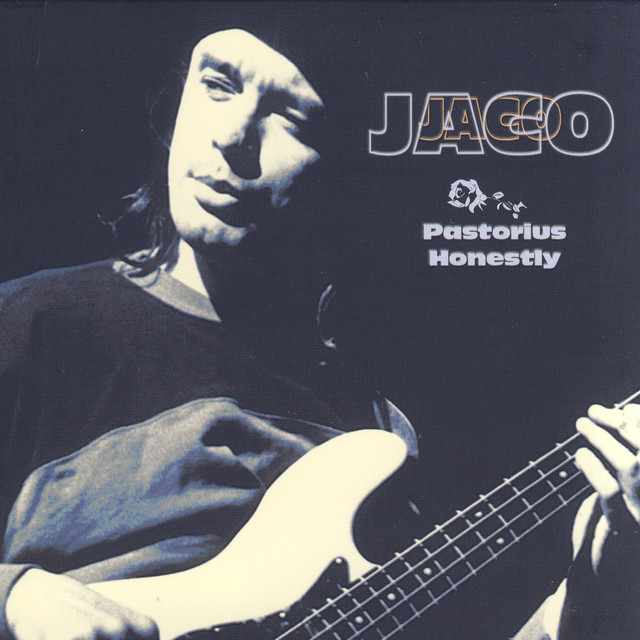
Honestly (Solo Live)
1998
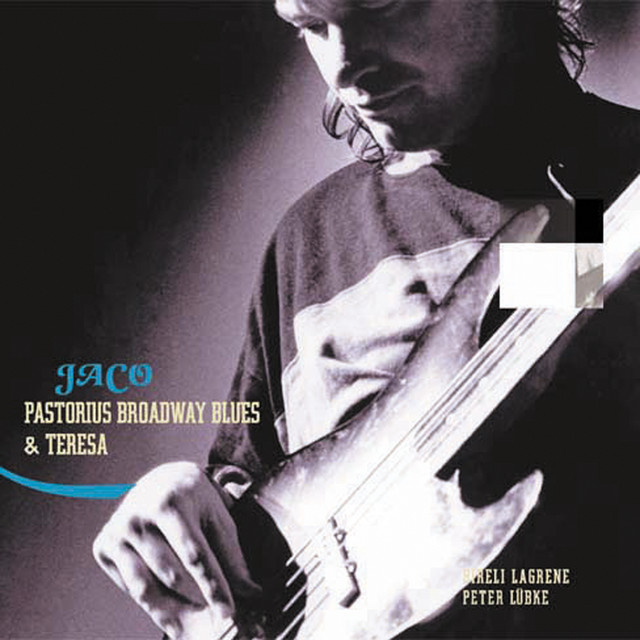
Broadway Blues
1999

Heavy'n Jazz (1999 Remaster)
1999
Album Credits
-
Jaco Pastorius · 1981
Producer








.webp)