.webp)
Table of Contents

Equipboard
Equipboard is the world's largest community of artists and their gear. Read our review process.
We are reader-supported. When you buy through links on our site, we may earn an affiliate commission. Learn more.
Few instruments have shaped modern music like the Fender Precision Bass and Jazz Bass. These iconic basses have defined the sound of countless genres and remain the gold standard for electric bass guitars. But which one fits your playing style? Let's explore their unique characteristics to help you make the right choice.
Historical Context
Understanding these instruments' origins provides valuable insight into their distinct personalities and approaches.
The Birth of the Precision Bass

In 1951, Leo Fender unveiled the Precision Bass (P-Bass), the world's first mass-produced electric bass guitar. Named for the precise intonation offered by its fretted neck, the P-Bass allowed bassists to play with unprecedented accuracy and consistency.
The original P-Bass featured a slab body similar to the Telecaster, eventually developing the split-coil pickup that became its signature feature. This design addressed a crucial need: allowing bass players to be heard clearly while providing a portable alternative to the upright bass. The P-Bass quickly became the foundation of modern popular music in rock and roll, country, and R&B.
Leo Fender's original design underwent a significant evolution in 1957 when it adopted a more contoured body style similar to the Stratocaster guitar. This redesign improved comfort and established the visual profile that remains largely unchanged today. The split-coil pickup design, which emerged as a solution to hum problems, became a defining element of the P-Bass sound, delivering a powerful, noise-free signal that cut through dense mixes.
By the late 1950s, the P-Bass had established itself as the professional standard. Its solid fundamental tone provided the perfect foundation for emerging rock and roll, while its fretted design democratized bass playing, making it accessible to musicians without years of specialized training.
The Jazz Bass Revolution
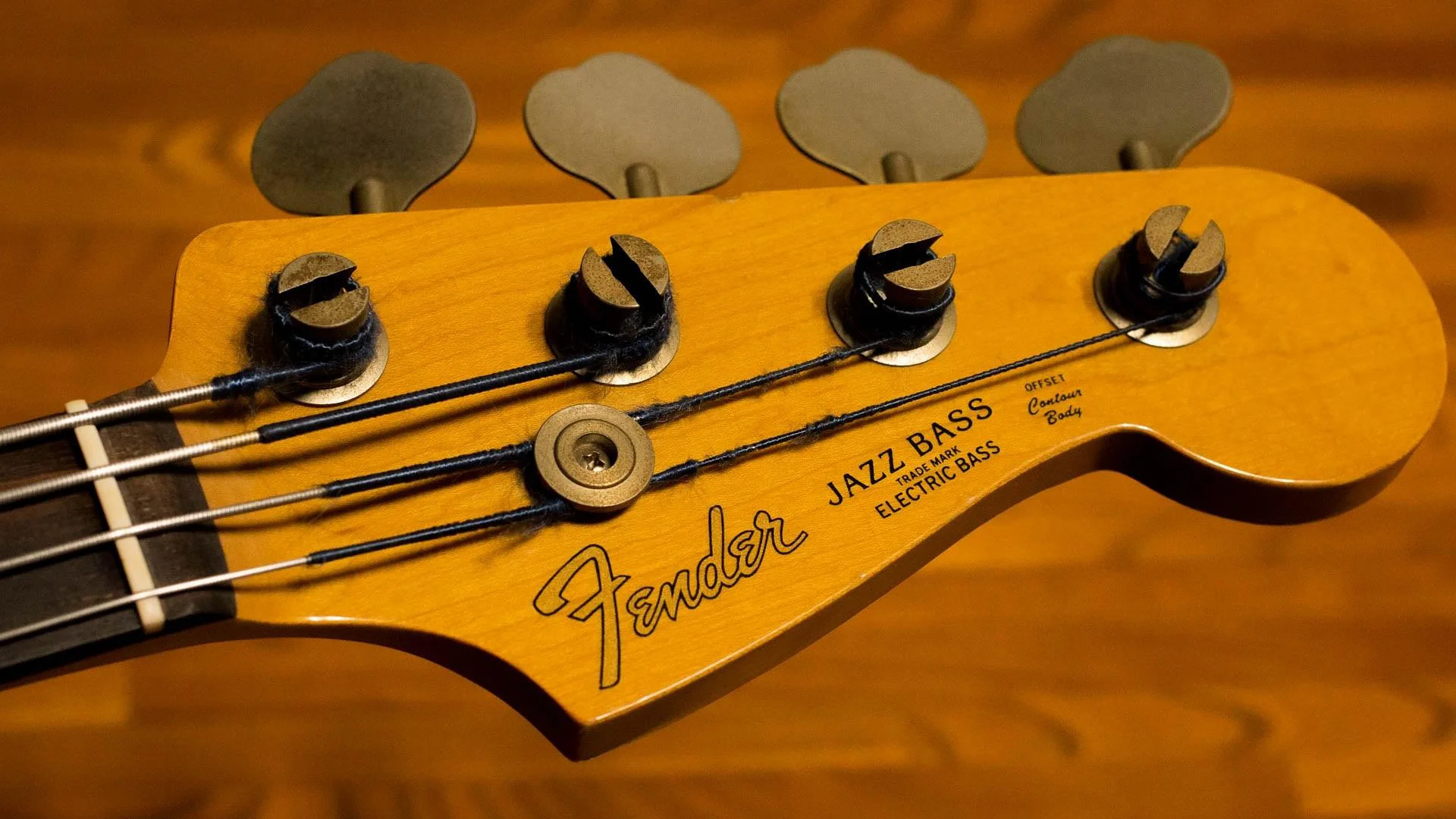
By 1960, Fender expanded their bass lineup with the Jazz Bass (J-Bass), designed for greater versatility and playability. It featured an offset waist body, a slimmer neck that tapered toward the nut, and two single-coil pickups for a wider range of tonal options.
Though initially marketed toward jazz musicians, the J-Bass gained popularity across virtually every genre thanks to its versatile sound and comfortable playability. The dual-pickup design reflected the evolving needs of professional musicians who required greater flexibility for complex playing styles.
By the mid-1960s, the J-Bass had found favor among forward-thinking musicians in rock, R&B, and funk who appreciated its articulate voice and comfortable playability.
Design & Construction
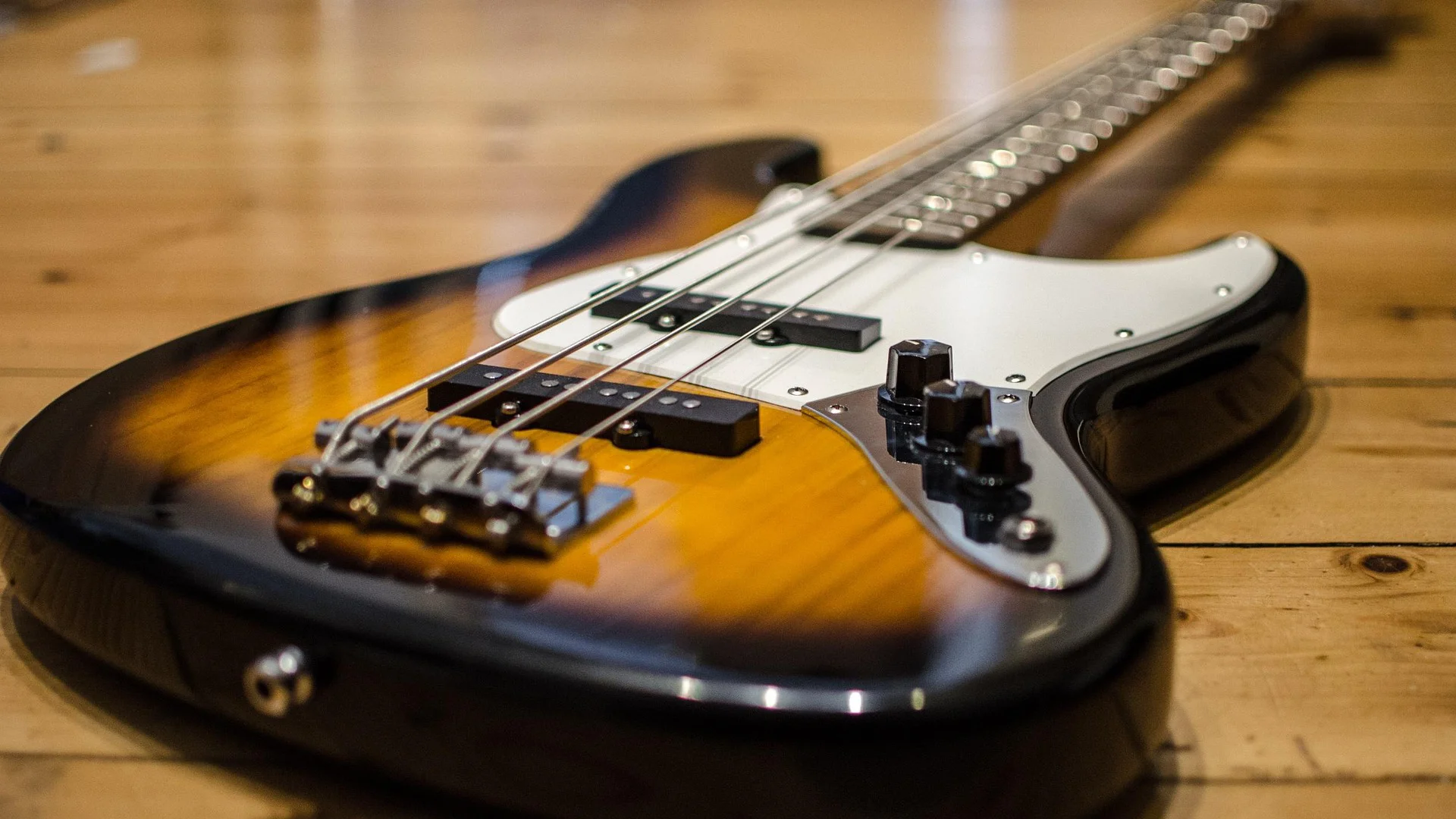
The physical characteristics of these two bass guitars contribute significantly to their distinct personalities and playing experiences.
Body Shape & Contours
The P-Bass features a symmetrical body shape with comfort contours added by 1957. These contours make the instrument more comfortable during long playing sessions. The P-Bass body has a classic, straightforward silhouette that's instantly recognizable.
Most P-Bass bodies are constructed from ash or alder, with ash generally providing a brighter tone with more pronounced highs and alder delivering a fuller midrange response. The body wood significantly influences the instrument's fundamental voice, providing the foundation upon which the electronics build.
The Jazz Bass features an offset waist design borrowed from the Jazzmaster guitar. This asymmetrical shape provides enhanced balance when playing in a seated position and feels sleeker and more ergonomic for active playing styles.
The J-Bass body design includes deeper cutaways that improve upper fret access, an important consideration for players who venture into the higher registers. Like the P-Bass, Jazz Bass bodies traditionally utilize ash or alder, though modern variants may incorporate alternative woods for different tonal characteristics.
Neck Profile & Dimensions
The most significant physical difference between these instruments lies in their neck profiles. The P-Bass typically features a wider neck (around 1.75 inches at the nut), providing more space between strings. This wider profile is particularly comfortable for players with larger hands.
P-Bass necks traditionally feature a "C" or "U" shaped profile that fills the player's hand. The wider string spacing at both the nut and bridge makes the P-Bass particularly well-suited to fingerstyle playing techniques that involve plucking between strings.
The Jazz Bass offers a slimmer neck that tapers from 1.5 inches at the nut to approximately the same width as the P-Bass at the 12th fret. This distinctive "C" to "D" shaped taper provides a more nimble feel that facilitates faster playing and makes complex techniques more accessible. The narrower nut width makes the J-Bass particularly appealing to guitarists transitioning to bass.
Both instruments typically feature maple necks, though the fingerboard material may be maple, rosewood, or other tonewoods depending on the specific model and era. The combination of neck taper and profile creates distinct playing experiences that influence technique and comfort.
Pickup Configuration & Electronics
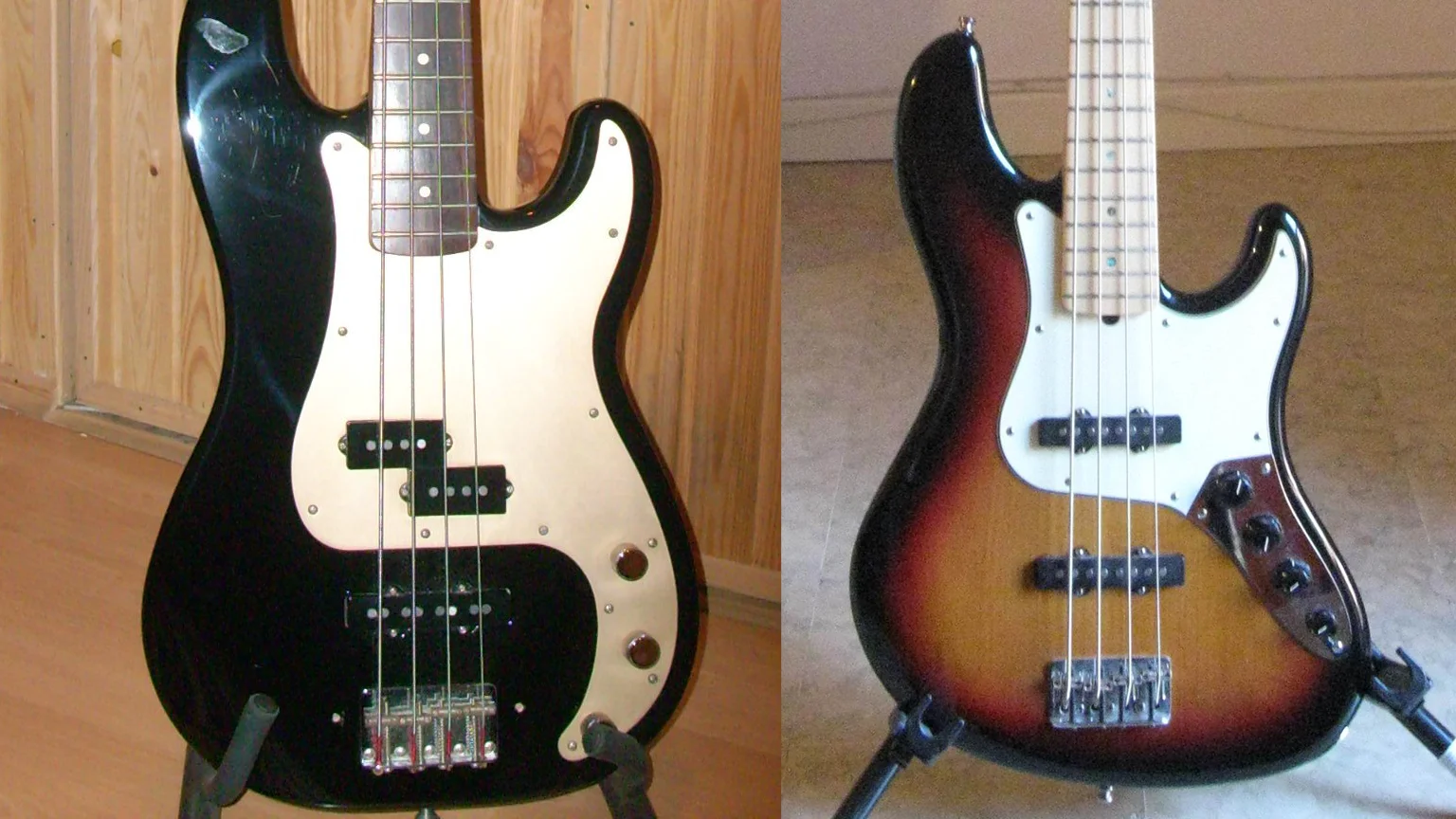
The P-Bass features a single split-coil pickup that helps cancel hum while delivering a characteristic thick, punchy tone. This pickup design provides excellent noise rejection while maintaining a focused frequency response that emphasizes the fundamental notes.
The standard P-Bass electronics are remarkably straightforward, typically featuring just a volume and a tone control. This simplicity contributes to the instrument's reputation for reliability. The streamlined control layout allows players to make quick adjustments without complex manipulation.
The Jazz Bass employs two single-coil pickups with separate volume controls for each plus a master tone control. This configuration offers a wider range of tonal possibilities through various blending options, allowing players to dial in precise sounds for different musical contexts.
The bridge pickup provides bright, articulate tones with pronounced treble definition, while the neck pickup delivers warmer, rounder sounds. By adjusting the balance between these pickups, players can access a spectrum of tonal colors from a single instrument, making the J-Bass particularly versatile.
Tonal Characteristics
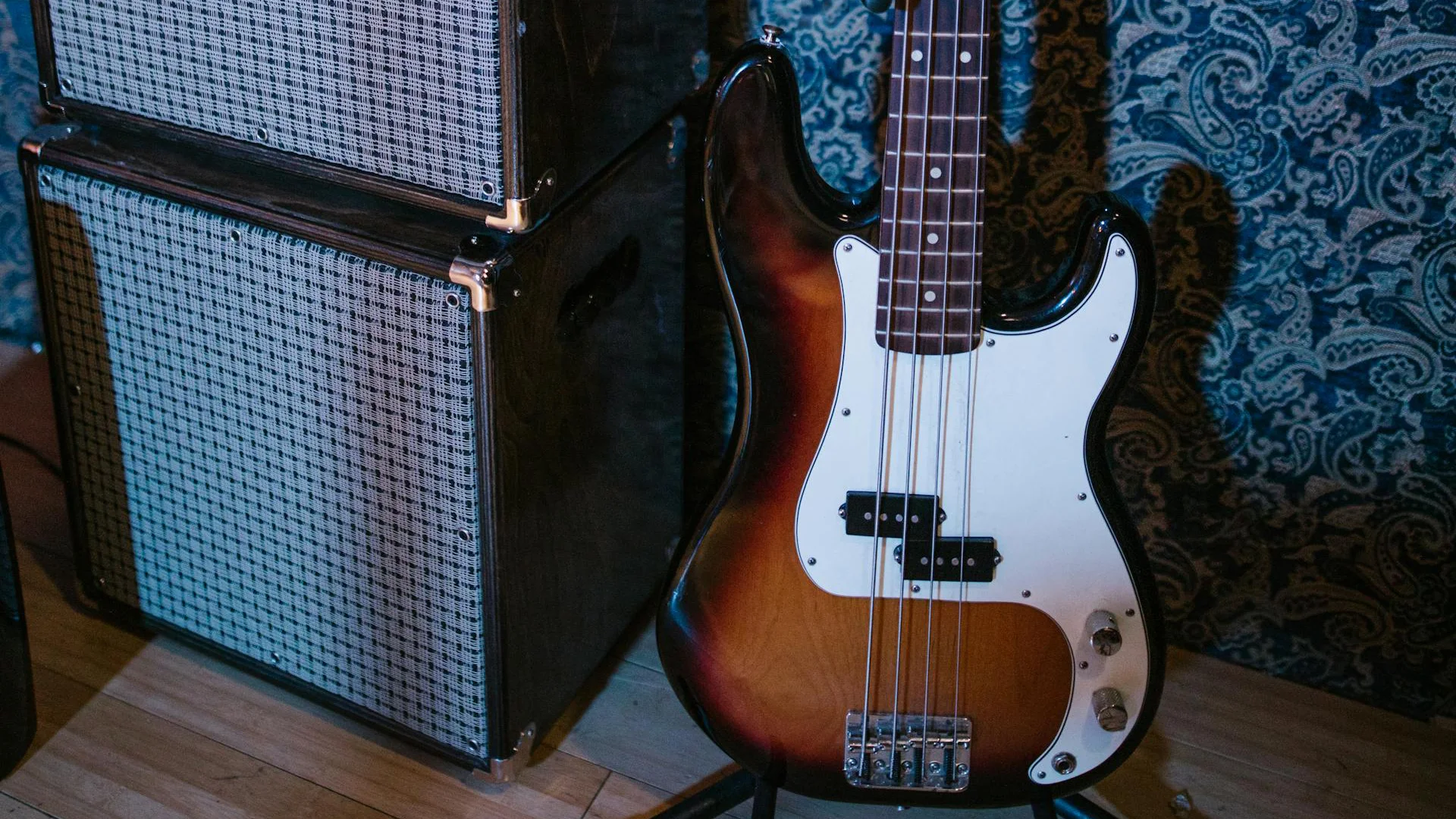
The sound is where these two legendary basses truly distinguish themselves, each offering a distinctive voice that has shaped countless recordings.
The Precision Bass Sound
The P-Bass delivers a thick, focused tone characterized by powerful midrange punch and substantial low-end authority. The split-coil pickup produces a remarkably balanced frequency response that emphasizes fundamental notes rather than harmonics, resulting in a sound that's fat, warm, and authoritative.
When played with a pick, the P-Bass produces a distinctive growl with excellent definition. With fingerstyle technique, it reveals a rounder, more vintage character with smooth sustain. The P-Bass excels at producing consistent, reliable tone that engineers and producers love for its predictable behavior in a mix.
One of the P-Bass's greatest strengths is its ability to maintain its essential character regardless of playing technique or musical context. Whether supporting a delicate ballad or driving an aggressive rock anthem, it provides a dependable sonic foundation that anchors the entire arrangement.
The Jazz Bass Sound
The Jazz Bass offers a more complex tonal palette with pronounced treble clarity and articulate midrange. Its dual pickup configuration provides a wider frequency spectrum with enhanced harmonic content and greater definition between notes.
The J-Bass tone has a more immediate attack and quicker decay than the P-Bass, resulting in greater note definition in fast passages. This responsiveness makes it particularly well-suited for complex playing styles and genres that demand tonal versatility.
Slap and pop techniques particularly benefit from the J-Bass's design, as its articulate sound highlights the percussive elements of these approaches. The well-defined attack and clear harmonic content make each note pop out of the mix.
Blend Capabilities
While the P-Bass offers a more singular voice, the J-Bass provides extensive tonal versatility through its dual pickup configuration. By adjusting the balance between pickups, players can access an impressive range of sounds, from vintage warmth to modern aggression.
Many players find that the tonal differences between these two basses actually inspire different approaches to playing.
Genres & Typical Usage
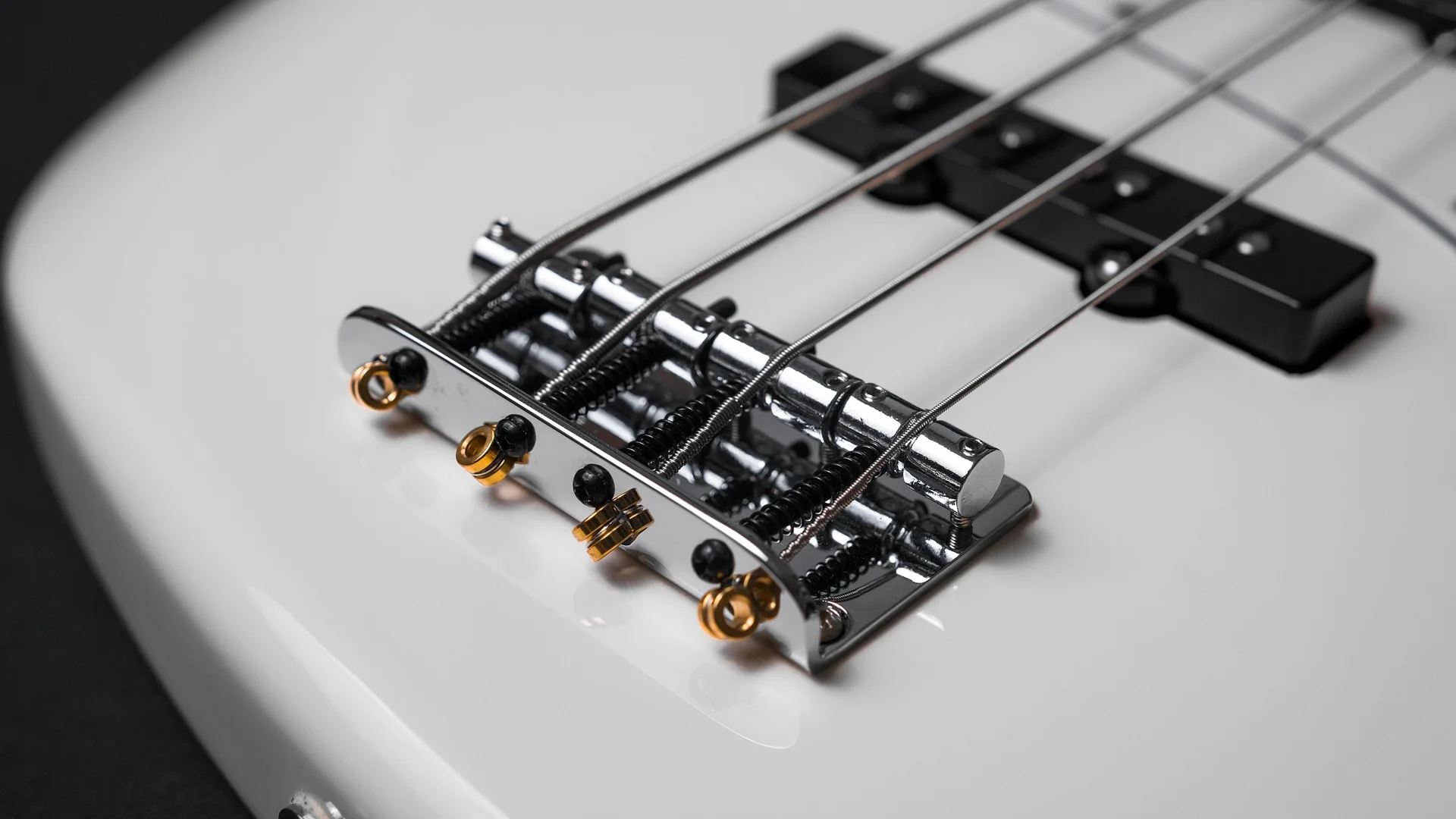
While both basses excel in virtually any musical context, each has developed associations with particular genres based on their unique characteristics.
Precision Bass Territory
The P-Bass found its first home in early rock and roll with artists like Donald "Duck" Dunn and Bill Wyman utilizing its robust midrange presence to establish the role of electric bass in rock music.
In the Motown era, the P-Bass became essential for session legends like James Jamerson, whose pioneering melodic bass lines benefited from the instrument's warm tone and substantial low-end support. Jamerson's sophisticated, syncopated parts defined an entire era of popular music.
The punk movement embraced the P-Bass for its straightforward reliability. Players like Dee Dee Ramone and Paul Simonon of The Clash demonstrated how it could deliver raw power and attitude. The instrument's ability to cut through dense, distorted guitar arrangements made it ideal for punk's high-energy approach.
Metal bassists like Steve Harris of Iron Maiden favor the P-Bass for its ability to cut through heavily distorted guitar tones. Harris's galloping eighth-note patterns showcase how the P-Bass can maintain clarity and punch even in the most aggressive musical contexts.
Jazz Bass Specialties
Fusion pioneers like Jaco Pastorius showcased the J-Bass's potential for jazz through technical innovation and creative modification. Pastorius famously removed the frets from his Jazz Bass and coated the fingerboard with epoxy to create his distinctive "Bass of Doom," which became the voice for his revolutionary approach to the instrument.
Funk music provided fertile ground for the Jazz Bass, with players like Larry Graham developing slap techniques that took advantage of its bright attack and enhanced harmonic content. Graham's work with Sly and the Family Stone established the slap bass technique that would influence countless players.
Progressive rock bassists like Geddy Lee of Rush and Chris Squire of Yes gravitated toward the Jazz Bass for its clear articulation in complex arrangements. Both players leveraged the instrument's inherent clarity to execute intricate parts that functioned as countermelodies.
In modern alternative rock, the Jazz Bass has found favor with players like Kim Gordon of Sonic Youth and Kim Deal of Pixies. Gordon's experimental approach showcased the J-Bass's potential for textural playing, while Deal's melodic sensibility highlighted the instrument's capacity for memorable bass lines.
The Jazz Bass shines in contexts that demand tonal flexibility and expressive range, particularly when the bass takes on a more prominent melodic role.
Notable Artists & Signature Models

Many influential players have collaborated with Fender to create signature models that reflect their unique approaches.
Precision Bass Icons
James Jamerson's fluid, melodic playing on countless Motown hits demonstrated the P-Bass's soulful potential. Fender later created tribute instruments honoring his revolutionary approach to bass playing.
Steve Harris of Iron Maiden is instantly recognizable with his West Ham United-decorated P-Bass. His signature model features wide spacing between pickup and bridge, mirror pickguard, and high-output pickup configuration.
Mike Dirnt of Green Day has a signature P-Bass designed to capture his aggressive playing style while maintaining clarity and punch. The model includes a specially voiced pickup that emphasizes the midrange frequencies crucial to punk's cutting bass sound.
Duff McKagan from Guns N' Roses has a signature model featuring a jazz bass neck on a P-Bass body, an interesting hybrid approach that demonstrates how elements from both designs can be combined.
Jazz Bass Legends
Jaco Pastorius revolutionized bass playing with his fretless Jazz Bass. Fender's Jaco Signature Jazz Bass recreates his distinctive fretless fingerboard and urethane-coated finish, allowing players to explore his innovative techniques.
Marcus Miller's signature Jazz Bass features a preamp designed for his percussive slap technique and melodic soloing style. With its distinctive jazz pickguard and premium tonewoods, Miller's model has become a favorite among players seeking enhanced tonal flexibility.
Geddy Lee's signature Jazz Bass has become one of Fender's most popular artist models, featuring a thin neck profile and high-output pickups for bright, articulate tone. Lee's technical facility and melodic creativity demonstrate how the J-Bass can handle complex parts while maintaining clarity.
Flea's active Jazz Bass features modifications for enhanced output and midrange presence while retaining the classic J-Bass feel. His energetic, funk-influenced playing with Red Hot Chili Peppers showcases the instrument's capacity for both technical slap passages and melodic fingerstyle playing.
Playability & Comfort

The physical experience of playing these two basses can be substantially different, and for many musicians, comfort factors ultimately prove more decisive than tonal considerations.
Neck Profile Comparison
The P-Bass typically features a wider neck with more space between strings. This design provides ample room for fingerstyle playing and helps prevent accidentally hitting adjacent strings, a significant advantage for beginners still developing their technique.
The typical P-Bass neck has a shoulder profile that fills the player's hand more completely than its Jazz Bass counterpart. This fuller shape provides excellent support for the thumb when playing traditional fingerstyle bass. Many players with larger hands find this design more comfortable for extended use.
The Jazz Bass neck's distinctive taper becomes narrower as you approach the headstock. This profile allows for greater speed and flexibility, particularly when playing complex passages. Many players with smaller hands or those transitioning from guitar find the J-Bass neck more accommodating for technical playing.
Some players describe the feeling of the J-Bass neck as more "fast" or "sleek" compared to the P-Bass, noting that it encourages exploration of the entire fingerboard rather than focusing on the lower positions.
Weight Distribution & Ergonomics
The P-Bass typically has a balanced feel when played standing, with less tendency toward "neck dive" than many other bass designs. This stable weight distribution helps reduce shoulder strain during extended performances.
The body contours of the P-Bass provide comfort against the torso, with the forearm cutaway preventing edge pressure during extended playing. These ergonomic features significantly improved the playing experience compared to the original slab-bodied model.
The Jazz Bass's offset body creates a more natural playing position, particularly when seated, as the bass rests comfortably on the right thigh. This design feature was specifically intended to improve ergonomics for seated players.
Upper fret access is slightly better on most Jazz Bass models due to the offset body cutaway design, allowing easier reach to the highest positions of the fingerboard. The deeper cutaways of the J-Bass body improve access to the upper registers, benefiting players who frequently venture beyond the 12th fret.
Pros & Cons Of Both Models

When deciding between these two iconic instruments, considering their relative strengths and limitations can help clarify which model might better serve your musical goals.
| Model | Pros | Cons |
|---|---|---|
| Precision Bass | • Focused, punchy tone that sits well in a mix • Excellent noise rejection from split-coil pickup • Wider neck comfortable for larger hands • Simple, intuitive controls • Consistent sound that engineers love | • Limited tonal variety • Wider neck challenging for smaller hands • Less comfortable for seated playing • Not as well-suited for slap techniques • Less upper fret access |
| Jazz Bass | • Versatile tone from dual-pickup configuration • Slimmer neck profile for faster playing • Ergonomic offset body shape • Better upper fret access • Ideal for slap and advanced techniques | • Single-coil pickups susceptible to noise • More complex control layout • Narrower string spacing can feel cramped • Brighter tone may need EQ adjustment • Can be less forgiving for beginners |
Choosing the Right Bass for You

With a clear understanding of both instruments, the question remains: which one is right for you? This decision ultimately comes down to personal preference, musical goals, and practical considerations.
Playing Style Considerations
If your playing emphasizes groove and pocket with consistent, powerful bass lines, the P-Bass's focused sound and stable feel might better serve your approach. Its natural compression and midrange presence help establish a solid foundation that supports the band.
If your style incorporates more technical elements like fast runs, slap techniques, or melodic solo work, the J-Bass's responsive character and versatile tonal options could provide more room for expression. The accessibility of upper registers and enhanced articulation support more adventurous playing.
Consider how you physically approach the instrument. Fingerstyle players who dig in with force often prefer the P-Bass's wider string spacing, while those employing lighter touch techniques might find the J-Bass more responsive to subtle nuances.
Musical Context
For traditional styles like classic rock, country, punk, or blues, the P-Bass's authentic vintage character might be particularly appropriate both sonically and visually. Its focused midrange punch and consistent output have defined these genres since their inception.
For fusion, funk, progressive genres, or modern alternative styles, the Jazz Bass's expanded tonal palette could better serve your musical objectives. Session players often gravitate toward the J-Bass for its versatility across multiple genres.
In guitar-heavy settings, the P-Bass's midrange focus helps carve out a distinct space in the mix. In sparser arrangements where the bass takes on a more prominent role, the J-Bass's enhanced clarity might better showcase your playing.
The Hybrid Option
If you're torn between these two classic designs, consider hybrid options that combine elements of both instruments. The P/J configuration featuring a P-Bass neck pickup and a J-Bass bridge pickup has become increasingly popular for its versatility.
Recommended Accessories & Gear Pairings
The right supporting gear can enhance your instrument's natural strengths and mitigate any limitations.
Amplification Choices
For the Precision Bass, amplifiers with robust midrange presence and controlled low-end response complement the instrument's natural characteristics. Traditional tube amps like the Ampeg SVT series enhance the P-Bass's warm, vintage quality.
The Jazz Bass pairs well with more modern, full-range amplification that can accurately reproduce its extended frequency response. Amps with graphic or parametric EQ options give J-Bass players flexibility to shape their tone precisely.
String Selection
For the P-Bass, flatwound strings enhance its vintage character and smooth response, ideal for traditional styles and recording situations where minimizing finger noise is important.
Roundwound strings bring out the Jazz Bass's natural brightness and articulation, particularly benefiting slap techniques and contemporary playing styles. Stainless steel varieties provide maximum treble response and extended sustain.
Effects Considerations
The P-Bass's focused midrange and consistent output make it particularly responsive to compression and overdrive effects, which can enhance its natural punch without sacrificing clarity.
The Jazz Bass's complex harmonic content pairs effectively with modulation effects like chorus and envelope filters. Its extended high-frequency response makes it well-suited for octave and synth effects that rely on clean tracking.
Conclusion

The Precision Bass and Jazz Bass represent two distinct approaches to the electric bass, each with its own sonic personality, feel, and historical significance. They're complementary instruments that have collectively shaped the sound of modern music across virtually every genre. Here is a summary of all the key differences between these two landmark bass guitar models.
| Feature | Precision Bass | Jazz Bass |
|---|---|---|
| Tonal Character | Thick, punchy, focused midrange | Articulate, versatile, brighter |
| Neck Profile | Wider (1.75" at nut), more substantial | Tapered (1.5" at nut), slimmer |
| Body Design | Symmetrical, balanced | Offset waist, ergonomic |
| Pickups | Single split-coil, hum-cancelling | Two single-coils, blend options |
| Controls | Simple: volume, tone | Complex: two volumes, master tone |
| Classic Genres | Rock, punk, country, metal | Funk, fusion, prog, alternative |
| Playing Styles | Fingerstyle, pick, foundational | Slap, technical, melodic |
| Best For | Players valuing consistency, punch | Players seeking versatility, speed |
There's no objectively "right" answer when choosing between them, only the bass that better aligns with your preferences, physical comfort, and musical goals. Many players develop a preference for one design, while others maintain both to access their unique strengths.
The best approach is to play both extensively if possible, paying attention to how each instrument feels in your hands and inspires your musical ideas.
Top Ranked Electric Basses on Equipboard

-m.webp?v=1785250797)

-m.webp?v=1785250782)

About the authors

S. Jino is an accomplished multi-instrumentalist and music producer based in Kolkata, India, distinguished by his self-taught mastery and unique blend of technical acumen and musical performance. His extensive experience was forged through hands-on dedication, starting with the full restoration of a broken guitar. Jino's capabilities span keyboards, pedals, and advanced digital production, reflecting a comprehensive skill set developed independently. As a significant contributor to the music scene, Jino regularly performs with worship bands and college ensembles. He has also established himself as a reliable and authoritative professional in freelance mixing, mastering, and original music creation. Inspired by the innovative sounds of Brian May and David Gilmour, and influenced by Kolkata's vibrant metal community, Jino is committed to the intricate art of vintage gear restoration and the continuous exploration of music and technology fusion. His current professional setup, featuring a meticulously restored nameless guitar, a Fender Player Strat, and a Boss Katana 50. Read more
New in Electric Basses

$1,149.99 - $1,199.00

$6,950.00 - $20,000.00

$661.00 - $779.00

$600.00 - $849.00

$1,899.00 - $2,199.00

$1,259.00 - $1,499.99

$3,899.00 - $4,980.00

$2,555.00 - $2,699.99


$2,769.00 - $2,899.99


$849.99 - $1,099.99


$1,785.00 - $2,499.00
in Electric Basses Rank


$1,175.00 - $1,249.99

$4,424.16 - $4,750.00