
Synkro
dubstep producer Joe McBride
Synkro's Gear


I try to keep the music as natural as I can, with as little editing or over-processing as possible. A lot of the melodic parts are all synth jams that I created using my Roland Juno-6, a Roland SH-101 and the Yamaha QY700 sequencer before I gradually started tracking into Ableton and putting percussive elements on top.
Find it on:


I’ve got a Roland JX-8P that I use quite a lot for basslines and a couple of Casio keyboards, including a HT-700.
Find it on:


Not really; I use audio effects plug-ins a bit but, again, only a really minimal selection. I’ve really been getting into the Max For Live granular plugins, which make my analogue synths sound absolutely mental. They make the most basic sounds ridiculously complex just by taking them apart and throwing them back together in a random order.
Find it on:

I try to keep the music as natural as I can, with as little editing or over-processing as possible. A lot of the melodic parts are all synth jams that I created using my Roland Juno-6, a Roland SH-101 and the Yamaha QY700 sequencer before I gradually started tracking into Ableton and putting percussive elements on top.
Find it on:


“Previously, I was using the standard Akai tape deck, but I’ve just bought a Tascam Portastudio 4-track, so if something sounds too clean or digital I’ll just run it through tape and resample it. I’ve also got a Korg Monotron Delay, so I’ll literally run stuff through that – they’re only £35.
Find it on:

There’s this one called Granular To Go, which is meant to be one that you just put on and hope for the best, but if you actually get your head around it you can make it do what you want it to do. I also use the Max for Live LFO plugin a lot, Audio Damage Kombinat, which is quite an old distortion unit, and the TAL delay plug-ins. I’m a big supporter of free plug-ins and lo-fi.
Find it on:

There’s this one called Granular To Go, which is meant to be one that you just put on and hope for the best, but if you actually get your head around it you can make it do what you want it to do. I also use the Max for Live LFO plugin a lot, Audio Damage Kombinat, which is quite an old distortion unit, and the TAL delay plug-ins. I’m a big supporter of free plug-ins and lo-fi.
Find it on:


The Microkorg is displayed numerous times throut the video. Example: 4:11
Find it on:

At 0:15. Akai MPD 26
Find it on:

I try to keep the music as natural as I can, with as little editing or over-processing as possible. A lot of the melodic parts are all synth jams that I created using my Roland Juno-6, a Roland SH-101 and the Yamaha QY700 sequencer before I gradually started tracking into Ableton and putting percussive elements on top.
Find it on:
-m.webp?v=1784213854)
I try to keep the music as natural as I can, with as little editing or over-processing as possible. A lot of the melodic parts are all synth jams that I created using my Roland Juno-6, a Roland SH-101 and the Yamaha QY700 sequencer before I gradually started tracking into Ableton and putting percussive elements on top.
Find it on:

“There’s a big trend of people using vinyl crackle in electronic production when they don’t even own a piece of vinyl. When you hear a vinyl crackle in my tune, it’s usually because it’s come from vinyl. It goes back to the Jungle era; people like LTJ Bukem, Photek and Source Direct, all those records come from other records, through an Akai S1000, 2000 or 950 sampler. I like paying homage to the original production techniques that got me into this game in the first place.”
Find it on:

“There’s a big trend of people using vinyl crackle in electronic production when they don’t even own a piece of vinyl. When you hear a vinyl crackle in my tune, it’s usually because it’s come from vinyl. It goes back to the Jungle era; people like LTJ Bukem, Photek and Source Direct, all those records come from other records, through an Akai S1000, 2000 or 950 sampler. I like paying homage to the original production techniques that got me into this game in the first place.”
Find it on:

“Previously, I was using the standard Akai tape deck, but I’ve just bought a Tascam Portastudio 4-track, so if something sounds too clean or digital I’ll just run it through tape and resample it. I’ve also got a Korg Monotron Delay, so I’ll literally run stuff through that – they’re only £35.
Find it on:

In an interview with MusicRadar, Synkro discusses his use of the Korg Volca Keys in his Manchester studio. He describes experimenting with the Volca Keys by running its sounds through the Monotron Delay, achieving effects reminiscent of raw tape saturation or compression.
Find it on:


I’ve got a Roland JX-8P that I use quite a lot for basslines and a couple of Casio keyboards, including a HT-700.
Find it on:

In a feature on MusicRadar, there's a photo of Synkro using the Ableton Push in his Manchester studio.
Find it on:

In a MusicRadar feature on Synkro's Manchester studio, a DR TONE Analog Delay is visible among his equipment, illustrating its role in his music production setup.
Find it on:

In a feature by MusicRadar, Synkro is shown using a Korg nanoKONTROL2 in his Manchester studio.
Find it on:

In a feature on MusicRadar, Synkro's Manchester studio is showcased, where an Akai MPK Mini Laptop Production Keyboard is visible on his desk.
Find it on:
This is a community-built gear list for Synkro.
- Find relevant music gear and add it to Synkro.
- The best places to look for gear usage are typically on the artist's social media, YouTube, live performance images, and interviews.
- To receive email updates when Synkro is seen with new gear, follow the artist.
Discography

Album Credits
-
Synkro & Arovane & Marenn Sukie · 2019
Producer -
Synkro · 2018
Producer -
Synkro · 2018
Producer -
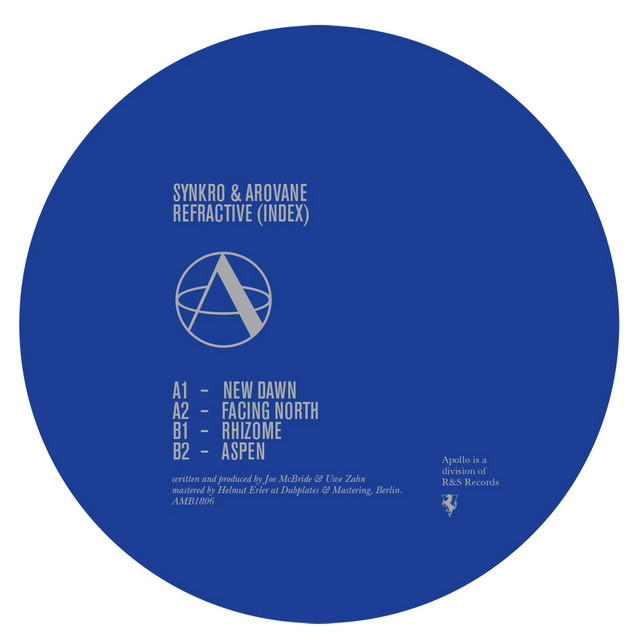
Synkro & Arovane · 2018
Producer -
Synkro · 2017
Producer


