Tony Huerta
Tony Huerta's Gear


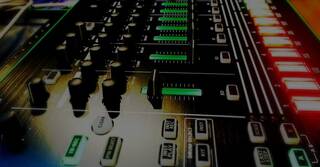
In the attached video, Tony Huerta talks in detail about his use of the M-200i with Take 6, his reasons for using it (from portability to quality), and talks about how Take 6 loves the mixer, as well.
Find it on:


In the attached blog post from Roland, Tony Huerta and his work with Vocalosity are highlighted, and his use of the M-5000 and R-1000 are discussed. "The M-5000 is manned by touring veteran and Sonic Audio owner Tony Huerta, using it to mix FOH and monitors, even as he also acts as Tour Director and recording engineer, multitracking each night’s show through the Roland R-1000 48 Channel Recorder and using those tracks for virtual sound checks that make the pre-show process quick and efficient."
Find it on:

In the attached blog post from Roland, Tony Huerta and his work with Vocalosity are highlighted, and his use of the M-5000 is discussed at length. "The M-5000 is manned by touring veteran and Sonic Audio owner Tony Huerta, using it to mix FOH and monitors, even as he also acts as Tour Director and recording engineer, multitracking each night’s show through the Roland R-1000 48 Channel Recorder and using those tracks for virtual sound checks that make the pre-show process quick and efficient." Huerta goes on to share that, “Overall, the M-5000 lets me do it all from one position. I built the show on the console before we even went on tour. It’s like one of the performers.”
Find it on:

In the attached article from Roland's website, it's mentioned that "Vocalosity Technical Director and Front-of-House Engineer Tony Huerta helms an entire Roland REAC system that also includes one Roland S-2416 24 x 16 digital snake stage unit...". The snakes are used in conjunction with the M-5000 OHRCA.
Find it on:

In the About section of Huerta's studio's website, the following is stated: "We are a full service ProTools recording studio & live sound production company based in Denver, CO."
More about Huerta's specific involvement in the company can be found here: http://www.sonicaudiopro.com/about/tonyhuerta/
Find it on:


In this in depth article and interview with Tony Huerta discussing recording and mixing a cappella, he states, "I have tried every microphone possible to find the perfect vocal kick sound and have found that microphones designed for a real kick work the best and provide the EQ I need. Specifically the Audix D6 or Beyer M88."
Find it on:

In this in depth article and interview with Tony Huerta discussing recording and mixing a cappella, he states, "I have tried every microphone possible to find the perfect vocal kick sound and have found that microphones designed for a real kick work the best and provide the EQ I need. Specifically the Audix D6 or Beyer M88."
Find it on:



In this article and interview with Tony Huerta detailing his process of recording and mixing a cappella, he shares, "I choose between several different microphones for the [vocal/beatbox] snare; usually dynamic instrument mics that I’d usually use on a real snare or on congas in a live show. I have used the Shure Beta 57, SM57, and a special SM57 with Gaff tape around the head, it changes the characteristics slightly and gets a cool body tone."
Find it on:

In this article and interview with Tony Huerta detailing his process of recording and mixing a cappella, he shares, "I choose between several different microphones for the [vocal/beatbox] snare; usually dynamic instrument mics that I’d usually use on a real snare or on congas in a live show. I have used the Shure Beta 57, SM57, and a special SM57 with Gaff tape around the head, it changes the characteristics slightly and gets a cool body tone."
Find it on:

In this article and interview with Tony Huerta detailing his process of recording and mixing a cappella, he shares, "To capture the rest of the sound coming off the artist, I use two DIFFERENT high-quality overhead condenser microphones... I use a Shure KSM 32 on one side and a Rode NT5 on the other."
Find it on:

In this article and interview with Tony Huerta detailing his process of recording and mixing a cappella, he shares, "To capture the rest of the sound coming off the artist, I use two DIFFERENT high-quality overhead condenser microphones... I use a Shure KSM 32 on one side and a Rode NT5 on the other."
Find it on:


In the attached article diving into Tony Huerta's process of recording and mixing a cappella, he shares in respect to live mixing, "I prefer vocal basses to use Shure’s Beta 58 or the Sennheiser 845/945 capsule. I NEVER use a condenser mic on [live] bass! NEVER! The capsules can’t handle the close plosives or SPL without coloring the final signal. Dynamic microphone coils can reproduce those needs sub frequencies with a more true sound."
Find it on:

In the attached article diving into Tony Huerta's process of recording and mixing a cappella, he shares in respect to live mixing, "I prefer vocal basses to use Shure’s Beta 58 or the Sennheiser 845/945 capsule. I NEVER use a condenser mic on [live] bass! NEVER! The capsules can’t handle the close plosives or SPL without coloring the final signal. Dynamic microphone coils can reproduce those needs sub frequencies with a more true sound."
Find it on:
This is a community-built gear list for Tony Huerta.
- Find relevant music gear like Microphones, Studio Equipment, Software Plugins and VSTs, Headphones, Studio Monitors, Mixers, DAWs, and other instruments and add it to Tony Huerta.
- The best places to look for gear usage are typically on the artist's social media, YouTube, live performance images, and interviews.
- To receive email updates when Tony Huerta is seen with new gear, follow the artist.
-
Added to Equipboard on by
 ttinari
GearIQ 8326
-
Updated