
zachariah_connor's Reviews
16 reviews Back to zachariah_connor's Equipboard

230
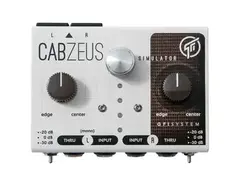
Good option for playing amp-less
This is a speaker simulator. It works well, but if you run your drive pedals directly into it, you can tell that the tone is missing a pre-amp or power amp sound
230
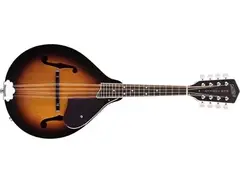
One of the best mandolins ever. For under $200
It sounds better than any other mandolin I've ever played. Plus the onboard pickup makes playing live easy!
230
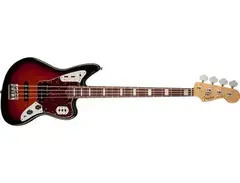
Beautiful Bass
Not a big fan of the active circuit on board, but the passive settings sound massive and beautiful. This bass sounds and plays excellently, plus it looks amazing. Unfortunately, due to the short upper horn, it is neck heavy.
230
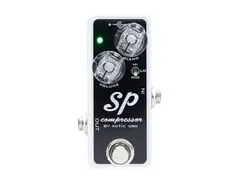
Best Budget Compressor
This pedal makes everything sound better on subtle settings, and slide playing effortless at ridiculous settings. Plenty of versatility with the mix knob, if you don't like compressors, try this one
230
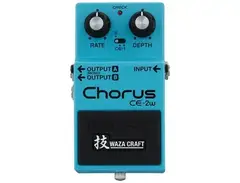
The BEST Chorus/Vibrato
This pedal has the best chorus and vibrato sounds of the classic Boss CE-1 and CE-2, it is easy to use, and sounds so freaking good. Just buy it. You won't be dissapointed
230
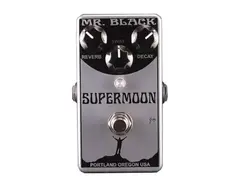
Massive Reverb
A beautiful, versatile, haunting reverb capable of 30 seconds of decay, 100% wet mix, and deep intense modulation. Can be used for more subtle hall like settings or for crazy, cavernous pitch shifting. The difference between the Supermoon Chrome and the regular Supermoon, is that the Chrome mix goes 100% wet and has a longer decay. Definitely a must have for reverb lovers
-s.webp?v=1784473083)
230
A steal
Plays and feels amazing, plus mine has lots of birds eye on the neck. Upgraded with Mastery Bridge and The Creamery Pickups
230
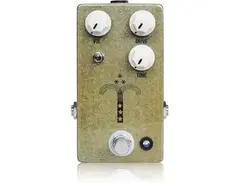
The Foundation
I own the JHS Morning Glory version 4, and have been using a version 3 for several months now; this pedal stays on almost all of the time. I usually prefer more gritty/crispy drive tones, but I kept this pedal because it really excels at bringing brightness and touch of grit to one's tone like nothing else does. It sounds very natural at low gain, winding it up sounds more like a smoother, much more transparent tube screamer, which isn't really all that exciting.Using the V4's gain switch, it's a little more crisp and sustaining. Don't worry, if you liked the last MG, you'll love the new one. The output volume is more usable, and the gain switch adds flexibility. All the original tones are here along with some dirtier ones. Issues? I like to have access to the bright cut switch, and now that it is on the side of the pedal, it is hard to quickly flick it as before. Also if you have the pedal in high gain mode, and turn the gain past 3 o'clock, you can hear this dirty, almost digital sounding scraping noise in the background, that decays in a very unnatural fashion. I thought this was just my pedal, but after listening to the JHS demo, I heard it there too, and there were careful not to turn up the gain past 2 o'clock. Now for what I use it for, I never have to go up there, but in care you were planning on using the MG for higher gain, you have been warned. On bass Like the V3, the V4 excels on bass adding compression, clarity, and light grit without losing low end. The gain problem isn't really an issue for the bass user, so the only issue that remains for bassists is the price and the bright cut switch location.
230
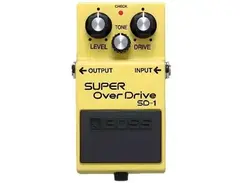
Super Booster
When I purchased this pedal at the age of 16, I thought it would sound like real tube breakup. From what I heard on the internet, this seemed true. However, if you are looking to run this into a clean amp and expect a sound like a turned up amp, be prepared to be surprised. This pedal has been around forever, and it basically is the Boss version of a tube screamer. Both of which sound like clean signal blended with a dark, smooth, and very distant compressed dirt. Some really enjoy this tone, but to my ears it sounds very fake and weird. Now, an amp can be dialed in a way to make it sound good on its own, but most other overdrives (besides tube screamers) won't sound ideal with the same settings. However, once the amp is opened up, or it is stacked with another pedal after it, it comes into its own as a tightener and booster. The mid hump of the SD-1 cuts out the mud, keeping things from becoming flabby. The mids pop, and the top end is boosted as well, just not in a harsh way. If you run it into a dirty amp, adding the Super OverDrive pushes it into that perfect solo tone. Every. Time. The tone control has a good range, but it would be nice to have a separate bass control.There really should be more output volume for a pedal of this purpose, but tube screamers also are weak in this department. Overall, the SD-1 can be used as a main/stage 1 overdrive in a pinch, but for $50, almost nothing beats the immortal SD-1 as a booster. It has a great buffer, will outlive your fingers, and is virtually indestructible.
230
The Reason True Bypass Exists
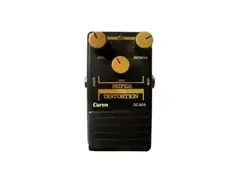
While this pedal is called the Coron Super Distortion, to my ears this is a Big Muff in disguise. An op-amp muff at that. It embodies the mid nineties affordable pedal market very well. I'll start with the good. When it's on, this thing is explosive, furry, and chewy, like a great big muff. There is oodles of gain on tap as well. The tone control is fantastic as well, with a wide range that retains most of the bass end throughout, unlike most muffs. In fact, I don't think I would really want a tone bypass. The DC-809 also has enough volume to drive the pre-amp of an amp. Probably my favorite thing to do is to run it at below 6 volts. It makes it gated and spitty, with an almost upper-octave overtone shining through. Even at low voltage, the gain and saturation remains high, allowing for more sustain than a similar germanium device. Now for the reason it is not a five star product. The bypass. Or really the lack of bypass. The buffer in this pedal KILLS all of your high and low end, making it dull and unusable. If you don't have a loop-switcher, you need to get it modded with true bypass switching, or have the buffer replaced with a better one. Let me be clear. High quality buffers, like the ones in Boss pedals, are fantastic. This one is not. Overall, I am very glad I found this pedal in my church, but I absolutely plan to get it recased with true bypass and a voltage knob. If you find one for less than $30, it's a great buy, and well worth the effort.

41034
the bypass might not be buffered at all, it might just be non-mechanical bypass like early MXR and DOD effects.
230
Versatile Noise Maker
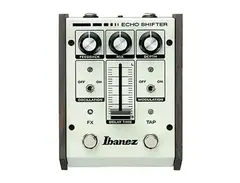
This pedal is a standout because of several features. The first being the tap tempo, and the next being the control of the parameters. First of all, I bought this on account of its tap tempo, but there are some things you should know about it. One, it has no sub-divisions, and it only works when the pedal is engaged. Second, the pedal returns to the time set by the time slider once the pedal is disengaged. This is somewhat of a drag, but the pedal isn't really percussive enough for the tap tempo to even be necessary really, think of it as a bonus feature. I mentioned it earlier, but the time slider is really useful, and can be operated by a dexterous foot. The modulation can be switched in and out with a mini toggle on the pedal, and it also has a depth knob, but the speed of the modulation is fixed.That toggle can also be triggered by a dexterous foot, but it sounds so good you might not want to turn it off. There are also knobs for feedback and mix , which do what one might think they do. The mix can go from no delay to unity and just beyond. Its set up in such a way that it can be dialed to go in front of both clean and dirty amps alike, with minimal fuss. The last toggle, is called oscillation. This toggle engages what sounds like a clipping circuit within the feedback loop at a lower level, allowing one to have the delay oscillate in a controlled manner, the loudness and intensity of this controlled by the feedback knob. It might be useful for ambient stuff, but I haven't found a use for it yet. Just to make things clear, it most definitely can do the run away self oscillation, without the oscillation switch, and it sounds incredible. Now on to how it sounds. This pedal sounds much brighter than the Carbon Copy, but is still very warm. It still isn't percussive, as most analog delays are not. And yes this thing is a true blue bucket brigade analogue delay. It can go from around 30ms to 1000ms, getting darker as the time increases. The repeats are beautiful, warm and not to bright or dark, not to dirty or clean. When the modulation is added, it becomes a bloom of glorious chorused repeats. The modulation sound so good, I never turn it off. And yes, you can totally go nuts with it, to the point of silliness, where the signal is moving about a 3rd up and down. Some quibbles are, the wood paneling looks great, but once you remove the feet and battery door to put Velcro on, the panels extend to far below the bottom of the pedal. Also, my first one broke, failing to pass signal in about 6 months. It was replaced under warranty, but apparently, this is rather common. While this pedal won't do dotted 8ths perfectly synced with the tempo, it does heavenly space ambiance and crazy shoegaze freakouts immensely well. The price is right, and it looks awesome too. It really is worth it, the fact that it is cheaper than a Carbon Copy, and better in my book, makes it all the better.
230
Hidden Tones
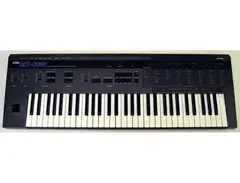
This is a review, not an overview. Go here http://www.vintagesynth.com/korg/dw8000.php if you want to know the history/how it works. This truly a pro-grade poly synth from 1985-87. The dual oscillators are digital, but that doesn't stop them from sounding fantastic. The saw, square and sine waveforms are incredibly fat and warm, with lots of harmonic content. They also have 13 other 8-bit sampled waveforms, some of which sound passable, like the organ and electric piano, and others sound very 80s and pretty cheesy. You can also tune the second oscillator to a 2nd, minor 3rd, major 3rd, 4th, and 5th above the first one. Next the analogue, 12db/octave low pass filter is incredible. This filter is self-ocsilating, and can be almost played by it-self, it doesn't track perfectly. It has 64 steps to the cut-off, sadly it is noticeable when using the slider. It has a very nice Korg character to it though, and is probably one of the best features on this board. The envelopes are somewhat tricky to set up, because they have 7 parameters instead of 4 like most synths have. This makes them very flexible, but because of the one slider interface, it's rather hard to refine them. The single LFO has four waveforms, and works well, but only has 31 steps to the speed. It reaches just into the audio range. Finally, there is a digital delay. This unit is equipped with its own modulation as well. It adds a very nice touch to the tone, allowing the user to thicken things up. The keyboard itself, is usual synth fare, with light, springy keys. They make a fare amount of acoustic noise though. The keyboard is equipped with after-touch, but it's monophonic and requires strong fingers. The joystick is nice to have, but it would be nice to have a separate LFO speed/depth control. The arpeggiator is a lot of fun and has several modes. It thankfully is controlled externally. The interface sucks, but I plan on making/buying a controller to make live performances much easier. Finally one note, the backup battery is soldered to the main board, which means than total loss can occur if the battery leaks. Other than the battery issue, these are still extremely useful to this day, and a lot of fun to boot. Cheap as well
230
Beautiful looking and sounding
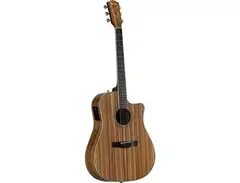
Eye catching, and affordable, this guitar is extremely pretty. But it also plays and sounds great as well. It features a solid zebrawood top, and zebrawood laminate back and sides; with a mahogany neck plus a rosewood fingerboard. It also includes a Fishman pickup system. This guitar has a chunky, C profile neck, that is fully bound. The neck is fairly playable, and the fretboard is round enough for chords, yet flat enough for lead. Action is a little higher than I'd like, but I haven't felt the need to get it setup yet. Unplugged, it has a loud, clear, and focused voice, without a boomy low end, or spiky high end. It sounds less bassy to the player thanks to the laminate sides. But the construction of the sides and back don't detract from the tone, they help project it. The pickup system is fully featured with a tuner, phase switch, 3-band eq, and volume. It sounds fairly natural, allowing for easy live performances. One QC issue, the nut has become unglued not long after purchase, but this isn't really important. The only real complaint I have is that the bottom strap button is very large to fit the jack through it, but it ruins all straps that have to fit over it. Other than that, it is a beautiful instrument for the money, and in general*. If you want beauty, tone, and usability at a great price, this is it. My friend who owns a 2015 Gibson J-45 did a blind test with me between the two. We both mixed up the guitars when our eyes were removed from the equation, a testament to the sound of the Zebrano.
230
A forgotten modern classic
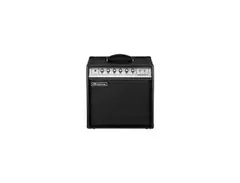
This amp was surprisingly a huge flop in the sales department, its failure can be largely traced to the reintroduction of the Marhsall DSL range, as well as the Fender Blues Junior III. What it lacked in sales, it more than makes up in mojo. This is a 15 watt, all tube amp loaded with two 6v6 power tubes, and two 12ax7s preamp tubes. It is equipped with a short reverb tank, and a serial effects loop. The combo comes with a 12" Celestion 70-80 speaker. The best feature of this amp is none of the previous items. It is the wonderful, 3-band Bandexall eq. This eq section allows for complete reshaping of the voice of the amp, going from the warm, bright fatness of a deluxe, to the throaty, karang of a Marshall to the chime of a Vox, this tone stack can do it, or get really close. Also, if the preamp gain is all the way up, cranking the mids and bass adds gain and punch. The amp is also equipped with a dual power switch, going from 7.5 watts, standby, to 15 watts. The 7.5 watt mode is about 25% quieter, but also 5% darker and thinner. I usually use the 15 watt mode all the time. Since there are only two pre-amp tubes, there is not very much pre-amp gain on tap, with a moderate output guitar, one can get slight breakup. As the volume is increased, the pillowy sag and punch of the 6v6s comes into the equation, adding some breakup, and lots of volume. With the mids all the way up as well, it will be fairly well into crunch territory. It has slightly more breakup than a Princeton, but less than an AC15. The reverb is not like a very popular american amp's. It lacks the "splash" and long decay. It is however, more usable than that certain brand's, in most situations. Finally, there is a myriad of speaker output options on the back, allowing for one 4, 8, or 16 ohm cab, or two 8, or 16 ohm cabs. Overall, this amp is perfect platform for pedals, thanks to that eq section; as well as to be turned up and rocked. Its loud and beautiful clean sounds are to die for as well. It looks super 70s retro cool, and it has a compact cabinet to boot. All of this can be yours for under $550 if you can find one. If you find one keep it.
41034
Ampeg's 60s Baxandall EQ was always one of their best features. Add in their lower gain preamps, unique reverb circuit and the short reverb pan and you have the 60s ampeg sound.... totally un-fender but still super American. My uncle has a pair of these modern ampegs and swears by them. I still kinda prefer the vintage Gemini II and reverb-o-rocket, but they are getting pricey. I think he likes that they are at least as gainy as a deluxe reverb, but I really dig the lower gain 60s sound.
-s.webp?v=1784612108)
230
It's a true Jaguar
First of all, not only is this affordable, it is very good quality. If you haven't played or owned one and want to know the history and what is so different about the Jaguar, the internet is awaiting to assist you. First of all, the bad. This guitars pots are pretty horrible. There is a very noticeable plummet in brightness when the volume is turned down, making it very hard to play backed off. Also, the rhythm circuit route is made for mini pots, so you'll have to either find higher quality mini pots, or break out the router. The pickups have not been wax potted, so they squeal pretty bad when the breakup and volume go up. I wax potted mine because I am cheap. It's not too difficult, but it might be worth it to just replace them. The bridge and trem are fine in terms of fit and finish and quality, and carry the usual idiosyncrasies that come from this offset set up. I have yet to replace them, I find the bridge usable, but I plan on replacing it; the trem is actually really great, smooth and stable. It has fast become my favorite type of trem system. Back to the pickups, they are fairly hot for a Jaguar, but sound decent. The bridge pickup has very little bass, but it makes it slice through a mix very well. It lacks the glassy top end of a tele or strat bridge pup, but it is still pretty bright. The neck pickup is decent, but it sounds somewhat dark on its own. Together, the pickups sound incredible. Bright, with lots of chime, and with a full low end. The perfect bright rhythm tone. I modded mine to have out of phase and series combinations, losing the bass cut function. Out of phase, the pickups combine to produce a very bright, nasal, and thin tone, that is very useful for rhythm or lead. In series, things get very dark and loud. I actually use the out of phase position more than the series one. The rhythm circuit is dark, but sweet sounding. It usually use it as a kill switch by rolling off the volume. I plan on modding it with a brighter tone pot, so I can darken it at will, instead of being forced to have a dark rhythm circuit. The neck is a fatter C than most Fenders, with a hint of V profile. It is comfortable and fits in the hand well. The frets are fairly well dressed, but the edges of the finger board are not rolled. the fretboard is a little dry, and has some noticeable filler by the 12th fret. The 24 inch scale length actually makes it somewhat cramped for my average sized hands, but it forces you to be more percise. Set up wise, it is easy to get a ballpark set up, but fine tuning is a little harder. Overall it's a great guitar for anyone who has gotten the offset itch, and with some mods is a very usable and playable instrument. The recent price increase is troubling, but still remains excellent value.
230
I have since changed the pickups to Fender American Vintage '65 Jaguar Pickups, which are much better sounding!
-s.webp?v=1784473062)
230
The Main
While it may have been one of the cheapest Fenders at the time of its arrival, this guitar captured my attention with the beautiful tone of the neck jazzmaster pickup. I just remember shopping for a guitar, and picking this one up at a music store and plugging it into a Deluxe Reverb and being blown away by the clarity and warmth of that neck pickup. The fact that it has a humbucker within the triplebucker bridge pickup, was the nail in the coffin. I did some set up to mine, adjusting the trem for minimal friction and best return to pitch, and it is pretty stable. The trem arm is really terrible, as it creaks and flops around. I really wish it was a push-in one, since the threads at the end of the travel are kind of thrashed. With a simple bridge height adjustment, it is incredibly playable. The neck is jaw-dropping, and the vintage tint really brings out the subtle, occasional flame and bird's eye. It is a little on the thin side for me unfortunately. The pickups sound great, but when switching between the humbucker and the neck pickup, the bridge is dark enough that it might disappear from the mix if your sound is geared towards the single coil tones already. That being said, since it has 500k pots, it is a really bright and hot on the single coil sounds, versus a strat or tele. The pots are reasonable, but could use a volume kit. One last quibble, is that in position 2, (neck and bridge single coil), it is not hum canceling. I should just mention, the body. It is extremely comfortable, standing or especially sitting. It looks similar to a Jaguar or Jazzmaster, but it is smaller and sleeker, meaning it fits in normal cases. Win. Aside from some minor hardware eccentricities, which all can be solved cheaply and quickly, this is a fantastic guitar for the money, if you can find one now, and it truly is a great guitar period. Great playing, great sounding, and amazingly comfortable. This is my first, and main axe. I rarely leave home without it, and it's the one I'll never sell.