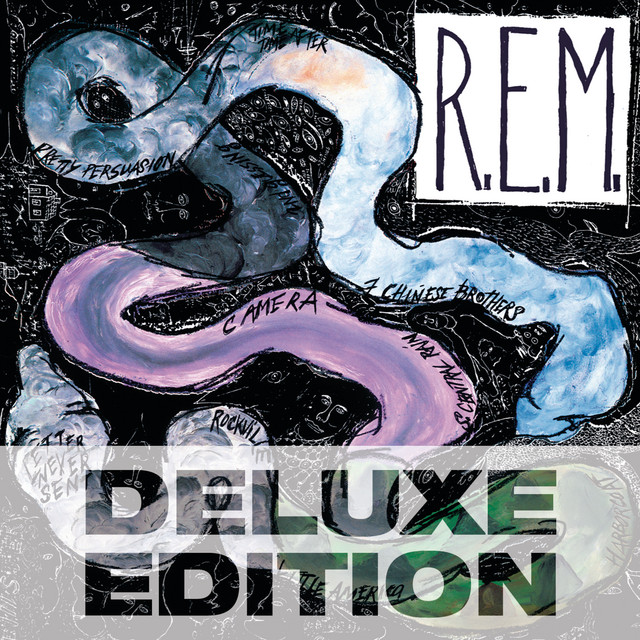
R.E.M. – Reckoning - Deluxe Edition
The music gear and equipment used by the artists, producers, engineers, and more involved in the making of the 1984 album Reckoning - Deluxe Edition.
Music from Reckoning - Deluxe Edition
Artists on Reckoning - Deluxe Edition
Gear Used On Reckoning - Deluxe Edition
Explore the instruments, equipment, software, and production tools used in the making of R.E.M. – Reckoning - Deluxe Edition (1984). Click more on each item to see exactly how it was used.

Michael Stipe
Roles:
Studio Equipment used by Michael Stipe on Reckoning - Deluxe Edition

Used to record Murmur and Reckoning, as recalled by producers Mitch Easter and Don Dixon.
Mix Online, February 1, 2009
Reflection certainly had plenty of tracks to offer. Easter recalls that studio owner Wayne Jernigan was also a pro audio dealer at that time and, in particular, an MCI rep. So the main recording gear at the studio included MCI JH24 and JH110 tape machines, and an MCI JH600 console.
(...) Recording to the JH-24 machine at 30 ips, Dixon and Easter tracked every song live, with the other three (gobo’d) bandmembers arranged around Berry’s kit in the main room, though Stipe’s vocals and some guitar solos would be replaced later.
When the band signed to IRS Records, the label insisted that they record in a 'proper studio,' which to them meant a studio with a 24-track tape machine. I only had 16. So we went to this place called Reflection, which was this really nice studio in Charlotte, North Carolina. Reflection had an MCI 600 console, an MCI JH24 tape machine, and a lot of great microphones.


-m.webp?v=1784991518)
Avg price: $2,473.00
Used for vocals on Murmur and Reckoning, as recalled by producer Mitch Easter.
Mix Online, February 1, 2009
Mills’ bass amp was miked with a Neumann FET U47 from eight or so feet away, according to Dixon, who says he spent more time on vocals for Reckoning than on anything else. He often gave Stipe a ride to the studio about noon, and they would sing for a few hours in the quiet studio, replacing scratch vocals from the previous day.
“We had Michael sing into a FET 47 — the transistor version of the famous 47 — and it sounded great. It had a good forwardness about it,” Easter says. “The processing on Michael, the thing that seemed to be the magic formula, was a touch of this thing called the EXR Exciter. It was one of those mystery treble-boosting things, and that gave him a touch of brightness.” Also included in Stipe’s vocal chain were a DeltaLab delay, set to only about 16 milliseconds, and a UREI 1176 compressor.
For the vocals, we used a Neumann U47 FET, and I think a lot of the selection was made by Michael Stipe. He saw the mic sitting there with its perfectly spherical windscreen and said, “That’s cute, let’s use that one.” It just so happened that the U47 was the perfect microphone for his voice. The u47 has a bit of a lift in the upper mids, which brought out the gravelly sound of his voice really well.
The rest of it was really straight-forward. Back then, no one used outboard mic pres. You had an expensive professional console and that’s why you had it. So we just used the MCI console preamp with an 1176 to compress it on the way in.
We tried to come up with a signature vocal sound for that record, which was done by adding an EXR Exciter coming back off the tape. The EXR was sort of an Aphex Exciter copy. We also used these DeltaLab delays, not the blue Effectrons that people remember, but these black DL1 delays that cost more and had XLR connections. It had these two toggle switches that would adjust the delay times in tiny increments; the max delay was like 128 ms. It had two channels so you could set two short delays, which we dialed in to be THE Michael Stipe sound.
If there was any reverb it would have been an EMT 140. The studio had Lexicon 224s and all the new digital stuff, but we thought the 140 sounded better. We used the digital units as special effects for a splatter on the snare drum or something, which was very fashionable at the time. It was all a very late ‘70s kind of approach."
According to Wayback Machine archives of Reflection Sound Studios' outboard gear list (April 21, 2003 and July 21, 2019), the 1176 is more specifically a "UREI 1176 LN Blackface limiter".


Used for vocals on Murmur and Reckoning, as recalled by producer Mitch Easter.
Mix Online, February 1, 2009
Mills’ bass amp was miked with a Neumann FET U47 from eight or so feet away, according to Dixon, who says he spent more time on vocals for Reckoning than on anything else. He often gave Stipe a ride to the studio about noon, and they would sing for a few hours in the quiet studio, replacing scratch vocals from the previous day.
“We had Michael sing into a FET 47 — the transistor version of the famous 47 — and it sounded great. It had a good forwardness about it,” Easter says. “The processing on Michael, the thing that seemed to be the magic formula, was a touch of this thing called the EXR Exciter. It was one of those mystery treble-boosting things, and that gave him a touch of brightness.” Also included in Stipe’s vocal chain were a DeltaLab delay, set to only about 16 milliseconds, and a UREI 1176 compressor.
For the vocals, we used a Neumann U47 FET, and I think a lot of the selection was made by Michael Stipe. He saw the mic sitting there with its perfectly spherical windscreen and said, “That’s cute, let’s use that one.” It just so happened that the U47 was the perfect microphone for his voice. The u47 has a bit of a lift in the upper mids, which brought out the gravelly sound of his voice really well.
The rest of it was really straight-forward. Back then, no one used outboard mic pres. You had an expensive professional console and that’s why you had it. So we just used the MCI console preamp with an 1176 to compress it on the way in.
We tried to come up with a signature vocal sound for that record, which was done by adding an EXR Exciter coming back off the tape. The EXR was sort of an Aphex Exciter copy. We also used these DeltaLab delays, not the blue Effectrons that people remember, but these black DL1 delays that cost more and had XLR connections. It had these two toggle switches that would adjust the delay times in tiny increments; the max delay was like 128 ms. It had two channels so you could set two short delays, which we dialed in to be THE Michael Stipe sound.
If there was any reverb it would have been an EMT 140. The studio had Lexicon 224s and all the new digital stuff, but we thought the 140 sounded better. We used the digital units as special effects for a splatter on the snare drum or something, which was very fashionable at the time. It was all a very late ‘70s kind of approach."

Used for vocals on Murmur and Reckoning, as recalled by producer Mitch Easter.
Mix Online, February 1, 2009, “Classic Tracks: R.E.M.’s ‘So. Central Rain’”
Mills’ bass amp was miked with a Neumann FET U47 from eight or so feet away, according to Dixon, who says he spent more time on vocals for Reckoning than on anything else. He often gave Stipe a ride to the studio about noon, and they would sing for a few hours in the quiet studio, replacing scratch vocals from the previous day.
“We had Michael sing into a FET 47 — the transistor version of the famous 47 — and it sounded great. It had a good forwardness about it,” Easter says. “The processing on Michael, the thing that seemed to be the magic formula, was a touch of this thing called the EXR Exciter. It was one of those mystery treble-boosting things, and that gave him a touch of brightness.” Also included in Stipe’s vocal chain were a DeltaLab delay, set to only about 16 milliseconds, and a UREI 1176 compressor.
Vintage King, June 11, 2019, “Five Sounds With Mitch Easter”
For the vocals, we used a Neumann U47 FET, and I think a lot of the selection was made by Michael Stipe. He saw the mic sitting there with its perfectly spherical windscreen and said, “That’s cute, let’s use that one.” It just so happened that the U47 was the perfect microphone for his voice. The u47 has a bit of a lift in the upper mids, which brought out the gravelly sound of his voice really well.
The rest of it was really straight-forward. Back then, no one used outboard mic pres. You had an expensive professional console and that’s why you had it. So we just used the MCI console preamp with an 1176 to compress it on the way in.
We tried to come up with a signature vocal sound for that record, which was done by adding an EXR Exciter coming back off the tape. The EXR was sort of an Aphex Exciter copy. We also used these DeltaLab delays, not the blue Effectrons that people remember, but these black DL1 delays that cost more and had XLR connections. It had these two toggle switches that would adjust the delay times in tiny increments; the max delay was like 128 ms. It had two channels so you could set two short delays, which we dialed in to be THE Michael Stipe sound.
If there was any reverb it would have been an EMT 140. The studio had Lexicon 224s and all the new digital stuff, but we thought the 140 sounded better. We used the digital units as special effects for a splatter on the snare drum or something, which was very fashionable at the time. It was all a very late ‘70s kind of approach."
In 2001 Wayback Machine archives of the website for Reflection Sound Studios, where Murmur and Reckoning were recorded, the outboard gear lists for Studio A and for Studio C specify the “EXR Exciter - EX2”.
Microphones used by Michael Stipe on Reckoning - Deluxe Edition

Avg price: $4,226.16
Used for vocals on Murmur and Reckoning, as recalled by producer Mitch Easter in the following sources. It also appears in the music video for "So. Central Rain" starting at 0:08.
Mix Online, February 1, 2009
Mills’ bass amp was miked with a Neumann FET U47 from eight or so feet away, according to Dixon, who says he spent more time on vocals for Reckoning than on anything else. He often gave Stipe a ride to the studio about noon, and they would sing for a few hours in the quiet studio, replacing scratch vocals from the previous day.
“We had Michael sing into a FET 47 — the transistor version of the famous 47 — and it sounded great. It had a good forwardness about it,” Easter says. “The processing on Michael, the thing that seemed to be the magic formula, was a touch of this thing called the EXR Exciter. It was one of those mystery treble-boosting things, and that gave him a touch of brightness.” Also included in Stipe’s vocal chain were a DeltaLab delay, set to only about 16 milliseconds, and a UREI 1176 compressor.
Standing on the left side of the studio, Peter Buck used Easter's own Ampeg, wide open without gobos and miked with an EV 635 or, for some overdubs, a compressed Neumann U47 FET. Meanwhile, a second FET 47 was used for Michael Stipe's vocals, which he recorded standing on the landing of a staircase positioned just below the control room and above a recreational basement area. "He still had this thing of loving to be invisible,” remarks Easter, "and so he'd go there, turn off all the lights and sing.”
For the vocals, we used a Neumann U47 FET, and I think a lot of the selection was made by Michael Stipe. He saw the mic sitting there with its perfectly spherical windscreen and said, “That’s cute, let’s use that one.” It just so happened that the U47 was the perfect microphone for his voice. The u47 has a bit of a lift in the upper mids, which brought out the gravelly sound of his voice really well.
The rest of it was really straight-forward. Back then, no one used outboard mic pres. You had an expensive professional console and that’s why you had it. So we just used the MCI console preamp with an 1176 to compress it on the way in.
We tried to come up with a signature vocal sound for that record, which was done by adding an EXR Exciter coming back off the tape. The EXR was sort of an Aphex Exciter copy. We also used these DeltaLab delays, not the blue Effectrons that people remember, but these black DL1 delays that cost more and had XLR connections. It had these two toggle switches that would adjust the delay times in tiny increments; the max delay was like 128 ms. It had two channels so you could set two short delays, which we dialed in to be THE Michael Stipe sound.
If there was any reverb it would have been an EMT 140. The studio had Lexicon 224s and all the new digital stuff, but we thought the 140 sounded better. We used the digital units as special effects for a splatter on the snare drum or something, which was very fashionable at the time. It was all a very late ‘70s kind of approach."


Peter Buck
Roles:
Studio Equipment used by Peter Buck on Reckoning - Deluxe Edition
Used to record Murmur and Reckoning, as recalled by producers Mitch Easter and Don Dixon.
Mix Online, February 1, 2009
Reflection certainly had plenty of tracks to offer. Easter recalls that studio owner Wayne Jernigan was also a pro audio dealer at that time and, in particular, an MCI rep. So the main recording gear at the studio included MCI JH24 and JH110 tape machines, and an MCI JH600 console.
(...) Recording to the JH-24 machine at 30 ips, Dixon and Easter tracked every song live, with the other three (gobo’d) bandmembers arranged around Berry’s kit in the main room, though Stipe’s vocals and some guitar solos would be replaced later.
When the band signed to IRS Records, the label insisted that they record in a 'proper studio,' which to them meant a studio with a 24-track tape machine. I only had 16. So we went to this place called Reflection, which was this really nice studio in Charlotte, North Carolina. Reflection had an MCI 600 console, an MCI JH24 tape machine, and a lot of great microphones.
Microphones used by Peter Buck on Reckoning - Deluxe Edition

Avg price: $417.00
Used for the guitar on Reckoning, as recalled by producer Mitch Easter in this February 1, 2009 Mix Online interview.
Buck’s beautiful guitar work, which so memorably opens “So. Central Rain,” was captured pretty dry, according to Easter, but did feature the effect of a Scholtz Rockman. “These days, that’s as uncool a piece of gear as you could possibly have,” Easter says with a laugh, “but it was so great for Pete Buck, especially back when he had that really clean tone. We would build up these guitar washes with different sounds. We would start with his amp, then do a direct box with some studio effect, and then we also used that Rockman a lot because it had that built-in, weird compressed sound that is really great for 12-strings or on top of one section.” Easter recalls primarily using Shure SM7 mics on guitars.

Bill Berry
Roles:
Studio Equipment used by Bill Berry on Reckoning - Deluxe Edition
Used to record Murmur and Reckoning, as recalled by producers Mitch Easter and Don Dixon.
Mix Online, February 1, 2009
Reflection certainly had plenty of tracks to offer. Easter recalls that studio owner Wayne Jernigan was also a pro audio dealer at that time and, in particular, an MCI rep. So the main recording gear at the studio included MCI JH24 and JH110 tape machines, and an MCI JH600 console.
(...) Recording to the JH-24 machine at 30 ips, Dixon and Easter tracked every song live, with the other three (gobo’d) bandmembers arranged around Berry’s kit in the main room, though Stipe’s vocals and some guitar solos would be replaced later.
When the band signed to IRS Records, the label insisted that they record in a 'proper studio,' which to them meant a studio with a 24-track tape machine. I only had 16. So we went to this place called Reflection, which was this really nice studio in Charlotte, North Carolina. Reflection had an MCI 600 console, an MCI JH24 tape machine, and a lot of great microphones.
Microphones used by Bill Berry on Reckoning - Deluxe Edition

Avg price: $6,190.00
Used for the drums on Reckoning, as recalled by producers Mitch Easter and Don Dixon in this February 1, 2009 Mix Online interview.
Easter says that drum miking on Reckoning was fairly conventional, with the exception of Dixon’s homemade version of Fritz, the binaural dummy head: “We wanted that stereo sound, but we didn’t have the budget for a real one,” Easter says. “But Dixon figured you could make one out of a cardboard box. He would take these 2-inch tape-shipping boxes that held two reels, and it was perfect to cut a slot in it and shove in one of those stereo brackets that holds two mics. He would ram that through the box and draw a nice face on the head.”
“I’d been doing that for a number of years,” Dixon confirms. “We’d use U64s or maybe small-diaphragm AKGs — whatever was handy that had a small diaphragm. We would try to pack it with something so it would be solid. I still do that today. Those tape boxes are scattered all over the world!”

Mike Mills
Roles:
Studio Equipment used by Mike Mills on Reckoning - Deluxe Edition
Used to record Murmur and Reckoning, as recalled by producers Mitch Easter and Don Dixon.
Mix Online, February 1, 2009
Reflection certainly had plenty of tracks to offer. Easter recalls that studio owner Wayne Jernigan was also a pro audio dealer at that time and, in particular, an MCI rep. So the main recording gear at the studio included MCI JH24 and JH110 tape machines, and an MCI JH600 console.
(...) Recording to the JH-24 machine at 30 ips, Dixon and Easter tracked every song live, with the other three (gobo’d) bandmembers arranged around Berry’s kit in the main room, though Stipe’s vocals and some guitar solos would be replaced later.
When the band signed to IRS Records, the label insisted that they record in a 'proper studio,' which to them meant a studio with a 24-track tape machine. I only had 16. So we went to this place called Reflection, which was this really nice studio in Charlotte, North Carolina. Reflection had an MCI 600 console, an MCI JH24 tape machine, and a lot of great microphones.
Microphones used by Mike Mills on Reckoning - Deluxe Edition
Avg price: $4,226.16
Used for the bass on Reckoning, as recalled by producers Mitch Easter and Don Dixon in this February 1, 2009 Mix Online interview.
Mills’ bass amp was miked with a Neumann FET U47 from eight or so feet away, according to Dixon, who says he spent more time on vocals for Reckoning than on anything else. He often gave Stipe a ride to the studio about noon, and they would sing for a few hours in the quiet studio, replacing scratch vocals from the previous day.
“We had Michael sing into a FET 47 — the transistor version of the famous 47 — and it sounded great. It had a good forwardness about it,” Easter says.