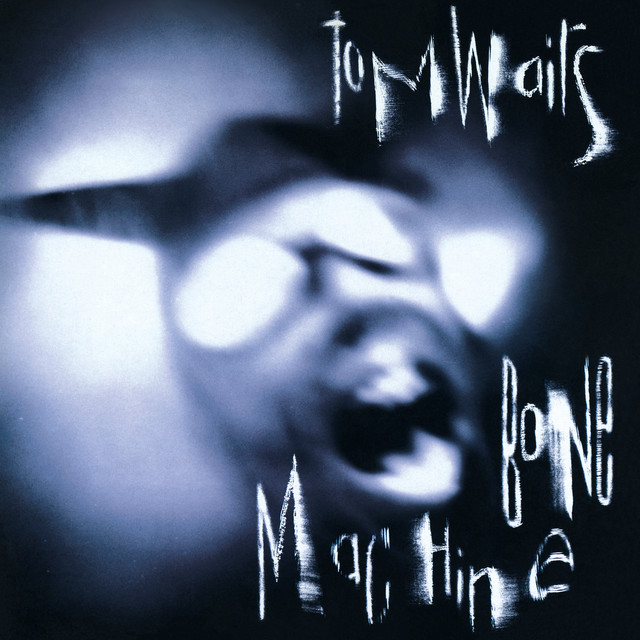
Tom Waits – Bone Machine (2023 Remaster)
The music gear and equipment used by the artists, producers, engineers, and more involved in the making of the 1992 album Bone Machine (2023 Remaster).
Music from Bone Machine (2023 Remaster)
Artists on Bone Machine (2023 Remaster)
Gear Used On Bone Machine (2023 Remaster)
Explore the instruments, equipment, software, and production tools used in the making of Tom Waits – Bone Machine (2023 Remaster) (1992). Click more on each item to see exactly how it was used.

Tom Waits
Roles:
Studio Equipment used by Tom Waits on Bone Machine (2023 Remaster)

Used to record Bone Machine, as stated by engineer Biff Dawes in this February 26, 2015 Mix Online interview.
The album was recorded on a Studer A80 24-track machine, with Dolby SR selectively used on certain tracks.
The same A80 was used to record Mule Variations, as stated by producer Jacquire King in this interview from issue 9 of Audio Technology Magazine.
As a result of using these various room mics, King sometimes ended up with a full 24-track, which meant that choices had to be made upon which room mics to use. The 24-track that was used was a late ‘70s Studer A80 MkIII, with BASF 900 tape, no Dolby, 30ips, recorded at +6, "hit very hard, which gives more tape compression". The album was mixed to analogue, an Ampex ATR102, on a half-inch tape running at 30ips, without Dolby.


Teletronix LA-2A Leveling Amplifier
Avg price: $5,434.61
Used for vocals on Bone Machine, as stated by engineer Biff Dawes in this February 6, 2015 Mix Online interview.
"Prairie Sun had a lot of good outboard equipment, too,” the engineer continues. “Along with the Neve mic pre’s, I would have also used an LA-2A or 1176 on his vocal.”
It was also used for vocals on Mule Variations, as stated by producer Jacquire King in this interview from issue 9 of Audio Technology Magazine.
"Tom’s vocals were always recorded with an Neumann M49, through a Neve mic pre and Teletronic LA2A tube limiter – although we often altered the sound of it afterwards."


Microphones used by Tom Waits on Bone Machine (2023 Remaster)

Avg price: $7,562.38
Used for the electric guitar and some vocals on Bone Machine, as stated by engineer Biff Dawes in this February 26, 2015 Mix Online interview.
Dawes describes what he recalls about placing those mics in 1992: “Usually I would take Tom’s guitar direct and I would close mike his amp [either a Princeton Tweed or a Fender Deluxe Reverb],” he says. “Sometimes I would tape mics to the guitar, and then we would add in the more distant mics from the room. Prairie Sun has a wide selection, so we used a lot of Neumanns: U 67s, U 87s, M 49s, that kind of thing. (...) Rennick says that Waits used one main vocal mic pretty consistently at Prairie Sun: “He gave every vocal on one Neumann that we still own, an M 49,” Rennick says.
However, Dawes remembers switching things up more: “It depended on the song,” he says. “A ballad, we would have a nice warm condenser, and sometimes the louder pieces we might use a [Sennheiser MD] 421, a dynamic to cut through. There was no standard. On ‘I Don’t Wanna Grow Up,’ it probably would have been something like a 421 close to him, but there also would have been a 67 or something like that, two or three feet away."


Avg price: $9,771.66
Used for the electric guitar and most vocals on Bone Machine, as stated by engineer Biff Dawes in this February 26, 2015 Mix Online interview.
Dawes describes what he recalls about placing those mics in 1992: “Usually I would take Tom’s guitar direct and I would close mike his amp [either a Princeton Tweed or a Fender Deluxe Reverb],” he says. “Sometimes I would tape mics to the guitar, and then we would add in the more distant mics from the room. Prairie Sun has a wide selection, so we used a lot of Neumanns: U 67s, U 87s, M 49s, that kind of thing. (...) Rennick says that Waits used one main vocal mic pretty consistently at Prairie Sun: “He gave every vocal on one Neumann that we still own, an M 49,” Rennick says.
However, Dawes remembers switching things up more: “It depended on the song,” he says. “A ballad, we would have a nice warm condenser, and sometimes the louder pieces we might use a [Sennheiser MD] 421, a dynamic to cut through. There was no standard. On ‘I Don’t Wanna Grow Up,’ it probably would have been something like a 421 close to him, but there also would have been a 67 or something like that, two or three feet away."
The microphone would later be used for vocals on Mule Variations, as stated by producer Jacquire King in this interview from issue 9 of Audio Technology Magazine.
"Tom’s vocals were always recorded with an Neumann M49, through a Neve mic pre and Teletronic LA2A tube limiter – although we often altered the sound of it afterwards."
-m.webp?v=1784933951)
Avg price: $388.52
Used for some vocals on Bone Machine, as stated by engineer Biff Dawes in this February 26, 2015 Mix Online interview.
Rennick says that Waits used one main vocal mic pretty consistently at Prairie Sun: “He gave every vocal on one Neumann that we still own, an M 49,” Rennick says.
However, Dawes remembers switching things up more: “It depended on the song,” he says. “A ballad, we would have a nice warm condenser, and sometimes the louder pieces we might use a [Sennheiser MD] 421, a dynamic to cut through. There was no standard. On ‘I Don’t Wanna Grow Up,’ it probably would have been something like a 421 close to him, but there also would have been a 67 or something like that, two or three feet away.
A 421 was later used for the electric guitar on Mule Variations, as stated by producer Jacques King in this interview from issue 9 of Audio Technology Magazine.
Acoustic guitars were miked with a Neumann KM84 or AKG 451, guitar amps were either a Shure SM57 or Sennheiser 421, bass amp with a Neumann U47, and acoustic bass with an Neumann M49, U47 or 582, routed via a Neve 2254 compressor.
Studio Gear used by Tom Waits on Bone Machine (2023 Remaster)

Avg price: $3,998.57
Used for vocals on Bone Machine, as stated by engineer Biff Dawes in this February 6, 2015 Mix Online interview.
"Prairie Sun had a lot of good outboard equipment, too,” the engineer continues. “Along with the Neve mic pre’s, I would have also used an LA-2A or 1176 on his vocal.”
It was also used for vocals on Mule Variations, as stated by producer Jacquire King in this interview from issue 9 of Audio Technology Magazine (which specifies the 1073).
"Prairie Sun has three separate buildings. There’s Studio A, which has a Trident TSM desk, Studio B with a Neve Custom 80 desk from the early ‘70s that came from Pete Townshend’s Eel Pie Studios and that has 1073-style EQ and mic pre modules. Then there’s a converted barn that contains three live rooms. We only used Studio B and the converted barn, which had a huge room that we used as an echo chamber, a medium-sized room of 35ft by 20ft, and a small room of 12ft by 15ft and a 15ft high ceiling – that was called the Waits Room, because Tom likes to record in there a lot. There is no acoustic treatment, just a concrete floor, and big double doors that open right into the driveway by which you enter the ranch. Almost all of Tom’s parts, including the vocals, were recorded in that room. In all, 90% of the recording took place in the barn, which is about 50 yards from the control room, so we needed to have a good communication set-up. We had about 20 Neve 1073/1272-style outboard mic preamps in the barn, so that the mic signal could bridge the 50 yards and come into the desk at line level. (...) Tom’s vocals were always recorded with an Neumann M49, through a Neve mic pre and Teletronic LA2A tube limiter – although we often altered the sound of it afterwards."
Amplifiers used by Tom Waits on Bone Machine (2023 Remaster)

Fender Deluxe Reverb-Amp Original Issue (1963-1981)
Used for the electric guitar on Bone Machine, as stated by engineer Biff Dawes in this February 26, 2015 Mix Online interview.
Dawes describes what he recalls about placing those mics in 1992: “Usually I would take Tom’s guitar direct and I would close mike his amp [either a Princeton Tweed or a Fender Deluxe Reverb],” he says. “Sometimes I would tape mics to the guitar, and then we would add in the more distant mics from the room. Prairie Sun has a wide selection, so we used a lot of Neumanns: U 67s, U 87s, M 49s, that kind of thing."

Keyboards and Synthesizers used by Tom Waits on Bone Machine (2023 Remaster)

Used on "Earth Died Screaming", "The Ocean Doesn't Want Me", "In the Colosseum", "Crossroads", "The Last Rose of Summer", "Carnival", "Black Market Baby", "Everything You Can Think", "Reeperbahn", "Barcarolle", "Everything Goes to Hell", "Coney Island Baby" and "Starving in the Belly of a Whale", as documented extensively in this page from the website Tom Waits Library.
Derk Richardson (1992): One of the dinosaurs Waits reclaimed on Bone Machine is the Chamberlain, a pre-synthesizer keyboard that taps into analog tape loops of pre-recorded material. TW: "It's stunning, really, I have like 70 voices on the instrument, from horses to rain, laughter, thunder, seven or eight different trains, and then all the standard orchestral instruments. It's a good alternative if you don't like the sound of the more conventional state-of-the-art instruments - sometimes it's like they've had the air sucked out of them." (Source: "Composer, musician, performer, actor Tom Waits..." Pulse!: Derk Richardson. September, 1992)
Jim Jarmusch (1992): Explain the Chamberlain. The first keyboard sampling instrument. The Chamberlain 2000. TW: It's a 70-voice tape loop, it's a tape recorder, an elaborate tape recorder with a keyboard. JJ: What year was it made? TW: I think maybe '60, '61 or '62. Musicians were afraid it was gonna put 'em out of business, because it was too real. It was like, oh my god... And if somebody had one of these, why ever hire a band? It's too perfect... JJ: Yeah, but that's what they say about synthesizers now. And people would still rather hear the real instruments. TW: A lot of scores are done on a synthesizer. JJ: I like the Chamberlain because it sounds like it breathes somehow. Maybe it's the action of the keys that you once showed me that cause a delay, so that it changed the way you played. TW: It changes the physicality of your approach to the instrument, because the keyboard is not easy (to play). It goes down too far, your fingers get stuck down there and can't get back up. JJ: They were made in L.A.? TW: Yeah. By Richard Chamberlain. Not the actor (laughs). There's a bicycle chain in it, and if the tape gets on the other side of the chain it can damage the tape. Tchad Blake actually spent four or five hours working on it, repairing it. (That's why I say) there are no gamblers in 'Chamberlain Pass'. You get decorated for valor. It's like operating on a flamingo. You don't even know where the heart is, nothing. If you touch there, you know, the world will end. If you touch this tape here, I dunno, you may lose your hand. It has that kind of danger about it. JJ: How do you program tapes on it? TW: They just move to a different place on the tape. They give you about a 12-second sample that's the length of time it takes for the tape to move through the head, and give you about three feet of quarter-inch tape. JJ: You've got two of them, right? TW: I've got one Mellotron and one Chamberlain, and the Chamberlain I have is a prototype. So it's made with found electronic objects. JJ: How many were made? TW: Well, ultimately it was mass produced, and they were out there like Fender Rhodes, only on a much smaller scale. But they were marketed, advertised and sold in music stores, and they had displays, and everyone heard this name Chamberlain. JJ: Did you use it on 'Bone Machine'? TW: Only on two songs, on "The Earth Died Screaming" and "The Ocean Doesn't Want Me". JJ: What other stuff did you use it on previously? TW: I used it a lot on "Frank's Wild Years". (Source: "Tom Waits Meets Jim Jarmusch" Straight No Chaser magazine (UK) Vol. 1, Issue 20 Jim Jarmusch. October, 1992 (published early 1993))
Jim Jarmusch (1992): "You have a Mellotron, and of course, the Chamberlain 2000. TW: Ah, the Chamberlain. It has a full sound effects bank that's thrilling. It has the sound of Superman leaving the window. It has storms. It has wind, rain and thunder. There are three keys right next to each other. What I have is a prototype, so its got whatever he discovered. In fact on some of 'em even, at the end of the sample you hear, "Okay, that's enough." You hear the engineer. JJ: Seriously? Where did you find it? TW: I bought it from three surfers who lived in Westwood who had a full state of the art room filled with every current -- they had decambodeizers -- JJ: Deneutralizers. TW: They had the Tascam 299 with a 300 count back -- JJ: With a hertz shifter. TW: Yeah. JJ: Hooker Headers on it. TW: They were laughing at the Chamberlain. I would have none of it. JJ: Ridiculing it? TW: Ridiculing it. I said, "I will take this from you." I got it for three grand. JJ: They know who you were? TW: No. I was just a guy. They were playing it and laughing at all the sounds it made, and I let them laugh knowing it would soon be mine and I would treat it better. JJ: They probably laughed that you paid that much for it. TW: Yeah. JJ: Little did they know. But then, they'll never know. TW: They'll never know. It's got a variety of trains, it's a sound that I've become obsessed with, getting an orchestra to sound like a train, actual train sounds. I have a guy in Los Angeles who collected not only the sound of the Stinson band organ, which is a carnival organ that's in all the carousels, the sound from that we used on 'Night on Earth', but he also has pitched four octaves of train whistles so that I can play the train whistle organ, which sounds like a calliope. It's a great sound."(Source: "Tom Waits Meets Jim Jarmusch" Straight No Chaser magazine (UK) Vol. 1, Issue 20 Jim Jarmusch. October, 1992 (published early 1993))
Robert Palmer (1993): "Ever since his film score for Mr. Coppola's "One From the Heart" (1982) and his own ground-breaking album "Swordfishtrombones" (1983), he has been resolutely broadening his musical palette, gravitating toward odd instruments (including a wheezing old proto-synthesizer called the chamberlain and a percussive sound sculpture known as the conundrum) and sonic textures." (Source: "Tom Waits, All-Purpose Troubadour" Robert Palmer, The New York Times: November 14, 1993) Mark Richard (1994): "Yet here we are, in the control room where Mike Kloster, the second engineer, is patching in Waits' Chamberlain Music Master 600, a broken-lidded, organ-like contraption with over 70 sounds and voices on tape loops. Waits bought it from some surfers in Westwood who were making fun of the instrument. "I saw it and said, 'I'll take you home now, dear'," Waits recalls. Waits is hoping to coax a woman's voice from the machine, but its wooden pins and spinning chain-driven gears and tape loops are visibly dusty and brittle." (Source: "The music of chance" Spin Magazine: Mark Richard. June, 1994)
Tom Waits (1996): "In 1985, I answered an ad in The Recycler, and bought a Chamberlin Music Master 600from two teenage surfers in Westwood, California. The Chamberlin, created by Richard Chamberlin (not Dr. Kildare), is an early 60s analog synthesizer that stores all of its voices (over 60 in total) on tape loops, and with a series of pulleys and chains and springs plays an eleven second "memory" of prerecorded sound stored on the tape. Then a spring snaps it back to the beginning, and it's ready to play again. It's a keyboard instrument, and I believe I own one of the early prototypes, because the "preset" instrument menu is written in longhand. It contains some of the most haunting sounds I have ever encountered, including an operatic human voice (both male and female), Portamento trombone, pizzicato violin, chimes, gong, squeaking door, thunder and rain, train whistles and chugs, acoustic bass, cello, clarinet, applause and various birds and dogs. The Rube Goldberg mechanism inside is as fascinating as the curiously strange sounds it holds in its tape bank." (Source: "Sound Hound": Foreword by Tom Waits to Bart Hopkin's book/ CD: "Gravikords Whirlies & Pyrophones - Experimental Musical Instruments." Publisher: Ellipsis Arts. October, 1996)
NN: "I was just checking out your excellent Mellotron-related website when I came across the page about the Chamberlin Music Master. What a cool instrument. Tom Waits has a Music Master. Apparently he saw an ad in his local Recycler-type of paper and went to find out what this thing was. The previous owners were a couple of "surfer" types that would just turn the thing on a revel in the sound effects (there's a fireworks or FX tape on this one). Tom reportedly paid something like $400 for it. Tom uses it quite a bit! Most recently he put down some tracks using the Music Master's "vibraphone" sound, and you will probably hear it on Tom's releases in the Spring of 2002. Tom also has an M400 he likes very much, by the way." (Source: email as published on: Ken Leonard's Mellotron page. Subject: Music Master/Tom Waits Date: Wed, 2 Jan 2002 14:37:55 -0600)