

Pricing and availability
We compare 600+ stores and found this item at 8 stores. Prices updated .
Store
Reviews
Price








Average Price: $5,431
High-end/Boutique
$100
$501+
Price Tier
Budget
Standard
High-end
Price History
Based on price data from 5 merchants for "Teletronix LA-2A Leveling Amplifier". Prices shown reflect NEW condition. Tracking began Apr 2, 2026.
* Product prices and availability are updated by Equipboard every 24hrs and are subject to change. Equipboard may receive compensation for purchases made at participating retailers linked on this site. This compensation does not affect what products or prices are displayed, or the order of prices listed. For more information, please refer to our affiliate disclosure.
Description
Introducing the Teletronix LA-2A Leveling Amplifier, a classic staple in the recording industry for over half a century. This leveling amplifier is a meticulously handcrafted reissue of the original model, designed with the same level of quality and performance.
The LA-2A operates with a groundbreaking electro-optical attenuator circuit that allows for immediate gain reduction without any distortion, granting a distinct warmth and smoothness to whatever signal it processes. This unique feature is pivotal to the creation of that classic LA-2A sound, resulting in transparent and lag-free compression that accentuates the subtle details in vocals, guitars, bass, and drums.
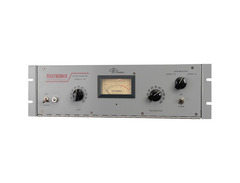
Equipped with intuitive Gain and Peak Reduction knobs, the LA-2A maintains a perfect balance of simplicity and versatility. With just these two controls, you can effortlessly adjust the input level, amount of compression and transient compression. Its straightforward interface lets you dial in your ideal sound without the need for technical complexity.
Key Features:
- Groundbreaking electro-optical design for pristine gain reduction
- Up to 40dB of gain limiting without distortion
- Simple, easy-to-use interface with Gain and Peak Reduction knobs
- Ability to switch between Compress and Limit modes
- Faithful reissue of the vintage classic, handcrafted in California
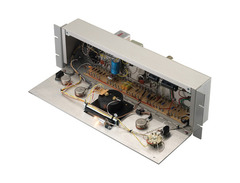
- All-tube, point-to-point circuitry and vintage-style transformers
- Provides warmth, smoothness, and character to any audio signal
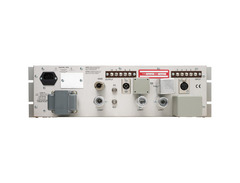
- Balanced XLR input and output
- Frequency response 30Hz-15kHz (+0/-1dB)
- Output level: 10dBm; Gain: 40dB
- Low noise: 70dB below +10dBm output level
- Handcrafted in Universal Audio's Scotts Valley, California labs
Product specs
| Type | Optical |
| Number of Channels | 1 |
| Controls | Gain, Peak Reduction |
| Frequency Response | 30Hz-15kHz (+0/-1 dB) |
| Inputs | 1 x XLR |
| Outputs | 1 x XLR |
| Rack Spaces | 3U |
| Power Source | Standard IEC AC cable |
| Height | 5.25" |
| Depth | 7.25" |
| Width | 19" |
| Weight | 13 lbs. |
FAQs
-
What makes the Teletronix LA-2A Leveling Amplifier unique compared to other compressors?
-
The Teletronix LA-2A is renowned for its smooth, natural compression thanks to its optical tube design. It features a simple control set with just Gain and Peak Reduction, making it user-friendly while delivering a warm, vintage sound ideal for vocals and bass.
-
Is the Teletronix LA-2A suitable for vocal recordings?
-
Yes, the LA-2A is highly sought after for vocal recordings due to its ability to maintain performance dynamics while providing smooth level management, resulting in a warm and transparent sound.
-
Can the Teletronix LA-2A be used for mastering?
-
While the LA-2A is primarily used for tracking, its transparent compression and ability to handle a variety of sources make it a versatile tool that can also be used in mastering, particularly for vocals and bass.
-
What type of connections does the Teletronix LA-2A offer?
-
The Teletronix LA-2A features both input and output connections via XLR, ensuring high-quality signal transfer in professional studio environments.
-
How does the optical compression in the LA-2A work?
-
The LA-2A uses a T4 optical cell, where the light panel's brightness increases with the input signal, causing the photo resistor's impedance to increase and reduce gain, resulting in its characteristic smooth compression.
Videos

Doctor Mix
The Teletronix LA-2A in action
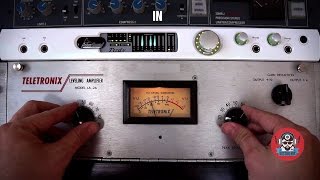
The Teletronix LA-2A in action
Doctor Mix
Teletronix® LA-2A Classic Leveler Plug-In Collection Trailer

Universal Audio
History of the Universal Audio LA-2A Leveling Amplifier with CEO Bill Putnam Jr.

Musician's Friend
Universal Audio LA-2A Classic Leveling Amplifier - Universal Audio Teletronix LA-2A

American Musical Supply
Reviews
PROS
-
Unmatched vocal compression; enhances clarity and presence
-
Simple operation with just two knobs for instant adjustments
-
Durable, with examples working flawlessly after 20 years
-
Revered in the industry; considered essential by professionals
-
Excellent for a wide range of applications beyond vocals
-
Faithful recreation maintains classic sound characteristics
-
Appreciates in value, making it a good investment
-
Provides a unique warmth and character to recordings
-
Versatile; used on countless hit records across genres
-
Easy to service and modify for personal preferences
CONS
Owner Insights
We analyzed real musician discussions from forums and Reddit to find what players love, question, and tweak about Teletronix LA-2A Leveling Amplifier.
User experience
-
Some users experience no noticeable latency with the LA-2A pedal through multiple AD/DA conversions, countering common concerns about digital effects.
Source -
It's reported that the UAD LA-2A plugin can be CPU intensive in large projects, though not prohibitively so.
Source -
Owners report that despite the terminology confusion, the LA-2A effectively manages peaks and amplifies signals, fulfilling its role as a leveling amplifier.
Source
Comparisons
-
Users prefer the UAD LA-2A over Waves CLA-2A, noting a more pleasant sound and better handling of high compression levels.
Source -
Owners note that UA's legacy LA-2A plugin closely matches the hardware, whereas differences emerge in newer models, particularly in attack and tonal shifts for vocals.
Source -
The LA-2A pedal is slightly preferred over Line 6's LA-2A emulation for its sound quality, despite only a marginal difference between them.
Source -
The LA-2A and 1176 are both labeled as limiting amplifiers, highlighting their historical and functional lineage despite modern reinterpretations of the term.
Source
Use cases and applications
Features and functionality
-
Owners highlight that the UAD LA-2A maintains more detail up front on vocals, with a slightly quicker/different release compared to the legacy model.
Source -
The LA-2A's Limit/Compress switch alters the compressor IO curve, offering a gentle compression in Compress mode and a higher ratio in Limit mode.
Source -
The LA-2A's simplicity and accessibility in controls make it a favored choice for always-on compression in pedalboards, especially when compared to more complex digital options.
Source -
It's noted that even in compression mode, the LA-2A starts to limit when input signals exceed 10 dB above the threshold, demonstrating its dual compressor/limiter functionality.
Source -
Historically, "limiting amplifiers" described compression with high input-output ratios, often above 8:1, reflecting a broader definition than today's brick-wall limiters.
Source
Software and compatibility
-
The Analog Obsession LA-2A plugin is favored for its speed and absence of iLok requirements, offering zero latency and comparable quality to UAD.
Source -
The HX Stomp's FX loop integration with the LA-2A allows for extensive routing possibilities, enhancing its utility in complex signal chains.
Source
Critic Reviews
5.0 out of 5
Based on 2 Reviews and 13 Ratings
144
My secret weapon
Best compressor hands down.every thing sounds better if you send it to the la2a

114
The best opto-compressor that exists ...
Smooth, elegant, genuine, clean, and down-right seductive compression comes only from the La-2a. I love staring at it in my rack unit. Gotta pick on up if you can afford the real hardwar!

41031
It does what it does really well and the only thing that will come close is an old Gates unit. But its not the be-all-end-all. I remember being so excited the 1st time I tried an LA2a only to find myself using a lot more 1176, LA4 and even the SSL G channel compressors on that project. The LA2A is not subtle even when you're just tickling the meter. It should be used when coloration is a priority over actual dynamics control. Have you ever tried a Sta-Level? If you like the LA2A you will love the Gates stuff!
Artist usage
Add artist

Used for vocals on Nevermind, as stated by producer Butch Vig in this March 1997 Sound on Sound interview.
Utilising a Neumann U67 and an LA2A, most of Cobain's vocals were recorded in the small Studio B at Sound City and ran straight to tape. The results alternate between a smooth, compressed, phasey sound and one of extreme dryness when the voice sits alone, yet minimal effects were employed. "Kurt really had an amazing voice," confirms the producer. "He could scream and it would have this great rasp and tone to it, and yet he could also bring it down really quiet and sound so world-weary and exhausted and intimate. It's hard to put your finger on it, but not many artists have that kind of voice or persona. Kurt had this brilliant pop sensibility in terms of melodic structure and phrasing, and yet he loved the attitude of punk, and those are the two things that collided and made Nirvana so special.
"In the studio I used a fair amount of compression on the vocals so that I could control his dynamics, and I also got Kurt to do some double-tracking. I'm a big fan of doubling, particularly on choruses, so he did that quite a bit on the record and that's part of what the sound is. Andy Wallace, the mix engineer, had a little bit of tight slap echo -- almost a double echo -- on a couple of the songs, and he also used a little bit of reverb and so on, but for the most part the vocals were left fairly dry. That really was the approach that the band and myself wanted to take. We didn't want to have it too washed out with reverb or echo, and it was the same with the drums and the guitars; we wanted everything to be fairly dry and in your face.


Used for the vocals and guitar on Icky Thump, as stated by recording and mixing engineer Joe Chiccarelli in this October 2007 Sound on Sound interview.
- Vocals: Teletronix LA2A, Roland Space Echo, echo chamber, Neve 8078 EQ
“Jack always wanted more distortion on the vocals! The main vocal effect is a distorted slap echo, which I recorded: I overloaded the tape machine. When you severely overload something, it squashes the waveform so much that it almost sounds like a different instrument. Instead of being a delay of the original signal, it becomes its own sound and adds a vibe to the track. When it came to the mix, Jack wanted still more distortion on the vocals and more edge, so I overloaded an LA2A compressor, setting the output to 80. This meant that I was getting the distortion from the last tube stage of the compressor, which creates a really beautiful distortion.
“I also added some Roland Space Echo spring reverb to the vocals during the mix, and ran the vocals through the echo chamber. Any reverb that I used on the album would have been dark-sounding, and in a lot of cases I made it mono as well. In the case of ‘Icky Thump’ I’d pan a mono reverb left behind the vocal that was panned left, and the other mono reverb was panned right behind the vocal that was panned right. Both were panned at about three quarters. I might also have rolled some top end off the distortion, just to get rid of any ugly harmonics.
“I was actually reluctant to use all that vocal distortion during the mix, but again, I had to trust him. One thing I have learned is when you work with great artists you have to put yourself in their hands, trust them and go with the flow. Sometimes the engineer in me would say ‘Oh no, I can’t print all that distortion,’ but then the music fan would go: ‘It sounds great, it’s exciting, who cares?’”
(...) “For the song ‘Icky Thump’ I had the Royer and an AEA on Jack’s two guitar amps, and a couple of U67s for room ambience. In a few cases I used the Shure SM7 guide vocal mic. Ribbons are prone to overloading, so we blew out four Coles mics on the guitar amps. Luckily Jack had several Coles 4038’s with him! The guitar mics went through Neve and Chandler preamps, and then always through an API 550A EQ, and then an 1176. The Univox sounded great acoustically in the room and was miked with a U87 across the room, going into a Chandler TG2 preamp and then some slight compression with an LA2A."


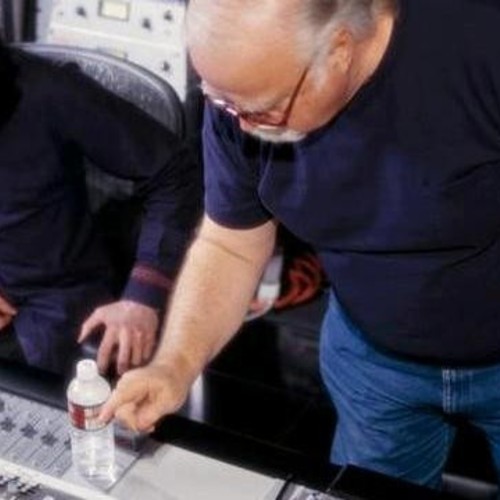
In this photo on the left rack you can see a teletronix La-2a leveling amplifier.


Used on Lullabies to Paralyze for Josh's vocals. Sound engineer Joe Baressi : "I tend to compress when I go to tape. The 1176 is my favourite on vocals, but sometimes the LA2A works really well. If you're looking for more dirt you can turn a tube compressor up a little more. I'm not opposed to dirtying the signal up and blending that in with the original. I'm not a transparent compressor guy. I may send one compressor into the other as well. That works well if you need a very up-front vocal. When I'm mixing I'll compress the vocal further, perhaps using an 1176 again."


Daft Punk record bass guitar via a Neve 1081 and Teletronix LA-2A. The LA-2A was also used to record a couple of vocalists, and during the mixing process it was used for parallel compression on the kick and snare.


Producer Steve Hoffman has stated his use of the LA-2A for Clapton.
My Teletronix LA-2A, ganged for stereo or mono reproduction via the handy toggle switch in the center of the two units. (...) I've used it on countless projects, Nat "King" Cole, Frank Sinatra, Beach Boys, Doors, Eagles, Ringo, McCartney, Fleetwood Mac, Bob Dylan, Ray Charles, Peggy Lee, Jethro Tull, Chuck Berry, Creedence Clearwater Revival, Van Morrison, White Stripes, Tom Petty, Red Hot Chili Peppers, Ella Fitzgerald, Yes, Sonny Rollins, John Coltrane, Steely Dan, Steppenwolf, Bad Company, Jim Croce, Elvis Presley, Billie Holiday, Judy Garland, Dave Mason, Paul Simon, America, The Band, Crosby, Stills & Nash, The Cars, ZZ Top, James Taylor, Art Pepper, Steve Miller Band, Queen, Rod Stewart, Duke Ellington, John Lee Hooker, Al Jolson, Roy Orbison, Bing Crosby, Sammy Davis, Jr., The Who, Lightnin' Hopkins, Bill Haley & his Comets, Miles Davis, Mamas and Papas, Blue Öyster Cult, The Byrds, Eric Clapton, Bill Evans Trio, Blood, Sweat & Tears, Phil Collins, Alice Cooper, Deep Purple, Jeff Beck, Doobie Bros., Faces, Grand Funk, Heart, Billy Joel, Linda Ronstadt, Ten Years After, Grant Green, Wes Montgomery, Pat Benetar [sic], Elton John, Leon Russell, Metallica. etc.

Producer Steve Hoffman has stated his use of the LA-2A for McCartney.
My Teletronix LA-2A, ganged for stereo or mono reproduction via the handy toggle switch in the center of the two units. (...) I've used it on countless projects, Nat "King" Cole, Frank Sinatra, Beach Boys, Doors, Eagles, Ringo, McCartney, Fleetwood Mac, Bob Dylan, Ray Charles, Peggy Lee, Jethro Tull, Chuck Berry, Creedence Clearwater Revival, Van Morrison, White Stripes, Tom Petty, Red Hot Chili Peppers, Ella Fitzgerald, Yes, Sonny Rollins, John Coltrane, Steely Dan, Steppenwolf, Bad Company, Jim Croce, Elvis Presley, Billie Holiday, Judy Garland, Dave Mason, Paul Simon, America, The Band, Crosby, Stills & Nash, The Cars, ZZ Top, James Taylor, Art Pepper, Steve Miller Band, Queen, Rod Stewart, Duke Ellington, John Lee Hooker, Al Jolson, Roy Orbison, Bing Crosby, Sammy Davis, Jr., The Who, Lightnin' Hopkins, Bill Haley & his Comets, Miles Davis, Mamas and Papas, Blue Öyster Cult, The Byrds, Eric Clapton, Bill Evans Trio, Blood, Sweat & Tears, Phil Collins, Alice Cooper, Deep Purple, Jeff Beck, Doobie Bros., Faces, Grand Funk, Heart, Billy Joel, Linda Ronstadt, Ten Years After, Grant Green, Wes Montgomery, Pat Benetar, Elton John, Leon Russell, Metallica. etc.


"These are really great compressors," says Steve Vai about the Teletronix LA-2A Leveling Amplifier which he uses in his studio setup.


Used for "Get On Your Boots", as stated by producer Declan Gaffney.
"Most of 'Get On Your Boots' was recorded in Dublin by Richard Rainey, and the basic backing tracks were done live, by the whole band together. (...) Edge's thick guitar sound is entirely from the live band session, recorded with two Royer 121s, one on his Fender Deluxe and the other on his AC30, and the mics went through the Neve and then an LA2A, though it's not doing anything, it was just there for the sound. When recording Edge's cabinets, it's almost always a 121, or a Sennheiser 409, occasionally a 57. I record completely flat, because Edge will have found a great guitar sound, and you just record it."

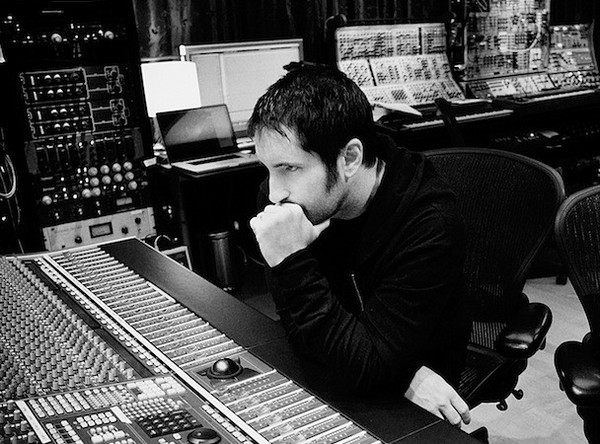
In the middle left of this picture, you can see an LA-2A Compressor in the rack.

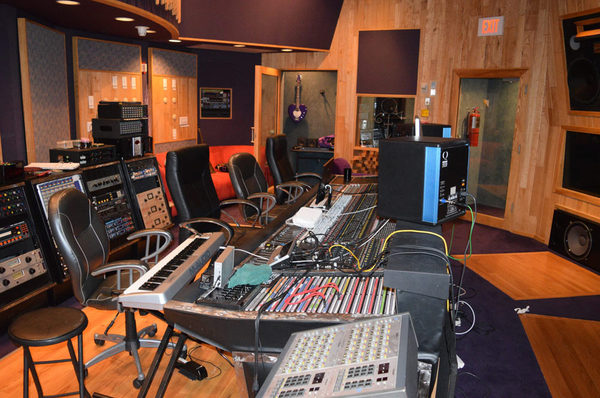
In an interview, Susan Rogers mentioned that Prince was hesitant to adopt new gear, preferring equipment he was familiar with. He favored the Teletronix LA-2A Leveling Amplifier, and multiple photos from his Paisley Park studios show several LA-2As in use.
Album Usage
The Teletronix LA-2A Leveling Amplifier has been featured on the following albums:

Xoxo
Jayhawks (2020)
Smells Funny
Hedvig Mollestad Trio (2018)
Drones
Muse (2015)

Random Access Memories
Daft Punk & Daft Punk (2013)

Sing to the Moon
Laura Mvula (2013)

Take Me to Church EP
Hozier (2013)

The Story of Light
Steve Vai (2012)
She
Laura Mvula (2012)

Headlines
Drake (2011)

Farm
Dinosaur Jr (2009)

No Line On The Horizon
U2 (2009)
Sex On Fire
Kings of Leon (2009)

Only By The Night
Kings of Leon (2008)
Sleep Through The Static
Jack Johnson (2008)

Love Song
Sara Bareilles (2008)
Icky Thump
The White Stripes & Jack White & Jack White (2007)

Raising Sand
Robert Plant & Alison Krauss (2007)

Lullabies To Paralyze
Queens of the Stone Age (2005)
A Thousand Kisses Deep
Chris Botti (2003)
Mule Variations (Remastered)
Tom Waits (1999)
All Eyez On Me
2Pac & Makaveli (1996)
Bone Machine (2023 Remaster)
Tom Waits (1992)

Nevermind
Nirvana (1991)
Mosquitos
Stan Ridgway (1989)
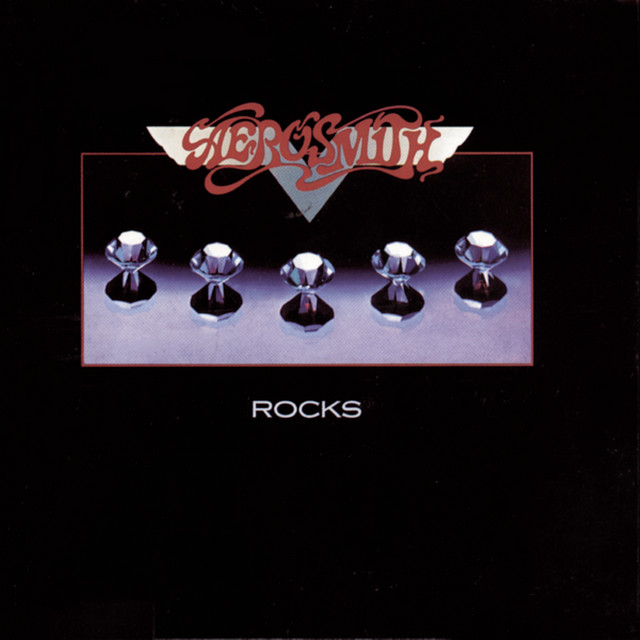
Rocks
Aerosmith (1976)
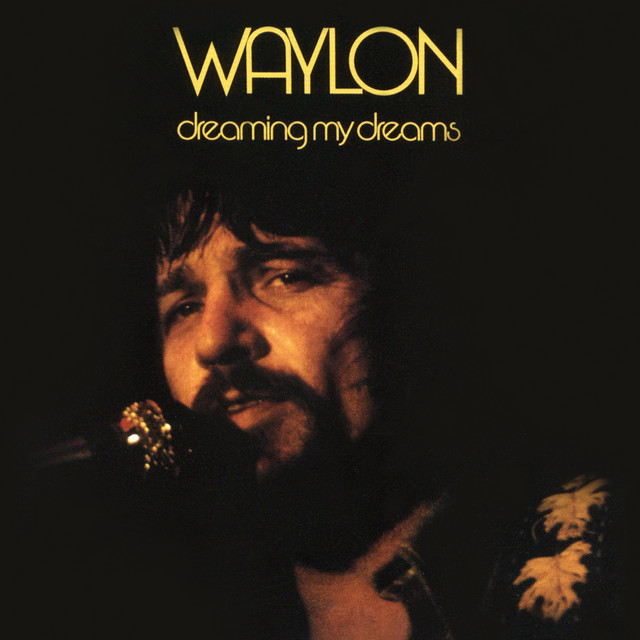
Dreaming My Dreams
Waylon Jennings (1975)
Genre Usage
Based on how artists on Equipboard use this gear, it is most commonly found in the following genres.
Used With
Based on how musicians on Equipboard use Teletronix LA-2A Leveling Amplifier, it is most commonly used with the following gear.

-s.webp?v=1785020100)
-s.webp?v=1784988059)




Community setups
Show yours

Similar
Add recommendation11 alternative and related items for Teletronix LA-2A Leveling Amplifier, curated by the Equipboard community.


$208.59 - $999.00
A true hardware clone of the LA-2A, built by Warm Audio.

More Effects Processors

$1,500.00
in Effects Processors Rank


-m.webp?v=1784991531)
$599.00
in Effects Processors Rank


$189.00
in Effects Processors Rank


$1,799.00
in Effects Processors Rank


$1,549.00
in Effects Processors Rank


$1,999.00
in Effects Processors Rank


$749.99 - $833.00
in Effects Processors Rank


$149.00
in Effects Processors Rank


$1,450.00
in Effects Processors Rank


$3,799.00 - $4,985.00
in Effects Processors Rank


-m.webp?v=1785020100)
$40.00 - $2,999.00
in Effects Processors Rank

$5,699.00 - $6,999.00
in Effects Processors Rank
.jpg?v=1784921365)


$1,153.00 - $2,635.00
in Effects Processors Rank


.jpg?v=1784917540)

$3,561.90 - $4,750.00
in Effects Processors Rank


$890.77 - $1,799.95
in Effects Processors Rank


$180.00
in Effects Processors Rank


$850.00
in Effects Processors Rank


$75.00
in Effects Processors Rank


$199.99 - $279.00
in Effects Processors Rank


-m.webp?v=1784991565)
$419.26
in Effects Processors Rank


$419.99 - $1,179.99
in Effects Processors Rank


$749.99 - $4,999.00
in Effects Processors Rank


$1,650.00
in Effects Processors Rank


$2,999.00 - $3,250.00
in Effects Processors Rank


$629.99 - $1,319.66
in Effects Processors Rank


$35.63 - $199.00
in Effects Processors Rank


-m.webp?v=1784991651)
$308.80 - $936.00
in Effects Processors Rank


$2,555.00 - $3,225.00
in Effects Processors Rank

-m.webp?v=1784991604)
$450.00 - $699.00
in Effects Processors Rank


$1,200.00
in Effects Processors Rank

.jpg?v=1784958340)


$138.00
in Effects Processors Rank


$1,336.16
in Effects Processors Rank


$202.50 - $599.99
in Effects Processors Rank


$360.22
in Effects Processors Rank


$66.00
in Effects Processors Rank


$175.00
in Effects Processors Rank


$475.00
in Effects Processors Rank


$1,135.25 - $1,199.00
in Effects Processors Rank

$149.00 - $638.00
in Effects Processors Rank

$2,999.00 - $3,299.00
in Effects Processors Rank


Accessories & Related Items
-s.webp?v=1785020606)

-s.webp?v=1785021008)


-s.webp?v=1784988062)






-s.webp?v=1785021122)




Gear Guides








Most Popular Effects Processors
Most Popular Brands
-
Added to Equipboard on by
 equipboard
GearIQ 4934
-


