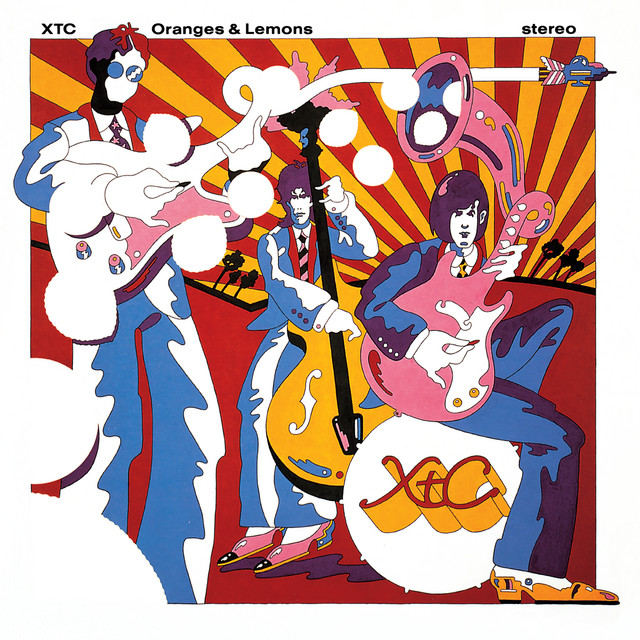
XTC – Oranges & Lemons
The music gear and equipment used by the artists, producers, engineers, and more involved in the making of the 1989 album Oranges & Lemons.
Music from Oranges & Lemons
Artists on Oranges & Lemons


Gear Used On Oranges & Lemons
Explore the instruments, equipment, software, and production tools used in the making of XTC – Oranges & Lemons (1989). Click more on each item to see exactly how it was used.

Dave Gregory
Roles:
Guitars used by Dave Gregory on Oranges & Lemons

Avg price: $18,113.57
Now if you want to talk guitar, ask Dave Gregory. He was crushed that he couldn't take his entire guitar harem (over 20) with him for Oranges and Lemons, but he made do with his faves: a 1953 Gibson Les Paul gold-top; a Schecter Telecaster-style ("quite versatile"); a 1963 Stratocaster; a semi-hollow 1964 Epiphone Riviera with miniature humbuckers, heard on the "Pink Thing" solo ("It has a nice Beatley sound"); and one of the first 25 Rickenbacker 12-strings shipped to England in the wake of A Hard Day's Night. Gregory uses Ernie Ball strings "out of force of habit," but creates his own gauge set: .011-.013-.016-.024-.038-.050. He has a Roland JC-120 amp "for those rare occasions that I go out of the house," and a Japanese Fender Sidekick 30 amp for home practice. Effects include a MIDIverb and D1500. For keyboard dabbling he keeps a Roland JX3P with MSQ-100 sequencer, and "an old acoustic piano."


Fender Stratocaster Electric Guitar
Avg price: $622.79
Now if you want to talk guitar, ask Dave Gregory. He was crushed that he couldn't take his entire guitar harem (over 20) with him for Oranges and Lemons, but he made do with his faves: a 1953 Gibson Les Paul gold-top; a Schecter Telecaster-style ("quite versatile"); a 1963 Stratocaster; a semi-hollow 1964 Epiphone Riviera with miniature humbuckers, heard on the "Pink Thing" solo ("It has a nice Beatley sound"); and one of the first 25 Rickenbacker 12-strings shipped to England in the wake of A Hard Day's Night. Gregory uses Ernie Ball strings "out of force of habit," but creates his own gauge set: .011-.013-.016-.024-.038-.050. He has a Roland JC-120 amp "for those rare occasions that I go out of the house," and a Japanese Fender Sidekick 30 amp for home practice. Effects include a MIDIverb and D1500. For keyboard dabbling he keeps a Roland JX3P with MSQ-100 sequencer, and "an old acoustic piano."


Semi-Hollowbody Electric Guitars

Avg price: $642.99
Now if you want to talk guitar, ask Dave Gregory. He was crushed that he couldn't take his entire guitar harem (over 20) with him for Oranges and Lemons, but he made do with his faves: a 1953 Gibson Les Paul gold-top; a Schecter Telecaster-style ("quite versatile"); a 1963 Stratocaster; a semi-hollow 1964 Epiphone Riviera with miniature humbuckers, heard on the "Pink Thing" solo ("It has a nice Beatley sound"); and one of the first 25 Rickenbacker 12-strings shipped to England in the wake of A Hard Day's Night. Gregory uses Ernie Ball strings "out of force of habit," but creates his own gauge set: .011-.013-.016-.024-.038-.050. He has a Roland JC-120 amp "for those rare occasions that I go out of the house," and a Japanese Fender Sidekick 30 amp for home practice. Effects include a MIDIverb and D1500. For keyboard dabbling he keeps a Roland JX3P with MSQ-100 sequencer, and "an old acoustic piano."
Amplifiers used by Dave Gregory on Oranges & Lemons
-m.webp?v=1784818796)
Avg price: $1,248.71
Now if you want to talk guitar, ask Dave Gregory. He was crushed that he couldn't take his entire guitar harem (over 20) with him for Oranges and Lemons, but he made do with his faves: a 1953 Gibson Les Paul gold-top; a Schecter Telecaster-style ("quite versatile"); a 1963 Stratocaster; a semi-hollow 1964 Epiphone Riviera with miniature humbuckers, heard on the "Pink Thing" solo ("It has a nice Beatley sound"); and one of the first 25 Rickenbacker 12-strings shipped to England in the wake of A Hard Day's Night. Gregory uses Ernie Ball strings "out of force of habit," but creates his own gauge set: .011-.013-.016-.024-.038-.050. He has a Roland JC-120 amp "for those rare occasions that I go out of the house," and a Japanese Fender Sidekick 30 amp for home practice. Effects include a MIDIverb and D1500. For keyboard dabbling he keeps a Roland JX3P with MSQ-100 sequencer, and "an old acoustic piano."
Studio Equipment used by Dave Gregory on Oranges & Lemons

Now if you want to talk guitar, ask Dave Gregory. He was crushed that he couldn't take his entire guitar harem (over 20) with him for Oranges and Lemons, but he made do with his faves: a 1953 Gibson Les Paul gold-top; a Schecter Telecaster-style ("quite versatile"); a 1963 Stratocaster; a semi-hollow 1964 Epiphone Riviera with miniature humbuckers, heard on the "Pink Thing" solo ("It has a nice Beatley sound"); and one of the first 25 Rickenbacker 12-strings shipped to England in the wake of A Hard Day's Night. Gregory uses Ernie Ball strings "out of force of habit," but creates his own gauge set: .011-.013-.016-.024-.038-.050. He has a Roland JC-120 amp "for those rare occasions that I go out of the house," and a Japanese Fender Sidekick 30 amp for home practice. Effects include a MIDIverb and D1500. For keyboard dabbling he keeps a Roland JX3P with MSQ-100 sequencer, and "an old acoustic piano."

-m.webp?v=1784335400)
Now if you want to talk guitar, ask Dave Gregory. He was crushed that he couldn't take his entire guitar harem (over 20) with him for Oranges and Lemons, but he made do with his faves: a 1953 Gibson Les Paul gold-top; a Schecter Telecaster-style ("quite versatile"); a 1963 Stratocaster; a semi-hollow 1964 Epiphone Riviera with miniature humbuckers, heard on the "Pink Thing" solo ("It has a nice Beatley sound"); and one of the first 25 Rickenbacker 12-strings shipped to England in the wake of A Hard Day's Night. Gregory uses Ernie Ball strings "out of force of habit," but creates his own gauge set: .011-.013-.016-.024-.038-.050. He has a Roland JC-120 amp "for those rare occasions that I go out of the house," and a Japanese Fender Sidekick 30 amp for home practice. Effects include a MIDIverb and D1500. For keyboard dabbling he keeps a Roland JX3P with MSQ-100 sequencer, and "an old acoustic piano."

Avg price: $411.70
Now if you want to talk guitar, ask Dave Gregory. He was crushed that he couldn't take his entire guitar harem (over 20) with him for Oranges and Lemons, but he made do with his faves: a 1953 Gibson Les Paul gold-top; a Schecter Telecaster-style ("quite versatile"); a 1963 Stratocaster; a semi-hollow 1964 Epiphone Riviera with miniature humbuckers, heard on the "Pink Thing" solo ("It has a nice Beatley sound"); and one of the first 25 Rickenbacker 12-strings shipped to England in the wake of A Hard Day's Night. Gregory uses Ernie Ball strings "out of force of habit," but creates his own gauge set: .011-.013-.016-.024-.038-.050. He has a Roland JC-120 amp "for those rare occasions that I go out of the house," and a Japanese Fender Sidekick 30 amp for home practice. Effects include a MIDIverb and D1500. For keyboard dabbling he keeps a Roland JX3P with MSQ-100 sequencer, and "an old acoustic piano."
Keyboards and Synthesizers used by Dave Gregory on Oranges & Lemons

Avg price: $499.00
Now if you want to talk guitar, ask Dave Gregory. He was crushed that he couldn't take his entire guitar harem (over 20) with him for Oranges and Lemons, but he made do with his faves: a 1953 Gibson Les Paul gold-top; a Schecter Telecaster-style ("quite versatile"); a 1963 Stratocaster; a semi-hollow 1964 Epiphone Riviera with miniature humbuckers, heard on the "Pink Thing" solo ("It has a nice Beatley sound"); and one of the first 25 Rickenbacker 12-strings shipped to England in the wake of A Hard Day's Night. Gregory uses Ernie Ball strings "out of force of habit," but creates his own gauge set: .011-.013-.016-.024-.038-.050. He has a Roland JC-120 amp "for those rare occasions that I go out of the house," and a Japanese Fender Sidekick 30 amp for home practice. Effects include a MIDIverb and D1500. For keyboard dabbling he keeps a Roland JX3P with MSQ-100 sequencer, and "an old acoustic piano."
Keyboards and Synthesizers used by Andy Partridge on Oranges & Lemons

Avg price: $196.33
This article states that Andy used a Roland D-50 with PG-1000 programmer on the XTC album "Oranges and Lemons."
Studio Equipment used by Andy Partridge on Oranges & Lemons

Avg price: $152.10
He may (or may not) be the Mayor of Simpleton, but Andy Partridge knows one thing: The Roland PG-1000 programmer that goes with his D-50 confuses the hell out of him. "I'm not a very logical person," Partridge declares, and the PG-1000 "is aggressively logical and it rather upsets me." Until he figures it out, he's happier with a "tiny little Yamaha sampler" that he used for songwriting until recently. He seems to be having more fun with a new toy, a Alesis HR-16 drum machine. Partridge records home demos on a 1982-vintage Tascam Portastudio; for that purpose he keeps a "fizzy" Session MKII amp -- "not fantastic". He was impressed with a Fender Stage Lead he played through during the Oranges and Lemons rehearsals. Oops, guitars: Until '82 he played an Ibanez Artist exclusively, but that changed when he got a Fender Telecaster Squier -- "it has a nice clangorous tone" -- that's his current electric one-and-only. On the acoustic side, Partridge has played his Martin D-35 on all XTC albums dating from English Settlement. He also has a small Yamaha acoustic for "twanging" purposes, and a "Woolworth's" bass guitar (no name on the head) with a "very unusual tuba-like tone to it." Guitar strings are D'Addario or Ernie Ball Regular Slinky. Other gear: Korg DDD-1 drum machine, Yamaha D1500 digital delay, Alesis MIDIverb, Hitachi boom box. He has PG Tips teabags but prefers coffee.

He may (or may not) be the Mayor of Simpleton, but Andy Partridge knows one thing: The Roland PG-1000 programmer that goes with his D-50 confuses the hell out of him. "I'm not a very logical person," Partridge declares, and the PG-1000 "is aggressively logical and it rather upsets me." Until he figures it out, he's happier with a "tiny little Yamaha sampler" that he used for songwriting until recently. He seems to be having more fun with a new toy, a Alesis HR-16 drum machine. Partridge records home demos on a 1982-vintage Tascam Portastudio; for that purpose he keeps a "fizzy" Session MKII amp -- "not fantastic". He was impressed with a Fender Stage Lead he played through during the Oranges and Lemons rehearsals. Oops, guitars: Until '82 he played an Ibanez Artist exclusively, but that changed when he got a Fender Telecaster Squier -- "it has a nice clangorous tone" -- that's his current electric one-and-only. On the acoustic side, Partridge has played his Martin D-35 on all XTC albums dating from English Settlement. He also has a small Yamaha acoustic for "twanging" purposes, and a "Woolworth's" bass guitar (no name on the head) with a "very unusual tuba-like tone to it." Guitar strings are D'Addario or Ernie Ball Regular Slinky. Other gear: Korg DDD-1 drum machine, Yamaha D1500 digital delay, Alesis MIDIverb, Hitachi boom box. He has PG Tips teabags but prefers coffee.
He may (or may not) be the Mayor of Simpleton, but Andy Partridge knows one thing: The Roland PG-1000 programmer that goes with his D-50 confuses the hell out of him. "I'm not a very logical person," Partridge declares, and the PG-1000 "is aggressively logical and it rather upsets me." Until he figures it out, he's happier with a "tiny little Yamaha sampler" that he used for songwriting until recently. He seems to be having more fun with a new toy, a Alesis HR-16 drum machine. Partridge records home demos on a 1982-vintage Tascam Portastudio; for that purpose he keeps a "fizzy" Session MKII amp -- "not fantastic". He was impressed with a Fender Stage Lead he played through during the Oranges and Lemons rehearsals. Oops, guitars: Until '82 he played an Ibanez Artist exclusively, but that changed when he got a Fender Telecaster Squier -- "it has a nice clangorous tone" -- that's his current electric one-and-only. On the acoustic side, Partridge has played his Martin D-35 on all XTC albums dating from English Settlement. He also has a small Yamaha acoustic for "twanging" purposes, and a "Woolworth's" bass guitar (no name on the head) with a "very unusual tuba-like tone to it." Guitar strings are D'Addario or Ernie Ball Regular Slinky. Other gear: Korg DDD-1 drum machine, Yamaha D1500 digital delay, Alesis MIDIverb, Hitachi boom box. He has PG Tips teabags but prefers coffee.
He may (or may not) be the Mayor of Simpleton, but Andy Partridge knows one thing: The Roland PG-1000 programmer that goes with his D-50 confuses the hell out of him. "I'm not a very logical person," Partridge declares, and the PG-1000 "is aggressively logical and it rather upsets me." Until he figures it out, he's happier with a "tiny little Yamaha sampler" that he used for songwriting until recently. He seems to be having more fun with a new toy, a Alesis HR-16 drum machine. Partridge records home demos on a 1982-vintage Tascam Portastudio; for that purpose he keeps a "fizzy" Session MKII amp -- "not fantastic". He was impressed with a Fender Stage Lead he played through during the Oranges and Lemons rehearsals. Oops, guitars: Until '82 he played an Ibanez Artist exclusively, but that changed when he got a Fender Telecaster Squier -- "it has a nice clangorous tone" -- that's his current electric one-and-only. On the acoustic side, Partridge has played his Martin D-35 on all XTC albums dating from English Settlement. He also has a small Yamaha acoustic for "twanging" purposes, and a "Woolworth's" bass guitar (no name on the head) with a "very unusual tuba-like tone to it." Guitar strings are D'Addario or Ernie Ball Regular Slinky. Other gear: Korg DDD-1 drum machine, Yamaha D1500 digital delay, Alesis MIDIverb, Hitachi boom box. He has PG Tips teabags but prefers coffee.

Colin Moulding
Roles:
Bass Guitars used by Colin Moulding on Oranges & Lemons

Avg price: $1,274.56
Colin Moulding used three basses on Oranges and Lemons, predominantly a Wal. Back-up basses were a Fender Precision and, for the double-bass sound on "Pink Thing", an Epiphone Newport. "It goes 'poun'," Partridge describes helpfully. Moulding's album rehearsal amp was a Trace Elliot -- "so clear it was unbelievable" -- and he holds his group together with Rotosound strings. Instead of a pick he prefers a fingernail (home-grown). He writes with the help of an Ovation acoustic guitar.


In this video of XTC from the David Letterman show in 1989, you can see Colin playing his Wal bass while singing "King for A Day" from their album "Oranges and Lemons."