
bgrassfield's Reviews
12 reviews Back to bgrassfield's Equipboard

184
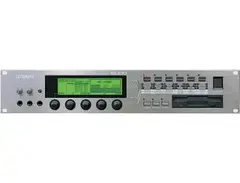
Excellent sampler and realtime effector
This gear has all you want from a fully qualified sampler. Basically it can record from 5 kHz (!!!) mono to 44.1 kHz stereo. Sampling on lower frequencies brings you warm and juicy lo-fi sound. Especially 22.5 kHz recording has a dedicated LoFi option to shape the sound nicely. Audio input can be routed directly to FX stage making this machine a cool outboard signal processor. What makes this sampler apart from the mainstream is the unique workflow, within samples got high authority and got near everything (envelopes, filter + EQ, output and keymapping) attached to every single sample. You can manage them in banks for bulk settings and link them to Programs which are final interfaces for put everything in order. If you never seen such a template, you may facing some day of learning the non-traditional vision of Yamaha's engineers. Darkside: it's SCSI implementation very slow, IDE controller is a bit picky, and OS can't handle basic failures like bad sectors on HDD surface. If you want the best from this gear, you better to get SCSI to SD driver or IDE to SD converter and a 8 GB SD memory card, but you should read about on net, because some type of SD interfaces are not compatible with the A5000. Very, very big sound, you will recognize the taste of some famous track's from 2000-2010!
184
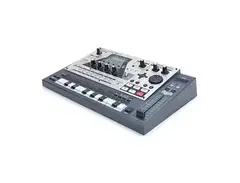
Disappointing
I think all we can agree that a grooveboxes first rule is to let it sounds good and let it handle easy. This one breaks this in first place. The MC-307 came after the MC-505 and before the MC-909, so I don't understand how was this? Because the MC-505 has an excellent sound engine with very useful inventions, the MC-909 is one of the groovebox kings. I felt that the 505 and 909 was instruments in the good meaning in every aspects, but the 307 is just a product. It has all the sounds in the ROM which you find in MC-303 and 505 plus some others which will appeared later in the SRX series. The same patches comes from the 505 sounds far better then when it comes from the 307. It's simple I think, the 505 has the good old sound engine from the MC-303 but on steroids, and both are well designed for its class. The MC-307 is something what is an early SRX tone generator, let we say, a prototype. For me, the well-known practices what I used frequently on other ROMplers, just simply not did the magic on the MC-307. It's just the weakness of the sound engine. Another painful thing is the gap when you switch from one pattern to another. This means you really bound to a one-pattern performances, at least if this gear is your primary on the stage. In other hands, it has a good and easy sequencer, 7 part instrument + 1 part rhythm (so forget the manual switch hihats and drums independently) and a master effect switch to immediate arm all the effects. It has 3 state: on, off, and grab. The last one is a special state, you have to hold the switch or the spring push back to off state. I think it's a good idea for a groovebox. It has a backlit LCD and it's good and informative at all. So finally, I tried hard to like this gear, but then I just packed the whole thing and replaced with a Korg EM-1. And I don't regret.

Como e isso
184
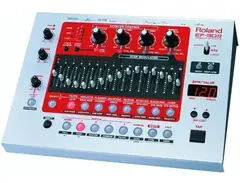
How they get this idea?
You know, when the word "Roland" appears in the same place where three-o-three, somehow you will meet a saturated saw bassline generator. Even if it comes from an effect machine. I don't get how did the engineers at Roland comes to this decision, because EF-303 is a good step-sequencing 20bit effect processor with 14 algorythm plus a DSP-based synthesizer. They meant this for an extension part to their MC-505 and JP-8080 tabletop synthesizers, namely suggest it with "Groove Effects" as this is from the same branch. It has a vocoder-like effect (VOICE), which funny and really cool. The modulation and delay effects (delays, phaser, flanger, chorus, etc) are good enough to radically change the sound, and it can get the BPM from the input signal. Finally, then you have SYN+DL and SYN BASS for synthesizers. The bass synthesizer is why this EF is "303", so you know, it's a TB emulation. SYN+DL is a fixed delay polysynth sound. Now I would ask, why? Because the bass synth sounds far from TB-303, the polysynth sound is boring. And top of all, you can control it by the slider-forest in the main part on the gear as a 16 step sequencer and each fader sets the note number. Not so easy to set a good phrase in realtime, however this machine built to make things right on the stage. Anyway, as an effect box it's intuitive and inspirative, but you will notice, it's really made for live performances, because in the studio, its sound quality fall behind the competitors.
184
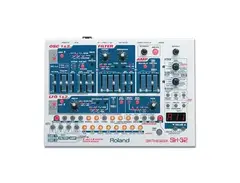
Kidding synth
First of all, I love the shape and workout of this gear. It's like a capacity-building game for kids, or a funny lie-detector from a low-budget sci-fi movie. (Hyphen-words maxed out.) Look that "SYNTHESIZER" label on the right bottom! You can't say it's not a badass layout for a serious scam! Because the SH-32 is a smart rip-off. While all the printed labels and icons, all the manual suggests that it's a virtual analog, because you can switch traditional waveforms for OSC1 & 2 and then add a sub oscillator, in reality it is a rompler. It has some samples, I guess octaves for all basic waveforms, and for the sub oscillator variations. Yes, it's not a real VA, but don't click on the back button quickly, because this synthesizer has all the abilities what a good VA synthesizer can serve. In some cases it can do more. First, it's funny how the DSP works in this cutie. If you playing individual notes between octaves, you will hear correct sounds, because it releases different samples in different frequencies. But if you start to pitch up a continuous voice, you will notice how it works in realtime, because the DSP only replaces the sample in the starting frequency point. Then just patch an LFO to the pitch, and with extreme amplitude and frequency, the DSP suddenly drops any bending algorythm and oversampling (in hardware-era, this is the only fallback if you run out the DSP power, drop processes) and you get a typical chiptune vibration. Compared to real VA's, I felt this a lucky weakness, because try this with a Radias or Virus - the SH-32 sounds far authentic in this. Otherwise, the machine's processing power sometimes really bad. Polyphony is only 32 voice, and one oscillator rents one voice. Since it could be stack 4 parts, 2 osc in a part, if you use all, then one note holds 8 voice at once. This means you can create in full capacity a 4 note chord, but if you want to hear full releases and attacks, you can think in 2 note "chords", because SH-32 will cut the release of a note if run out of polyphony. Sadly, one oscillator voice is a bit wispy in my opinion, so I built great stacks when I designed new sounds. Thanks for the sample-based engine, the sub-oscillator doesn't cost you additional polyphonies, because the playing oscillator tone sample switching to a mixed or clear oscillator sound - hence this, you can't set the mixing rate. It has an outstanding analog-type filter with 12 dB and 24 dB slope and LPF or HPF type. I bet you will not be disappointed, this gear wears the SH and SYNTHESIZER labels because the filter I think. All 4 part has an independent TR-style sequencer, nothing exciting here. It has one insert MFX and one reverb/delay effect, and it can be order to series. Not a big ones, but for arpeggiators and simple leads are ok. I loved this gear, it was one of my first synths in my life. It can be used to quick polysynth lines and powerful leads generally. I don't recommend it for basses because it misses the subtle range, and can't be used for really deep pads because the polyphony restrictions.
184
Rated it 5 star...
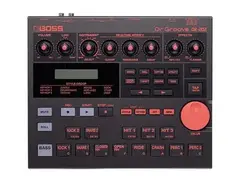
... because in this low-budget drum machine there is a pattern sequencer, a dance oriented sample pack and some bass sound. You can idependently set the sound characteristics on each slot (1 button is 1 slot) and you can modify all of them in realtime. Pity that the sound quality put this cutie into the "toy" category.
184
I bought it, it bought me
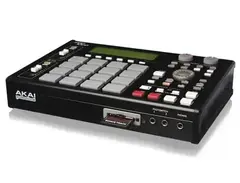
My first sampler was an Akai S2000 which was a budget rack sample player. It didn't impressed me enough since my E-MU 1212m with the Reason NN-XT did the job far-far better. This was around 2004. Then I bought an MPC 1000 in 2011 and the JJOS2XL actual version to replace the annoying Akai OS. So you think, Kontakt or any other software sampler handling things better and more efficient? I bet you will change your mind when you spent a few hour with the MPC1K under JJOS2XL. Far the best and easiest hardware sampler I seen until nowadays. My enthusiasm rooted one hand because the excellent sound engine and another hand because the JJOS2XL operation system. These together makes this beast as a real warrior. It can drive 2 gears outside, and the MPC1K didn't get the terrible MIDI timing problem like the MPC5K, so it can be as precise like any other pro MIDI gear. I tried it in many ways, in the bed at evening, connected my phone's out to the input and sampled some favourite phrase from a science interview with Michio Kaku. On the stage controlling my DAW on the notebook and release some long sample. On my vacation in the hotel room creating the first impressions after an inspirative day. This gear can fit near any situation if you able to plug it. You can expand the memory to 128 MB and add a simple IDE 2.5 HDD. The CF card slot is default. If you don't use the special JJOS2XL format, the basic PGM files can be read by MPC 2500/5000 models. The sequences are compatible except the effects section. For some bad points, it has a terrible workout in physical. If you buy one as second hand, you better to look around for pad set replacement kit, and check the faders if you can!

2532
I really want to try an MPC w/ the JJOS. One of my favorite groups of all time hold it in high regard.
https://equipboard.com/pros/autechre/akai-mpc1000-music-production-center
184
Hammer
I was the last in my gallery who bought THE synthesizer. Unlike other well-known gears, I didn't tried it before, never saw a real world tutorial about it. (For the truth, it was long before, when YouTube was a cute video site which was loaded with some kitty and parrot videos and laughing dogs. Or something like that.) Since than, my opinions changed as I heard many boring whe-whe-wheee type sound aswell with the I'm-sexy-an-I-know-it-type leads. I think, it's a good tool. Like a hammer. Did you see that somebody used the hammer to do something radically different than knocking things? With success? And did you tried to knock-in nails with something other than a hammer (in the same period)? With success??? Similar the Virus C as synthesizer. It's definitely the only synth if you would like to create typical whe-whe-wheees and saw or supersaw leads sounding like the other 16372 pieces of identical motives. You can stack near a hundred of saw signals detuned from 0.01 cents each from others, and you'll get a totally unusable sound-monster. Or you can switch off all the effects and hear the voice of an old and sick mouse while it crying for food. If you are a sound-designer, you'll better look for another gear. Virus C can do anything what is simple and strong. That is tha case what it is built on. I imagine how guys at Access thought the process: we made a bunch of presets for many electronic styles, and our users will just dial in one of them, which is the closest as his/her idea, and then just turn 3-4 rotaries to get the final tone. Play. And it works! Many successful producer used the Virus C, and kept themselves in the business with TI and TI2. Like good workers with good hammers. So if you are firstly a good keyboardist and don't want to messing with the sound, this gear must be in your setup. Otherwise if you like to fine-tune your sounds, or you fell in love with agressive D'n'B or dubstep leads, or your sound is a bit FX-hungry (like experimental or minimal styles) then you could be disappointed.
184
Buy this if you want trance sounds - they said
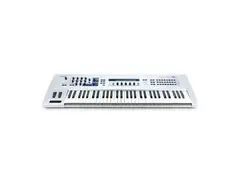
First I had the rack version (CS6R), but with a strange business, I replaced it to the full workstation. So when I first began to make a new preset, I just gone empirical, menu-by-menu, feature-by-feature. And it all amazed me. The ROM sounds are incredible good selection for electronic styles. Really, tell me another synth which has at least so focused and even reach samplepack in it's heart! I can't, because CS6X is truly one of the best EDM synth ever built. That filters! You get many characteristics, in "analog" and "digital" type (the "A" in the filter's name means "analog", while "D" means the "digital" version), and it seems all can scream but "A"-types are more. From raw bass sounds to thin belly tones you can find everything, but don't try the drum sounds, you will be disappointed. Otherwise, arpeggiator is far enough to fire typical house, trance or acid phrases, and best of all, it has something similar to MOTIF pattern audition, so you can bind a style-pattern to a preset. Effects are good and all can make serious changes in the sound. I feel myself a bit stucked with 2 MFX channel + 1 master FX for the whole bunch - but another hand, performance mode has the ability to act like a perfomance mixer console, so you have a 2 band EQ, Chorus, Reverb and MFX send on all the 16 channel, and the summed signal could be processed by the Master FX. After all, this is a rompler, but the good wavetable, the tasty and crazy filters makes this instruments a real well-developed gear ready to make your hits in effectively short period.
184
Best in features, worst in usage
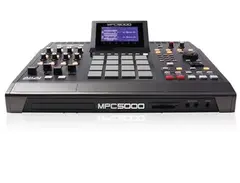
The Akai MPC 5000 is the last serious sampling workstation from Numark Akai. (If we not count the Reneissance-era which is finally just a controller separated from the software in the computer.) Many aspects it's the best MPC ever built, it has a stable HD player, 24bit sampling engine, and built-in synthesizer, as I heard, it's a reduced Alesis ION packed. (You may know, Numark bought Alesis too.) Other aspects, it's the worst MPC ever built, not so stable disk-operations, relatively slow loading, bad MIDI timing (wtf Akai pls!!! bad MIDI timing in a drum-computer??? are you serious???) and frustrating restrictions which are making really bad reputation of this machine. Of course, it's not completely unusable, but you may expect long learning time to bypass hidden mines. Like the HD option: you can play from harddisk only in song mode. It's because the topology of the system, since HD play is bound to virtual tracks which are exists only in song mode. After all, if this not enough, in song mode, you can't switch to pattern view, so you can't even change tracks! That means you can't change what you want to play over song mode. The only way to achieve this is to connect a MIDI controller to your MPC5K, and set the MIDI option that program change message initiates a track-change, because the MIDI implementation still enabled over song mode. Another annoying bug is the Q-Link stuff: when you first loads a pattern, Q-Link settings are not loading till you doesn't open the Q-Link settings page. After you opened once, settings are restored and you can leave the page. Seriously. I completely disappointed when I discovered, that MPC5K engine is just a litllet bit slower than the real BPM tempo. Like 0.01 or something around. Unfortunatelly, you can set the tempo in 1 decimal, like 125.1. So you can't really fix this problem inside the MPC. Instead you can slave it to outside, like from computer or other gear. It's just annoying because MPC5K built to be the center of the studio, and it can't be, because it's always fall behind all the good timed gears. (Or if you dedicate that the MPC let the BPM master to all other gear, some of them may supports only whole numbers as tempo, and you can hear a small desynchronisation and finally a small gaps time to time when these are resyncing itself after every 4 bar playing hence the minor tempo change.) In other side, the built in synthesizer is awesome. It's simple and has not so many modulation and patching opportunities, but it sounds really well, sending into the EQ and compressor serial, it could be far good to make basses, leads and fx. It's not the best for pads and lucious motion sounds, but at least it doesn't want to be more than it is. The sequencer is fckyeah-good, after you learnt how it works, you got the world's fastest workstaion even if you want to drive outside modules, or just want to messing around the 64 tracks at your service. The sound engine is no-compromise, I promise you will love it. You can load the same .wav file into your DAW and the MPC5K and you will notice the difference. Effects are so-so, some of them making radical changes (distorsion, amp models, EQ) and some are actually not (phaser - I don't understand how they thought this). Delays are good ones, but if you want to reverb a sound, you should look something other than built-in algorythms. All-in-all: if you want a very outstanding sampler for it's sound plus a far enough synth engine to bass, leads and polysynth tones, and maybe you can deal with the very strict HD playing, then this machine will be your love. You will like it even if the problems above are annoying for you - but you have to pair it to another gear like me. I'm driving it with an E-MU XL-7 Command Station, and it seems all my problems are gone... for a while. Tip: if you would like to buy an Akai sampling workstation for it's sound, but without all these problems and you don't mind the built-in synthesizer, you can choose from 2 options: buy an Akai MPC 2500 and JJOS2XL hacked OS for it, or buy an Akai MPC 4000 which near the same, except the flash memory rack, the built-in synthesizer and HD rec/play - but you get ak.sys OS (best Akai OS ever), you can boost the RAM to 512 MB and it has a good MIDI implementation with stable operation.
184
Most incredible digital synth
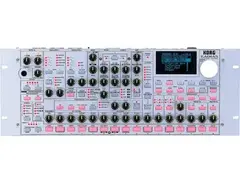
When you start to use one, you become an addict. It's not analog, it's digital and something. I don't know. It's just Radias. Identificable, you can't confuse its sound hence the continuous morphing dual filters and very edgy oscillators. It's a strange hybrid, the first oscillator can be operate as a traditional signal source and in this mode you can switch to cross mode (crossfades the second oscillator), unison mode (a.k.a supersaw, supersqure, supertriangle and supersine) and VPM mode (I don't really understand how it works, but it creates typical metal bell sounds). It can operate as a wavetable oscillator with 64 very different waves and usual others: Noise, Formant and DrumPCM mode. Formant mode is another good one, because Radias has the ability to record your voice and it stores the formants. Then you can use it as a formant source which brings many fun for creating robot voices and other stupid or sci-fi related humanoid sounds. Effects are exceptionally good, but it lacks DSP power, so when you set a delay and reverb on the same tone, the delay time is reducing to 1 sec. Rotary and TalkingMod effects renting all the two FX slot for a tone, so they can use alone. Otherwise, virtual patch system reminds me to the E-MU engine, and God bless the internal audio bus, then you can internally mix and vocode your tones making really exclusive sounds and beatrhythms. It has an arpeggiator, 2 x 32 step polyphonic sequencer, and Korg's other magic invention, the ModStep which is basically a 3x16 step-sequencer for modulate parameters on every tone independently, and it can run free or keysynced, of course can be triggered by the master arpeggiator or step sequencers. Guess the potentials... So it's a digital synth with a modular-like patching system and a VST-like interface. It has very deep programming possibilities, and factory presets are good represention of the features and opportunities. For me, it's far better than a Virus TI, but of course, it's only personal. (I had a Virus before too.) Oh, and a sidenote:it has a template system for tones. When you start sound-sculpturing, you can just dial in the best starting tone from the 128 overwritable synth template. :) You can save your typical tones as templates. So literally you can build your personal style-machine from this one. :)
184
Mine lost 5 from the 8 faders cap...
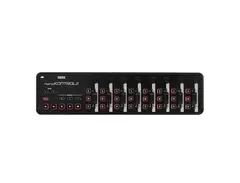
Korg created this for extreme mobility. But when you start to pack in and out frequently, it starts to drop its fader caps. So Korg pls!
184
I love it!
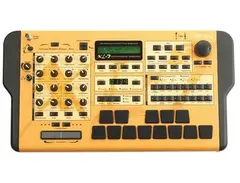
As a tabletop synth gear, it has a suprisingly deep sequencer and very easy access controls. Many cases it just better than Ableton Live or Machine software, because instant and encourage creativity. S/PDIF is a bit choosy, but you have 2 stereo sub output. MIDI is awesome, and it can act as a sound module. But why you want use this as a sound module if this machine born to take control?! :)