

Pricing and availability
We compare 600+ stores and found this item at 1 store. Prices updated .
Store
Reviews
Price




* Product prices and availability are updated by Equipboard every 24hrs and are subject to change. Equipboard may receive compensation for purchases made at participating retailers linked on this site. This compensation does not affect what products or prices are displayed, or the order of prices listed. For more information, please refer to our affiliate disclosure.
Description
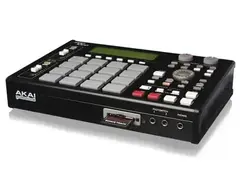
Unleash your creative potential with the Akai MPC 1000, a modern classic that seamlessly bridges the gap between vintage charm and contemporary innovation. Designed for both seasoned professionals and budding producers, this Music Production Center offers a robust array of tools perfect for crafting your next hit. The MPC 1000 is equipped with the iconic 16 velocity-sensitive pads that have become synonymous with Akai's reputation for excellence, providing a tactile and responsive interface that musicians and producers have trusted for decades.
Experience unparalleled flexibility with its extensive sampling capabilities, allowing you to manipulate and mold sounds in ways only limited by your imagination. Built with onboard time-stretch and pitch-shift features, the MPC 1000 empowers you to sculpt your tracks with precision and ease. Its compact design belies a powerhouse of features, including four pad banks, ensuring you never run out of creative options.
Join a community of artists who have made the MPC series a staple in their toolkit. Whether you're crafting beats in your bedroom studio or performing live on stage, the MPC 1000 is your ticket to sonic exploration and musical mastery.
Key Features:
- 16 velocity-sensitive pads for dynamic performance
- 16 MB of sampling memory, expandable for more extensive projects
- Onboard time-stretch and pitch-shift capabilities
- Four pad banks for extensive control
- Two MIDI inputs and four MIDI outputs for seamless integration
- Compact design perfect for studio and live use
Product specs
| Brand | Akai |
| Model | MPC1000 Music Production Center |
| Finish | Black, Blue |
| Year | 2004 - 2013 |
| Made In | Japan |
| Categories | Drum Machines, Samplers |
| Analog / Digital | Digital |
| MIDI I/O | MIDI Input, MIDI Output, USB MIDI |
| Number of Pads | 16 Pads |
| Polyphony | 32 Voices |
FAQs
-
What are the key features of the Akai MPC 1000's sound engine?
-
The Akai MPC 1000 features a digital sound engine with 32-voice polyphony, allowing for complex layering and sequencing. It includes 16 velocity-sensitive pads for dynamic control and a range of onboard effects for versatile sound shaping.
-
How does the Akai MPC 1000 integrate with other MIDI devices?
-
The Akai MPC 1000 offers MIDI Input and Output, as well as USB MIDI connectivity, making it easy to integrate with other MIDI devices and DAWs for expanded production capabilities.
-
Is the Akai MPC 1000 suitable for live performances?
-
Yes, the Akai MPC 1000 is designed to be compact and portable, making it ideal for on-the-go music production and live performances. Its intuitive interface and robust build support reliable use on stage.
-
Can the Akai MPC 1000 be upgraded for better performance?
-
Yes, the Akai MPC 1000 can be upgraded with additional RAM, improved pads, and expanded memory, enhancing its performance and usability for more demanding production tasks.
-
What kind of music production is the Akai MPC 1000 best suited for?
-
The Akai MPC 1000 is versatile and well-suited for various music production styles, including hip-hop, electronic, and sample-based music, thanks to its powerful sampling capabilities and intuitive sequencing.
Videos

Ricky Tinez
MPC 1000 Only House Music // Compact Creations 016
MPC 1000 Only House Music // Compact Creations 016
Ricky Tinez
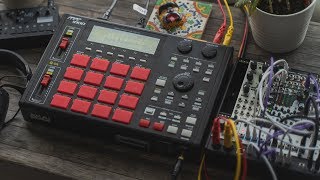
MPC 1000 + Modular Live Setup // Way more fun than i thought.
Ricky Tinez
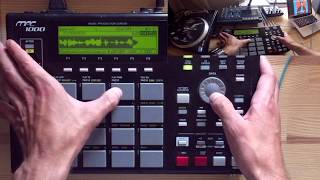
Beatmaking Process AKAI MPC 1000

Ghetto Dwella
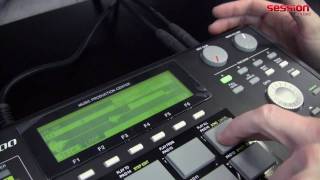
AKAI MPC-1000

session
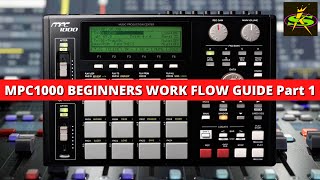
AKAI MPC 1000 Full Workflow Guide for Beginners Part 1

SampleKings
MPC 1000 Pros and Cons : My perspective and why I love it!

Re-sampled
Akai MPC 2000XL vs MPC 1000

vintagestereos
Mpc 1000 Fat Pad upgrade from MPCstuff.com

Ken Flux Pierce Fluxwithit
Exploring A 19 Year Old Sampler In 2024 - Akai MPC 1000 JJOS2XL - NervousCook$

NervousCook$
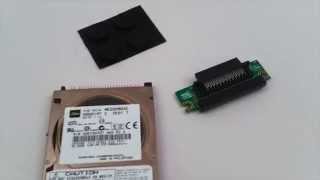
Akai MPC1000 Hard Drive Kit HDM10 V2 Installation - MPCstuff com

mpcstuff
MPC ONE Vs MPC 1000 With JJOS. There can only be 1!

PPIC
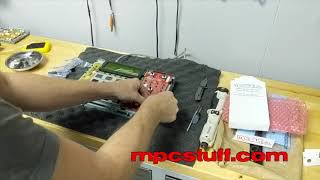
Akai MPC Full Repair Upgrade and Refurbishment from MPCstuff com
mpcstuff
MPC 1000 Journey. Was it worth it?
PPIC
Akai MPC 1000 128Mb memory upgrade

ranzee
MPC 1000 Update. Turn your MPC 1000 to an MPC Live.
PPIC
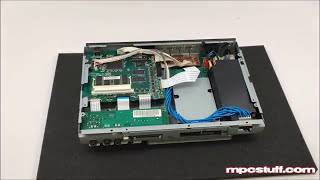
Akai MPC1000 - HDM10 V2 - Install (please see other HDM10 V2 Install video first)
mpcstuff
LETS TEST: Akai MPC1000 MPCstuff Replacement pads VS Modified Stock Pads

Tim Whitt Sound
Reviews
PROS
-
Upgradeable OS and RAM enhance functionality
-
Excellent MIDI sequencing and comprehensive studio gear control
-
Inspirational workflow ideal for experimental musicians
-
Direct, raw sampling and editing experience
-
Compact, powerful sequencer with tactile advantage over software
-
Versatile for live performances and studio production
-
Pads and buttons can be upgraded for improved user experience
-
Compatible with a range of external gear without MIDI timing issues
-
Essential tool for hip-hop beat production
-
JJOS2XL significantly boosts sampler capabilities
CONS
-
Learning curve due to its complexity and 1980s technology base
-
Stock operating system and RAM may need upgrades for full potential
-
Pads and CF card reader prone to wear and malfunction
-
Aftermarket JJOS requires additional purchase for full functionality
-
Physical build quality varies; some units have durability issues with buttons
-
Misleading information about included OS in second-hand sales
Owner Insights
We analyzed real musician discussions from forums and Reddit to find what players love, question, and tweak about Akai MPC 1000.
Features and functionality
-
Users note the MPC 1000 lacks extensive EQ and FX, requiring external processing for polished tracks, unlike the MPC One which offers more built-in options.
Source -
The MPC 1000's USB is solely for file transfer and operates slowly, making MIDI over USB unavailable and necessitating traditional MIDI connections for external gear control.
Source
User experience
-
Many users prefer the MPC 1000's streamlined workflow with JJOS for boombap beats, though it requires familiarity to maximize its efficiency.
Source -
Owners enjoy the creative limitations of the MPC 1000, as it encourages a focused approach to music production, differing from feature-rich modern models.
Source
Mods and upgrades
-
The MPC 1000 can be upgraded from compact flash to SD cards, addressing one of the storage limitations.
Source -
JJOS enhances the MPC 1000's capabilities, allowing real-time cycling through stereo and mono sound parameters, improving workflow efficiency.
Source -
JJOS adds advanced sequencing, MIDI enhancements, and looper mode to the MPC 1000, though high polyphony can occasionally cause lag.
Source
Comparisons
-
While the MPC 1000 is praised for its simplicity, the MPC One is considered better for those seeking an all-in-one solution with modern features.
Source -
Owners note the MPC 4000 is the only model with an internal synth, highlighting the 1000's reliance on external synths or samples for sound creation.
Source -
The MPC 2500 is highlighted as superior to the 1000 in terms of pad quality, with some users recommending it over newer models.
Source
Use cases and applications
Software and compatibility
-
The MPC 1000 requires syncing with a DAW or external FX for full track production, unlike the more self-contained newer models.
Source
Build quality
-
The MPC 1000 is recognized for its ease of repair and customization, making it a durable option for users looking to maintain or upgrade their gear.
Source -
Original MPC 1000 red/blue models had individual pads that required upgrades for better durability; updated 1000-blk models have improved pads.
Source
Critic Reviews
4.5 out of 5
Based on 19 Reviews and 77 Ratings

141
an absolutely spellbinding machine
(disclaimer: this review is from the perspective of someone who does not use jjos because she keeps forgetting to try it and is way too used to the most recent version of the akai os because it does its job. i still think the akai os is amazing but know that my review deals primarily with that experience rather than the souped-up jjos experience).
ok. i've been using this thing for a little under a year in the context of glitched-out raw beats and other compositions. i bought a unit off of reverb with the entirety of my first two paychecks out of a fascination with the sampler world and a need for something to sequence all my other midi equipment at once, and i could not have been more excited about it when it showed up in late july. i had come from owning a sp-404a for a few months and working in a computer daw and a hardware recorder for years beforehand, but trust me, this is a different beast from any of that. at any rate, everything about it was in working order, the blue-and-red case was alluring as hell, and with time, it proved to be the endless world of possibility i thought it was going to be when i placed that order. it did take a while to learn: my first few months with the machine understandably resulted in a lot of ooo-shiny moments where i couldn't see the simple beauty of the mpc1000, but soon enough, it started to shine through. what's beautiful about this machine, you might ask? it's raw. it puts you in direct, uninterrupted contact with the audio you record into it. from the get-go, there is almost nothing abstracting your editing experience. you sample something off your record player or synth, take it to the trim menu, move the sliders around, and cut up what you've recorded however you like. it makes chopping far more flexible than an auto-timestretched, tempo-synced format and allows for timings and loops far beyond the ordinary framework of the "chop" that you might associate with the mpc workflow. this machine is far, far more than it's made out to be in that regard; if you open yourself up to ideas like this, the trim and program features can take you just about anywhere you want to go. i've used creative trimming along with the programmable filters, envelopes, and lfos to create everything from novel melodies of colliding snippets of records i've collected to single-cycle oscillating digital tones that i can treat like tunable, malleable synths inside of the unit. all this time, i never have to worry about running out of memory even though i work mostly with stereo samples; 128mb is surprisingly spacious and lets you take your mind off of the technical side of things and almost forget that you're working with a machine to begin with. what about the sequencer, you may ask? equally amazing in its elegance and form. the midi/drum/whatever track system allows for complex, gradual variations in all sorts of sequence data and coexists beautifully with other live performance techniques, as the track-mute and next-sequence screens are only a single button-press away at all times. quantization also works like a charm, and the classic mpc variable swing combined with the sheer variety of options for time correction (or lack thereof!) is an excellent touch that allows for nuanced relationships between tracks and elements inside and outside the machine, with smooth looping that allows for like, an entire song with a complete progression within a single multitracked 8- or 16-bar loop (adding and subtracting elements via track mute), and thus also a whole live set within a few of those loops, readily accessible through the next-sequence menu. this brings us back to the idea of being in direct contact with your data: there are no abstractions here, only immediately accessible sequence events at 96ppq. beautiful, isn't it? i challenge you to find the same rawness and directness in a newer sampler.
overall, while i wouldn't say this machine (or any other given machine, for that matter) is for everyone, i would recommend it to just about any experimentalist musician who loves working with samples, is willing to commit to learning a new instrument (because that's what this is, a whole instrument!), and values raw functionality and capability. people like to discuss how "limitations breed creativity" when they work on this machine, but really, it's quite the opposite: the mpc1000 lays out previously unimaginable possibilities before your eyes, and it's up to you to discover them. god, what a wonderful instrument.
Preferred Settings + Usage:
mute groups are absolutely awesome. use your mute groups to the fullest :)

91
Timeless piece
Crashed on this after exploring so many different samplers. The capability of the MPC1000, even by today's standards, is amazing. Lots of modern-day groove boxes don't allow for Phrase-sampling i.e. longer samples that stretch across multiple bars, however this is right up the MPC's alley. It's clunky, and it's specs don't compare to the newer MPC Lives etc, however the 1000's limitations are what make it great. The dusty sound has it's own character, and ranges from quite transparent to very colourful, depending on how you process the master output. JJOS upgrade and memory increase are essential for enhanced capability. Pad upgrade is also important depending on which line of MPC1000s you get. I have them, but as an electronic artist that triggers mutes and unmutes of tracks with the pads, rather than plays the pads live (i.e. hip hop), it's not a huge deal.

184
I bought it, it bought me
My first sampler was an Akai S2000 which was a budget rack sample player. It didn't impressed me enough since my E-MU 1212m with the Reason NN-XT did the job far-far better. This was around 2004. Then I bought an MPC 1000 in 2011 and the JJOS2XL actual version to replace the annoying Akai OS. So you think, Kontakt or any other software sampler handling things better and more efficient? I bet you will change your mind when you spent a few hour with the MPC1K under JJOS2XL. Far the best and easiest hardware sampler I seen until nowadays. My enthusiasm rooted one hand because the excellent sound engine and another hand because the JJOS2XL operation system. These together makes this beast as a real warrior. It can drive 2 gears outside, and the MPC1K didn't get the terrible MIDI timing problem like the MPC5K, so it can be as precise like any other pro MIDI gear. I tried it in many ways, in the bed at evening, connected my phone's out to the input and sampled some favourite phrase from a science interview with Michio Kaku. On the stage controlling my DAW on the notebook and release some long sample. On my vacation in the hotel room creating the first impressions after an inspirative day. This gear can fit near any situation if you able to plug it. You can expand the memory to 128 MB and add a simple IDE 2.5 HDD. The CF card slot is default. If you don't use the special JJOS2XL format, the basic PGM files can be read by MPC 2500/5000 models. The sequences are compatible except the effects section. For some bad points, it has a terrible workout in physical. If you buy one as second hand, you better to look around for pad set replacement kit, and check the faders if you can!

2532
I really want to try an MPC w/ the JJOS. One of my favorite groups of all time hold it in high regard.
https://equipboard.com/pros/autechre/akai-mpc1000-music-production-center

125
Quick and Easy
Nothing i've used so far is as quick and easy for laying down rhythms and quick melodies. JJ OS2XL - turns it into a pretty powerful sequencer for all my synthesizers as well. I find it more efficient and tactile than using Ableton with less hassle. More fun for live performances as well. Studio in a box. Down side is the learning curve and getting around the fact that it's really 1980s tech... but using what works is what counts, not how fancy your gear is.

159
Regret that I sold it..
This was my first hardware device for music production and I completely regret selling it. I’ll probably end up getting another one in the future as it’s a perfect package when it comes to an MPC. Very versatile, very fun, can generate immmediate musical results.
I had the first one back in the day. It's been a very long time since I've made any music. As the game has changed, I'm more excited than ever to get started again.

41028
oh wow, people still use the MPC? Or is it getting to be an old enough design to be retro? This was THE hiphop sampler for awhile, but its really too hifi sounding to ever be cool because of its weird sound artifacts...

146
Full featured and portable
I've only had the unit for about a month, but I'm loving it. The amount of power packed into this thing is incredible. Like just about everyone, I've upgraded the Operating System to JJOS2XL. Wouldn't trade it for anything. This is a piece that will stay in my studio until the end of time. Guaranteed.
105
Great workhorse
This is my workhorse during my live performances. I use the JJOS2xl on it. Very stable midi in and out. Solid as a rock.

98
I use this for sequencing the hardware of my setup
updated to jjos2 and 128mb RAM It's the heart of my production chain, specially for his midi features!
Artist usage
Add artist
.jpg)
On John's Instagram, "Writer's room/Titanfall download waiting lounge."

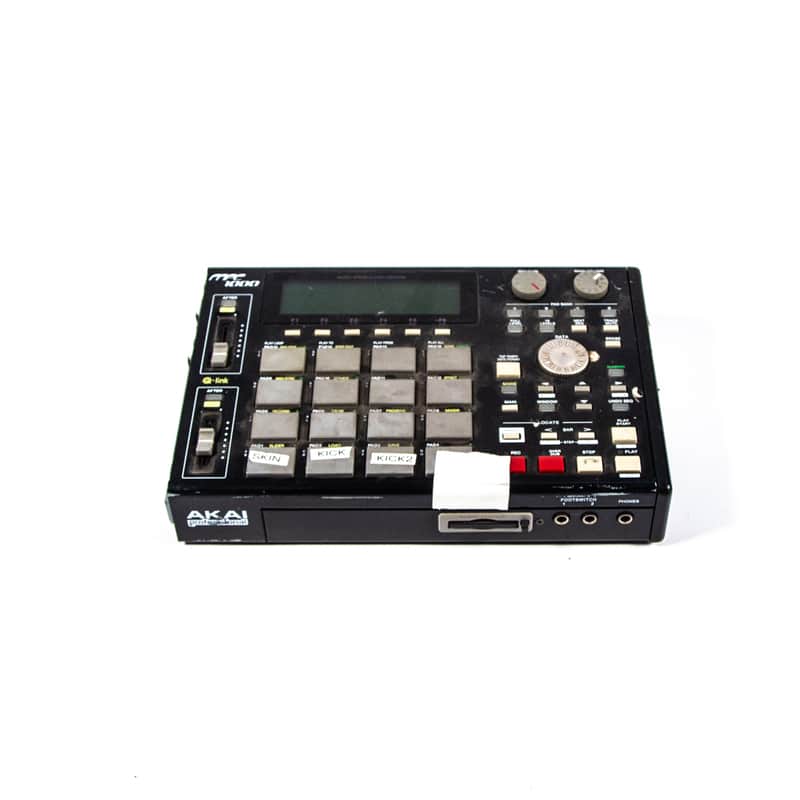
This Akai MPC1000 was Owned by Dave Mustaine


Mike demonstrates how he puts a beat together through this short video.


In this video of The XX performing in in the KEXP studio the pair of Akai MPC 1000 can be seen at 20:59


"If we're disregarding any computers here just for this Q, I would give the mpc1000 a good exercise with its JJOS now n then. Our RS integrator is a worthy distraction too. DMX has always been there for me too."
Rob Brown on WATTM AAA


"The drums are all either vintage drum machines, or an Akai MPC1000, which is one of the two smallest ones. It has a clean sound, and makes everything really punchy and loud. I’ll sometimes sample, say, a kick from the DrumTraks into it, if I want it to have a more bottom-y, compressed sound."


In this video Alex Trimble can be seen using the Akai MPC 1000. Alex can be seen using the MPC in this video as well at 2:33. He appears to be using to trigger samples for the organ part of the song "Eat That Up, It's Good For You".


in this instagram post Szary is seen using a Mpc 1000 in rehearsal for the "Moderat 3" tour


At 2:34 in the YouTube video titled "Inside Real World Studios, Peter Gabriel's recording sanctuary" by The Vinyl Factory, an artist can be observed using a pair of Akai Professional MPC1000 Music Production Centers in Peter Gabriel's studio, providing evidence of the gear's presence there.


Dave used this for early performances of "blackout" before switching to using a Starr labs ztar as a midi controller


The sampler is used in several live performances as a part of a custom instrument


Album Usage
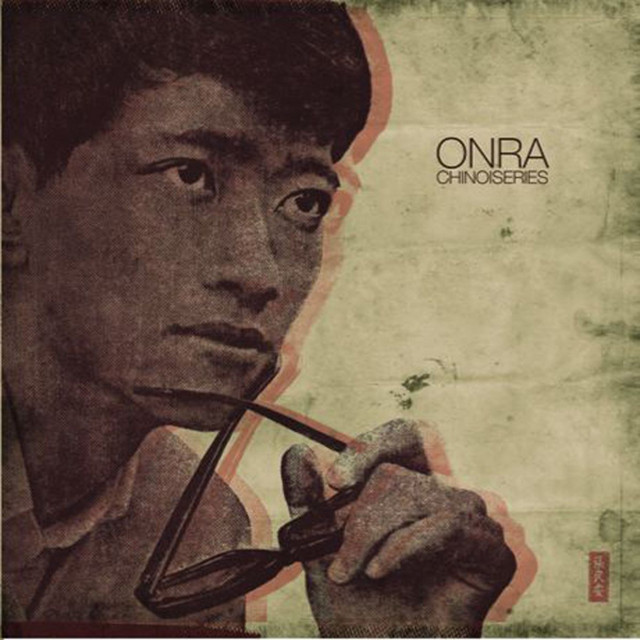
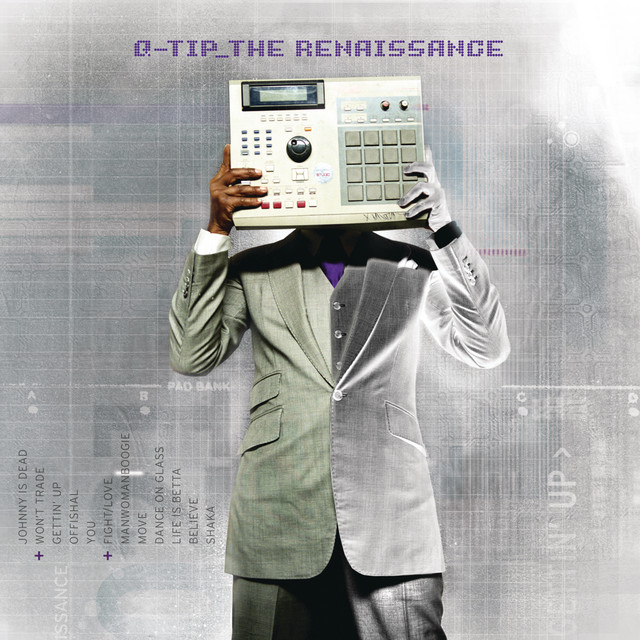
The Akai MPC 1000 has been featured on the following albums:


Genre Usage
Based on how artists on Equipboard use this gear, it is most commonly found in the following genres.
Used With
Based on how musicians on Equipboard use Akai MPC 1000, it is most commonly used with the following gear.
-s.webp?v=1784818708)


-s.webp?v=1784559385)

-s.webp?v=1784818703)
Community setups
Show yours


Similar
Add recommendation2 alternative and related items for Akai MPC 1000, curated by the Equipboard community.

$225.00

$152.12
The 2500 was similar to the 1000 but with extra q links, extra midi outs, and larger screen.
More Akai Production & Groove

$939.00 - $999.99
in Production & Groove Rank

$400.00 - $1,299.00
in Production & Groove Rank


-m.webp?v=1784818735)
$475.00
in Production & Groove Rank


$1,499.00 - $1,899.99
in Production & Groove Rank
.jpg?v=1784733415)


$350.00 - $728.00
in Production & Groove Rank


$149.00 - $285.57
in Production & Groove Rank
.jpg?v=1784733418)


$1,487.35 - $2,299.00
in Production & Groove Rank


$320.16 - $899.00
in Production & Groove Rank


$699.00 - $1,299.00
in Production & Groove Rank


$152.12
in Production & Groove Rank


$85.30 - $119.00
in Production & Groove Rank

.jpg?v=1783774944)


$952.49
in Production & Groove Rank


$225.00
in Production & Groove Rank


$3,000.00
in Production & Groove Rank


$4,000.00
in Production & Groove Rank


$642.99 - $899.00
in Production & Groove Rank


$535.45
in Production & Groove Rank


$972.13 - $1,499.00
in Production & Groove Rank


$575.00
in Production & Groove Rank


$1,159.99 - $1,499.00
in Production & Groove Rank


$3,200.00
in Production & Groove Rank


$220.00 - $428.00
in Production & Groove Rank


in Production & Groove Rank


$139.99 - $278.00
in Production & Groove Rank


-m.webp?v=1784813424)
$568.00 - $699.00
in Production & Groove Rank
.jpg?v=1784640202)

$715.00
in Production & Groove Rank


$149.00 - $199.00
in Production & Groove Rank

$835.00
in Production & Groove Rank


-m.webp?v=1784819517)
$550.00
in Production & Groove Rank


$110.25
in Production & Groove Rank


$199.00 - $399.00
in Production & Groove Rank
![Akai MPC 4000 [Blue]](https://images.equipboard.com/uploads/item/image/42853/akai-mpc-4000-blue-m.webp?v=1784819060)
$535.45
in Production & Groove Rank


$1,149.00 - $2,599.00
in Production & Groove Rank


$100.00
in Production & Groove Rank


$475.00
in Production & Groove Rank


Accessories & Related Items


-s.webp?v=1784813424)
Gear Guides




Most Popular Production & Groove
Most Popular Brands
-
Added to Equipboard on by
bgrassfieldGearIQ 184
-


