

Pricing and availability
We compare 600+ stores and found this item at 1 store. Prices updated .
Store
Reviews
Price




* Product prices and availability are updated by Equipboard every 24hrs and are subject to change. Equipboard may receive compensation for purchases made at participating retailers linked on this site. This compensation does not affect what products or prices are displayed, or the order of prices listed. For more information, please refer to our affiliate disclosure.
Description
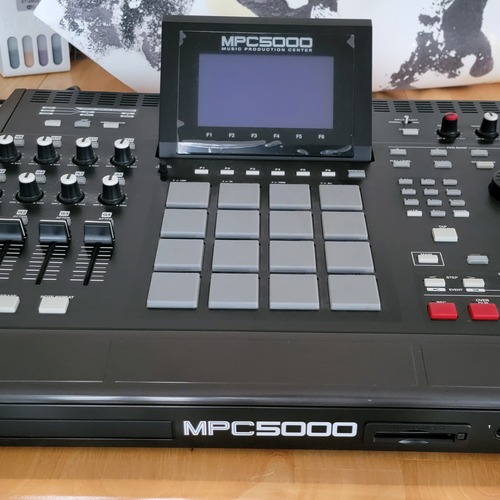
The Akai MPC 5000 is an adept and compact fusion of performance and production. Designed in collaboration with the legendary electronic engineer, Roger Linn, this device is more than just a drum machine. It's an interactive musical playground, merging old-school hip-hop allure with modern production capabilities. Its signature rubber squares allow for tactile interaction, while its extensive sampling and MIDI sequencing capabilities open up a world of creative possibilities. Whether you're a vintage hip-hop enthusiast or a cutting-edge music producer, this versatile instrument is the key to unlocking your musical potential.
Key Features:
- Developed in partnership with electronic engineer Roger Linn
- Interactive interface with signature rubber squares
- Extensive sampling abilities and MIDI sequencing
- Popular production tool in both old-school and modern hip-hop and rap
- 16 touch pads, enabling a wide range of musical expression
- Virtual analog synthesizer and arpeggiator for creating complex sounds and patterns
- 64 MB sampling memory for storing your favorite sounds
- 64-voice drum and phrase sampler for layering beats and melodies
- Four pad banks for organizing your sounds and samples
- One MIDI input and one MIDI output for connecting to other devices
Product specs
| Brand | Akai |
| Model | MPC5000 Music Production Center |
| Finish | Black |
| Year | 2008 - 2013 |
| Categories | Drum Machines, Samplers |
| Analog / Digital | Digital |
| MIDI I/O | MIDI Input, MIDI Output, USB MIDI |
| Number of Pads | 16 Pads |
| Polyphony | 64 Voices |
FAQs
-
What are the standout features of the Akai MPC 5000?
-
The Akai MPC 5000 features a built-in virtual analog synthesizer, 8-track direct-to-disk recording, and 64-voice polyphony, making it a powerful tool for music production and live performance.
-
Is the Akai MPC 5000 suitable for standalone use?
-
Yes, the Akai MPC 5000 is a standalone music production center, allowing you to create and perform music without needing a computer.
-
How many pads does the Akai MPC 5000 have?
-
The Akai MPC 5000 comes equipped with 16 velocity-sensitive pads, providing dynamic control for drum programming and sample triggering.
-
Does the Akai MPC 5000 support MIDI connectivity?
-
Yes, the Akai MPC 5000 includes MIDI Input and Output ports as well as USB MIDI, enabling integration with other MIDI-compatible gear.
-
What type of synthesis is built into the Akai MPC 5000?
-
The Akai MPC 5000 features a built-in virtual analog synthesizer, offering a range of customizable sounds for music production.
Videos

AkaiProVideo
Akai Pro MPC5000: Overview
Akai Pro MPC5000: Overview
AkaiProVideo
Akai MPC5000 with Steve Mowat

Store DJ
AKAI MPC 5000 FULL WORK FLOW FOR BEGINNERS PART 1

SampleKings
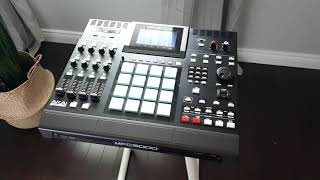
My "new" Akai MPC 5000 - my opinion so far

vintagestereos
How Akai doomed its hardware MPC in 2008. MPC 5000 Thoughts

Hypebeast Dad
History of the AKAI MPC: Part 10 The MPC5000
SampleKings
What You Need to Know about Akai MPC 5000, the Good and the Bad!

Petrol Media
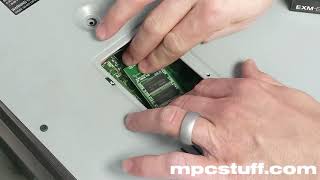
Akai MPC5000 RAM Upgrade Installation - MPCstuff.com

mpcstuff
Reviews
PROS
-
Outstanding sampling engine and sound quality
-
Great workflow, ideal for vinyl sampling
-
Stable HD player and 24-bit sampling
-
Built-in synthesizer with quality sound for basses, leads, and FX
-
Superior sequencer and fast workstation with 64 tracks
-
Distinctive sound engine enhances .wav files noticeably
-
Effective for live drum performing and sequencing
-
Mixes analogue and digital inputs well
-
Some effects (distortion, amp models, EQ) offer radical improvements
CONS
-
Slow loading times and unstable disk operations
-
Poor MIDI timing for a drum machine
-
Frustrating restrictions and long learning curve
-
Hard disk play limited to song mode
-
Q-Link settings not loading properly
-
Built-in effects like reverb are subpar
-
Minor tempo desynchronization issues
Owner Insights
We analyzed real musician discussions from forums and Reddit to find what players love, question, and tweak about Akai MPC 5000.
Build quality
-
An owner noted the 5000 is built like a late 80’s Fiat, suggesting potential reliability issues.
Source
Features and functionality
-
Some users highlight the internal hard drive capability as a standout feature for loading drum kits and samples.
Source -
The built-in VA synth engine is comparable to the Alesis Fusion, offering a unique aspect not found in newer MPC models.
Source -
The MPC 5000 allows for swapping in an SSD for improved storage and performance, enhancing its usability as a flagship model.
Source
User experience
Software and compatibility
Value and pricing
-
Despite mixed reviews, the $600 price tag is considered a good deal by several users, given its historical pricing.
Source
Critic Reviews
4.5 out of 5
Based on 5 Reviews and 14 Ratings

184
Best in features, worst in usage
The Akai MPC 5000 is the last serious sampling workstation from Numark Akai. (If we not count the Reneissance-era which is finally just a controller separated from the software in the computer.) Many aspects it's the best MPC ever built, it has a stable HD player, 24bit sampling engine, and built-in synthesizer, as I heard, it's a reduced Alesis ION packed. (You may know, Numark bought Alesis too.) Other aspects, it's the worst MPC ever built, not so stable disk-operations, relatively slow loading, bad MIDI timing (wtf Akai pls!!! bad MIDI timing in a drum-computer??? are you serious???) and frustrating restrictions which are making really bad reputation of this machine. Of course, it's not completely unusable, but you may expect long learning time to bypass hidden mines. Like the HD option: you can play from harddisk only in song mode. It's because the topology of the system, since HD play is bound to virtual tracks which are exists only in song mode. After all, if this not enough, in song mode, you can't switch to pattern view, so you can't even change tracks! That means you can't change what you want to play over song mode. The only way to achieve this is to connect a MIDI controller to your MPC5K, and set the MIDI option that program change message initiates a track-change, because the MIDI implementation still enabled over song mode. Another annoying bug is the Q-Link stuff: when you first loads a pattern, Q-Link settings are not loading till you doesn't open the Q-Link settings page. After you opened once, settings are restored and you can leave the page. Seriously. I completely disappointed when I discovered, that MPC5K engine is just a litllet bit slower than the real BPM tempo. Like 0.01 or something around. Unfortunatelly, you can set the tempo in 1 decimal, like 125.1. So you can't really fix this problem inside the MPC. Instead you can slave it to outside, like from computer or other gear. It's just annoying because MPC5K built to be the center of the studio, and it can't be, because it's always fall behind all the good timed gears. (Or if you dedicate that the MPC let the BPM master to all other gear, some of them may supports only whole numbers as tempo, and you can hear a small desynchronisation and finally a small gaps time to time when these are resyncing itself after every 4 bar playing hence the minor tempo change.) In other side, the built in synthesizer is awesome. It's simple and has not so many modulation and patching opportunities, but it sounds really well, sending into the EQ and compressor serial, it could be far good to make basses, leads and fx. It's not the best for pads and lucious motion sounds, but at least it doesn't want to be more than it is. The sequencer is fckyeah-good, after you learnt how it works, you got the world's fastest workstaion even if you want to drive outside modules, or just want to messing around the 64 tracks at your service. The sound engine is no-compromise, I promise you will love it. You can load the same .wav file into your DAW and the MPC5K and you will notice the difference. Effects are so-so, some of them making radical changes (distorsion, amp models, EQ) and some are actually not (phaser - I don't understand how they thought this). Delays are good ones, but if you want to reverb a sound, you should look something other than built-in algorythms. All-in-all: if you want a very outstanding sampler for it's sound plus a far enough synth engine to bass, leads and polysynth tones, and maybe you can deal with the very strict HD playing, then this machine will be your love. You will like it even if the problems above are annoying for you - but you have to pair it to another gear like me. I'm driving it with an E-MU XL-7 Command Station, and it seems all my problems are gone... for a while. Tip: if you would like to buy an Akai sampling workstation for it's sound, but without all these problems and you don't mind the built-in synthesizer, you can choose from 2 options: buy an Akai MPC 2500 and JJOS2XL hacked OS for it, or buy an Akai MPC 4000 which near the same, except the flash memory rack, the built-in synthesizer and HD rec/play - but you get ak.sys OS (best Akai OS ever), you can boost the RAM to 512 MB and it has a good MIDI implementation with stable operation.

206
Production Centre
Best for live drum performing, good for sequencing, enough to mix analogue and digital inputs. Also enough to prepare synthetic sounds from the scratch. I mainly using it as master connected to the rest of my gear


Used heavily when bought making it impossible to do some of the most desired functions. but still builds the prettiest synth sounds and is stellar A+
Used heavily when bought making it impossible to do some of the most desired functions. but still builds the prettiest synth sounds and is stellar A+
Artist usage
Add artist

Patrick: "The MPC 5000, that's where you can see our hip-hop roots... It's a great machine. It’s very clean, a bit cleaner than the [MPC] 1000. It sounds great, it's really good."
Dave: "So P samples. When P's not working on demos he samples drum sounds, like when you produce hip-hop (or at least when you produced hip-hop in the 90s, which is how we came into production in the first place)."
Patrick: "This has a built-in phono in so that you don't have to go through a mixer or anything... I think it makes the sound cleaner. The MPC, of course, has a built-in compression, one that it's always had, since the days of the [MPC] 3000."


Mentioned in this October 2017 Sound on Sound interview.
Davis’ trusty old MPC60, though, is sadly long gone from his setup. Over successive DJ Shadow albums, however, he has progressed through variations on it: upgrading to an MPC2000 for his production of Unkle’s 1998 album Psyence Fiction, then MIDI’ing two of them together for the second DJ Shadow album The Private Press, released in 2002.
“I basically had nearly unlimited sample power and chop power,” he says. “But after The Private Press, I felt like it was important to switch things up. I had purchased Pro Tools so I was fully up and running on that. There’s probably two or three songs on [2006’s] The Outsider where the initial ideas or sketches were done on an MPC. It’s been I’d say 13, 14 years since I used one.
“I will say though that in I think about 2008, I got whatever was new at that time [the MPC5000], thinking, ‘Oh I kinda miss it, let me see what the new version’s like.’ But I just couldn’t go back. It seemed a bit silly to me, knowing what was possible within stuff like Maschine. Once you go into the software synth world, it’s really hard to legitimise going back into the box.”

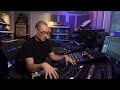
can be seen in the background throughout the video


In the YouTube video titled "Casilofi - SNDSKP," San Holo is seen using the Akai MPC 5000.

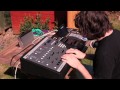
The description of this video of Bibio says, "Capturing sounds with a vintage Sennheiser MD-21 microphone, then using the EMU SP1200 for its inimitable fidelity, then resampled and sequenced on an Akai MPC 5000. "

.jpg)
In this Instagram picture, you can see Wayne Sermon using the submitted item.

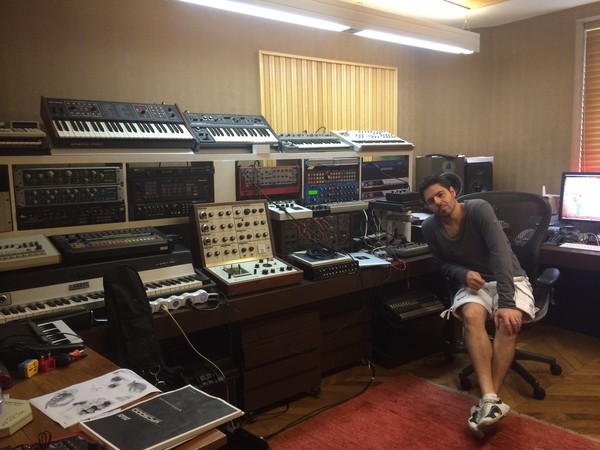


The submitted item can be seen in the video, with the model name seen very clearly at 3:55.


At 0:11 in this video Dj Muggs talks about using the MPC 5000 and calls it a "beast".

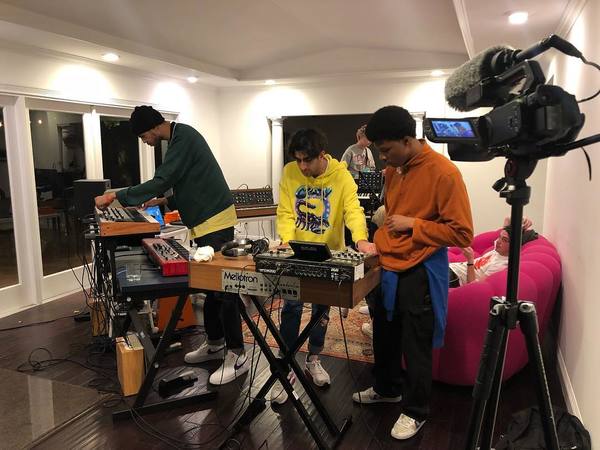
Romil Hemnani is shown using the Akai MPC 5000 in a photo shared on Instagram, where he is working on a new album.


At 2:38 - 2:40 you can see Ben hitting the pad. In the second link you can see Ben at 1:11:16 - 1:11:18 standing next to it. Also at 1:11:43 - 1:11:45 you can see him using it on the very left.


Album Usage
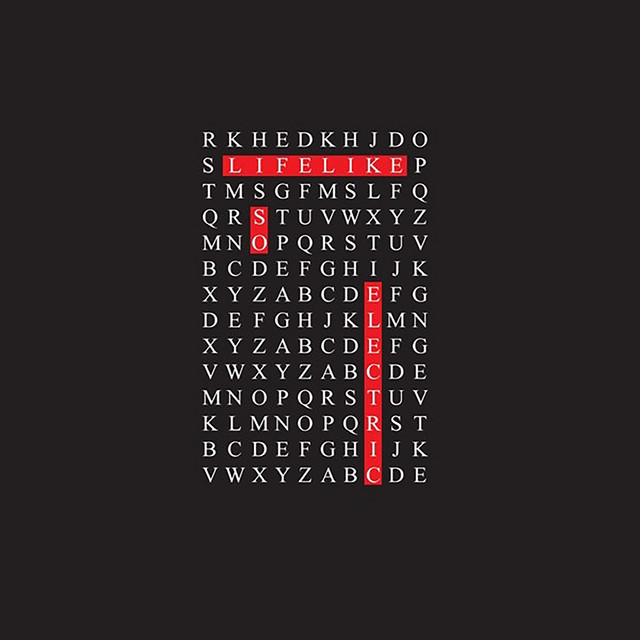
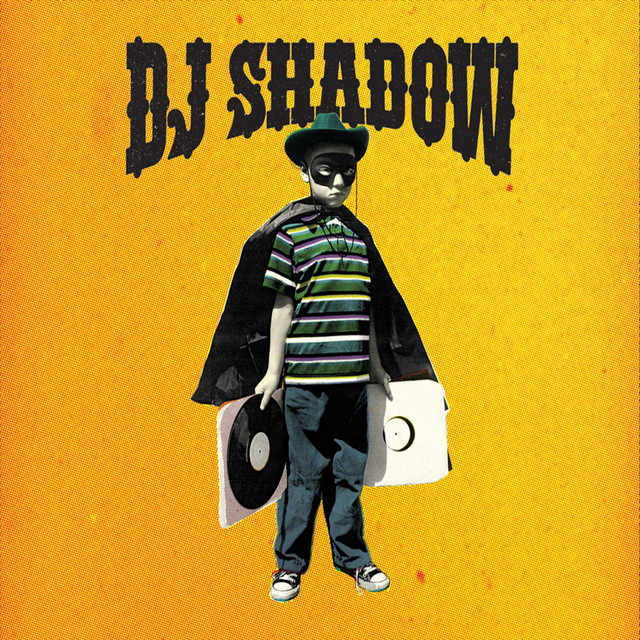
The Akai MPC 5000 has been featured on the following albums:


Genre Usage
Based on how artists on Equipboard use this gear, it is most commonly found in the following genres.
Used With
Based on how musicians on Equipboard use Akai MPC 5000, it is most commonly used with the following gear.



Community setups
Show yoursSimilar
Add recommendation1 alternative for Akai MPC 5000, curated by the Equipboard community.

$152.12
More Akai Production & Groove

$939.00 - $999.99
in Production & Groove Rank

$400.00 - $1,299.00
in Production & Groove Rank


-m.webp?v=1784818735)
$475.00
in Production & Groove Rank


$1,499.00 - $1,899.99
in Production & Groove Rank
.jpg?v=1784733415)


$350.00 - $728.00
in Production & Groove Rank


$450.00
in Production & Groove Rank


$149.00 - $285.57
in Production & Groove Rank
.jpg?v=1784733418)


$1,487.35 - $2,299.00
in Production & Groove Rank


$320.16 - $899.00
in Production & Groove Rank


$699.00 - $1,299.00
in Production & Groove Rank


$152.12
in Production & Groove Rank


$85.30 - $119.00
in Production & Groove Rank

.jpg?v=1783774944)


$225.00
in Production & Groove Rank


$3,000.00
in Production & Groove Rank


$4,000.00
in Production & Groove Rank


$642.99 - $899.00
in Production & Groove Rank


$535.45
in Production & Groove Rank


$972.13 - $1,499.00
in Production & Groove Rank


$575.00
in Production & Groove Rank


$1,159.99 - $1,499.00
in Production & Groove Rank


$3,200.00
in Production & Groove Rank


$220.00 - $428.00
in Production & Groove Rank


in Production & Groove Rank


$139.99 - $278.00
in Production & Groove Rank


-m.webp?v=1784845735)
$568.00 - $699.00
in Production & Groove Rank
.jpg?v=1784640202)

$715.00
in Production & Groove Rank


$149.00 - $199.00
in Production & Groove Rank

$835.00
in Production & Groove Rank


-m.webp?v=1784819517)
$550.00
in Production & Groove Rank


$110.25
in Production & Groove Rank


$199.00 - $399.00
in Production & Groove Rank
![Akai MPC 4000 [Blue]](https://images.equipboard.com/uploads/item/image/42853/akai-mpc-4000-blue-m.webp?v=1784819060)
$535.45
in Production & Groove Rank


$1,149.00 - $2,599.00
in Production & Groove Rank


$100.00
in Production & Groove Rank


$475.00
in Production & Groove Rank


Accessories & Related Items
-s.webp?v=1784845735)


Gear Guides




Most Popular Production & Groove
Most Popular Brands
-
Added to Equipboard on by
 oneminutebeatz
GearIQ 97
-


