Donald Fagen
Role
Credits
Role
Credits
Donald Fagen's Gear


Mike over at Retrolinear restored all 3 of Donald Fagens 88 key Fenders, Lucy, Grace and Wilma. Lucy is demosntrated post-refurb in the video I linked but the otehr 2 pianos can be head on youtube as well as on documenting the process on Lucy (apparently Mike's favorite). You can read all about the restoration of Grace in 2011 and Lucy in 2013 in articles on teh Retrolinear website (http://www.retrolinear.com/new-stuff/you-go-back-jack-and-do-it-again.aspx http://www.retrolinear.com/new-stuff/steely-dan-round-2!!!.aspx).
Find it on:


Used "on the early Steely Dan records", as stated by Fagen in this August 2006 Sound on Sound interview.
Donald Fagen's interest in the ins and outs of recording technology might have grown in recent years, but when it comes to the tools of his trade — keyboards — the opposite is true. "From an instrument point of view, I find that the technical developments in keyboards since the '70s are not worth talking about. I experimented with all sorts of synthesizers at the time. I recall that my first synthesizer was an ARP Odyssey, which I used on the early Steely Dan records. Somebody gave me a Synergy and that had some interesting sounds that I used on The Nightfly."
At 1:10 in this interview with Fagen for the documentary Down the Rhodes: The Fender Rhodes Story, which was bonus footage published on YouTube on October 5, 2012, he reveals that it was an "early" Odyssey (and, therefore, the Rev1) and that is was destroyed.
Well here's a synthesizer story to go along with my antipathy towards synthesizers. There was an early commercial synthesizer called the ARP Odyssey, which was a, uh... uh, it was kind of a useful thing, it uh... Early analog synthesizer. It looked like, it was this kind of square little board that had a lot of switches on it and... it wasn't very flexible. You could do a few things with it. You know, you had a little ring modulator and stuff like that and the problem with a lot of those early analog synthesizers is they go out of tune, like, especially after a few six months or seven months, the, I don't know, something about the oscillators or the resistors or something and they start to drift like, you'd be doing a take and five minutes into the take, it would be a little flat. You'd have to retune and if after you'd had it for a year, like after five seconds they'd start to drift, you know, and I got so frustrated with this ARP Odyssey that I... You know, it's really into what I was doing, you know when you're doing a take, you're concentrating, and this started to happen so that, you know, I just, you know, took the thing and smashed it. You know, my rage got the better of me and then my partner started making suggestions as to what else we might do to the ARP Odyssey and, you know, we ended up getting lighter fluid and, you know, we set it on fire, we deface it in any other number of ways and then we went out on the balcony of the ABC Dunhill Records and just dropped it off the balcony and, um... the guy who ran the studio thought it was so funny that he had it framed and just like, it looked like artwork because it was essentially a destroyed musical instrument and he framed it and put it up in a studio hall there for everybody to laught at. [laughs]
Find it on:


" I do have a Triton and a Kurzweil K2500, and use them for special effects and when I can get away with only using part of the keyboard, like if I want to mimic a flute or a mallet instrument or an organ. Organs aren't tuneable, and are flat, weird-sounding anyway."
Find it on:

A pair was used for the piano on Morph the Cat, as stated by mix engineer Elliott Scheiner in this August 2006 Sound on Sound interview.
According to Elliott Scheiner, the following mics were used on the Morph The Cat recording sessions.
- Kick drum: AKG D112.
- Snare: SM57 (only on top).
- Hi-hat: Neumann KM81 or 84.
- Toms: Audio-Technica ATM25.
- Overheads: Neumann U67.
- Room mics: Electrovoice RE20.
- Electric guitar: Shure SM57 right on speaker cone.
- Piano: 2x AKG C12 mics, about 12 inches from the strings.
- Trumpet and trombone: Coles ribbon.
- Tenor sax: Neumann U67.
- Baritone sax: Neumann FET47.
Find it on:


Used on The Nightfly, as stated by Fagen in this August 2006 Sound on Sound interview.
Donald Fagen's interest in the ins and outs of recording technology might have grown in recent years, but when it comes to the tools of his trade — keyboards — the opposite is true. "From an instrument point of view, I find that the technical developments in keyboards since the '70s are not worth talking about. I experimented with all sorts of synthesizers at the time. I recall that my first synthesizer was an ARP Odyssey, which I used on the early Steely Dan records. Somebody gave me a Synergy and that had some interesting sounds that I used on The Nightfly."
Find it on:

An original version was used on "Hey Nineteen", while the Wendel-II was used on The Nightfly, as stated by Fagen in this August 2006 Sound on Sound interview and clarified on Nichols' official history page for the Wendel, respectively.
On both Fagen's first two solo albums, The Nightfly and Kamakiriad, mention is made of the use of sampling technology, while Morph The Cat has none of it. What has changed? "We started using sequencing and stuff on [Steely Dan's] Gaucho," replies Fagen, "out of desperation really. We were having trouble laying down 'Hey Nineteen'. We tried it with two different bands and it still didn't work, so one of us said something like 'It's too bad that we can't get a machine to play the beat we want, with full-frequency drum sounds, and to be able to move the snare drum and kick drum around independently.' Roger [Nichols] replied 'I can do that.' This was back in 1978 or something, so we said 'You can do that???' To which he said 'Yes, all I need is $150,000.' So we gave him the money out of our recording budget, and six weeks later he came in with this machine and that is how it all started."
The pioneering machine was the now-legendary Wendel, reportedly based on a CompuPro S100 computer with an CPM/86 operating system. It was capable of replacing already recorded sounds and moving them around, rather than constructing a drum track from scratch. "This was in the days when digital was still very primitive," recalls Fagen. "Roger's machine did not even have any switches, it only had a regular computer keyboard and he had to type all these bytes out, huge lists of numbers, which took him 20 minutes, and at the end he would hit Return, and we heard this one snare a beat. It took so long. It got a little better during The Nightfly, but it was so horrible, I have tried to figure out how to get out of sampling ever since."
Find it on:

" I do have a Triton and a Kurzweil K2500, and use them for special effects and when I can get away with only using part of the keyboard, like if I want to mimic a flute or a mallet instrument or an organ. Organs aren't tuneable, and are flat, weird-sounding anyway."
Find it on:

Fagen is known to have used two different 8078s in his career. The first, owned and later sold by him, was used to record and mix Aja, according to this May 2019 Reddit post.
ColbyKill I can currently enrolled in The Blackbird Academy in Nashville, Tennessee. If you haven't heard of it, should definitely check it out. So this console used to belong to Donald. John McBride, Martina's husband, had bought it from him a few years ago now. It has been slightly modified, but it is pretty much exactly how it was while they were using it to record Aja. Its amazing to be able to get to be in the same room let along get to work on it as well. Figured y'all would enjoy seeing this.
The second was the in-house console at the now defunct Clinton Recording Studios. It was used to record and mix Morph the Cat, as stated by Fagen and mix engineer Elliott Scheiner in this August 2006 Sound on Sound interview.
Scheiner adds that he 'seldom' uses EQ during the mix, and that Morph The Cat was recorded via Clinton's Neve 8078 directly to analogue 24-track. Straightforward recording to analogue without much processing is now Fagen's favoured approach, says he. "It's the sound I like. It's not necessary to have the latest equipment. Today I think that I could use any studio, and any equipment, and all I need is good players and it will sound good. I like the sound of jazz records recorded in the late 1950s. I love the sound of Rudy van Gelder's records for Prestige. I can't imagine anything sounding better. Van Gelder's jazz recordings definitely influenced the Steely Dan recording and mixing style."
Find it on:

Mentioned in this May 2006 Keyboard interview with Scott Healy.
SH: So what’s the secret formula for your trademark phasey Rhodes sound?
DF: The trademark is, first you try and find those little orange boxes, I forget what they’re called, and if you can’t find the little orange boxes [MXR Phase 90s] from the late sixties, and if you can’t get them you go get the big orange boxes from a slightly later period, and—
SH: Phase shifters—
DF: –they’re just phasers, that’s all they do, and you use two of them, so they’re stereo, and you keep ‘em on a slow pace, and that’s about it.
SH: Sometimes the effect is like you’ve got them on a trigger pedal–
DF: It’s all random.
SH: That’s cool. And on some of the tunes, obviously, the Rhodes is straight.
DF: Right. I like the phasers, because they even out the signal, for some tunes, especially if you want it to sound a little more like an organ tone, or you need to sustain things a certain way, with a kind of compression, they’re useful, it makes it less boring, because you’re hearing some modulation or something. It’s a nice sound.
SH: So the stereo thing, with the two of them, that’s the secret, ‘cuz you can hear it with the headphones for sure.
DF: Yeah, they modulate with each other—
SH: They’re not exactly locked in together, so you don’t get that predictable back and forth sweep.
DF: And it’s random, so it’s not like some kind of synthesizer. On the attack sometimes you get some random nice little whops.
SH: That’s why I though there might some kind of a wa pedal—
DF: No, no, it’s more often than not you’ll get some kind of interesting thing happen on the attack.
SH: That’s really cool.
DF: You gotta kind of whop the keyboard, too.
Find it on:

Donald Fagen used the Lync LN 4 during several live performances after the 1990s, most notably while performing "Kid Charlemagne," as evidenced by the photograph shown below
Find it on:

Donald Fagen is seen playing the Yamaha p32d melodica in his later live appearances
Find it on:


Donald Fagen played the Yamaha P37d in several live apparences after the 2000s, he also played this particular melodica for his 2012 album Sunken Condos
Find it on:
This is a community-built gear list for Donald Fagen.
- Find relevant music gear like Microphones, Pianos, Keyboards and Synthesizers, Software Plugins and VSTs, Instruments, and other instruments and add it to Donald Fagen.
- The best places to look for gear usage are typically on the artist's social media, YouTube, live performance images, and interviews.
- To receive email updates when Donald Fagen is seen with new gear, follow the artist.
Discography
Album Credits
-
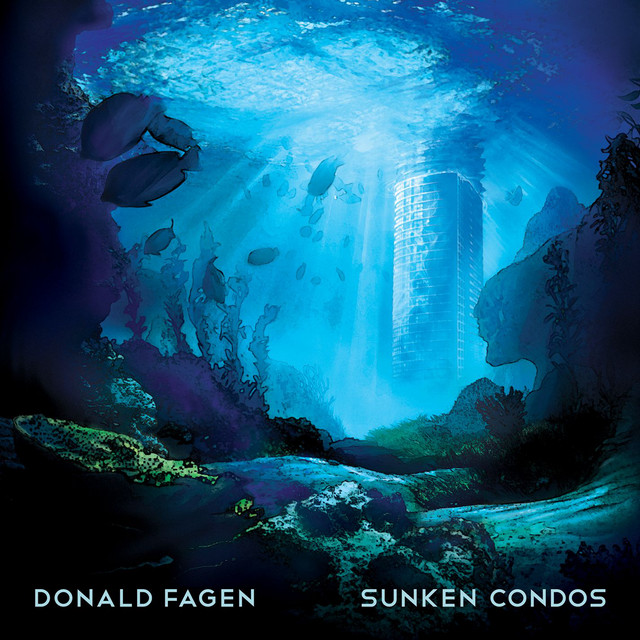
Donald Fagen · 2012
Producer






.webp)