By Gear Experts
Table of Contents

Equipboard
Equipboard is the world's largest community of artists and their gear. Read our review process.
We are reader-supported. When you buy through links on our site, we may earn an affiliate commission. Learn more.
Our Picks

Despite a clunky interface, Roland's FP-30X has a superb feel and sound. Sweet spot in terms of value for money.
Read more


Yamaha P-143 88-key Digital Piano
Offers a great feel, outstanding sound, solid onboard speakers, and a well-done app integration. Most importantly Yamaha does not skimp where it counts the most - the gorgeous piano tone, based on Yamaha's CFIIIS grand piano.
Read more
Alesis Recital Pro 88-Key Digital Piano
Delivers essential features without the frills, and for the most part, it succeeds admirably.
Read more
Yamaha DGX670B 88-key Arranger Piano
A substantial investment, perhaps not the best fit for beginners and kids due to its depth of features and weight. Great if you want a premium digital piano with 100s of sounds and effects at your disposal.
Read more
Sleek, minimal, gorgeous looks. Lightweight. Onboard speaker quality is not the best (get good headphones or speakers), but you get a keyboard with a textured feel that closely emulates Ebony & Ivory of a real piano.
Read moreFiguring out the best digital piano to get can be overwhelming. It doesn't help that their model names are a litte... dry. Yamaha P-143? Casio PX-S1100? If the model numbers alone don't confuse you, each manufacturer has different digital piano lines, and it can be hard to cut through the marketing speak. Do you want one from the “entry-level console digital piano” line? Or should you get one from the “Compact and stylish digital pianos for a wide range of piano-playing abilities” line? Worse yet, with so many models, are you buying one that's already outdated??
Well, have no fear, we're here to help! We've got piano players on our team with a wide range of experience that came together to write this guide (one of the founders of this website has been playing piano for 20+ years!). We live and breathe music gear, and we love to do our research so we can save you some precious time.
Different people have different ideas of what the best digital piano is - if you're the piano player for a world-famous musician who is touring, "best" will mean something completely different than if you're a parent trying to buy one for your kid, or a hobbyist who just wants a sleek piano they can plug headphones into and practice quietly in their living room.
In this guide, we'll mostly be focusing on the beginner-to-intermediate level player looking for a great digital piano. Here's our criteria for considering the digital pianos that should be tested:
- Under $1000
- Above all, the piano sound needs to be great
- 88 keys, fully-weighted to best simulate an acoustic piano
- Widely available in online stores/retailers
- Mostly positive opinions from existing owners
Experienced players, don't worry, there's no reason these picks wouldn't work for you as well. First, let's talk a bit about digital pianos, and what you should look for when picking out the best one for you (i.e. what matters, and what doesn't).
Digital vs. Real Acoustic Pianos - What's the Difference?
Chances are you're reading this guide because you've decided to look for the best digital piano. Our goal is to make you a very informed buyer, so we think it's important that you understand the key differences between an acoustic piano and a digital one. Why? Digital pianos are mostly judged for how close they get to a real acoustic piano in terms of 1) sound and 2) feel of the keys.
Characteristics of acoustic pianos:
- Superior sound
- Superior action (keys are weighted as the hammers hit the strings)
- More expressive
- Heavy, bulky, unwieldy
- Expensive ($3000 is a typical starting price for an upright piano)
- Require maintenance by a specialist (can be expensive)
Characteristics of digital pianos:
- Less expensive than acoustic pianos (a good digital piano starts around $3-400)
- Lighter and much more portable, easy to pack and ship
- Can double as a MIDI controller (e.g. you can use it to control software synthesizers)
- Require no maintenance
- Good recreation of an acoustic piano sound (some better than others, obviously)
- Versatility and features (many tones/voices, built-in learning tools, layered sounds, split keyboard ranges, etc.)
- Headphones for quiet playing and practicing
What to Look for & How to Shop for a Digital Piano
Budget & Cost: Without a doubt, your budget and the price of a digital piano are often the most important factors. There is an absolutely overwhelming selection of digital pianos out there. Casio alone makes enough digital piano models to make your head spin. They do this of course to fit a large number of piano players' budgets. Whether you already have a budget in mind, or are trying to decide what to spend, as experienced piano players and gear-heads, we're here to help you get the most for your money. In this guide, we're focusing on the $400 to $800 budget range. We think this covers the beginner and intermediate player very well, as well as giving the advanced player some good options. We strongly feel that $350 or so is the entry level price to own a good-sounding digital piano from a reputable brand that you'll be proud to own and play.
Number of Keys: The number of keys on your piano determines how big the piano is, and also affects the price. Acoustic pianos have 88 keys, so 88 is considered “full size.” The next smallest option is 76 keys, and the smaller step after that is 61 keys. In this guide, we focus on digital pianos with 88 keys, since that's more like a proper piano. 61 and 76 keys can be limiting when you play certain songs, and as you get more serious about your piano playing we fear you would quickly outgrow anything smaller than full size.
Portability: Pianos, unlike guitars, tend not to be the most portable instrument. Acoustic pianos are certainly not portable, and are a nightmare to move around (imagine the team of people you need to lug a fragile, expensive, wooden acoustic piano up a flight of stairs). Digital pianos have the advantage of being more portable. Take a look at the weight, depth, width, and height of the digital piano you're buying to get a feel for how portable it is. Despite the minimum width taken up by having 88 keys, the variations in dimensions and weight might surprise you.
Key Weight aka “Action”: The key weight, or action, of a digital piano is incredibly important; arguably the second-most important factor after how the digital piano actually sounds. When we talk about a digital piano's “feel,” we're mostly referring to the action. When you press down on an acoustic piano key, you feel resistance and weight as the hammer moves closer to and strikes the piano's strings. A digital piano is just a computer, as you might have guessed, and thus has no hammers or strings. However, to be considered a great digital piano, it needs to replicate that weighted feel of a real piano. In general, the fancier and more expensive the digital piano is, the more emphasis is placed on the feel of the keyboard. Always look for digital pianos with “fully-weighted” keys (also known as “hammer action”). Cheap digital pianos, some synthesizers, and smaller sized keyboards might come with semi-weighted keys, or no weight at all. For a piano, we very much want to avoid these.
Polyphony: Polyphony is one of those “big words” in the music world that can confuse beginners. If you've played piano or keyboards/synths before, chances are you've at least heard of polyphony. Simply put, polyphony is the maximum number of notes that the digital piano can produce at one time. Remember, a digital piano is essentially a computer inside, and thus is limited by the amount of memory and other components within. You'll typically see digital pianos have 64 or 128 polyphony (32 or 192 are also not uncommon). Example: Let's say you're playing the piano, and step on the sustain pedal to sustain or hold the notes even after you've let go of the key. Because they are being sustained, old notes don't simply go away when you play new ones; they're still there in the background, fading away. Eventually, you'll have many tones playing at the same time (a few louder because you played them more recently, and many softer and decaying because you played them earlier and sustained them). If the polyphony of your keyboard is max. 64, and you reach 64 notes that are sounding at the same time, the older ones will suddenly drop off.
tl;dr: Polyphony is the number of notes that can be played at the same time. Modern digital pianos have 64, 128 or higher polyphony, and that is plenty!
Built-in Speakers: When you play your digital piano, it may have built-in speakers, but if it doesn't it won't make any sounds by itself unless you hook it up to speakers, or use headphones. Built-in speakers might not sound as good as whatever quality headphones or external speakers you have, but they have their advantages: 1) You get immediate gratification and can hear yourself play right away, 2) maybe you misplaced your headphones, or 3) you simply don't feel like turning your speakers on. Simply put, onboard speakers are handy to have. One of our readers pointed out that he is teaching his young kids to play on his digital piano, and it's easier to teach them to just turn the piano on and they can immediately hear themselves play, rather than having to teach them how to turn on an external speaker system. This is a great point, and we completely agree!
Brand: Brand tends to be a more important consideration when shopping for a digital piano than it does for other music gear. As you shop for one, you might be overwhelmed by the amount of brands - each with dozens of models - so it's good to know which brands have more experience with this instrument. With brands like Yamaha, Casio, Roland, Alesis, Kawai, and Korg, you're in good hands. These are all manufacturers that have a proven track record of creating very high quality music gear for many years. Yamaha and Kawai have many years of experience building quality acoustic pianos, which is expertise they can apply to their digital counterparts. That's not to say other brands don't - if you fall in love with a piano from another brand, as long as it's reliable and inspires you to play, that's all that really counts!
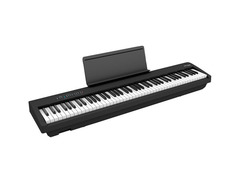
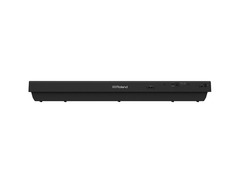
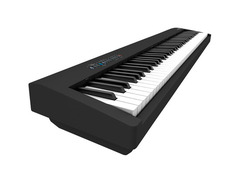
Roland FP-30X Digital Piano
5.0 (1)










Average Price: $642
Standard/Professional
$400
$2001+
Budget
Standard
High-end
- Superb keyboard touch mimics acoustic piano
- Grand piano sound rich and realistic
- Lightweight and portable
- Onboard speakers deliver clear, room-filling sound
- See 6 more
- In-built speakers sound boxy at low volume
- Lacks a digital display, making setting adjustments difficult
- Interface not very intuitive, especially for metronome functions
- Downward-facing speakers may sound muffled at lower volumes
| Weight | 32.7 lbs. (with music rest) |
| Polyphony | 256 notes |
| Number of Keys | 88 |
| Headphone Jacks | 1 x 1/8", 1 x 1/4" |
| Built-in Speakers | yes |
When we first got our hands on the Roland FP-30X Digital Piano, we knew we were in for a treat. As seasoned musicians and reviewers, we’ve played a bunch of digital pianos, but every now and then a model like the FP-30X comes along and stands out in a crowded market. Let's dive into what makes this piano a strong contender and where it falls short.
First and foremost, the key action on the FP-30X is remarkable. It’s the closest we’ve felt to a genuine acoustic piano in this price range. The keys have a satisfying weight and texture, which greatly enhances playability. Whether you're a beginner or a seasoned pianist, you’ll appreciate the tactile feedback.
The sound quality is another major win. Sometimes built-in speakers are "meh" but these deliver rich, full tones that are surprisingly immersive. We found the piano sounds to be authentic, and the variety of additional voices, including organs and harpsichords, adds a lot of versatility. The sound, when used with high-quality headphones or external speakers, is even more impressive, offering depth and resonance that rivals much more expensive models.
If you're wondering about the polyphony, 256-voice polyphony is MORE than enough for most practical applications (reaching anywhere near 256 notes playing simultaneously is quite rare).
However, no product is without its flaws. The FP-30X's control interface isn’t the most intuitive. We often found ourselves reaching for the Roland Piano app to make adjustments, which, while functional, isn’t always convenient. Additionally, the included sustain pedal is too light and tends to move around- a minor annoyance that can be fixed with an upgrade.
Bluetooth connectivity is a nice touch, simplifying the integration with apps and other devices, but it does occasionally require reconnection. Despite these minor issues, the FP-30X offers excellent value for money. Its combination of realistic feel, superb sound, and modern features makes it a strong choice for anyone looking to invest in a digital piano.
Bottom Line: The Roland FP-30X delivers on key aspects - feel, sound, and value - while leaving room for minor improvements. It's a solid investment for both beginners and experienced players alike.

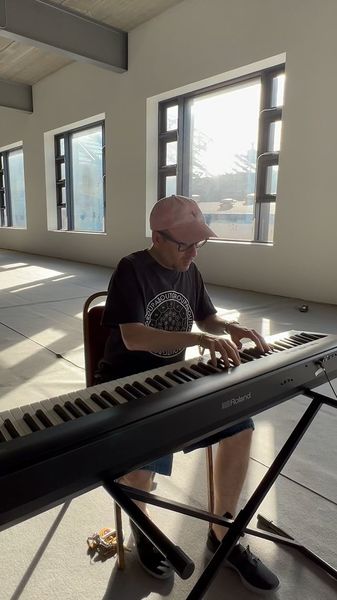
Yamaha P-143 88-key Digital Piano

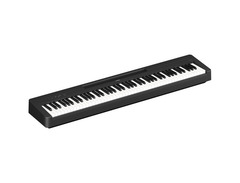
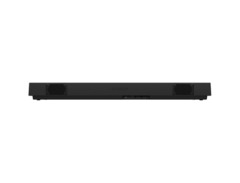
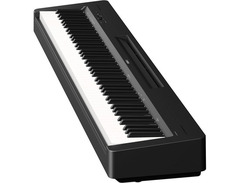
Average Price: $476
Standard/Professional
$400
$2001+
Budget
Standard
High-end
- Fantastic, realistic sound quality with Yamaha's PureCF sound engine
- Graded Hammer Action keys mimic acoustic piano feel
- Compact size ideal for small spaces, yet retains traditional elegance
- Bluetooth connectivity and USB full duplex audio for modern integration
- See 6 more
- Basic sustain pedal included is functional but lacks elegance
- Sustain pedal may require anchoring to floor for stability
| Weight | 24.5 lbs |
| Polyphony | 64 notes |
| Number of Keys | 88 |
| Headphone Jacks | 1 x 1/4" trs |
| Built-in Speakers | yes |
An entry-level model in Yamaha's P-series of digital pianos, the Yamaha P-143 captured our attention with its blend of affordability and performance, making it an intriguing option for both beginners and intermediate players.
First and foremost, the it packs the gorgeous voice of Yamaha's CFIIIS grand piano (a very expensive piano), which is a standout feature in this price range. The sound quality is spectacular, with the onboard speakers delivering rich, concert-quality tones. This instrument doesn’t just sound great - it feels great too. The weighted keys provide a realistic touch that closely mimics an acoustic piano, with adjustable sensitivity to suit different playing styles.
The P-143 comes with 10 voices, including organ, harpsichord, and vibraphone, adding versatility for various musical genres. The inclusion of the Smart Pianist app elevates the user experience. This app allows you to change piano voices, adjust reverb, and access a host of educational tools directly from your smart device. Whether you’re practicing exercises, downloading PDF scores, or playing along with your favorite songs using generated chord progressions, the Smart Pianist app enhances the ownership of this piano.
Setting up the P-143 is a breeze, and its lightweight design (about 24 lbs/11 kg) makes it easy to move around. The headphone jack is a nice touch for quiet practice, and the included sustain pedal and music holder round out a thoughtful package. However, we did notice a couple of downsides. The keys don't quite match the fluidity of some more expensive options, though admittedly we're being picky here. The onboard speakers could also stand to be a touch louder. The 64-voice polyphony is on the lower end for a modern digital piano, though in most real-world scenarios like home practice or casual playing you won't notice any limitations.
Bottom Line: Overall, the Yamaha P-143 offers excellent value for money. It’s a robust, reliable digital piano with features and sound quality that exceed its modest price tag. Whether you’re just starting out or looking to upgrade, the P-143 is a solid investment.
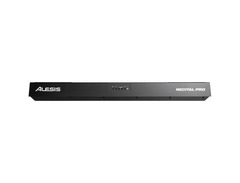
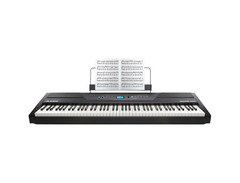
Alesis Recital Pro 88-Key Digital Piano
5.0 (2)

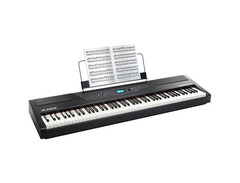
Average Price: $447
Standard/Professional
$400
$2001+
Budget
Standard
High-end
- Authentic hammer-action keys feel like a real piano
- Great for travel and gigs due to its portability
- Easy to use with functional buttons for customization
- Compatible with various DAWs as a controller
- See 3 more
- Built-in sounds are limited and can feel a bit thin
- Sound quality may diminish at low practice volumes due to plastic casing
| Weight | 26 lbs. |
| Polyphony | 128 notes |
| Number of Keys | 88 |
| Headphone Jacks | 1 x 1/4" |
| Built-in Speakers | yes |
When we unboxed the Alesis Recital Pro Digital Piano, we knew we were dealing with a budget-friendly instrument, yet we were immediately struck by its sleek design and user-friendly setup.
Starting with the feel, the hammer action keys are a standout feature. They provide a realistic touch that closely mimics an acoustic piano, which is a rare find at this price point. The adjustable key weight adds a layer of customization, making it suitable for players of all levels. However, we did notice a slight 'thump' sound when the keys are struck, which can be a bit distracting during quieter passages.
The sound quality of the Recital Pro is commendable, especially when connected to an external amp. The onboard speakers are adequate for practice, though we found them lacking in volume and depth. The grand piano sound, while decent, doesn’t quite measure up to more expensive models. It can come off as a bit thin, but for casual playing and practice, it gets the job done.
Feature-wise, the Alesis Recital Pro has 12 built-in voices, including a surprisingly good vibraphone, and effects like reverb and chorus. Unlike Yamaha and Roland, which offer apps for expanded functionality, Alesis focuses on the basics. The MIDI connectivity is great for those looking to use the keyboard as a controller.
Bottom Line: The Alesis Recital Pro is a solid digital piano that delivers on many fronts. It’s an excellent choice for beginners and intermediate players who want a full-sized, weighted keyboard without breaking the bank. While it doesn’t quite match the sound quality of higher-end models, its realistic feel, comprehensive feature set, and affordability make it a compelling option for both new learners and those seeking a reliable practice instrument.
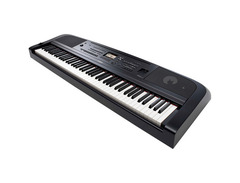
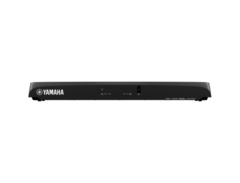
Yamaha DGX670B 88-key Arranger Piano

Average Price: $818
High-end/Boutique
$100
$601+
Budget
Standard
High-end
- Improved features and sound quality over the predecessor DGX660
- Offers realistic vintage electric piano and CP80 sounds
- Multiple drum track options with high-quality sound
- Suitable for students, keyboard players, and gigs
- See 6 more
- Stand sold separately, adding extra cost
- Some factory presets and features might be tampered with in delivery
- Label "portable grand" may be misleading due to weight
- Strings and voices sounds may not impress users with high expectations
- See 2 more
| Weight | 47 lbs. 3 oz. |
| Polyphony | 256 notes |
| Number of Keys | 88 |
| Headphone Jacks | yes (shared w/out) |
| Built-in Speakers | yes |
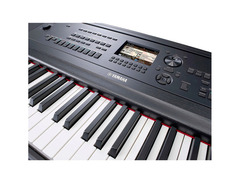
The Yamaha DGX-670 Digital Piano is the successor to the popular DGX-660, a piano we were fond of and recommended previously in our guide. Yes, it is the priciest recommendation we make. However, it improves upon the 660, and stands out with its exceptional build quality, advanced features, and superior sound.
Starting with the feel, the weighted keys deliver an almost acoustic-like experience. The balance Yamaha strikes between heavy piano keys and soft touch keyboard keys makes it versatile for various playing styles, whether you're jamming out on a synth or practicing classical pieces. The key action is top-notch, giving you that satisfying tactile response every pianist craves.
The sound quality of the DGX-670 is truly impressive. The CFX Grand piano voice is rich and dynamic, and the wide range of other instrument voices - like the sax, flute, guitar, and organ - are equally captivating. The onboard speakers are good, not great (this is par for the course, not necessarily a knock on it). However, plug in some headphones or connect to an external amp, and the sound transforms into something quite spectacular.
One of the standout features of the DGX-670 is its deep customization options. From voice editing to advanced accompaniment modes, there's a lot to explore. This makes it an excellent choice for musicians who enjoy tweaking their sound. However, this depth might be overwhelming for beginners or younger players.
Another drawback is its substantial weight (a whopping 47 lbs/21 kg). It’s not exactly a sleek lightweight piano, so if your primary purpose is gigging, or you live in a compact space this isn’t the best option.
Bottom Line: So who is the DGX-670 for? It’s pricey considering you can get a perfectly good digital piano for around half the price. It’s also heavy, and the interface and depth of editing can be intimidating. This makes it not the best fit for beginners, or kids. Having said that, its combination of advanced features, realistic feel, and high-quality sound justifies the higher price tag. For more serious piano players and musicians who value all the bells and whistles, the DGX-670 breaks you into the advanced tier of digital pianos for a price that is still under $1000.

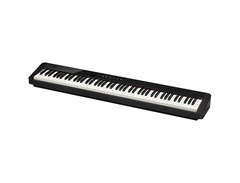
Casio Privia PX-S1100

Average Price: $617
Standard/Professional
$400
$2001+
Budget
Standard
High-end
- Slim, minimalistic design ideal for small spaces
- Responsive keys with natural hammer action for expressive playing
- High-quality piano tones, realistic and well-sampled
- Lightweight and easily portable, perfect for gigs and home use
- See 5 more
- Built-in speakers lack power, especially for home office use
- No LCD screen makes parameter adjustments cumbersome
- Bluetooth app has inconsistent performance across different devices
- Limited variety of non-piano sounds compared to competitors
- See 1 more
| Weight | 24.7 lbs. |
| Polyphony | 192 notes |
| Number of Keys | 88 |
| Headphone Jacks | 2 x 1/8" |
| Built-in Speakers | yes |
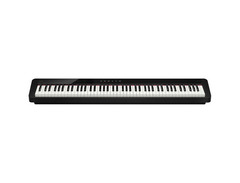
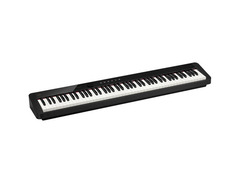
When we first set up the Casio Privia PX-S1100, we were immediately impressed by its sleek, polished design and illuminated touch-sensor controls. Right away this was our favorite in the looks department. The PX-S1100’s slim profile and lightweight build (about 25 lbs/11.3 kg) make it a standout choice for those needing portability without sacrificing quality.
The key action on the PX-S1100 is powered by Casio's Smart Scaled Hammer Action, offering a realistic feel that closely mimics an acoustic piano. The keys are responsive and feature simulated ebony and ivory textures, which is a nice touch (no pun intended). However, we did find that the keys can be slightly stiff when pressed near the front edge of the keyboard, which may take some getting used to.
Sound quality is where the PX-S1100 truly excels. Powered by Casio’s AiR sound engine, it delivers stunning piano sounds with damper and string resonance and 192-note polyphony (which is more than enough). The 18 built-in tones are top-notch, providing a range of options from grand pianos to electric pianos. The internal stereo speaker system produces a decent enough sound, although it could benefit from deeper bass. For those who need more volume or clarity, connecting to an external amplifier or using headphones via the dual headphone outputs makes a significant difference - of course this is true for most digital pianos.
Feature-wise, the PX-S1100 is versatile. It works seamlessly with the Chordana Play for Piano app, which is great for beginners looking to improve their skills. The Bluetooth audio capability via the WU-BT10 USB adapter allows for easy play-along with favorite songs. The duet mode is a thoughtful addition for teachers and students, and the option to power it with 6 AA batteries adds to its portability.
Bottom Line: In terms of value for money, the PX-S1100 is a compelling option. While it has a few minor drawbacks, such as key stiffness and somewhat unimpressive speakers, its overall performance and build quality are exceptional. This is the one to get if you prioritize a simple no-frills digital piano with a sleek design, superb portability, and an acoustic piano-like key feel.
Let's Recap
Whew, that was a lot of stuff to cover - but hey, nobody said selecting the best digital piano was going to be easy! In case you have information overload - or if you just don't feel like reading the whole guide - here's the bottom line:
For the most part, if you stick with reputable brands that have been making digital pianos for years like Yamaha, Casio, Roland, etc. you're very likely looking at a decent choice. Just because it's not one of Equipboard's top picks doesn't mean it's trash! Technology has gotten to the point where these brands are making digital pianos with impressive sounding piano tones, and the feel of the keys is getting better and better. This makes price one of the biggest factors, especially if you're new to the hobby and aren't sure if it's something you (or your kids) will stick with.
Rest assured there's a healthy used market for digital pianos on sites like Reverb, so if you decide it's not the instrument for you, you should be able to sell it pretty easily. Here's a pro tip - hang on to the original box and packaging materials! It'll make it infinitely easier to pack and ship it.
That said, we hope this guide helps you choose the best digital piano for you, and that you enjoy it for years to come.

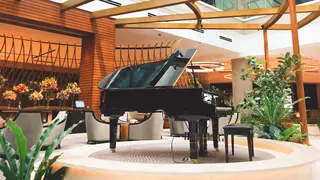
Not only do digital pianos take up less space than acoustic pianos, they can also look great in their own right and enhance the vibe of a room.
Top Ranked Digital Pianos on Equipboard
-m.webp?v=1785151772)


Recent updates
Jun 16, 2024
Replaced the Yamaha DGX-660 with the newer DGX-670 because it's better, and easier to find at retailers. Also replaced the Casio Privia PX-160 with the Privia PX-S1100, a new generation model of the Casio Privia line that embodies much of what we liked about the PX-160. Made minor revisions to text for accuracy.
Jun 15, 2024
Replaced the Yamaha P-45 with the Alesis Recital Pro to balance out the brands we recommend per their price ranges. Additionally, the P-45 is harder to find, and the Alesis offers better value.
Jun 14, 2024
Replaced the Yamaha P-125 with the Yamaha P-143, as the P-125 is discontinued.
Jun 14, 2024
Replaced the Kawai ES100 with the Roland FP-30X, as the Kawai is discontinued and unavailable.
About the authors
Michael R. Pierce is the co-founder of Equipboard and a lifelong musician with over 25 years of experience as a guitarist and gear enthusiast. He blends solid music theory chops (thanks to formal training in guitar, piano, and trumpet) with real-world experience, always exploring and experimenting across genres like rock, blues, and hip-hop. Michael launched Equipboard in 2013 after graduating from The University of Texas at Austin, leveraging his unique blend of musical passion, technological acumen, and community building. His current go-to rig features a Fender American Original ‘50s Telecaster, Analogman King of Tone, Strymon Flint, and a Fender ‘57 Custom Champ. Read more
Giulio Chiarenza is the co-founder of Equipboard and a lifelong multi-instrumentalist with a deep passion for music gear. Born in Italy and raised in the U.S., he holds a Computer Science degree from The University of Texas at Austin and blends technical acumen with decades of hands-on experience across guitar, piano, drums, and electronic production. Early in his career, Giulio was signed to a San Francisco-based EDM label, releasing both remixes and original tracks. These days, he helps steer Equipboard’s vision while personally testing and reviewing gear. He's never too far from his go-to guitar: a vintage 1978 Fender Telecaster Custom. Read more
Comments
Sign Up or Log In to add comments

125
That was quite the masterclass on digital pianos, awesome article, thanks! I'm on the market for one, after reading this I'm leaning towards the Casio PX-160 (black version).

41034
I bought my son an ES110 and I love it so much... feels just like a real piano and the sound of the acoustic pianos and even the electric pianos? damn. the internal speakers sound shockingly lifelike on acoustic piano and it even records very nicely and sits in a mix like a dream. Kills my old Yamaha. Also cost double.

4934
Replaced the Kawai ES100 with the Roland FP-30X, as the Kawai is discontinued and unavailable.
4934
Replaced the Yamaha P-125 with the Yamaha P-143, as the P-125 is discontinued.
4934
Replaced the Yamaha P-45 with the Alesis Recital Pro to balance out the brands we recommend per their price ranges. Additionally, the P-45 is harder to find, and the Alesis offers better value.
4934
Replaced the Yamaha DGX-660 with the newer DGX-670 because it's better, and easier to find at retailers. Also replaced the Casio Privia PX-160 with the Privia PX-S1100, a new generation model of the Casio Privia line that embodies much of what we liked about the PX-160. Made minor revisions to text for accuracy.
New in Digital Pianos

$1,599.99
in Digital Pianos Rank

$1,737.99 - $2,699.95
in Digital Pianos Rank

$2,099.00 - $3,299.00
in Digital Pianos Rank


$799.99 - $899.99
in Digital Pianos Rank


$622.00 - $699.00
in Digital Pianos Rank




.jpg)