
jimmarchi1's Reviews
801 reviews Back to jimmarchi1's Equipboard
-s.webp?v=1784890826)

41028
meh
I have 2 of these I need to repair. I've owned various GCB95s since the mid 90s, but I was more of a vox guy until they came up with the mini when I was building a touring/studio board... I also suck at wah, but you have to have some wahs. Anyway, I like the vox sound better if you get a good one (I'm talking about 90s ones and more recent clyde RIs), but into some amps the crybaby has the stuff, with a long fx chin it definitely rules, the vox is too gainy and growly in the mids for some boxes after it. Anyway, the downside of these whether you like the sound or not is that the pad that contacts the dpdt switch that engages the wah at the toe wears out easily and switch is also weak so if the pad doesn't die the switch gives in first. Lower quality product that vintage, vox or cool guy brands like buddha (bud-wah rocks). I have yet to wear out my mini but I've barely used it, the gig didn't happen and it just sits there, but I assume it's not as durable as a vox or something more esoteric or unique. This guy's best attribute is that you can replace it at any guitar store anywhere in the world if it fails at soundcheck.
41028
I don't always use this one, but I should.
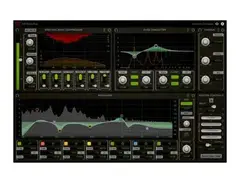
I got this thrown in with my first copy of mixbus during a sale. It took me a couple version upgrades to even try it and it is hands down Harrison's best all-in-one processing solution. The 'bass character' section is hands down the most useful. This 2 band pitch tracking EQ allows you to suppress moving resonances or give a nice boost that follows the fundamental or a harmonic. The spectral compressor is useful at times and the EQ almost sounds analog, or rather I should say that its very forgiving, which I find is the hallmark of all decent analog equalizers. I stopped mixing bass guitar the same way awhile back, but when I just focus on the DI or the DI and amp are printed as 1 track, this is my go-to over hardware or used in conjunction with some b@llsy hardware dynamic control. This is a bass GUITAR plugin, its typically overkill for bass synth and a well recorded upright probably won't need all these features.
41028
So underrated.
This amp is similar to a tweed tremolux or brownface deluxe... and yet very different.
I have the diamond tolex, 7591 version with octal 6sl7 preamps and it has more headroom and a bolder tone than the 6v6 version or the later version with noval 12ax7 preamp tubes and 7591 power tubes. The 2 channels are truly independent unlike a 5e3. The second channel is voiced for accordion. It has mire gain and us prettyflat into the low bass, the tone control is more of midrange gain boost on the accordion channel. Very grungey. The tremelo is power tube bias vary with a wider range of speed and depth than fender trem. It uses 2 full triodes as the oscillator and it's the lushest trem you've ever heard.
The stock CTS alnuco 12" is a little underrated for the 7591s and breaks up before the power amp. It's a cool sound when the speaker gives up the cowboy crunch but the amp might sound better overall with a celestion gold alnico or h30 ceramic. The amp takes fx pedals really well. The 7591 power amp has a hint of el34s tone to it and just a hint of rectifier sag from the 5y3... a 5v4 would probably make the tone even firmer if you needed it. The feel sits squarely between practice amps and stage amps. The ampeg jet j20 reissue is closer to this amp than it is to a vintage jet... but the mercury takes it to school.
This is the best tele amp I've ever heard. It has the authority of an ac30 or tweed pro/super and the edge of breakup tone of a 5e3. Not your typically jazzy ampeg. At about 20 watts its loud enough to stay pretty clean at modern stage levels but it can still give up the dirt at home studio levels.
-s.webp?v=1784646071)
41028
Surprisingly good.
This pedal sounds nothing like a sans amp. Warp controls harmonics, full clockwise is odd harmonics, counter is even. At full clockwise warp puts the pedal in tonebender territory, anywhere below heads up through Rat territory into cranked tube amp tones. It can also cop some op amp bug muff sounds with the gain up and warp down. The tone control us subtle and really just balances the treble and bass response so it matches your clean tone.
The XXL has very transparent and articulate distortion (but its capital "D" Distortion, h oi t damn its dirty) and tons of output on tap if you want filth and a big lead boost for solos. With the gain turned all the way down it's about as much dirt as a ts9 tubescreamer with the gain maxed out. Its very compressed as well, but in a pleasant way. The distortion is very responsive to picking dynamics. It cleans up well rolling back your volume knob too. But its just too much gain even with low output strat and tele pickups.
Overall the XXL makes me think of a Rat crossed with a box of rock but it colors your amp tone less than either. It's a very neutral distortion character with the warp below 3 o'clock. I'm an ac30 man and apart from a Rat or rat-alike I've never truly bonded with any dirt boxes in front of my 62, reissues and matchless dc30. The XXL really works in front of all those amps into whatever channel you want but it also works in front of fenders, ampegs and my hiwatt build... each amp shines in it's own way with this pedal in front. A fender will get to mesa turf, a vox can get some hot rod plexi tones. It goes from grind to razor blade to raunchy fuzz... but I dock it 1 point for having too much gain for most humans and because it's a bit compressed for a lit of folks, although I dig the fatness... I got a schematic and I might mod it with a gain cut switch, just a little voltage divider between the tl072 and the oddball IC that produces the distortion. Stock the XXL us suited to sustaining leads and is only a viable rhythm tone at zero drive... unless you're playing in a TAD tribute band or something.
41028
This plugin works.
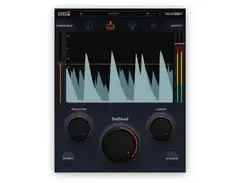
The de-bleed feature on this plugin heavily reduces cymbal bleed from spot mics on kick, snare and toms. It changes the tonality a tiny bit with heavy bleed, but that can be adjusted later and with most reasonably recorded tracks it's pretty transparent when you combine the de-bleed with the traditional gating features.
Silencer is particularly effective in isolating toms where the drummer prefers his cymbals low and/or loud, slushy hihats. There's reverse settings for bleed that can be used to reduce snare bleed into a hihat mic... alternately I tried multing the hihat track with the snare bleed isolated by silencer on the mult out of phase from the dry track with great shinata. With some gentle eq I was able to cancel lots of snare from an sm81 pointed straight at the edge if the hat.
Silencer produces clean kick, snare and tom tracks that you can process with abandon and never have to worry about bits of cymbal popping up to shift the stereo image from your overhead and room tracks. The 'ghost' button works great on delicate snare work and busy, dynamic kick and tom patterns. I was particularly impressed with how it handled a floor tom track where the drummer was riding the tom in the verses with a lot of touch on different parts of the head. Took the rest if the kit out while preserving all those overtones nicely even though I had used a condenser to capture his fancy tom work.
I have a few quibbles with Silencer. The side chain button is worthless although maybe I'm not using it right? It doesn't have any filter parameters and keying the gate is nothing special. The GUI goes wonky sometimes, resizing itself to be enormous in most DAWs, but can be shrunk easily... its tolerable and I'm typically setting and forgetting Silencer so it's a minor issue.
I will never use another ITB gate for drums unless someone improves in this spectral reduction idea. Silencer just slays. I can't say I won't ever use another valley or drawmer for drums, hardware has a sound for sure, but that's more to get a specific attack or decay and some grit. A dynamite or keypex can put a nice point on your kick but silencer just gets all the bullshit out of a spot mic leaving pretty much what you tried to record and nothing else.... that's why we started gating in the first place, right? Black Salt offers a 14 day free trial, try it for yourself and I assure you that you're going to buy it too. Not bad for 50USD.
Buy if you record fiddly, dynamic drummers with a spot mic on every drum... skip if you just do vintage style drums or programmed drums.
41028
This thing is great at doing what it does, different than aphex big bottom, its a sub harmonic synthesizer!
I don't often do sub octave junk but when I do I reach for this before I try metric halo thump. Mostly on feel it bass... get a p-bass to throb like a model D with all the analogery (that's a word now). Mine has RCA in and out which sucks, but the 120 doesn't suck.
41028
Not bad at all.
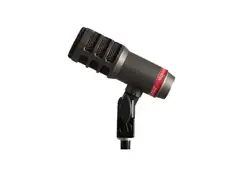
This is a decent tom mic and can work on snare too. It's small, takes a pounding and has a tight polar pattern that makes it easy to setup a gate. Its better on rack than floor. Transient response is sluggish which can be good or bad. It's similar to the longer bodied atm63 so you could probably put it on a guitar speaker. I like that there's a swivel mount built right into it (probably to put it on something that clips to the tom for live use) but wish the XLR wasn't directly opposite the diaphragm. Its okay if you have right angle XLRs around but with regular ones it makes a big cable mess really close to the drum due to the short body. At any rate, the ergonomics could've been thought through better but that's true of lots of dynamic drum mics that were available in sets like this was. A lot of people swear by these little fellas on stage and in the studio. I would take some of these over 57es for tomtoms any day.
41028
Not an md409, e906 or even an e609.
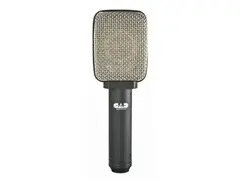
This mic looks like a sennheiser but it has it's own sound. The response sounds a bit scooped. I guess you could use it for metal guitar. Its not bad on snare top and is pretty good underneath if you want a lit of snare size and shell thump. It's actually pretty decent on rack toms though, better than a 609 or 906, and it can be positioned just as easily without annoying the drummer.
41028
Part of a budget drum mic kit.
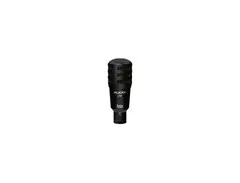
This microphone is meant to be clipped to a tom. It doesn't sound good or bad on rack but it's wesk on floor. You can use thus if you run out of decent microphones.

41028
Like a 57 but not a 57.
I was at a small studio last year with a couple of these and no shure 57s. They actually had a bunch of discontinued Audio-Technica dynamics. I put one on snare and was pleasantly surprised. There wasnt a 57 to compare it to but it sounded pretty good and I felt like it captured more of the snap without a bottom mic. It worked well on guitar amps too. Supoosedly it's a hypercardioid polar pattern but it didn'thave the proximity effect of a beta57. I don't think this microphone is currently in production. It's similar to the atm25 tom mic but they're not interchangeable.
41028
Drum kit specialist.
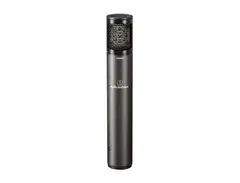
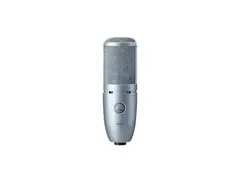
This is a side address small diaphragm condenser with a similar form factor to certain side address sony pencil condensers. There are few microphones like it at this price point. It excels in tight spaces like drum kits. It seems to be marketed as a hihat mic but I find it's best suited to close miking rack toms. The small, light body allow you to put a pair on a stereo bar mounted on a single stand and position them to taste, even fully parallel to the heads, without getting in the drummer's way. The snappy audio technica condenser sound works well here although you will probably have to use a gate since a condenser doesn't reject bleed the same as a dynamic. Being small diaphragm mics the off-axus sound us very flat in response which reduces false gate triggering vs using a large diaphragm condenser. The spl handling is great so you could even drape it over a guitar cab if you ran out of stands.
41028
You can use this to record certain things.
This is a fixed cardioid u87 copy that's made in china to akg spec. It has transformer balanced output and used perceptions trade for peanuts. It's weird to me that akg knocked off a u87 and it doesn't sound much like one, but it doesn't sound like an akg either. It's like a somewhat nicer version of that green and gold mxl.
The perception produces harsh, sibilant vocals on most singers. Its equipped with a high pass that makes it more shrill and a pad. You could use this on a guitar or bass amp if you had to but you will want to use the high pass on your channel and maybe shelf some harsh out on guitar cabs. A pair can be used as room mics pointed away from the source with channel phases flipped. It can sound okay on acoustic guitar but actually shines on the resonant head of kick drums with the high pass off and pad engaged. I've also stuck this on kick drum batter head on the floor tom side positioned straight on just a tad in from the rim where it produces a nice whack and thump combined with a dynamic inside the shell or sub kick on the resonant head... and if the drummer breaks it you won't be upset.
41028
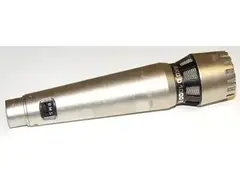
AKG's answer to the SM57 in the 70s
This is like a 57 that's better in every way. If you've used an audix i5 imagine that mic with less shrillness and a less tailored low end response. Takes a lot of spl with class but sounds nice on lower level sources as well.
The D1000E can work really well on some guitar speakers, pairs well with condensers and is a great choice on snare drum when you wanta less hyped sound than a 57 without the extra bleed from a 451 or sm81. If you don't have anything better you can use a couple of these on rack toms where they smoke 57s and in my opinion sound more natural than a lot of dynamics marketed specifically for drums though they lack the stick smack of an md421. This microphone can also serve you well on single singer backing vocals as its flatter and more open than most stage mics but still likes to sit behind LDCs and broadcast microphones.
Output is on the low side so you will need a good 70 or 80dB of low noise gain for quieter sources.
41028
Has its uses.
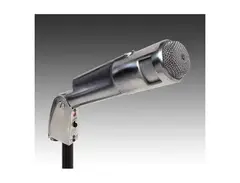
This is a 50s cardioid dynamic with an on/off switch meant for public address and dictaphone uses (at one time it was marketed as "the executive"). It doesn't capture a source faithfully like ckassic EV reporter and broadcast dynamics. You see these in music videos because of the retro styling. There was a screw on cable on older versions that need an adapter or modification. The swivel base mounts on a standard thread mic stand.
This mic is extremely useful inside kick drums due to its slow spl handling and thumpy overload character (I'm told that the thump is the diaphragm cartridge smacking into the back of the capsule assembly) and its a very different flavor of bad than an sm57 on anything you would point a 57 at like guitar amps or snares. $100 is too much for one of these but 50 to 80 is fair. They made plenty of them so every should have one.
41028
This has replaced altiverb for me.
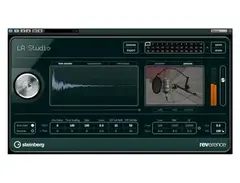
This is the only non-hardware reverb I'll use regularly. The stock IRs are very useful. The editing parameters are comprehensive right down to a IR shaping level and it can handle all the IRs I've sampled over the years and is pretty format tolerant. It allows me to screw with the tails, early reflections etc. Its easy to get bad sounds at first but this is a great plugin when you want fairly natural ambience and you learn to tweak an IR to taste. It came included with cubase pro10/11 but I'll use it in any daw that will host it. It's a big cpu hit but if you have a grownup computer you can easily swing multiple instances. It runs best in cubase of course.
There's not a lot of steinberg plugins that are more than utilitarian; just more feature laden versions of cubase/nuendo channel strip functions or goofy sounding bread and butter fx. This one is different. Worth purchasing.

41028
Still expensive, sound matches price point if you're into lexicon reverb.
A crisper sounding pcm60. Mono to stereo. No fx loop. MIDI in, out and thru. If you like the 60 you'll like the 70. Just a more modern flavor of the 60 with more of everything. Midi patch selection makes it great for live performance or FOH where you need different verbs every tune. Editing is less fun than the 60 but the screen is better. Very complex sound but as a result it doesn't tuck in a mix as well as the 60. You KNOW it's on an aux send. Kinda overpriced these days.
Preferred Settings + Usage:
Tiled room.

41028
It's a middle range lexicon
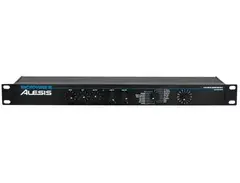
Does a good version of the lexicon thing. Nice rooms, ambience etc. Supernatural concert halls, plates that don't sound like real plates but still rule. This is the last dark sounding lexi. Mono to stereo out. Has fx loop to add more wackiness to your swirly lexicon experience. Not a 224 or 480 but I defy you to tell the difference tucked in a mix unless it's like blade runner covers. I'm really used to the 60, they were in every studio when I was learning the ropes.
41028
Can't live with it, can't live without it
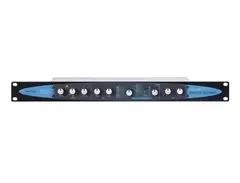
This does a few things I like that subtly tuck into some mixes. Kinda like a reflex or alex where the room patches can really help dry guitar recordings... true to form for alesis verbs, it's on the dark side compared to competitive units of the area and downright murky compared to higher end stuff. These are cheap and well worth 50 bucks.
41028
About 4 or 5 runkin, not good, not bad.
'Better' sounding version of the 1201 with more controls stock. All the bread and butter fx are a little nicer and have more breakable parameters. Lacks wacky lo fi fx of 1201, which is a shame. I basically only use the pitch and modulation fx. They have a certain 90s project studio charm that's different than a budget lexicon. It's like a better sounding alesis. I'd put it between the quadraverb and spx90Ii. Doesn't see a lot of use but I've had it so long I don't remember what I paid for it and don't know if I'd be making a profit selling it for its minuscule resale. Definitely worth a rack space though. You never know.
41028
Decent EQ, routing and summing in a mackie 8 bus footprint.
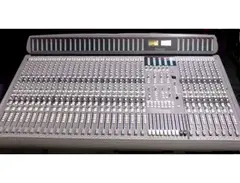
I purchased a 32 channel Topaz project8 for under $1k a few years back when my home studio outgrew my soundcraft 400b 16:8. I wanted to go to an in-line format with 8 sub groups and a full meter bridge but my room is a shoebox. I have just enough space for a mackie 8 bus or soundcraft spirit with 32 channels, neither of which have pleased me sonically when I've used them previously. A souncraft ghost would fit the bill but the depth is a little bigger than I could deal with. This left the Soundtracs Topaz and Solo Midi desks or the A&H GS3000 which are basically the same other than the preamps which are discrete in the solo, analog devices IC based on the Topaz and a discrete/IC hybrid in the late 90s Allen & Heath stuff. None are really great, just different and I don't track through my desk often unless I'm submixing synths, so not a real issue.
The topaz was by far the smallest option at 46"×27" and I was able to pick one up from a nice synth player in Princeton NJ who bought his new in the 90s and was going over to a cont rye ol surface in his home studio. A few days of haggling later the topaz was in my SUV.
Overall the topaz is a very good sounding mixer with most of the features of a large format in-line desk. It sounds much like a toft ATB and has an identical feature set. I mostly like it. Given my space requirements I doubt I could do better and certainly not for under a grand. The console gas been completely reliable so far but will probably need a recap soon as its pushing 30. Not being modular service is a scary prospect but when I finally need to do a tear down I'm considering some small modifications.
One of the coolest features is a 2 band shelving EQ on each monitor path in addition to the 4 band wein type sweepable mids eq on the main path.
So here's what I DON'T like about the topaz:
No small fader for monitor, just a knob like on a toft or ghost, but an extra fader woulda made it bigger and then I wouldn't have room for it.
No stereo aux sends.
Only 4 of the 6 mono auxes can be used per channel at one time and aux 1 and 2 are fixed pre fader internally. You have to disassemble the whole desk and desolder 64 jumpers to set them post. A switch woulda been nice so i could choose.
Monitor ins, direct outs and the 2 stere recorder feeds are set to -10 stock. If you want +4 pro level you have to open the whole desk and guess what? That's right, desolder jumpers... 68 of them.
Unbalanced trs inserts are post eq only and are set for about 0dbu so care is needed gain staging your ourboard.
Non-modular design means you can't acquire spare channels to swap if one goes down.
All of the outs are unbalanced. In my small space this isn't a deal breaker. I don't have noise issues but the rest of my gear is balanced so I have a lot of Art T8s and some radial stuff around for gear that doesn't like interfacing directly with the topaz.
The fx returns are also unbalanced on goofy stereo 1/4" connectors. If you want a mono return you have to use a channel line input or monitor input.
The monitor path can only be merged to the 2bus via the center section. If you want to merge to a stereo sub group you have to physically patch the monitor outs into an fx return and route that to the bus adding another tl072 stage or you could go to a pair of panned channels but thud adds even more circuitry.
The 4 stereo aux retutns can only be routed to the 2bus or to 1 stereo subgroup... so aux return 1 can only route to group 1/2 and only if 1/2 is assigned left right... return 2 goes to 3/4 etc. If you want your r er turns routed to the same group to say compress 3 reverbs together it has to be the main stereo bus. Or you have to return to open channels or use an additional line mixer or something wacky.
The externsl PSU is mainly a large transformer and a good portion of the circuitry the +/- 18 and +48v rails is jammed inside the desk. Because it's a classic linear supply (as it should be) this means good ventilation of the mixer is a must to avoid burning the regulators up. The supply is also on the weak side. The desk can be pushed pretty hard but I suspect a beefier PSU with a lot moe current on demand would open the sound up further and provide more punch. Upgrading the filter caps would involve ripping the whole desk apart though.
Otherwise I really like this desk. It cost a lot more than a mackie new and you can hear the difference. Could I have maybe done better for the money? Maybe but I would need a larger control room and that ain't happening right now. If I move the studio out of my house I'll probably look around for a more professional desk but I might stick to an old soundtracs like maybe an il32 or jade. Being a lesser known, defunct brand the resale is on the low side compared to the better soundcrafts. Good value for dollar and the topaz is a really impressive desk for its size.