
jimmarchi1's Reviews
801 reviews Back to jimmarchi1's Equipboard

41028
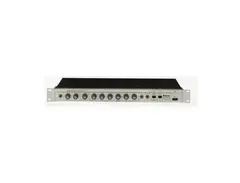
A versatile mid 80s 8 bit delay
This is a heavily companded 8 bit single delay line with a very 80s character. It offers agressive modulation and a delay time that goes from flanging through chorus up to over 3 seconds echo. Feedback can be infinite but will not self oscillate or exceed unity gain. Frontpanel features a freeze control. Some functions can be engaged via back panel Jack's with latching or momentary foot pedals.Mono input with mixed, mixed phsse inverted and dry out allowing pseudo stereochorus or out of phase echo when the dry signal is removed from the mixer and the dry out is used for dry, obviously. Input and outs are mirrored on the front and back. It also has a touchy input gain trim next to a basic treble to ground tone control before the delay line in the fx path only. The input circuity is pure vanilla.
These delays were cheap, marketed at synth players the hair metal budget rack guitar crowd of the 80s. Though they provided a +4/-20 switch, I find gain staging is critical when interfacing with properly designed plus 4 studio gear. Symths can wail on it producing earlier clipping on the wet signal than the input meters might suggest. That distortion is not plessant. Maybe trent reznor has a use for it.
Yes it was a cheapie and it's even cheaper now. In fact I got mine as a gift. That said it has a quirky retro sound all its own that sits quite nicely in some tracks and really melds withvontage synths... especially into big hall reverbs which allow you to get silly eith the pitch mod in a big wash if lush vangelis cheese.
I definitely recommend this little 80s toy. It's easily worth 80usd.
41028
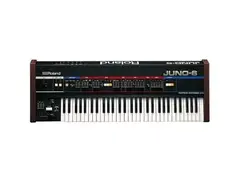
Wanted one since the late 80s. Have one now.
My particular unit is a 1st year juno I bought from the original owner peak pandemic. I even have his receipt from the hollywood guitar center back when it was the only location. She probably needs some general maintenance and professional grade cleaning but worked beautifully right out of the gate apart from a slightly miscalibrated envelope on 1 voice. I almost hate to return to spec because its vibey as hell to have 1 voice drcay and release a little differently at what feels like random times. Lately the chorus has been acting a little weird for a little after power on so I guess it's time for a belltone trip.
What can you say about the juno6? It's an icon because of its twangy DCOs and snappy envelopes. Its got that classic era roland filter sound. Most importantly it's a live performance instrument with a decent keybed, simple but versatile architecture and an all slider programming interface that provides immediate visual feedback like the arp odyssey. The arpeggiator trigger is a v-trig that will work with almost any source that approaches 5v with a fast rise.
It predates midi and doesn't offer patch storage. It doesn't have Roland's din sync technology so adding midi requires hole drilling. Wouldn't a juno60 be a better buy for the storage and easy midi retrofit to the existing din jacks?
NO!
Why not? High pass filter. The 60 has a 4 position switch masquerading as a slider for the HPF due to 80s processor constraints imposed by the patch storage. The juno6 has a continuous HPF that allows for bandpass style manual sweeps not to mention the obvious benefit if getting exactly the low end response you need rather than compromising it using external eq. You don't need patch storage on something this basic and obvious. If you can't get a sound back on a juno6 manually you need to give me yours.l as a backup. Also, as great as the 60 sounds, whenever I've had a 6 and 60 side (and this was before I owned mine) the 6 just had the sonic edge to my ear when set very similarly. Just a little fuller, faster... the 6 soubds better with the chorus iff. The chorus is sweet on both but i dont absolutely require it on the 6. It's an always on thing for a 60. I dunno. Its subtle but I bought a 6.
While the juno family as a whole are not the best at anything, they CANNOT MAKE BAD SOUNDS. The limitations make this synth all killer and no filler. All Juno's have a distinct family vibe that's easy to love and the 6 is the best sonically PERIOD
41028
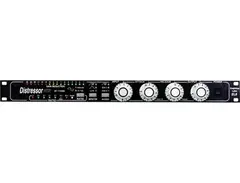
The most versatile compressor ever made... apart from the el8x
If you don't need british mode because you own 1176es then the original el8 does everything else you want a distressor to do and lots of stuff you didn't know you wanted.... and at a fair price now that the X is out.
If you're reading this you probably know already.
UPDATE: I forgot to mention the old version doesn't have stereo link capability with a 2nd unit, but I don't necessarily link my compressor channels in stereo. More often not. I know, it's weird. I don't hit groups hard enough to cause the image to shift.
41028
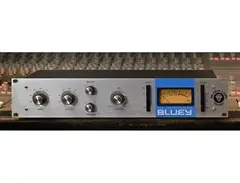
Pretty good for the money.
This is a great sounding fet compressor for hard rock vocals. As one would expect, the self noise is a little higher than an 1176LN. It's still within acceptable levels under same operating condions and the revision A output electronics are definitely vibey. The build quality is exemplary.
Don't discount the bluey on other sources though, if it's not right on a vocal it way just the thing for a kick, snare or boring campfire acoustic where the fast 1176 time constants and a less than pristine and clean sound is desired over VCA dynamics control. Even when not providing gain reduction audio run thru bluey acquires additional weight and harmonic content within input and make up set to unity.
Due to some CLA mods on the ins and outs to mimic his SSL insert buffers I find I prefer to run it as an external effect in a daw rather than on console inserts. It definitely sounds best that way even with the reconversion while mixing. Its subtle though. I might even be imagining it or it could just be that my desk has tlo72s post eq buffering the inserts and whatever is driving my converters is probably more modern.
The other additional feature is a blend knob. This seems to take the dry signal from after the input amp/knob which makes this control utterly worthless to me most of the time. If you set your makeup properly to match unity gain when the bluey's insert is bypassed the dry signal will always be way too loud. In order to get a true 50/50 wet dry at 12 o'clock you need to gun your makeup gain to ridiculous levels which usually requires a pad on the return while upping the noise floor and THD from the output amplifier in ways that aren't always tolerable to me. Otherwise it's a great vintage style compressor with a double serving of 1176 character.
After spending a few LPs and singles with the bluey floating around the studio I'm ready to commit rack space and wire it into the patchbay. I'm not sure how they pulled this off at the price point.
Not for those new to the 1176 and its quirks, buy a distressor if you want familiar vca behavior that can reach back in time to the 60s in some of its many modes. This is not a swiss army knife, it's a very specific type of tool that can do many jobs, but it doesn't have a corkscrew or a toothpick.
41028
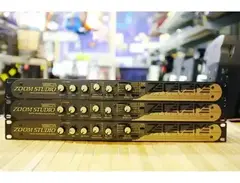
3 stars stock 5 stars modded
This is s weirder unit than the 1202 and 1204 anyway, sort of like the Vortex compared to the Reflex and Alex... but with mods it's just insane.
https://www.circuitbenders.co.uk/fxmod/1201.html
The guy will also relabel your jacks and backpsnel stuff if you forgot what goes where when the ink wore off and you pulled this from your rack s to make room for "classier" processing.
Drink petrol for jesus.
41028
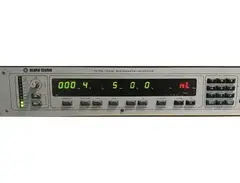
Quintessential 80s verbs
What can I say, I love this reverb.
Similar to an AMS. While it has that at AMS non-lin mode I use it most for a touch of room on drums or hall on vocals. Anywhere I can get away without stereo localization. Beautiful tails that just get out of the way with no additional processing. Limited bandwidth really sits it in the background. I dock it 1 star for being mono to stereo. Sure none if these old herbs were but I'm spoiled by modern gear! Heck Sony had stereo to stereo around this time. I mean, the output is TRUE stereo with different reverb on each side not just some phase tricks, but it's definitely not helping with the stereo image. Thus has never been a cheap verb, I feel like stereo coulda been done even in the 80s. Although my desk us mono auxes to stereo returns so I guess it makes sense in that context but there are workarounds for mono auxes.
That said, sound quality is 5 stars. Ersar8lity is great allowing subtle early reflections all the way to lush Vangelis scifi tunnels. The only fx processor I use more frequently is my roland chorus echo!
41028
Bang for buck when you can't treat your home studio and/or travel around to unfamiliar cheapo studios bands picked without your input
These speakers really surprised me.
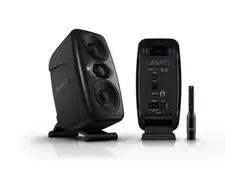
First off they weigh quite a bit for something so tiny and despite their consumery cosmetics are a sturdy professional product.
Good bass response for something this size. No great. Sealed design provides excellent transient response. Dual woofers probably help there too. Phase coherent mids. Clarity across the frequency spectrum. Subdued treble.
They look like fancy gaming speakers but don't be fooled. Think budget genelec when you look at the plastic ovoid enclosures. They also are pretty darn flat outta thebox in a properly treated room. Least crossover notch of any powered 2 way speaker I've used at this price point.
It can take a few tries to get the mems mic setup just right to calibrate the room correction dsp for your mix position in an untreated room but if you're patient it works well.
I got these to take to unfamiliar budget studios in my engineering work in the cheap seats if the music biz. I've dealt with some sketchy environments that can yield fine recordings if you can actually hear your mics properly... but my home studio is untreated and these have now taken over as mu primary mix monitors.
I actually recommend the MTMs highly for anyone who doesn'twork regularly in a purpose built room with high end sofitmounts the room wss designed around.
The iLoud MTMs punch well above their $800/pair asking price. They replaced a pair of those JBLs with room correction from the early aughts which I foolishly sold during a period where I gave up music production st even a hobbyist level. If you owned and enjoyed the old JBLs these are a similar concept only better implemented with modern technology... and nor a JBL sound signature, neutral and honest!
Only caveat is that the bass, while surprisingly deep and very accurate viz a viz transient response cannot be completely trusted in extreme sub frequencies. Depending on the style if music you're working on you need to keep that in mind like with any small speakers... and I'm not sure how the dsp would real with a sub woofer. I'm not a sub guy anyway. Given my druthers I like sofit mounted bi or tri amped 3 ways for hearing lows... but the sub frequencies have not been a major issue for me so far. Not important while tracking and no one has complained about the mixes I've been doing since setting these above my meter bridge. Oh yeah! They're mic stand mountable and also have really great desk stands for vertical mounting and isolation bass for horizontal. Both sound great.
Excellent product at a great sub 1k price from an unexpected source.
41028
Tolerable.
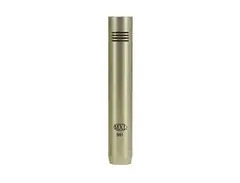
This is a passable chinese mic. I'm guessing it's knocked off of the km84. It's very cheap. Sometimes you can get it for free with an MXL LDC. For free it's pretty good but I would not pay more than 50 dollars for one. Low headroom, no pad. Very midrange focused but the top end that's there can become shrill. Does not take eq boosts well. Position carefully and apply cut only in mixdown.
You run into these guys at project studios a lot and they're a good reason to bring as many of your own carefully selected affordable mics as possible when traveling to engineer a low budget session. I always try to find out exactly what these places have on hand. Sometimes they'll just say like 3 or 4 SDCs and that could be a mixed bag of stuff... your chances of getting a good sound from unspecified cheapo LDCs is a little better than with SDCs in my opinion. There are just better cheap LDCs out there as the LDC firmat has always been the attention grabber.
Preferred Settings + Usage:
Overheads in a pinch, typically spaced. Acoustic guitar in a pinch... toms maybe. Doorstop.
41028
Great value.
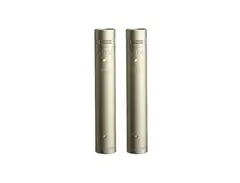
I bought a pair if these when they first came out and never regretted it. When I want SDCs on drum overheads or a less american sound for xy acoustic guitar than sm81s offer I go with these guys. They punch way above their price point.
They have pretty good headroom but the lack of a pad limits their usefulness as a close mic for me. I would rather not fiddle with the nt5 as a spot mic when i can just put up something that I know won't overload.
The nt5 is fairly flat to my ear and is priced similarly to the sm81, but the way they pick up the same source when set up the same is like chalk and cheese. One or the other will sound right.
Preferred Settings + Usage:
XY pair as drum overheads or in front of an acoustic guitar around the 14th fret.
Spaced drum overheads.
Hihat spot mic, positioned carefully to avoid overload and maintain snare phase (you're never getting the snare out of the nt5 in this application so make it work).
Saxaphone about a foot from the bell.
Cello spot mic for extra bow detail and transient response alone, in XY or spaced with a figure 8 mic with good bass response.
Backing vocals, position to taste.
41028
Arguably Shure's best microphone.
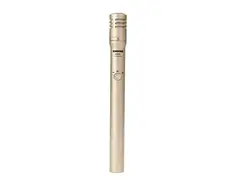
The sm81 is a superb small diaphragm electret condenser. It has a really natural response and beautiful transient capture. Being an electret there is no frequency rise caused by the polarization voltage and being an LDC the pickup pattern is uniform across the frequency spectrum.
On hihat and other cymbals it seems to pick up all of the attack and tone and none of the clang. It's a great spot mic and not too shabby on drum overheads. I also like to use it on snare drum if possible. It can sound good on guitars of all sorts and even some vocals. It's not a km84 or c451 and it's not trying to be. It has a 70s America sound that is instantly recognizable on a hat or large bodied acoustic guitar.
The only flaw with this mic is physical. With such a long body it should be a side address for drum kit use. The body is really hard to position well to reject other drums when used as a spot mic, particularly for hihat. If they made a side address variant I would buy one.
Preferred Settings + Usage:
Pointed right at a hihat either right at the spot where the hats are open, slightly over top at a about a 45 degree angle downwards facing the drummer or beneath the hat angled to reject the snare with the null pointed between the snare and kick. These basic positions give you different balances of stick, sizzle and body. That's if you even need a hihat spot mic.
XY pair pointed at the 14th fret of an acoustic guitar or alone in mono pointed straight at the 12th fret.
Pointed directly at the bell of a ride cymbal very close from above.
Pointed at a snare however you would point a dynamic, pad engaged.
Set up on a vocalist like a stage microphone. This is an excellent way of getting a distinctive vocal double when you recorded the main vocal with a large diaphragm condenser or dynamic. If you can get 2 passes of 81 you can smash the heck out of the center vocal and then just gently control the dynamics of the sm81 tracks and pan them out for a little excitement on the sides. You can even high pass them pretty hard to just add motion in the intelligibility and detail ranges. The 81 is really good at this and works very well against a main track recorded with an re20 or sm7b. As a main track the 81 is worth a shot but there are better suited SDCs and MDCs... there are some sony mics that come to mind.
41028
This is the one to have...
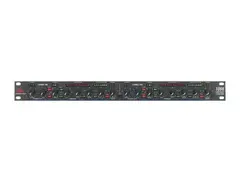
Out of the cheap dbx stereo 1u dynamics boxes invest inthe 1066. Stay away from the 166 and 266, you're better off with an alesis 3630 or better yet a 3632. All of these units are comparable in features but the 1066 has the best sound quality and the least undesireable artifacts when you get heavy handed. In stereo at this price point you may prefer a symetrix 522. It's kinda personal taste. The 1066 is midrangey dark, the 522 is thin and bright. This is a good device on channel inserts like stereo microphone pairs or stereo line signals from synths with unruly peaks where you just want to tame stuff down and maybe tuck it back in the mix.... if you run out of RNCs because you're using them mono the 1066 will get the job done, although maybe not as transparently.

27261
My hands-on time with DBX compressors is just a grain of sand on your beach of experience, but there's a certain honesty and clarity to the way DBX stuff is presented that I appreciate... they don't clone other ppl's stuff, they don't try to pretend that a compressor is anything more than a tool... don't use corny metaphors and adjectives in their marketing copy ("warmth", "breathing", "bring life to your mixes", "grain of sand on your beach of experience", etc)... it's no-nonsense. I dig it.
41028
Dbx has always made quality gear at reasonable prices. Some of the stuff specifically targeted at FOH and/or home studio market is lackluster lile the stere compressors, channel strips and 900 series modules... but all of it generally does what it's supposed to. There's only a handful of dbx units I would say are worthless,though I've not tried them all, particularly the new 500 series gear.... they've done some hella interesting stuff like the sub bass enhancers too... they've made those half rack units with the hiZ option for guitarists who want a compressor that's also a DI. They didn't completely lose their way when Blackmer sold the company.
-s.webp?v=1784819107)
41028
Best in class? Best bang for buck!
This takes off where the old platinum octopre left off. This might be the best sounding 8 pre under a grand. Sometimes used the clarett can be found for 500usd! For that money its unbeatable. Nothing else delivers analog circuitry and DA converters of this caliber for $700 or less.
The unit is fairly sturdy and very easy to use with dedicated gain controls and 2 function per channel buttons... inserts... these are just specs.
My 1 big complaint is that you can't get all 8 preamps out digitally over SMUX at 192k. It would be nice to have something like an AVB output but focusrite is tied to dante and only for their expensive pro studio-grade stuff.
The 'air' is neat sounding but isn't exactly the same as changing the impedance on an ISA range. Like a lot of affordable discrete focusrite designs over the years you can hear the soundcraft lineage as much or as the neve lineage and that's okay.
I dock it 1 point because it foolishly has 2 preamp inputs out front and all the other connectors on the back where they belong... and for the digital connectivity. I don't think anything in this class and form factor can do better but its focusrite and they've set the bar really high since getting into the home/project studio market. I really think a piece of this caliber should be designed for normal rack use with patch bays, snakes or breakout panels etc.
The only comparable stuff is by audient... which is interesting because Dave Dearden wound up at soundcraft for awhile after DDA was bought up. I've not tried the audient stuff but I suspect the clarett and ASP preamps will perform similarly... although on their desks the audient preamps are actually transformer balanced but I don't think they are on the 1u 8 channel preamps. And the focusrite just clicks in cheaper and is of very high quality sporting very nice converters that keep up with anything from avid, apogee or MOTU.
41028
A great expansion unit for mixing OTB
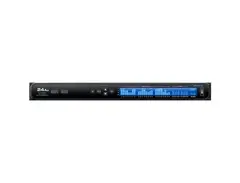
If you already have an AVB equipped centerpiece unit that will run to your computer via thunderbolt, this and the sister 24Ai input unit is a great addition to your studio. Fantastic converters.AVB allows you to send a huge channel count along with word clock data at ridiculously low latency.
The AVB connection will occassionally fail at power on and you'll need to fiddle around for 5 minutes to get the network running. That's the only issue I've ever had.
UPDATE: the networking issues disappeared a few years ago with a really solid firmware update on all of the motu avb gear, still happy with these converters, you need to spend a lot more to get better sound... also, whenever I've had an issue, even though its invariably the host computer's fault, motu tech support is right there 9 to 5 eastern time and they ALWAYS help me solve the problem or at least bandaid it well enough to meet my deadlines
41028
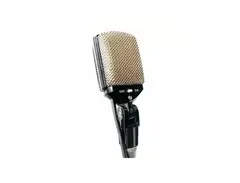
A very nice old dynamic.
This mic sounds a lot like Sennheiser's very similar looking MD409. It might have the same capsule. I don't know for sure. Where it differs is the touches for stage use; an on/off switch and a hi/lo impedance switch marked aus/ein. This is definitely meant to be a stage microphone but performs well in the studio. You can't go wrong with a D14 on mid range focused sources, pretty much any place you would use a modern sennheiser e609.
41028
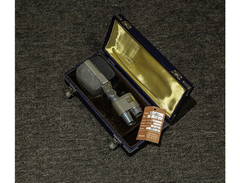
A D12 by another name.
The D20 is the hot rod version of the D12. It mainly differs in that it has improved internal shock mounting. This is an excellent dynamic microphone with extended bass, flat mids and high spl handling. It was a part of the EMI mic locker and it can be seen on late period beatles sessions in Ringo's kick and also suspended on large booms to pick up studio conversation for the let it be film. Sadly that connection has driven the price up. A D12 or D12e sounds essentially the same and will typically cost a bit less. These rectangular D series mics are some of my favorite dynamics.
41028
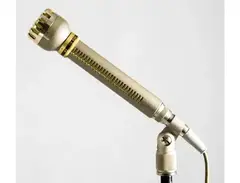
A decent but overpriced old dynamic.
This is a solid handheld cardioid dynamic. It handles high spl and has a pretty flat response between 100hz and 15k. It makes a nice snare mic for a vintage box of wheaties sound. It wouldn't be my first choice for anything else but I definitely prefer it to a 57 in all of the 57 roles although not to a 59. Sadly these were omnipresent at EMI studios and can be seen at Twickenham and apple in Let it Be so the prices tend to be quite high now. It's not that special. I'm thinking of selling mine.
41028
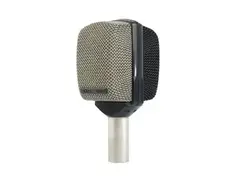
Good for more than kick.
I'm not sure what the difference between the D12 and D12e is apart from the the 12e being the 80s version of the 12. This mic can take a licking. It has extended bass response and high spl handling suitable for internal kick drum placement but it's also a great mic for toms, horns, guitar and bass cabinets. It sounds like it rolls off around 15k like a lot of the old akg dynamic capsules, but that's fine for a lot of applications.
41028
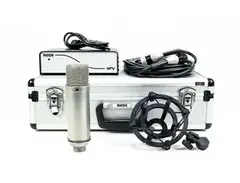
A stand out fixed cardioid mic from the millennial budget tube mic boom.
I've owned this microphone for a little under 20 years and though I once replaced the 12at7 it's been a worry free workhorse for me. It's got a really uniquely open high end, probably due to its edge terminated capsule (every other capacitor mic you come across is center terminated in yheneumann tradition). At the time I bought this I had a few other fixed pattern triode based condensers including an ADK A51 and a cheapo mxl v69m. This mic stayed. It has it's own personality and excellent noise specs. It's got a real lack of useful features basically relegating it to lead vocal duties but in that role it's a real heavyweight. It's also a good choice for a center kick in M/S when recording stereo acoustic instruments or group backing vocals. It makes a nice mono acoustic guitar mic as well for a big folky sound on singer songwriter material. It's a shame they don't make the ntv anymore. I wish they would reissue it as a multipattern with a variable pad. It's not a vintage tube mic at all sporting a lush but modern sound. Amongst modern dual triode based mics I really don't think there's a more original sounding design and it has the best headroom and least self noise of any of these affordable triode models of the era. It's a great, open sounding microphone that holds its own with affordable pentode models on vocal but its versatility is hampered by a lack of pad and high pass. I like that it's not trying to use an affordable dual triode to cop a 47, 67, C12 or 251 sound. A great addition to an existing collection but don't expect to use it all the time. Even on vocals it flatters some singers more than others.
41028
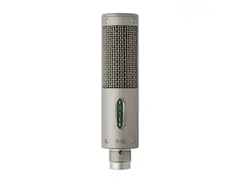
Just buy one.
The R-10 is hands down the finest passive ribbon microphone under 1000 usd. It excels at everything. This microphone has an extended top compared to more vintage designs and exhibits very strong rejection at the sides making it a superb choice for instruments in open room scenarios and also a good choice as a spot mic for cymbals, particularly pointed at the space between hats with the bulls angled at your snare (just don'tlet the drummer hit it). If I had a matched pair I wouldn't hesitate to use it as a drum overhead. It is, of course, a go to choice for guitar amplifiers though I have been more if an LDC fan in this application the past decade. This mic reminds me a lot of the naked eye ribbon that is now produced by shure and sold under their brand for over 1k usd. The R-10 is half that price and every bit as enjoyable. It's not quite as euphonic as a 121, but this is the little ribbon that could. I've had this microphone awhile and it's just so reliably good i never reviewed it until now.
41028
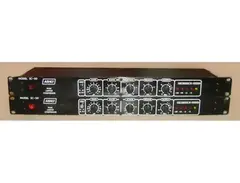
Super fat and dirty VCA in blue face.
This review is for the blue face circuit. Score a blue face or very early black face you're getting a real beast. The VCA is discrete versus later ones that use a dbx VCAs. This is an unusually colored VCA design either way but the big bottom and midrange saturation of the discrete model will bring a smile to your face. Brings the dirt like certain distressor settings. The 50 is getting pricey these days.... stereo bus version is the 55.