
jimmarchi1's Reviews
801 reviews Back to jimmarchi1's Equipboard

41028
A very beefy VCA design.
Pretty much the compressor section of the notorious 501. Anywhere you don't need that vicious limiter, this will do the job. You can use this wherever you would use a dbx 160x. Its thicker and excels on bass and kick. You can get away with a 150 on kick without a bass boost post a lot of times and you may not even want to run the kick in parallel. These are getting pricier but are still a solid value. There's also a CL100 but I prefer the 150 personally. The 100 is more like half a 522 with better peak detection. But either is a good buy.
41028
Very good value from a sleeper vintage broadcast EQ
Very similar to the various iterations of Orban's stereo parametric EQ. 2 channels, 4 peak/notch filters per channel. Quieter than my Orban (which it is replacing for the time being) at extreme boost and pretty transparent tonally. I may mod it for even cleaner performance. I'm docking 2 stars for a lack of shelving option on high and low bands, no individual in out controls on the bands (orban has them here) and the lack of variable hp and lp filters (theres a fixed rumble filter) but don't think this EQ won't do the job well when you need a little more than your mid-range desk eq can do. If you don't want coloration or excessive bands reach for this guy. As it's a late 80s or early 90s piece I don't recommend it for stereo work; between potential parts drift and the lack of matched detented pots it's not suitable for anything critical although I can imagine trying it on spaced microphones, like drum overheads or room mics. If you're young dude used to plugins this will be easy to adjust to though in a hybrid or mainly digital setup it doesn't add a lot of mojo. This is a great idea for someone who wants to keep things analog from line amps to 2bus outputs.
41028
It's not a perfect 1081 but for the money? 5 stars!
Many with more experience will say that the class AB 1081 sacrifices the sweetness of the 73 for features and that it doesn't even touch the 1084 which is class A and has hiQ on the mid as well as some extra frequencies available... but I always liked having the extra mid band!
As with the GAP eq71 you want to avoid the mk1 eq81 if you want to use it on your desk's inserts or loop it through an interface output back to an input while mixing (although if you have a pre73 you can easily loop in and out of the ou interface assuming you'renot trying to compress pre-EQ and you can run off your inserts with or without compression before the line amp assumingyou're super precise with gain staging, though the results in either instance you won't exactly be getting the effect of a neve 80 series desk with dynamics insertion but you'll get some mojo from the transformer balanced line amp though it will be colored by anything before it).
If you've never used a 1081 know that it's the cleanest neve eq with the most flexibility... but just as with the 3 bands it's impossible to destroy your source material. This eq does exactly as much as it needs to and no more. If you're new to analog EQ this unit is a great starting point.
I personally love the sound of an 81 or ISA eq so I'm coming in with some bias towards the later neve designs. It's very clear but not without character and the frequencies available are perfect for sitting any source in a mix assuming it's not recorded incompetently. Even for corrective EQ this circuit is a champ as the frequencies are perfect for most of the mic placement errors you encounter as a mix engineer. The HiQ settings are just right most of the time. If the 81 won't do it you may need a full parametric or like a urei little dipper! Or just make the idiots who recorded it go back and do it over... just kidding.
Without springing for a great river I feel like golden age is the only game in town for this type of inductor eq in a standalone format for insert use. It's not that good but it's really good, ok? You can rack a pair of these new for half the price of the eq2nv and you will be really happy... you lose a little vibe and may experience some smeariness due to the IC in and out buffers versus class A discrete buffers but really, its minor; the sparkle and harmonic richness is right there. Wealthy connoisseurs will quibble, but I work the cheap seats and I definitely will take the cheapo clone over a plugin. Even a BAE or AMS is kinda out of my reach still. I have a kid to feed.
The wall warts are a bummer but investing in their rackable PSU solves that, running 4 modules from a single conditioner outlet... and once you have 1 of these you'll want more. The rack mount kit is sturdy as heck and pretty cheap at about 50USD.
I have not been this happy with a brand new budget piece for a long time and plan to purchase a few more... and some moe eq73s!
Preferred Settings + Usage:
I will try this on anything. It's great on kick,, bass, guitar (270 and 330 at hiQ for electricguitar muck, 2k7 or 3k3 low for harshness, hi and low shelves or bells to taste), any vocal especially post compression! Try a little sandwich with a 1073 strip shaping the track into a varimu or la2a followed by the eq81 making corrections and boosting 15k as a shelf... and maybe pop a fet compressor in parallel... badaboom
41028
Good bang for buck.
If you're using this on inserts with a desk do not get the mk1, the mk1 can only work on the insert of the pre73 at -20bdu so your +4 inserts will overload it and you'll have a lossy distorted signal at your injection point.
You can use a mk2 standalone. Theres individual balanced ins and outs buffered by transparent ICs.
You can also use a whole mk1 1073 system as your line amp and eq and return it to your injection point via the preamp outputs. If you shell out for their deluxe pre73 you get the hpf too as well as a nice line amp for critical high bandwidth sources like vocal, kick or bass... but at 600 bucks minimum for both pieces and the rack you may want to look at a warm or better yet a heritage in this sub-BAE price range. None of them sound 'right' if you've been lucky enough to use well serviced vintage 1073 modules. But I'm a bit partial to the GAP and heritage stuff... they sound pretty good to me and feel sturdier than the warm audio units.
While the mic/line amps are part of the sound, the EQ circuit sports some serious vibe patched solo to your inserts. If you have trident style semi parametric desk EQ this guy will eat that tl072 based eq fir breakfast even being short a band. It's very much worth having a channel or 2of standalone 1073 style eq for midtown.
Still, if you're looking at EQing during tracking, adding some 12k to vocals for instance? The WA73EQ is a better value and for a slightly larger outlay Herirage gets you an even more impressive build and component quality than the GAP. If you want a standalone inductor EQ with great frequency selections and a shadow of that neve midrange magic for broad tone adjustments in a 1/2 rack form factor? This is a winner... but invest in the 4 unit PSU. Wall warts make messes behind your rack. Plus theres starting to be a plethora of 1/2 and 1/4 width 1u modules from these dudes you can rack up off of a single 24v PSU. I really love the form factor and high voltage. 500 series is always tempting but its lower voltage means this style of module needs 2 spaces to run properly.... I digress. Try some GAP gear. Not too shabby!
Preferred Settings + Usage:
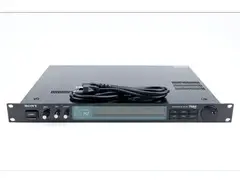
Pop lead vocals, female vocals, crooning Male vocals, electric guitars, some bass guitars, synth leads
41028
If sound quality were the sole concern this would be 5 stars!
The R7 is a worthy sonic successor to its 2 ancestors and then some. It's got lush, realistic stereo reverbs and excels at rooms of all sizes, right down to tight, dry spaces.it has scads if editable parameters. But the interface and editing menus are impenetrable. The presets are impressive but unsuitable for actual music production. This unit is a giant time suck during a mix. You'll waste hours with it and eventually change it out for something less sophisticated to save time.
41028
Not Roland's best reverb but good bang for buck
There are pretty much 2 affordable 1u roland reverbs worth using. The srv330 and this one. The srv3030 is awful, it's not a worthy successor to the 330. I think tje 2000 was meant to be a cheapie but it's really pretty nice. The 2000 isn't as lush as the 330 but it has a grainy quality that can be charming. It can be really good on drums and particularlyshines on snare when you're treating a snare separately. The presets need a lot of tweaking but the interface is intuitive and storing your own patches is a snap. Definitely worth the price if admission if you already have fancier processors.

27261
I owned an SRV3030 for all of 2 days. It was so not to my taste, and I was so unable to get anything useful out of it, that I sent it back to Zzounds or wherever I had purchased it (on clearance discount) and never thought about it again until I read this.

41028
Good sounds but limited editing. Different than Alex.
Worth buying for the guitar stage setting. Solid little budget Lexi but inflexible. Midi functions trump the alex.
Preferred Settings + Usage:
Guitar stage
41028
True stere reverb, virtually unknown outside Japan.
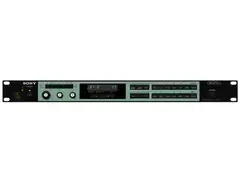
This is not a lexicon. While it has a somewhat 80s sound if abused it excels at subtle spaces. It really has it's own vibe unlike Lexi, eventide, yamaha or AMS. Its biggest selling point is that it is, as far as I know, the first true stereo reverb in that s signal panned one way will receive reverb as per your settings on that channel but will also be delayed at a lower level into the opposite channel to simulate the way sound sources at extreme sides of an actual space bounce around and hit your ears on both sides in different ways. It's very effective at this and I've never heard another stereo reverb apart from a quantec create such a convincing sense of physical position in the soundfield without doing some tricks with the sends and returns using an additional delay and maybe mid side processing. This unit also has a simple 4 band EQ available to shape the reverb into your echo returns without wasting a pricey outboard stereo unit. Its digitally controlled and settings are stored with the patch but it sound analog. Digital eq in the late 80s wasn't so hot and this eq is really musica and will handle mist of what you would want to do short of compressing the reverb prior to EQ. Oh yeah. Rather than a non-lin patch this guy boasts an actual gate that can be a bit finicky to set but works just fine or phil Collins and def lepard moments alleviating the need to waste a stereo dynamics processor on an echo return and cutting down patchbay spaghetti. The 2 channels can also be used as dual independent mono effects or a single series mono within certain limits defined by the software. Mist of what one would wish to do in mono is available via the front panel without patching the unit into itself.
This unit was originally designed for Ibanez but the sony version has improved algorithms and different presets though the hardware is identical. The ibanez 1000+ is the exact same unit as the sony badged version. These units are in every Japanese studio but weren't well known in the states. It's rare to find a 120v version. Most are 100v or ibanez branded. The identical ibanez is much less common than the earlier ibanez version. That unit is okay but not as good. Its subtle though.
Unlike later Sony processors the interface is user friendly and mostly self explanatory. Editing presets is a snap.
The distorted guitar room preset alone is worth the price of admission to me. Used judiciously with some tweaking it beats the reflex's guitar stage for subtlety and natural character sitting Rock guitars tight in the pocket with the drums and lending a sense of power to close miked speakers. Of course the reflex is a budget processor and this was high end in its day so theres that. Also of note is the sharp snare preset (a lot of the drum presets are amazing though there are some 80s cheese patches too) but using this just for snare is a bit if a waste unless you have 2. That said I always loved the SRV330 or SRV1000 when a snare needs its own over reverb and this guy just murders the rolands.
I have an ibanez version and just acquired a 120v sony unit. I like it that much. Probably my favorite affordable digital reverb apart from the klark teknik... and a serviced klark is 4 times the money for a mono to stereo unit.
Its biggest drawback as a sole reverb is that, like most of these processors or the 80s apart from the AMS and Klark units it is not full bandwidth so you automatically have rolloff. In practice this sounds realistic for most rooms but it definitely hurts it for bright reflective spaces and plates. If you want fake plate use a Lexi, TC (gold pkate!) or the exceptional Arturia plate routed from your interface to its own channel strip.
Preferred Settings + Usage:
Rock guitar distortion, sharp snare, vivid snare, powerful drums (analog drum machine), compact room, clear reverb.
41028
@pkennethk I take back my lexicon statement. I didn't deep dive the hall parameters. It goes full vangelis if you tweak enough parameters on preset 1. This thing is a beast. I'll never get another one at US wall voltage for what I paid :(
41028
a gem at this price
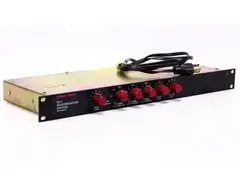
the furman spring reverbs have quite a sound in mono.... excellent to acquire in droves for cheese ball FX
41028
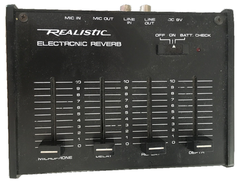
its so bad its good
I have one of these bought in the 90s and its like a bathtub reverb with a scattered delay effect.... -10dbv standard on the rcas I think, just misuse it and interesting things occur... I would use this more for its bizzare sounds if not for the irritating interfacing just XLR and RCA and non rack format.... the sliders are very satisfying I guess
so bad its good, like backaroo bonzai.... is it 1 star or 5 stars?
Preferred Settings + Usage:
crank everything
41028
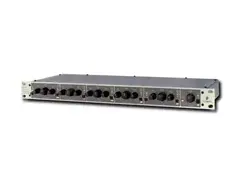
a solid parametric EQ for cheap
This EQ lacks a bit of head room but is very functional. Not as transparent as klark teknik but keeps up with the orban EQs and orban designed dbx 242.... solid guitar track EQ. I scored 2 of these for $200 after being told daft punk used them. They don't suck but aren't particularly musical and require good ears. Not my first choice but solid and useful for very little money. I love cheap, useful gear. Do not pay more than 150 USD, poor man's dbx 242 EQ..... over that and you can get a 242. I suspect this is Uli's budget clone.... probably made mostly in west germany in the e0s.... another mono contender arethe symetrix mix pre EQ half racks which are somewhat better and the single channel 80s and 90s klark tekinks but they can command more money. This sounds much better than stock ashly, furman and and rane parametrics of the era whch sound grainier uptop though cleaner in bypass.
41028
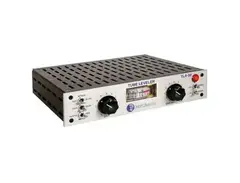
bees knees
there's a lot of talk about what sort of compressor this is, well, I have one and i opened it and looked it over.... this is a vari-mu but instead of using a a triode/duplex-diode tube for gain detection and control surrounded by triodes like vintage units this guy uses a common guitar dual triode for input gain and gain control with a pair of solid state diodes back to back for detection... this is like the SPL iron that uses different cheap SS diode arrangements for detection with triodes but without the transformers.... this compressor sounds excellent on ANYTHING and even with minimal gain reduction it adds weight to mono sources.... it is an absolute vocal champ sitting between an opto LA2A sound and like a gates sta-level but cleaner if you want. Absolutely bad-assed compressor/leveler. Built to WWII military spec, super sturdy. Neve style meter needs periodic recalibration via a trimmer. I intend to purchase at least 1 more and a TLA100 for bus work. Can't go wrong.
41028
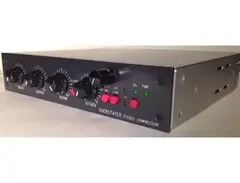
the subgroup bus slayer
stereo FET compressor with dual ganged controls.... transformerless.... 1176 based circuit but transformerless.... fixed ratio, in gain, attack release, auto time constants, sidechain filter and BLEND CONTROL. sounds like its fixed at maybe 8:1. Discontinued currently. This thing smacks. At high input settings it goes from mean and dirty to ruthlessly filthy at the twist of the drive knob and can be blended to taste without wasting aux sends or busses. But its also great and controlling extreme peaks of percussive or just fast stereo material when set conservatively. It has a voice of its own with a very transparent frequency response especially with the side chain engaged to focus on high frequency transients but it excels as a parallel smash and distort box. The metering is awful but the way you use this guy its all ear tuning. This is an excellent FET compressor in true stereo for overheads or busses.... pairs well with the valley dynamite. Cons? hard to rack without a kit and doesn't play well with other half rack mounting schemes. Not worth docking a star, it sounds great.
Preferred Settings + Usage:
Cranked input, high drive, fast time constants RMS compressing at about 1/3 to 2/3 effect blend into a valley dynamite or 610 peak limiting on a parallel bus adds a lot of balls to drums or rhythm section groups that also tickle the 2bus.
41028
Bang for buck.
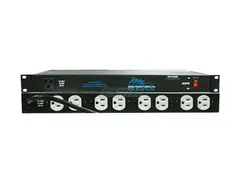
every bit as good as a budget furman and can be had a bit cheaper new or for 20 to 30 USD used. outlets are sideways but spaced so that 1 of every pair will accomodate a wall wart if needed. Very sturdy build wuality, nice tight outlets. Hidden gem.
41028
indispensable in the well equipped home studio
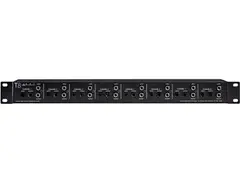
If you have a mid sized mixing desk with unbalanced inputs in a building without a dedicated audio ground scheme (a home studio) you need some way to eliminate ground loops and interface balanced only processors with unbalanced mixer connections and patchbays. This is the lowest cost alternative and performs every bit as well as the slightly more costly proco version. I have a number of these. You don't always need them for interfacing balanced gear but they really simplify your life when there's a ground loop coming from one specific piece of gear (my main culrpits are my valley pieces like my dynamites). This guy will knock that right out. Its very transparent.... the transformers are 1:1 and pass 10hz-50khz, more than enough bandwidth. its pretty darn flat but as with most transformers it actually semms to add a subtle bump to the lows that will flatter any bassy source. You really don't need to go with a radial or jensen unit that will break the bank when the ART T8 does the job for a fraction of the cost. It has various connectors to each transformer and the rack ears are reversible so you can keep everything nice and tidy. I can't recommend the T8 highly enough for your home studio patchbay.
27261
Great writeup, as usual. How long do these things live? How old is your oldest surviving T8?
41028
@pkennethk unsure, they're all used... I have 4 and the first one I bought was 15 or so years ago when I wanted to rackmount iso/matching transformers in my mobile recording rig instead of using the little 2 channel DI sized box I had originally. They're passive and the transformers don't see any strain so the life is as good as the jack life and PCB trace durability.... there's nothing inside the but if you went to build a unit like this it would be a nightmare to make it rackmountable and would add up fast in cost. I added this review because I just bought a 4thone, I can usually score these for $100 or less...
41028
@pkennethk I wanted some more channels because of how much gear I got on the cheap lately, no issues yet but I'm also thinking of changing mixing desks so who knows what I'll be up against trading up!
27261
@jimmarchi1 if your oldest is at least 15 years and still kicking, that's good enough for me. thanks!
41028
colored but not like a VLA, more.... something?
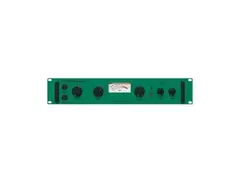
This is an underrated stereo bus compressor, not good for master bus, but for sub groups? yeah! Imagine a pair of perfectly matched and linked LA3As with more functionality and a smokey british lower midrange.... you want V4 with dark mode, but all versions are good, but yeah, V4 is best.
Preferred Settings + Usage:
My main use for this is a brauer derived 3 bus approach on my 3rd bus where sustaining sounds like backing vox, pads, legato strings, fuzz guitar and delay/reverb returns get grouped although some additional guitar or bass might go in there as well as into the 1st and 2nd busses. Thic can be done in parallel with dry signal on bus 4 or any of the other busses through other compressor/eq chains. Its also a contender on stereo recordings of guitars, synths, some stereo room mics or anything that needs some coloration and bloom to the decay. My settings vary a lot but I always audition all of the positions on the curve rotary, its very powerful.
27261
Seeing a lime green Joe Meek takes me back! Holy S%$#. A whole decade of Musician's Friend catalogs just flashed before my eyes. Do you feel these are worth the prices they're currently going for on Reverb?
41028
@pkennethk I'ma go long winded here... you can get 'em for $600 or less unserviced if you're not picky about the version, although there's a version 4 for $600 right now if you need a good buss compressor for synths, vocals or guitar groups, its tested and seems good but its been sitting in its box awhile so I would be worried about the caps, its 30 years old.... for one rthat was just recapped with any non matched compnents on the sides replaced to make it a tight stereo pair I went up to $700 shipped but would not pay more. Guy's who are firm on $850 to a grand are crazy, they made a lot of them. But then again look at prices for real LA3As now.... even the reissue, a pair wills et you back and its a kissing cousin. Your main option is the heritage clones and a pair will still run more than a joemeek and they're really better at mono in my book. I mean, a pair is cool if you have an m/s matrix, but its nutty to use them for stereo unless they're factory matched....
Being a true stereo unit the meek has great link and dual ganged controls if you need a bus comp. Not a true dual mono unit like a pro VLA though. But the Pro VL has been finnicky for me for bus work, I much prefer it as dual monos or for ungrouped stereo sources like overheads or stereo synths, backing vocals, shaping reverb or room mics etc.... so I did a deal on one of these because I ahd such fond memories and so far I'm feeling like it was a good trade up on my laggy bus even without the starved plate tube stages adding that color. The SC2 provides lots of character, more than the VLA I or II when used conservatively, now if you start smashing wth a VLA and hit the input ahrd that's another story but I don't like to roll my subgroups like that. Defintiely a good buy, its great at non percussive groups and can do aprallel bus.... I also have a little 1/2 rack overstayer stereo fet coming.... woohoo....thing seems very interesting.
Anyway, I would say the SC2.2 and either pro VLA are great budget options, you et a lot for your money.... you need to really step up into summit or better LA2A clones to top them. You can spend more and not be any more happy. As far as I know the SC2 and SC2.2 are both Ted Fletcher designs based on an older Joe Meek design from the 60s and that's a pretty good pedigree.
41028
@pkennethk I try.... I should point out that Iw as not entirely accurate in ym generalization of Art optos, the VLA I allows all the left channel's settings but makeup to control the 2nd channel in link, the link doesn't seem that interactive though.... in the VLAII even makeup is controlled by channel 1 and in link the detectors respond in better harmony to my ear and that can be varied in some way by the second channel's makeup control which becomes a stereo width kinda thing and I don't know what its doing really, but tis neat, however the VLA I flat out sounds better to me when you hit it hard and the lack of options can be really refreshing... but the sides are just not that well matched on either, its good enough for a lot of stuff don't get me wrong. Its been annoying me lately so I decided to shop around. Plus I ave an inherent dislike of starved plates even though this low voltage tube stage does sound more than okay. The SC2.2 is far more purposebuilt though and for a relatively budget conscious bus comp its a real slayer... I have also heard tell that one can change out the vactrol for different bulb to LDR responses like the plug in detector modules in the LA series although I've never confirmed this. Its solid state, sure, but the VLA is basically solid state, the tube is a color thing tossed in and note even running right. It'll last awhile though. So there's my self correction.... expect reviews on the overstayer stereo fet comrpessor and the summit audio TLA50 coming soon. I have high hope for the TLA50 as its some sort of varimu tube/fet hybrid in a tine box that gets rave reviews. If their preamps are any indication it should be fantastic, a very hifi, high voltage affair with vibe for days when abused....
41028
worth it
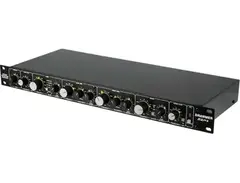
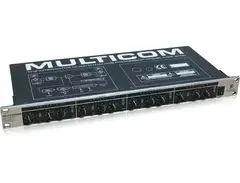
If you need an excellent analog stereo EQ with dual ganged controls that are detented this thing sounds excellent and is perfectly matched. Utterly phenomenal value for dollar. Very british sound in the trident/soundcraft/midas style but almost fully parametric! Sounds good broad and van get surgical, incredibly versatile, highly musical filters. Just passing stereo through it adds a little something to it. It of course can be used mono if needed but not dual mono, so what? For just under a grand its hard to deny the 1974....
41028
noisy but functional
I won't use this unless I am dead out of compressors and using software will be in the wrong part of my signal chain... its not even in a rack. Its actually my friend Mike's. This compressor is not very good and the makeup gain gets noisy. Its generally hissy if you concentrate.
-s.webp?v=1784891628)
41028
its not perfect but its damned good for $400 lightly used
I think this will suit a lot of people for alot of sources because their only exposure to an 1176 is a plugin. This is easier to use and sounds at least as good until you start really flattening bassy sources.
I have heard talk about these guys being noisy, I have had the output up really loud on a heavily compressed snare track with lots of bleed in the mic and it was fine. Didn't add any noise and it really didn't amplify the bleed in a way that caused more problems and the added snap on my snare was well worth it.
This guy's output amp is a bit less colored than an old one, but then again you don't know which revision you have at someone else's studio unless it has a blue stripe or is plain silver... you can pay a lot more and get a UA reissue or pay double for a purple audio and probably not be that much happier. Those units are better at smashing things to death, but the time constants and general flavor are there with the warm. It dials in fast if you know what you're doing. I also have a black lion bluey but they're different revisions and the bluey clones CLA's personal blue stripe so tis not a valid comparison. Lets say they are different in timbre but can be used for the same applications generally and get closer the more conservative your settings are. I kinda wanna do a shoot out of all the clones on the market right now... get behring--errr--a klark teknik, pick up some other options like the revive clone, a purple and just round 'em up. try to shoot them out on their own merits as fet compressors, not even include a vintage 76 or a UA reissue.
My verdict is that this is a useful addition to any studio at a bargain basement price, not as cheap as the Klark, but still a heckuva deal.... there's been a lot of comparison between the klark and this guy and I gotta say i don't expect to hear a lot of difference when I get around to buying a klark. The used market on Warm stuff isn't huge but you can get a good 200 dollar discount if you scan around patiently making it just about the price of the behringer klak teknik version. I really might get another one of these soon. It only falls down when using higher ratio settings on bass heavy content. It definitely sucks more bass than an actual 1176 in good working order. All compressors WILL do this to some extent and the warm is tolerable, but if you're expecting a real 1176 level of bottom when you brutalize a bass guitar or kick then be prepared for a bit of a elt down. I suggest not brutalizing those sources, you don't need to.
A word about ratios for the uninitiated. Yes, you can do all buttons in. That's not to say you should. You can also combine 4 and 8 to make a 12:1 ratio that sounds different than using the 12:1 button... and using 4 and 12 gives you a 16:1 ratio in theory but it has a whole different feel than you expect based on the 12 and 20 settings... the 16:1 in between setting is a great way to catch overs while tracking vocals set so its only tickling the loud bits. The time constants have a different slope to my ear when you combine 2 or more buttons so experiment and learn your 76. The warm has all of these quirky behaviors.
for day to day tasks my WA76 is serving me really well. Out of my recent acquisitions its making me the most happy because it can pretty much do anything I throw at it and its not tweaky or difficult to set.
41028
my favorite stereo limiter/expander
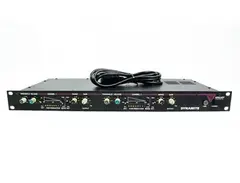
I have 2 of these and a valley people, these sound and behave exactly like the earlier dynamite in a sturdier rack case, see that review.... excellent VCA unit, versatile and extreme if you want it.... not for the timid or uninitiated