
jp_belanger's Reviews
63 reviews Back to jp_belanger's Equipboard

620
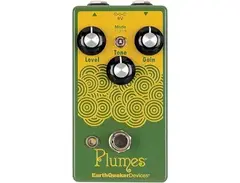
Probably the best bang for your buck of all pedals
Plumes is pretty simple on paper: a Tube Screamer with 3 voice settings.
There are dozens of TS circuit clones and mods on the market, some available for way less and some for way more money. Once could argue that any Tube Screamer will do the TS job, and would probably be right. But at $99 brand new, this high quality Earthquaker Devices pedal should find a place on your board.
It sounds just as good for pushing a high gain amp as it's a good overdrive on its own when ran through a sweet sounding clean channel.
There is not much more to say about it; it looks great, it's green, and has more options than a standard Ibanez TS. Get one!
620
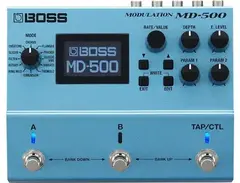
Great sounds, great connectivity, bad everything else.
I wanted to love this pedal, I really did. While I loved parts of it, I certainly sold it in the end. This is why:
I was shopping for a new modulation multi effects unit, and these days options are plenty. I ended up choosing the MD-500 for its Slicer effect; I really wanted some kind of sequencer+gate effect and on paper it seemed perfect. Also let's be honest, if you need connectivity, the MD-500 delivers with all its ports and features. Finally, being able to use two effects at once is great. When I opened the box I found an all metal, very sturdy box that reminds you Boss pedals can survive decades of playing.
Now I'm a IT guy, first thing I did was plugging it through USB to my PC, downloaded the latest firmware and installed it. Then I opened the editor. Man, it's pretty incredible to think Boss thought it was fine. You would think for a unit that is top tier with USB, you'd have a nice software to control it but no. No real time editing; you have to save and dump every change you make, and it renders this software basically useless except for saving presets outside of the unit. So I read the manual and started using the physical controls. Once again, it's harder to operate than a 2008 Line 6 M13.
Then, that damn angled footswitch bed. While it certainly looks good, there's a reason NO ONE does this: browsing through banks by holding two of the switches together makes it nearly impossible to hit right. I guess putting it on a riser on the second row of a pedalboard could make it more useable but it's a pretty niche market.
So all in all, it's a unit that has many great and classic sounds plus newer ones, and the only way I would ever use it again would be with a MIDI controller like a Disaster Area or MorningStar FX.
620
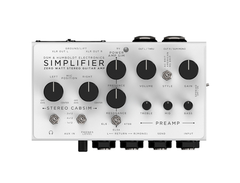
Would give it 4 stars if the new DLX model didn't exist
This little box really surprised me with its tonal versatility. It's hard to fault it because it packs so much in such a small footprint, for a really fair price.
The only thing I (and many other users) wish this model had was turning off Cab Sim and be able to use Impulse Responses instead. Fortunately this has been fixed with the new DLX model, and one could hope DSM will release the single channel Simplifier in a new form, with cam sim off switch. What makes this feature so appealing is that since the Simplifier has onboard analog power amp simp, you can connect it to cheap IR loaders (not just Two Notes, Mesa or Suhr) and get more realistic results out of it.
I never tried it live but would have no problem to. DSM stuff is extremely solid and well thought.
620
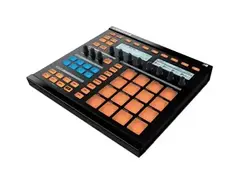
Controller is A1. Software is getting there.
Before I got a Maschine, I used: M-Audio Trigger Finger, Akai MPD-24, Korg PadKontrol and many other drum pad controllers.
Maschine puts them all to shame. Korg PadKontrol pads feel reaaaally great, but it lacks all the buttons and knobs Maschine has.
It took me time to acclimate to its workflow, but in the end it quickly became organic and I didn't have to use the mouse at all.
There have been many great reviews over the software and how it evolved into something that is now very near DAW-like experience, and that's awesome for a sampler, which people tend to forget. It plays super well with all nki-compatible VSTs.
The more recent iterations are even better, but I am confident to say that just using the MK1 you will get very satisfying usage.
620
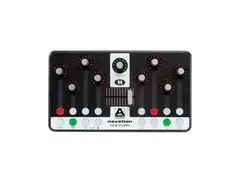
Novation and their g-d drivers...
Maybe I didn't get how the unit could be used more easily, but I really didn't enjoy the time I had using it.
The layout is very nice, buttons feel great, but the knobs are VERY flaky at best. Don't expect any kind of precise movement; could as well be a 0-50-100% switch.
Everytime I plugged it in, the Novation driver software would have to run and create some kind of connection to Ableton Live. I have had over 100 MIDI controllers in my life and never have I hated one so much. So frustrating since the layout was perfect for me: I wanted to use the crossfader for kind of Elektron Octatrack-like morphing.
I ended up pulling it apart and using parts for repairs on other gear.
620
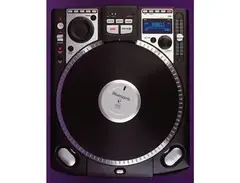
The absolute best turntablist tool that got shelved way too early.
There were two iterations of this unit: the CDX and the HDX. The only difference being the CDX used a CD drive and was black, and the HDX used a hard drive caddy and was silver.
I bought a brand new CDX when they came out. I was deep into turntablism, and at the time digital options for vinyl DJs were just coming out. The CDX had most of the features any turntablist could want.
First, the layout: the only turntable that has this layout is the Vestax PDX-a2s. A turntablist dream: everything setup vertically and not only that, it sported not one but TWO start/stop buttons so access was super easy when juggling for stop effects. The pitch fader placed vertically is also a given!
Then, the track selection. It was pretty rudimentary but the system worked well. My only gripe was the resolution of the display, that could fit way more info than it did.
The effects selection was really nice to have onboard and cool to control with the big wheel. Could be passed-on, but you could literally use the wheel to "scratch" effects! How cool is that?
THE BIGGEST THING that was forgot by everyone quickly and that was never implemented this way in any other DJ media player was the MIDI input. Hear this:
- Load a CD full of long horns samples on C notes
- Connect something like a 25-key MIDI controller
The pitch can now be controlled by the MIDI controller: since your original sample is in C note, the pitch is now automatically mapped to the MIDI controller keys. So you can pitch the sample to any precise note you want on the scale, and scratch it. Think DJ Dexter, Kid Koala who spend hours digging through vinyls to find a sample that could fit their set within many parameters and when they play it they have to be ultra price on their +10/-10% pitch fader.... But with the CDX you can do the exact same thing just by hitting a key on your MIDI controller and be on note every time.
It's an incredibly nice experience to scratch samples chromatically and being able to play melodies while doing so. AFAIK no other piece of gear does that.
I've read about users not getting satisfying results when scratching super fast on the CDX. I think I scratch pretty fast and never felt any lagging issue.
The main CDX problem is the CD drive. Like an Xbox 360, you cannot just swap the drive for any other. It has to be the Numark compatible model. Most problems come from drive loading issues, since it's a motorized input system. I don't know if it can be fixed by disabling that motor, but it's just sad InMusic (Numark proprietary group) never felt the need to build another one.
Nowadays with the Rane Twelve, it's hard to justify getting a unit that only supports medium from another era (CDs). Denon could do it too, they are real close with their latest; the SC6000M which sports a 8.5in platter. But it's just way too much tech for a traditional turntablist that just wants to mix, juggle and scratch and their use of effects is limited to post-fader delays, filters and reverbs.
Numark seem to have decided that the scratch market needed no more than 7in platters with the NS7-1-2-3 and the V7. Native Instruments was rumored to release a Rane Twelve-like unit many years ago, that would have been coupled with Traktor. They surprised everybody with the Maschine+ standalone, maybe they will be getting there sooner or later.
Numark are no stranger to the DMC scene and have been sponsoring it since its beginning. They even released a new scratch mixer 2 years ago, but when you head to Numark website, the only turntables they have are 7in portable ones. What a shame.
620
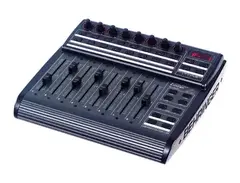
Very hard to beat for the price
Behringer BCF2000 and BCR2000 came out at a moment when it was necessary. Being USB made it aging well.
I could write a lenghty review but this will probably do: it's old, it's bulky, it's light, it's noisy, it's precise, buttons and knobs are clunky and feel cheap but end up still doing the job. When I say it's noisy, it sure is at its worst when super slow fader movement: tic-tic-tic-tic-tic-tic-tic is what you'll hear.
People are still selling these at a premium price on the used market, but is it worth its price? How do you value moving faders over touch-based? Until I had the BCF2000 I thought having physical faders was mandatory to my workflow, but in the end it didn't. It's super cool to watch, but workflow-wise it didn't add anything to the way I work.
Alternatives:
Akai APC20/40: without having motorized faders, you'll get way more buttons, knobs, transport (40 model only), and can probably find a used one for about half the price of a BCF2000 with its bubbled price. Plus you'll get a superb Ableton Live control surface with everything mapped automatically.
Presonus Faderport: Do you really need multiple motorized faders at once, or only one would do the job? Faderport is a super cool DAW control surface the size of your hand, and has an assignable motorized fader that auto assigns to the selected channel.
Behringer X-Touch: I thought Behringer would fix the issues of the BCF2000 in this new iteration of a DAW control surface with multiple motorized faders. I have no experience first hand with it, but I suggest you go read the reviews. From what I've read it's not really an enjoyable surface.
Mackie MCU: Not the highest-end, but still high end. It's what the BCF2000 is based on. And it has absolutely everything the BCF2000 lacks of. It's the center piece of many recording studios.
There are others, and you absolutely should look for them. If you can get your hands on a BCF2000 for $100 USD, you should definitely buy it and give it a try. Maybe like me, you'll find out you don't need that many motorized faders at once.
620
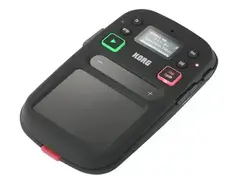
Has as many shortcomings as cool things.
If you never played a Kaoss pad, this will be sure to make you smile and play for hours.
If like me you played KP1, KP2, KP3, KP3+, KP Quad... This just feels like a toy. Yes it can be battery operated, yes it has an headphone outputs, and yes it is super cool to have with small synths like the Korg Volcas or Roland mini.
It's all plastic and unfortunately does not feel sturdy at all. You better keep it in a case if you are to carry it around.
I would still buy a full-sized KP2 over this any day, and they sell for the same price used as a brand new Mini KP2. The portability is not worth the shortcomings. The Kaoss pad is made to be mashed and not be precise, but some effects and sounds are so good you would really want it to be more precise and write and save patterns. The full-sized KP2 does that.
620
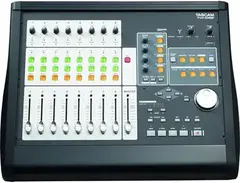
Could have been a valuable studio tool, but now it's a door stop.
This unit was super cool when it came out. It was more affordable than Mackie, and had long throw motorized faders, great DAW layout too.
But Tascam discontinued the product and made it obsolete by killing the driver updates.
I loved it for the 6 months it worked well under OS 9.
620
Gemini is always good value for the price
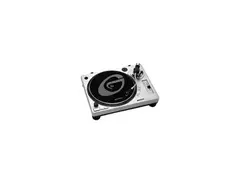
This was my first turntable. I didn't knew anything about DJ'ing so went to local music instruments store which is way more of a piano store than anything. This was the only direct-drive motor turntable they had, plus they didn't knew anything about it. They just had it in stock.
I don't know if it would be a great audiophile turntable, but for learning how to mix and scratch until I was ready for something with more torque, it was nice. Not much noise from the unit, even if I used a super cheap Stanton SK-Two mixer.
It looks like a SL-1200 MK2-3-4-5-6-7, and that's inspiring when you're starting. If you want to learn the ropes about turntable mixing and can get your hands on an old one, you won't be disappointed!
620
Poor quality, can maybe sustain a teenager's playing, but not mine
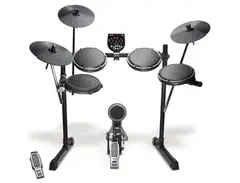
I bought this drum kit to act as a MIDI controller for Steven Slate Drums. The onboard sounds are laughable at best: they are synthesized and not sample-based. So if you hit the snare lightly, it will be the same sound, just louder if you hit the snare harder. Sample-based drum brains have short sniplets of a real drumkit recorded with ultra high end studio equipment. This is why I use this drumkit with SSD, which is not completely sample-based, but sounds way more realistic than any (most) drum brain sounds. Same for Superior Drummer.
For the task I wanted it to do, the brain was pretty simple to connect to my PC through USB and map everything quickly. Well, not everything. I can't seem to be able to map the dual-zone ride cymbal. Anyway, that is not my main gripe.
Some parts of this drumkit are solid and well made, but most of it is flaky. The tubing and plastic clips are horrible to adjust, the hit-hat stand gave up on me after just a couple of hours, and the worst thing is this drumkit has just one crash cymbal, and no input for any other pad you could want to buy and connect directly to the DM6. There are ways around it: you could get an Alesis Trigger I|O and connect up to 10 pads/cymbals more. But having just one crash is just not enough even for basic drum duties. Your beats soon become redundant. One could say you should be creative and create more with less... That's right, but when you need a studio tool, it needs to have a basic set of features, and 2 crash cymbals (at least, mappable-crash-style-cymbals) are a must.
So unless you plan on buying other gear just to be able to mimic a basic drumkit, this is not for you. Have a look at the DM8 or DM10.
Now here's why I think it's a bad idea to buy this drumkit unless it's for a 12 y.o. or less: when you're learning drums, you play harder than you usually would. That's a totally normal behaviour in learning: it's hard at first to get a grip of playing different beats with your arms and feet, so you hit hard as it helps you keep the beat. As you progress, you will be more precise, and will be playing more smoothly since you won't have to hit as hard to tell your brain "the measure starts now". Following this idea, a solid drumkit is a must when you start learning, if not you will trash it.
What was I waiting for from an entry-level drumkit? I don't know... a little better I guess. At least 2 extra pad inputs (one for an extra crash, and the other one for that cowbell, of course ;)), a more decent hi-hat that wouldn't give up on me because I play funk, rock or punk. I felt the quality beforehand, I knew I had to watch my hits and it still happened.
For all those reasons, this drum kit is PERFECT for a kid to start learning the ropes. Nothing else though.
620
5 stars for value/quality
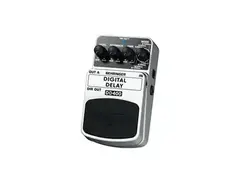
I have a saying: if you can't afford upper-tier, don't waste your money pushing for almost-as-good. Instead, find the best deal possible and be happy with what you have. And this Behringer pedal will be sure to put a smile on your face when you play it and think that cost about a pack of beers.
Digital Delay is serious matter, and fortunately Behringer is delivering with this one. If you need/want a digital delay for bread and butter duties and can pass on extravagant features that may seem overkill, this is the one. At this price point, you can just try it and return or resell it if you are of that breed that snobs on affordable quality gear! But I doubt you will, at least for a couple of months, if not years.
Some bash Behringer pedals for their low-quality built than Boss. Well, at that price point it seems to me it's an advantage: you happen to break it? Just buy another. Some players need military-grade tools, but most of us mortals don't.
The best thing this pedal gives is a super-affordable entry into delays (digital, that is) and will play nicely along your ods and distos.
620
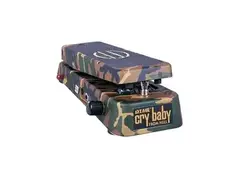
Top versatility for a wah
The main advantage of this pedal is the amount of fine tuning you can dial to make it sing along your other overdrives and distortions.
So many options, it's actually not ideal for a first wah pedal. But if you want your first wah to last yo a lifetime and will fit any wah job under any setting, this is it. But don't be mistaken; it sounds great out of the box and everything at 12 o'clock will give you a very lush and trebly sound.
I had to sell it due to Covid and am now looking for a used mini 535Q, and if it's half as versatile as the CFH I'll be more than happy.
620
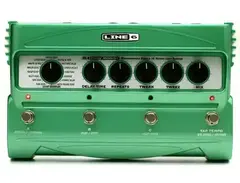
Like most Line 6 products from this era: it sounds awesome, but the built is to be questioned...
Let's get this right out of the way: this pedal has all the delays one could want, and they all sound awesome.
Now, before going any further, in case you don't know Line 6 products from this series (DL4, FM4, MM4, M5, M9, M13...) that share those switches all eventually fail. At least, the tap tempo switch on mine gave up pretty quickly, under 6 months of playing in my apartment, wearing socks only. I also had a M13 that had some switches that would behave randomly when hit. Either I would have to hit it harder, or tap it twice to activate. It's a real shame since its enclosure is built like a tank and would withstand one's life of playing. There are schematics available online to help you swap the switches with soft, higher end ones that feels better and last way longer. Some companies will even do it for you (look for JHV3).
This problem is the main reason why people who buy it end giving up because, well let's be honest there are far better options on the market now and fixing broken things is pricey. My advice would be: if you can get your hands on a beaten one with broken switches for more or less $100, and get a tech to fix it with higher end switches. Because fix that, and you have a hell of a Delay pedal, one of the best actually!
620
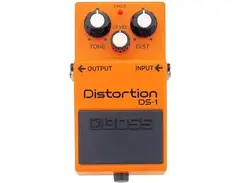
I just bought it at a wrong moment...
Listen, this is a classic. So many musicians used and still use it to this day...
I just bought it at the wrong moment in my progression. I knew nothing about pedals, I only had a Fender Red Knob 10w amp and wanted it to sound like a 100w hot rodded Plexi. That's why I was disappointed and eventually sold it. I wish I could try it again with my DSM & Humboldt Simplifier and see what I missed.
Oh and being a Boss means it's all metal and will last a Cobain's life!
620
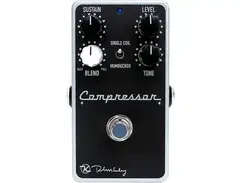
You have to play it to hear it
Before I bought this pedal I didn't knew how much a good compressor would help me achieve my dream tone. I play mostly rock (punk, hardcore, metal-ish) and the Compressor Plus with its Blend knob really lets me dial in just the right amount of compression.
The Sustain knob starts to shine right around 12 o'clock, and without pushing it much further the sustain you can achieve is impressive without putting too much noise.
The Compressor Plus lets me keep the integrity of my tone and just adds the perfect finishing effect that glues all my other pedals together. A very great pedal.
620
It just sounds great
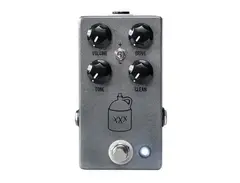
There are a bazillion Tube Screamer clones out there. JHS is advertising this pedal as "an overdrive that colours your tone in a good way", and I must say that's exactly what I wanted.
I didn't played that many Tube Screamer iterations in the past: a TS-9, a TS-808, a Behringer clone. Before going any further you need to know that even that Behringer TO800 will give you that Screamer gnarliness and will sound just about the same as an original TS-808. The TS-808 mini is also another great option and it sounds so much like the full sized version even Danish Pete couldn't tell if it sounded like it was worth more than the Moonshine, or full sized TS-808. So if you're looking for a Tube Screamer, but also want to be able to afford other pedals in a near future you should look elsewhere than the Moonshine. Seriously, skip your money and just buy whatever iteration you like at the best price you can find. In the end, the original Tube Screamer circuit is still one of the most popular pedals to this day. I could play the Behringer TO-800 all day, it just does the Screamer job.
When choosing a Tube Screamer variant, only higher-end products will give you something more than the original. The style of music you play could also impact the iteration you want. So if you're on a tight budget, I suggest the Behringer TO800. If you have a little more slack, go for the 808 mini. Next the original TS-808 and ONLY IF you want extra controls you should look for higher end.
Then comes the Moonshine V2. First impression: the pedal is built like a tank and the switch while not a completely soft one feels great. It doesn't have a super long travel without clicking, and that I appreciate. The Clean knob is what makes it stand from other iterations for me. It lets you blend the exact amount of clean signal so the Moonshine colours your sound while keeping harmonic integrity. It really makes my Friedman BE-OD Deluxe roar, even so I now find myself using the lesser-gain Blue Channel, crank a liiiittle bit of gain on the Moonshine, blend just the right amount of clean and I get a beast of a Hot-Rodded Marshall Plexi tone that sounds just like a 100w stack.
I've yet to hear a huge difference between the + and - switch, maybe once I'll try it on a cleaner setting I'll find better use for it.
I must say the second I put all knobs to 12 and hit On, I knew I was gonna love this pedal. It stacks very well with my other pedals.
AGAIN: I bought this pedal because I wanted to treat myself. If even looking at the price of the Moonshine makes no sense to you, you shouldn't even think back and get any other reknown clones. If you want something with more options than a traditional Tube Screamer but don't want to pay premium price, I recommend looking at the GupTech Honker Hot Rod, superb boutique pedal!
620
Sleeper - If you need parametric EQ and can't afford the Empress, this is the way to go!
Story time: I didn't plan to buy an EQ boost. I was to get a Moonshine V2 to boost my amp (which I did get it anyway and use it at gain stage) and that would be it. But describing my setup to other players, someone said "Maybe you don't need a modded Tube Screamer, maybe you need an EQ with boost". Then began my search for something that would fit the bill.
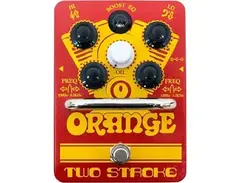
Probably the most popular high-end choice, the Empress ParaEQ is becoming harder and harder to find, and prices are skyrocketing. So I tried searching for something else and found some forum thread where someone suggested the Two Stroke. I haven't ever heard of this pedal and except for the Fur Coat, I don't know much about Orange pedals. Took a chance and ordered it. And boy is it precise!
If you play ods and distos, a good parametric equalizer is a must as you can really dial your tone to anywhere in the mix. And this pedal does just that: within minutes I was able to tweak the Two Stroke to make shine all my other pedals and amp. I use it in the FX loop, and boy is it brutal! It literally takes your tone and clean boosts it in a very impressive, and sonically rich way.
The only reasons I give it 4 stars are: its format is not for everyone; it's a little larger than most pedals, more akin to a Big Muff full format, so it takes a little more space on your pedalboard than usual. But considering its higher-end alternative would be the Empress ParaEQ, it would take even more space on your board anyway. Also, I've yet to get a grip on the Oil knob. The pedal already boosts the signal from the get-go, and the Oil knob just adds even more boost. Maybe if I used it with a less gain-y setup I would find more benefit to it, but fact is I use it with a Friedman BE-OD Deluxe and JHS Moonshine V2, going into a DSM&Humboldt Simplifier. On the Fender Deluxe emulation of the Simplifier, which is the cleanest one (obviously), the Oil knob of the Two Stroke adds way too much boost to be bearable. It just does what I want from it without this added boost, that's all.
A really great pedal that I wouldn't have found without specifically looking for an EQ Boost. Experts says it takes a lot of mastering to build a decent Parametric Equalizer, and Orange hit a home run with this one. Highly recommended!
620
It's *just* a tuner, right?
What do you want from a tuner? In case you don't know, it's okay, I didn't either before buying everything from old school analog VU-meter style to this one.
First, in case you don't know, a tuner is just as much as a mute switch as it's a tuner. This means when you stop playing, you hit your tuner right away and you're muted. That may seem like something natural, but for electric guitar players having a good tuner that completely bypasses the sound when hit it's a must. Just before that I had a Donner Digital Tuner pedal, and when it was supposed to be muted, sound would still spill over to the amp, albeit very low. But you don't want "very low", you want complete silence!
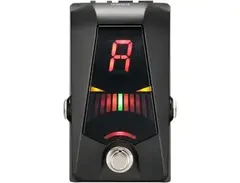
There are 4 main options when it comes to pro-grade tuners: TC Electronic Polytune and sub-models, Peterson StroboPlus, the venerable Boss TU-2 and finally Korg Pitchblack and its sub models. Even though Boss could seem like the way to go, it still uses the VU-meter style needle and is not as accurate as the 3 others because of that. Know that any of Pitchblack, Polytune or StroboPlus is gonna be a great choice, you'll be able to tune in easily and will 100% mute.
I love the Pitchblack because there's lots of units on the used market, and well... it's black. I know Polytune mini has a black version but I prefered a full-sized black version, that's all. There's just as much PT as PB on the used market.
Now, time to be a little patronizing: if you have or plan to buy pedals soon, a tuner is the very first thing you need. Yes it's boring, no it does not do anything for your tone... But it's a utility, and as such you're better with a good one that will last you for a long time!
620
For that price, what do you expect?
I didn't expect much. I just needed a small multi-effects unit for bedroom playing and Digitech was a standard at the time.
I didn't play it with neither a very good guitar or amp, and am keeping this in mind while writing this review. Poop in = Poop out, this rule applies for everything
It's super annoying to tweak presets or create custom ones because the menus are circular.. just like the dumb clock on your kitchen's range. It is not super slow to setup because it is complicated; it is super slow because you can't go any faster.
I can't say that this unit provides you good tones because I was not super well equipped at the time, and I was probably using it wrong, but either way the presets didn't sound very good. But then again, this is not supposed to be a high-end unit, not at all.
There are far better options on the market today, for example Zoom G3xn if you need amp sim with multi-effects in hardware format, and of course any popular guitar emulation software; Line 6 Helix, Amplitube, Guitar Rig, BIAS FX... all of those with a simple audio interface will give you excellent, convincing tones.