
jp_belanger's Reviews
63 reviews Back to jp_belanger's Equipboard

620
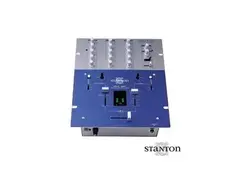
You could get worse for a first scratch mixer
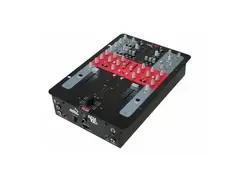
This is a basic, beginner two-channel scratch mixer from a company which made excellent products. The SK-Two may not have many bells and whistles, but it gets the job done. Just don't expect to be crab-scratching on this one except if you're more comfortable with very long crossfader opening. Nowadays you could probably just get a compatible Innofader and turn this into a pro-grade scratch mixer.
This mixer is very light, and will move in every direction unless you place it in a case, or on an anti-slipping mat.
There are far better options on the market today, but if you still have or can get one for next to nothing, it's a fun little mixer!
620
Better than vertical, better than horizontal
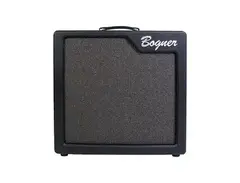
Bogner Amplification is an American company. The Alchemist amplifier (and extension cabinet) were a collaboration between Bogner and Line 6. Instead of being built in the US, the Alchemist, the combo version and its extension cabinet were all built in China.
This extension cabinet sports 2x12": one Celestion Greenback 16ohms Made In China, and one Celestion G12H Anniversary 16ohms, Made In China too.
The cabinet has an atypical speaker arrangement: instead of being aside or on top of another, the two speakers are positioned at an angle, so the cab looks like a smaller 4x12" instead of the typical narrow height of a vertical/horizontal cab. It makes it easy to transport too as it feels more compact.
Now, how does it sound? Excellent. Having the Greenback on top and G12H on bottom gives this cab an overall great headroom. Also the cab is semi-closed, so some sound gets out behind and depending on the material behind your cab you can get even boomier. This cab was made for modern high gain, and it delivers.
I fell in love with this cab when I found out that they were selling for cheap on the used market, and thought that its retro-modern look was killer!
It's made out of Plywood, which makes it really, really solid. This cabinet is one of the few hidden gems on the 2x12" market.
620
4 stars for variety
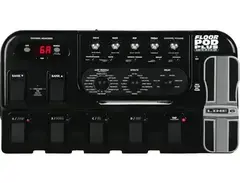
I played many many Line 6 products over the years, and owned this one for a while.
It's basically a Pod 2.0 inside a floorboard, so if you want to know about sound quality you may want to read Pod 2.0 reviews. I liked the fact I could just take this, put it in my bag with a pair of headphones and go play anywhere. For a plastic-made product, it was pretty solid and the expression pedal even though I had to tighten it sometimes, felt really great.
There are far better options on the market now even from Line 6 themselves, but if you're a beginner looking for lots of tones on tap, built-in effects and expression pedal in a all-in-one portable package, you will like it.
620
One back to the lab was not enough.
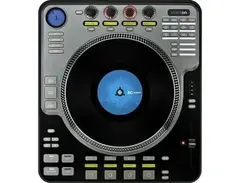
NAMM 2009: Stanton announces Stanton SCS.1 system which is a combo controller/audio interface in 2 unit types: the mixer controller named SCS.1M with audio interface, and the SCS.1D which is a turntable-like controller.
At the time everything was to do be done in the digital (DVS) DJ market, and Stanton to prove the performance of its SCS.1D presents a diagnostic tool of their own that shows a resolution of about 3500 points per rotation: one of the best yet, and basically as natural as a turntable/vinyl/DVS. It was the first scratch controller that promised to give about the same experience as using a turntable.
So they released it in 2009 before removing it from the shelves, due to being plagued with Firmware issues. TWO WHOLE YEARS LATER, they re-released the system promising they fixed every single problem the units had.
They didn't: the units still had major issues and this time they just pulled the plug on the most promising DJ hardware at the time without looking back. I'm no insider at all, but after that it seems Stanton who once was a staple in the DJ hardware market took a huge hit and never was the same as before. They were about to win most of the entire market and instead decided to call off.
FFW 10 years later, and the 1.D still has some features that are missing from today's offering. As if it was so ahead of its time you can almost forgive them for releasing such an unfinished product. The only hardware that is a tad like the 1.D is of course the Rane Twelve controller.
But when you look at the Rane Twelve, it doesn't have half the features the 1.D had when it was released. Except for the obvious turntable platter, here's what the 1.D had that even modern controller doesn't:
- Complete loop/stutter/sample playing section at the bottom with 4 big pads that feels good to play. They are not pressure sensitive, but anyway felt good to play samples or rises.
- MOTORIZED PITCH FADER: Okay, now this is one of the most underrated features that should be present on any turntable-like controller. On the 1.D, you could place the fader in any position, hit a button and it would slowly or quickly go back to 0%. You could also bend using +/- buttons and the fader would move accordingly. The pitch fader position also allowed for excellent instrument scratching: play a trumpet note looping, set the fader to 100% and glide the instrument notes using the fader.
- Rane Twelve left aside, there's no other 10in platter controller on the market. 10" platter is perfect since it's more forgiving than 12", but still retains lots of torque under the vinyl that it doesn't feel completely light either. It feels a lot like playing 12", and the adaptation period was little to none.
- Complete effects section at the top. The 4 clickable knobs and buttons at the top allows you to select, load and tweak DVS effects.
- 1/2/3/4 layers: up to 4 virtual decks selection per hardware deck
- Use the platter for browsing: this one I loved a lot, but since I also had the 1.M with dedicated browser knob I didn't use as much on the 1.D.
2009 was a strange time for innovation. Peripherals connection standards were not set in stone yet (USB/Firewire), and makers were having a hard time betting on one or another for their newest products. There was some kind of bar though: "Pro gear had to be Mac compatible, so Firewire was the high-end one". And of course, every single product that was based around Firewire ended up getting E.O.L. in the long run, while most USB products are still plug-and-play today. It was totally like Beta vs VHS. MOTU is a good example of this era, with their dual/hybrid USB/Firewire products, like the Ultralite. For some reason, USB was getting the "not pro" tag, maybe because Apple really was the best computers to use at the time for music production. Either way, it makes SCS.1 system very hard to connect and use on modern computers:m if you have a Thunderbolt 3 port, you have to get two separate adapters connected together: Apple's TB3 to TB2 adapter, and Apple's TB1 to Firewire 800 adapter. Since TB2 and TB1 have the same physical connector and TB2 is backward-compatible, the Firewire connection is automatically converted to TB2. This also works with most hardware with Firewire port, but they need to be working on Windows 10 or latest MacOS to use. Now that Firewire has completely disappeared from modern computers except in TB3 form this places the SCS.1 system in the "done-so" closet.
The display strips on the units were also of very poor quality and gave up one after another, until only displaying some symbols. Fortunately, SCS.1D no-nonsense layout makes it easy to remember what knob/button does what. I opened one unit to see if parts numbers were there, but most electronics were Stanton-made and thus f.u.b.a.r.
Around 2014-2015, a huge amount of SCS.1 systems was dumped on eBay at prices around $30 USD per unit. I bought 4. Since then it's pretty rare to see one for sale.
I can confidently say that the hardware is Windows 10 compatible even though it never was updated. The SCS.1 system is plug and play in Virtual DJ which is the DVS I use. It also is compatible with Traktor, but afaik the rotating platter was not working properly. VDJ is now a superb piece of software that works perfectly with SCS.1 system.
620
As long as yours don't have motor issues, you'll be more than pleased
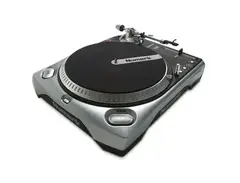
These turntables were the perfect budget scratch turntable with pro features. It sports the same motor as its big brother the TTX, the same pitch range, the same tone arm system, the same layout except for the obvious TTX bubble with BPM and pitch info.
It has more than enough torque for any turntablist needs, and it's at its best in battle position.
Now, I don't know if there was some problem on the assembly line, or what caused this problem exactly but one of mine started playing in reverse randomly. At first it was scarce but then it suddenly became a problem to the extent I just couldn't use it anymore. I searched online for fixes but it seems if you had this problem, the motor had a problem, and you were basically doomed.
Since the TTX has the same motor, I guess the same thing could happen. After having a CDX with CD drive issues and this problem with my tt-500, I decided to steer away from Numark, which is a shame because I was so into their products and wanted them to work.
620
Let's not forget this unit was used on stage by multiple international musicians on tour
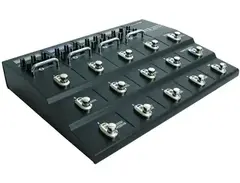
I'd like to clear up a thing before going any further: this multi-effect unit has been used by so many professional musicians there's simply too much to mention. When it came out, it was probably the best multi-effect unit on the market, and while Boss GT-series, Digitech and Line 6 themselves had pretty innovative multi-effects unit before, the M13 (and M9 and M5) were all the rave for a couple of years.
Nowadays Line 6 has the HX Effects unit which replaced the M13 directly, and even if it has many new and improved excellent effects replicas, the HX Effects also has most of the M13 effects in their original programming.
I could talk in great extent about which effect is good and which is less, but let's just put it this way: delays are nothing short of awesome. the reverb are very very nice, the modulation effects are so various there's literally weeks of exploration to do, the overdrives and distortions got the heat in reviews but I find them mostly quite pleasing and even though I run standalone od, disto and fuzz pedals, there are some gems hidden in there too!
One of the best thing of the M13 was the introduction of a separation point between "front of the amp" and "fx loop time based" effects selection. So you can run all the od, disto, fuzz, modulation in front of the amp and delays and reverbs hit the fx loop, just as it's supposed to be. It works really well and it's one of those things that makes you go "it's so versatile, I can't get rid of it".
The looper is not very versatile, but it does offer more options than just record/overdub, like half speed and reverse. You can also set the looper to be pre or post fx.
2 expression pedal inputs is very nice to play a delay swell on one and a pitch-shift-whammy-type effect on another for immediate access.
I really, really love my M13. The only bad things I can say about it have already been fixed by third party suppliers and modders, like the somewhat poor quality bult of the switches, the lack of a master volume etc... Google it and you'll find it.
620
A beginner's amp that is not really good for a beginner.
This is a 15w solid state amplifier which is supposed to be aimed at beginners.
But what's a good beginner amp? For me, it's an amp that lets a new player explore possibilities you can get from more expensive amps. After all, isn't it the master plan to make you buy more expensive gear as you progress? Of course it wouldn't be fair to compare this amp to today's offering which simply put totally annihilates any need for this amplifier. There are far better option even in the very beginner market.
No, let's compare this amp to what you could do with it at the time it was released and I first got it - It doesn't take pedals well, even overdrive or distortion sounded dull and tamed. - For a solid state amp which is supposed to be easy for manufacturers to handle volume control, this amp goes from barely audible to plain too loud for bedroom. What are you supposed to do with a 15w ss amp exactly? - Fender is known for their pristine clean tones, but unfortunately this amp does not sound good. - Shame because it was well built, and it was pretty heavy for a solid state 10" speaker 15w combo. - Efforts on details seems to have been limited to how the amp looks, because it indeed looks good and like a smaller version of more expensive Fender amps.
620
The innovation in the name is just the start of it!
Check this: in the battle DJ mixer market, there was a time when you had to buy a professional-grade mixer to get the benefits of great and easy to play faders, mostly the crossfader. Rane had the TTM-56 and their Magnetic crossfader, Vestax had the PMC-05/06/07 with the CF-PCV , Pioneer the DJM-909 and its optical crossfader, Ecler the Hak 360/380 and their Eternal fader, and that was the line. You had to have one of these mixers to have a suitable crossfader and be able to scratch like your favorite DJs did. The only third-party fader you could use in some mixers that had the space to house it was a Penny&Giles.
Cue in 2005 the rogue appearance of a new fader maker company named Eclectic Breaks, and they put out their first product: the Pro X-Fade. Now this was the first third-party crossfader you could buy and install in some DJ mixers: Vestax PMC series, Allen and Heath Xone series, Numark SM-1 and Stanton SK-series mixers. That was a really great start! There is some high-end and some affordable mixers in there, and installing a Pro X-Fade basically rocketed your mixer into pro territory. When the hype cleared, some people started to argue one company should make a pro-grade DJ mixer based around the Pro X-Fade because well, Vestax and A&H were high end mixers already with a corresponding price tag, and the Numark SM-1 and Stanton SK series were really low-end mixers.
Out of nowhere comes Elliott Marx, an electrical engineer who builds a pro-grade scratch mixer that comes stock with a Pro X-Fade. It was correctly priced, it was built like a tank, it sounded great and the 2 variations both had interesting features not found on other battle-style DJ mixers: the AEM-100i had a built-in waveform generator you could cut, and the AEM-100 had "cut buttons" that spouses the form of the fingers for another way of cutting ultra fast crabs.
I had the 100i, and loved it. The only thing missing was a suitable FX Loop. But at the price I paid for this mixer, it was worth every penny!
For the short story: Elliott Marx then created his own Audio Innovate Innofader crossfader with many iterations of different sizes and fits most modern DJ mixers available today and is still one of the best crossfaders you can get!
620
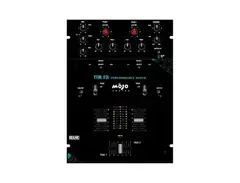
A mixer that paved the way
This was my second battle-style DJ mixer after a Stanton SK-Two, and boy it did not disappoint! The faders felt very great for pre-Rane's own Magnetic Fader, and the control curves allowed me to hamster scratch which I couldn't do on the Stanton (both because the x-fader sucked and because the minimum travel only allowed for very basic scratches). The success for a nice battle mixer is having all the space required around the faders area, and this mixer had all the estate one could want.
The Lexan faceplate was supposed to be scratch-resistant for years, and weirdly it was not. Because of the way I cut, my finger joints would rub against the faceplate and it took about 6 months for it to show kind of a polished look against the otherwise matte faceplate.
Two other small things that bothered me: transform switches broke off easily without much playing, and the 6P4C connector of the power supply...well is just like any other 6P4C phone connector and the lock pin would break if you just looked at it. Rane says even though the connector looks like a phone connector it is not and in case of broken connector you should change the whole power supply... That is of course BS and you actually can repair the thing, you just have to note cable colours order, or give them one if no colours. It is indeed a standard 6P4C connector, you just have to crimp it properly.
Looks like I've written more bad things and good, but I can assure you that it's just because this thing is so well built, sounds so great, looks and feels professional and is (was?) a fantastic first pro scratch mixer at a time where the pro battle DJ market was mostly split between Vestax and Rane.
620
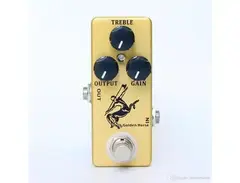
Supposed to be a Klon clone.
But it's not. It can boost your sound mostly transparently but it does tone suck a bit.
I'm having a hard time dialing in a suitable tone, except for boosting.
620
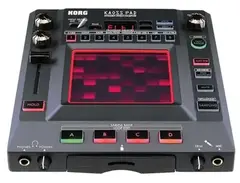
For some reason, didn't bond with this one as much as I did with the KP2
Don't get me wrong, the KP3 is a superb piece of gear that has sold thousands units, just like its predecessors.
The KP3 has all these great new features; more effects, more sampling time and options, a wet/dry fader..
It's hard to find any bad things to say about it, but my only gripe would be the price. This iteration just like the KP3+ (plus) have so much potential on paper, but just feels short when you're playing it. The sampling feature seems to have so many guts to it but it still relies on operations on the touch pad itself, which is pretty much always inaccurate since it's pretty hard to hit the right spot on the pad to achieve say a pitch note and record over or overdub the actual playing pattern.
Also the effect selection while pretty extensive, does not bring much more to the table than the KP2. There is newer effects, but I didn't use them at all.
What could be better on the KP3:
- A better support for external MIDI clock
- A better support for sample importing
- A way more precise touch pad
- Unbalanced connectors are fine for DJ gear, but no so much in the studio
- Crazier effects
620
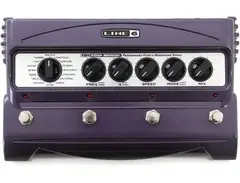
Sold it and have been regretting it since.
This pedal is nothing short of awesome. You can get super crazy digital filter tones from it or tame it down to a smooth LP.
Removed one star for those super awful footswitches on all these Line 6 products. Didn't learn my lesson though since I got the DL4 and an M13 after that, both which have the same footswitches.
This pedal was used by many professional musicians on tour and in the studio, if you can get your hands on one for a good price, don't think twice!
620
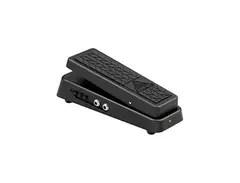
I will never go back to non auto-return wah
This wah sounds just fine. It's not as good as the model is clones; a Dunlop Crybaby From Hell, but it sounds good with heavy stuff. Had both, quality was obviously way better on the Dunlop starting from the toughness of the enclosure all to the sound it produces.
The thing that struck me the most about this pedal is the auto return though. Never before have I had the chance to try such feature, and it's the best thing. Who ends playing a wah part on the toes anyway? The range adjustment helps you reach the perfect release for your style.
Since then Dunlop released the mini 535Q Auto-Return wah. Definitely on my to-get list. But if you're on a tight budget and want something gnarlier than a standard Crybaby or Hendrix, you can't go wrong with the Hellbabe.
620
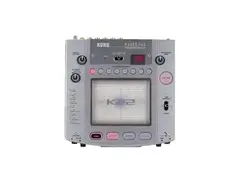
Was and still is a superb performance tool
This thing is built like a tank. It sounds great and the effects are perfect for experimentation.
The live looping feature is perfect for short patterns, less for anything longer.
It's super easy to connect and use, the microphone input and headphones out are really practical. If you do live or home experimental stuff, you will be pleased with it. So many great effects.
620
4 stars for innovation, 3 for execution
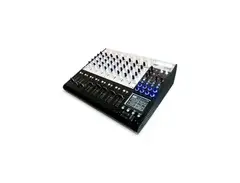
Korg... What did you do? This mixer is probably the most necessary mixer one could have on paper: 8 stereo channels, multiple input types, internal Kaoss Pad with touch menu features, built-in audio interface...
The design of this mixer and its little brother, the Korg Zero 4, were seriously flawed. The 8 more than the 4, here's why:
There is no fan in this mixer, and the air flow is too restricted by the Zero8 side plates. The heat generated by the internal power supply makes capacitor burst, and cause damage to the fragile data cable that links the Kaoss Pad to the mixer's PCB.
Further symptoms are Kaoss pad losing features and doesn't respond properly, the power supply's busted caps cause the mixer to light up but only digital noise comes out of it, inputs are tamed... To fix this, people have been drilling through the side plates either to help with air flow dissipation or simply by installing a large computer fan on the side of the mixer near the power supply.
Due to these design flaws, the mixer was soon discontinued. Drivers stopped getting updated, and users started getting worried, rightfully so. I had my psu repaired twice, and had to replace the Kaoss Pad itself. Thankfully, part was still available on eBay.
I never quite understood why Korg wouldn't release an updated version. After all, the heat problems could have been easily fix in factory, and the thing would have worked wonderfully. It paved the way for today's multi channel production mixers like the Pioneer DJM-V10 and PlayDifferently's Model:1. Even if those are all analog and the Zero 8 was obviously digital, they fill about the same need for producers to have a studio mixer they can actually play like an instrument.
Maybe if the DJM-V10 gets enough success, competition will arrive with some new concepts. Even the band Justice played a Zero8 through their "Cross" tour as their main mixer, so the need is definitely there.
620
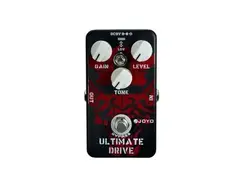
It's a Fulltone OCD clone.
What is there more to say: it basically is a Fulltone OCD clone. It is thus perfect for adding grit to your tone or gain stacking, and at a price that you can't pass on.
The enclosure is though and the switch feels great. Of course if I bought it again I would do a paint job, what an ugly design.
620
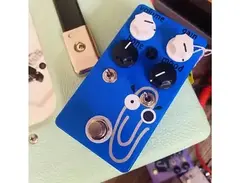
A completely crazy fuzz for the modern player
This is not your usual Fuzz pedal. It can do crazy things you wouldn't think are possible; it ranges from light fizzling up to bit reduction. And with its multiple modes it will fill your experimental boutique pedal GAS. You can literally play this fuzz like an instrument.
GUP Tech rules!
620
Hidden gem too many people pass on
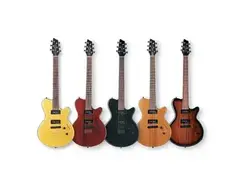
Let's make this clear right from the start: Godin makes excellent guitars. From affordable all the way to high end, they hold great value.
The LG with P-90s makes no exception. This unique kind of funky Les Paul shape combined with the thickness of a Strat makes this guitar feel really comfortable in your hands, and in any position.
The lush P-90s are perfect for jazz all the way up to modern/alternative rock and gives you plenty of headroom.
The neck of this guitar has this special Godin lacquer that glides just enough to give you extreme control all the neck long. The tuners are of excellent quality, as are the electronics.
I can't believe how cheap these are on today's used market. Whether you're looking for an intermediate level axe or an addition to your arsenal, the LG will find a place in your heart.
620
Jack of all trades, Master of None.
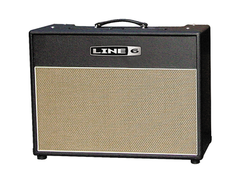
The best thing about this amp is that it thought me to look away from do-it-all products.
It's basically a 100-so watts solid state power amp with a Pod 2.0 for a preamp. While the amp itself is solid and offers way more options than one could need, the tones that comes out of it is what matters, and most of those sounds thin, fizzly, noisy.
Cleans are okay up to light disto, but Mesa and Plexi models sound cheap.
With way better options on the market today, like the IO Stomp, it's hard to recommend this, even used.
If you want a 2x12 amp that you can play with a drummer, there are many other options out there.
620
This is not your usual affordable guitar
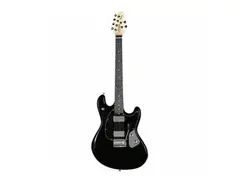
First, I must say that the retro-modern look, strat-body and humbuckers looks very very cool!
This guitar parts are made in China, but assembled, tuned up and quality checked at MusicMan USA factory. Not many guitar suppliers these days can say they do so. This makes this guitar as close to a Deluxe Musicman you can get. Best thing is they are really affordable considering the quality you get. I would have prefered the 3-tone burst, but I got a deal on a used black one I just couldn't let pass. If Covid had one advantage and only one, is that it got enough time for people to think about what gear they actually used and not, then sell at a correct price the items they don't use anymore.
The neck of this guitar feels really great. Very fast action, and the finish reminds me of one of the best I've ever felt; on a Godin guitar. Reaching the highest frets is easy, which makes this 22 frets almost feel like a 24. Tension adjustment system is something you find on way pricier guitars: it has an adjustment wheel at the base of the neck instead of the traditional hex at the top.
The body feels really comfortable is any position: sitting, standing, on a stool, on the couch, that is really important for me. I hate a guitar that feels great standing but when you sit it feels bulky. The Stingray is heavy in a good way. It feels solid and the resonance is nothing short of awesome.
In theory, I loved the idea of a pickup select switch located near me and easily reachable. Thing is I'm pretty tall, and have long hands. I found myself knocking the switch in another position when playing hard. Since I use mostly the bridge pickup, I put electrical tape on the switch. Maybe I'll also try turning it in another position but I'm pretty sure I would knock it accidentally anyway.
Since I bought the guitar used, I don't know if a tune-up would "fix" this, but the volume knob has a very fast change near the max, and for now I love to use it as a solo boost. I just turn the knob 10 degrees and get a nice sharp tone. Tune it down a bit and get still excellent rhythm tones with lots of humpfh (headroom). I love its position as I can just reach it with the tip of my fingers and do a quick change.
The tone knob is very responsive and gives lots of possibilities on both pickup.
The pickups may not be top quality, but they sound way better than say Epiphone Deluxe. Way clearer, sharper, warmer, gives more headroom. Combined with the superb body that provide exceptional natural resonance, you can get almost infinite sustain. I love the bridge better, but the neck also gives superb cleans, it's just that I need to tweak it a bit more and being limited to one volume and one tone knob for both pickups, it requires a little finger magic to get good clean. But once you get it, it really sounds incredible. It's of little concern for me since I play modern metal mostly, and when I need clean it's for whole songs, so I have time to set up between them. Reading what I just wrote, it seems like I'm saying it's a bad thing albeit small, but I can assure you these pickuips plays clean just as good as high gain. It's just switching between them that requires 2 or 3 knob twists.
You may or may not know that MusicMan guitar tremolos use a modern trem system designed by Musicman themselves and is of top notch quality. While the trem system on the Sterling is a little different, it is based on the same idea. It doesn't have the same metal cover as some deluxe Stingray and Majestic models, but otherwise I couldn't tell the difference. It really is beautiful and works wonderfully.
Giving it 4.5 stars, it is an incredible guitar its price, it is used in many music schools as an excellent study guitar with all the playing qualities and skip on the premium price.
Wether you play jazz, blues, rock, hard rock or even modern metal, this guitar will please you and you'll love its unique look.