
jp_belanger's Reviews
63 reviews Back to jp_belanger's Equipboard

620
Fun for days, limited real world utility
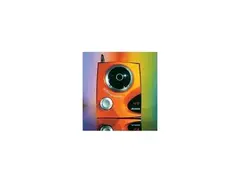
The "Air" series from Alesis made quite a few waves when it first came out. There's AirFX (effects unit), Photon X25 and X49 (MIDI controllers) and AirSynth, all of which features the AXYZ dome infrared controller. It was Alesis best effort at making a modern age theremin with more sounds and possibilities.
AirSynth has some interesting sounds. It's a fun instrument to get creative and spontaenous playing, making it perfect for DJ rise-ups. Its ease of use is basically foolproof so even the non-iniated will get how it works in a matter of minutes.
But there are a handful of cons that comes with its use. First, it's infrared. And like all infrared-based devices it does not goes well with any kind of hard light source directed at it. This also causes uneven performance: you cannot "master" the airSynth unless you use it under the exact same lighting conditions every time. So I always saw it as more of a percussion instrument rather than a synthesizer per se. Also the unability to set sensibiity you are forever stuck with this limitation.
Yet, it's still super fun to play!
620
It's when you think you get it you realize you haven't even poppep up the hood yet.
There's so much going on with this effects unit one could write a whole essay about it.
It's great for guitarists, keyboardists, producers, DJs, in the studio, live... A couple of features makes it stand out from the rest of the market.
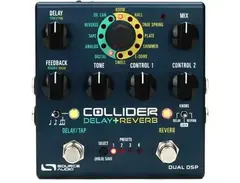
First and foremost it's the most underrated feature; this is a Dual DSP engine Reverb and Delay Unit. This means it can be Reverb-and-Reverb, Reverb-and-Delay, Delay and Delay or Delay and Reverb. So it's not "just" a Delay+Reverb pedal.
It's Stereo/Mono/Dual Mono. Routing options make it super flexible as any input can be routed to any DSP engine and either be mixed or have separate mono outs. Makes it super useful for all types of line signal.
It has enough Reverb and Delay modes to suit 99% of needs of 99% of user cases. All the basics are covered and some more exotic modes are also available. Once again, I cannot stress enough howtDual DSP engine allows for effects creation by mixing both signals.
Full-sized MIDI din 5-pin connectors. Collider has In and Thru MIDI ports for connecting to controllers, MIDI clocks... It also has a dedicated 2.5mm tap swtch connector which works with any standard tap switch.
All of these features can eb used by what you see on the pedal itself, but this is only the beginning....
Source Audio Neuro App (for desktop or mobile) unlocks all the hidden settings of the Collider, and allows for much further customisation, exploration and creation. You can download the app and run the free emulator mode to see all the available settings. You can also save way more Presets using the app.
There is very little room for improvement here. The only cons I could think of is I would way much prefer top-mounted jacks, but all Source Audio pedals are side-mounted. Also a time-clock feature would have been nice, to allow other pedals to sync with the Collider without the need for a separate device. Otherwise it's basically a perfect product!
620
Best value hands down
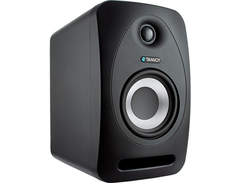
These are small enough to throw in a backpack, just like the KRK GoAUX which goes for 4x the R402 price.
I used a handful of mid-end near field studio monitors before, and the R402 is easily the best out of equivalent products from KRK, M-Audio, Presonus or Behringer.
Despite its small size, it packs a bunch of sweet low end frequencies that will instantly sound gratifying, whether you're using it as studio monitors or desktop/bookshelf speakers.
Highly recommend for the price!
620
How far we've come
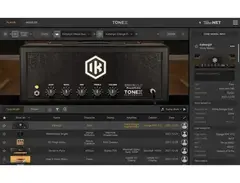
So we're here: a profiler software you can use on any modern computer. Modeler, profiler, amp simulator, does this mean anything anymore? Aren't they all the same thing? Well IK Multimedia proves that they are indeed not, since the Tonex player sounds and feels like no other thing I tried before.
There are plenty of things to improve:
- Most Tonex users will exclusively use the Player mode and it could be its own entire app.
- Better librarian - Everything needs to be improved on this level
Better Amplitube intregration - in fact it feels like you're using a plugin inside Amplitube, not in the good way
But the biggest thing missing right now is what I would call "Multi-profile presets". Right now when you're using a profile, this profile is a snapshot of a certain amp with a certain cab at certain settings. You can turn on/off the cab section and use IRs, but the Gain, Volume and EQ settings you can modify inside a profile are Tonex-software driven, and thus uses modeling instead of real profiling. Now one user could setup every possible configuration on a real amp and profile each combination into a Preset. So it would totally make sense if you could just select say a "JCM-800" Preset and now as you move any of the Gain, Volume, Master, Bright switch, anything really; you're in fact switching profiles instead of models.
Still, it does one thing better than all other software guitar amp emulation, and that's sounding almost* perfect. Did some blind tests myself and while I could spot Tonex over 2 other tube amps, it is way closer to the real thing than Helix Native, Neural DSP, Softube or other modeling software. Now I'm not saying these are less of a good solution; they all sound phenomenal. I just bounded more with Tonex and great user profiles.
620
Good value product
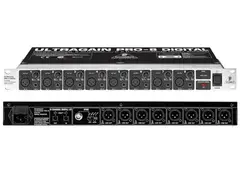
A pretty nice converter that easily adds 8 channels of line inputs/outputs to any optical-ADAT audio interface.
Used it with my trusty M-Audio 1814 interface back in the day and it allowed me to record way channels at once. Behringer may not be the most beloved company out there, but they do make some products that are very solid for their price tag, and the ADA8000 is one of them.
Very easy to use, you do not need a audio engineering diploma to operate it at all.
-s.webp?v=1784007609)
620
Limitations are good
What a fun all-analog little drum machine!
Even if you've never used a drum machine with the Volca Beats it will take you about an hour to get comfortable and jam away for hours after that.
It's cheap, it works on batteries, has sync in/out, can be modded for MIDI, has a very fun sequencer and it sounds huge for such a small piece of gear.
Of course it has its shortcomings, but it forces you to get to work and be creative with it. It is very nice for lo-fi, ambient, hip-hop, and many more. Run it through a filter, reverb and delay and you're in creative heaven.
There is also a snare mod available on the interwebz that makes it sound better, never bothered to do this as if I want another snare sound I can use any sampler to do so.
Loved it!
620
Was expensive when it came out, but it was worth it
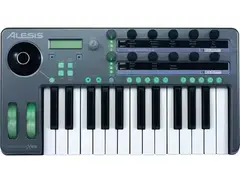
Alesis AXYZ Dome series products line had a very limited lifespan. First there was two very disruptive products that were used by many professionals as a secret weapon: the Alesis AirFX and AirSynth. I happen to have owned the AirSynth before, and it was lots of fun. Not precise at all but lots of fun still. But I quickly realized with its limitations that it would have been so nice if it had MIDI, and that I could connect other hardware to it and control it using the AXYZ Dome,
A year later (iirc) Alesis announced the Photon X25 and X49; a couple of USB MIDI keyboard controllers with onboard class-compliant audio interface and the infamous AXYZ Dome. Wow, that's a lot of features in such a small piece of gear!
The knobs on the controller are one of the most satisfying I ever touched. They have a nice restriction that feels natural and allows for very precise movements. Menus on such a small display are a pain to navigate through but fortunately Alesis made the settings pretty simple to configure.
Keybed feels great. It's one of the good keybeds I've encountered on a MIDI controller. All others felt way cheaper when playing. I'm not talking Fatar-quality here, but it's still nice. No aftertouch on such a vintage product either.
All in all it's a very unique product that is fun to use. Korg has Kaoss pad controllers, Roland has D-Beam and Alesis once had AXYZ series. I'll keep my X25 forever.
620
Staple controller
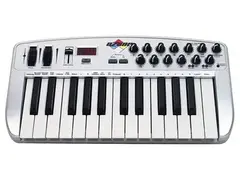
Aww! My first USB MIDI controller keyboard.
Looking back it was way sturdier than many gear I tried over the years. I got it to fill a very odd task: I connected it to a Numark CDX because it had a feature that allowed to control the pitch fader using standard MIDI. It was plug and play and made possible to scratch long horns samples in tune. So I placed the Ozone right over the CDX and its size and format were perfect for what I was looking to do.
There's not much to say about a small MIDI controller keyboard with features that are all right in front of you, but it was a great buddy for experimenting things.
620
Unbeatable value/quality ratio!
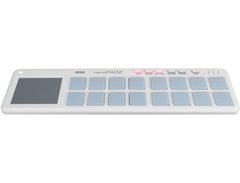
While Korg pad series products like the full sized padKontrol didn't took off as much as say Native Instruments Maschine or Akai MPC controller products, ayone who tried Korg pad products will say that they are the best feeling and the pressure sensor is very responsive. I once bought a Akai MPC-24 and returned it because the pads were way too much stiff feeling, made of a very hard material that hurt finger tips and pressure sensor were not that responsive.
Ok, now I'm a fan of Korg Kaoss products, having owned most of them: Kaoss Pad 1, Kaoss Pad 2, Kaoss Pad 3, Zero8 mixer, KP2 and KP2s Mini, and I regret not having more of them like the KM202 and KM402 mixers, Kaossilator, and the not-reliable-whatsoever but I still would very much like to have, namely the vintage Kaoss Mixer 2 which was a groundbreaking product when it came out. Anyway, the Kaoss pad on the nanoPAD is not like most other Kaoss products which is plastic but still kind of feel like moving on a glass; the nanoPAD feels way more like a ribbon controller and unfortunately you immediately realize you'll have to be careful not hitting it too hard and then moving your fucking with hard pressure because the top material will probably bend and ripple.
With that said, at that price it's a top-notch product which works with most DAW and DJ software, the Kaoss Pad allows you to combine any two effects together and move between them. It's also very satisfying controlling Filter Cutoff and Resonance with it. I wish there was a tad higher-end version with a more decent Kaoss pad, but hey, it's a real affordable product.
620
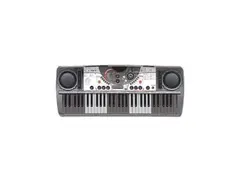
Yup, 100% DJ-oriented keyboard
It takes guts to label a keyboard as a "DJ" product. DJs at the time used mainly turntables or CDJs, so labelling a keyboard as a "DJ" product is very odd to say the least. The only other product I know that was labelled as such was the Roland DJ-70 Sampling Workstation which I also happened to own at some point.
Well it definitely has some "DJ-like" features that allows to play in sync with other audio devices using MIDI, it also has a filter with easily reachable Cutoff and Resonance controls, you can mix parts by turning them on or off... So these terms are familiar to DJ aficionados and have an heritage that can be traced back to other producing tools available at the time like Roland SP series products. So in this respect, it was kind of in line with what other options were available at the time.
I guess when I bought this, I thought it would help me understand DJ tools and allow me to produce tracks. I think it was a biased view of what this was and what its place was in a DJ setup. I did not understand that it was not a be-all-end-all DJ solution, having been blinded by the onboard speakers. Looking back after years of DJing in clubs, here's what I understand it is and its best use:
It's a complement to a standard DJ setup that already has either 2x turntables/CDJs or more, and a mixer. Its use case would be for fills between songs, adding pads, playing one shot samples or loops, adding drums etc... so it's really meant to be used as a tool to add little touches to live mixes. Keyboard allows to play live piano, leads, pads, bass on top of this.
It is fun to play with for sure, but it's not something you buy for learning how to DJ, despite it being a 100% DJ-oriented tool. Fortunately nowadays, live production tools are plenty and there is no reason to buy something like the DJX-II; think Native Instruments Maschine controller and software or Maschine+, Akai MPC One, Ableton Push controller and Live software, Elektron Digitakt and Octatrack etc. All of these were made with live production in mind so you can sample and resample, live loop, add effects, timestretch audio, play pads, leads or bass lines...
DJX-II can be remembered as a classic "Blast from the past" unit, which once was a daring try of Yamaha into the techno/rave-era DJ market.
620
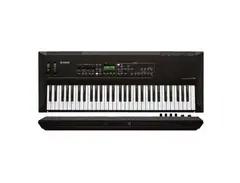
When hundred years of piano knowledge just can't translate into a modern controller
I bought this to control my desktop synths and plugins, was expecting Yamaha quality but been left sour about the product
Pros:
- Cheap
- Full size MIDI ports and power supply operation makes it more versatile than USB-only controllers
- Classic Yamaha look
Cons:
- Too light. While it may seem like a good point for transportation, it's actually so light it moves anytime you touch it a little too hard
- Keybed feels very cheap: out of the box, some keys were higher than others.
- No aftertouch
- Knobs are the worst I ever tried: they click and CC sent do not match the click-ety as it jumps way too much. What's more? There's only 4 of them.
- Display, menus are bad: they crammed so much onto this tiny display it makes it very hard to navigate through, even more with the click-ety knobs.
620
Unbeatable value, that comes at a price
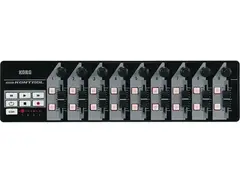
It's a very, very useful tool for anyone either getting into production, looking for a cheap way to control any virtual mixer, DAW, or plugins. It's very well built for its price, the only thing I was worried about was the fader knobs which I thought would just get lost but their design makes it so that they stay in place.
Its slimline design sits very well on top of a computer keyboard and it's small enough to fit on top of some piano-type keyboard controllers with free estate on their surface: I used double faced velcro tape to stick it to my Yamaha KX-61. Mute buttons are very useful too.
I guess its shortcomings are easily pinpointed: USB operation makes it harder to control MIDI hardware, you either need a computer with BOME MIDI translator software or something like the BOME box that will act as a relay. Faders are clunky, but nobody expects studio-level mixing experience on this, and it's meant for setting up a level and leave it there. But that's about it, the nanoKONTROL is exactly what you would expect from a product priced such at this one.
Preferred Settings + Usage:
USB is on side. Buy angled micro-USB adapter or cable so the cable faces backwards the unit and not lying on the side for 5-6".
620
When a groundbreaking product disrupts the market, it always have a limited life span
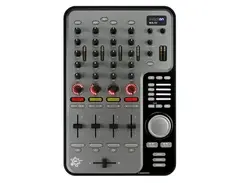
This product was supposed to be Stanton introduction to professional DVS market. The SCS.1M mixer and SCS.1D turntable were the two products making the "Stanton SCS System".
Before its release, marketing was super aggressive from Stanton and at NAMM where the SCS system was thought to be released, Stanton pushed back the release by showing a demo of SCS.1D controlling Ableton Live clips and announcing further advancements in the development of the system.
Everybody was in awe and wanted a digital turntable that could control Ableton Live in a typical DJ setup-manner; by being able to "scratch" Live clips so the community kind of forgive Stanton, almost a year passes by and Stanton finally releases the system but not without much pressure from the community.
What happened next was totally unexpected: the two products (1D and 1M) were lemons. Displays gave up life quickly and displayed weird characters, Traktor support was very limited and scratch performance was sub par, part because of NI, part because of Stanton.
DJ community has no patience for unreliable gear; their set getting interrupted by a bug will only happen once as it's not worth risking breaking a good vibe by a digital error noise. And around the same period, Serato was quickly becoming the DVS standard, and EDM DJ's didn't mind using CDJs which were widely available and built to endure club night life, drink spills and other casualties that can happen.
Stanton quickly discontinued the SCS System, everyone who bought the units for close to $2K (iirc) was mad and ditching Stanton on forum boards and mainly Skratchworx.com, a now defunt website which was a very good reference for everything hip-hop DJing and DMC.
So as of now, while Stanton still exist and produces one of the best Super OEM DJ turntable of all time - namely the ST-150 but is nowhere near the promise of a digital DJing future lead by their expertise.
Then one day, a large distributor liquidated its stock and sold over 300 units on eBay for ridiculous prices. That's when I bought a couple of ones and fiddle with them.
Afterlife: While support in Traktor was super sketchy, VirtualDJ supported the SCS System until just a couple of releases ago. Scratch performance is very great and one could argue it's the second-best 100% digital turntable controler experience next to Serato Twelve. I still use it for scratch-only duties and since I'm not DJ Q-Bert it is fine for what it does.
620
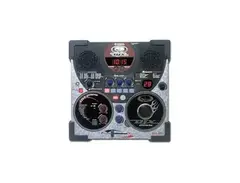
3 stars for fun, but it's definitely the worst thing I ever bought
I knew nothing about sampling, producing, DJing, nothing at all, but I wanted to learn. So I took the little money I had and went to one of the only two musical instruments stores in town to get information. Clearly the guys knew absolutely nothing about it either being a piano store (this explains Yamaha) and just saw the opportunity to sell me something before I go to the only other store nearby. They didn't have it in store but offered to order it right now so I would get it a week later.
So I knew basically nothing about what I was buying, it had the letters "DJ" on it, had a spinning platter just like the high-end stuff I saw before... I don't know what I thought I would have but I wanted to be able to record things and scratch them like on a turntable. Oh boy... how wrong I was.
I must admit, Yamaha did a really good job at building a eye-catching unit that will fool idiots like me to buy it. It had built-in speakers that did not sound better than a old CB radio, the limitations hit you right in the face, you can just use so many samples and the platter is a joke.
Nonetheless, I had fun playing with it and maybe would be a good candidate for a circuit-bending job, I don't know.
Make sure to read my review of the Yamaha DJX-II Keyboard, DJX-IIB's sibling product!
620
Perfect power supply
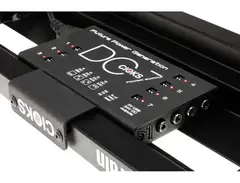
There's nothing else like it. Super simple. Super versatile. Super small. Super convenient. If you already have a pedalboard that is powered properly with all 9V or 18V pedals keep it that way. If you plan on expanding your pedalboard in the future, if you don't know what you're gonna end up buying in the future, or if you have noise issues the Cioks DC-7 is simply the best power supply to get. Voodoo Labs fans will hate me for saying this, but Cioks is best.
620
A pretty much perfect product, more 4.5 than 4.
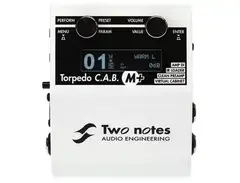
Only once in a while you buy a piece of gear and everything is laid down so well you feel right at home even the first time you turn it on. The Torpedo C.A.B. M(+) is one of these products.
Who needs it?
Anyone who needs a post preamp, or post loadbox all-in-one solution.
What does it do?
Preamp simulation, Power amplifier simulation, Impulse Response loading, Noise Gate, Semi-Parametric Equalization, Virtual mic'ing, preset saving/recalling and many more.
Why would I need this when there are free plugins that can load Impulse Responses?
Because its meant to be used untethered from a computer, even though you can profit from connecting it through USB and use the Torpedo Remote software for configuring the C.A.B. M instead of using the onboard dials, or iOS/Android app. It's like 10 plugins onto one single pedal-format piece of hardware.
Where do I use it in my signal chain?
Either after a preamplifier (like the KSR Ceres, the Orange Butler, Effectrode Blackbird, JHS Clover etc) or after a load box (Two Notes Captor, Mesa Power House, Fractal X-Load) when used to record from an amp. If used after a preamp you can profit from the power amplifier sim which covers many types of virtual tubes and Volume, Contour and Pres controls before hitting it with either Two Notes own DynIR Virtual Cabinets or classic Impulse Responses and if used after a load box you keep the Power Amp Sim OFF and use DynIR or Impulse Responses. It is meant to be the very last piece of gear in your chain, however you hook it up.
What are its competitors in this category?
Mooer Radar, NUX Solid Studio, ENGL Cab Loader are its direct competitors. They all have some sort of power amp simulation with choice of virtual tubes combined with Impulse Responses loading. If your setup is going towards using an amp, any other Impulse Response loader will do the job as IR loading is concerned. It's the power amp sim really and then other features that sets the CAB M, Radar, Solid Studio and the ENGL apart from the other Impulse Response Loaders out there.
If you plan on using it with an complete a standard guitar amplifier you basically have two choices: getting your signal out of the speaker output into some type of load box and then into any IR loader really, or you get your signal out from the FX Send (provided your amp has an FX loop) and straight into something like the CAB M and turn On the Power Amp sim to get the best out of the preamp from your amp and let the CAB M do the rest. Doing it this way has its quirks though, as you will have to keep your speaker connected if you don't use a load box. But all in all, except if you already own a load box or plan on buying one in a near future, the CAB M and its main competitors are the best piece of gear to complement your setup.
So why the CAB M then?
There are a few reasons that sets the CAB M apart from its competitors.
Speaker Pass Thru: You can actually connect the speaker output of your amp to the CAB M and then route the signal to your speaker cabinet. This allows to have a direct, IR -loaded, balanced signal to front of house when playing live and still be able to use your speaker cabinet. This feature alone makes the CAB M a stellar tool for live sound engineering.
DynIR: While Two Notes' own take on Impulse Responses might not be absolute best out there, it's actually very useful to understand exactly how mic'ing of cabinet works. Using the Torpedo Remote software/app you get a GUI with dozens of features like advanced mic'ing of virtual cabinets, mixer and more. DynIR are priced fairly for their level of complexity and actual usefulness, many Virtual Cabinets are around $10 USD so you can try a couple for not much.
DynIr AND IR: You know what would have been real bad? That Two Notes created a product that is only compatible with their own DynIR series products. They could have as DynIR are very good, but they didn't, and now you can choose between what you actually like the best. There are shortcomings to it which I will talk about later but all in all: it's supported and works flawlessly when loaded.
Preamp: What? That's a feature that is often overlooked when talking about the CAB M. The virtual preamp allows you to use the CAB M as a pedal platform; place your favourite overdrive or distortion in front of it and that's it, you basically have a whole rig capable of producing serious tones just like that. It may not be the best preamp sim out there but this feature by itself makes the CAB M a true all-in-one solution post gain-stage.
Bluetooth/USB/Software/App: CAB M has onboard Bluetooth! You can load the Torpedo Remote app from your phone, and control the CAB M from there. Very Eventide-y! All the features are there combined with a very pleasing looking GUI, and it's pretty responsive too with very little lag. Same features and similar GUI available on PC/Mac with Torpedo Remote software available on Two Notes website. But it's not like using the two onboard dial is hard either: once you've seen the app/software, you instantly understand how to use the clickable dials for fast setup. Very impressing tech from such unit.
Supports IRs up to 200ms: Now that's a great touch, and while it does not tap the 500ms mark support, many engineers will say that past 200ms it's not speaker response anymore but only room sound.
But here are the cons, the shortcomings and limitations:
While Impulse Responses are fully supported on the CAB M, you quickly understand how this piece of gear was designed to use with Two Notes DynIR. Read this: the SD card browser does not supports ANY level of folders. What does that mean? Well say you already own a good collection of Impulse Responses from Celestion, OwnHammer, York Audio, whatever. IRs are in separate folders depending on the mics used, their length and frequency. That's as much folders by cab collection you have. You load a perfectly managed IR .wav files library with corresponding folders onto a SD card, pop it onto the CAB M and then get a message saying the files you are trying to access are not visible. Yup that's heading exactly where you think it does: you have to load ONLY .wav files within the SD card's Home folder and that's it. No folder at all. You now realize all the hours you spent managing folders and directories are ruined to nothing and you now have to figure out how microphones are identified within your .wav file names and so are speakers.
It does not have MIDI but the previous gen did: Torpedo CAB M is the follow up to the classic C.A.B. which was way larger, had weaker processing weaker and much more shortcomings. But one thing it did have was full MIDI support with in/out 5-pin full-sized DIN connections on the back. Two Notes stated that they basically "traded" MIDI support for Bluetooth on the CAB M. Bluetooth is very nice, allows easy setup, but really was it worth ditching MIDI for it? I mean there are only so much settings you can play with to find your favourite IR settings, once it's setup to your taste, how many times will you need to makes changes that require the GUI, while you could actually just change it using the unit's dials? With a resurgence of MIDI support with popular foot controller companies like MorningStar FX, Disaster Area and others, it would have been really nice to be able to change IR depending on the settings of digital amp processors one could use before the CAB M, like using a JC-120 emulation with a Jensen IR as Rhythm, and AC-30 emulation with Alnico Blue IR as lead and be able to switch between them? The CAB M does not allows that.
It's mono: How I wish this thing was Stereo. I have a collection of stereo Source Audio pedals that would have very much liked to be used as they're intended to. It may sound like a far-stretched ask, and their higher-end offering the Torpedo Studio has Stereo in/out, but it's so small I wish they made it just a tad bigger and get 2x XLR outs. In fact if Two Notes or another company makes this I will instantly switch to it. There are many affordable, Stereo IR loaders and some even have MIDI support (like the Yerasov IRon Cab) but they unfortunately don't have power amp sim, which is crucial for a amp-less, pedals-only setup. So it's not like any other product is offering it in this format right now, even less in the CAB M price range.
It's 12V: now this is something to think about if you are not the proud owner of a modern, multi-voltage, isolated outputs power supply like a Cioks or Voodoo Labs. You may need to use its own power supply and that can be cumbersome when planning a pedalboard built.
All connections are on the sides, none on the top: They get a free pass for making such an incredible product but I really wish the next generation has all connections on top, even if it means making the thing wider. If my Source Audio pedals didn't had such a great quality/value factor I would ditch them all just to get something with connections on top, that's how much I had side connections.
That's about it, its shortcomings are not huge problems and I guess one could get 2x units, make it Stereo or with different IR on each one and switching between them, so the problem may be more finance-related than shortcomings. I really enjoy using this unit, it's one of the best thing I ever bought and paired with my KSR Ceres it's just a match made in heaven! You can find them used for cheap nowadays, so go get one ASAP, it's really THAT great!
620
Good in concept, bad execution
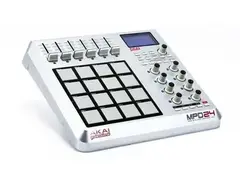
I was very eager to get the MPD-24 when it was announced, I thought it would be a good upgrade to my M-Audio Trigger Finger.
Within just a couple of minutes of playing I knew I wouldn't bond with it. Pads are very stiff and are made of very poor materials, the buttons all are clicky, the faders bend very easily, buttons caps will go off eventually, but the worst was the pad sensitivity. Even on Full Levels, I couldn't "play" the pads as I had to hit them way harder than I usually would for them to trigger sound.
Brand new it looks very cool but after a couple of hours some knobs become less responsive, bent faders are annoying on a brand new unit and they do not have a smooth travel at all.
I wouldn't even pay $20 for it used.
620
4 Stars at its birth, less now
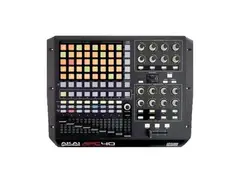
Akai APC-40 was truly a pioneering product; it was the first affordable complete controller for Ableton Live. So many launch pads, knobs, faders, buttons, etc.
There are two main issues with the APC-40:
- Knob caps will fall off whatever you do
- Faders bend real easily, and once it's bent the unit looks clunky
Aside from these two this is a perfectly capable unit that can be used for a myriad of multimedia applications and with the right software can control basically anything. It has a killer look that is sure to impress anyone who looks at it.
Even by today's standards, it's one of the best Live controllers and except for a few bells and whistles the APC-40 MKII is not that much more advanced, same with Novation Launchpad.
Things I liked about it: the crossfader, the 4 way direction buttons, the transport section, the number of channels available, the dedicated cue level knob.
Things I disliked: the horrible tap tempo button with click, the close proximity of the crossfader to transport buttons making almost any technical move risky, the dumb exterior shape, the small "Activation" buttons, the Nudge buttons which could have served a way better purpose.
620
The most versatile, best Tube Screamer on the market.
People about Tube Screamer-type pedals:
- "They all sound the same"
- "It's basically all the same circuit"
- "They all do the same job"
- "My TS-9 has been on my board since 1912 and it still works so why should I care?"
- "There's only one setting: Gain at 0, Volume at 10, Tone around the middle"
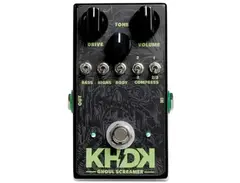
Well forget everything you think you know about Tube Screamers because this one is very special. The pedal company backed by Metallica's Kirk Hammett created a TS-style pedal that offers tons of tone shaping options making it one of the most feature-packed TS pedal on the market. But enough with the catchphrases, here are my thoughts:
Hardware-wise it's a perfect. Even more so if you can get your hands on one with the input/output connectors on top. My only gripe is the middle switch that is located right under the Tone knob is hard to reach with my large fingers when it's in up position.
I tried many TS-style pedals; JHS Moonshine V2, Behringer TO800, Earthquaker Plumes, and the ultra-capable Source Audio LA Lady (which can do all sorts of dirt effects) and nothing sounds as good as the KHDK Ghoul Screamer. It makes my KSR Ceres roar for high gain, and can also do a very pleasant slightly overdriven tone before a clean channel. On a more personal note; the Ceres is VERY selective as to what overdrive/boost can make it sound better than it does out of the box, and the GS made it sound even better than before.
The plethora of compression settings available through the 5 top-mounted switches is enough for hours upon hours of fiddling to dial in the perfect tone, but they also have enough effect on the signal so you can just flip them up and down and quickly find a good tone. In fact I found a very nice setting in under two minutes of plugging it.
The best setting I found so far are completely different than the usual Gain-at-zero/Volume-at-10/Tone-to-taste. I found that volume at around 6-7, Gain at 3-4 and Tone on the darker side gives me a very satisfying tone on crunch as well as on higher gain. Seems to tighten and tame my Ceres distortion when needed.
I rarely play on clean, as I play mostly hard rock/hardcore/metal but I instantly fell in love with the warmth the GS brings.
Oddly, I think they would have sold a lot more units if they made a more mainstream color scheme graphics. While it certainly excels at pushing a high gain amp it's just as good on a clean amp. I see many Youtubers use it as their main overdrive since it's so versatile and is so good with whatever amp you play it through.
I buy and sell a lot of stuff, but this one is definitely a keeper.
620
A 4 Star product that really deserves 3.5
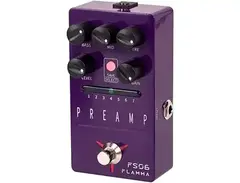
The product itself is great, and really affordable too. To me it sounds just as good as Boss Katana's or other new digital solution preamp section.
The enclosure is as good and tough as it can be, the knobs feels a little cheap but nothing like it would be an issue. There is onboard cab sim, but I did not try it as I used my Two Notes C.A.B. M+ and York Audio Impulse Responses which produces way better results.
Being the proud owner of a KSR Ceres, I think I was just expecting a little too much from the FS06. I really wanted it to fill the holes left by my Ceres; cleans with more character (Ceres clean is crystal clear) and maybe the Boogie emulation could do... But it didn't click with me. It sounded very dark, and even with the brightest settings it did not bring the sparkle I was hoping for. I know, I'm comparing a top-of-the-line analog preamp vs an affordable do-it-all digital one. But isn't it what people need to know in the end? I could sugar-coat and say it's better than it actually is, but I found it just didn't sound as good as I expected.
With that said, I'd like to point out at another issue with Flamma products line: they have the FS06 Preamp and FS02 Cab IR and both were made to be used together, at a VERY affordable price. But there's a problem here; the Flamma CAB IR (along with many other Impulse Response Loader-pedals) lacks a Power Amplifier simulation onboard. What does it mean? Well if you look at a standard basic signal chain, guitar is plugged into a preamp, which goes into power amp, which outputs to speaker cabinet. So here you have the FS06 Preamp and FS02 CAB, but no power amp sim. You really have to try a power amp sim in your signal chain, even more if you're running direct with the FS02 CAB IR or other solution to hear the difference in what one would call "oompfh" or "life" to direct audio. Having a choice of 6L6 or EL34 tube sim is critical to overall tone depending on the preamp you're using.
I can't say if the FS06 sounds good or not through a nice effects loop on a nice amp, but I can tell you that if going direct, power amp simulation is a must. So Flamma don't have it; they don't have another cheaply priced product that can fill that gap. That's really something one should be aware of before considering this product; the FS06 does not have a problem itself, but Flamma does not offer some kind of solution for this on the FS02 CAB IR. The cheapest solution for this would be to pair the FS06 with a Mooer Radar instead of the FS02 CAB IR, which is a IR Loader with onboard Power Amp Simulation, now that would be a good pair. I think the Radar is a little more expensive that the Flamma FS02 and it may not look as good but it's actually a way better product. Other good options that sports onboard power amp sim to pair with the FS06 with would be Nux Solid Studio (full-sized version), Two Notes C.A.B. (obviously), or DSM Simplifier DLX (also the first "single-channel" Simplifier by running its FX Send to Flamma FS02 input. This works since Power Amp simulation on the Simplifier is PRE effects loop).
So by itself this product a 4, but really it deserves 3.5. If Flamma creates a FS06+FS02 hybrid with the preamp models of the FS06, the Impulse Response loader of the FS02, added power amp sim and effects loop now this could become very interesting, provided they keep their prices just like they are now.