Autechre
electronic music duo
Autechre's Studio Equipment
Filter by


"If we're disregarding any computers here just for this Q, I would give the mpc1000 a good exercise with its JJOS now n then. Our RS integrator is a worthy distraction too. DMX has always been there for me too."
Rob Brown on WATTM AAA
Find it on:


Incredibly lush sound. Digital but warm, deep and very open ended. The Machinedrum has bass, it really delivers. I've made some of the lushest kick drums on it; they really cut through a rig in a live situation. The physical modelling in the Machinedrum is really odd and unique I think. Very useable, way better than the standard set you hear everywhere. I’m also having a lot of fun with the RAM machines in the Machinedrum UserWave. Done tons of stuff with them and I still see loads of potential for new applications. The Machinedrum is also the tightest sequencer we've got in here.
Find it on:

Sean Booth talks about the first gear he and Rob Brown used in this November 1997 interview with Sound On Sound magazine.
"The first stuff we had was a [Roland TR] 606, a [Casio] SK1 and SK5, then a Boss delay unit. Then we got our [Roland MC] 202, a Tascam 244 4-track and a Juno 106. It's grown so slowly that we're totally au fait with it all. But you can't forget, especially with the amount of software that we've got now, that it's very easy to get into a specific way of working and to forget what it's like to use an analogue synth, to have to deal with 40 controllers at once, for instance."
Find it on:
-m.webp?v=1783177011)
In this photo, Rob Brown of Autechre can be seen playing the Ensoniq ASR-10.
Find it on:

During a November 1997 interview with Sound On Sound magazine, Autechre talk about the internals of their Casio SK-1.
"See this chip here? If you connect any two of these points together, it crosses the samples together. You can get ring modulation, flangers, delays, and all this other timed-based stuff. So we're going to try and get a switch fitted on the back that can move across the points, that way we can adjust it in real-time in a live situation."
via Sound On Sound
Find it on:

Sean Booth talks about the first gear he and Rob Brown used in this November 1997 interview with Sound On Sound magazine.
"The first stuff we had was a [Roland TR] 606, a [Casio] SK1 and SK5, then a Boss delay unit. Then we got our [Roland MC] 202, a Tascam 244 4-track and a Juno 106. It's grown so slowly that we're totally au fait with it all. But you can't forget, especially with the amount of software that we've got now, that it's very easy to get into a specific way of working and to forget what it's like to use an analogue synth, to have to deal with 40 controllers at once, for instance."
Find it on:

Autechre's hardware samplers include the likes of the Ensoniq ESR and EPS, Kurzweil K2500, Emu E-Synth, and Casio samplers like the FZ1, FZ10, SK1, SK5 and SK100
Find it on:

AUTECHRE ON ENSONIQ SAMPLERS
Sean: "We use modified software on the sampler for live work. We found some nerd in America who writes interesting software."
Rob: "We were then able to take the sampler input and convert it to a thru for a start. Then we were able to use the software to write our own effects in the EPS."
Sean: "It's even better than the [newer, more powerful] ASR-10. You can select samples independently from the sequencer, which means that as the sequencer is running you can select your sample and edit it, turning it into a synth really. It's already got a decent OS in there, but it's really easy to modify as well.
Rob: "It's really only the American manufacturers, Ensoniq and Emu, that turn their gear into synths and not just sample playback machines."
Sean: "The EPS is just like using the Prophecy really. Everybody beats on about how smart the Prophecy is but we've been able to do that with samples for years. Much of the multiple LFO routings and the assigning of controllers to modulate controllers and so on, we can do on the EPS -- setting up quite elaborate patches on it really quickly. It's weird that Ensoniq is getting ignored in preference to Akai, which admittedly is a tighter more accurate sampler, but it still lacks a lot of scope for exploration, you can't really do a lot with it. With the EPS and the ASR-10 we're still finding things, like changing aspects of effects that you're not supposed to be able to alter."
Although when you originally bought the EPS you obviously didn't know what you know now.
Sean: "No, we bought it because we got a good deal."
Rob: "And it had on-board effects. We thought, 'it's only got two outputs but then it does have effects -- f**k it, we've only got this much money'. Before that the only sampler we had was 1.4 seconds worth on our Boss delay, so anything on top of that was a luxury."
Sean: "By necessity we've struck up a good working relationship with our samplers. The only current sampler that we would get, knowing what we know now, is probably the Kurzweil. It's the only thing that I've used that intrigues me.
Rob: "Emus as well, they seem to have a lot to them."
Sean: "Just in terms of the editability if you put a sampler into a synth you know you'll be buying all those synth facilities, whereas if you're just buying a sampler then that can be limiting. I think a lot of manufacturers still see the sampler as being limited in those respects, which is bullshit, considering the amount of DSP chips that they pack in there. There's so much you can potentially do with them."
Find it on:

In the list "SOME OF THE AUTECHRE HARDWARE" in their Sound on Sound interview it said that they use the Alesis Quadraverb.
Find it on:

Autechre's hardware samplers include the likes of the Ensoniq ESR and EPS...
Find it on:

Autechre is listed as using the Yamaha SU10 Sampling Unit in the Autechre Gear List curated by Mike Baas.
Find it on:

In an interview with Autechre on Sound on Sound it said, "Of course, even with Autechre's wide-ranging tastes, some pieces of kit are favoured over others, or have a more central function. This often-used gear includes Mackie 16:8 and 24:8 desks, a Shure Auxpander, and an Apple G4 Powerbook running OS X".
Find it on:

Autechre used the Yamaha RY30 exclusively for the tracks on the mail-order exclusive "We Are R Why" EP.
Find it on:


Autechre utilizes the Boss RSD-10 effects processor, as documented in the Autechre Gear List provided by Mikebaas.
Find it on:

Listed among the recording gear in the January 1995 issue of Future Music magazine.
Find it on:

In an interview with "Sound on Sound" Rob and Sean say they use the Roland R8 Synthesizer.
Find it on:

Listed among the recording gear in the January 1995 issue of Future Music magazine.
Find it on:

In the list "SOME OF THE AUTECHRE HARDWARE" in their Sound on Sound interview it said that they use the Ensoniq DP/2.
Find it on:

In the list "SOME OF THE AUTECHRE HARDWARE" in their Sound on Sound interview it said that they use the Casio RZ1. They also added "That's really old school. The sampling quality is crap but it sounds awesome.".
Find it on:

In the list "SOME OF THE AUTECHRE HARDWARE" in their Sound on Sound interview it said that they use the Tascam 24 channel mixer. They also added, "We like the range and flexibility of the EQ a lot.".
Find it on:


Philips Oscilloscope "We have a lot of problems with high frequencies, so we try and keep an eye on it. We also occasionally write tracks that look good on the oscilloscope. Unfortunately it tends to be really basic rave stuff."
Find it on:

Autechre appreciates the range and flexibility of the EQ on their TASCAM M2600 mixer, as noted in the Autechre Gear List on Mikebaas.
Find it on:

Autechre uses the Sony MDS JE520 MiniDisc recorder
Find it on:


Listed among the recording gear in the January 1995 issue of Future Music magazine.
Find it on:

Of course, even with Autechre's wide-ranging tastes, some pieces of kit are favoured over others... ...a Shure Auxpander...
Find it on:

Autechre utilizes the Akai Z8 sampler, as detailed in Mike Baas's Autechre Gear List.
Find it on:
This is a community-built gear list for Autechre.
- Find relevant music gear like Studio Equipment, Software Plugins and VSTs, Headphones, and other instruments and add it to Autechre.
- The best places to look for gear usage are typically on the artist's social media, YouTube, live performance images, and interviews.
- To receive email updates when Autechre is seen with new gear, follow the artist.
-
Added to Equipboard on by
 simfonik
Gear IQ 2532
-
Updated
Discography
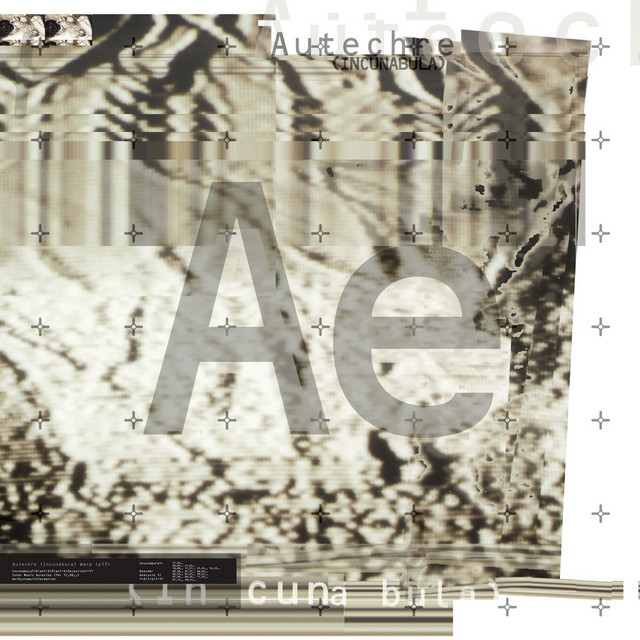
Album Credits
-
Autechre · 2010
Producer -
Autechre · 2008
Producer -

Autechre · 2005
Producer -
Autechre · 2003
Producer -
Autechre · 2001
Producer -
Autechre · 1998
Producer -
Autechre · 1997
Producer -
Autechre · 1995
Producer -
Autechre · 1995
Producer -
Autechre · 1995
Producer