
By Gear Experts
Table of Contents

Equipboard
Equipboard is the world's largest community of artists and their gear. Read our review process.
We are reader-supported. When you buy through links on our site, we may earn an affiliate commission. Learn more.
Our Picks


If you’re a guitar player, odds are you can’t imagine a world without DI boxes. They’re the secret weapon of recording engineers, session players, and gigging guitarists the world over, and it would definitely complicate the recording process if we didn’t have them.
The question is: How do you choose the best DI box? There’s a ton of different models on the market, and it would definitely be understandable if you’ve ever felt overwhelmed with trying to figure out the best direct box for your rig and your budget.
If that sounds like you, you’ve come to the right place. This article will give you all the information that you need to make an informed purchase, as well as give you five great recommendations to help aid you in your search.
What Is a DI Box?
A DI box, or direct injection box, is a tool that helps balance and increase input signals while isolating your instrument from electronic interference. Although it may sound technical, the concept is straightforward.
So why Use a DI Box?
Signal Boosting: Many instruments, especially those with passive piezo pickups, don’t put out a strong enough signal on their own. When you plug these instruments into a P.A. system or recording interface, the signal can be weak. A DI box boosts the signal, making it more robust for recording or live sound. This is particularly useful for acoustic instruments and bass guitars.
Balancing and Isolation: A DI box typically includes a balancing transformer. This component helps reduce unwanted electrical interference, such as hum from ground loops or noise from faulty venue wiring. By balancing the signal, a DI box ensures cleaner audio with less external noise.
While DI boxes are valuable, modern audio interfaces have significantly improved their instrument inputs. If you're recording straight into a laptop, investing in a quality audio interface like the Focusrite Scarlett Solo or the Audient iD4 (featuring a highly regarded JFET instrument input) might be a more practical first step. These interfaces often provide excellent sound quality and include preamps designed to handle instrument-level signals effectively.
A dedicated DI box can offer superior performance compared to the instrument inputs on some interfaces, especially in professional settings or live environments. However, for many home recording setups, modern interfaces may suffice.
So simply put:
- For Home Recording: A good audio interface with quality instrument inputs might be sufficient.
- For Live Sound and Professional Recording: A DI box can offer enhanced signal quality and noise reduction.
What Should I Look for in a DI Box?
First thing first, a good DI box should be built like a tank. DI boxes will get so much use and will be hauled to and from so many different places that they need to be a bet more durable than most other pieces of equipment.
Also, it’s super important that a DI box is made with high quality electric components. You can get away with cheap stuff on a lot of pedals because they don’t deal with electrical current in the same way that a DI box does. A guitar pedal mildly manipulates a signal, while a DI box will fundamentally change it.
Lastly, make sure that you consider your needs when thinking about whether you want a passive or active DI box. Active DI boxes are actually preamps. Therefore, the general rule of thumb is to use active DI boxes on low output instruments while passive outputs are great at handling the hum on higher output instruments. Think about how you want to use your direct box in your setup before focusing on a particular manufacturer or model.
The Best DI Boxes
As always, it’s important to remember the purpose of these articles. They’re aimed at informing people, and giving as many of you as possible a viable option for your next purchase. While we recognize that a professional quality piece of equipment is always going to be superior to something that’s aimed at hobbyists, most people can’t justify the expense. It doesn’t matter how good a Reddi Tube direct box is if you literally can’t afford to purchase it. So just keep in mind that the best option for you may not be the best option for your neighbor, and vice versa.
Walrus Audio Canvas Stereo Direct Injection Box
5.0 (2)






Average Price: $239
Standard/Professional
$119
$300+
Budget
Standard
High-end
- Enhances synth and guitar sound without squashing dynamics
- Lift switch effectively eliminates ground loop issues
- Compact and sturdy design, perfect for pedalboards
- Excellent stereo sound quality, ideal for live and studio use
- See 6 more
- Higher price point than some alternatives
- Some users find it noisier than Radial DI when not connected to an instrument
- SUM switch for XLR outs would be a useful addition

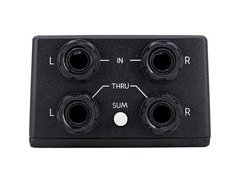
When it comes to direct injection boxes, the Walrus Audio Canvas Stereo DI Box stands out. In our tests, we found it offers a compelling blend of high-quality sound and smart features, though the premium price tag may be hard to swallow if you don't need everything it offers.
The first thing that struck us was its build quality. The Canvas Stereo DI feels robust, with a sturdy yet compact design that's as functional as it is attractive. Having a stereo DI box in a 2.6-inch width stompbox size makes it super portable, whether by itself or on the last slot of your pedalboard. Though highly subjective, we love the retro-modern color scheme of the Walrus Canvas series.
While the build quality is what we've come to expect from Walrus, it is worth mentioning that it feels a tad bit less road-worthy than a Radial DI box. If we threw both against the wall, our money would be on the Radial surviving over the Walrus... but please don't throw your DI box at anything!
Feature-wise, the Canvas Stereo DI is loaded. You've got top-mounted stereo 1/4" inputs, and stereo XLR main outputs (as well as top-mounted stereo 1/4" thru jacks). There's a button dedicated to switching between DI and LI modes, so you can customize it based on your setup. We plugged directly into a mixing console and an audio interface without any hassle, and the high-quality transformers ensured minimal signal loss across a wide range of instruments frequencies.
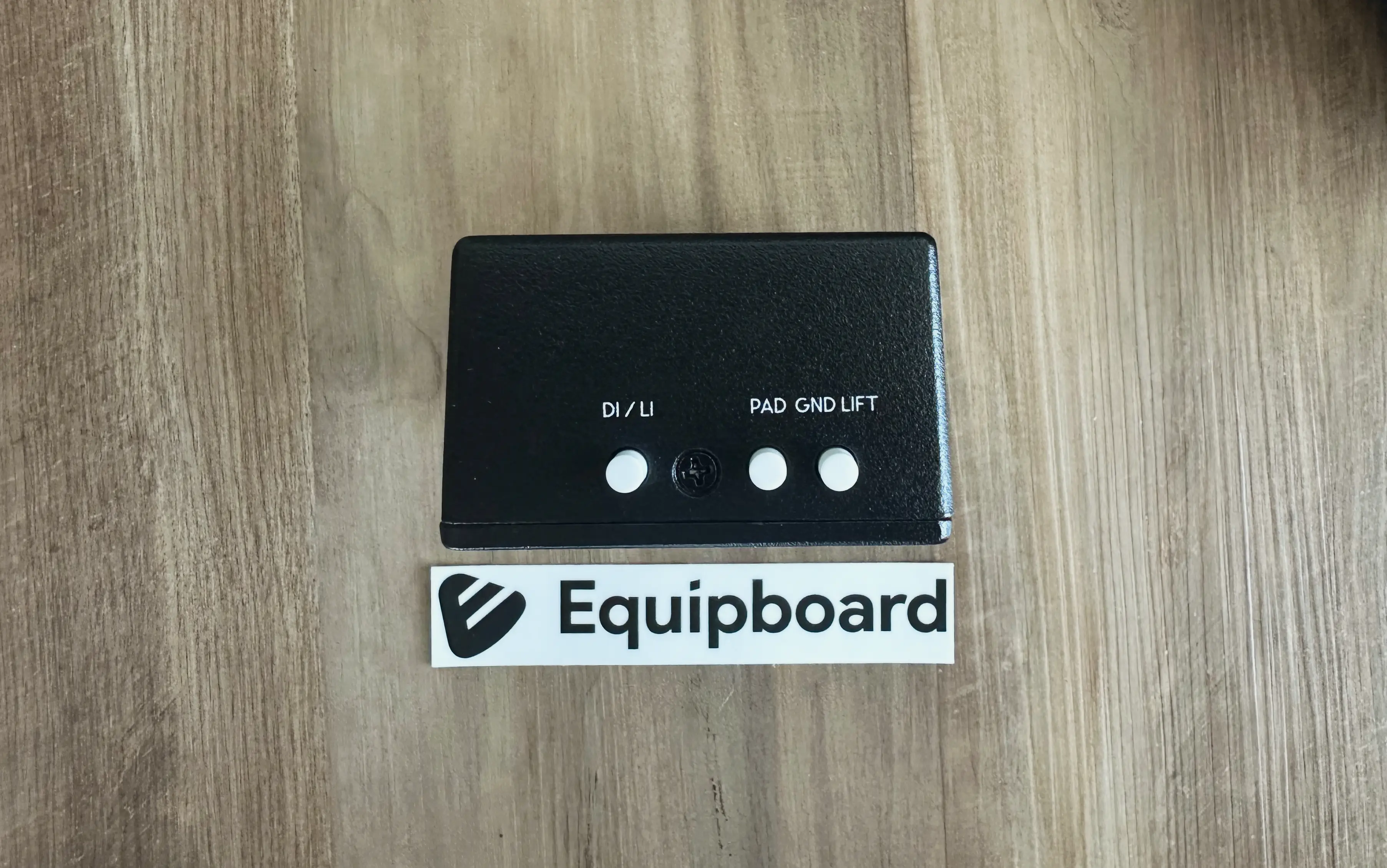
The ground lift switch proved invaluable in troubleshooting and eliminating pesky ground loop issues during live performance. One notable oversight, however, is the lack of a SUM switch for the XLR outputs, which could be a useful addition for some setups.
Sound quality is where this DI box truly shines. The clarity and richness of the sound were immediately noticeable. In use, our synths had a thicker body, and the overall spatial sound was remarkably clean. Noise reduction and signal integrity were maintained throughout, making it ideal for both studio and live settings. We normally record electric guitar by running the guitar signal through pedals, into an amp sim pedal (Walrus ACS1), and then directly into an audio interface. By running the amp sim signal into the Walrus Canvas DI box we noticed a significant improvement in our sound quality (which will also improve the sound during live gigs where every nuance counts).

Bottom Line: It's really hard to find flaw in this Walrus Canvas Stereo DI box, since it does everything it should in an elegant package. That said, it does come with a slightly higher price tag compared to comparable DI boxes. If like the feature-set of this Walrus DI box but don't need stereo operation, they have you covered with a significantly cheaper mono version. We fully believe the sound quality and functionality of the Canvas DI justify the cost, however, budget-conscious musicians might want to explore more affordable options.
See how artists use this


Countryman Type 85 FET Direct Box
5.0 (9)


Average Price: $232
Standard/Professional
$119
$300+
Budget
Standard
High-end
- Crisp, clean sound; enhances preamps in Scarlett 18i20
- Reamp and dual signal features are valuable at this price
- Flexible input levels; sturdy and reliable build
- Rich and warm tone, especially for Taylor 714CE
- See 3 more
- Hint of low end missing compared to high-end models
- FET can get gritty; transformer not the most hi-fi
- Tends to color amp feed when using speaker pad
Founded over 35 years ago by Carl Countryman, Countryman has been a long time secret weapon for gigging musicians and audio engineers. The company actually got its start handcrafting custom gear for touring rock bands and performers. They went on to expand into the company we know today, and though they may not be a household name they’ve retained a place on a variety of professional pedalboards and recording rigs for years.
Even better, all of the company’s components are designed, manufactured, and tested at their office in Menlo Park, California. While the U.S. doesn’t have a monopoly on producing quality equipment, it’s always a badge of quality for a product to be produced in a developed country with well paid and knowledgeable workers.
Considering the fact that Countryman is widely used by professional musicians, it’s no surprise that it is a quality piece of equipment. However, in order to know whether or not the device is a good fit for you be sure to read up on the specifications below.
DI boxes perform virtually the same function, so the reason to invest in a better device is that they’re made from better from better quality materials and are better able to reduce the amount of distortion and unwanted noise introduced into your tone.
Apart from that, the most notable feature of this device is that runs on phantom power. The best part about this is that it ensures that you’re never going to have to worry about batteries dying mid-performance, which can be incredibly disruptive.
A cool feature of this DI box is that it allows you to select between a pickup setting and a setting for microphones. This is pretty helpful, as it gives you a lot more control on how the device impacts your signal.
It is a pretty clear clue that this device is a very well made piece of equipment. A key thing to note about this device is that you’re paying a premium for a device you can count on. The company takes an extreme amount of care in designing and testing their products, so while there are devices with similar components and features for cheaper we wouldn’t call this product overpriced because so much care is taken in every step of producing it. This makes it a great option for those of you who make a living from recording music or playing live, because you can rest assured that it’s not going to let you down.
Countryman does offer a comprehensive warranty on their products for five years following the purchase date. Like any other warranty policy, it should be noted that putting the DI box through unnecessary amounts of strain or modifying it will invalidate your warranty. Thankfully, there’s literally no reports we could find of any Countryman product being defective, so you can rest assured that when you buy this DI box there’s virtually no chance that you’re going to receive a product that’s not going to function as advertised.
The Countryman DT85 Type 85 Direct Box is an industry standard, and if you’re looking for a professional quality piece of equipment this DI box is worth serious consideration. Hobbyists or weekend warrior guitarists may find that their money is better spent elsewhere, which isn’t to say that the product is overpriced; you’re just paying a premium for a device that you know will hold up to regular use.
See how artists use this






Radial Engineering ProDI Passive Direct Box
4.5 (20)






Average Price: $128
Standard/Professional
$119
$300+
Budget
Standard
High-end
- Clean, warm, pure sound quality
- Extremely durable, "built like a tank"
- No coloration, retains original tone
- Very quiet with minimal noise
- See 6 more
- Not as "classy" sounding as higher-end models
- One unit reported to have failed after extensive use
- Exterior writing may come off with tape usage
Established in 1991, Radial Engineering Ltd. Is the brain child of Peter Janis. Janis has been a long time gigging musician and a constant face in the music industry. He actually worked with Fender Canada before Fender consolidated their upper end models into their California factory, though he did leave the company because he didn’t want to leave Canada.
Considering that the company is helmed by a former professional musician, it’s no surprise that the Radial Pro DI Passive Direct Box is a quality piece of equipment. To learn more about the specifications for the product read the sections below. They’ll give you all the information that you need to make an informed purchase, and give you a better idea to how this DI box compares to its competition.
The most notable feature of this DI box is it’s uniquely designed MuMETAL shielding, which is a proprietary design that does an excellent job of protecting against unwanted electrical noise. This feature itself gives the device a comparable level of isolation to that of much more expensive DI boxes, which is impressive considering the fact that it’s relatively affordable for this type of device.
Another design element that’s worth talking about is the 14-gauge steel I-beam skeleton. While most DI boxes are pretty rugged, some aren’t as resistant to being bent should they take a hard knock, be thrown in a bag or case with a bunch of other equipment, or get dropped onto a hard surface. This steel skeleton helps to alleviate this problem somewhat, giving the device more rigidity than similarly price options. The chassis for the device is also bookended meaning that it’s beefed up a bit on the ends. This helps to increase the durability of switches and inputs, which is a plus if you’re going to be transporting the unit to and from various gigs and/or rehearsal spaces.
Lastly, the Radial Pro DI Passive Direct Box has a -15dB switch, which is great for active basses or high output acoustic guitar pickups (like aftermarket models, such as the L.R. Baggs M80). It also comes with a ground lift switch, which in certain situations can help to further eliminate signal artifacts caused by electric interference.
The general consensus is that this DI box produces a very clean tone without leaving any noticeable artifacts on your sound. There also aren’t any reports of the device breaking down during regular use, which is a huge plus if you’re a gigging musician who depends on your gear to make a living.
Every Radial product comes with a 1-year limited warranty, which ensures that if you happen to receive a device with flaws that are the fault of the manufacturer you can get a replacement without having to buy another device. Some Radial products also come with a transferrable warranty, so if you should happen to sell the unit (or buy it used) so long as you have a copy of the original receipt you can still get a replacement DI box should you happen to run into any issues.
The Radial Pro DI Passive Direct Box is easily one of the most isolated DI boxes in its price range, so if you’re looking for a DI box to remove signal interference during live performance or recording sessions you definitely can’t go wrong with this unit. It’s also reasonably priced for the features included and materials used, and it’s cheap enough the most working musicians should be able to afford it.
See how artists use this

.jpg)







Behringer Ultra-DI DI400P
4.0 (9)



Average Price: $34
Budget/Beginner
$119
$300+
Budget
Standard
High-end
- Excellent performance-to-cost ratio, providing great value
- Solid metal construction ensures durability
- Reduces noise and improves signal flow effectively
- Versatile for various instruments: bass, keyboards, acoustic guitars
- See 5 more
- Loses significant signal strength, especially with certain instruments
- Overloads and distorts with stereo keys or music playback
- Limited features compared to higher-end models
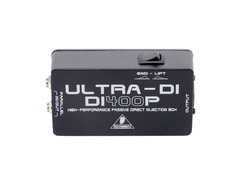
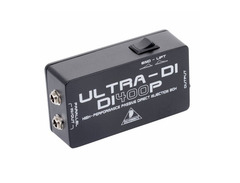
Founded in 1989 by Uli Behringer, Behringer has a long-standing reputation for producing some of the most affordable audio equipment on the market. So it's no surprise that the Ultra-DI DI400P is an affordable DI box option. The only question is: Is it a cheap knockoff, or is it an incredibly affordable hidden gem?
You wouldn’t be in the wrong to be skeptical of the Ultra-DI DI400P, because it is a very low priced piece of equipment. As a general rule, if a piece of musical equipment is significantly cheaper than its competitors there’s a good reason for it. The product is either let down by poor quality components or poor quality control, both of which can be incredibly frustrating for musicians.
However, this is a full featured device. It’s just as capable of performing the intended purpose of a DI box as any other product, and in all reality it doesn’t do a terrible job of it. It allows you to run long lengths of cable without losing high-end frequencies and helps to reduce hum.
The only con with the design of the device is that it while it does have a ground-lift switch (which helps to isolate a circuit from signal interference) it’s not as well shielded as a higher quality DI box. This makes it a pretty good fit for live applications, but many may find it a bit too noisy for recording.
Behringer drops the ball on quality on a pretty consistent basis, though they have gotten better in the last few years. Thankfully, DI boxes have been around long enough that it’s not hard to take “inspiration” from a different design in order to produce a functional device on the cheap. The only thing to keep in mind is that you will get more noise with this DI box than you will with a more expensive one.
However, something you need to keep in mind is that Behringer does not have good customer support. This is well documented and widely reported, which means that if you do happen to receive a device that doesn’t function properly you may have a hard time returning it or trying to have them provide you with a replacement. Thankfully, should this happen you’re not going to be out a ton of money (which is still not a good excuse to have poor customer service).
The Behringer DI-400P is easily one of the most affordable DI boxes on the market. It probably isn’t the best choice for recording, but in most live applications it’s going to perform pretty admirably for its price.

Tech 21 SansAmp Para Driver DI v2
5.0 (8)


Average Price: $258
Standard/Professional
$150
$601+
Budget
Standard
High-end
- Versatile: Works well with various instruments including Clavinet, bass, electric, and pedal steel guitar
- Quality tone control: Offers deep bass tones, serious overdrive, and clean settings
- User-friendly: Simple yet packed with features for both tech-savvy and non-tech users
- Excellent DI capabilities: Enhances live and studio recordings, making them more consistent
- See 4 more
- Sounds "digital": Some users find it lacks the organic tube amp feel
- Buzzing when boosting mids: A minor issue for some, potentially fixable with further adjustments
- Learning curve: Takes time for some users to dial in preferred settings
Unlike a lot of other companies that produce musical instruments, Tech 21 was actually created to fill the founders needs as opposed to any commercial purposes. B. Andrew Barta (the founder of Tech 21) was actually a performing musician in his own right, but his day job was repairing and modifying amplifiers and audio equipment for his fellow musicians.
He was dissatisfied by the performance of DI boxes he used during his own performances, so he used his hard-won experience and technical know-how to create one of his own. Before he launched his own company, he actually tied to sell his technology to a few different manufacturers. Unfortunately for them, they all passed on the opportunity.
The product is a household name in the industry, and it offers a degree of fidelity and a wealth of features you won’t find elsewhere. While it is a great product, be sure to read the specifications below so you’ll know whether or not it will work for your needs.
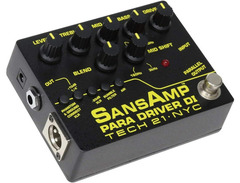
The first thing you have to know about the SansAmp is that it’s not just a DI box, it’s also a mini-amp modeler. You can EQ your tone from the unit with the included 3-band active EQ (controls three main frequency ranges, and gives you the ability to both boost and cut those three frequencies), and you can also add in distortion. The unit also comes with phantom power, so you won’t have to worry about carrying around batteries to power the unit so long as you’re mixer offers phantom power.
While the faux-amp controls are a great inclusion, the device also works well as a DI. It’s well shielded, and comes with a -20dB switch for high-output mics and active pickups (like what you’d find on an active bass).
A unique control is the “Rumble filter”, which removes booming frequencies and handling noise. This in itself makes the pedal worth a second look, because during a live performance these frequencies can be incredibly audible because of the high volume generally utilized during most gigs. You’re going to notice the benefits of this more so when using an acoustic instrument, because noises from handling are a much bigger issue on acoustic instruments because of how resonant they are.
A possible con for the device is that it does affect your tone. The box has a reputation for adding a lot of warmth to an instrument’s signal, which if you’re using a darker voiced guitar may make your tone a bit muddy. You should be able to compensate for this with the EQ, but it’s something you should be aware of.
Tech21 does have a return policy and a 1-year limited warranty. The product is guaranteed against manufacturer error. Should you experience technical difficulties with a unit that is not covered by the warranty, you can send it in for repair to the company.
The Tech21 SansAmp Para Driver V2 DI is a great option for any musician looking for a DI box that can positively influence their tone. However, it should be noted that it doesn’t come with as comprehensive a warranty as other products in its price range. And while its generally regarded to have a positive effect on your tone, it does color the signal to a greater degree than that of other devices.
See how artists use this


.jpg)



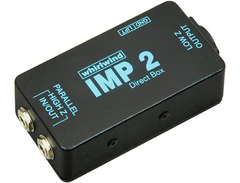
Whirlwind IMP 2 Unbalanced to Balanced Audio Converter
5.0 (1)


Average Price: $79
Budget/Beginner
$119
$300+
Budget
Standard
High-end
- Exceptionally rugged and durable; withstands heavy use and adverse conditions
- Delivers clear and balanced signal for various instruments
- Solves hum and impedance mismatch issues effectively
- No need for external power source; passive operation
- See 6 more
- Lacks additional features like preamp, tuner, or sound-shaping controls
- No battery or active components; may not suit all preferences
- Limited to basic functionalities of a passive DI box
Whirlwind USA’s IMP 2 box provides a great option for a hobbyist audio engineer on a budget. The unit is well made and definitely worth a look if you’re looking to record your own music without breaking the bank.
The most important feature about this DI box is that it focuses on helping to reduce hum and various signal noise. This is incredibly important, because once this noise is introduce to a recording it can be very difficult and time consuming to remove. Even worse, if you’re just starting out you likely won’t even know how to begin removing noise from a recording. The ground lift switch helps to aid in this even further.
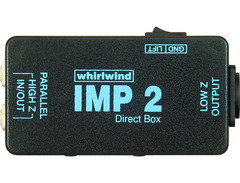
This DI box also does a good job of performing its intended function, which is reducing the output level of a signal to match a lower one. The impedance ratio (input to output) is 133:1, which is pretty impressive considering the price of the unit. The unit comes with ¼” parallel wired input/output jacks.
Another notable feature of the device is that it’s casing is incredibly rugged. This is a huge plus if you intend on using the device for live sound applications, as the durability inherent to the design of the device means that you shouldn’t have to worry about it becoming inoperable through the rigors of regular use. We’ll get into the quality of device in a bit more detail in the section below.
Lastly, another positive element of the design is that it’s relatively sleek and compact. This is a huge plus if you’re working in a cramped setting (as most do when they’re just getting into recording) because you shouldn’t have to clear out a bunch of space for the device. As previously stated, the device is incredibly rugged. An interesting feature is that every part of the chassis is riveted as opposed to glued. This will definitely pay off in the long run, as rivets are much less prone to drifting or becoming unstable when compared to glue.
The Whirlwind IMP 2 is a great DI box for musicians looking to record their music on a budget. The unit is well built and does a great job of isolating your signal from electric interference. The only con is that it’s not the most flexible device, so if you need more control over the impact of a DI box on your recording you may want to check out DI boxes with more controls.
See how artists use this


Top Ranked Direct Boxes on Equipboard


$111.57 - $144.00
4.5 (20)
4.5 (20)


$223.16 - $266.00
5.0 (6)
5.0 (6)
Recent updates
Jul 28, 2024
Updated the "What Is a DI Box?" section to better explain what a DI box is and does, and considerations for home recording vs. live sound.
About the authors
Mason is a freelance music gear writer that contributes to Equipboard, Reverb, TuneCore, Music Aficionado, and more. He plays the guitar and mandolin and resides in Wyoming. Read more
Giulio Chiarenza is the co-founder of Equipboard and a lifelong multi-instrumentalist with a deep passion for music gear. Born in Italy and raised in the U.S., he holds a Computer Science degree from The University of Texas at Austin and blends technical acumen with decades of hands-on experience across guitar, piano, drums, and electronic production. Early in his career, Giulio was signed to a San Francisco-based EDM label, releasing both remixes and original tracks. These days, he helps steer Equipboard’s vision while personally testing and reviewing gear. He's never too far from his go-to guitar: a vintage 1978 Fender Telecaster Custom. Read more
Comments
Sign Up or Log In to add comments

27237
"This is why if you’re recording straight into a laptop you generally use a DI box to help boost the signal of your instrument. A DI box is also commonly used for the same reason with acoustic instruments and bass guitars." Huh?
It's 2024, if you're trying to record straight into the mic/line input on your laptop... don't. A DI box isn't your best investment in that case. Wouldn't using the instrument input on a $99 Focusrite Scarlett Solo be the better first investment if you're trying to recording straight into a laptop and not liking the results? A dedicated DI is usually going to be a bit better than the instrument in on your interface, but the instrument inputs on interfaces are getting pretty decent. Audient iD4 has a JFET instrument input that's supposed to be great.

4934
Updated the "What Is a DI Box?" section to better explain what a DI box is and does, and considerations for home recording vs. live sound.


.jpg?v=1784353661)