
Billy Gibbons
Role
Genre
Role
Genre
Billy Gibbons' Microphones


In the picture, from the Telefunken webpage, Billy Gibbons can be seen using the Telefunken M80 live.
Find it on:


According to sE Electronics' website, Gibbons uses the VR1.
Find it on:

According to Billy Gibbons's guitar tech several Heil PR-40 mics are used inside the Demeter Iso cab.
Find it on:


Developed in collaboration with Gibbons. According to a YouTube comment by sE Electronics on the official product video, the microphone's aesthetic "was made to match Billy's rings."
This bling was made to match Billy's rings. ;)
Find it on:


Listed as a user on the official product page.
"The V7, in a word? Perfectamundo!"
Gibbons would later release a signature edition of the V7 with sE Electronics.
Find it on:

Used for the guitars on Eliminator, as stated by engineer Terry Manning in this February 15, 2005 ProSoundWeb forum reply.
[Tue, 15 February 2005 09:20]
tenaciousJay wrote on Mon, 14 February 2005 12:05
Terry I wonder if you could comment on the guitar sound in Eliminator. What I always heard it was all Rockman - but was there an amp mixed in as well? And thoughts on the direction of that album as a whole - it certainly was a huge change in sound, even if there were hints of it on earlier albums.
The full story of the making of Eliminator (the politics, the chicannery, the technical aberrations, the high social drama, the exodus, the payback) is one that I cannot tell. Even if I could, there certainly wouldn't be room for it here! It probably won't even make it into "the book" (or the movie). Just don't forget that truth is often stranger than fiction!
However, I will address certain specific musical or technical issues, and I'll begin with your guitar amp question.
THERE WAS ABSOLUTELY NO ROCKMAN USED ON THIS RECORDING!
Not a little bit, not a tiny bit; NOT ANY. I don't know how these stories get started. Billy may indeed have used Rockman at a later date, after I left the situation, but I did not allow it when I was working with him. He did bring one in to try, but I was not satisfied with the sound, compared to an amplifier.
The amp used, almost exclusively, on Eliminator was a Legend. This was about a 50 watt hybrid unit, employing a tube/valve preamp, and a transistor power amp. This is the amp which has a finished wood case, and a rattan-type cane grill. It has one 12" Celestion speaker. Legend were later bought by, or at least distributed by, Gibson, but they were independent when we started using them. I still have this amp; it is almost new. A couple of years ago I plugged one of the Eliminator guitars into it, just to see...there was the sound!
The guitars were custom built by Dean. Dean were out of Chicago, and were trying to break into the high end (a la Jackson, PRS) market. They were very nice, albeit different, instruments. Subsequently however, they got a contract with Sears to make guitars, so they opted for the big bucks, Korean manufactured, low end market instead. But the ones we used were very nicely made. There were two which we employed. One was somewhat like a cross between a Flying-V and a Moderne shape, very long "ears," and the other was a sort of a warped, pointy Stratocaster-y shape. Both guitars had a single DiMarzio Super Distortion high output pickup, and almost no controls. I don't think there is even a tone control...what would you need one for? They have big, heavy, brass bridge/tail pieces bolted into the body. These guitars were very live, very resonant, and would verge on resonant feedback at all times; they were also very hard to keep in tune because of this. But they were always alive. Billy has the first one mentioned, and he gave me the latter, which I still have.
The guitar was recorded with basically only one setup; one amp (Legend), one speaker (12"), one guitar (Deans, the two were almost exactly the same), one mic (AKG 414B-ULS, I still have it) in one position (about 5" from the cone, placed at a slight angle off axis), one mic pre (the SpectraSonics console). 98% of ALL guitar on this album, whether lead or rhythm was done this way. Any variations were from the player himself, who, remember, did not even have a tone control. That's how good Billy was back then. We did use very briefly a small amp by Ross, but we didn't like it much, and I think only a tiny part or two was kept from this, if any.
The rhythm guitars were done in a precursor-to-Protools style. Short phrases were played, and then double tracked, onto one set of tracks, and then the chord change/next phrase was played on a second set of tracks. This allowed a seamless transition between changes; since the Deans were so close to feedback at all times (acoustically, through the fairly loud JBL monitors), we couldn't even lift the fingers to change chords! Then I would trim the edges of each section by punching in and out to silence at the beginnings and ends of the phrases (somewhat analogous to "trimming the region" today). This method also "eliminated" to a degree the loud harmonic squeaks between chord changes. The punch in/out points, if done exactly perfectly, made for a primitive cross fade of probably 10-20 ms, and ended up sounding very different as rhythm guitar, sort of like a big train rolling down a track, almost out of control; without knowing how it was done, one wouldn't really realise why it was different.
For the leads, as always, there was a lot of punching done.
The bass was mostly played either by Billy or by me, and was either a bass instrument, or a Moog Source (the Source was a Mini Moog [rhymes with 'Vouge'] analogue synth with digitally controlled parameters...I still have this, too). Synth chords were played on a Memory Moog (polyphonic Mini).
Billy sang great, different vocals, as usual, and the harmonies were done either by Jimmy Jamison or by me.
There are a MILLION more things which could be told about this distinctive album, but as mentioned, most of it is probably better left unsaid. But one interesting thing, at least to me, was the recording of "Legs." We had tried it a couple of ways unsuccessfully at Ardent, so I decided to try a new approach. I had a 24 track studio in my attic at home, so I took Billy's lead guitar and vocal home on a 1/2" two track L/R ("samples"). I recut the entire track myself, and then hand flew in Billy's parts onto the track. This meant careful timing of the play button on my MCI 1/2", for each and every phrase, as after a few seconds, they would drift out of sync. I mixed it there through my Soundcraft 1200 console (these were also the mic pre's) onto the MCI 1/2". The multitrack was also the Soundcraft 2" machine, which I really loved. Then I did a totally different version, which became the long "dance mix" later released to clubs, and it is now included in the new box set. Later, I saw a review of this dance version credited, to Jellybean Benitez ...go figure!
Anyway, that's a lot about Eliminator for now. Thanks for your interest!
Terry
Find it on:


In a rig tour video by musicradararchive, Billy Gibbons's guitar tech discusses the setup, noting that the Marshall power amps and Magnatone are routed to Demeter ISO boxes, each containing a Heil PR30 Dynamic Microphone alongside a PR40.
Find it on:


"These Demeter ISO boxes are just an enclosed single 12 with Heil microphones," says Billy Gibbons's guitar tech about how he uses the Heil HM-12 Microphone.
Find it on:

At 4.20 in this rig rundown video Billy's tech says he uses the same Wireless gear as Dusty.
Find it on:


Billy Gibbons is singing through a Lewitt MTP 550 DM in this pic.
Find it on:
This is a community-built gear list for Billy Gibbons.
- Find relevant music gear like Guitars, Amplifiers, Effects Pedals, and other instruments and add it to Billy Gibbons.
- The best places to look for gear usage are typically on the artist's social media, YouTube, live performance images, and interviews.
- To receive email updates when Billy Gibbons is seen with new gear, follow the artist.
Discography
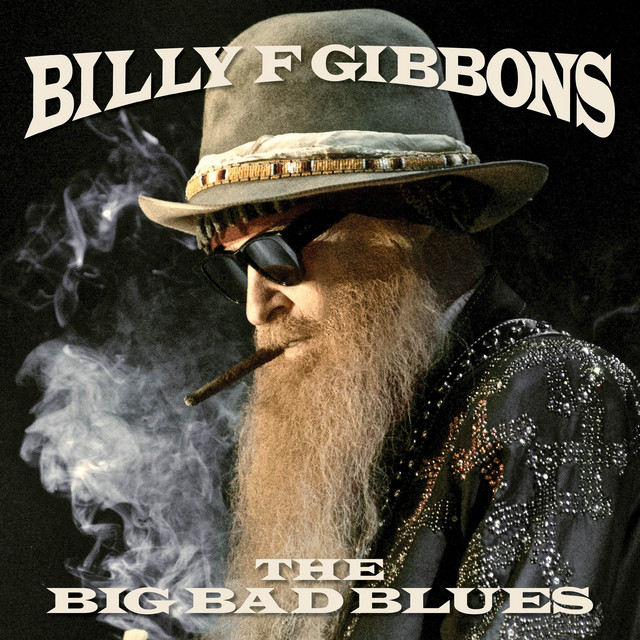
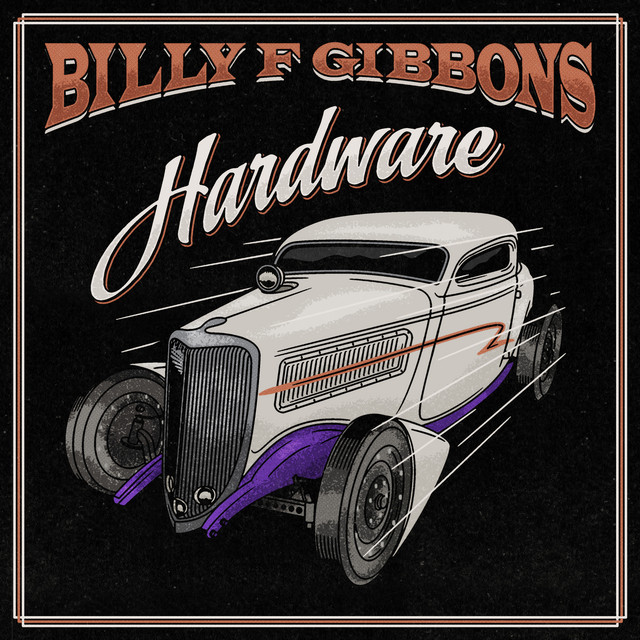



.jpg?v=1782932350)




.webp)