Billy Gibbons
Role
Genre
Role
Genre
Billy Gibbons' Studio Equipment


"In the effects loop this year I have…the Boss SE70 Modeling Effects unit that I'm using it for a flange. We use this multi purpose. I t has ring mods, slap-back echos, just anything utility type thing," says Billy Gibbons's guitar tech about the Boss SE-70 Super Effects Processor.
Find it on:


“You have to take advantage of the upper levels of sophistication that modern gear can provide,” says Billy Gibbons about the DigiTech Mono 28 MIDI Equalizer.
Find it on:

"The MIDI mouse, the real secret to the rig is that every guitar has a tone that it's supposed to reach because when we change guitars they have to be homogenous. So if we go to from a Telecaster to a Les Paul the gain has to be the same. We don't want you to tell that he's playing a Telecaster," says Billy Gibbons's guitar tech about the Tech 21 MIDI Mouse Pedal.
Find it on:


Used for ZZ Top's First Album, Rio Grande Mud, Tres Hombres and Fandango!, as recalled by Gibbons in this December 3, 2009 Guitar World article (reprinted from an interview in the November 1996 issue).
“Tush”
Fandango! (1975)
“The first three albums were recorded exclusively at the Robin Hood Studios outside of Dallas, and the special sound that always seemed to be accessible there was due in part to the fact that the equipment was nailed to the floor and nothing ever moved so you could always count on a sound. Quite a good sound, I must say.
“ ‘Tush’ was Pearly Gates, my beloved Les Paul, played through the same Marshall Super Lead, and we sure enough did stop and enjoy the G tuning for the composition’s slide element. This song was largely straight guitar to amp, but I also utilized a real odd, esoteric device called the Cooper Time Cube, which was a simplistic application of the complex world of physics. In a small rack-mounted can sits a small speaker, right up next to maybe 50 feet of one-inch rubber tubing, which is coiled, spring-like. The sound waves actually take longer to travel, having to make these corners, creating a type of delay which is quite unlike the familiar sound of a digital delay. That was a real left-field piece of gear which they had—and still have, I might add—in that studio. Some of the guitar sounds that appear to be doubled on the early albums are actually the byproduct of that oddball Cooper Time Cube.”
Find it on:

"The Samson UR-5Ds, we've used them for twelve years and I don't have a problem with them. I've got a whole bunch of them. We're waiting for the next generation to come out because they say that wireless is going through the big change and everything but they keep putting that off. So until they do, I'll keep using this. The sound is consistent. We're really hung up on being consistent, so it works for us," says Billy Gibbons's guitar tech about the Samson UR-5D Dual UHF Diversity Receiver.
Find it on:

Used for the outro of "Cheap Sunglasses", as recalled by Gibbons in this December 3, 2009 Guitar World article (reprinted from an interview in the November 1996 issue).
“Cheap Sunglasses”
Deguello (1979)
“This song was actually written during a trip from the Gulf Coast up to Austin, Texas. A bright spot of creativity flared as we were passing the hamlet of La Grange, and I recited all three verses of ‘Cheap Sunglasses’ within the space of 20 miles. And that’s the way they stayed. Though that may sound simplistic, the lyrics speak for themselves. ‘Simplistic’ is indeed a word which may come to the minds of some.
“The lead track was performed on a fake Fender guitar, which I used for the wiggle stick—there is a little dive bomb in the solo section. I played it through a Marshall Major, a short-lived 200-watt beast, which had one blown tube. Hence the rather bulbous, rotund sound. There’s also a little bit of digital delay for that Bo Diddley impersonation at the tail out, and a Maestro Ring Modulator, which produces the strange tag to each verse. It appears three times, and it’s a pretty funny sound. That is one insane effect put to good use.”
Find it on:

Shown by Elwood Francis (Gibbons' guitar tech) in Fuzz: The Sound That Revolutionized the World at 1:20:18.
Find it on:

One is on prominent display throughout Gibbons' segments in Fuzz: The Sound That Revolutionized the World, starting at 3:41. It is also mentioned by Mike Piera of Analog Man on the official Beano Boost product page, noting that Gibbons expressed preference of the Beano over the original.
Billy F Gibbons seems to hold his Dallas Rangemaster in high regards, one of his Holy Grails. In 2008 he called to tell me that his new Beano Boost was even a little better, and maybe the old box was best for a museum. We should hear his new Beano Boost on the album they are working on in 2008, Mr. BFG is always at the cutting edge, with the best tones, while revisiting vintage gear and making it fresh again.
Find it on:

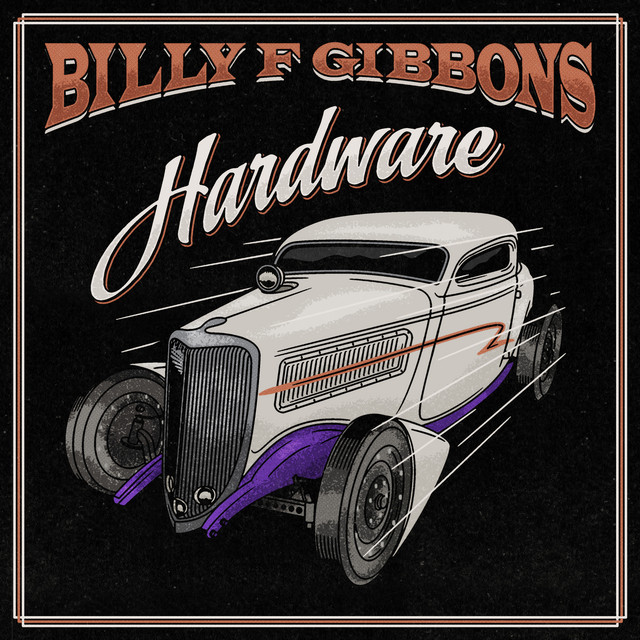
When asked by Guitar World about gear he used for the album Hardware, Billy Gibbons responded:
When we first arrived at the studio we only had the gear that was existing in that studio. All the backups, the known suspects, were yet to arrive, but in the corner I picked up an old Fender Jazzmaster that was leaning up against a ’61 Fender Piggyback amp and a Fender Reverb tank, something I hadn’t had the pleasure of plugging into for seemingly forever.
Find it on:


A Monster Power PRO 2500 Rack PowerCenter is part of Billy Gibbons's live rig.
Find it on:

An RJM RG-16 is seen at 8:20 in this rig rundown video of Billy Gibbons.
Find it on:

Used on “I’m Bad, I’m Nationwide”, as recalled by Gibbons in this December 3, 2009 Guitar World interview. It is also visible as a label on Gibbons' pedal switcher in Fuzz: The Sound That Revolutionized the World at 1:20:18.
“I’m Bad, I’m Nationwide”
Deguello (1979)
“We wrote this about the great Texas bluesman Joey Long, a Gulf Coast lead-guitar picker who appeared on a great number of wonderful records by the likes of Slim Harpo and Barbara Lynn. He played on Lynn’s great hit record ‘We Got a Good Thing Going,’ which was covered by the Stones, and which was really one of the important recordings that shaped my understanding of where it was I wanted to go with my life. It was good. And so was he.
“Joey loaned me a multistringed mandolin-like instrument from Parral, Mexico, and I put it to good use on ‘Nationwide.’ If you listen closely, you can hear close-miked mandolin-sounding rhythm accompaniment. The lead track was played on a custom-made, half-size, real short-scaled guitar tuned to G. It was actually standard tuning cranked up a minor third, which remained quite playable thanks to the guitar’s short scale.
“The song’s tail end alternates between three distinct effects created by two pedals: an Echoplex doubler and a Maestro octave box alternating every third bar between having the octave up and the octave down. The song also contains some Hohner Clavinet, which was owned by one of our famous Memphis pals, Carlos De Marlos. It’s such an interesting sound that it ignited Dusty’s [Hill, bassist] interest in learning some keyboard skills, and it was he who subsequently handled all the tickling of the ivories.”
Find it on:
This is a community-built gear list for Billy Gibbons.
- Find relevant music gear like Guitars, Amplifiers, Effects Pedals, and other instruments and add it to Billy Gibbons.
- The best places to look for gear usage are typically on the artist's social media, YouTube, live performance images, and interviews.
- To receive email updates when Billy Gibbons is seen with new gear, follow the artist.
Discography



.jpg?v=1782932350)