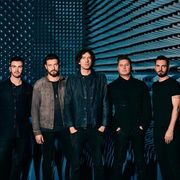
Chris Martin
lead singer of Coldplay
Role
Genre
Group
Credits
Role
Genre
Group
Credits
Chris Martin's Microphones


In an article found on Universal Audio's site, producer/engineer Rik Simpson is interviewed on what gear he used to record Coldplay for their Viva La Vida album. When asked about the signal chain for Chris Martin's vocals in the studio, he mentions how Chris Martin really likes the AKG C 414 XL II Condenser Microphone. Rik Simpson says, "I don't use any other outboard gear when recording. It depends--Chris is a big fan of the [AKG] 414, so we use that a fair bit. He does a lot of vocals in the control room these days as well, with the monitors on, so I don't always like using a condenser mic for that. I'll use a dynamic, like a Shure SM-7 or something. We did use some other mikes other than the 414 as well, but the 414 generally seems to capture what he's about. It keeps it very organic, and earthy, and simple."
Original article link here.
Find it on:


At 1:44 in this Coldplay performance video, there is a good shot of Chris Martin using a Shure SM7B microphone.
Find it on:

Chris Martin is seen using the Shure Beta 58A microphone during live performances, including Coldplay's A Rush of Blood to the Head tour and at the Austin City Limits music festival, as featured in Eduardo Meira's YouTube video of "The Scientist" live performance.
Find it on:

coldplay recorded all of their latest album with this mic
Find it on:



Chris Martin uses the Telefunken M81 microphone during more intimate performances, as seen in the live session with SiriusXM.
Find it on:

Mentioned by A Head Full of Dreams co-producer Rik Simpson in this Sound on Sound article.
“The piano we have at The Beehive is an upright Yamaha Disklavier, which has a very nice sound, and the benefit of MIDI. In general it’s the only time we use MIDI with Coldplay. If the band are recording a live take all together, there’s no way I would be able to use the piano mics, because they would have drums all over them. So I record the MIDI at the same time, and once the takes are done and the band are out of the room, I’ll record the piano on its own, playing Chris’s part back via MIDI. It’s the same performance, with a clean recording. I use two sE Electronics 4400a’s on the piano, which are the closest thing to the old [AKG] C414EBs.
Find it on:


Used on "Hymn for the Weekend", as mentioned by A Head Full of Dreams co-producer Rik Simpson in this Sound on Sound article.
It was very important to get the development and arrangement of the vocals right. Many of the 45 tracks are effect tracks. There’s only one lead vocal track each for the verses [LV Verse], for the bridge [LV Bridge], and the choruses [LV Chorus], and then Chris sang a number of bridge and chorus vocal overdubs. The main verse vocal has the Avid Channel Strip, which is taking out some low end, an SPL TwinTube, which adds some saturation, the UBK1 compressor adding more crunch, and the UAD Fairchild 670 and SSL E Channel. I don’t use a great deal of compression from each unit. I will just tickle it a little bit with each one, and each one adds a different characteristic. I could just add a whole load of compression from one plug–in, but like this it doesn’t sound over–compressed. The Pro–Q 2 is, again, a high–pass filter. In the sends there’s a Waves H–Delay that I recorded elsewhere, and sends to a main D–Verb and two QL Spaces aux tracks. I have different reverbs and delays for each part of the song so that the vocal sound evolves during the song.
“The main chorus lead vocal has the FabFilter Pro–Q 2 EQ, the Waves Rennaissance Vox, again the UBK1, two instances of the FabFilter Pro–DS de–esser, two instances of the UAD Pultec EQP–1A, and the FabFilter Pro–MB multi–band compressor. I like the FabFilter de–esser. I am still trying to find the ultimate de–esser, because it’s quite a hard thing to do right. I have two because one is doing high top sibilance, and the other lower stuff around 2kHz. The sends on chorus lead vocal go to aux tracks with the Waves H–Delay, the FXpansion Bloom with a lush, wide stereo delay, a small chamber from the QL Spaces plug–in, a mono delay from the UAD Echoplex, and several other delays. The sends to the delays are all automated independently, with different words getting different delays.
“One thing of note is that there also is a ‘Hope House M80’ vocal track, recorded when Chris was still using the Telefunken M80, and it’s mixed in very low. There’s also a lead-vocal double that has ‘251’ marked, indicating that Chris was also using that mic. But the main vocals were recorded using the Soyuz. There are two tracks marked ‘251 Melo Lead’ and ‘251 Melo Double’, again mixed in low. ‘Melo’ stands for Melodyne, and these tracks are raised two semitones. They were recorded in a different key for a different version of the song, and detuning them added a certain alien quality to these vocals which we really liked. At the bottom of the session are the Beyoncé vocal tracks, on which I mainly used the SSL E Channel strip, UBK1, L2, SoundToys Echo Boy, Avid ModDelay and the QL Space.”
Find it on:

Used on "Hymn for the Weekend", as mentioned by A Head Full of Dreams co-producer Rik Simpson in this Sound on Sound article.
“One thing of note is that there also is a ‘Hope House M80’ vocal track, recorded when Chris was still using the Telefunken M80, and it’s mixed in very low. There’s also a lead-vocal double that has ‘251’ marked, indicating that Chris was also using that mic. But the main vocals were recorded using the Soyuz.
(...) “A lot of the 58 recordings did end up on the album, and I think it sounds great, though I’d never comp between the Soyuz and the 58. At the beginning of the record I asked him to use Telefunken M80 as a hand-held mic. I was trying to get something that sounded better than an SM58, but later on during the sessions we went back to the SM58 because the weight of it feels more comfortable to him. The mic pre on both the 58 and the Soyuz was a UA–610, which sounds great and is a wonderful and very reliable workhorse."
Find it on:

Chris Martin frequently uses the Shure UR2/SM58 wireless microphone during Coldplay performances, as seen in their live show in Madrid in 2011. The microphone appears in various colors and designs across different concerts.
Find it on:


Mentioned in this Front of House Magazine article.
Mics: Shure UHF-R wireless system, Shure SM58 (4+ on stage for Chris Martin’s vocals)
Find it on:

Chris Martin uses the Sennheiser SK 9000 wireless microphone system for acoustic guitar performances, as noted by Sennheiser.
Find it on:

Chris Martin used the AKG C414 B-XL II condenser microphone to record the official song "Clocks" by Coldplay, as shown in the YouTube video titled "UNSEEN FOOTAGE OF CHRIS MARTIN FROM COLDPLAY CREATING CLOCKS IN THE STUDIO," uploaded by Richard Goldfinch.
Find it on:


This is a community-built gear list for Chris Martin.
- Find relevant music gear like Microphones, Guitars, Amplifiers, Effects Pedals, Pianos, Keyboards and Synthesizers, and other instruments and add it to Chris Martin.
- The best places to look for gear usage are typically on the artist's social media, YouTube, live performance images, and interviews.
- To receive email updates when Chris Martin is seen with new gear, follow the artist.
Album Credits
-
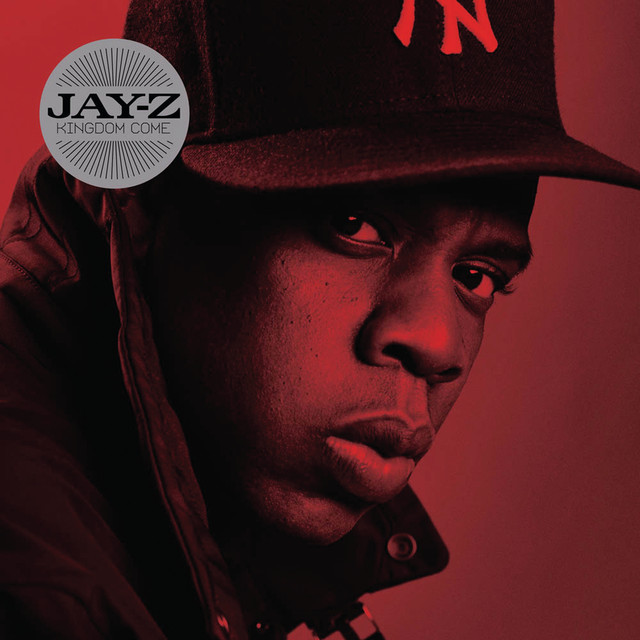
Jay-Z · 2006
Producer