Table of Contents

Equipboard
Equipboard is the world's largest community of artists and their gear. Read our review process.
We are reader-supported. When you buy through links on our site, we may earn an affiliate commission. Learn more.
The haunting, ethereal sound of a pedal steel guitar has graced countless classic country recordings, but today this versatile instrument finds itself at home in everything from traditional country to Americana, jazz fusion, and even experimental rock. For those drawn to its distinctive voice and expressive capabilities, finding the right pedal steel guitar can be the beginning of a lifelong musical journey.
Unlike standard guitars, pedal steel guitars utilize a unique combination of pedals and knee levers to change the pitch of strings while playing, creating those signature bends and smooth transitions that define the instrument's sound. This mechanical complexity, combined with playing technique that involves both hands, feet, and knees, makes the pedal steel one of the more challenging instruments to master, but also one of the most rewarding.
In this comprehensive guide, we'll explore the top pedal steel guitars available, examining options for players of all skill levels and budgets.
A Brief History of the Pedal Steel Guitar
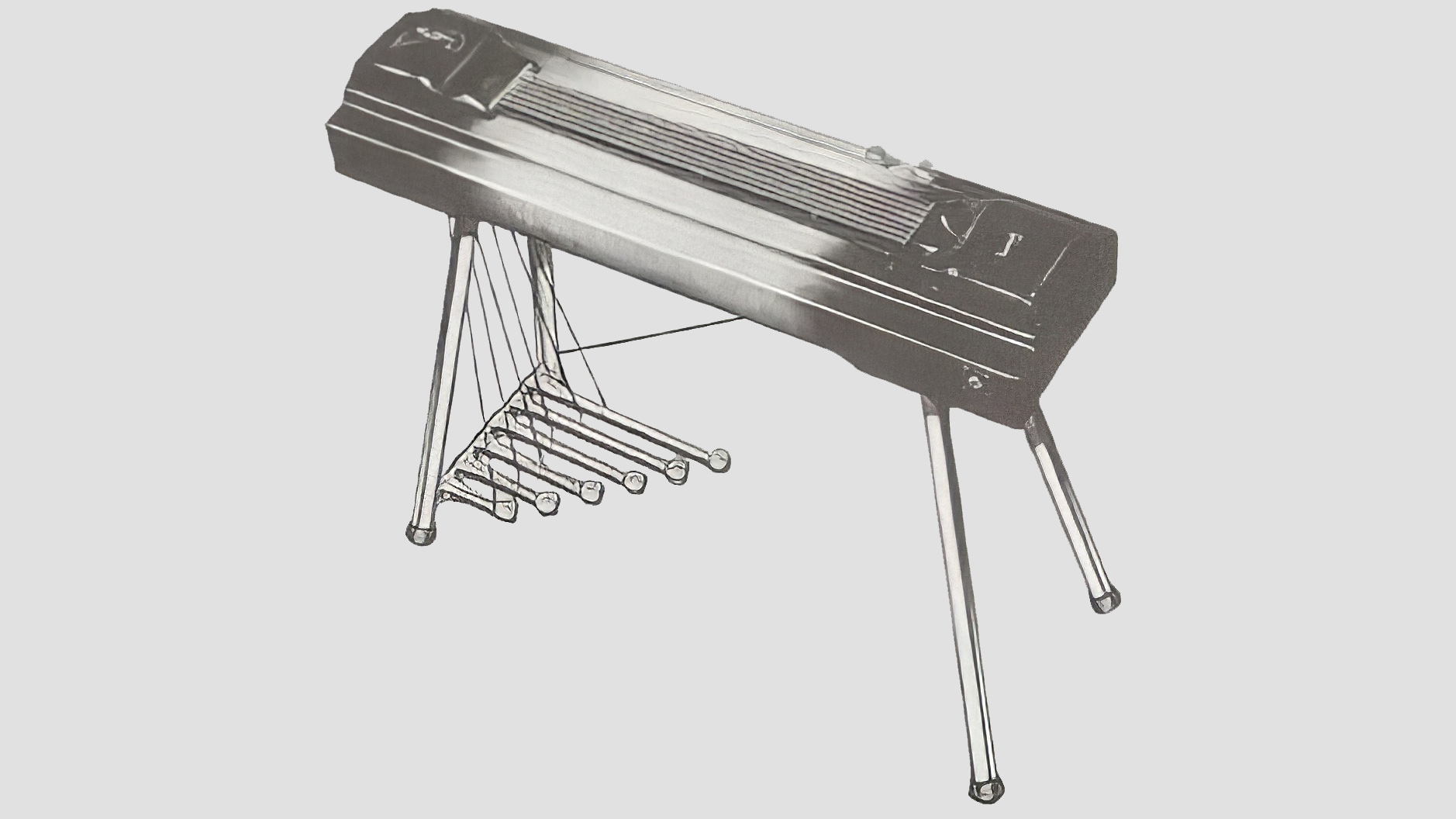
The pedal steel guitar evolved from the lap steel guitar, which itself developed in Hawaii in the late 19th century. The lap steel became popular in the United States during the 1920s and 1930s, particularly in country and western music. However, players were limited by the instrument's fixed tuning, which restricted the available chord voicings and melodic possibilities.
Attempts to add pitch-changing mechanisms to steel guitars began as early as 1940, when Gibson introduced the Electraharp, which featured rudimentary pedal mechanisms. Though not entirely successful, these early experiments laid important groundwork. Innovative musicians and inventors like Alvino Rey and the Harlan Brothers also made pioneering efforts, though their designs didn't achieve widespread adoption.
The true breakthrough came in the late 1940s when Paul Bigsby built an early version for Speedy West around 1948, featuring pedals that altered the tension of specific strings to change their pitch. This innovation revolutionized the instrument's capabilities, allowing players to create complex chord changes and the signature "crying" sound that has become synonymous with pedal steel. Bigsby's design succeeded where earlier attempts had fallen short, creating a practical and reliable system that musicians could use effectively.
The modern pedal steel guitar took shape in the 1950s, with Bud Isaacs' iconic playing on Webb Pierce's 1954 hit "Slowly" showcasing the distinctive sound of pedal-activated pitch changes. This recording is often cited as the moment the pedal steel sound captured the imagination of country music audiences and musicians alike.
Throughout the 1950s and 1960s, legendary builders like Shot Jackson and Buddy Emmons (who founded the [Sho-Bud company]](https://equipboard.com/brands/sho-bud) in 1957) and innovators like Jimmy Day and Lloyd Green continued refining the instrument. The Nashville E9 tuning and pedal setup gradually became standardized, creating the foundation for what most players use today.
By the 1970s, pedal steel had become an essential element of country music production, with players like Lloyd Green, Buddy Emmons, and Weldon Myrick defining the instrument's role in countless hit recordings.
Pedal Steel vs. Lap Steel: Understanding the Difference
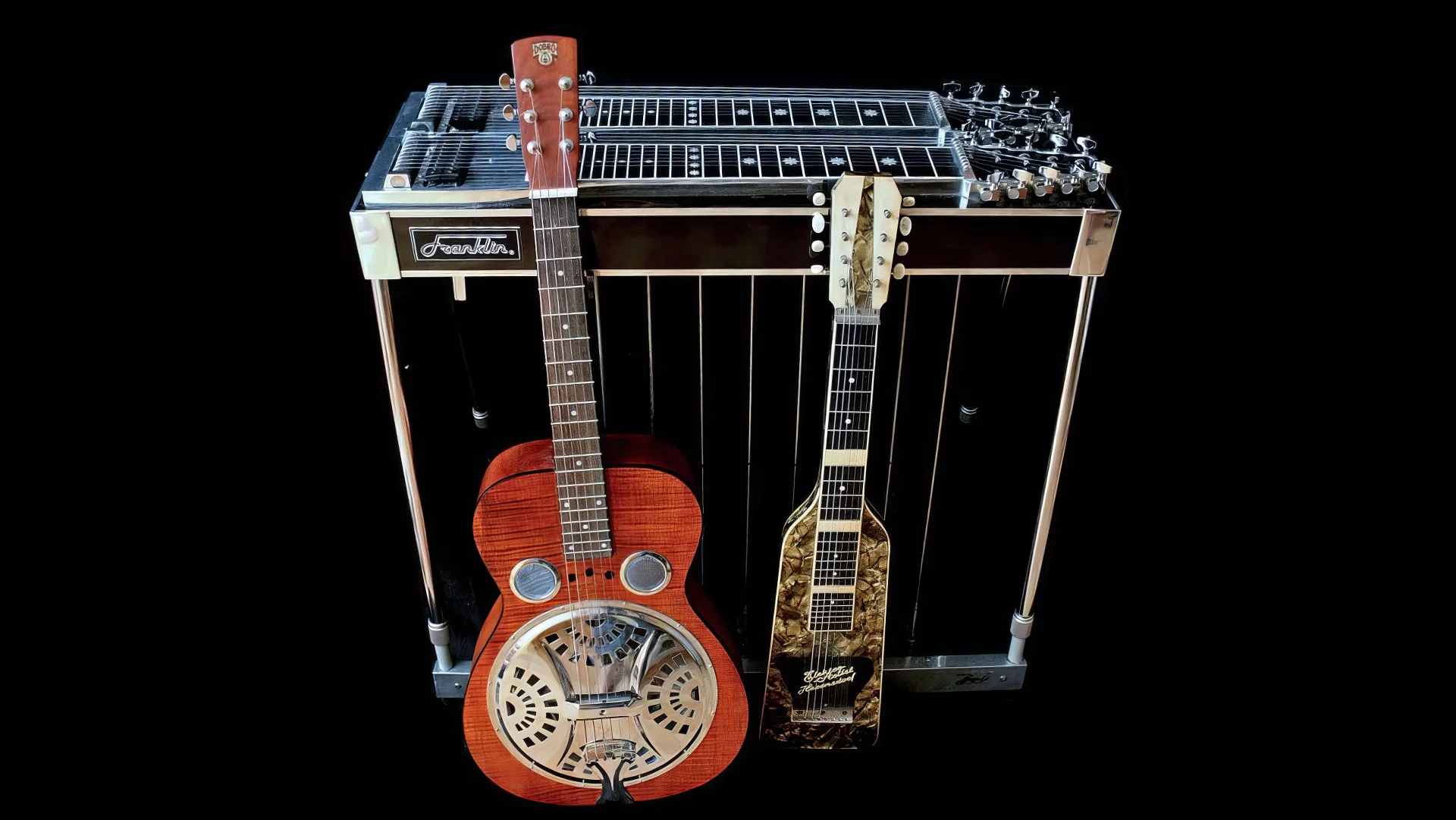
Newcomers to steel guitar often confuse pedal steel and lap steel guitars, but these instruments differ significantly in both design and playing capabilities. Understanding these differences is crucial for selecting the right instrument for your musical goals.
The lap steel guitar is a simpler instrument played on the lap or on a stand, with the strings raised above the fretboard. Players use a metal bar or "tone bar" to press down on the strings and create notes, sliding between positions to change pitch. Lap steels lack the pedals and knee levers that define pedal steel guitars, limiting them to a single fixed tuning during play.
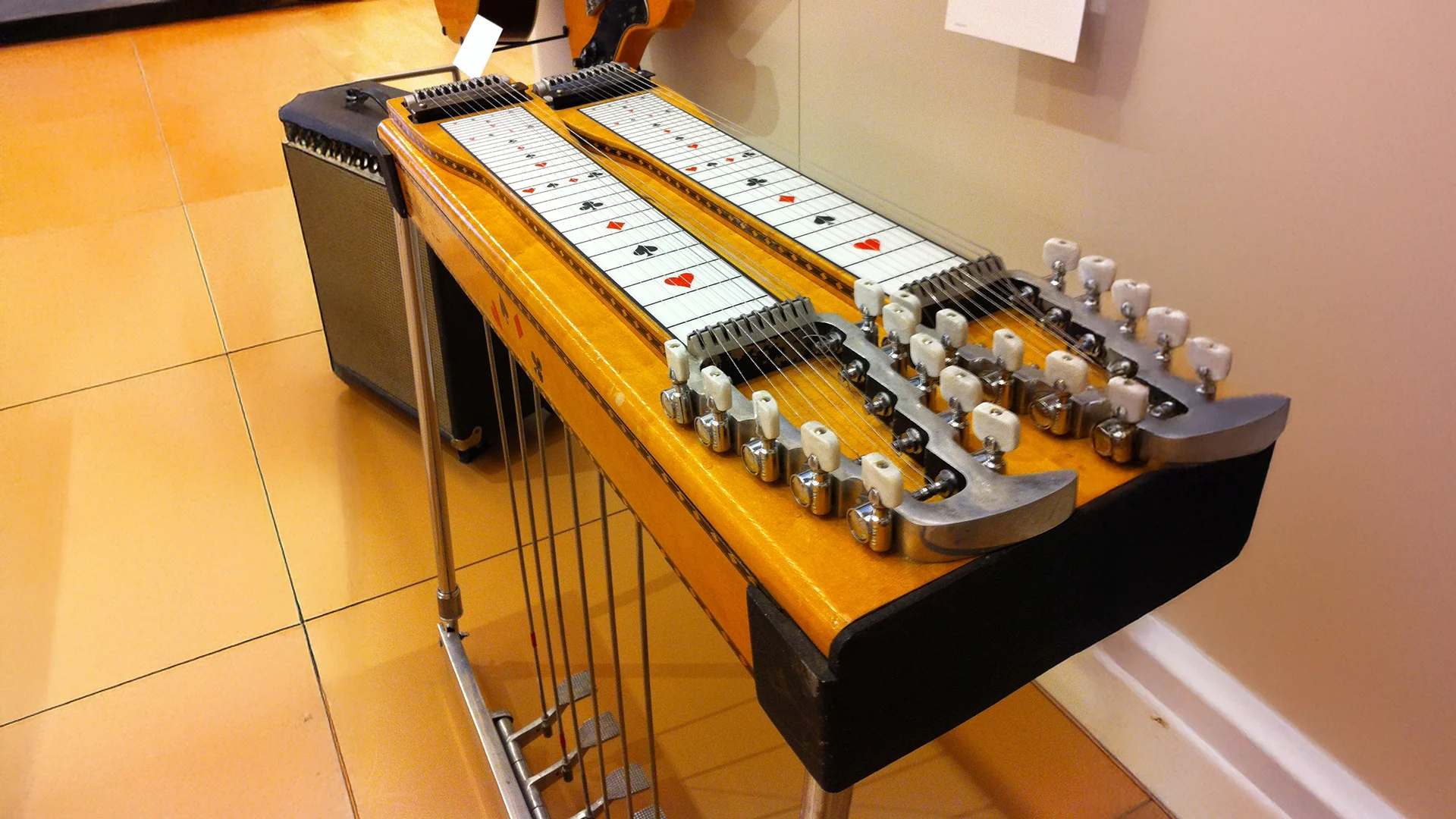
In contrast, pedal steel guitars incorporate a complex mechanical system of pedals and knee levers that change the pitch of specific strings while playing. This mechanism allows for smooth transitions between chords and the signature pitch bends that characterize the instrument's sound. The pedal steel is typically mounted on legs at a fixed height and angle, creating a consistent playing position.
Tonally, lap steels often produce a brighter, more direct sound commonly associated with Hawaiian music, blues, and early country recordings. Pedal steels generate a smoother, more vocal-like tone with the ability to create complex chord voicings and melodic passages that would be impossible on a lap steel.
Key Considerations When Choosing a Pedal Steel Guitar
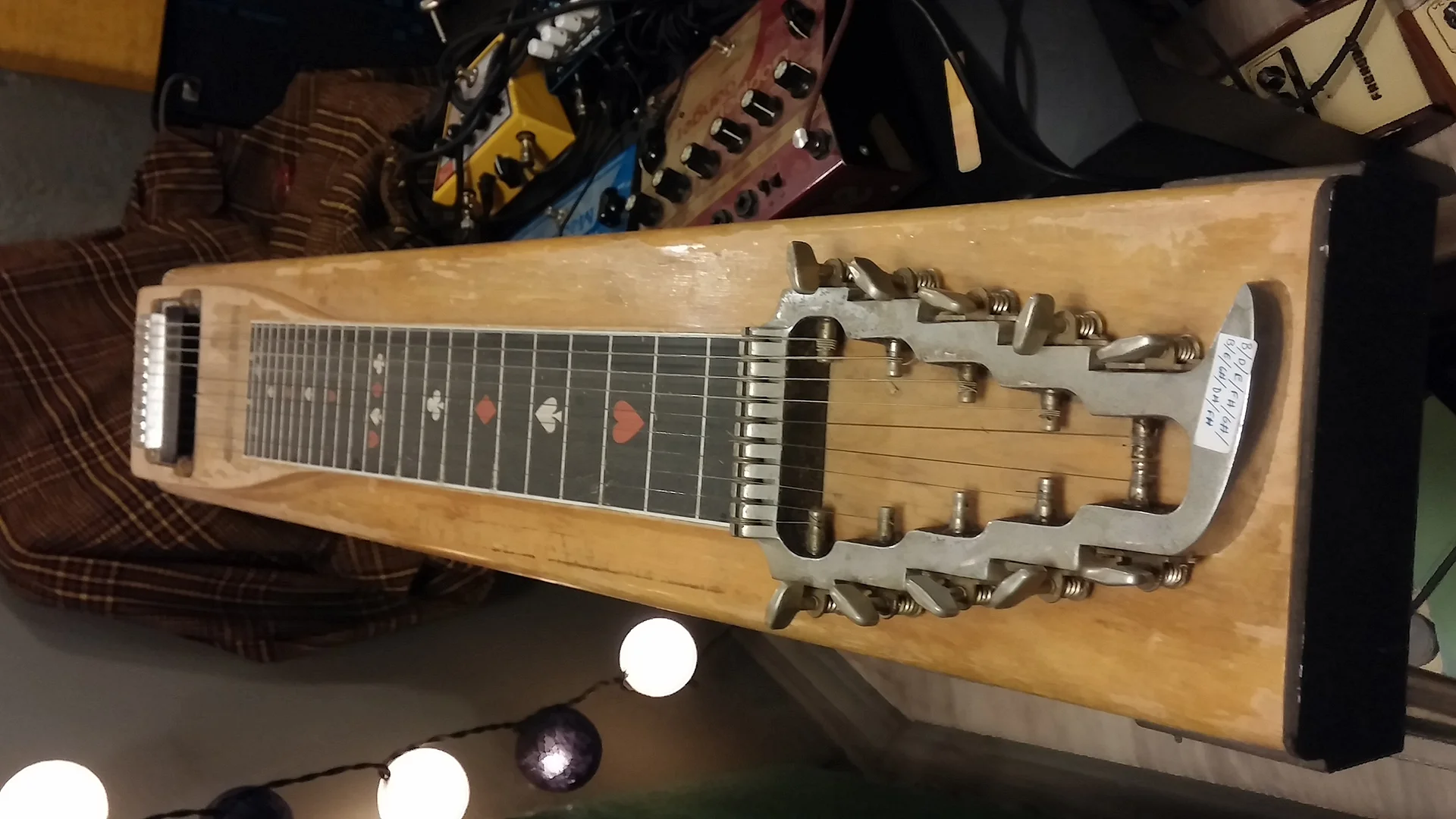
Selecting the right pedal steel guitar involves understanding several crucial factors that will impact your playing experience, sound, and overall satisfaction with the instrument. Let's explore what you should consider when making this significant investment.
Number of Necks and Strings
Pedal steel guitars come in single-neck and double-neck configurations, with each offering distinct advantages. Single-neck models typically feature 10 strings, though 8-string and 12-string variants exist as well. For beginners, a single-neck with 10 strings in E9 tuning provides the classic country sound most people associate with pedal steel, including those signature "crying" notes heard in countless recordings.
Professional players often prefer double-neck instruments for their versatility, particularly when performing across multiple genres.
Pedal and Lever Configuration
The heart of a pedal steel guitar lies in its pedal and knee lever system, which allows for real-time pitch changes while playing. Standard configurations typically include three pedals and up to five knee levers, though professional models may offer more options for customization.
For beginners, having the standard three pedals (A, B, and C) provides enough versatility to learn fundamental techniques without becoming overwhelmed.
Build Quality and Tuning Stability
Perhaps more than with many other instruments, build quality dramatically impacts the playability and sound of a pedal steel guitar. The complex mechanical systems require precise engineering to function reliably, while the materials used affect both tone and durability.
Tuning stability ranks among the most critical factors for pedal steel guitars. Because of the constant tension changes created by pedal and lever actions, inferior instruments can quickly go out of tune during performance. Professional-grade instruments incorporate design features that maintain tuning even with heavy use of the pitch-changing mechanisms.
Portability and Weight
Practical considerations like portability and weight deserve serious attention, especially if you plan to transport your pedal steel guitar to gigs regularly. Traditional pedal steel guitars are substantial instruments, with single-neck models typically weighing between 75-90 pounds (34-41 kg) and double-neck versions exceeding 100 pounds (45 kg) when including the case and stand.
Expert-Recommended Pedal Steel Guitars
Here's a selection of the finest pedal steel guitars. These recommendations span various price points and feature sets, ensuring options for everyone from beginners to touring professionals. Each instrument offers distinct advantages for different playing scenarios, musical styles, and skill levels.
Fender 400 - Best Overall Pedal Steel Guitar

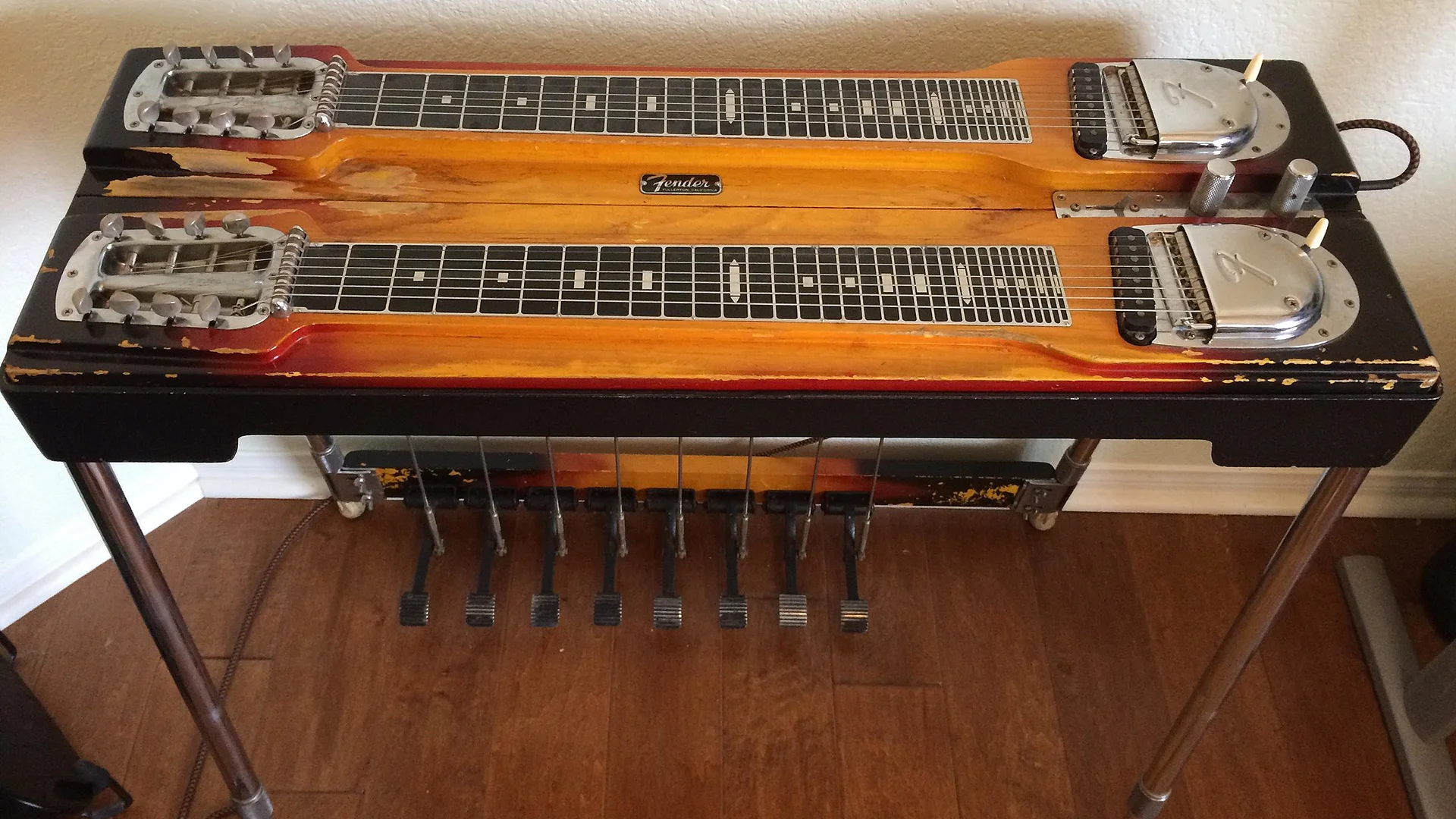
The Fender 400, particularly in its long-scale configuration, represents perhaps the most iconic pedal steel guitar ever created. Originally manufactured from the 1950s through the 1980s, vintage models remain highly sought after, while modern reproductions capture the essence of what made these instruments legendary.
Sound Quality and Tonal Characteristics
The Fender 400's distinctive tone stems from its combination of quality materials and expert design. Its voice features a balanced frequency response with warm lows, present mids, and crystalline highs that cut through any mix without becoming harsh. The instrument's sustain and note definition allow for complex chordal work while maintaining clarity, a crucial factor when navigating the intricate voicings common in pedal steel playing.
Professional players particularly value the Fender 400 for its dynamic responsiveness. The instrument reacts beautifully to different picking techniques, allowing for tremendous expressive range from whisper-quiet passages to bold, assertive lines. This sensitivity makes it equally suited for recording sessions where nuance is paramount and live performances where projection matters.
Construction and Durability
Built to professional standards, the Fender 400 features precision-engineered mechanical components that ensure smooth, consistent operation of all pedals and levers. The pull rods, adjustable stops, and return springs work together harmoniously to provide accurate pitch changes with minimal effort.
The instruments typically feature maple necks and bodies, contributing to their characteristic bright yet warm tone while providing excellent stability. The quality of components extends to every aspect of the instrument, from the tuning machines to the string pulleys, resulting in exceptional tuning stability even under intense playing conditions.
Playability and Comfort
Playability remains one of the Fender 400's strongest attributes. The action and string spacing strike an ideal balance that facilitates both single-note melodies and complex chord work. For professional players who may spend hours with the instrument, the thoughtful ergonomics help reduce fatigue during extended sessions.
The pedal and knee lever layout follows the standard Nashville configuration, making this instrument immediately familiar to experienced players while providing an ideal learning platform for those developing their skills. The smooth, predictable response of the mechanical systems allows players to focus on music rather than wrestling with the instrument's mechanics.
Mullen G2 - Best Professional-Grade Instrument
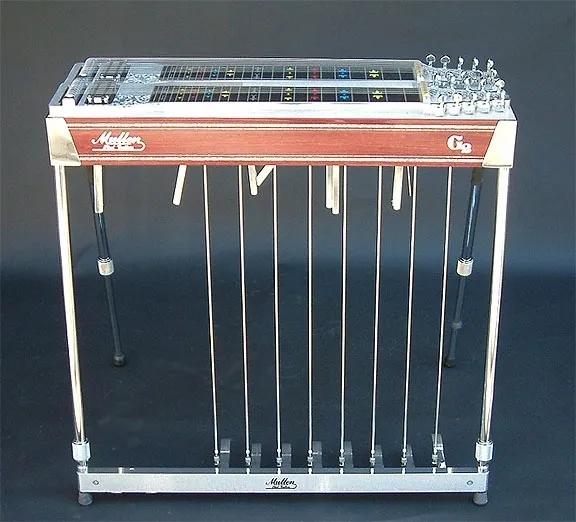
The Mullen G2 has established itself as a favorite among professional players who demand uncompromising quality and customization. Built by master luthier Bruce Mullen, these instruments combine traditional craftsmanship with forward-thinking design elements to create pedal steel guitars that excel in both studio and stage environments.
Customization and Configuration Options
What sets the Mullen G2 apart is its approach to customization. Rather than offering a single standard configuration, Mullen works with each player to create an instrument that matches their specific needs. From custom string gauges and spacing to personalized pedal and lever setups, these instruments can be configured to match even the most particular player's requirements.
This bespoke approach extends to the visual aspects as well, with options for exotic woods, custom finishes, and personalized inlay work. While these aesthetic choices don't affect the sound, they allow professional players to express their personality through their instrument - an important consideration for those who make their living on stage.
Innovative Design Features
The G2 incorporates several innovative technical features that improve upon traditional pedal steel design. Its proprietary pull system offers exceptionally smooth pedal action with minimal effort, reducing player fatigue during long performances. The precisely engineered mechanical components provide unprecedented tuning stability, even with aggressive use of pedals and levers.
Mullen's patented buffer system helps maintain consistent string tension regardless of pedal position, resulting in more predictable pitch changes and better overall intonation. For professional players who push the expressive capabilities of the instrument, these refinements translate to greater control and more musical results.
Carter Starter - Best Value for Beginners

For those just beginning their pedal steel journey, the Carter Starter offers an ideal entry point. This thoughtfully designed instrument focuses on the fundamentals, providing everything a new player needs while eliminating features that might complicate the initial learning process.
Simplified Design for Learning
The Carter Starter features a single 10-string neck in the standard E9 tuning, allowing beginners to focus on developing fundamental techniques before tackling more complex configurations. The instrument includes the three standard pedals (A, B, and C) and two knee levers - enough to learn essential pitch-changing techniques without becoming overwhelming.
This streamlined approach helps new players build confidence more quickly by focusing on mastering a limited set of variables before progressing to more complex setups. The comfortable string spacing and moderate action make it easier for beginners to achieve clean notes and smooth pedal transitions, reducing frustration during the crucial early learning stages.
Construction Quality
Despite its beginner-friendly price point, the Carter Starter doesn't compromise on essential quality factors. The mechanical components - while simpler than those found on professional models - operate smoothly and reliably, giving new players an accurate introduction to how a quality pedal steel should feel and respond.
The instrument features solid maple construction for the body and neck, providing good tone and stability while keeping the weight manageable for easy transportation to lessons. Sealed tuners maintain reasonable tuning stability, though as with all entry-level instruments, more frequent tuning adjustments should be expected compared to professional models.
GFI Expo - Best Compact and Portable Option
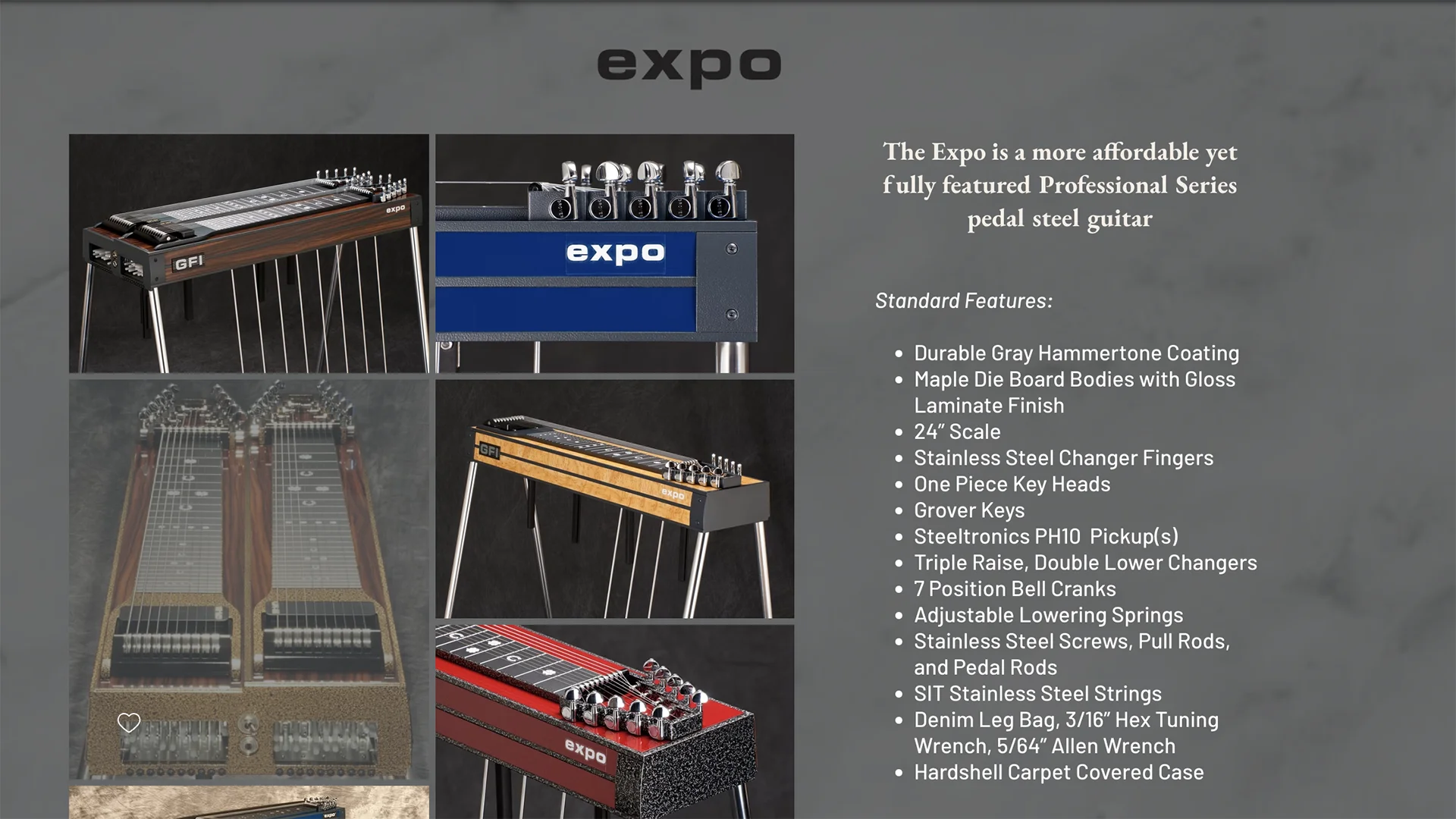
For working musicians who need to transport their instrument regularly, the GFI Expo Model addresses one of the traditional pedal steel guitar's biggest challenges: its size and weight. This innovative design maintains the essential playing experience while dramatically improving portability.
Revolutionary Lightweight Design
The GFI Expo's most striking feature is its ultralight construction, which reduces the instrument's weight by nearly 40% compared to conventional pedal steel guitars. Through the use of aircraft-grade aluminum and advanced composite materials, the Expo achieves a total weight of just 45-50 pounds (20-23 kg), making it significantly easier to transport to gigs and sessions.
Despite this weight reduction, the instrument doesn't sacrifice structural integrity or stability. The proprietary leg system locks securely in place for performance yet collapses quickly for transport. The entire setup process takes under five minutes, a valuable time-saver for musicians dealing with tight changeover times between acts.
Professional-Grade Sound in a Compact Package
Remarkably, the Expo's streamlined design doesn't compromise its tonal quality. The instrument produces a full, rich sound that stands up favorably against much larger instruments. Its voice features excellent projection and clarity, with balanced frequency response across all strings and positions.
Many touring professionals note that the Expo's focused tone actually helps it cut through dense mixes more effectively in live settings. Its slightly brighter character ensures the instrument remains audible without requiring excessive volume, an advantage when playing with full bands in venues with challenging acoustics.
Sho-Bud LDG - Premium Choice for Advanced Players

For advanced players seeking an instrument that captures the golden age of pedal steel, the Sho-Bud LDG stands as a magnificent continuation of one of the most revered lineages in pedal steel history. These instruments honor the legacy of Shot Jackson and Buddy Emmons, whose innovations helped define the modern pedal steel guitar.
Historical Significance and Pedigree
The Sho-Bud name carries immense historical weight in the pedal steel community. Founded by Shot Jackson and Buddy Emmons in 1957, the original company produced instruments that shaped the sound of countless classic country recordings. The modern LDG model maintains the essential character of these vintage instruments while incorporating subtle refinements that enhance playability and reliability.
Each LDG is built with a deep respect for traditional construction methods, often utilizing old-growth woods selected for their superior tonal properties. This connection to traditional building techniques results in an instrument with authentic vintage character that's increasingly difficult to find in modern productions.
Unmatched Tonal Character
The LDG's voice is immediately recognizable to aficionados of classic pedal steel recordings. It produces a warm, rich tone with complex harmonics and exceptional sustain. The instrument's voice possesses a certain darkness or complexity in its midrange that creates the emotional depth pedal steel is famous for, particularly when executing the crying bends and smooth transitions characteristic of traditional country playing.
This tonal signature comes from a combination of premium materials and time-honored construction techniques. The aged maple used in the body and neck undergoes specific curing processes that enhance its resonance, while the proprietary pickup design captures every nuance of the strings' vibration with remarkable fidelity.
Buying Tips and Advice
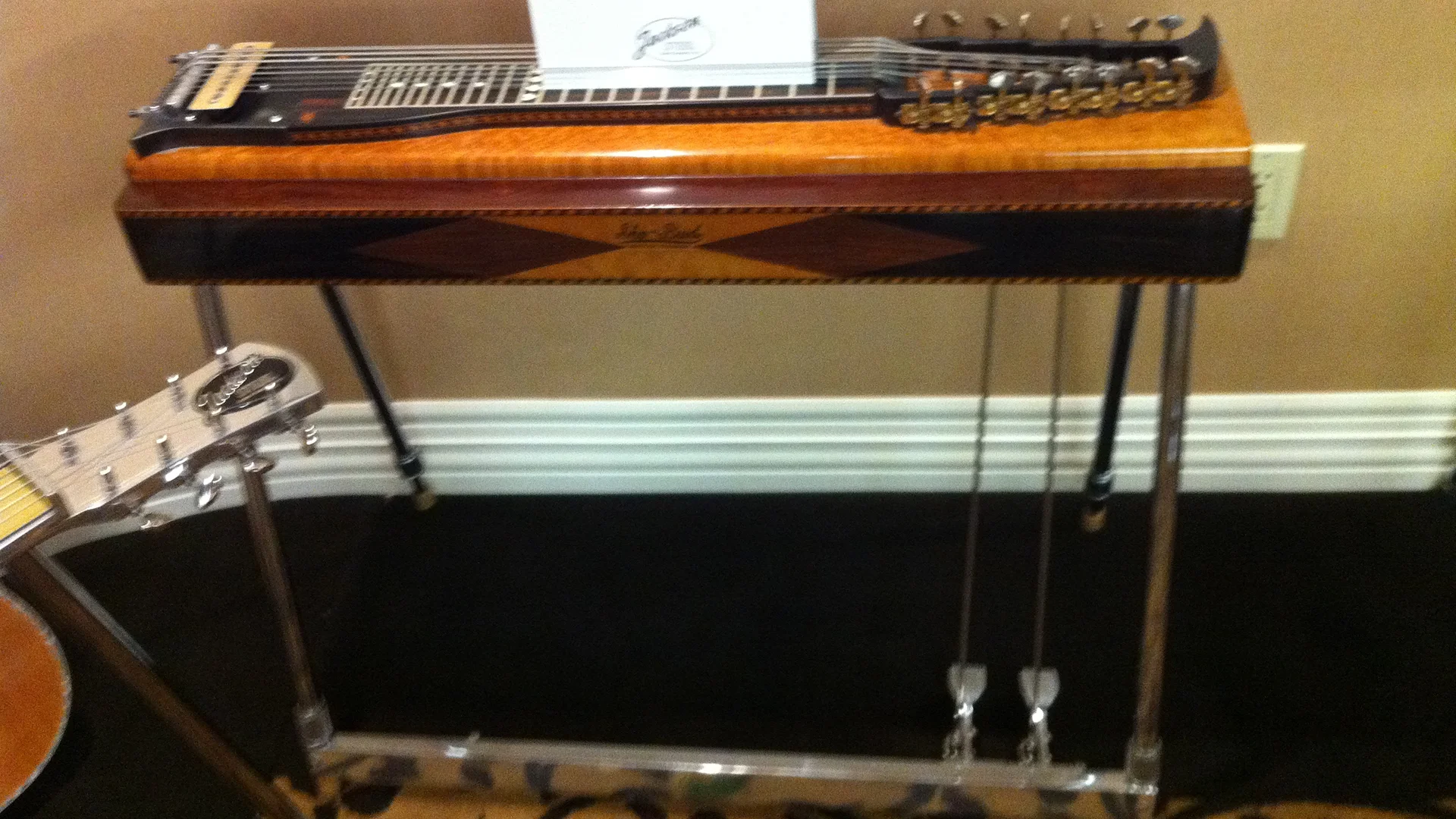
Selecting the right pedal steel guitar requires careful consideration beyond simply selecting a model. The following practical advice will help you navigate the buying process with confidence, whether you're selecting your first instrument or upgrading to a professional model.
Understanding Pedal and Lever Configurations
While standard configurations like the E9 Nashville setup predominate, variations exist that cater to different playing styles and musical contexts. Before purchasing, clarify exactly which pedals and knee levers are included and how they're configured. Most beginners should start with the standard three-pedal setup (A, B, and C) with at least two knee levers, as this provides enough flexibility to learn fundamental techniques without overwhelming complexity.
Many quality builders offer the ability to customize pedal and lever configurations to match your specific needs or to replicate the setup of an instrument you've previously played. This customization capability represents a significant advantage when purchasing higher-end instruments.
Evaluating Playability and Tonal Quality
Unlike standard guitars, where playability can be assessed through familiar techniques, evaluating a pedal steel requires specific knowledge. If possible, bring an experienced player with you when trying instruments, especially if you're a beginner. They can identify issues with mechanical function, setup quality, and tonal characteristics that might not be apparent to new players.
Listen for even response across all strings and positions, with consistent volume and tone quality throughout the range. Pay attention to sustain - notes should ring clearly with good duration. Check that pedal and lever actions produce accurate, consistent pitch changes without excessive effort, and return precisely to their original pitch when released.
New vs. Used Considerations
It's important to understand that pedal steel guitars are niche instruments with limited production. Unlike standard guitars that can be found very easily, pedal steel guitars are produced by a small number of specialized builders, often with waiting lists. This limited availability means both new and used markets operate differently than for mainstream instruments.
For new instruments, you'll typically need to contact builders directly or work through the few retailers that specialize in pedal steel guitars. Many quality builders are small operations that produce instruments to order, resulting in wait times that can extend from several months to over a year for custom builds.
The used market offers more immediate options and often better value. Specialized online marketplaces like Reverb regularly feature quality pre-owned instruments, while pedal steel guitar forums and social media groups are excellent resources for finding instruments that may never appear in traditional retail channels. Joining these communities not only helps in finding instruments but also connects you with experienced players who can offer advice on specific models and builders.
When considering used instruments, focus on the mechanical condition above all else. Minor cosmetic issues rarely affect playability or sound, but worn mechanical components can significantly impact the playing experience and potentially require expensive repairs. Check for smooth, quiet operation of all moving parts, consistent pedal and lever action, and good overall setup.
Frequently Asked Questions
How many pedals and levers do I need on a pedal steel guitar?
For beginners, the standard E9 Nashville tuning with three pedals (A, B, and C) and two knee levers provides an ideal starting point. This configuration allows you to play most country standards while developing fundamental techniques. As you progress, additional pedals and levers enable more complex chord voicings, but these additions make sense only after mastering the basics.
Is it better to buy a new or used pedal steel guitar?
Both options have advantages. New instruments come with warranty protection and current design features. Used instruments often represent better value, with high-quality pre-owned models typically selling for 50-70% of their new price. Purchasing used requires knowledge to evaluate mechanical condition accurately, with particular attention to the components that impact playability.
How much should I expect to spend on my first pedal steel guitar?
For beginners committed to learning, budget between $1,500-$3,000 for a quality entry-level instrument. While less expensive options exist, instruments below this range often suffer from mechanical issues that can hinder learning progress. Intermediate players looking to upgrade should plan on $3,000-$5,000 for improved tonal quality and mechanical reliability.
How difficult is it for guitarists to transition to pedal steel?
The transition presents significant challenges, requiring new techniques and a different approach to music. The most immediate difference involves playing position: using a bar in the left hand and picks on the right hand. Most guitarists require 6-12 months of regular practice to develop basic proficiency, with mastery taking years of dedicated study.
Conclusion
Selecting the right pedal steel guitar represents a significant step in your musical journey, whether you're just beginning to explore this unique instrument or seeking to upgrade your professional setup. The models highlighted in this guide represent the finest options available, each offering distinct advantages for different playing scenarios and skill levels.
For beginners, focusing on instruments like the Carter Starter provides the essential features needed to develop proper technique without unnecessary complexity or excessive cost. These entry-level instruments establish a solid foundation that supports your growth as a player while making the learning process as accessible as possible.
Intermediate and professional players benefit from the expanded capabilities and refined craftsmanship of instruments like the Fender 400, Mullen G2, or Sho-Bud LDG. These professional-grade instruments reward advanced technique with exceptional tonal quality and expressive potential. Their superior construction and attention to detail translate directly to enhanced playability and musical possibilities, justifying their position as investments rather than mere purchases.
The world of pedal steel continues to evolve, with innovations like the GFI Expo Model addressing traditional challenges such as weight and portability. These forward-thinking designs make the instrument more accessible to touring musicians and players with physical limitations without compromising the essential sound and feel that define pedal steel.
Ultimately, the "best" pedal steel guitar is the one that aligns most closely with your musical goals, physical requirements, and practical circumstances. By considering the factors outlined in this guide and evaluating options with these criteria in mind, you'll be well-equipped to select an instrument that inspires your playing and supports your creative expression for years to come.
We encourage you to share your own experiences with these instruments or ask questions about specific models or playing techniques in the comments section below.
Top Ranked Lap & Pedal Steel Guitars on Equipboard


About the authors

S. Jino is an accomplished multi-instrumentalist and music producer based in Kolkata, India, distinguished by his self-taught mastery and unique blend of technical acumen and musical performance. His extensive experience was forged through hands-on dedication, starting with the full restoration of a broken guitar. Jino's capabilities span keyboards, pedals, and advanced digital production, reflecting a comprehensive skill set developed independently. As a significant contributor to the music scene, Jino regularly performs with worship bands and college ensembles. He has also established himself as a reliable and authoritative professional in freelance mixing, mastering, and original music creation. Inspired by the innovative sounds of Brian May and David Gilmour, and influenced by Kolkata's vibrant metal community, Jino is committed to the intricate art of vintage gear restoration and the continuous exploration of music and technology fusion. His current professional setup, featuring a meticulously restored nameless guitar, a Fender Player Strat, and a Boss Katana 50. Read more