Liam Howlett
Role
Genre
Group
Credits
Role
Genre
Group
Credits
Liam Howlett's Studio Equipment
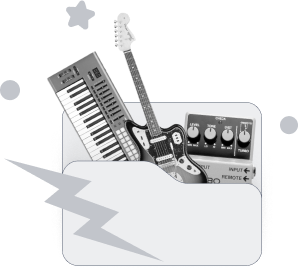


Korg ES-1 - Electribe S Rhythm Production Sampler Liam's comment: "I've used the ES-1 on stage and I've used the ER-1 on a couple of tracks on the new album. The ER-1 doesnt require much processing or EQing - it sounds f**king great straight out of the box. "
Sample and go! The ELECTRIBE·S is a new type of sampler that doesn't simply play back a recorded sound - it lets you aggressively process the samples to create your own signature sound. Play any sound or phrase in and use the pitch, filter and effects knobs to drastically alter the sample.
Slice loops with Time Slice Chop a sampled phrase or sound into pieces with the ELECTRIBE·S' Time Slice function. Time Slice detects the attacks of each part within a loop (e.g., bass drum, snare, and hi-hat), so that these parts can be massaged separately. You can also use the knobs to modify the tone of a phrase processed by Time Slice, creating complex patterns from a simple loop or phrase.
Realtime resampling With the resampling function, you can apply effects to a previously-recorded sample and then resample the result. You can even resample while modifying parameters such as pitch in realtime, and create even more new sounds with absolutely no deterioration in audio quality.
Instant rhythm creation Assign sampled sounds to up to ten parts, then use the step sequencer to create rhythm patterns. The step sequencer's sixteen pads divide a measure (or two measures) into sixteen parts. You decide where you want each sound to play by touching the desired keypads to create a pattern. And with the touch of a button you can add rolls or reverse playback for each part, so you can easily create highly complex rhythms that used to take ages to program in.
Add and change effects with the Motion Sequence function You're in complete control of sound alteration. With the Motion Sequence function, every tweak of a knob can be recorded as part of the rhythm pattern. Alter your tone at will on each part using one of the following parameters: pitch, filter, level, or pan. Then, with the Motion Sequence assign effect on/off, roll, and reverse playback for each part (all three can be recorded per part). Plus you can apply an Effect Motion Sequence (a motion sequence for effect parameters) and a Delay Motion Sequence to the entire pattern.
Radical sample processing In addition to a master delay effect, you get a built-in effects processor with eleven types of effects, that can be switched on/off for each part. The eleven types include basic effects such as Reverb and Flanger/Chorus, as well as unique effects like Decimator, Isolator, and Resonant Filter. Effect parameters can be edited using the knobs, and knob movements can be used as part of the rhythm pattern in the form of a Motion Sequence. The sound processed by the effects can also be sampled again. The internal memory of the ELECTRIBE·S can hold 128 user patterns. Combine up to 256 patterns/steps to create a song, which can be stored in one of sixteen internal song memories.
Store your data with Smart Media The ELECTRIBE·S provides a Smart Media slot for storing data. 3.3 V Smart Media ranging from 4 MB to 64 MB can be used to store your own sampled sounds, patterns and songs. The ELECTRIBE·S can also load AIFF and WAV files via Smart Media, allowing you to take advantage of sampled data stored on your computer.
The word is in The ELECTRIBES kick ass. Their thick, meaty analog sounds are making their own unique contribution to global mayhem. But we're not done with our radical donation to the rhythmic revolution. Introducing the ELECTRIBE·S, a sampler with a sound that is as fat and gritty as ever. And in true ELECTRIBE fashion, the ELECTRIBE·S is packed with tweakable knobs for extreme sound editing, and sixteen pad keys to program rhythm patterns and break beats.
Used:
Before Always Outnumbered was finished Liam told in several interviews that he has been using Electribes and the new album is going to be sounding quite electronic. Anyway all tracks were binned before the actual new album was released.
Find it on:


"The original hip-hop drum machine. That is fat! I'm really into the hip-hop scene, and did a lot of research into the equipment they used to get that real heavy sound. A guy from our record company went to New York and got this for me for my birthday; it was a really good present. It's so nice, just for single drum hits." – Liam Howlett, from a 1996 interview with Sound On Sound.
Find it on:


"The Prodigy sound owes a lot to Mackie because I've been using their stuff for years. The first mixer I ever bought was a Mackie CR1604, which I got when I was a teenager, and I've now got a 32:8 analogue eight-buss console that I love because it gives us our distinctive Prodigy sound. It's a desk that lends itself to being driven very hard. It has a naturally warm sound that allows you to push the channels as far as they'll go. Part of the appeal of The Mews was that it had a 32:8, so I immediately felt at home."
Find it on:

Roland TR-707 Rythm Composer The Roland TR-707 Rhythm Composer is a programmable digital sampling drum machine built by the Roland Corporation, beginning in 1984. The TR-707 was a staple in early house music, particularly with acid house. Because the TR-707 offers a limited number of instruments sampled at 12 bits, its sound is considered dated by modern standards. However, it is still in use because of its versatility in synchronizing with other hardware and its fully featured interface, comparable to that of high-end Roland drum machines such as the TR-808 and TR-909.
Used:
Liam has told that this machine was used to produce drums for Invaders Must Die single. He has probably used it also in many more older tracks too.
Find it on:

Liam Howlett of The Prodigy utilizes three Drawmer LX20 Stereo Compressors in his studio setup. Known for their versatility, these compressors are designed to meet the demands of both small and large studio environments. The LX20 features a soft knee compression, an expander to reduce low-level noise, and a stereo linking option, offering precise control over dynamics. This information is detailed on The Prodigy .info website, which provides insight into the gear used by the band.
Find it on:

Liam Howlett, the driving force behind The Prodigy, utilizes the Korg KONTROL49 49-Key MIDI/USB Controller, as detailed on Theprodigy.info. This advanced MIDI keyboard controller is known for its intuitive design and versatility, featuring 40 assignable control elements, including a Vector Joystick and velocity-sensitive trigger pads. These features allow for dynamic interaction with softsynths, MIDI modules, and digital audio workstations, making it an essential tool in Howlett's music production setup.
Find it on:

Liam Howlett includes the Roland MC-303 Groovebox in his gear list, as documented by The Prodigy .info.
Find it on:
-m.webp?v=1783177133)
Liam Howlett of The Prodigy utilizes the Roland MC-505 Groovebox, as detailed on The Prodigy .info. This high-performance groovebox is known for its 64-voice polyphony, advanced sound controls, and innovative D-Beam Controller, providing dynamic effects and sound manipulation. It features 714 dance music patterns and 512 sounds, including iconic drum and synth sounds like the TB-303 and TR-808, making it ideal for creating cutting-edge electronic music.
Find it on:

hermionic Culture Vulture Stereo Liam Howlett was the very first customer to purchase a Phoenix compressor and Culture Vulture distortion from Unity Audio before the company established their distributor and dealer networks.
Liam Howlett from The Prodigy gets presented with his Culture Vulture Limited EditionOriginally designed as a "distortion box" to simulate distortion in valve amps it has found lots of uses beyond this. Some owners use them on drum loops, vocals, piano sounds and even across entire tracks (it is a stereo unit).
Predominant distortion can be changed from even to odd harmonics with a simple switch.
“Thermionic Culture has always been an important part of The Prodigy’s sound. The new Limited Edition Culture Vulture takes it to a new level of sonic devastation.” Key Features
Warm sounds gently or create a noise like a 200 watt guitar stack with all the drivers slashed. Independent channel operation
Odd or Even harmonic distortion, or combination of both. All valve design free from solid state additives. High impedance line input or instrument inputs. 4 & 7 kHz filters Overdrive & bypass switches
Culture Vulture Specifications:
Max output level (MOL): +20dBV Distortion: 0.2% to 99.9%. Noise: Variable better than 75dB below M. O. L at most settings Input Impedance: 30k Output Impedance: 2.5k ohm ( should ideally drive a 10k input impedance ) Frequency response: >1dB variation over 10Hz to 25kHz ( actually +/- 1.75dB over 50Hz to 15kHz at low distortion ) Used
You can clearly hear the Culture Vulture in action on the bass line in Thunder.
Find it on:


Liam Howlett uses Apple MacBook Pro computers during live performances and for music production, as seen in a post on the official Instagram account of The Prodigy after their Sydney gig.
Find it on:
-m.webp?v=1783177316)
Liam uses it at the live shows and of course in the studio. Classic broadcast quality professional sampler from AKAI. Very versatile machine with excellent dynamic range, filter and timestretch capabilities (timestretch to 2000%). Excellent sample / program editing functions. 16-bit linear encoding. 32 voice polyphonic. Digital moving low-pass filter (-12dB/octave with resonance). Balanced inputs on 1/4" phono. Backlit LCD display (320 characters/240x640). Max sample time: 44.56s (using unexpanded memory). 2MB onboard memory expandable to 16MB using standard SIMMS.
Find it on:

Liam Howlett of The Prodigy uses the Akai S3000XL audio sampler in live performances. According to The Prodigy equipment page, this sampler features a 16-bit linear sampling system, supports up to 32 voices of polyphony, and offers a variety of effects, including echo, chorus, and reverb. Its robust capabilities, such as digital moving low-pass filters and multiple storage options, make it integral to Howlett's live setup.
Find it on:

The Akai Z8 is the world's first 24bit/96kHz hardware based sampler. Designed for professional audio production, the Z series samplers offer all the advantages of dedicated hardware plus the interface power of ak.Sys PC/Mac control and networking software.
The Akai Z8 has been developed using the undisputed skills of Akai's worldwide engineering teams in tandem and the result is a super-sampler with the heritage of the "S" series but incorporating operational features from the unique "MPC" range and effects from the highly acclaimed DPS16.
Used:
Liam uses it at live shows and of course in the studio.
Find it on:

The SE-70 is a half rack size digital multi effect processor. It has some multi-effects setups for guitar/bass/keyboard/vocal, though they're processed in 32kHz mode. Available effects: Reverb, Gate Reverb, Ambience, Delay, Chorus, Pitch Shift, Phaser, Flanger, Ring Modulator, Noise Suppressor, Overdrive/Distortion, Rotary, Enhancer, Panning/Tremolo, Slow Gear, Compressor/Limiter, Auto Wah, Guitar Amp Simulator, Vibrato, Feedbacker, Bass Amp Simulator, De-esser, Equalizer, Vocoder, Guitar Synth, Bass Synth, Mixer, Hum Canceler, Vocal Canceler, Key Changer, 2 Second Digital Sampler, plus a Chromatic Tuner and Metronome.
Bass multi includes: Slow gear, comp/limit, auto wah, overdrive/distortion, eq, enhancer, bass amp simulator, noise suppressor, pitch shifter, vibrato, phaser, flanger, delay, chorus, panning/tremolo.
Single algorithms include interesting ones like: 21 band vocoder 12 voice pitch shifter 16 unit chorus, etc. Signal level is 0dB or -20dB in.
If you turn the reverb on heavily, with some wrong values, you get exciting distortion effects, which are one of the Prodigy's trademarks (at least on the FOTL-album, you can hear them on SMBU and Narayan, for example) Used:
Liam once said to an interviewer, asking him what advice he'd give to upcoming musicians: "I'd like to quote Keith here, who said 'You can never have enough SE-70's'... "
Find it on:
-m.webp?v=1783177069)
Liam Howlett of The Prodigy uses the DBX 160A Compressor, known for its versatile compression features like OverEasy® and classic hard knee settings. This gear, with its precision dual RMS LED display and exclusive Infinity+ compression, enhances Howlett's studio recordings. Detailed specifications and usage are documented on The Prodigy's official equipment page.
Find it on:

Machine info: This mixer is designed for maximum flexibility. It features 16 XLR Mic, 1/4" Line inputs. It is perfect for larger exhibit booth demonstration areas. The 1604 is also an excellent choice for meeting applications where a number of mics, and audio sources need to be mixed together.
Used: Liam always uses this mixer in live shows.
Liam's comment:
"I take a Mackie 1604 out live. As far as I'm concerned, Mackie are the best desks for dance production. I had a Tascam 32 channel, and I sold it to Shades Of Rhythm, and I had done as much as I could do with it. Mackie has much more headroom. I went from a 16 channel Mackie to buying that Tascam and after a year, I still couldn't get a good sound out of it. So I went back to basics - like two 16 channel Mackies. Then I was happy again!" .
Inputs Channels 1-16 XLR Mic, 1/4" Balanced/Unbalanced Line Level Insert 1/4" Balanced/Unbalanced Line inputs Other inputs Tape in (dual RCA) Main Insert (L & R)1/4". Balanced/Unbalanced line level (4) Aux returns (L & R)1/4". Balanced/Unbalanced line level Outputs Main outs Left, Right, Mono 1/4" Balanced/Unbalanced Line Level (4) Sub Outs 1/4" Balanced/Unbalanced Line Level Other outputs Tape record out (dual RCA), (6) Aux sends 1/4" Balanced/Unbalanced line level (8) Direct Outs 1/4" Balanced/Unbalanced Line Level Width 442mm (17.3") Depth 447mm (17.6") Weight 9.1kg (20 lb) Power Requirements 120V 60hz 50w
Find it on:

Korg ER-1 - Electribe R Rhythm Synth ER-1 Specifications: Synthesizer type: Modelled drum synthesizer Synthesis Type: Modelled/ Sample based Polyphony: 6 Oscillators: 4 modelled/ 4 Sample based (HH, OH, Crash, Clap) FX : Delay, Motion Sequence Inputs and Outputs : Number of Audio Outs: 2 Number of Audio Ins: 2 MIDI: in, out, thru
Liam's comment: "I've used the ES-1 on stage and I've used the ER-1 on a couple of tracks on the new album. The ER-1 doesnt require much processing or EQing - it sounds f**king great straight out of the box. "
"I havent checked the mixer yet, but the ER-1 resembles 70's and 80's analogue drum sounds, which is what I like. "
Find it on:

Liam Howlett, a key member of The Prodigy, utilizes the Roland E-660 Digital EQ, as detailed on The Prodigy .info. This versatile equalizer, known for its fully parametric capabilities, is configured to suit various studio applications, including mastering and monitoring. It features two-channel, four-band parametric options that can be adjusted independently or simultaneously to maintain stereo integrity. The E-660 offers extensive EQ flexibility, with eight filters providing up to 12 dB of boost or cut across a wide frequency range, and includes both analog and digital connectivity. The unit’s settings can be stored in 99 user memories, preserved by an internal battery, ensuring seamless operation in any studio setup.
Find it on:
-m.webp?v=1783090753)
Roland TR-909 Rhythm Composer The Roland TR-909 Rhythm Composer is a partially analog, partially sample-based, drum machine introduced by the Japanese Roland Corporation in 1983. The brainchild of Tadao Kikumoto, the engineer behind the Roland TB-303, it features a 16-step step sequencer and a drum kit that aimed for realism and cost-effectiveness. It is fully programmable, and like its predecessor, the TR-808, it can store entire songs with multiple sections, as opposed to simply storing patterns. It was the first MIDI-equipped drum machine. Around 10,000 units were produced.
All drums except for the hi-hats and cymbals are synthetically generated; there is an oscillator circuit with a dedicated filter and envelope curve. The hi-hats and cymbals are 6-bit samples, compressed and combined with a volume envelope curve (and tuning) to allow slight modification. Thanks to the analog circuitry, various aspects of the drum sound can be modified (pitch, attack, decay).
There is also a feature called "accent"—a primitive means of humanizing the drumbeat. In a simplified model of a drummer and a kit, the loudness of the sound created would basically depend on the velocity at which the drummer hits a given part of the kit. A human drummer can emphasize certain notes by playing them louder, and the accent parameter provides a means to boost a particular step.
Part of the charm of the TR-909 comes from its 16-step sequencer — the 16 buttons along the bottom of the interface correspond to the 16th notes of a single bar in 4/4 meter. For example, punching the buttons 1, 5, 9 and 13 on the bass drum part would create a simple "four to the floor" beat. Multiple patterns can be grouped or chained together which allows the user to create drum patterns that are longer than one bar in length or, alternatively, create drum patterns in compound meters outside of 3/4 or 4/4. While the sequencer is running, a light runs from step 1 to step 16.
This machine is used most of the common dance tracks and you can almost say that this is the standard House and Techno beatbox. Used:
Almost in every Experience track! like... Everybody in the Place Wind It Up
This machine can been seen in many Prodigy Experience videos and sometimes Liam uses it in live shows.
Find it on:

Liam Howlett of The Prodigy utilizes the TC Electronic Finalizer 96K, a high-quality mastering processor, to achieve a professional, "radio-ready" sound. This equipment, known for its advanced features and 96kHz processing capabilities, is an essential tool in both large and small studio settings. Details on its use by Howlett can be found on Theprodigy.info.
Find it on:

Apple Macintosh 70100 computer About: As we all know Liam really hates technology and computers. He likes more to play with his synths and keyboards. Before Baby's Got A Temper era he only had one computer for music making and it was this Macintosh.
Liam used Steinbergs ReCycle! and Cubase in this computer. I'm not sure how much he really used those softwares, but maybe he did some sequencing with them. Before computers he used to sequence all the tracks with Roland W-30.
Find it on:

In a Facebook post by The Prodigy, Liam Howlett mentions his use of the DBX 900 Series Rack, emphasizing his preference for hardware by stating, "No plugins here."
Find it on:

In this user-uploaded photo, Liam Howlett is seen using the M-Audio Oxygen 49-Key USB MIDI Keyboard Controller.
Find it on:

Liam Howlett uses the Sherman Filterbank 2 in his studio, as shown in a post by theprodigyofficial on Instagram.
Find it on:





Akai CD 3000 XL (10MB) is included in Liam Howlett's gear list.
Find it on:

Liam Howlett of The Prodigy uses the Akai S5000 sampler, a versatile piece of DJ gear known for its robust features such as 128-note polyphony, MIDI support, and optional effect processing. Released in 1998, the sampler supports a 16-bit sample rate and offers up to 256MB of RAM. It also includes technologies like Assignable Program Modulation and direct sample audition. For more details on Howlett's equipment, refer to The Prodigy .info.
Find it on:

You can see this piece of equipment lying on Liam's floor in Dirtchamber Sessions inner sleeve! Gear info:
It's a two-channel psychoaccoustics soundprocessor, also containing a multiband processor, an exciter, an enhancer, a noise reduction-function that can either be adjusted manually as also be used with an automatic function (this is supposed to work in a similar way to the 'Fingerprint-method'), various surround-fx and a dynamic VU-meter.
A great thing, and absolutely not expensive! (~200,- DM, which would be about 65,- Pounds) Quite cheap for a such an upper-class toy!
Find it on:

Liam Howlett, the mastermind behind The Prodigy, utilizes the Drawmer DL221 Two Channel Compressor/Limiter in his studio setup, as detailed on TheProdigy.info. This industry-standard compressor/limiter, known for its straightforward design and reliability since the mid-80s, features dual mono/stereo capabilities, side chain inputs, and a preset peak limiter. While the LED metering might not always be perfectly precise, the unit remains a staple in professional audio processing, offering controls for attack, release, threshold, ratio, and gain. The DL221 is valued for its solid-state construction and performance specifications, including a wide bandwidth and low distortion.
Find it on:

Liam Howlett of The Prodigy uses the Mackie Onyx 1640i Firewire Mixer, a premium 16-channel analog mixer known for its high-headroom, low-noise operation and Onyx mic preamps. The mixer features Perkins EQ circuitry, offering a warm, musical sound, and can be equipped with a FireWire I/O card for seamless audio streaming to digital platforms. This information is detailed on The Prodigy .info, which highlights the band's equipment.
Find it on:
This is a community-built gear list for Liam Howlett.
- Find relevant music gear like Studio Equipment, Software Plugins and VSTs, Headphones, and other instruments and add it to Liam Howlett.
- The best places to look for gear usage are typically on the artist's social media, YouTube, live performance images, and interviews.
- To receive email updates when Liam Howlett is seen with new gear, follow the artist.
-
Added to Equipboard on by
 adamfiregate
Gear IQ 2049
-
Updated
Album Credits
-
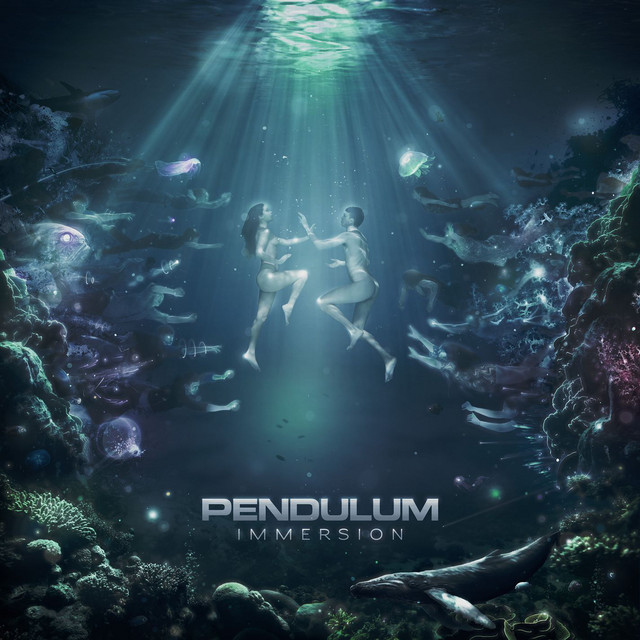
Pendulum · 2010
Producer